Backyard Learning Center
Learn practical backyard skills one project at a time through beginner-friendly articles, seasonal tips, and step-by-step guides that help you build, grow, raise, and thrive.
What Can You Compost?
The Ultimate Yes, No, and Maybe List
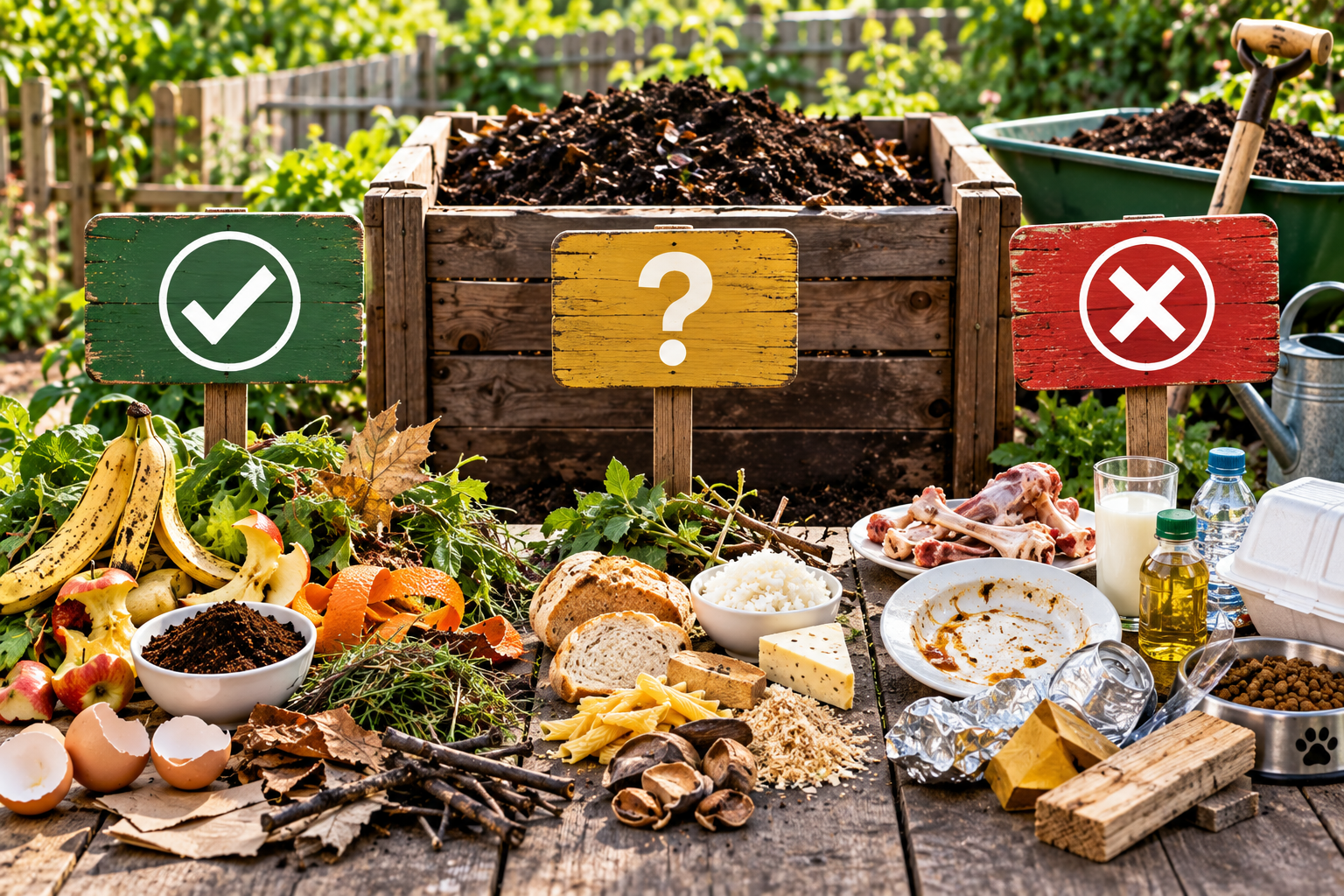
One of the first questions almost every new composter asks is:
Can I compost this?
Banana peel? Absolutely.
Coffee grounds? Yep.
Cardboard? Usually.
Last night’s cheeseburger?
Now we’re getting into dangerous territory.
Once you start composting, you’ll catch yourself standing over the bin holding something you’ve thrown away a thousand times before, wondering whether you’ve been overlooking perfectly good compost material.
That’s a good habit to develop.
But your compost pile isn’t a magical portal where anything vaguely organic should disappear. Some materials belong there, some don’t, and others come with a giant “it depends.”
Here’s a simple guide to sorting it all out.
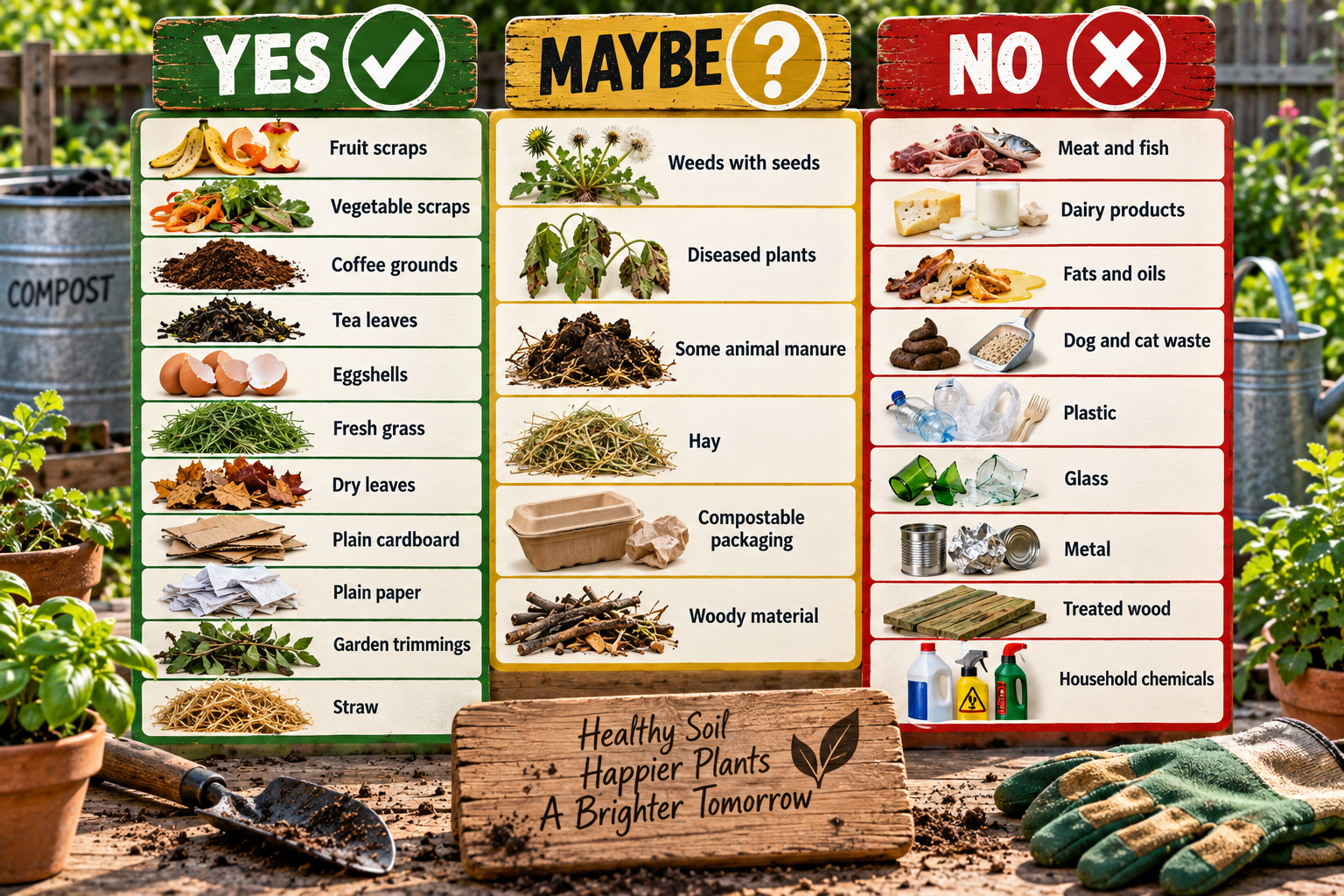
YES: These Are Great for Backyard Composting
Let’s start with the easy ones.
Fruit and Vegetable Scraps
Most fruit and vegetable scraps are excellent compost ingredients.
That includes:
- Banana peels
- Apple cores
- Melon rinds
- Potato peelings
- Carrot tops
- Lettuce
- Cucumber ends
- Pepper scraps
- Corn husks
- Pumpkin
- Old fruits and vegetables
These materials are generally considered greens, meaning they provide nitrogen and moisture to your compost.
Chopping larger pieces into smaller ones can help them break down faster, but you don’t have to turn every watermelon rind into confetti.
YES: Coffee Grounds and Paper Coffee Filters
Coffee grounds are one of the compost pile’s great impostors.
They’re brown.
They’re called grounds.
And they’re considered a green because they’re nitrogen-rich.
Paper coffee filters can usually go right along with them.
If your household drinks coffee every morning, you’ve already got a steady supply of compost material before breakfast.
YES: Tea Leaves
Loose tea leaves can go into the compost pile.
Tea bags require a little more attention because some bags contain synthetic materials. If you aren’t sure what the bag is made from, empty the tea leaves into the compost and dispose of the bag separately.
YES: Eggshells
Eggshells can be composted.
Crushing them first gives microorganisms more surface area to work on and makes the shells less noticeable in finished compost.
They break down more slowly than fruit and vegetable scraps, so don’t be surprised if you still spot a few shell fragments later.
YES: Grass Clippings
Fresh grass clippings provide nitrogen and can be an excellent green material.
But grass comes with a warning label.
Don’t dump thick masses of fresh clippings into one spot.
They can mat together, trap moisture, restrict oxygen, and turn into a smelly mess surprisingly quickly.
Mix grass with dry leaves, shredded cardboard, straw, or other browns.
Your nose will appreciate the effort.
YES: Dry Leaves
If compost piles had a savings account, dry leaves would be money in the bank.
They’re an excellent source of carbon and one of the most useful browns you can keep around.
Collect extra leaves during fall and save them for later. Kitchen scraps arrive throughout the year, while dry leaves have the irritating habit of showing up by the truckload all at once.
YES: Plain Cardboard and Paper
Many plain paper products can be composted, including:
- Corrugated cardboard
- Plain paper
- Paper towel and toilet paper tubes
- Paper grocery bags
- Uncoated paper packaging
Shred or tear them into smaller pieces before adding them.
Smaller pieces break down faster and are less likely to form large, compacted sections.
Cardboard is particularly useful when your compost is too wet or you’ve added a large amount of kitchen scraps.
YES: Garden Trimmings
Healthy plant material from your garden can usually go straight into the compost.
This includes:
- Spent annuals
- Vegetable plants
- Flower trimmings
- Deadheaded flowers
- Small plant stems
- Weeds that haven’t gone to seed
Larger or woody pieces will take longer to decompose, so chopping them into smaller pieces helps.
YES: Straw
Straw is a useful brown material.
It adds carbon and also helps create structure inside the pile, allowing air to circulate.
Just remember that straw and hay aren’t necessarily the same thing. Hay may contain seeds that survive a compost pile that doesn’t become hot enough to kill them.
And that brings us nicely to…
MAYBE: These Require a Little More Thought
Some materials aren’t automatically good or bad.
Whether you should compost them depends on your composting method, experience, and what you plan to do with the finished compost.
MAYBE: Weeds
Young weeds that haven’t produced seeds are generally fine.
Weeds that have already gone to seed are another story.
Unless your pile reaches temperatures high enough for long enough to destroy those seeds, you could eventually spread them right back into the garden with your finished compost.
That’s not composting.
That’s a weed relocation program.
When in doubt, leave mature seed heads out.
MAYBE: Diseased Plants
Diseased plant material can be risky in a home compost pile.
A properly managed hot pile may reach temperatures capable of destroying some plant pathogens, but a cooler backyard pile may not.
If you aren’t confident that your compost reaches and maintains sufficient temperatures, keeping diseased plants out is the safer choice.
MAYBE: Animal Manure
Some animal manures can be extremely valuable compost ingredients.
Manure from animals such as chickens, rabbits, cows, horses, sheep, and goats can provide nitrogen and nutrients.
But manure needs to be handled properly and given adequate composting time before being used around plants, particularly food crops.
And not all manure belongs in a backyard compost pile.
Which leads us to the next category.
NO: Keep These Out of a Typical Backyard Compost Pile
NO: Dog and Cat Waste
Don’t put dog or cat feces into compost you plan to use in your vegetable garden.
Pet waste can contain pathogens and parasites that you don’t want introduced into compost used around food crops.
The same caution applies to cat litter contaminated with feces.
Your Labrador may contribute many things to the household.
Vegetable-garden fertilizer shouldn’t be one of them.
NO: Meat and Fish
Meat and fish will decompose.
That’s not the problem.
The problem is everything that may arrive for dinner when they do.
Meat scraps can create odors and attract flies, rodents, raccoons, and other animals.
For a typical beginner backyard pile, leave them out.
NO: Dairy Products
Milk, cheese, yogurt, butter, and other dairy products are generally best kept out of a conventional backyard compost pile.
Like meat, they can create odors and attract pests.
NO: Fats, Grease, and Oils
Cooking oil, grease, and fatty foods aren’t good additions to a standard backyard compost pile.
They can create odors, attract animals, and interfere with the conditions you’re trying to maintain inside the pile.
That leftover bacon grease has other plans.
Don’t invite it.
NO: Plastic
Plastic doesn’t belong in compost.
That includes those tiny stickers stuck to fruits and vegetables.
Remove them before tossing peels, cores, or spoiled produce into your kitchen compost container.
Nothing ruins the satisfaction of beautiful finished compost quite like finding a tiny produce sticker announcing that your garden is apparently sponsored by a grocery store.
NO: Glass and Metal
Neither will become compost.
Keep them out.
NO: Chemically Treated Wood
Avoid adding sawdust, shavings, or scraps from chemically treated or painted lumber.
You don’t want questionable chemicals ending up in finished compost that will eventually return to your soil.
NO: Household Chemicals
Paint, cleaners, automotive fluids, pesticides, and other household chemicals have no place in your compost pile.
Compost is a biological system.
Treat it accordingly.
What About "Compostable" Packaging?
Be careful here.
Something labeled compostable doesn’t necessarily mean it will break down successfully in your backyard compost pile.
Some products are designed for commercial or industrial composting facilities that maintain conditions a backyard pile may never reach.
Read the packaging before tossing it into your bin.
“Compostable” and “backyard compostable” aren’t always the same thing.
The Simplest Rule When You’re Unsure
When you’re standing beside the compost pile holding some mysterious object and wondering where it belongs, ask yourself three questions:
Was it once a plant or produced by a plant?
That’s a promising start.
Could it introduce chemicals, pathogens, plastics, or other unwanted materials into my soil?
If so, leave it out.
Could it attract pests or create serious odors in my backyard pile?
If the answer is yes, the garbage may be the better destination.
And when you’re genuinely unsure?
Don’t compost it.
Missing one questionable ingredient won’t hurt your pile.
Adding something you shouldn’t can create a much bigger headache.
One Final Thought
Learning what belongs in your compost pile quickly becomes second nature.
Before long, you’ll look at kitchen scraps, cardboard boxes, coffee grounds, and bags of autumn leaves differently.
They’re no longer just things to throw away.
They’re ingredients.
And once you start seeing them that way, tossing a perfectly good banana peel into the garbage can start to seem strangely wasteful.
Yesterday it was breakfast. Tomorrow it could be tomatoes.
That’s a pretty good deal for a banana peel. 🍌🌱
Ready to Grow More with Less Work?
Composting Made Easy expands on each of these topics with clear, step-by-step guidance designed specifically for beginners. From choosing the right composting method and knowing what to add to balancing greens and browns, managing moisture, avoiding common problems, and knowing when your compost is ready, the book provides practical instruction to help you turn everyday scraps and yard waste into rich, healthy compost with confidence. 🌱

More Composting Articles
If you found this article helpful, these beginner guides are a great next step:
Get Your FREE Backyard Starter Toolkit
Download our free Backyard Starter Toolkit, packed with printable planners, checklists, and beginner resources to help you build, grow, raise, and thrive.
About the Author
Steve McChesney is the founder of Backyard Living Books and has spent decades helping homeowners build, grow, raise, and preserve more from their own backyards. Through practical, beginner-friendly guides, he encourages people to tackle one backyard project at a time and enjoy the satisfaction that comes with learning new skills.