
Backyard Learning Center
Learn practical backyard skills one project at a time through beginner-friendly articles, seasonal tips, and step-by-step guides that help you build, grow, raise, and thrive.
How Long Does Compost Take?
And How Do You Know If It’s Ready?
You built the pile.
You added greens and browns.
You kept it moist.
You turned it.
You waited.
Then you waited some more.
At some point, almost every new composter looks at that pile and asks the obvious question:
How long is this supposed to take?
The slightly annoying answer is:
It depends.
Compost doesn’t come with a timer that pops up and announces, “Congratulations! Your banana peels are officially dirt.”
How quickly compost finishes depends on what you put into the pile, how large the materials are, how much moisture and oxygen it receives, the weather, and how actively you manage it.
But there are some good guidelines, and even better, there are several simple ways to tell when your compost is actually ready to use.
So, How Long Does Compost Take?
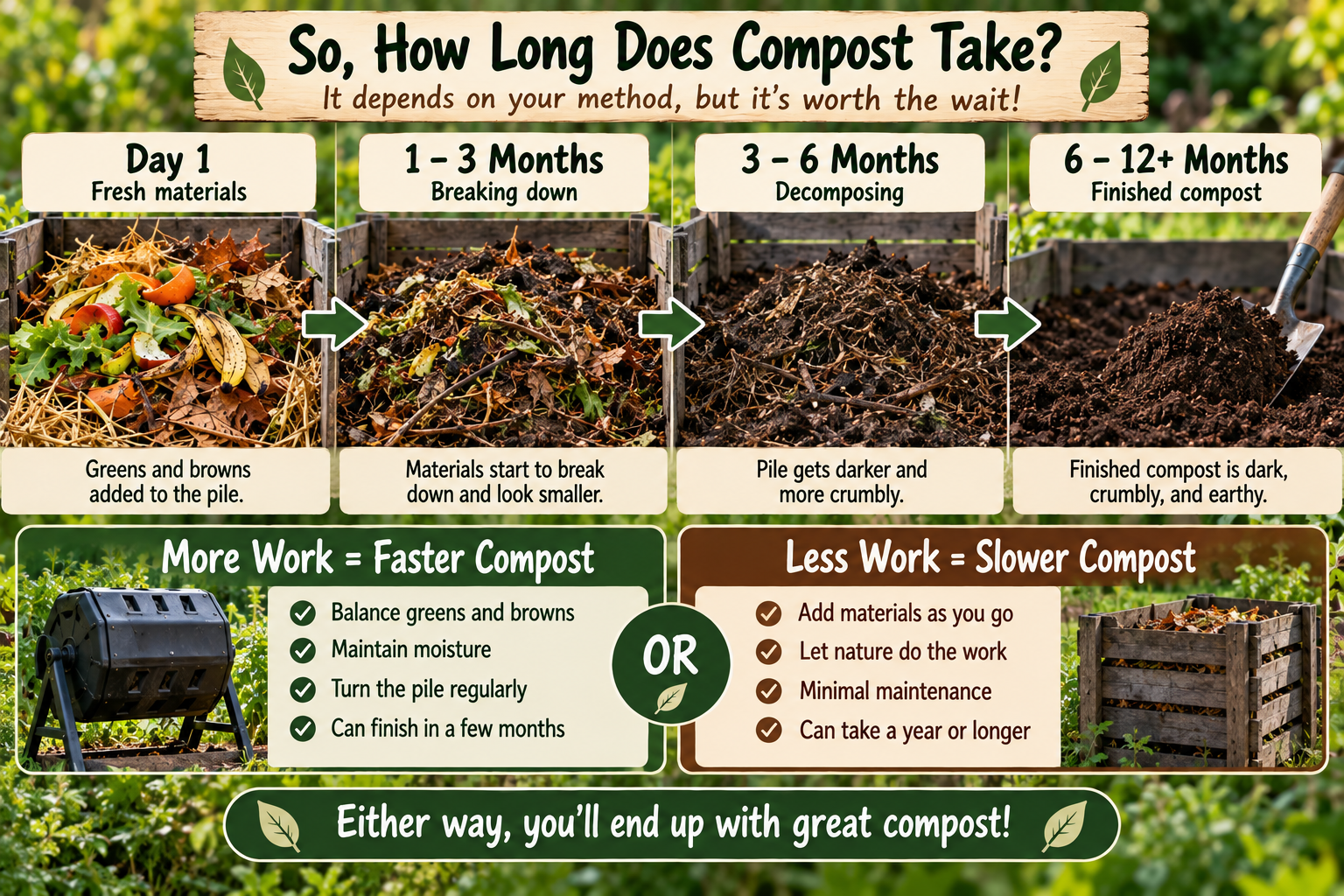
Depending on your composting method, finished compost can take anywhere from a few months to a year or longer.
An actively managed pile can finish much faster than one that’s simply left alone.
If you’re regularly balancing greens and browns, maintaining moisture, and turning the pile to provide oxygen, decomposition happens more quickly.
If you’re using a slower, low-maintenance approach, nature will still get the job done.
You’ll simply wait longer.
That’s one of the nice things about composting.
You can choose between:
More work and faster compost
or
Less work and slower compost.
Either approach can produce excellent finished compost.
What Makes Compost Finish Faster?
If you’d like to speed things up, concentrate on a few basic factors.
- Use Smaller Pieces
Microorganisms work on the surfaces of compost materials.
Smaller pieces provide more surface area.
A whole pumpkin takes longer to break down than a chopped pumpkin.
A large sheet of cardboard takes longer than shredded cardboard.
A thick branch takes much longer than small twigs.
You don’t have to pulverize everything before it enters the pile, but breaking larger materials into smaller pieces can make a noticeable difference.
- Maintain a Good Mix of Greens and Browns
Your pile needs nitrogen-rich greens and carbon-rich browns.
Too many browns and decomposition may become very slow.
Too many greens and the pile can become wet, compacted, and smelly.
You don’t need perfect measurements.
Aim for variety and reasonable balance.
- Keep It Moist
A dry compost pile decomposes slowly because the microorganisms doing the work need moisture.
Check the material inside the pile.
You’re looking for approximately the moisture level of a wrung-out sponge.
Too dry?
Add water.
Too wet?
Add dry browns.
- Give It Oxygen
Turning or mixing the pile introduces oxygen and brings different materials into contact with one another.
If speed matters to you, turn your compost more frequently.
If speed doesn’t matter?
Turn it occasionally and let nature handle the schedule.
Your compost pile has nowhere else to be.

Does Compost Have to Get Hot?
No.
This is an important distinction for beginners.
Hot composting uses active management to encourage rapid microbial activity and higher temperatures. When managed correctly, it can produce compost relatively quickly.
Cold composting takes a slower approach. Materials are added over time and allowed to decompose with less attention.
Cold composting works.
It just takes longer.
So don’t assume your pile has failed simply because you aren’t seeing steam rising from it on a chilly morning.
Temperature can be useful information, but the final condition of the compost matters more than whether your pile ever put on a volcanic performance.
How Do You Know When Compost Is Ready?
This is actually easier than trying to predict an exact finishing date.
Instead of watching the calendar, watch the compost.
Finished compost has several recognizable characteristics.
Sign #1: It’s Dark
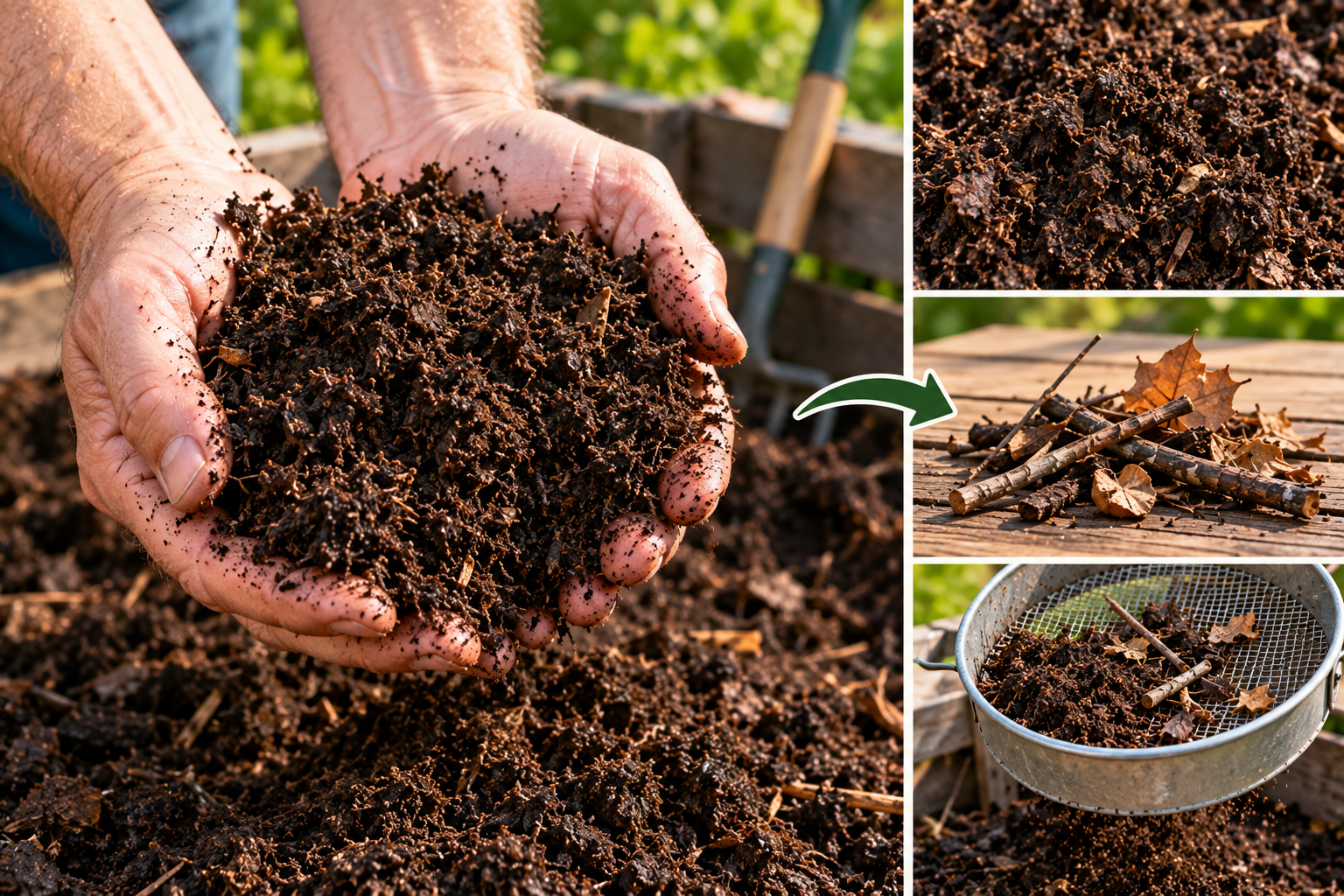
Finished compost is generally dark brown.
The original ingredients should no longer dominate its appearance.
You shouldn’t look into the pile and immediately see a recognizable collection of yesterday’s kitchen scraps and last fall’s yard cleanup.
The materials have become something new.
Sign #2: It’s Crumbly
Good finished compost has a loose, crumbly texture.
Pick up a handful.
It should break apart easily rather than forming a wet, slimy clump.
You may still find the occasional twig or other slow-decomposing item.
That’s normal.
Remove those pieces and toss them into your next compost batch.
They apparently weren’t ready for graduation.
Sign #3: It Smells Earthy
This may be the easiest test of all.
Smell it.
Finished compost should have a pleasant, earthy smell.
It shouldn’t smell like rotting food, ammonia, sour vegetation, or last Tuesday’s leftovers.
If unpleasant odors remain, decomposition may still be taking place or the pile may need additional oxygen or browns.
Finished compost smells much more like rich soil than garbage.
Sign #4: Most of the Original Materials Are Unrecognizable
Remember all those banana peels?
Coffee grounds?
Grass clippings?
Leaves?
Vegetable scraps?
Most of them should no longer be recognizable.
You’ll probably still encounter an occasional stubborn item.
Small sticks, avocado pits, eggshell fragments, and other tough materials can take longer.
That doesn’t mean the entire batch isn’t ready.
Simply remove the larger unfinished pieces and return them to your active compost pile.

Sign #5: The Pile Has Shrunk
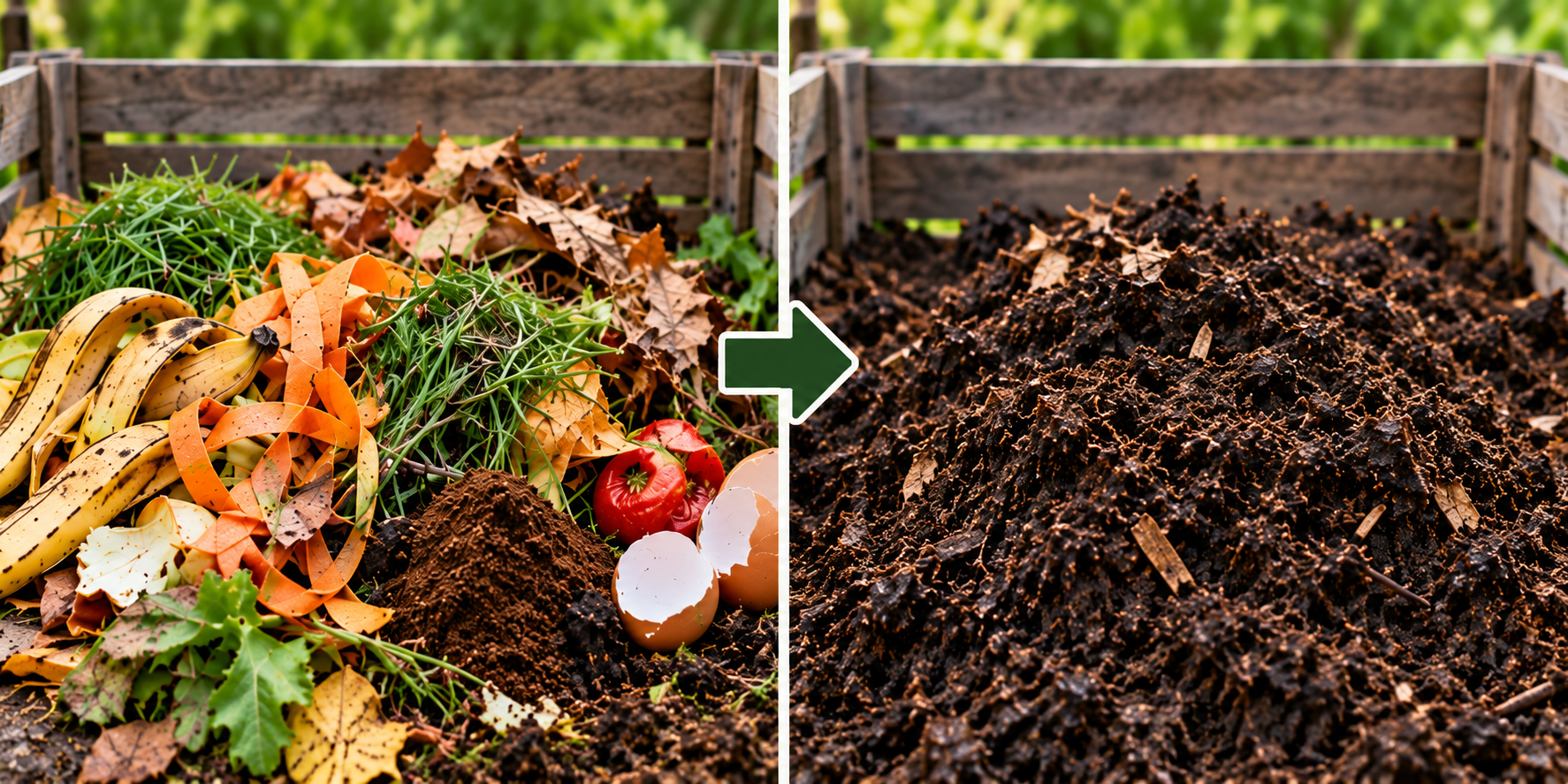
One of the fascinating parts of composting is watching a large amount of organic material become a much smaller amount of finished compost.
As microorganisms break down the materials, your pile loses considerable volume.
So don’t be surprised when that impressive mountain of leaves, grass, cardboard, and kitchen scraps produces considerably less finished compost than you expected.
Nothing went wrong.
That’s decomposition doing its job.
Let Finished Compost Cure
Even when compost looks finished, giving it additional time to cure can improve the final product.
Curing simply means allowing the compost to sit after the most active decomposition has finished.
During this period, biological activity continues at a slower rate and the compost becomes more stable.
You don’t need to fuss with it constantly.
Give it some time.
Your microorganisms are finishing the paperwork.
The Simple Finished-Compost Test
Before using your compost, ask:
Is it dark?
Is it crumbly?
Does it smell earthy?
Are most original ingredients unrecognizable?
Has the pile stopped actively heating?
If you’re answering yes across the board, you’ve probably got finished compost.
What If Some Pieces Aren't Finished?
Don’t wait six additional months because three twigs refuse to cooperate.
Screen the compost.
A simple compost screen separates the fine finished material from larger pieces.
Use the finished compost and return the larger material to your next pile.
Those pieces already contain microorganisms and partially decomposed material, so they’re perfectly suited for another trip through the composting process.
Don’t Use the Calendar as Your Only Guide
This is probably the biggest takeaway.
Two compost piles started on exactly the same day can finish at very different times.
One may contain chopped materials, receive regular turning, maintain good moisture, and have a healthy supply of greens and browns.
The other may contain large pieces, remain mostly untouched, and occasionally dry out.
Both can eventually become compost.
One simply gets there sooner.
So instead of asking:
“Has it been three months?”
Ask:
“What is my compost telling me?”
Appearance, texture, smell, temperature, and the condition of the original materials are far better indicators than a date on the calendar.
When Your Garbage Becomes Garden Gold
There’s something remarkably satisfying about holding your first handful of finished compost.
Months earlier, it was coffee grounds, vegetable peelings, grass clippings, cardboard, and leaves.
Now it’s dark, crumbly material ready to return to the garden.
Spread it around vegetables.
Add it to raised beds.
Use it around flowers, shrubs, and trees.
Work it into tired garden soil.
Then start another pile.
Because once you’ve watched a heap of things you used to throw away become something your garden can use, that kitchen garbage can starts looking a little different.
The banana peel isn’t finished.
It’s just changing jobs. 🌱
Ready to Grow More with Less Work?
Composting Made Easy expands on each of these topics with clear, step-by-step guidance designed specifically for beginners. From choosing the right composting method and knowing what to add to balancing greens and browns, managing moisture, avoiding common problems, and knowing when your compost is ready, the book provides practical instruction to help you turn everyday scraps and yard waste into rich, healthy compost with confidence. 🌱

More Composting Articles
If you found this article helpful, these beginner guides are a great next step:
Get Your FREE Backyard Starter Toolkit
Download our free Backyard Starter Toolkit, packed with printable planners, checklists, and beginner resources to help you build, grow, raise, and thrive.
About the Author
Steve McChesney is the founder of Backyard Living Books and has spent decades helping homeowners build, grow, raise, and preserve more from their own backyards. Through practical, beginner-friendly guides, he encourages people to tackle one backyard project at a time and enjoy the satisfaction that comes with learning new skills.