Backyard Learning Center
Learn practical backyard skills one project at a time through beginner-friendly articles, seasonal tips, and step-by-step guides that help you build, grow, raise, and thrive.
How to Use Finished Compost in Your Garden, Raised Beds, and Containers
You did it.
The kitchen scraps are gone.
The leaves have disappeared.
That pile of coffee grounds, cardboard, vegetable peelings, and yard waste has become dark, crumbly compost.
Now comes the payoff:
What do you actually do with it?
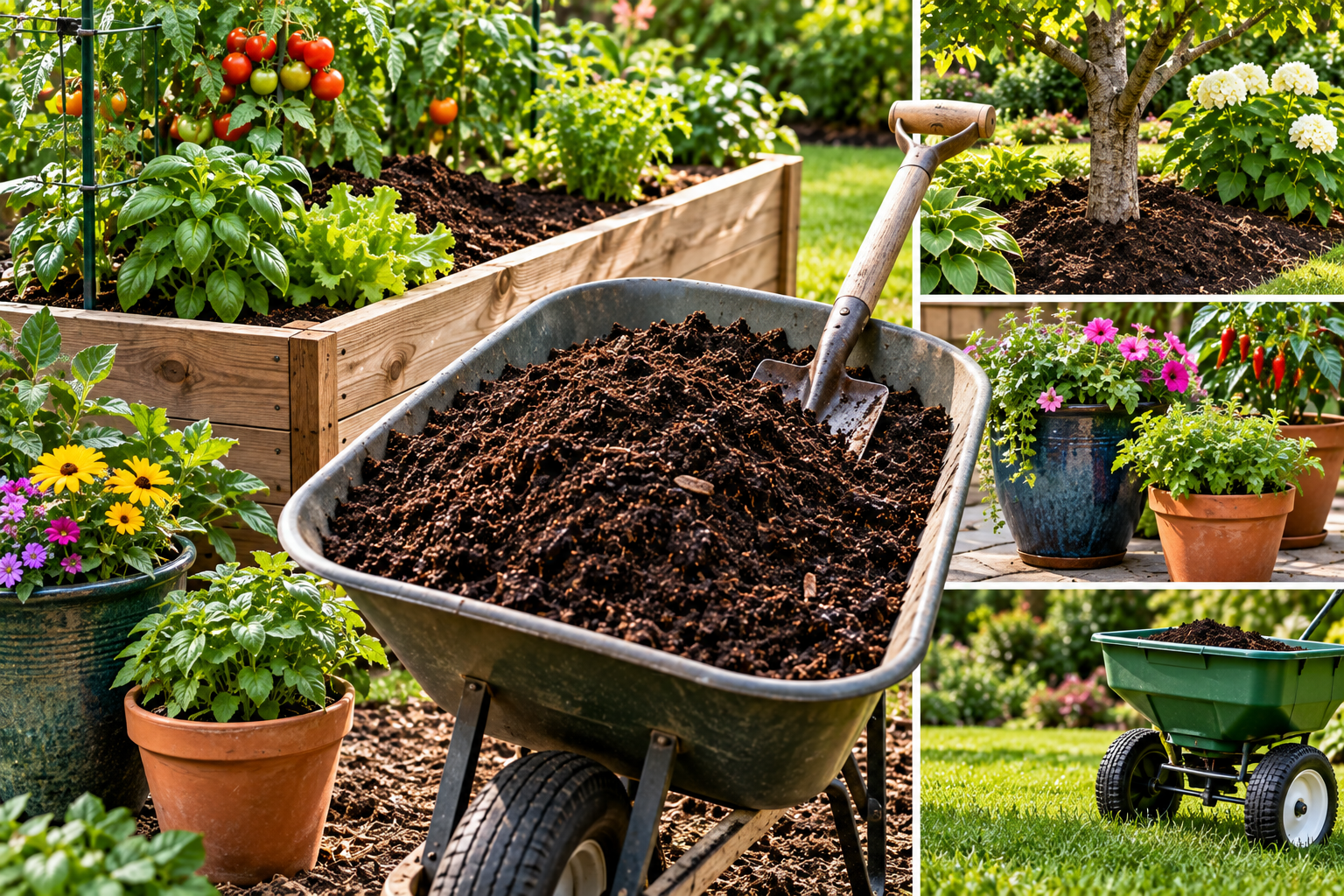
Finished compost is one of the most useful materials you can produce for your yard and garden. It can improve garden soil, refresh raised beds, support container plants, help trees and shrubs, and even give your lawn a boost.
But you don’t need to bury everything under six inches of compost simply because you finally have some.
A little used wisely can go a long way.
First, Make Sure Your Compost Is Finished
Before adding compost around plants, make sure it has completed the active decomposition process.
Finished compost should:
- Be dark brown
- Have a loose, crumbly texture
- Smell earthy
- Contain few recognizable original ingredients
- No longer be actively heating
A few stubborn twigs, eggshell fragments, or other larger pieces aren’t a problem. Remove them and toss them into your next compost pile.
What you don’t want is compost that’s still full of recognizable food scraps or producing strong odors.
When it’s dark, crumbly, and earthy, you’re ready to put it to work.
Using Compost in an Existing Garden
One of the easiest ways to use finished compost is right in your garden beds.
Spread a modest amount across the soil surface and gently work it into the upper portion of the soil.
You don’t need to dig halfway to the center of the Earth.
The goal is to incorporate organic matter into the area where your plants will use it.
Compost can help improve:
- Soil structure
- Moisture retention
- Drainage
- Biological activity
- Nutrient availability
And unlike a quick application of fertilizer, compost contributes something else that’s extremely valuable:
Organic matter.
You’re not simply feeding plants. You’re improving the soil they grow in.
Using Compost in Raised Beds
Raised beds and compost are excellent partners.
Each growing season removes nutrients and organic matter from the soil. The soil also settles over time, which explains why a raised bed that started completely full can mysteriously look several inches shorter later.
Finished compost gives you an easy way to refresh it.
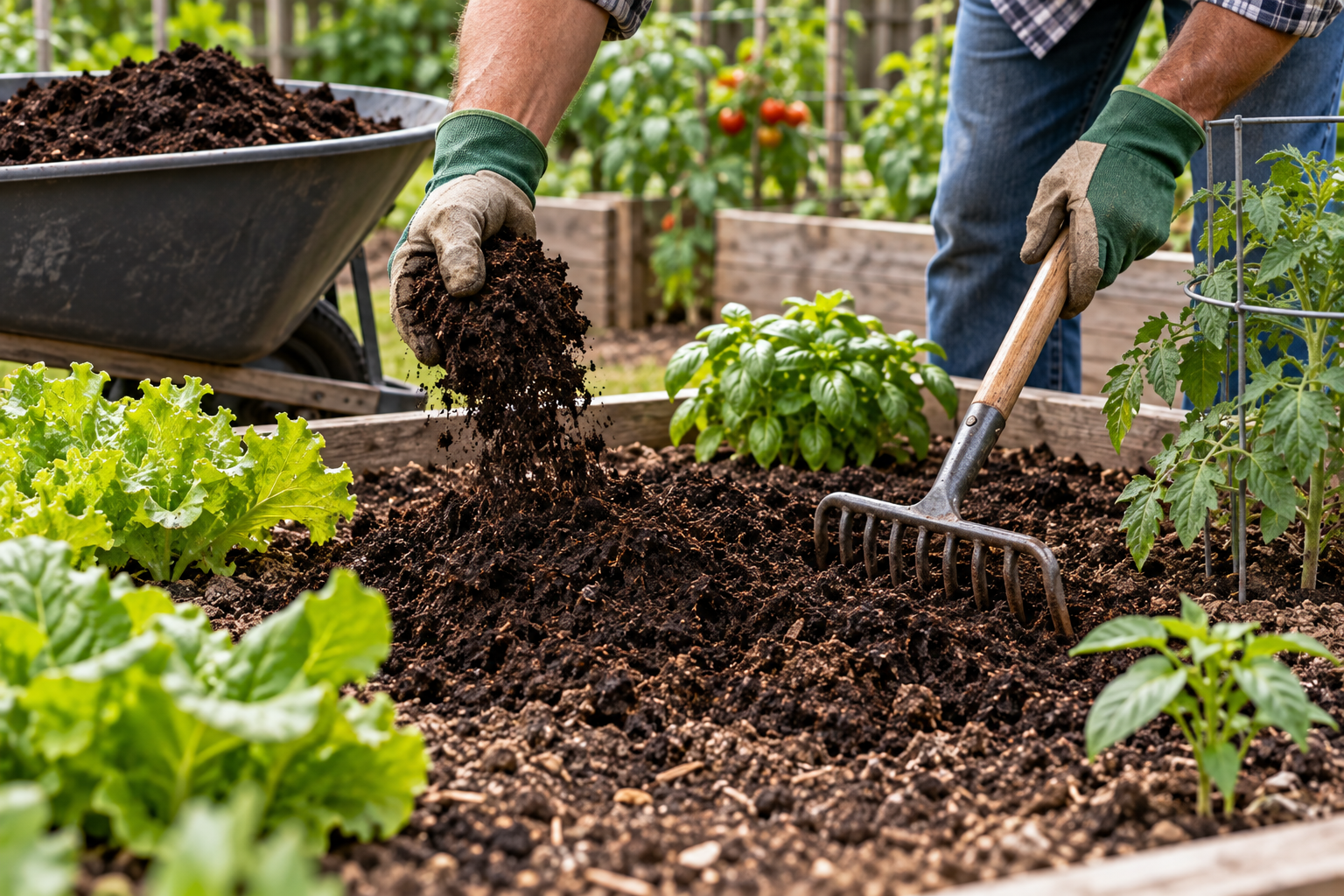
Before planting, spread compost across the top of the bed and gently mix it into the upper soil.
You can also add compost between growing seasons.
If you’re preparing a bed for another crop, remove old plant material, add finished compost, mix it into the existing soil, and you’re ready to start again.
What About a Brand-New Raised Bed?
Compost can be an important ingredient when filling a new raised bed, but don’t fill the entire bed with pure compost.
Plants need a suitable growing medium with good structure.
Think of compost as an ingredient in your raised-bed soil, not necessarily the entire recipe.
Your tomatoes don’t need to live inside Mount Compost.
Using Compost in Containers
Container plants can benefit from compost too, but once again, moderation matters.
Containers have limited space and need a growing medium that drains properly while still holding enough moisture for plant roots.
Instead of filling a pot entirely with compost, mix finished compost with your regular container-growing medium.
You can also use compost to refresh containers that have already been planted.
Add a small amount to the surface and gently work it into the top without disturbing the plant’s roots.
Water afterward.
This gives an older container a nice organic-matter boost without completely replacing the potting mix.
Top-Dressing Around Established Plants
You don’t always have to dig compost into the soil.
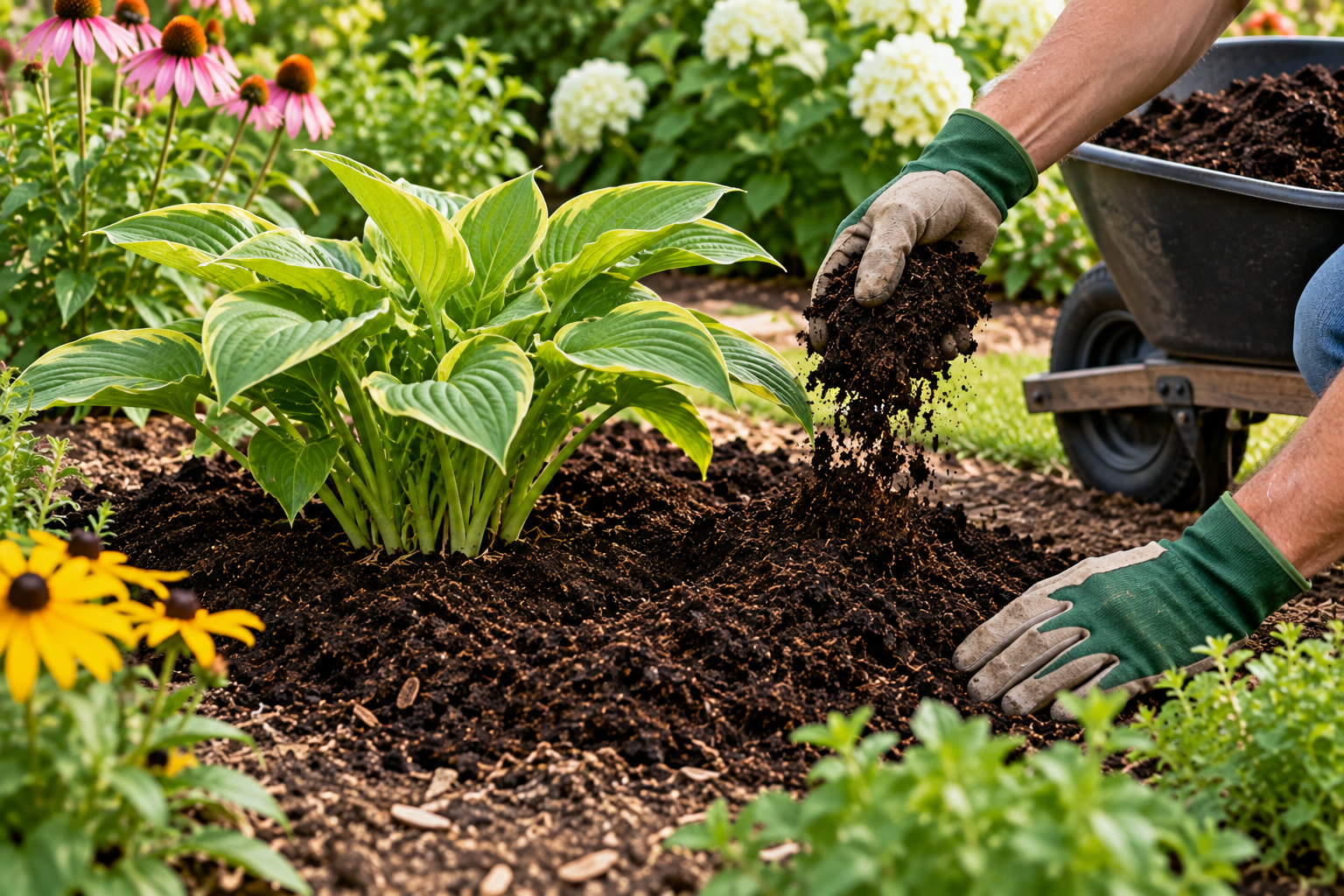
Sometimes you can simply spread it across the surface.
This is called top-dressing.
Apply compost around established vegetables, flowers, herbs, shrubs, or other plants and let water, soil organisms, and normal garden activity gradually carry its benefits downward.
Keep compost slightly away from direct contact with plant stems.
More isn’t automatically better.
A modest application around the plant is plenty.
Using Compost Around Trees and Shrubs
Trees and shrubs can also benefit from finished compost.
Spread it around the root area rather than piling it directly against the trunk.
That’s important.
You want compost around the tree, not a compost volcano climbing up the bark.
Apply it across the soil surface where feeder roots can benefit, then water if conditions are dry.
The same approach works around established shrubs.
Using Compost When Planting
Planting vegetables, flowers, shrubs, or other garden plants?
Finished compost can be incorporated into the surrounding garden soil before planting.
Mixing compost with the existing soil adds organic matter to the planting area while allowing the new plant’s roots to grow into the surrounding native soil.
Again, resist the temptation to make compost the only material surrounding the roots.
You’re improving the soil, not building the plant its own private compost apartment.
Using Compost as Mulch
Finished or somewhat coarse compost can also be spread across the soil surface.
This can help:
- Reduce moisture loss
- Protect exposed soil
- Moderate soil conditions
- Add organic matter as it continues breaking down
Over time, worms, microorganisms, rainfall, and irrigation help incorporate that organic material into the soil.
This is one of the easiest approaches because there’s very little work involved.
Spread it.
Leave it.
Let biology clock in for the day.
Can You Use Compost on Your Lawn?
Yes.
Finished, screened compost can be applied lightly across a lawn as a top-dressing.
The key word is lightly.
You don’t want to bury the grass.
Spread a thin amount across the lawn so the grass blades remain exposed. The compost gradually settles down toward the soil surface.
Screening the compost first makes this much easier because large sticks and unfinished materials won’t be scattered across the lawn.

Should You Screen Finished Compost?
You don’t have to.
For vegetable beds, flower gardens, trees, and shrubs, a few small pieces of unfinished organic material aren’t usually a concern.
But screening is useful when you want a finer product.
It’s particularly handy for:
- Containers
- Seed-starting applications
- Lawn top-dressing
- Areas where appearance matters
Anything too large to pass through the screen goes right back into the active compost pile.
Nothing wasted.
Nothing complicated.
When Should You Add Compost?
There isn’t one single compost day circled on the gardening calendar.
You can use finished compost at several useful times.
Before planting: Mix it into garden or raised-bed soil.
During the growing season: Top-dress around established plants.
Between crops: Refresh vegetable beds before replanting.
At the end of the season: Add organic matter after clearing the garden.
If you’ve got finished compost and soil that could use improvement, chances are pretty good you can find somewhere useful to put it.
Don’t Assume More Is Better
This is worth remembering.
Compost is wonderful stuff.
That doesn’t mean every plant needs to be buried in it.
Use compost as part of your overall soil-management strategy. You’re adding organic matter and supporting healthy soil conditions over time.
One application isn’t supposed to transform poor soil overnight.
The real benefit comes from repeatedly returning organic matter to the soil year after year.
Don't Forget Where It Came From

This may be my favorite part of composting.
Take a handful of finished compost and think about what you’re holding.
Coffee grounds.
Banana peels.
Dry leaves.
Cardboard boxes.
Vegetable scraps.
Grass clippings.
Garden trimmings.
Things that once seemed completely unrelated have been transformed into one dark, crumbly material that can go right back into your garden.
And then the garden produces more vegetables.
Those vegetables return more scraps to the compost pile.
Which creates more compost.
Which goes back into the garden.
Suddenly, the trash can isn’t getting nearly as much business.
From Scraps to Soil
Making compost is satisfying.
Using it is even better.
Add it to your vegetable garden.
Refresh your raised beds.
Mix some into container-growing media.
Top-dress established plants.
Spread it around trees and shrubs.
Give the lawn a light application.
You spent months helping nature turn waste into something useful.
Now put that compost where it belongs.
Back in the soil, getting ready to help grow whatever comes next. 🌱🥕🍅
Ready to Grow More with Less Work?
Composting Made Easy expands on each of these topics with clear, step-by-step guidance designed specifically for beginners. From choosing the right composting method and knowing what to add to balancing greens and browns, managing moisture, avoiding common problems, and knowing when your compost is ready, the book provides practical instruction to help you turn everyday scraps and yard waste into rich, healthy compost with confidence. 🌱

More Composting Articles
If you found this article helpful, these beginner guides are a great next step:
Get Your FREE Backyard Starter Toolkit
Download our free Backyard Starter Toolkit, packed with printable planners, checklists, and beginner resources to help you build, grow, raise, and thrive.
About the Author
Steve McChesney is the founder of Backyard Living Books and has spent decades helping homeowners build, grow, raise, and preserve more from their own backyards. Through practical, beginner-friendly guides, he encourages people to tackle one backyard project at a time and enjoy the satisfaction that comes with learning new skills.