
Backyard Learning Center
Learn practical backyard skills one project at a time through beginner-friendly articles, seasonal tips, and step-by-step guides that help you build, grow, raise, and thrive.
Raising Quail for Beginners
What You Need to Know Before You Start
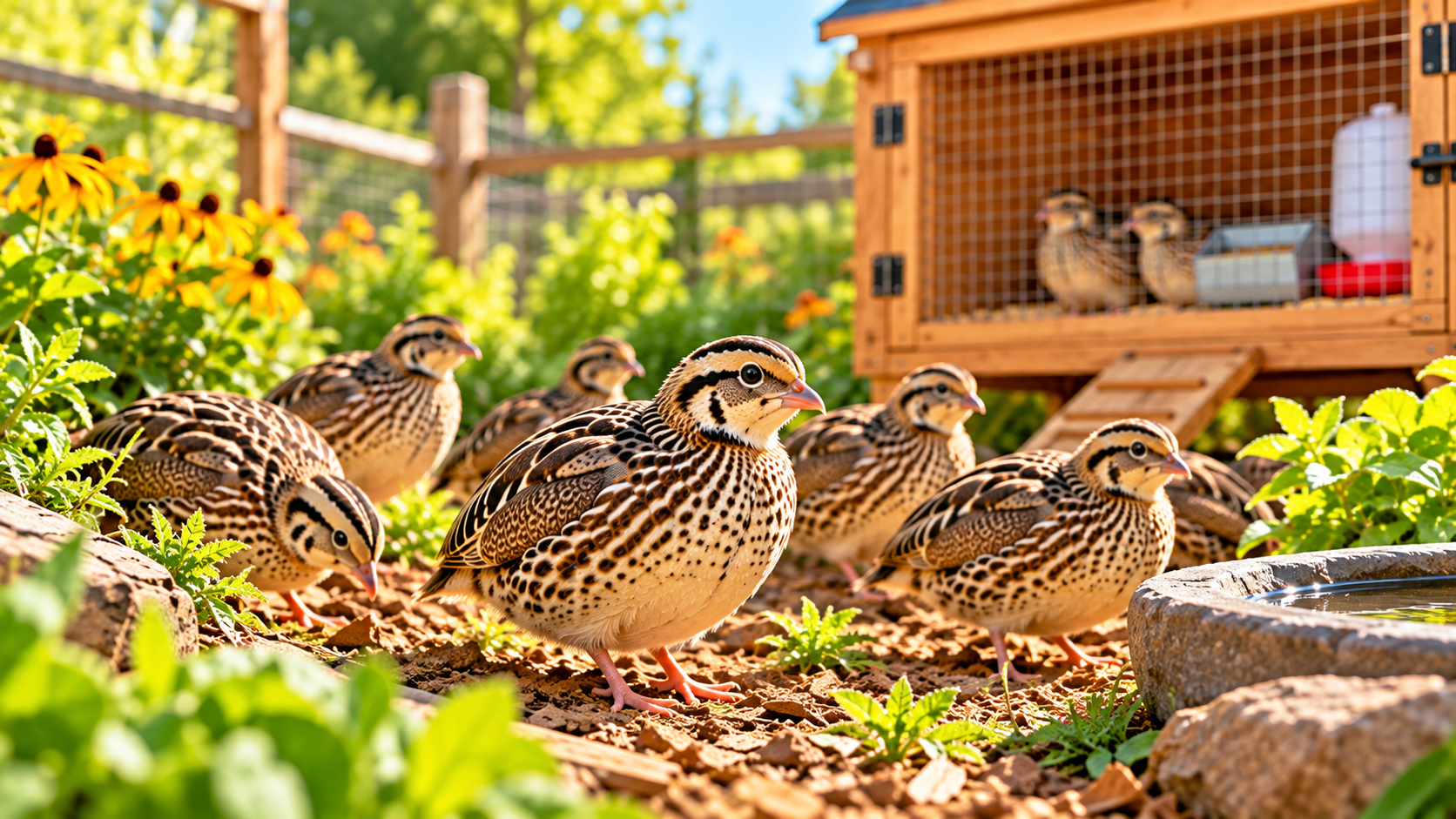
Backyard chickens get most of the attention.
They wander around the yard, appear on feed-store signs, and have somehow convinced half the country that fresh eggs require a chicken coop.
But there’s another little bird quietly making a case for itself.
The Coturnix quail.
Quail are small, mature quickly, require relatively little space, and can provide a steady supply of eggs. For someone with a smaller backyard, limited space, or simply an interest in raising something besides chickens, they can be an excellent choice.
But before you order your first chicks or load an incubator with eggs, there are a few things you should know.
Quail aren’t miniature chickens.
They have their own housing requirements, behaviors, feeding needs, and peculiar little habits.
Here’s what to expect before you get started.
Why Raise Quail?
People raise quail for several reasons.
Some want fresh eggs.
Others raise them for meat.
Some maintain breeding flocks and hatch their own chicks.
And plenty of people simply enjoy keeping them.
For beginners, one of the biggest attractions is their size.
You don’t necessarily need a large property or elaborate barn. A properly designed quail enclosure can fit into spaces where keeping a flock of full-sized chickens wouldn’t be practical.
They’re also remarkably productive for such small birds.

Coturnix quail mature quickly, and females can begin laying eggs at a surprisingly young age.
Those eggs are small, beautifully speckled, and perfectly edible.
You’ll need several quail eggs to equal a chicken egg, of course.
Nobody ever accused a quail of overdoing portion size.
Start With Coturnix Quail
There are several types of quail, but for someone interested in backyard egg or meat production, Coturnix quail are generally the place to start.
They’re popular because they’re:
- Small
- Fast-growing
- Productive egg layers
- Relatively straightforward to raise
- Well suited to managed backyard housing
You’ll also encounter Bobwhite, Gambel’s, and other quail species, but they aren’t necessarily interchangeable when it comes to management or purpose.
For your first flock, knowing exactly what type of quail you’re getting matters.
Quail Don't Need Much Space, But They Need the Right Space
Here’s where quail become particularly interesting for backyard keepers.
They’re compact.
You can house a small flock in a properly designed enclosure without dedicating a huge section of your property to them.
But small doesn’t mean you can simply put several birds into a tiny box.
Quail still need enough room to:
- Eat and drink comfortably
- Rest
- Move around
- Get away from aggressive birds
- Stay clean and dry
Overcrowding can contribute to stress, feather picking, injuries, and other problems.
Your housing should also provide good ventilation without exposing the birds to harsh drafts or weather.
Quail Have One Very Important Habit
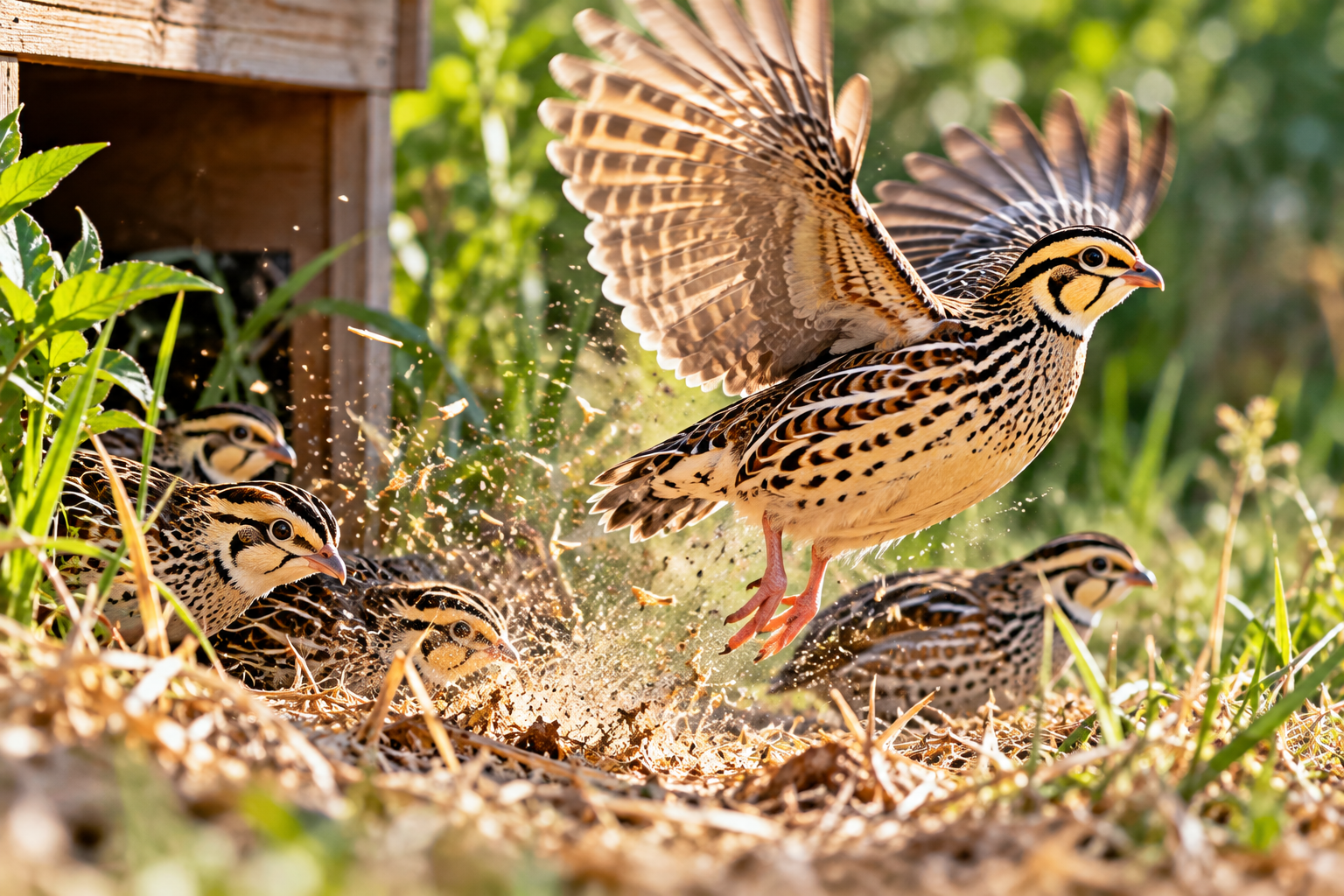
Startle a chicken and it will probably run.
Startle a quail and you may discover that gravity has temporarily become optional.
Quail can launch themselves almost straight upward when frightened.
This behavior is sometimes called flushing.
That’s important when designing housing.
A poorly designed enclosure can allow a frightened quail to hit its head or escape when the enclosure is opened.
Your housing design needs to account for this behavior from the beginning.
It’s one of those details that’s much easier to plan for before you own quail than discover while chasing one across the backyard.
Ground Pen or Raised Cage?
One of the first housing decisions you’ll make is whether to keep your quail in a ground pen or a raised cage or hutch.
Both approaches can work.
Ground Pens
Ground pens allow quail to live closer to a natural environment.
Depending on the design, you can provide areas for scratching, hiding, and dust bathing.
The tradeoff is that ground housing requires careful attention to predators, moisture, sanitation, and parasites.
Raised Housing
Raised cages or hutches can make cleaning, egg collection, and general management easier.
They can also keep birds separated from wet or contaminated ground.
The right choice depends on your available space, climate, management preferences, and what you want from your flock.
There’s no universal quail mansion.
There’s simply the system that works best for you and your birds.
Predator Protection Is Essential
Quail are small.
Unfortunately, plenty of other animals have noticed.
Raccoons, snakes, rats, cats, dogs, hawks, and other predators may see your flock very differently than you do.
That means predator protection isn’t an optional upgrade.
Your enclosure needs to be secure.
Check:
- Doors
- Latches
- Wire openings
- Corners
- Roof areas
- Ground-level access
- Any small gaps around the enclosure
If you’re using a ground pen, protection against animals digging underneath deserves special attention.
A gap that looks insignificant to you may look suspiciously like a front door to something considerably smaller.
Quail Need Proper Feed
Quail grow quickly and have nutritional requirements that aren’t identical to chickens.
Don’t assume whatever poultry feed happens to be sitting in the garage is automatically appropriate.
Young quail require a suitable high-protein feed to support rapid growth. Nutritional needs change as the birds mature and depending on whether you’re raising them for eggs, meat, or breeding.
Clean water should always be available.
And because quail are small, feeders and waterers need to be appropriate for their size.
A system that works perfectly for full-sized chickens may be completely impractical for tiny quail chicks.
Quail Chicks Are Tiny
You may understand intellectually that baby quail are small.
Then you see one.
They’re really small.
If you’re starting with newly hatched chicks, you’ll need a properly prepared brooder with:
- Safe supplemental heat
- Appropriate bedding or flooring
- Chick-sized feeders
- Safe waterers
- Suitable starter feed
- Protection from drafts
Because of their size, details matter.
Water containers that seem harmless can create problems for tiny chicks, and openings you wouldn’t think twice about with chickens may become escape routes.
Set up the brooder before the chicks arrive.
Trying to assemble one while several tiny birds are waiting for accommodations adds an unnecessary degree of excitement.
You Don't Need a Male for Eggs
Female quail don’t need a male to produce eggs.
If you’re raising quail strictly for eating eggs, an all-female group can work perfectly well.
You need males only if you want fertile eggs for hatching.
If you decide to breed your quail, you’ll need to manage the ratio of males to females carefully.
Too many males can create excessive mating pressure, aggression, feather damage, and injuries among the females.
More males do not equal more productivity.
Sometimes they simply equal more problems.
Egg Production Can Be Impressive
One of the great attractions of Coturnix quail is how quickly they mature.
Instead of waiting many months for your first eggs, females can begin producing at a relatively young age.
Several factors can affect laying, including:
- Age
- Nutrition
- Lighting
- Stress
- Temperature
- Health
- Housing conditions
If production suddenly drops, don’t automatically assume something is wrong with the birds.
Look at their environment and management too.
Quail aren’t vending machines with feathers.

Quail Can Be Messy
Small bird.
Small egg.
Small feed bill.
Surely that means small mess?
Not exactly.
A flock of quail produces manure every day, scatters feed, sheds feathers, and manages to remind you that livestock remains livestock regardless of size.
Your housing design should make cleaning easy.
Think about this before building or buying an enclosure.
Ask yourself:
Can I reach every area?
Can I remove manure easily?
Can I clean the feeders and waterers?
Can I collect eggs without dismantling half the enclosure?
A housing system that’s convenient to maintain is much more likely to stay clean.
Check Your Local Rules
Before buying birds, check your local regulations.
Don’t assume that because quail are small, they’re automatically permitted everywhere.
Rules can vary by location and may address poultry, game birds, livestock, enclosure placement, flock size, or other requirements.
If you live in a community with an HOA, check those rules too.
This is one of the least exciting parts of raising quail.
It’s also considerably more exciting than discovering the rules after you’ve built the enclosure and purchased 20 birds.
How Many Quail Should a Beginner Start With?
You don’t need dozens of birds to learn how to raise quail.
Starting with a manageable flock gives you time to understand feeding, cleaning, egg collection, behavior, and daily care before expanding.
And expansion can happen surprisingly easily.
Once you own an incubator and start hatching fertile eggs, quail arithmetic begins developing some interesting characteristics.
Twelve eggs become chicks.
Those chicks mature.
Then you collect more fertile eggs.
Then somebody buys a second incubator.
You can probably see where this is headed.
What Does Daily Quail Care Look Like?
Once your housing is established, routine quail care doesn’t need to consume your entire day.
Your regular responsibilities include:
- Providing fresh feed
- Checking clean water
- Collecting eggs
- Watching for injuries or unusual behavior
- Checking the enclosure for security problems
- Cleaning as needed
- Watching temperature and weather conditions
One of the best habits you can develop is simply observing your birds.
You’ll become familiar with what normal looks like.
When something changes, you’re much more likely to notice it early.
Watching quail dust bathe can initially look as though something has gone terribly wrong.
There’s kicking.
There’s flapping.
There’s dirt flying everywhere.
Then the bird gets up and walks away looking perfectly pleased with itself.
Completely normal.
Are Quail Right for You?
Quail can be a great choice if you want productive backyard poultry but don’t have the room or desire for a traditional chicken flock.
They’re compact.
They’re productive.
They’re fascinating to watch.
And once you’ve got the housing and routine established, they’re very manageable.
But they’re still animals that depend on you.
Before getting started, make sure you’re prepared to provide secure housing, appropriate nutrition, clean water, sanitation, predator protection, and daily attention.
Get those basics right and you’re well on your way.
Because raising quail isn’t particularly complicated.
It’s mostly a matter of understanding what these little birds need and setting things up properly before the first one arrives.
Do that, and one day you may find yourself standing in the backyard collecting tiny speckled eggs and wondering why chickens have such a good public-relations department.
Small birds. Small spaces. Surprisingly big possibilities. 🐦🥚
Ready to Raise Quail with Confidence?
Backyard Quail Raising Made Easy expands on each of these topics with clear, step-by-step guidance designed specifically for beginners. From choosing the right quail and setting up safe, comfortable housing to feeding your flock, hatching eggs, raising chicks, and understanding egg production, the book provides practical instruction to help you build a healthy, productive backyard quail flock with confidence. 


More Quail Articles
If you found this article helpful, these beginner guides are a great next step:
Get Your FREE Backyard Starter Toolkit
Download our free Backyard Starter Toolkit, packed with printable planners, checklists, and beginner resources to help you build, grow, raise, and thrive.
About the Author
Steve McChesney is the founder of Backyard Living Books and has spent decades helping homeowners build, grow, raise, and preserve more from their own backyards. Through practical, beginner-friendly guides, he encourages people to tackle one backyard project at a time and enjoy the satisfaction that comes with learning new skills.