
Backyard Learning Center
Learn practical backyard skills one project at a time through beginner-friendly articles, seasonal tips, and step-by-step guides that help you build, grow, raise, and thrive.
Quail Eggs 101
When They Start Laying and What to Expect
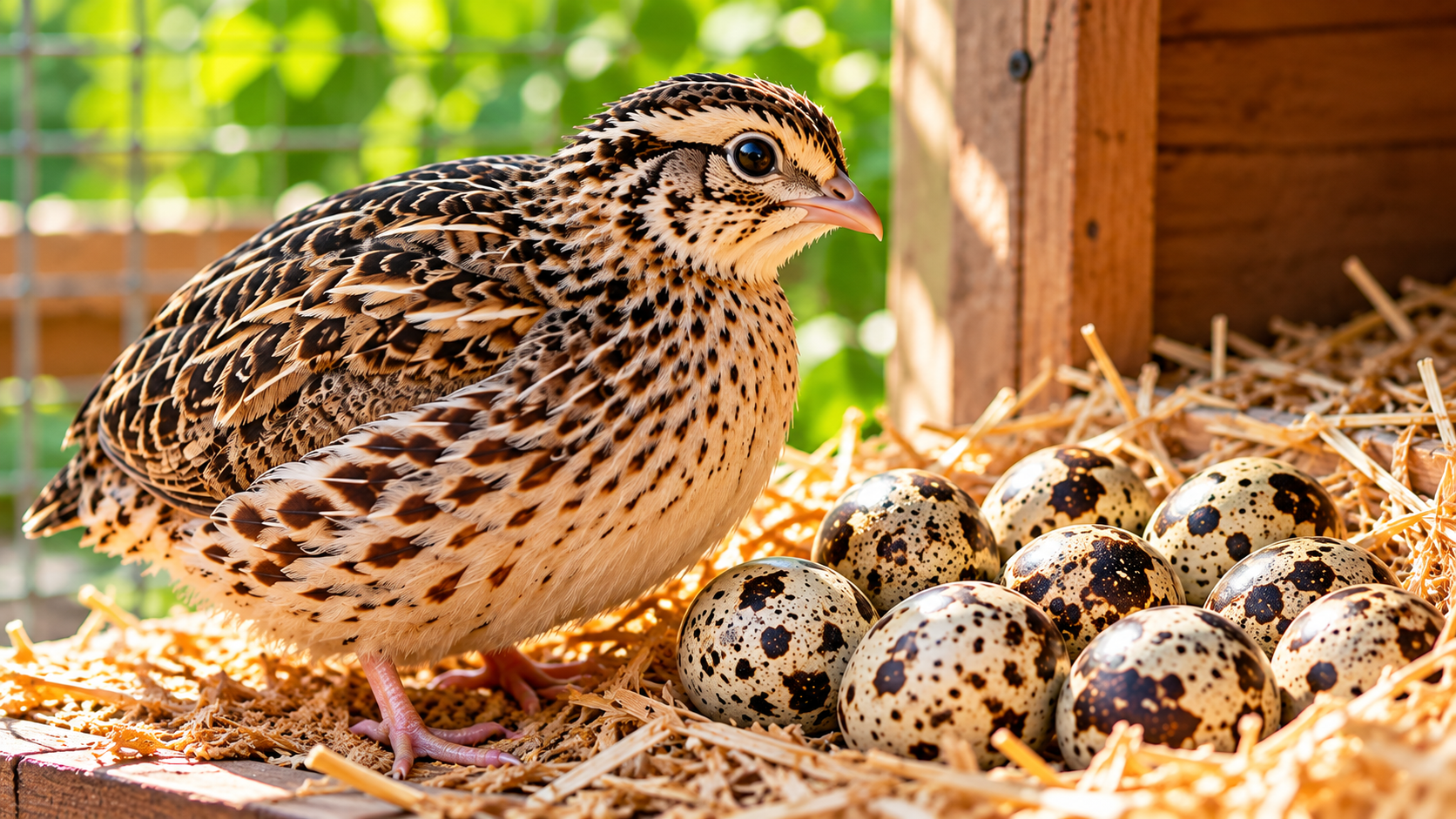
One of the most enjoyable moments in raising quail happens when you walk out to the enclosure and spot something new.
A tiny speckled egg.
Then another.
And before long, you may be collecting them every day.
For such small birds, Coturnix quail can be remarkably productive egg producers. Better yet, you generally don’t have to wait very long for the first egg to appear.
But when should laying begin? How many eggs can you expect? Why does production sometimes drop? And what do you do with eggs that look a little unusual?
Let’s crack into it.
When Do Coturnix Quail Start Laying?
One of the biggest advantages of Coturnix quail is how quickly they mature.
Many females begin laying at around six to eight weeks of age, although individual birds can start earlier or later.
Compare that with chickens, which usually require several months before producing their first eggs, and you begin to understand why quail are so popular with people interested in backyard egg production.
Your birds may still look surprisingly small when the first eggs arrive.
Apparently, nobody told the quail they’re supposed to wait.
What Does the First Egg Look Like?
Don’t be surprised if the first eggs aren’t perfect.
Young females are just beginning their egg-producing careers, and early eggs can occasionally be:
- Smaller than normal
- Oddly shaped
- Thin-shelled
- Unusually colored
- Missing the typical speckled appearance
Production may also be inconsistent at first.
One egg today doesn’t necessarily mean you’ll find another tomorrow.
Give the young hens some time to settle into regular production.
What Do Quail Eggs Look Like?
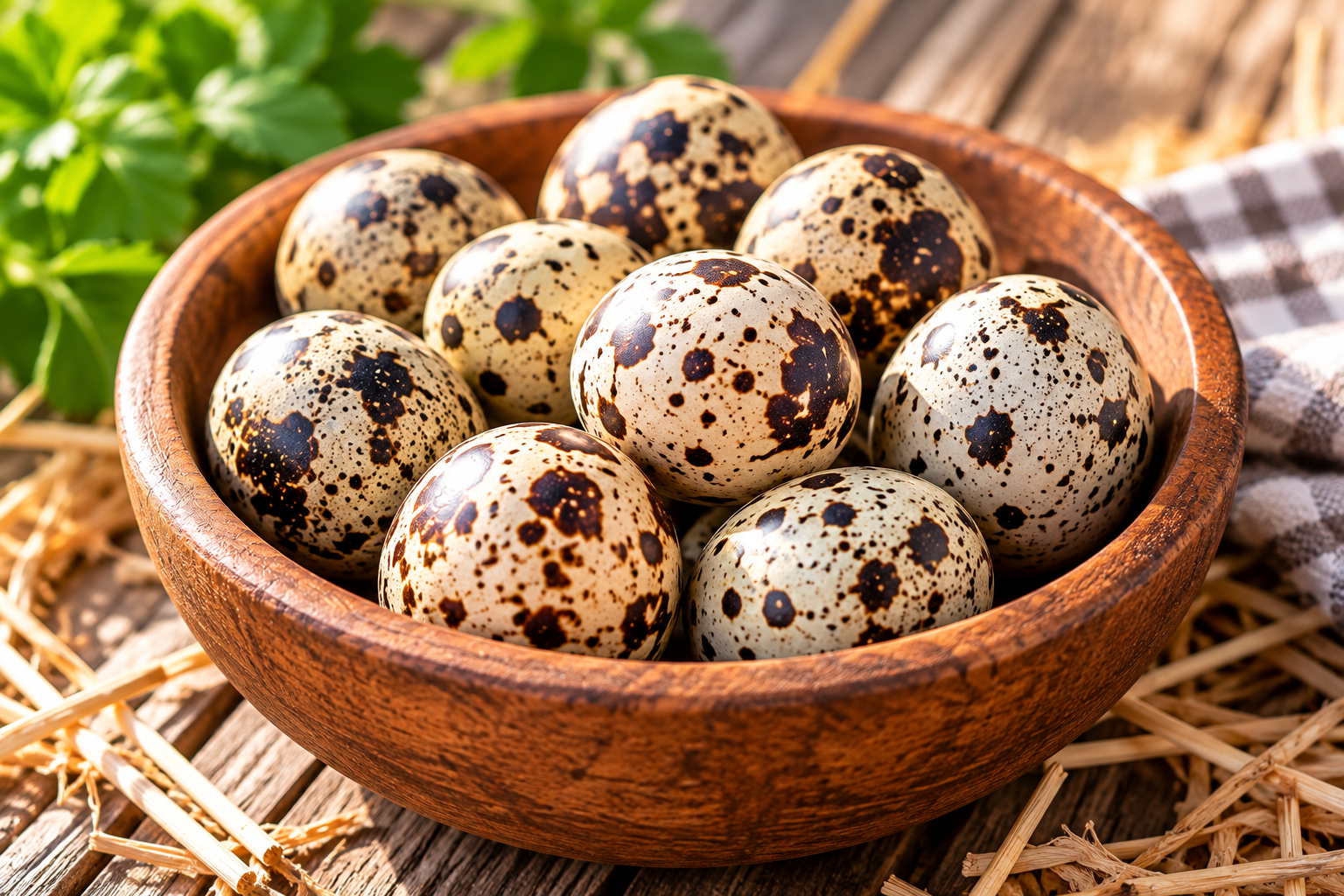
Coturnix quail eggs are one of the charming bonuses of raising these birds.
Most are cream or light-colored with brown or dark speckles and blotches.
But don’t expect every egg to look identical.
Patterns can vary considerably between hens.
Some eggs may have heavy markings.
Others may have delicate speckles.
Occasionally, you may get an egg with very little pattern at all.
After you’ve collected eggs from the same flock for a while, you may even begin recognizing which hen produced certain eggs based on their appearance.
It’s a tiny backyard version of signature artwork.
How Often Do Quail Lay?
Under good conditions, healthy Coturnix females can be prolific producers.
A productive hen may lay an egg on many days, although production varies among individual birds and throughout the year.
Don’t assume every female will produce exactly one egg every 24 hours.
Egg production is influenced by several factors, including:
- Age
- Nutrition
- Light
- Temperature
- Stress
- Health
- Housing conditions
Your flock’s output will naturally vary.
Look at production over time rather than worrying about one eggless afternoon.
Quail Often Lay Later in the Day
Chicken keepers sometimes become accustomed to collecting eggs earlier in the day.
Quail may have other plans.
Coturnix hens commonly lay later in the day, so don’t assume something is wrong because the enclosure is empty when you check first thing in the morning.
You may return later and discover the day’s little speckled delivery waiting for you.
Once you learn your flock’s routine, egg collection becomes easier.
Do Quail Use Nest Boxes?
Here’s another difference between chickens and quail.
Don’t expect every quail hen to march into a beautiful little nest box, arrange the bedding, produce an egg, and leave it neatly waiting for you.
Quail may simply lay wherever they happen to be.
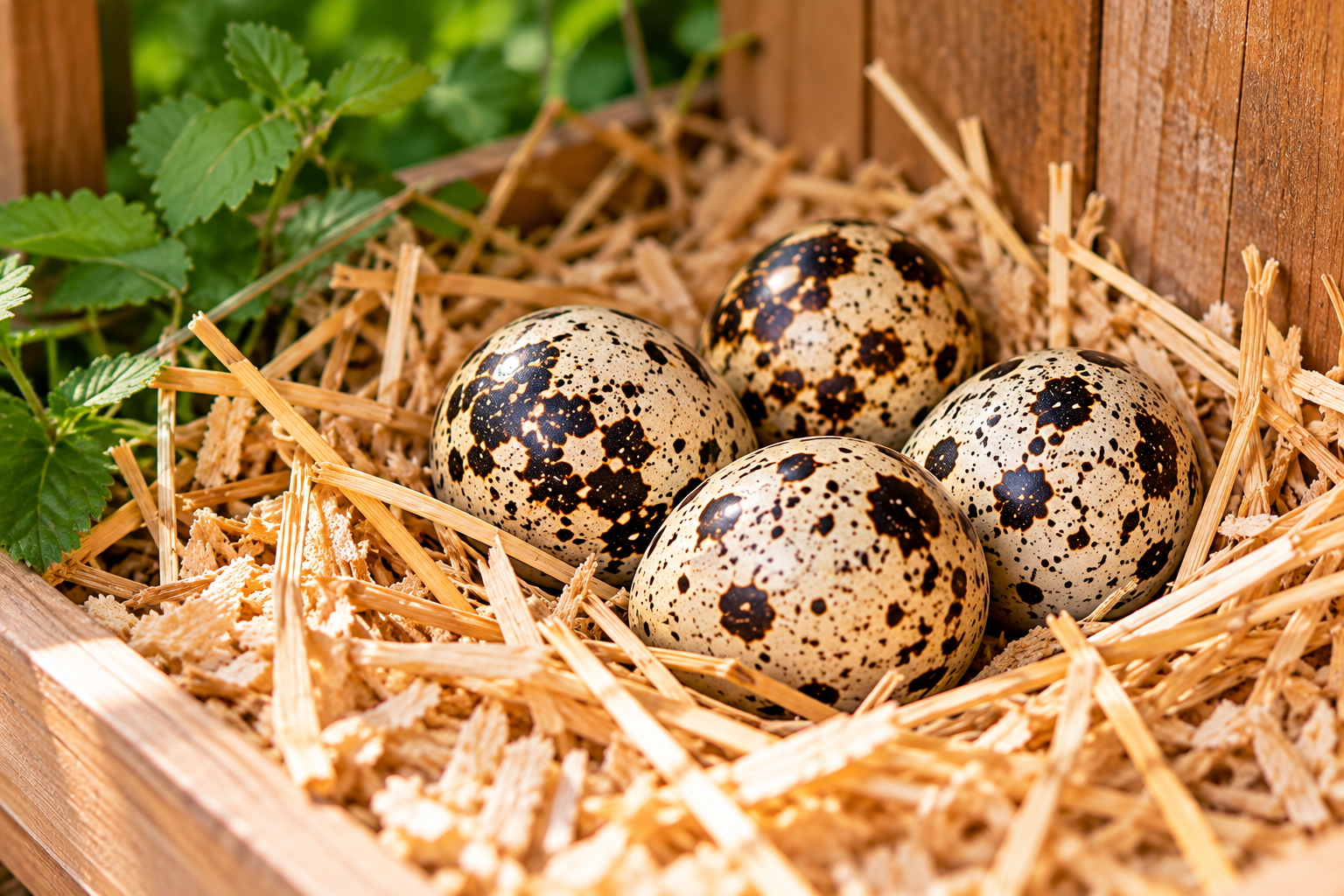
You might find eggs:
- Along the side of the enclosure
- In a sheltered corner
- Near a hiding area
- On the enclosure floor
- In a dust-bathing area
Some hens may favor certain spots, but others seem to operate under a simpler policy:
Egg ready. Egg goes here.
If you’re using a cage designed for egg production, a slightly sloped floor can allow eggs to roll gently toward a collection area.
That can make gathering eggs considerably easier.
Do You Need a Male Quail to Get Eggs?
No.
This is one of the most common beginner questions.
Female quail lay eggs whether or not a male is present.
If your goal is simply producing eggs for your kitchen, you don’t need males.
You need a male only if you want the eggs to be fertile so they can potentially be incubated and hatched.
This can simplify a backyard egg flock because you can keep a group of females without dealing with breeding behavior.
What If You Want Fertile Eggs?
If you plan to hatch your own chicks, you’ll need at least one healthy male with your females.
But more males aren’t necessarily better.
Too many males can result in excessive breeding pressure, feather damage, stress, fighting, and injuries.
A breeding flock needs an appropriate balance between males and females.
Once you’ve established breeding groups, collect clean, properly formed eggs for incubation and handle them carefully.
And then prepare yourself.
Because owning an incubator can turn “I’ll hatch a few quail” into an entirely different hobby.
Quail arithmetic works quickly.
Why Did My Quail Stop Laying?
When egg production suddenly declines, start by checking the basics.
Light
Day length plays an important role in egg production.
Shorter daylight hours can reduce laying.
Some keepers use supplemental lighting to maintain production, but birds still need a regular period of darkness and rest.
Nutrition
Egg production requires considerable nutritional resources.
Make sure your laying birds are receiving an appropriate complete feed and adequate calcium.
Poor nutrition can reduce production and contribute to shell problems.
Water
Never underestimate water.
If hens don’t have reliable access to clean drinking water, egg production can suffer quickly.
Check waterers every day, especially during hot weather.
Stress
Quail can respond to environmental stress by reducing production.
Possible sources include:
- Predator activity
- Excessive handling
- Overcrowding
- Aggressive birds
- Sudden housing changes
- Extreme temperatures
- Frequent disturbances
If production drops, look at what has recently changed.
Age
Quail don’t maintain peak production forever.
As hens get older, egg production naturally declines.
That’s normal and should be considered when planning a flock primarily for egg production.
What Causes Thin or Soft Eggshells?
An occasional unusual egg isn’t necessarily cause for alarm.
Young hens can produce some interesting early attempts.
But repeated thin or soft shells deserve attention.
Check:
- Overall nutrition
- Calcium availability
- Feed quality
- Water
- Stress
- Health
Make sure laying hens are receiving a diet appropriate for egg production.
If several birds begin producing poor-quality shells at the same time, that’s especially good reason to examine your feeding and management.
How Often Should You Collect Quail Eggs?
Collect eggs regularly, preferably every day.
Frequent collection helps keep eggs cleaner and reduces the chance of:
- Cracking
- Contamination
- Birds damaging them
- Eggs being forgotten in the enclosure
Daily collection also gives you useful information about your flock.
If you normally collect ten or twelve eggs and suddenly find three, something has changed.
Egg collection becomes a simple flock-management tool.
And it’s considerably more enjoyable than most recordkeeping.
Should You Wash Quail Eggs?
Fresh eggs naturally have a protective coating on the shell.
For relatively clean eggs, brushing or wiping away small amounts of dry debris may be preferable to immediately washing them.
If an egg does need washing, food-safety practices matter because moisture and improper handling can increase the risk of contamination.
For eggs you’re planning to incubate, avoid using heavily soiled or damaged eggs.
Clean housing goes a long way toward producing cleaner eggs in the first place.
What About Cracked Eggs?
Inspect eggs during collection.
If you find one that’s badly cracked, leaking, or contaminated, don’t treat it the same as an intact clean egg.
Cracks can provide a pathway for bacteria.
The easiest solution is prevention.
Provide suitable flooring, collect eggs regularly, and design the enclosure so eggs aren’t constantly being stepped on or knocked around.
How Many Quail Eggs Equal One Chicken Egg?

Quail eggs are considerably smaller than chicken eggs.
As a general kitchen rule, it takes several quail eggs to replace one large chicken egg, with the exact number depending on the size of both.
That can make breakfast preparation interesting.
Cracking two chicken eggs?
Done.
Cracking a dozen quail eggs?
You may want coffee first.
Fortunately, there are inexpensive quail egg scissors that make opening the shells much easier.
Can You Eat Quail Eggs Just Like Chicken Eggs?
Yes.
Quail eggs can be:
- Fried
- Boiled
- Scrambled
- Pickled
- Baked
- Added to salads
- Used in recipes
Their small size also makes them great for appetizers and individual servings.
Treat them with the same sensible food-safety practices you’d use with other eggs.
Keep Simple Egg Records
If you’re raising quail primarily for eggs, keeping basic records can be surprisingly useful.
Record the number of eggs collected each day or week.
Over time, you’ll begin seeing patterns.
You may notice seasonal changes, declining production in older hens, or a sudden drop that points toward a management issue.
You don’t need complicated software.
A notebook, calendar, or simple egg collection tracker works perfectly well.
Your First Egg Is Just the Beginning
That first tiny speckled egg is a milestone.
It means those little chicks you were carefully watching just weeks ago have reached an entirely new stage.
Soon, instead of wondering when the first egg will appear, you may be wondering what you’re going to do with all the eggs you’re collecting.
That’s a pretty nice problem to have.
Give your hens good nutrition, clean water, secure housing, adequate light, and a low-stress environment, then keep an eye on what their eggs are telling you.
And don’t be surprised if collecting them becomes one of your favorite daily chores.
They’re tiny, they’re speckled, and your quail somehow managed to put breakfast in a package barely bigger than a grape. 🐦🥚🍳
Ready to Raise Quail with Confidence?
Backyard Quail Raising Made Easy expands on each of these topics with clear, step-by-step guidance designed specifically for beginners. From choosing the right quail and setting up safe, comfortable housing to feeding your flock, hatching eggs, raising chicks, and understanding egg production, the book provides practical instruction to help you build a healthy, productive backyard quail flock with confidence. 


More Quail Articles
If you found this article helpful, these beginner guides are a great next step:
Get Your FREE Backyard Starter Toolkit
Download our free Backyard Starter Toolkit, packed with printable planners, checklists, and beginner resources to help you build, grow, raise, and thrive.
About the Author
Steve McChesney is the founder of Backyard Living Books and has spent decades helping homeowners build, grow, raise, and preserve more from their own backyards. Through practical, beginner-friendly guides, he encourages people to tackle one backyard project at a time and enjoy the satisfaction that comes with learning new skills.