Backyard Learning Center
Learn practical backyard skills one project at a time through beginner-friendly articles, seasonal tips, and step-by-step guides that help you build, grow, raise, and thrive.
Quail Housing Made Simple
Ground Pens, Hutches, and Cages Compared

Quail don’t need a barn.
They don’t need a sprawling chicken coop.
And they certainly don’t need a miniature farmhouse with curtains and a tiny front porch, although somewhere on the internet, someone has probably built one.
What quail do need is housing that keeps them safe, dry, comfortable, and protected from predators.
For most backyard quail keepers, the housing decision comes down to three basic choices:
Ground pens, raised hutches, or cages.
Each can work well.
The best choice depends on your space, climate, flock size, and how much cleaning and maintenance you want to do.
Let’s compare them.
Option #1: Ground Pens
A ground pen keeps quail at ground level in an enclosed area.
For people who want their birds living in a more natural setting, this option has plenty of appeal.
Quail can scratch, explore, dust bathe, and interact with the soil beneath their feet.
A ground pen can also include natural features such as:
- Sand or soil
- Grasses
- Small shelters
- Hiding areas
- Branches
- Dust-bathing areas
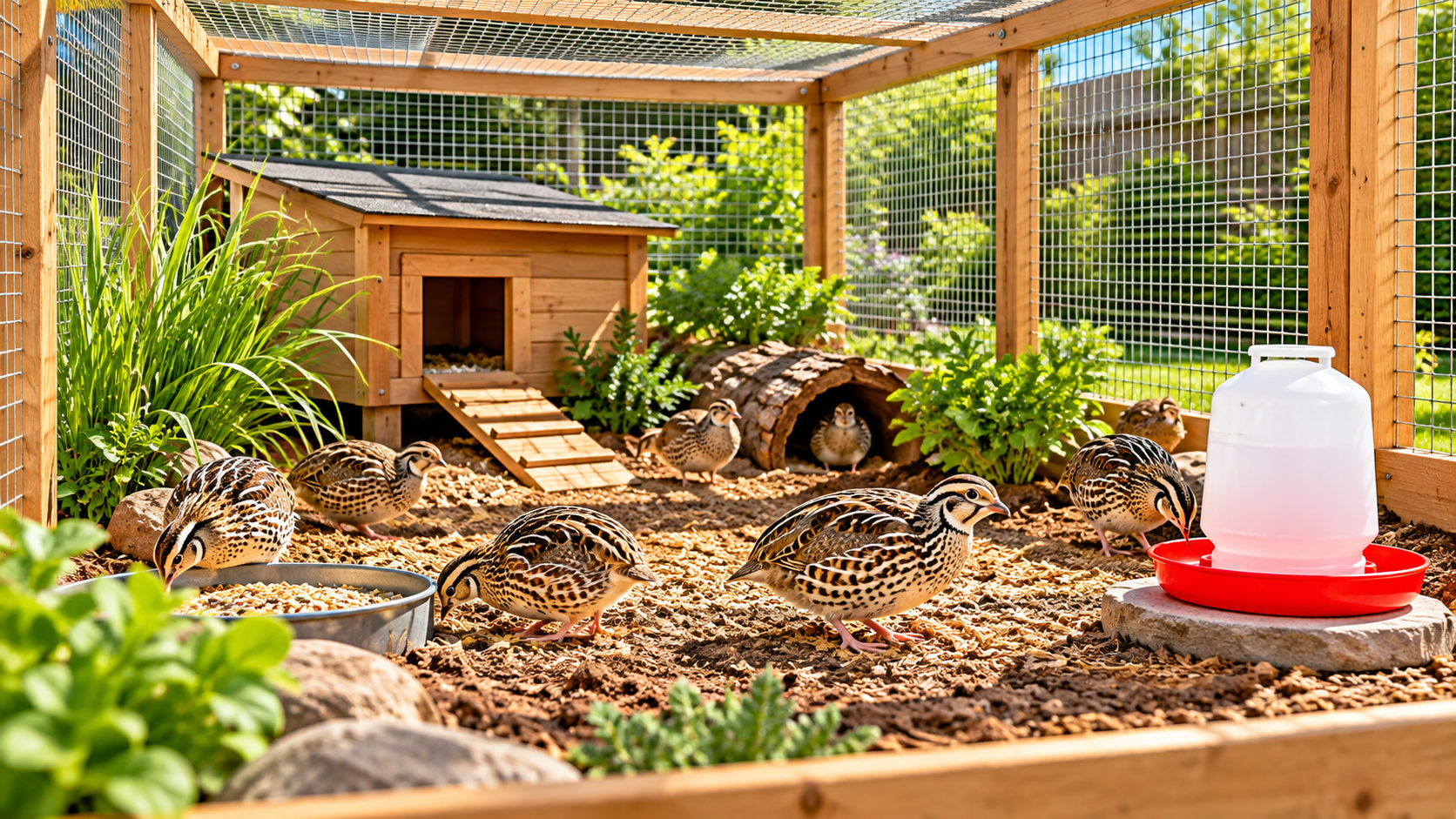
It can create a very interesting environment for the birds.
But there’s a tradeoff.
When your quail live on the ground, you’re also dealing with everything else that lives, crawls, digs, rains, or grows there.
Advantages of Ground Pens
Ground pens can provide:
- More natural surroundings
- Plenty of opportunity for enrichment
- Room for birds to explore
- Easy incorporation of hiding places and dust baths
- An attractive backyard setup
For someone who enjoys watching quail behave more naturally, a well-designed ground pen can be an excellent choice.
Disadvantages of Ground Pens
Ground housing requires more attention to:
- Predators
- Drainage
- Parasites
- Mud
- Manure buildup
- Rodents
- Weather
A poorly drained pen can quickly become a mess after heavy rain.
And because the birds have direct contact with the soil, sanitation requires careful management.
Predator Protection Matters
Quail are small enough to become attractive targets for a surprisingly long guest list.
Depending on where you live, potential predators may include:
- Raccoons
- Snakes
- Rats
- Hawks
- Owls
- Cats
- Dogs
- Foxes
- Other wildlife
A ground enclosure needs protection from above, around the sides, and underneath or along the perimeter.
Don’t assume a predator won’t find a small opening.
If you’ve found the gap, something else probably has too.
Option #2: Raised Hutches
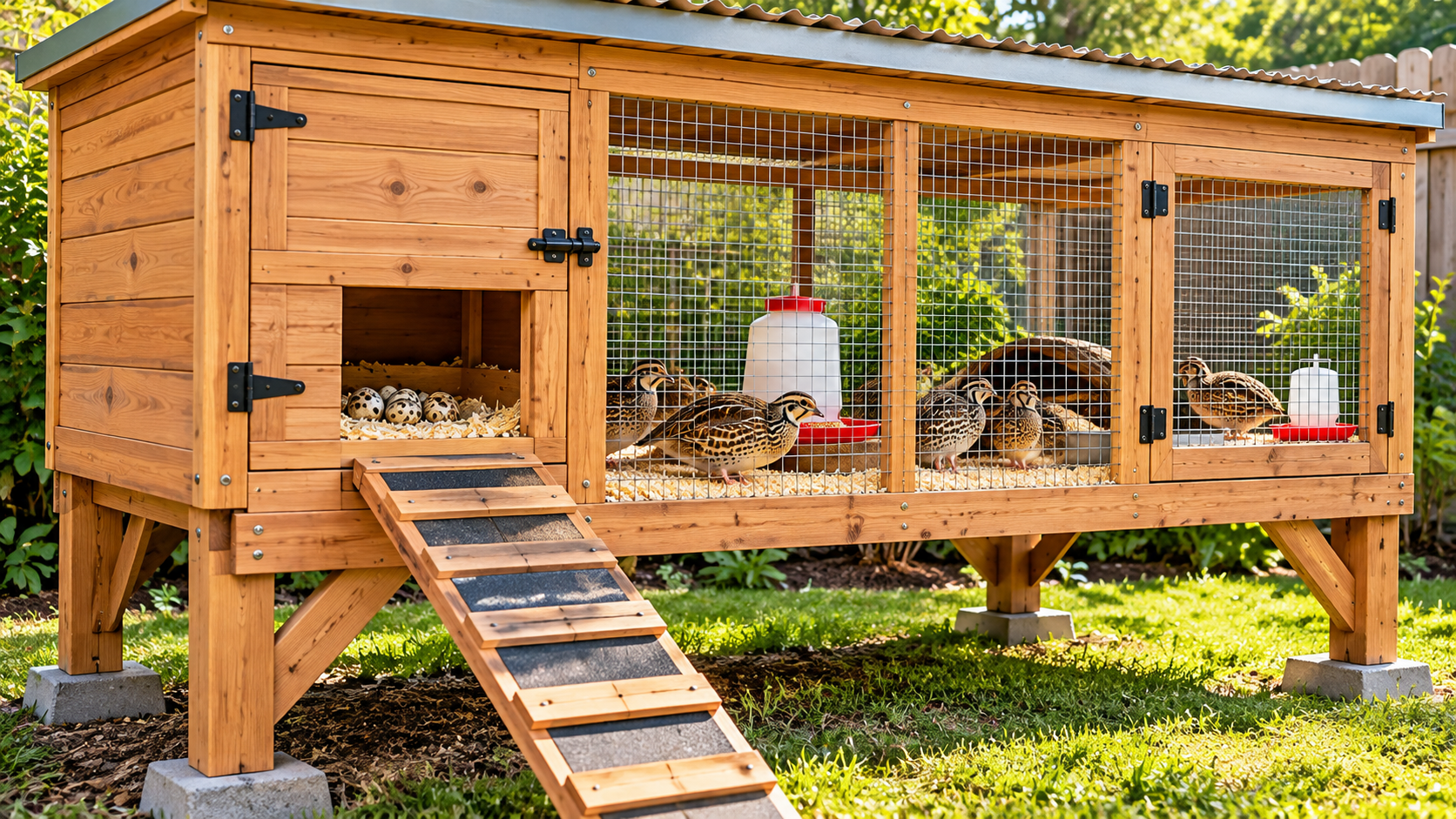
A raised hutch gets the quail off the ground while keeping the flock at a convenient working height.
For many backyard keepers, this offers a nice compromise.
You still have a dedicated enclosure, but you aren’t bending down to ground level every time you feed the birds, clean the enclosure, or collect eggs.
Your knees may vote for this option before you do.
Advantages of Raised Hutches
A raised hutch can make several routine jobs easier:
- Feeding
- Watering
- Egg collection
- Cleaning
- Inspecting birds
- Checking equipment
Getting the birds off the ground can also help reduce some problems associated with wet soil and muddy conditions.
A well-designed hutch can fit neatly against a shed, under a covered area, or in another protected part of the property.
What Should a Good HUTCH Include?
Regardless of its exact design, think about:
Ventilation
Fresh air is important, but the birds still need protection from harsh weather.
Protection from rain and direct sun
Quail need a dry area and adequate shade.
Secure doors and latches
If a raccoon can manipulate the latch, you’ve accidentally installed a puzzle rather than a lock.
Easy access
You should be able to reach the birds, feeders, waterers, and every part of the enclosure.
A cleaning plan
Before building anything, ask yourself:
Where does the manure go?
It’s much better to answer that question while holding a pencil than while holding a scraper.
Option #3: Cages
Cage systems are another common approach, particularly for people focused on efficient egg production, breeding, or maintaining several groups of quail.
They can be individual units or arranged in stackable systems.
The main attraction is efficiency.
A properly designed cage system can provide a lot of control over feeding, watering, breeding groups, egg collection, and sanitation.

Advantages of Cages
Cages can offer:
- Efficient use of space
- Easier cleaning
- Convenient egg collection
- Better control of breeding groups
- Easier observation of individual birds
- Separation of males or aggressive birds
- Protection from wet ground
For someone with limited space, these advantages can be significant.
Disadvantages of Cages
Cages need thoughtful design.
Poorly constructed housing can create problems with:
- Foot health
- Crowding
- Manure management
- Ventilation
- Weather exposure
- Bird injuries
Efficiency shouldn’t come at the expense of the birds’ basic needs.
Give quail adequate room to move and access food and water without constant competition.
What About Stackable Cages?
Stackable cage systems allow several enclosures to occupy a relatively small footprint.
That can be especially useful when maintaining:
- Separate breeding groups
- Different age groups
- Males and females
- Birds being raised for different purposes
But stacking creates another obvious question.
What’s underneath the birds?
Manure trays or another collection system become important because the occupants of the lower cage shouldn’t receive unwanted deliveries from upstairs.
Design the waste system at the same time you design the cages.
Don't Forget About Quail Flushing
No matter which housing system you choose, remember one unusual quail behavior.
When frightened, quail can launch themselves upward very quickly.
This is known as flushing.
Housing should be designed with this behavior in mind.
A bird startled inside an enclosure can injure itself if it strikes a hard ceiling.
Your enclosure also needs to make accidental escapes less likely when doors are opened.
A quail that shoots past your shoulder can turn routine feeding into an unscheduled cardio workout.
Flooring Deserves Some Thought
The housing style you choose will affect the flooring beneath your birds.
Ground pens may use natural soil, sand, or another suitable surface.
Raised hutches and cages may use wire or another carefully selected flooring system.
Whatever you choose, consider:
- Foot comfort
- Drainage
- Sanitation
- Manure removal
- Ease of cleaning
- Safety
You want a surface that works for both the quail and the person responsible for maintaining it.
That second person is you.
Provide a Dust-Bathing Area
Quail naturally enjoy dust bathing.
If your housing system doesn’t provide access to suitable dry soil or sand, consider giving the birds a dedicated dust-bathing area.
Watching quail dust bathe can initially look as though something has gone terribly wrong.
There’s kicking.
There’s flapping.
There’s dirt flying everywhere.
Then the bird gets up and walks away looking perfectly pleased with itself.
Completely normal.
Protect Quail From Weather
Small birds still need serious weather protection.
Your housing should provide shelter from:
- Heavy rain
- Strong wind
- Excessive heat
- Direct summer sun
- Extreme cold
Ventilation remains important.
The goal isn’t to seal the enclosure tightly. You want fresh air without leaving the birds exposed to severe weather.
Shade is especially important during hot conditions.
Always provide clean water and check it more frequently during periods of extreme heat.
Make Feeding and Watering Convenient
A beautiful enclosure becomes considerably less impressive if you have to dismantle it every morning to refill the feeder.
Think about daily chores during the design stage.
Can you easily:
- Refill feed?
- Replace water?
- Collect eggs?
- Inspect the birds?
- Remove manure?
- Reach a sick or injured quail?
- Clean the corners?
Good housing makes routine care simpler.
If basic maintenance requires advanced yoga, reconsider the design.
How Much Space Do You Need?
Avoid the temptation to squeeze in additional birds simply because quail are small.
Crowding can contribute to:
- Aggression
- Feather picking
- Injuries
- Stress
- Sanitation problems
- Competition around feeders and waterers
Plan your housing for the flock you intend to maintain, and provide enough feeder and waterer access so birds aren’t constantly competing.
If you’re planning to hatch your own quail later, consider future housing now.
Tiny chicks have an inconvenient habit of becoming adult quail.

Which Quail Housing Is Best?
There isn’t one correct answer.
Choose a ground pen if you want a more natural environment and don’t mind additional attention to soil, drainage, predators, and sanitation.
Choose a raised hutch if you want a manageable backyard setup that keeps your birds off the ground and makes routine care convenient.
Choose a cage system if efficient management, breeding control, egg collection, or limited space are your priorities.
You can even combine ideas.
The important thing isn’t whether your quail live on the ground or three feet above it.
It’s whether their housing is:
Secure.
Dry.
Well ventilated.
Easy to clean.
Protected from weather.
Protected from predators.
Large enough for the birds you’re keeping.
Get those things right and you’ve solved the most important part of quail housing.
Because quail don’t care whether their home would win an architectural award.
They care whether dinner arrives, the water is clean, the roof doesn’t leak, and nothing with teeth can get through the door.
Build for the quail first. Build for easy maintenance second. Everything else is decoration. 🐦🏠
Ready to Raise Quail with Confidence?
Backyard Quail Raising Made Easy expands on each of these topics with clear, step-by-step guidance designed specifically for beginners. From choosing the right quail and setting up safe, comfortable housing to feeding your flock, hatching eggs, raising chicks, and understanding egg production, the book provides practical instruction to help you build a healthy, productive backyard quail flock with confidence. 


More Quail Articles
If you found this article helpful, these beginner guides are a great next step:
Get Your FREE Backyard Starter Toolkit
Download our free Backyard Starter Toolkit, packed with printable planners, checklists, and beginner resources to help you build, grow, raise, and thrive.
About the Author
Steve McChesney is the founder of Backyard Living Books and has spent decades helping homeowners build, grow, raise, and preserve more from their own backyards. Through practical, beginner-friendly guides, he encourages people to tackle one backyard project at a time and enjoy the satisfaction that comes with learning new skills.