
Backyard Learning Center
Learn practical backyard skills one project at a time through beginner-friendly articles, seasonal tips, and step-by-step guides that help you build, grow, raise, and thrive.
10 Fruit Tree Mistakes Beginners Make
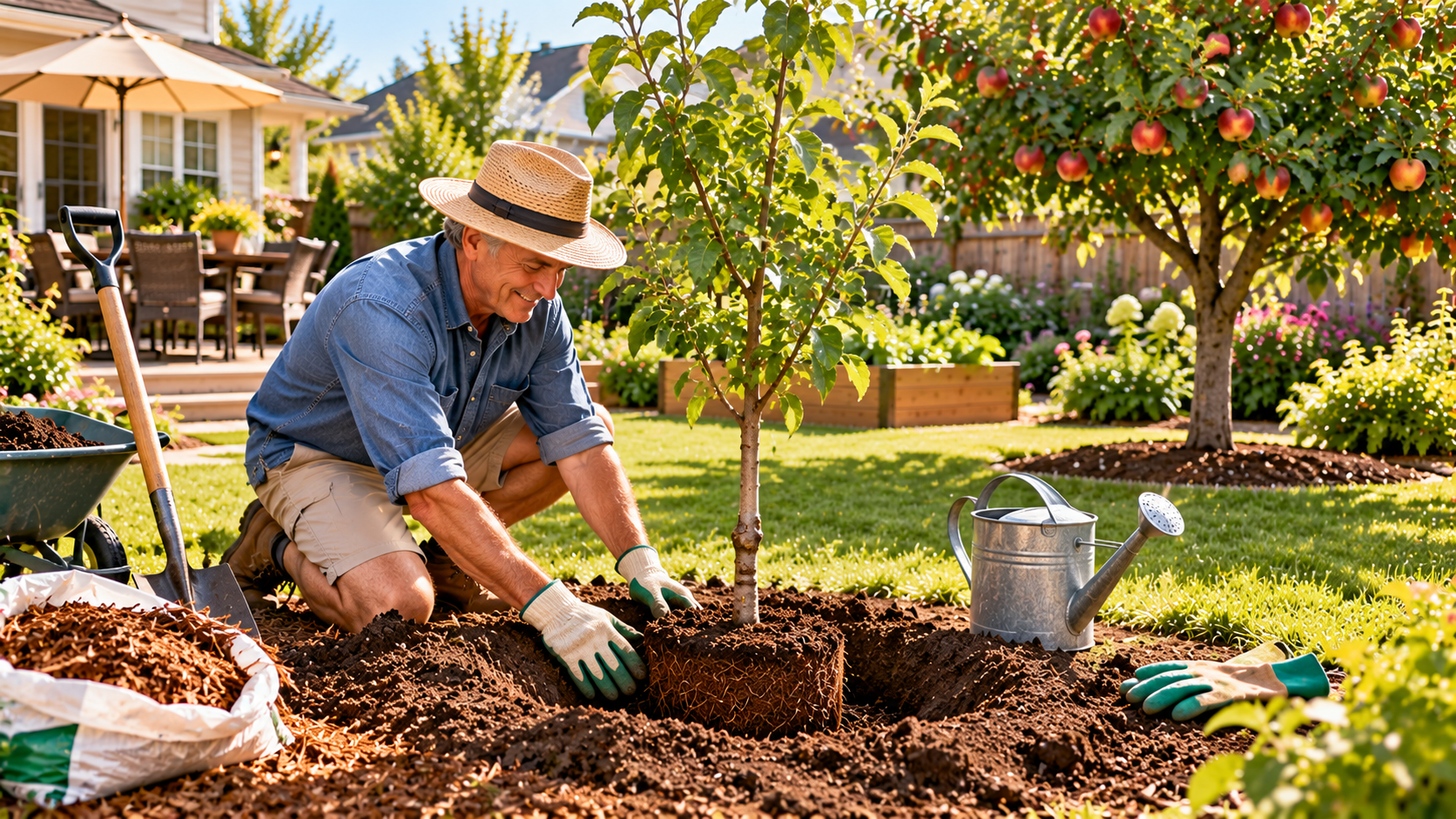
Planting a fruit tree seems simple enough.
Dig a hole.
Put the tree in it.
Add water.
Wait for apples.
Unfortunately, fruit trees occasionally have other ideas.
Most beginner problems don’t come from some obscure horticultural disaster. They come from a handful of common mistakes made before planting or during the tree’s first few years.
The good news?
Most of them are completely avoidable.
Here are ten mistakes worth knowing before your little fruit tree becomes a much bigger fruit tree.
Mistake #1: Choosing the Wrong Tree for Your Climate
A fruit tree can look perfectly healthy sitting at the nursery and still be a poor choice for your backyard.
Climate matters.
Different fruit trees and varieties have different requirements for:
- Winter cold
- Summer heat
- Chill hours
- Frost tolerance
- Growing-season length
A variety that performs beautifully in Georgia may struggle in Minnesota. A citrus tree that’s perfectly happy in Florida may have serious objections to a Wisconsin winter.
How to Avoid It
Know your USDA Hardiness Zone, then research the specific variety you’re considering.
For apples, peaches, pears, plums, and other fruits that may have chilling requirements, make sure those requirements are appropriate for your area.
Don’t just buy a peach tree.
Buy the right peach tree for where you live.
Mistake #2: Planting in Too Much Shade
Most fruit trees want sunshine.
Lots of it.
A tree may survive in partial shade but produce disappointing fruit.
Insufficient sunlight can affect flowering, fruit production, ripening, and overall tree performance.
How to Avoid It
Choose a location receiving at least six hours of direct sunlight daily, with more being beneficial for many fruit trees.
Watch the proposed planting area throughout the day before deciding.
Remember to account for nearby trees and structures.
That sunny spot at 10:00 in the morning may be completely shaded by 1:00 in the afternoon.
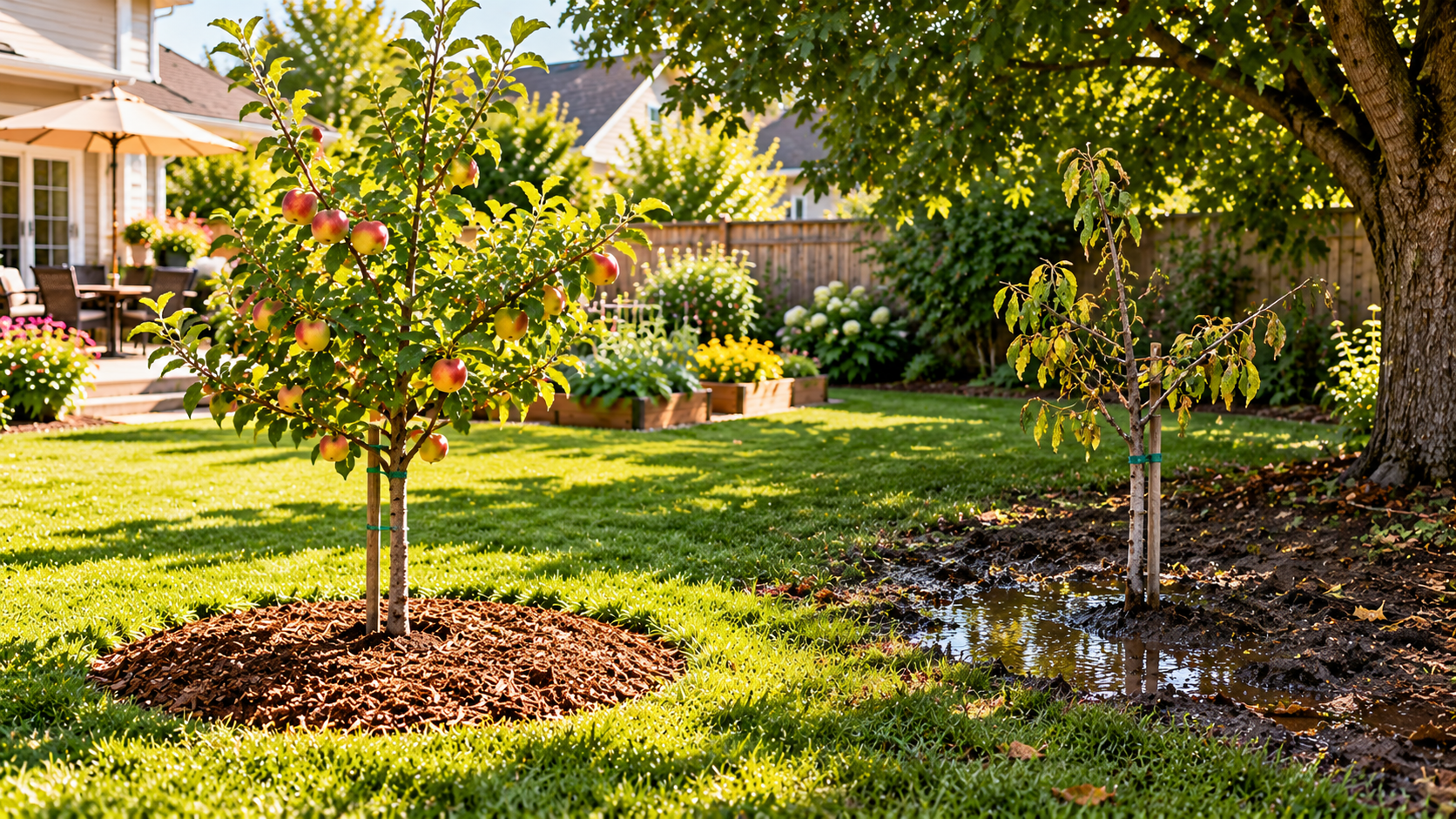
Mistake #3: Ignoring Drainage
Fruit trees need water, especially while becoming established.
What they generally don’t need is a permanent swimming pool around their roots.
Poorly drained soil can create serious root problems.
How to Avoid It
Watch your yard after heavy rain.
Avoid locations where water routinely collects and remains for extended periods.
If you’re uncertain about drainage, test the location before planting.
This is one problem that’s much easier to discover before there’s a tree occupying the spot.
Mistake #4: Planting the Tree Too Deep
This is an extremely common beginner mistake.
If a little soil around the roots is good, surely another six inches must be better.
It isn’t.
Fruit trees should be planted at the appropriate depth, and the root flare should not disappear deep beneath the soil.
Grafted fruit trees require additional attention because you generally want the graft union above the soil line.
How to Avoid It
Before planting, locate the root flare and graft union.
Don’t automatically use the soil level inside the nursery container as your planting-depth guide. Trees can sometimes sit too deeply in their nursery pots.
Dig the planting hole according to the root system rather than assuming deeper is better.
You’re planting a tree.
You’re not burying treasure.
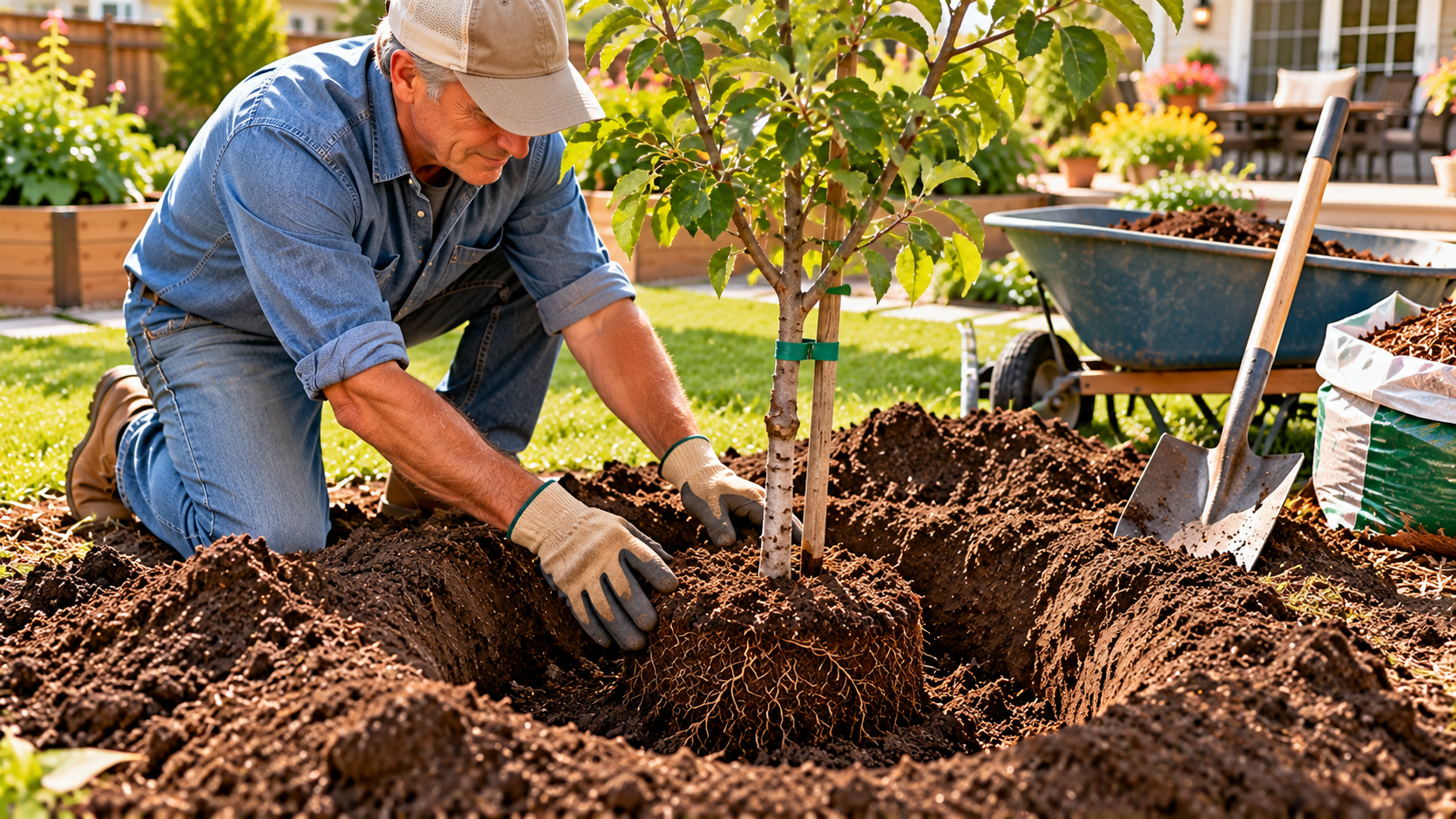
Mistake #5: Digging a Tiny Planting Hole
Another common approach goes something like this:
The root ball is twelve inches wide.
Dig a twelve-inch hole.
Drop it in.
Done.
The tree may have other plans.
Roots need to expand outward into the surrounding soil as the tree becomes established.
How to Avoid It
Make the planting hole wider than the root system, while keeping the proper planting depth.
Loosen or address circling roots when appropriate and give the roots an opportunity to grow outward.
Don’t create a tiny underground flowerpot surrounded by compacted soil.
Mistake #6: Forgetting About Pollination
Your apple tree blooms beautifully.
The bees arrive.
Spring looks promising.
Then you get almost no apples.
Sometimes the missing ingredient isn’t fertilizer or pruning.
It’s another tree.
Many fruit varieties require or benefit from cross-pollination.
How to Avoid It
Before buying, determine whether the variety is:
Self-fertile
or
Requires a compatible pollination partner.
If another variety is required, make sure the two bloom at approximately the same time.
Don’t assume any two apple, pear, plum, or cherry trees will automatically work together.
Pollination compatibility matters.
Mistake #7: Overwatering or Underwatering
New fruit trees need reliable moisture while their roots become established.
But there’s a big difference between keeping the root area adequately moist and keeping it constantly saturated.
Too little water can stress a young tree.
Too much can deprive roots of oxygen and contribute to root problems.
How to Avoid It
Water deeply enough to reach the root area, then monitor soil moisture rather than automatically watering every day.
Weather matters.
Soil matters.
Tree size matters.
A tree planted during cool, rainy weather won’t necessarily need the same watering routine as one planted during a hot, dry summer.
Check the soil and respond to actual conditions.
Mistake #8: Improper Mulching
Mulch can be tremendously useful around fruit trees.
It can help conserve moisture, reduce weed competition, protect the soil surface, and add organic matter as it decomposes.
Then somebody piles it against the trunk until the tree appears to be erupting from a mulch volcano.
That’s where a good idea goes sideways.
How to Avoid It
Spread mulch across the root area, but keep it away from direct contact with the trunk.
You want a broad mulched area, not a mountain around the bark.
And don’t forget that mulch can hide what is happening underneath.
Occasionally check for rodents, excessive moisture, or other problems.
Mistake #9: Ignoring Pruning Until the Tree Is Huge
That little nursery tree doesn’t look as though it needs much attention.
So you leave it alone.
Then another year passes.
And another.
Eventually, you have crowded branches going in every direction and you’re standing underneath them with pruning shears wondering where to begin.
Early pruning can help establish a strong structure and keep the tree manageable.
How to Avoid It
Learn the recommended pruning method for your particular fruit tree.
Different fruits have different pruning requirements.
Apples, peaches, figs, citrus, and cherries aren’t necessarily managed the same way.
Remove dead, damaged, or problematic growth when appropriate and develop a useful structure while the tree is young.
A little thoughtful pruning early can prevent much larger jobs later.
Mistake #10: Expecting Fruit Too Soon
You planted the tree last spring.
It’s now spring again.
Where are the peaches?
Fruit trees require patience.
How quickly a tree begins producing depends on:
- Fruit type
- Variety
- Rootstock
- Tree age at planting
- Growing conditions
- Climate
- Tree health
Some fruit trees begin producing relatively young.
Others take several years.
And even when a young tree does produce fruit, allowing it to carry a huge crop before its structure is ready may not be the best idea.
How to Avoid It
Give your tree time to establish a healthy root system and strong branches.
Think long term.
You’re not planting for next Tuesday.
You’re planting something that could provide fruit for years.
Bonus Mistake: Planting and Forgetting
Technically, this makes eleven.
Consider it free fruit.
A fruit tree isn’t a plant-it-and-forget-it project.
You don’t need to stand beside it every afternoon asking how its day went, but regular observation matters.
Check your trees for:
- Insect damage
- Disease symptoms
- Broken branches
- Water stress
- Trunk damage
- Animal damage
- Unusual leaf changes
- Fruit problems
Problems are generally easier to address when they’re small.
Walk past your trees regularly and actually look at them.
You’ll soon learn what normal looks like.
Give Your Fruit Tree a Strong Start
Most fruit-tree mistakes aren’t caused by beginners lacking some secret gardening skill.
They’re usually planning mistakes.
Wrong variety.
Wrong location.
Wrong depth.
Wrong watering.
Wrong pollination partner.

Those are all things you can address before they become major problems.
Choose a tree suited to your climate.
Give it plenty of sunlight and good drainage.
Plant it properly.
Water appropriately.
Understand its pollination needs.
Learn how and when to prune it.
Then give it something gardeners occasionally struggle to provide:
Time.
A fruit tree is a long-term backyard investment.
Take care of the basics now, and years from today you may be standing beneath the same tree with more apples, peaches, pears, or plums than you know what to do with.
And that’s a beginner mistake most of us would be perfectly happy to make. 🍎🍑🌳
Ready to Grow Fruit Trees with Confidence?
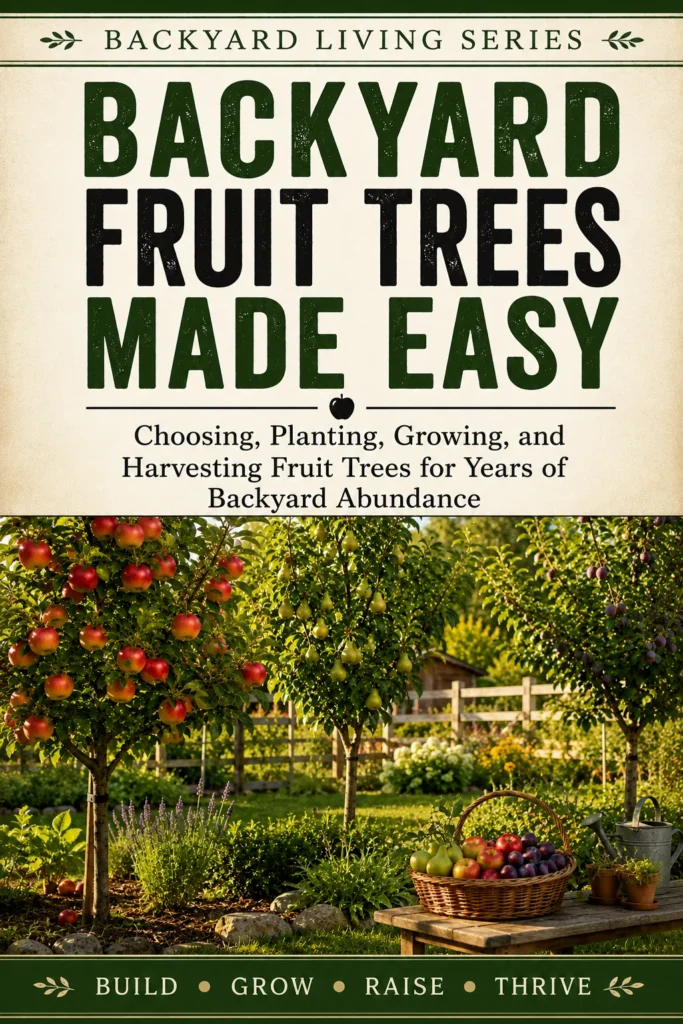
Backyard Fruit Trees Made Easy expands on each of these topics with clear, step-by-step guidance designed specifically for beginners. From choosing the right fruit trees for your climate and finding the perfect planting location to understanding pollination, growing dwarf varieties, and raising fruit trees in containers, this book provides practical instruction to help you succeed. You’ll also learn how to prepare your soil, water and fertilize properly, prune for healthy growth, prevent common pests and diseases, and enjoy delicious homegrown fruit. Whether you have a spacious backyard or a small patio, you’ll discover how to grow healthy, productive fruit trees with confidence. 🌳🍎
More Fruit Tree Articles
If you found this article helpful, these beginner guides are a great next step:
Get Your FREE Backyard Starter Toolkit
Download our free Backyard Starter Toolkit, packed with printable planners, checklists, and beginner resources to help you build, grow, raise, and thrive.
About the Author
Steve McChesney is the founder of Backyard Living Books and has spent decades guiding homeowners to build, grow, raise, and preserve more from their own backyards. Through practical, beginner-friendly guides, he encourages people to tackle one backyard project at a time and enjoy the satisfaction that comes with learning new skills.