
Backyard Learning Center
Learn practical backyard skills one project at a time through beginner-friendly articles, seasonal tips, and step-by-step guides that help you build, grow, raise, and thrive.
Growing Fruit Trees in Pots

No backyard?
No orchard?
No problem.
You don’t necessarily need a large property to grow your own fruit. With the right tree, the right container, and a little planning, you can grow fruit trees on a patio, deck, courtyard, or other sunny space.
Container growing also offers an advantage that gardeners with trees planted in the ground don’t have.
You can move the tree.
That can be especially useful when you need to protect a cold-sensitive tree during winter or rearrange your growing area as conditions change.
But growing a fruit tree in a pot isn’t quite the same as growing flowers in a patio container.
Fruit trees are long-term residents.
Let’s give them a good home.
Why Grow Fruit Trees in Containers?
Container fruit trees make sense for several situations.
Maybe you:
- Have a small yard
- Rent your home
- Live in a townhouse or condominium
- Want fruit on a patio or deck
- Need to protect a tree during winter
- Want greater control over soil conditions
- Simply don’t want a full-sized tree
Container growing can also make pruning, harvesting, and inspecting your tree easier because the tree remains relatively compact.
And there’s something pretty satisfying about picking an actual lemon or peach from a tree sitting ten feet from your patio chair.
Start With the Right Tree
This is the most important decision.
Not every fruit tree is a good candidate for container growing.
Look for dwarf or compact varieties, particularly trees grown on dwarfing rootstock.
Possible container-grown fruits include certain varieties of:
- Citrus
- Figs
- Apples
- Peaches
- Nectarines
- Plums
- Cherries
The specific variety matters more than the fruit name alone.
A dwarf apple and a standard apple may both begin as innocent-looking nursery trees.
Several years later, they’ll have very different opinions about how much space they require.
Rootstock Matters
When buying a grafted fruit tree, don’t look only at the variety producing the fruit.
Look at the rootstock too.
Rootstock can influence:
- Mature tree size
- Vigor
- Disease resistance
- Soil tolerance
- Cold hardiness
- How well the tree adapts to container growing
Ask the nursery whether the tree is suitable for long-term container culture.
“Dwarf” on a tag is helpful.
Knowing what made it dwarf is even better.
Choose the Right Container
That cute little decorative pot may look perfect beside the patio furniture.
Your fruit tree has other priorities.
Fruit trees need enough container volume for their root systems to develop.
As the tree grows, it may need to be moved into a larger container.
Whatever container you choose, make sure it is:
Large enough for the tree.
Strong enough to support it.
Weather resistant.
Equipped with adequate drainage holes.
Drainage is especially important.
Fruit tree roots need moisture, but they generally don’t appreciate spending their lives sitting in water.

Think About Weight Before You Plant
Large containers get heavy.
Really heavy.
Add the pot.
Add growing medium.
Add water.
Add the tree.
Then decide you want to move it six feet.
Congratulations. You’ve created backyard weightlifting equipment.
If you expect to move the tree regularly, consider placing the container on a sturdy rolling plant caddy before filling it.
Your back will appreciate the advance planning.
Use a Good Container-Growing Medium

Don’t simply dig up garden soil and fill the pot.
Soil that works perfectly well in the yard may become dense and poorly drained inside a container.
Use a quality growing medium designed for containers and appropriate for the fruit tree you’re growing.
The goal is to provide a root environment that:
- Holds adequate moisture
- Drains well
- Allows air around the roots
- Supports healthy root development
Containers create a very different root environment from open garden soil.
Treat them accordingly.
Fruit Trees Still Need Plenty of Sun
Putting a fruit tree in a pot doesn’t change its appetite for sunlight.
Most fruit trees perform best with full sun, generally at least six hours of direct sunlight daily.
Place the container where the tree receives adequate sun without being crowded by walls, fences, or larger plants.
Observe the location throughout the day.
A patio that looks wonderfully sunny at breakfast may spend the afternoon in complete shade.
Container Trees Need More Attention to Water
This is one of the biggest differences between fruit trees in containers and those planted in the ground.
Containers can dry out quickly.
During hot weather, a potted fruit tree may need frequent watering.
But don’t automatically water on a rigid schedule.
Check the growing medium.
Weather, container size, tree size, wind, temperature, and the type of pot can all affect how quickly moisture disappears.
Water thoroughly when needed and allow excess water to drain from the bottom.
Avoid letting the tree repeatedly become severely dry.
At the same time, don’t keep the roots constantly saturated.
You’re looking for consistency.
Don’t Forget Fertilizer
A tree planted in the ground can send roots into a much larger area searching for nutrients.
A container-grown tree has access only to what’s inside its pot.
That means nutrition deserves regular attention.
Use a fertilizer appropriate for the type of fruit tree you’re growing and follow the product directions.
Don’t assume more fertilizer means more fruit.
Too much can create its own problems.
You want healthy, productive growth, not a tree training for a bodybuilding competition.
Pruning Becomes Especially Important
Pruning helps keep a container fruit tree manageable.
Depending on the species and variety, pruning can help:
- Control size
- Remove damaged or dead wood
- Improve airflow
- Maintain a useful shape
- Make harvesting easier
- Encourage appropriate fruiting wood
But pruning methods vary among fruit trees.
Peaches don’t necessarily get pruned the same way as apples, figs, or citrus.
Learn what your particular tree needs before approaching it with pruning shears.
The tree cannot put the branch back.
What About Pollination?
Growing in a container doesn’t eliminate pollination requirements.
If your fruit variety requires cross-pollination, you’ll still need access to a compatible variety blooming at the same time.
If you only have room for one container, consider a self-fertile variety.
Another possibility is a multi-grafted tree containing more than one compatible variety on the same plant.
That can provide an interesting solution for small spaces.
One container.
Several varieties.
Very efficient real estate.
Protect the Roots From Temperature Extremes
A fruit tree growing in the ground has a large amount of soil insulating its roots.
A container-grown tree doesn’t.
Its roots are more exposed to temperature extremes.
That matters during both hot summers and cold winters.
In hot climates, containers can become extremely warm in direct sun.
In cold climates, roots can be damaged when the entire container freezes.
Depending on your tree and climate, winter protection might include moving the container into a protected location or providing additional insulation.
This is one reason container growing works particularly well for some cold-sensitive fruits.
You can move the tree to protection instead of standing outside trying to negotiate with the weather.
Citrus Is a Natural Container Candidate

Citrus is particularly popular for container growing.
Dwarf lemons, limes, mandarins, and other citrus can make attractive patio plants while producing usable fruit.
In colder regions, containers provide another advantage.
The tree can spend warm months outdoors and receive protection when freezing weather arrives.
Just remember that moving a tree indoors changes its environment.
Light, temperature, humidity, and watering requirements may all be different.
Figs Can Work Well Too
Figs are another popular container choice.
Many respond well to pruning and can be maintained at a manageable size.
A container can also help gardeners grow figs where winter protection would otherwise be difficult.
Choose a variety suited to your climate and available space.
And when those figs begin ripening, keep an eye on them.
Birds apparently maintain excellent harvest calendars.
Your Tree May Eventually Need Repotting
Fruit trees can live in containers for years, but they still grow.
Eventually, you may notice signs that the tree needs attention.
Roots may become crowded.
Water may run through unusually quickly.
Growth may decline.
The tree may simply have outgrown its current home.
Depending on the tree, you may need to move it into a larger container or perform appropriate root maintenance and replace some of the growing medium.
This isn’t necessarily an annual project.
Just remember that putting a tree in a pot doesn’t permanently freeze it at the size it was on planting day.
Watch for Containers Becoming Top-Heavy
As the tree grows, the canopy can become large compared with the container.
Strong wind can topple a top-heavy tree.
Choose a stable container and maintain the tree at a manageable size.
If the location is particularly windy, provide appropriate protection.
A peach tree lying sideways across the patio technically remains a peach tree.
It’s just not the arrangement you had in mind.
Can You Actually Get a Good Harvest From a Potted Tree?
Absolutely.
But set reasonable expectations.
A dwarf fruit tree growing in a container won’t necessarily produce the same quantity of fruit as a large mature tree growing in ideal conditions in the ground.
That’s not really the point.
Container growing gives you the opportunity to produce fresh fruit in a place where a traditional fruit tree might not work at all.
A modest harvest from your patio is still fruit you grew yourself.
A Simple Container Fruit Tree Checklist
Before bringing your tree home, make sure you can provide:
A variety suitable for containers
A large container with good drainage
Quality container-growing medium
Plenty of sunlight
Regular access to water
Appropriate nutrition
Seasonal pruning
A pollination partner if required
Protection from temperature extremes
Enough room for the tree as it grows
Get those basics right and you’ve created a strong start.
You Don’t Need an Orchard to Grow Fruit
That’s the real beauty of growing fruit trees in containers.
A patio can produce lemons.
A deck can produce figs.
A small courtyard may have room for a dwarf peach.
Even renters may be able to grow a fruit tree they can take with them when they move.
Start with the right variety.
Give it enough sun.
Use a proper container.
Pay attention to water and nutrition.
Keep the tree at a manageable size.
Then give it time.
Because growing your own fruit doesn’t necessarily require acres of land.
Sometimes all you need is a sunny corner, a big pot, and a little tree with very big plans. 🍋🍑🌳
Ready to Grow Fruit Trees with Confidence?
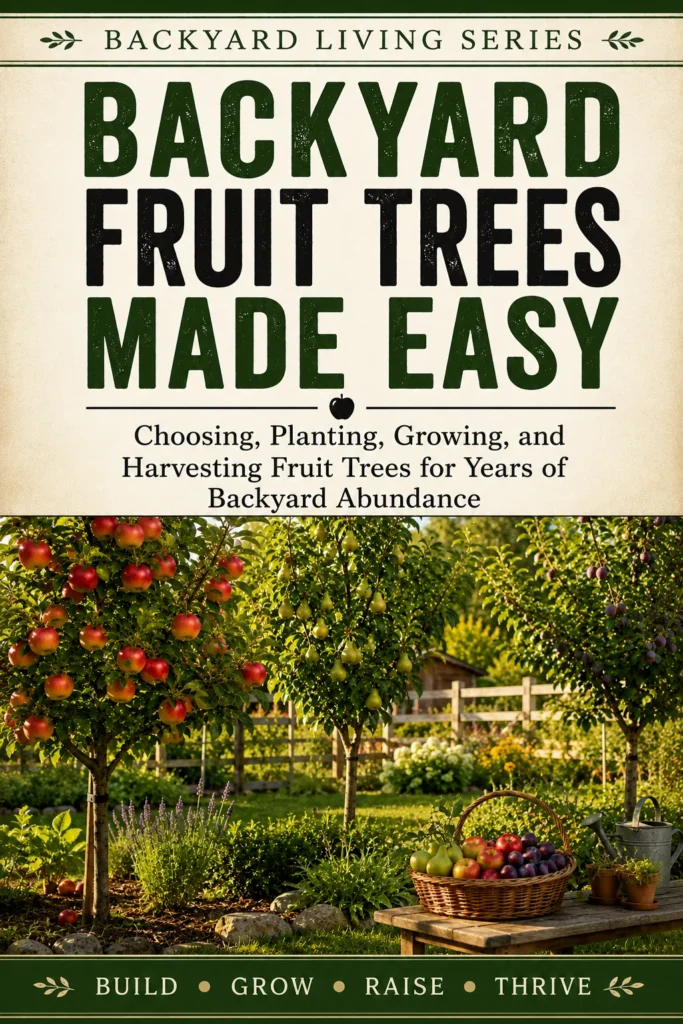
Backyard Fruit Trees Made Easy expands on each of these topics with clear, step-by-step guidance designed specifically for beginners. From choosing the right fruit trees for your climate and finding the perfect planting location to understanding pollination, growing dwarf varieties, and raising fruit trees in containers, this book provides practical instruction to help you succeed. You’ll also learn how to prepare your soil, water and fertilize properly, prune for healthy growth, prevent common pests and diseases, and enjoy delicious homegrown fruit. Whether you have a spacious backyard or a small patio, you’ll discover how to grow healthy, productive fruit trees with confidence. 🌳🍎
More Fruit Tree Articles
If you found this article helpful, these beginner guides are a great next step:
Get Your FREE Backyard Starter Toolkit
Download our free Backyard Starter Toolkit, packed with printable planners, checklists, and beginner resources to help you build, grow, raise, and thrive.
About the Author
Steve McChesney is the founder of Backyard Living Books and has spent decades guiding homeowners to build, grow, raise, and preserve more from their own backyards. Through practical, beginner-friendly guides, he encourages people to tackle one backyard project at a time and enjoy the satisfaction that comes with learning new skills.