Backyard Learning Center
Learn practical backyard skills one project at a time through beginner-friendly articles, seasonal tips, and step-by-step guides that help you build, grow, raise, and thrive.
Dwarf Fruit Trees
Big Harvests for Small Backyards

You’d love to grow fruit trees.
There’s just one problem.
Your backyard isn’t exactly an orchard.
Maybe you have a small suburban lot, a patio, a narrow side yard, or simply don’t want a 25-foot apple tree taking over the property.
That’s where dwarf fruit trees become interesting.
These smaller trees can produce full-sized fruit while taking up considerably less space than standard fruit trees. They can also make pruning, spraying, thinning, and harvesting much easier.
Small tree.
Real fruit.
No extension ladder required to retrieve your breakfast.
What Is a Dwarf Fruit Tree?
A dwarf fruit tree is a tree that remains smaller than a standard-sized version of the same fruit.
With many apples, pears, peaches, plums, and other fruit trees, size can be influenced by the rootstock onto which the fruiting variety has been grafted.
The upper portion determines the variety of fruit.
The rootstock beneath it can influence characteristics such as:
- Mature size
- Vigor
- Cold hardiness
- Disease resistance
- Soil adaptability
- How soon the tree may begin producing
Other fruit trees are naturally compact or have been bred specifically for smaller spaces.
Either way, the goal is similar:
Grow useful amounts of fruit without growing an enormous tree.
Dwarf Doesn't Mean Dwarf Fruit
This causes some confusion for beginners.
A dwarf tree doesn’t necessarily produce tiny apples, peaches, pears, or plums.
The tree is smaller.
The fruit can still reach the normal size expected for that variety when the tree is healthy and properly managed.
So your dwarf peach tree isn’t destined to produce peaches the size of marbles.
That would make cobbler unnecessarily complicated.
How Small Are Dwarf Fruit Trees?
There isn’t one universal size.
Mature height depends on the type of fruit, variety, rootstock, climate, pruning, and growing conditions.
You’ll commonly encounter terms such as:
Standard
Semi-dwarf
Dwarf
But those terms alone don’t tell you everything.
Before buying, check the expected mature height and width of the specific tree.
A nursery tag that simply says “dwarf apple” is a starting point.
You still want to know how large that particular tree is expected to become.

Why Grow Dwarf Fruit Trees?
The obvious advantage is space.
But that’s only the beginning.
Easier Harvesting
Picking fruit from a smaller tree is considerably simpler.
Much of the crop may be reachable from the ground or with minimal assistance.
That means fewer adventures involving ladders, branches, and an apple located exactly six inches beyond your fingertips.
Easier Pruning
Smaller trees are easier to inspect and prune.
You can see the tree’s structure more clearly and reach more of the branches.
Easier Pest Management
When you need to inspect leaves, remove damaged fruit, or address an insect problem, a compact tree is simply easier to manage.
More Varieties in Less Space
Instead of planting one enormous standard tree, you may be able to plant several smaller trees.
That can give you:
- Different fruits
- Multiple varieties
- Different harvest periods
- Compatible pollination partners
For a backyard grower, variety can be more useful than sheer tree size.
Dwarf Trees Can Produce Surprisingly Well

A smaller tree doesn’t automatically mean an insignificant harvest.
A healthy dwarf fruit tree can produce an impressive amount of fruit relative to its size.
And because the tree is easier to manage, you may find it simpler to provide the pruning, thinning, watering, and pest monitoring needed for good production.
The objective isn’t necessarily to produce hundreds of pounds of one fruit.
For many backyard growers, the better goal is:
Enough fruit to enjoy without needing to open a roadside produce stand.
Dwarf vs. Semi-Dwarf
Don’t overlook semi-dwarf trees.
They can provide a useful middle option between compact dwarf trees and much larger standard trees.
A semi-dwarf tree may require more space than a dwarf, but it can still be substantially easier to manage than a standard tree.
If your yard has moderate space and you want a somewhat larger harvest, semi-dwarf may be worth considering.
Think about your actual property rather than automatically choosing the smallest tree available.
Dwarf Apple Trees
Apples are among the most common fruits available on dwarfing rootstocks.
This gives backyard growers plenty of choices.
You can select varieties based on:
- Flavor
- Climate
- Disease resistance
- Harvest season
- Storage ability
- Pollination compatibility
Just remember that many apple varieties require a compatible pollination partner.
If you have room for two dwarf apple trees, you may be able to satisfy pollination requirements while still using less space than a large standard tree.
Dwarf Peaches and Nectarines
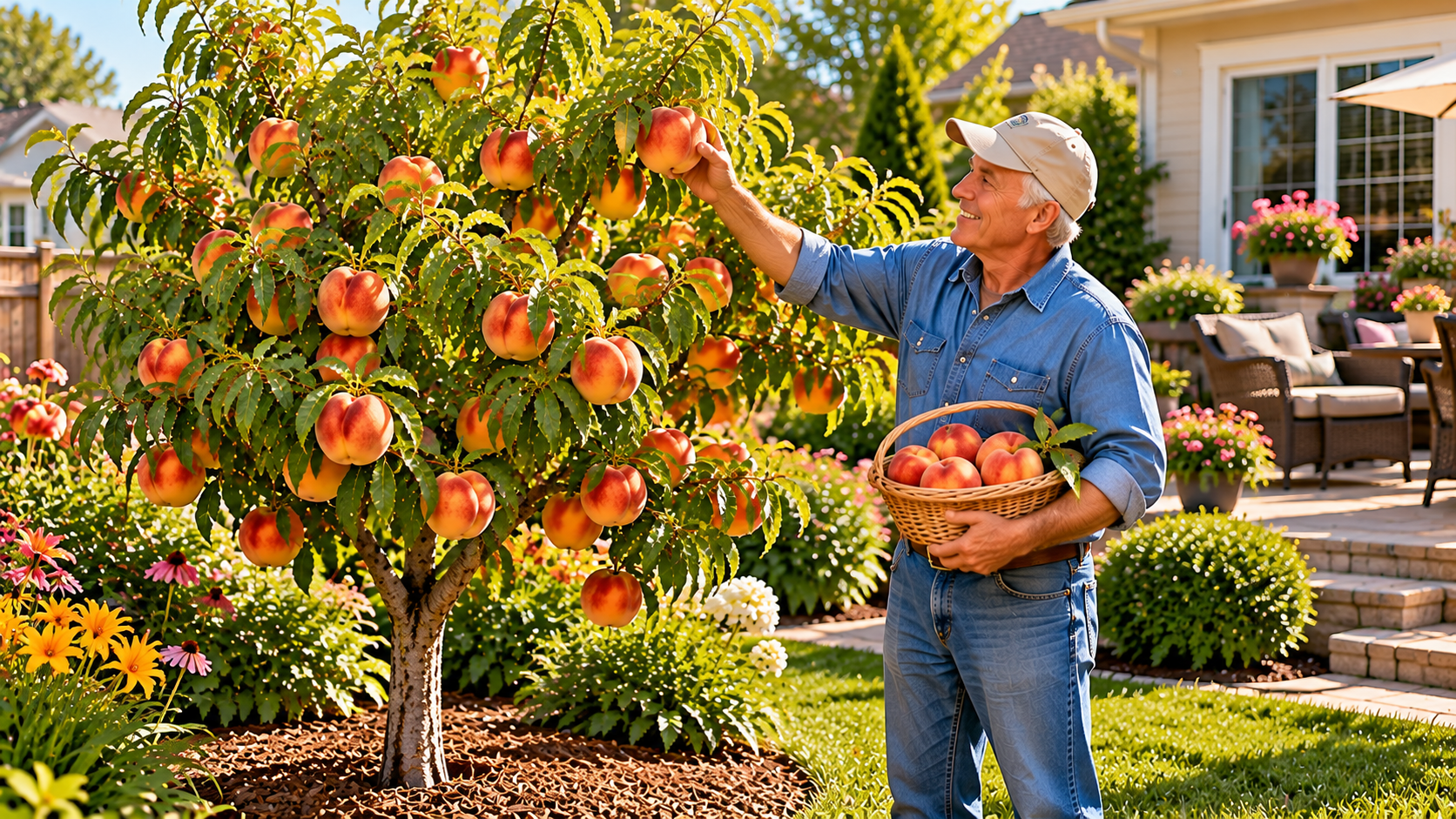
Compact peaches and nectarines can be excellent choices for sunny backyards.
Many varieties are self-fertile, which can be a major advantage when you only have room for one tree.
They still need proper pruning and may require fruit thinning when crops are heavy.
And make sure the variety’s chill requirements match your climate.
A small tree doesn’t get a free pass on climate requirements.
Dwarf Citrus Trees
Dwarf citrus can work beautifully in warm climates and can also be grown in containers where winter protection is necessary.
Depending on your climate and variety, you might grow:
- Lemons
- Limes
- Oranges
- Mandarins
- Other citrus
Many citrus varieties are self-fertile, making them especially useful when space is limited.
A dwarf lemon tree on a sunny patio can be both productive and attractive.
The lemonade is simply a bonus.
Can Dwarf Fruit Trees Grow in Containers?
Many can.
This is one of their biggest advantages.
A suitable dwarf fruit tree in a large container can make fruit growing possible on a patio, deck, courtyard, or other small area.
Container-grown trees require extra attention to:
- Water
- Drainage
- Nutrition
- Root space
- Temperature extremes
- Pruning
The container also needs to be large and sturdy enough for the tree.
And remember that large containers become very heavy once filled.
If you plan to move the tree, put the container on a sturdy rolling base before filling it.
Your future self may send you a thank-you note.
Dwarf Trees Still Need Full Sun
Smaller doesn’t mean less sunlight.
Most fruit trees still need plenty of direct sun to produce well.
A compact tree squeezed into a permanently shaded corner isn’t going to become productive simply because it fits there.
Choose a sunny location with good drainage and enough room for the tree’s mature width.
Small-space gardening still requires smart placement.
Some Dwarf Trees Need Support
Certain dwarfing rootstocks produce smaller root systems or trees that may benefit from permanent support.
Depending on the tree and rootstock, staking or another support system may be recommended.
This is something worth asking about when you buy the tree.
Don’t assume every fruit tree should automatically stand unsupported simply because it’s mature.
Know what your particular rootstock requires.
Pollination Rules Still Apply
Dwarfing a fruit tree doesn’t change its basic pollination requirements.
If the variety needs another compatible variety, you’ll still need one.
Fortunately, smaller trees make that easier.
Two dwarf trees may fit comfortably where two standard trees never would.
You can also consider:
- Self-fertile varieties
- Compatible nearby trees
- Crabapples for certain apples
- Multi-grafted fruit trees
Plan pollination before planting rather than hoping the bees can somehow negotiate a solution later.
Don’t Plant Them Too Close Together
Here’s an easy mistake to make.
They’re dwarf trees.
They’re small.
Let’s plant six of them right beside each other.
Not so fast.
Dwarf trees still have mature widths.
Crowding can make pruning, harvesting, airflow, and general maintenance more difficult.
Check the recommended spacing for your specific trees and rootstocks.
Plant according to the size they’ll become, not the size they are when you bring them home.
Are Dwarf Fruit Trees Easier for Older Gardeners?

They certainly can be.
Smaller trees can reduce the amount of climbing, reaching, and heavy pruning involved in maintaining fruit trees.
Harvesting from ground level or a small step ladder can also make the job considerably more manageable.
That’s an advantage for almost anyone.
Fruit tastes just as good when you don’t have to climb 15 feet to get it.
The Small-Backyard Orchard
Here’s where dwarf trees become especially fun.
Instead of thinking about planting a fruit tree, think about creating a miniature backyard orchard.
Depending on your climate and available space, you might grow:
A dwarf peach for early summer.
A fig for later in summer.
Two compatible dwarf apples for fall.
A container-grown lemon on the patio.
Now your small backyard isn’t producing one type of fruit during one short harvest period.
It’s producing different fruits throughout the growing season.
That’s a lot of productivity from a relatively small amount of ground.
Before Buying a Dwarf Fruit Tree
Check more than the picture on the nursery tag.
Find out:
What is the exact variety?
What rootstock is it growing on?
What is its expected mature size?
Is it suited to my climate?
Does it require a pollination partner?
Does it need permanent support?
Can it be grown in a container?
How soon might it begin producing?
Those answers will tell you much more than the word dwarf ever could.
Small Tree, Serious Potential
You don’t need five acres to grow apples.
You don’t need an orchard to grow peaches.
And you don’t need a giant backyard to enjoy fruit picked directly from a tree.
Dwarf fruit trees make home fruit growing possible in spaces where standard trees simply aren’t practical.
Choose varieties suited to your climate.
Give them enough sunlight.
Understand their pollination requirements.
Plant them with enough room to grow.
Then keep them properly pruned and cared for.
A few years from now, you may walk into a very small backyard and discover something rather impressive.
There’s an orchard hiding in there. 🍎🍑🍋🌳
Ready to Grow Fruit Trees with Confidence?
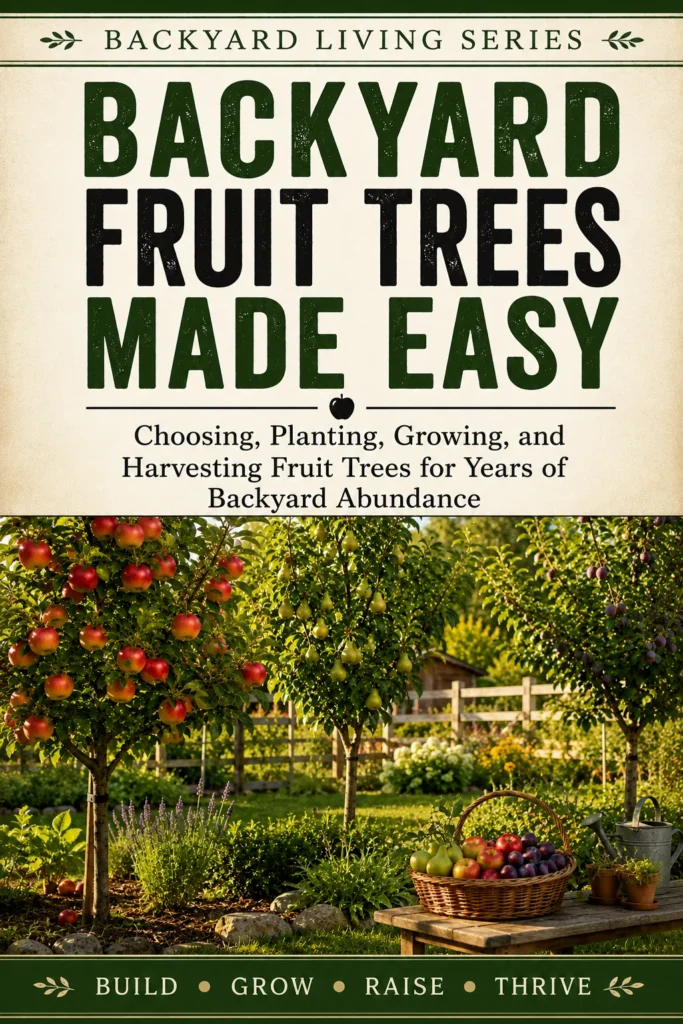
Backyard Fruit Trees Made Easy expands on each of these topics with clear, step-by-step guidance designed specifically for beginners. From choosing the right fruit trees for your climate and finding the perfect planting location to understanding pollination, growing dwarf varieties, and raising fruit trees in containers, this book provides practical instruction to help you succeed. You’ll also learn how to prepare your soil, water and fertilize properly, prune for healthy growth, prevent common pests and diseases, and enjoy delicious homegrown fruit. Whether you have a spacious backyard or a small patio, you’ll discover how to grow healthy, productive fruit trees with confidence. 🌳🍎
More Fruit Tree Articles
If you found this article helpful, these beginner guides are a great next step:
Get Your FREE Backyard Starter Toolkit
Download our free Backyard Starter Toolkit, packed with printable planners, checklists, and beginner resources to help you build, grow, raise, and thrive.
About the Author
Steve McChesney is the founder of Backyard Living Books and has spent decades guiding homeowners to build, grow, raise, and preserve more from their own backyards. Through practical, beginner-friendly guides, he encourages people to tackle one backyard project at a time and enjoy the satisfaction that comes with learning new skills.