
Backyard Learning Center
Learn practical backyard skills one project at a time through beginner-friendly articles, seasonal tips, and step-by-step guides that help you build, grow, raise, and thrive.
How to Pick the Perfect Spot for a Fruit Tree
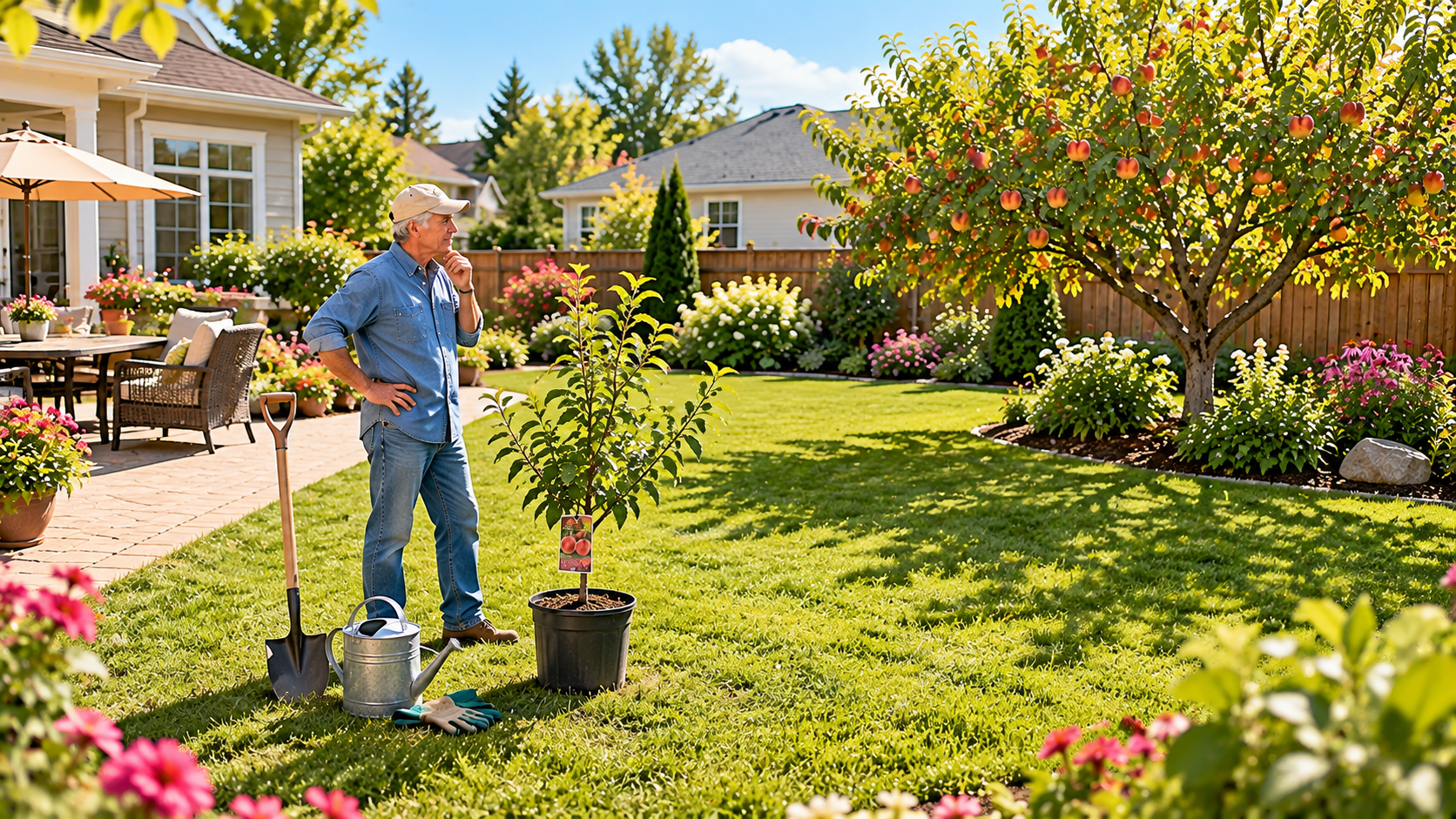
Planting a fruit tree is a long-term decision.
Put a tomato plant in the wrong spot and you can try somewhere else next spring.
Plant an apple tree in the wrong spot and, several years later, you may find yourself staring at a 12-foot reminder that you probably should have thought this through.
The location you choose affects sunlight, drainage, airflow, fruit production, disease problems, and even how easy the tree will be to maintain.
Fortunately, choosing a good location isn’t complicated.
Before you grab the shovel, take a walk around your property and look for these important things.
Start With Sunlight
Fruit trees love sunshine.
For most fruit trees, full sun is the goal, generally meaning at least six hours of direct sunlight each day. More can be beneficial for many types.
Sunlight helps trees:
- Produce fruit
- Ripen fruit properly
- Develop strong growth
- Dry after rain
- Reduce conditions that encourage some diseases
An area that looks sunny at noon may spend half the morning shaded by your house and most of the afternoon behind a large oak.
Watch the area at different times of day before deciding.
And remember that sunlight changes throughout the year.
That perfectly sunny February location may look very different when nearby deciduous trees are covered with leaves in July.
Think About the Tree's Mature Size
That little fruit tree at the nursery can be deceptive.
It’s three feet tall.
It’s adorable.
You can carry it with one hand.
It will not remain that size.
Before planting, find out the expected mature height and width of the tree.
Fruit trees may be sold as:
- Dwarf
- Semi-dwarf
- Standard
The rootstock can have a major influence on the tree’s eventual size.
Give the tree enough room to reach its expected dimensions without colliding with the house, fence, shed, power lines, or neighboring trees.
Your three-foot apple tree has ambitions.
Plan accordingly.
Look Up
This step takes approximately two seconds and can prevent a major problem.
Before planting, look directly above the proposed location.
Are there power lines?
Roof overhangs?
Large tree branches?
Other obstacles?
Don’t plant a tree beneath something that will create problems as the tree grows.
You don’t want to spend the next decade pruning a fruit tree simply because it keeps trying to occupy the same space as the utility lines.
Check the Drainage
Fruit tree roots need water.
They also need oxygen.
Soil that remains saturated for long periods can create serious problems for many fruit trees.
Before choosing a location, pay attention to what happens after a heavy rain.
Does water drain away?
Or does that part of the yard become a temporary duck pond?
Standing water is a warning sign.
If you’re unsure, dig a test hole, fill it with water, allow it to drain, then fill it again and observe how readily the water disappears.
You don’t need laboratory equipment.
You’re simply trying to determine whether water drains reasonably well or sits there for an unusually long time.
Don’t Automatically Choose the Lowest Part of the Yard
The lowest spot on your property can collect water.
It can also collect cold air.
Cold air tends to settle into lower areas, creating what gardeners sometimes call a frost pocket.
That can matter when fruit trees bloom early in spring.
A warm spell may encourage blossoms to open, followed by a late frost that damages those flowers.
No flowers can mean little or no fruit.
If late frost is a concern in your area, a slightly elevated planting site may offer an advantage over the lowest point on the property.
Good Airflow Matters
Packing a fruit tree tightly between buildings, fences, shrubs, and other trees can restrict airflow.
Good air circulation helps foliage dry after rain and can reduce conditions that encourage certain fungal diseases.
Give your tree some breathing room.
This doesn’t mean planting it in the middle of a wind tunnel.
You’re looking for reasonable air circulation without constant exposure to damaging winds.
Consider Strong Winds
A wide-open location may receive wonderful sunlight while also taking the full impact of every storm that arrives.
Young trees can be particularly vulnerable to strong winds.
Persistent wind can also dry soil more quickly and make fruit-tree management more difficult.
If your property is exposed, consider whether a building, fence, hedge, or other feature provides some protection without creating excessive shade.
The goal is shelter, not darkness.
Know What's Under the Ground
Looking up is important.
So is thinking down.
Avoid planting directly over or too close to:
- Septic systems
- Drain fields
- Underground utilities
- Irrigation lines
- Other buried infrastructure
Tree roots don’t study property diagrams before deciding where to grow.
Before digging, make sure you’re not about to introduce your shovel to something that was supposed to remain underground and undisturbed.
For utility lines, use your local utility-locating service before digging.

Think About Your House and Other Structures
Large containers get heavy.
Really heavy.
Add the pot.
Add growing medium.
Add water.
Add the tree.
Then decide you want to move it six feet.
Congratulations. You’ve created backyard weightlifting equipment.
If you expect to move the tree regularly, consider placing the container on a sturdy rolling plant caddy before filling it.
Your back will appreciate the advance planning.
Think About Your House and Other Structures

That sunny location beside the house may look perfect today.
But consider the mature tree.
Will branches eventually rub against the roof?
Will falling fruit land on the patio?
Will roots become a concern?
Will the tree block a walkway?
Will you still be able to get a ladder around it for pruning and harvesting?
Give yourself working room.
You’ll appreciate it when the tree becomes large enough to require regular maintenance.
Think About Falling Fruit
This sounds obvious until your first bumper crop begins hitting the ground.
Avoid placing messy fruit trees directly beside:
- Driveways
- Sidewalks
- Patios
- Pools
- Outdoor furniture
- Frequently used entrances
Mulberries deserve special consideration here.
A productive mulberry above a white driveway can create a color scheme nobody ordered.
Falling peaches, plums, figs, and other ripe fruit can also attract insects and wildlife if they aren’t collected.
Put productive trees where harvesting and cleanup will be manageable.
Make Sure Water Is Convenient
Young fruit trees need consistent watering while they become established.
If the perfect planting site requires connecting four garden hoses and dragging them 200 feet across the yard, watering may become a chore.
And chores have an interesting tendency to get postponed.
Consider access to:
- A garden hose
- Irrigation
- A nearby water source
You don’t need to plant beside the faucet.
Just make routine watering practical.
Check Your Soil
Fruit trees can tolerate different soil conditions, but the planting location should provide soil suitable for the particular tree you’re growing.
Pay attention to:
- Drainage
- Soil texture
- Soil pH
- Organic matter
- Compaction
A soil test can provide useful information before planting, particularly if you’re planning several fruit trees.
It is much easier to understand your soil before planting an orchard than after the trees begin struggling.
Don't Forget Pollination Partners
Sometimes the perfect location for one fruit tree depends on another fruit tree.
Certain apples, pears, plums, cherries, and other fruits may require or benefit from a compatible variety nearby for pollination.
Before planting, find out whether your variety is:
Self-fertile
or
Requires cross-pollination.
If you need two compatible trees, plan both locations before planting the first.
Make sure the varieties bloom at compatible times and are close enough for pollinators to do their work.
Otherwise, you may grow two beautiful trees that have very little interest in helping each other produce fruit.
Consider Deer and Other Wildlife
You aren’t the only one interested in fresh fruit.
Deer may browse young trees.
Rabbits and rodents can damage trunks.
Birds may discover ripening fruit.
Other wildlife may visit depending on where you live.
If animal pressure is common in your area, think about protection before planting.
A location where you can easily install fencing, trunk guards, or other protection may be better than an exposed spot at the far edge of the property.
Convenience Counts

Fruit trees require attention.
You’ll eventually need to:
- Water
- Prune
- Inspect for pests
- Watch for disease
- Thin fruit on some species
- Harvest
- Clean up fallen fruit
There’s something to be said for planting trees where you’ll actually see them.
A fruit tree hidden behind a shed at the far end of the property can be surprisingly easy to ignore.
Planting where you regularly walk gives you more opportunities to notice problems early.
It also makes harvesting much more convenient.
Use the Five-Year Test
Before digging the planting hole, stand in the proposed location and imagine the tree five or ten years from now.
Not the little nursery tree.
The real tree.
Ask yourself:
Will it still have enough sunlight?
Will it have enough room?
Will branches interfere with anything?
Can I easily water and maintain it?
Will fallen fruit create a problem?
Is the soil well drained?
Will I be able to harvest it conveniently?
If those answers look good, you’ve probably found a strong location.
A Great Fruit Tree Starts Before Planting Day
It’s tempting to focus on the exciting parts.
Which apple?
Which peach?
How many figs will I get?
When will I harvest my first fruit?
But one of the most important decisions happens before the tree ever comes out of its nursery pot.
Where are you going to put it?
Give your fruit tree plenty of sunlight, good drainage, adequate space, reasonable airflow, convenient access to water, and room to reach its mature size.
Then step back and let that tiny tree start working on the future.
Because the best planting spot isn’t simply where the tree fits today.
It’s where the tree will still belong years from now, when you’re standing underneath it with a basket full of fruit. 🍎🌳🍑
Ready to Grow Fruit Trees with Confidence?
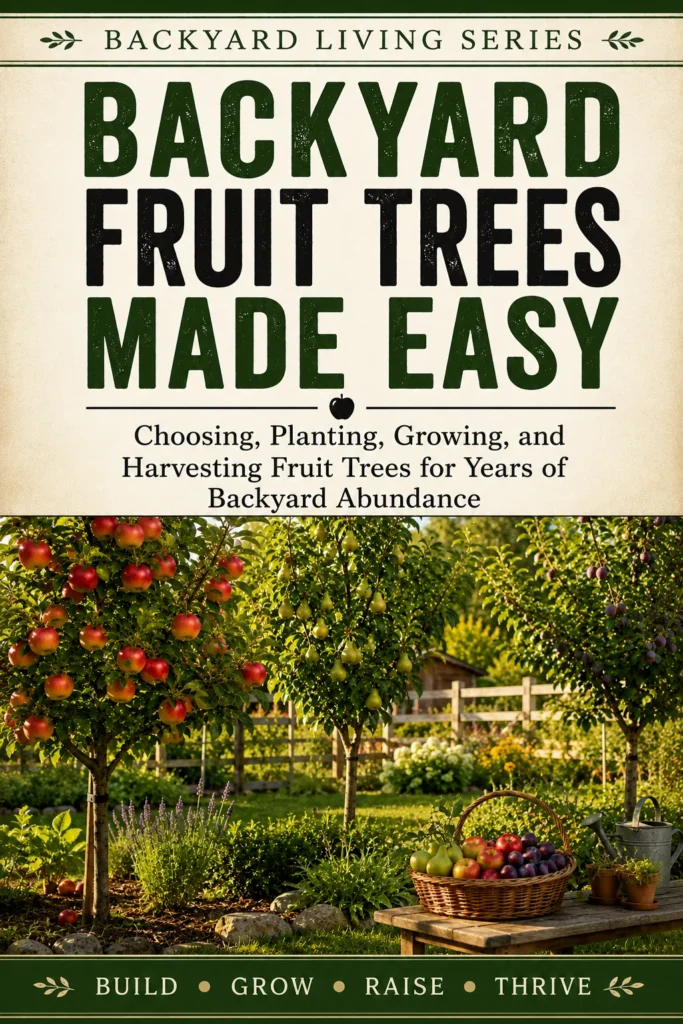
Backyard Fruit Trees Made Easy expands on each of these topics with clear, step-by-step guidance designed specifically for beginners. From choosing the right fruit trees for your climate and finding the perfect planting location to understanding pollination, growing dwarf varieties, and raising fruit trees in containers, this book provides practical instruction to help you succeed. You’ll also learn how to prepare your soil, water and fertilize properly, prune for healthy growth, prevent common pests and diseases, and enjoy delicious homegrown fruit. Whether you have a spacious backyard or a small patio, you’ll discover how to grow healthy, productive fruit trees with confidence. 🌳🍎
More Fruit Tree Articles
If you found this article helpful, these beginner guides are a great next step:
Get Your FREE Backyard Starter Toolkit
Download our free Backyard Starter Toolkit, packed with printable planners, checklists, and beginner resources to help you build, grow, raise, and thrive.
About the Author
Steve McChesney is the founder of Backyard Living Books and has spent decades guiding homeowners to build, grow, raise, and preserve more from their own backyards. Through practical, beginner-friendly guides, he encourages people to tackle one backyard project at a time and enjoy the satisfaction that comes with learning new skills.