
Backyard Learning Center
Learn practical backyard skills one project at a time through beginner-friendly articles, seasonal tips, and step-by-step guides that help you build, grow, raise, and thrive.
Build a Pantry You'll Be Proud Of
A Year-Round Food Preservation Plan
(July 2026 – Estimated Reading Time: 7 Minutes)
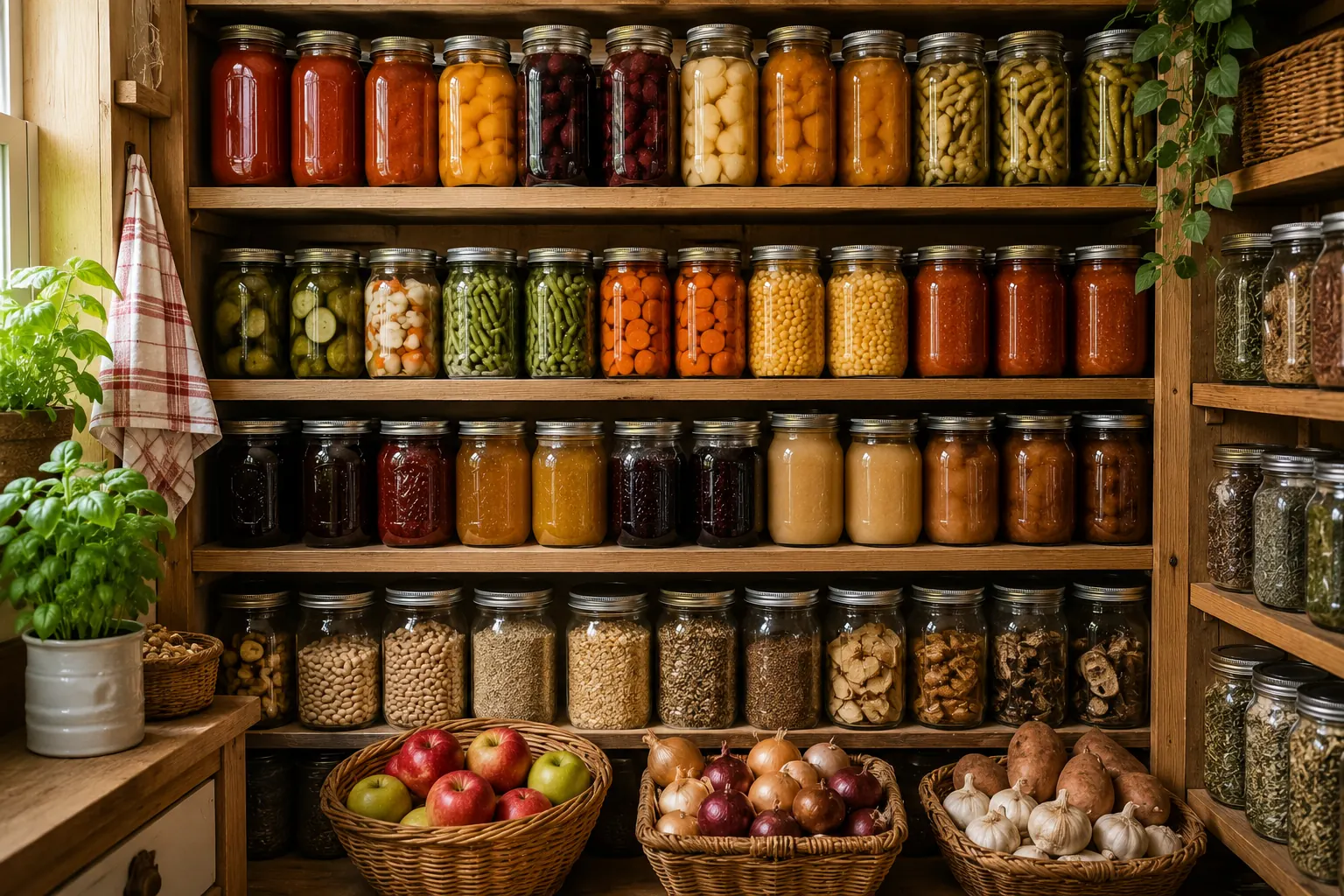
Open almost any pantry in late winter, and you’ll probably find the usual collection of canned vegetables, pasta, soup, cereal, and a few forgotten items pushed toward the back of the shelves. While there’s nothing wrong with having a pantry stocked with store-bought foods, there’s something especially satisfying about reaching for a jar of tomato sauce you made yourself or opening a freezer bag filled with blueberries picked at the height of summer.
A well-stocked pantry doesn’t happen overnight.
It isn’t created during one marathon weekend of canning or by trying to preserve every vegetable your garden produces in a single season. Instead, it’s built gradually throughout the year, one harvest at a time.
The secret is simple: preserve foods when they’re at their best, and by the time winter arrives, you’ll have shelves and freezers filled with the flavors of every season.
Here’s how to build a pantry you’ll be proud of, one season at a time.
Think of Your Pantry as a Year-Round Project
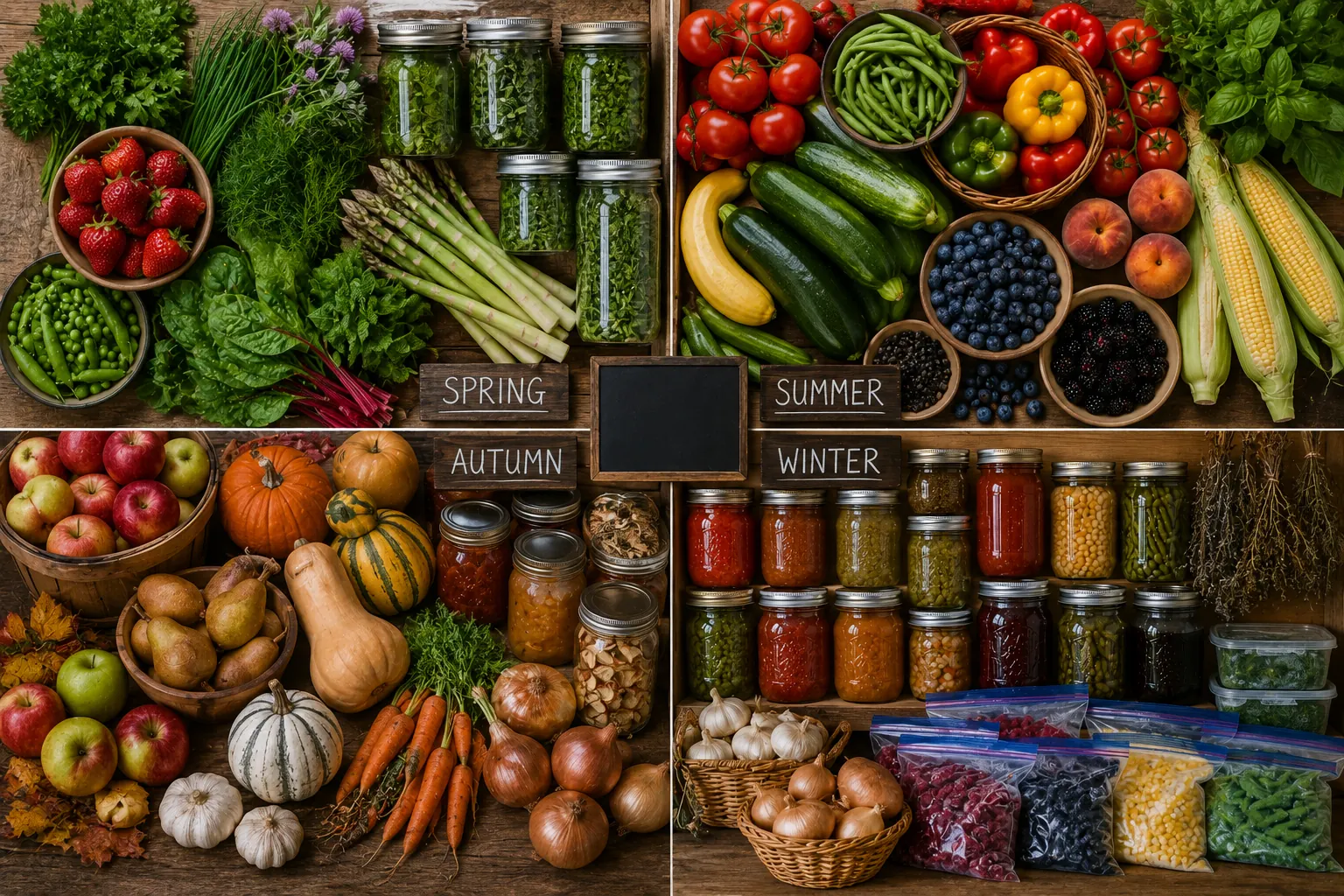
Many beginners make the mistake of viewing food preservation as something that only happens during late summer.
While August and September are certainly busy months, every season offers opportunities to preserve food.
Spring brings berries, herbs, and leafy greens.
Summer delivers tomatoes, peppers, beans, corn, and cucumbers.
Autumn offers apples, pumpkins, winter squash, carrots, and onions.
Winter provides time to organize, rotate inventory, and prepare for another growing season.
Looking at the entire year instead of one hectic harvest season makes food preservation far more enjoyable and much easier to manage.
Spring: The Season of Fresh Beginnings
After a long winter, spring feels like nature hitting the reset button.
The first strawberries appear at farmers’ markets, herbs begin growing rapidly, and cool-season vegetables start filling gardens.
Although spring harvests may seem smaller than summer’s abundance, they’re the perfect opportunity to begin stocking your pantry.
Fresh strawberries become homemade jam or freezer-ready berries for smoothies and desserts.
Tender herbs such as parsley, cilantro, chives, dill, oregano, thyme, and mint can be dried or frozen before the summer heat changes their flavor.
Leafy greens like spinach, kale, and Swiss chard freeze beautifully after a quick blanching and become valuable additions to soups, casseroles, and pasta dishes throughout the year.
Spring is also an excellent time to preserve asparagus if you’re fortunate enough to have a patch producing fresh spears.
By preserving these early harvests, your pantry begins growing long before tomato season arrives.
Summer: When the Garden Produces More Than You Can Eat
Summer is when food preservation shifts into high gear.
Tomatoes ripen almost faster than they can be picked.
Green beans seem endless.
Peppers, zucchini, cucumbers, corn, peaches, blueberries, blackberries, and countless other fruits and vegetables arrive in abundance.
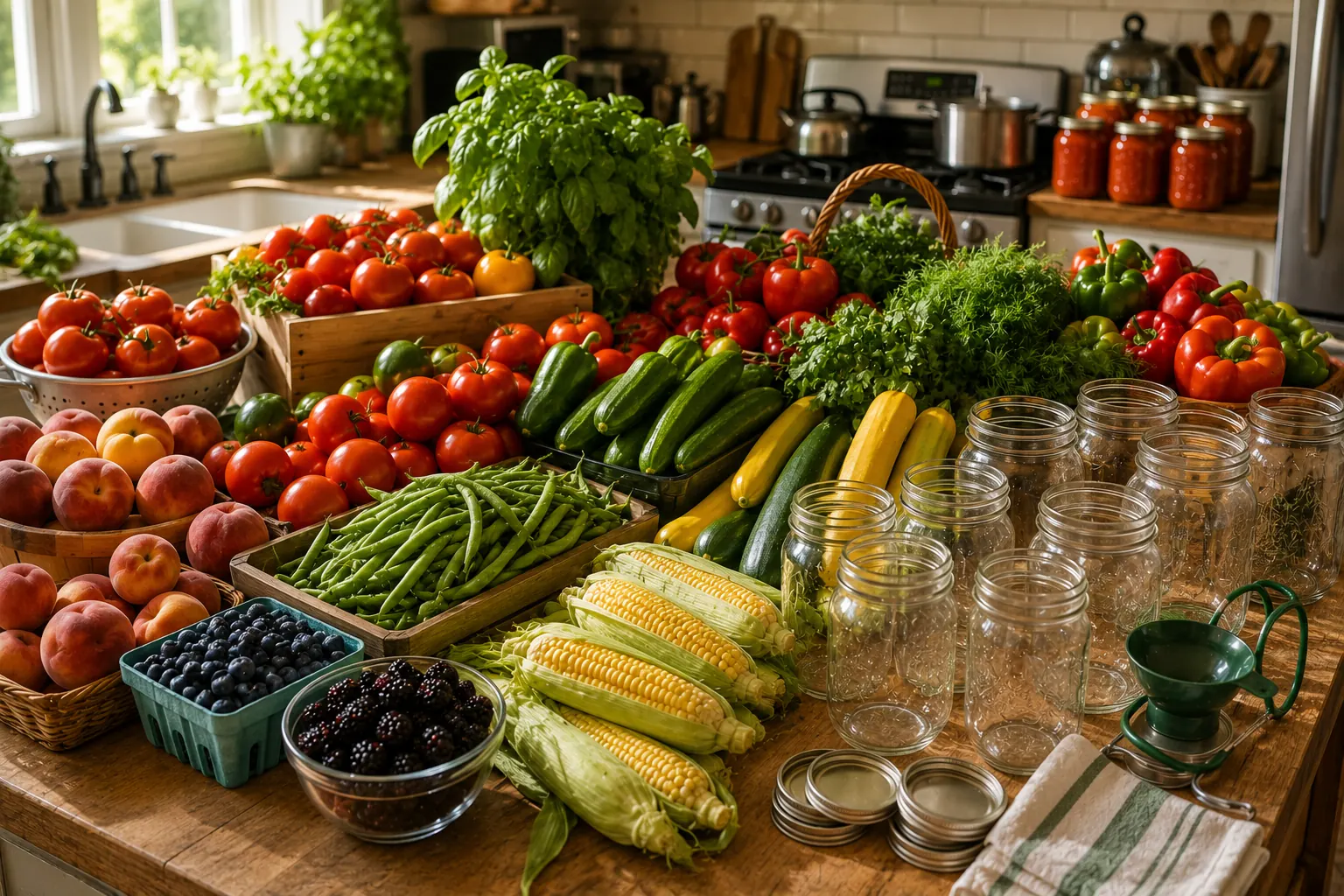
This is where planning makes all the difference.
Rather than trying to preserve everything at once, focus on a few crops each week.
Freeze green beans after blanching them.
Slice peppers and package them in meal-sized portions.
Preserve sweet corn while it’s at peak sweetness.
Turn tomatoes into pasta sauce, salsa, crushed tomatoes, or simply freeze them whole for later recipes.
Cucumbers become crisp pickles.
Fresh herbs can be dried in batches as they’re harvested.
Berries freeze beautifully with very little preparation, allowing you to enjoy fresh summer flavor long after berry season ends.
Each weekend adds another layer to your pantry.
By the end of summer, you’ll be amazed at how much food you’ve preserved without feeling overwhelmed.
Autumn: The Harvest Continues
Many people assume food preservation ends when summer does.
In reality, autumn offers some of the best preserving opportunities of the entire year.
Apples become applesauce, apple butter, pie filling, dehydrated slices, or freezer-ready desserts.
Pears preserve beautifully as slices, jams, and preserves.
Pumpkins can be cooked and frozen for pies, breads, soups, and muffins.
Winter squash often stores naturally for months when properly cured, making it one of the easiest vegetables to preserve.
Root vegetables like carrots, beets, potatoes, onions, and garlic can often be stored in cool, dry conditions or preserved using methods that fit your family’s cooking style.
Autumn is also a wonderful time to prepare homemade soups, stews, and broths for freezing.
Having those meals ready during the colder months makes busy evenings much easier.
Winter: Organize, Rotate, and Enjoy
Winter may seem quiet compared to harvest season, but it’s actually one of the most important times for maintaining your pantry.
This is when all the work from earlier in the year begins paying off.
Instead of buying expensive tomatoes in January, you’re opening jars of homemade sauce.
Frozen blueberries become pancakes on snowy mornings.
Homegrown green beans appear alongside holiday dinners.
Dried herbs flavor soups and casseroles while the garden rests beneath winter skies.
Winter is also the perfect time to inspect your pantry.
Check labels.
Rotate older foods toward the front.
Update your inventory.
Make note of which items you’re using quickly and which ones remain untouched.
These observations become valuable planning tools for next year’s harvest.
Perhaps you preserved too many pickles but not enough salsa.
Maybe your family finished every jar of applesauce by February.
Learning your family’s preferences helps each year’s pantry become even more useful.
Preserve the Foods You Actually Use
A beautiful pantry filled with food no one eats isn’t much of a success.
Instead of preserving everything you grow, focus on foods your family regularly enjoys.
If pasta is a weekly meal, preserve tomatoes.
If soups appear often during winter, freeze vegetables specifically for soup ingredients.
If everyone enjoys smoothies, berries deserve priority.
If homemade pizza is popular, tomato sauce, peppers, onions, and herbs become valuable pantry staples.
Food preservation works best when it supports your everyday cooking habits.
Build Meal Ingredients, Not Just Individual Foods
Many experienced food preservers think beyond individual vegetables.
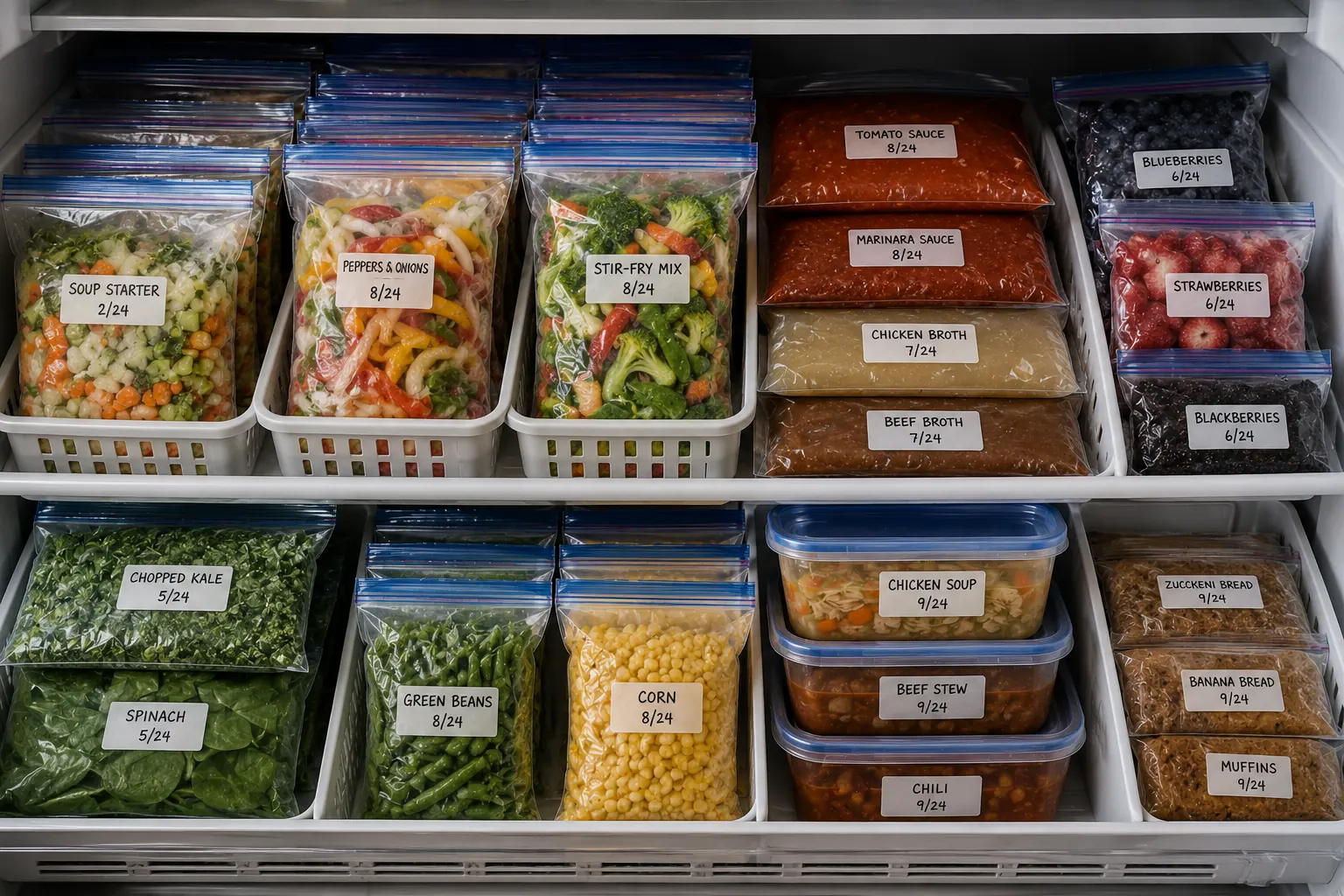
Instead of freezing onions, peppers, and celery separately, they prepare soup starter mixes.
Tomatoes, peppers, and onions become ready-to-use salsa ingredients.
Mixed vegetables are portioned for stir-fries.
Homemade broth is frozen in convenient containers.
These meal-ready ingredients save valuable time during busy weekdays.
Dinner becomes much easier when much of the preparation has already been completed months earlier.
Keep an Inventory
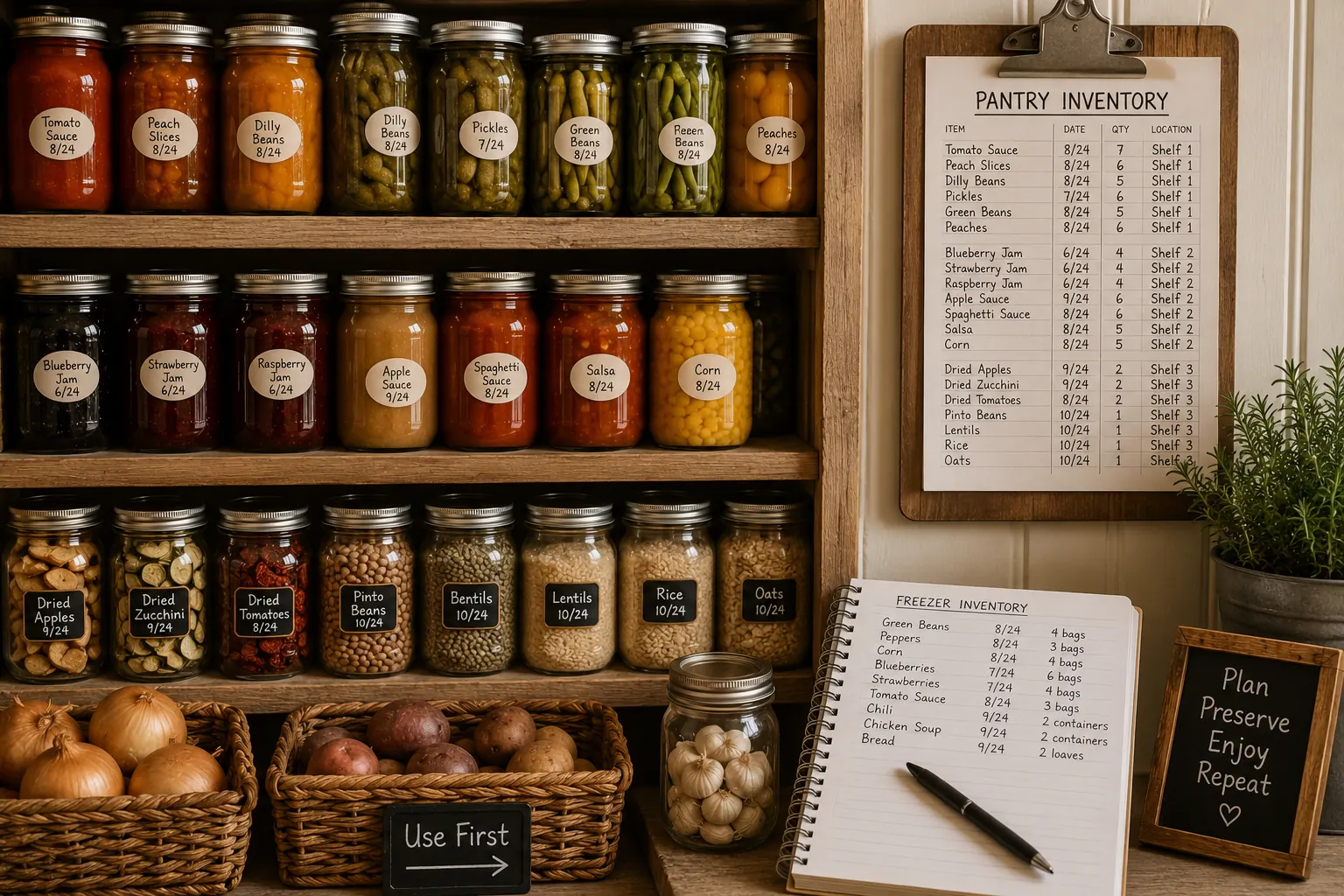
One of the simplest habits can also be one of the most helpful.
Keep a written inventory of your pantry and freezer.
It doesn’t have to be elaborate.
A notebook, clipboard, or simple spreadsheet works perfectly.
Record what you’ve preserved and approximately how many jars or packages remain.
Cross items off as they’re used.
This simple system prevents forgotten food from disappearing into the back of shelves or the bottom of the freezer.
It also makes grocery shopping easier because you already know what you have available at home.
Label Everything Clearly
It’s amazing how similar frozen containers begin to look after several months.
Always label every jar, freezer bag, or container with both the contents and the preservation date.
You’ll never regret spending those extra few seconds.
Future you will be grateful.
Proper labels also make rotating older food much easier, helping ensure everything gets used while it’s still at its best quality.
Don’t Try to Fill the Pantry in One Season
One mistake many beginners make is believing they need hundreds of jars before they’ve truly succeeded.
Nothing could be further from the truth.
The most impressive pantries weren’t built in a single year.
They grew gradually.
Each season added a little more experience, a few new recipes, and greater confidence.
Start with a handful of freezer bags, a few jars of jam, or several containers of tomato sauce.
Next season, add pickles.
The following year, perhaps try pressure canning vegetables or making homemade broth.
Before long, your pantry will naturally reflect years of learning and careful planning.
The Rewards Go Beyond Saving Money

A well-stocked pantry certainly helps reduce grocery bills, especially during the off-season when fresh produce becomes expensive.
But the rewards don’t stop there.
Every jar represents food that didn’t go to waste.
Every freezer bag captures produce at its peak flavor.
Every homemade recipe reflects ingredients you selected yourself.
Perhaps most importantly, your pantry becomes a reminder of the changing seasons.
Summer tomatoes brighten winter dinners.
Spring berries become holiday desserts.
Autumn apples turn into warm breakfasts months after the leaves have fallen.
Instead of relying entirely on the grocery store, you’ve preserved a little of each season to enjoy whenever you choose.
One Season Builds Upon the Next
Building a pantry you’ll be proud of isn’t about perfection.
It isn’t about filling every shelf during your first year.
It’s about creating a steady rhythm that follows the seasons.
Harvest.
Preserve.
Store.
Enjoy.
Repeat.
Each year you’ll discover new recipes, improve your techniques, and better understand which foods your family enjoys most.
Before long, preserving food becomes as natural as planting a garden or visiting the farmers’ market.
And one cold winter evening, when you open a jar of homemade tomato sauce, sprinkle dried herbs into a simmering soup, or serve peaches you preserved months earlier, you’ll realize something.
You didn’t simply fill a pantry.
You captured an entire year’s harvest, one season at a time.
Ready to Preserve Your Harvest with Confidence?
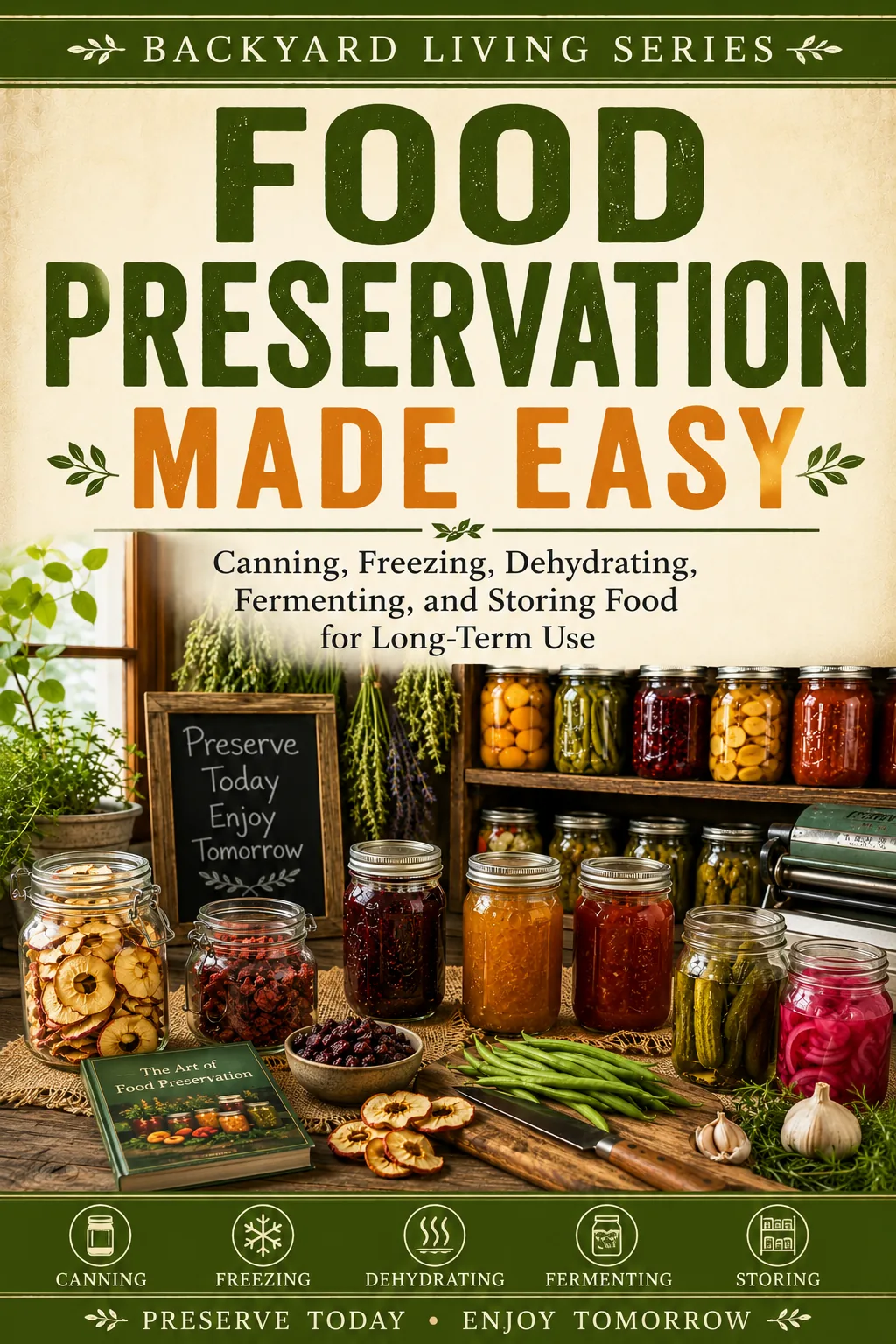
Food Preservation Made Easy expands on each of these topics with clear, step-by-step guidance designed specifically for beginners. From water bath canning and pressure canning to freezing, dehydrating, fermenting, and long-term food storage, the book walks you through safe, proven methods that help you preserve your harvest, reduce food waste, and enjoy homegrown goodness all year long. 🫙
More Food Preservation Articles
If you found this article helpful, these beginner guides are a great next step:
Get Your FREE Backyard Starter Toolkit
Download our free Backyard Starter Toolkit, packed with printable planners, checklists, and beginner resources to help you build, grow, raise, and thrive.
About the Author
Steve McChesney is the founder of Backyard Living Books and has spent decades helping homeowners build, grow, raise, and preserve more from their own backyards. Through practical, beginner-friendly guides, he encourages people to tackle one backyard project at a time and enjoy the satisfaction that comes with learning new skills.