
Backyard Learning Center
Learn practical backyard skills one project at a time through beginner-friendly articles, seasonal tips, and step-by-step guides that help you build, grow, raise, and thrive.
10 Food Preservation Mistakes Every Beginner Should Avoid
(July 2026 – Estimated Reading Time: 8 Minutes)
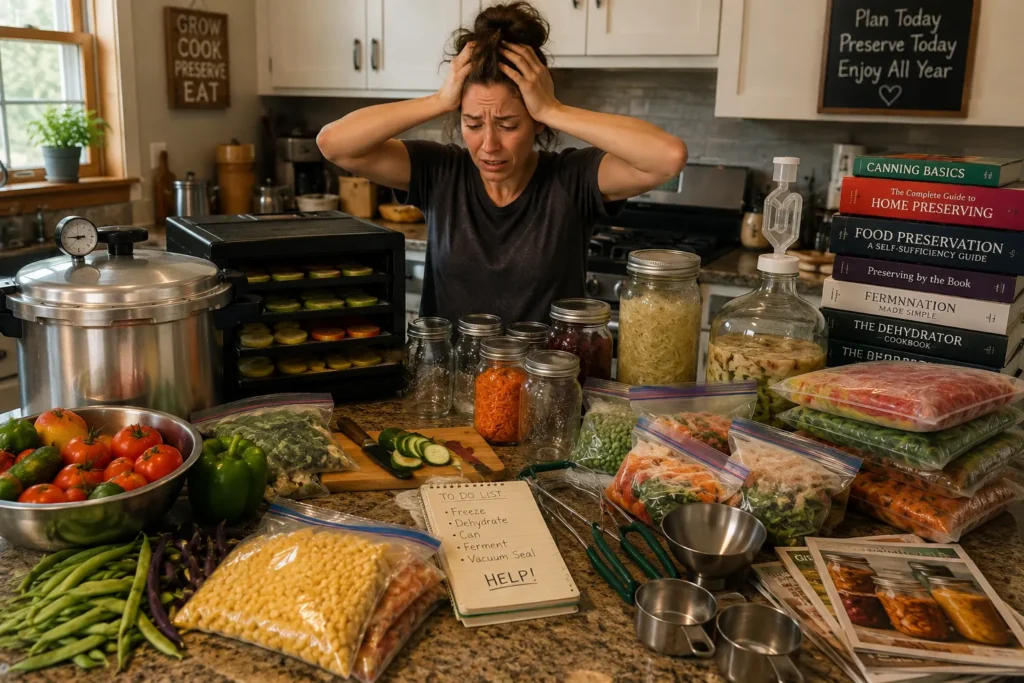
Every year, countless people decide they’re finally going to preserve food. Maybe the garden produced more tomatoes than expected. Perhaps peaches were on sale at the farmers’ market, or a neighbor shared a bumper crop of green beans. The excitement is real, the kitchen is full of fresh produce, and visions of a well-stocked pantry begin to take shape.
Then reality sets in.
The tomatoes spoil before they’re processed. The freezer fills faster than expected. A batch of jam doesn’t set. Labels get forgotten. Before long, what started as an exciting project feels overwhelming.
The good news is that nearly every experienced home food preserver has made beginner mistakes. The difference is that they learned from them and adjusted their approach.
If you’re just getting started, avoiding these common pitfalls will save time, reduce waste, and help you build confidence with every batch you preserve.
Mistake #1: Waiting Too Long to Preserve Fresh Produce
One of the biggest mistakes happens before preservation even begins.
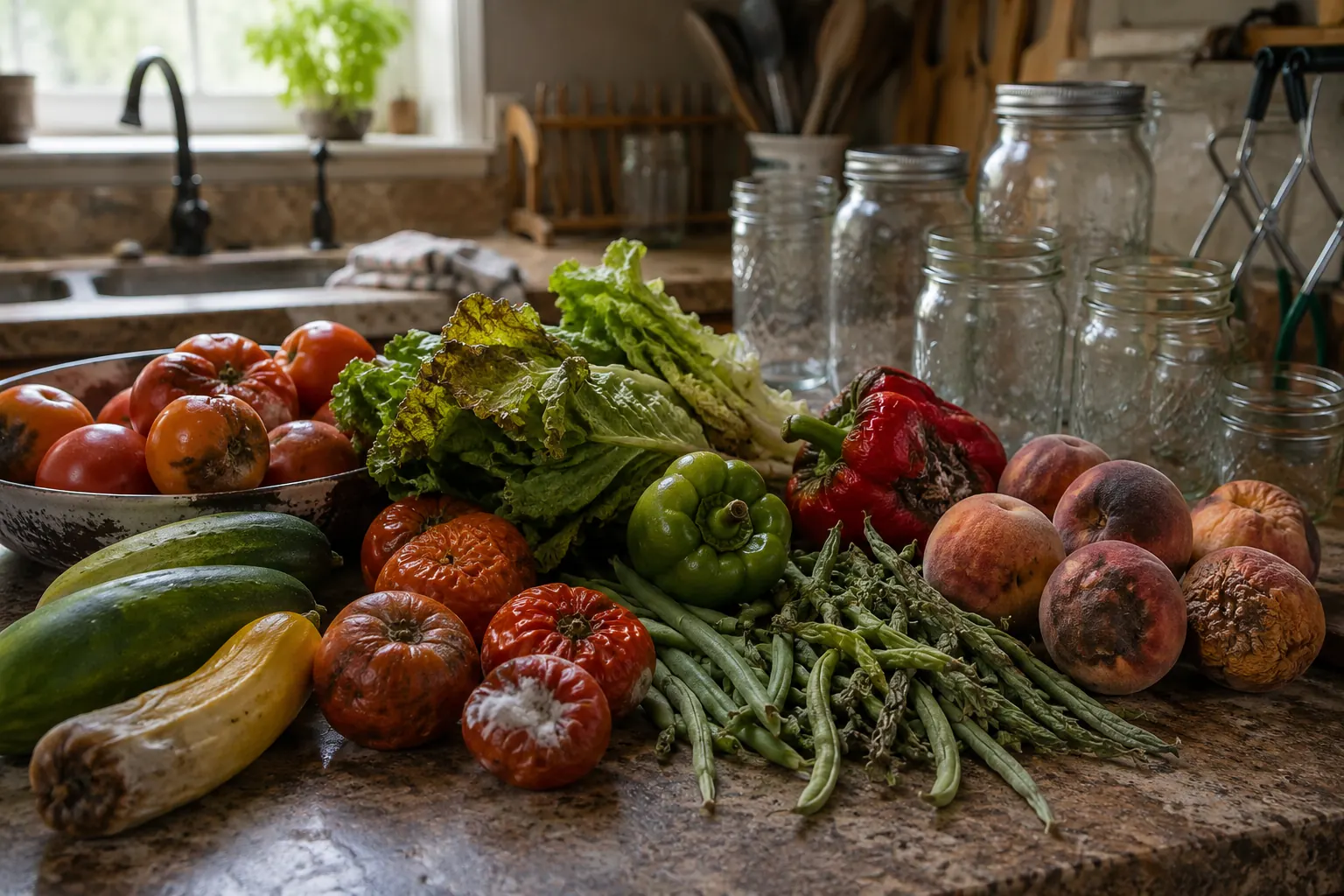
Fresh fruits and vegetables continue to age after they’re picked. Every day they sit on the kitchen counter, they lose moisture, sweetness, texture, and nutritional value. While some produce ripens after harvest, most vegetables begin declining almost immediately.
It’s tempting to wait until the weekend or until you have enough produce for one giant preserving session. Unfortunately, by then your tomatoes may be soft, your peaches bruised, and your green beans beginning to wilt.
The best preserved food starts with the freshest ingredients.
If you harvest vegetables from your own garden, try to preserve them the same day whenever possible. If you purchase produce from a farmers’ market, plan your shopping around the time you’ll have available to process it.
Your finished product will taste noticeably better.
Mistake #2: Trying Every Preservation Method at Once
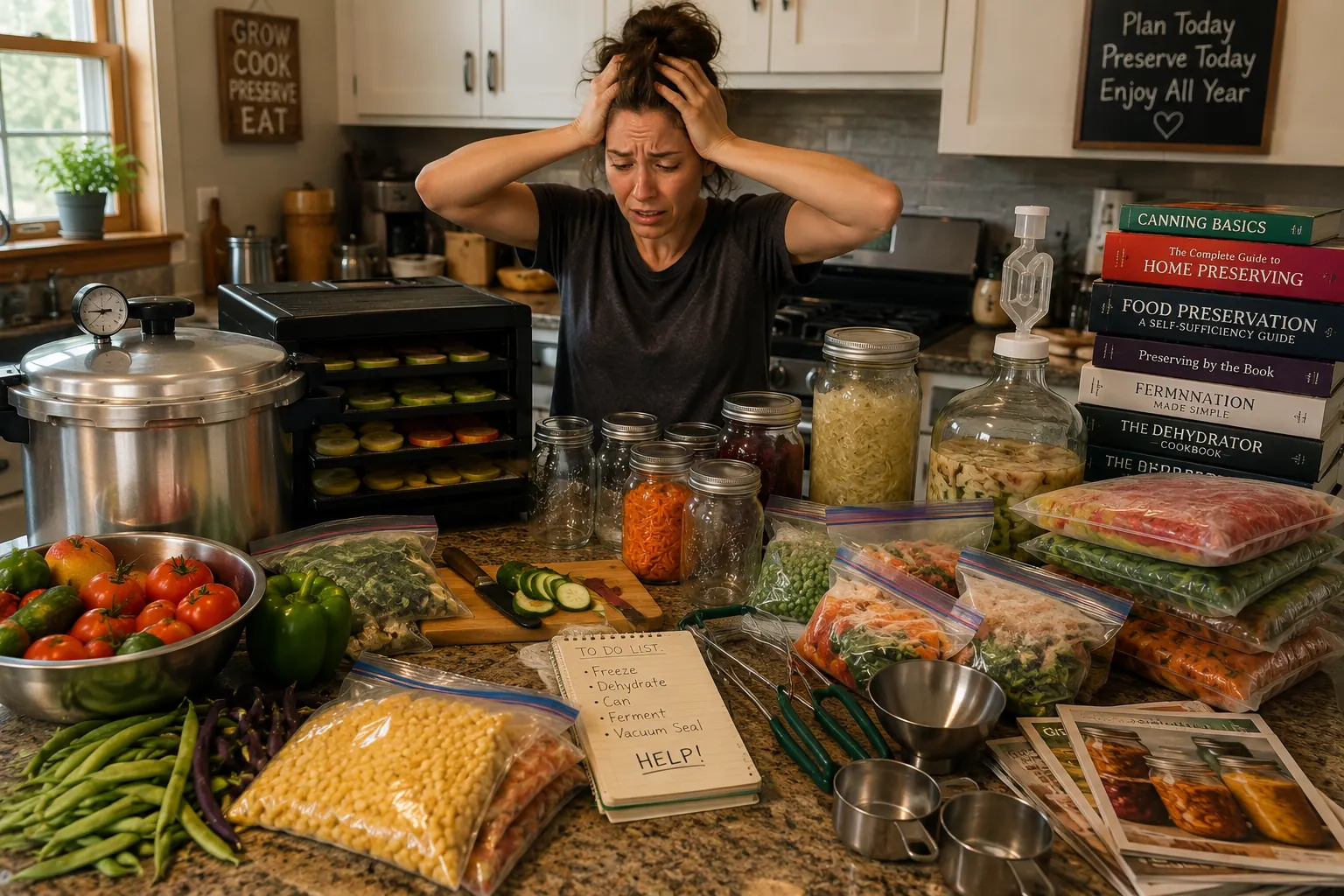
Food preservation opens the door to freezing, dehydrating, water bath canning, pressure canning, fermentation, and root storage.
Many beginners become excited and decide to learn all of them during their very first season.
That’s a recipe for frustration.
Each preservation method has its own equipment, techniques, and learning curve. Attempting to master everything at once often leads to confusion and burnout.
Instead, choose one method and become comfortable with it.
Freezing is an excellent place to begin because it requires little specialized equipment. Once you’re confident, perhaps add dehydrating or simple water bath canning. As your experience grows, pressure canning and fermentation become much easier to understand.
Building one skill at a time is far more enjoyable than trying to become an expert overnight.
Mistake #3: Ignoring Food Safety Guidelines
Food preservation isn’t difficult, but it does require following proven procedures.
Many beginners are tempted to alter recipes, shorten processing times, or use techniques they found on social media without verifying whether they’re safe.
This is especially important when canning.
Some foods require boiling water processing, while others must be pressure canned to eliminate harmful bacteria. Using the wrong method can create serious food safety risks that aren’t always visible.
Fortunately, modern food preservation has been extensively researched. Reliable recipes have been carefully tested to produce safe, dependable results.
Following those tested instructions isn’t about making preservation more complicated. It’s about making sure your family can enjoy the food with complete confidence.
Mistake #4: Underestimating Preparation Time
Watching someone preserve food online often makes the process look surprisingly quick.
What those videos rarely show is the washing, peeling, trimming, blanching, sterilizing, chopping, labeling, and cleanup that happens before and after the jars are filled.
Many beginners believe they’ll preserve an entire garden harvest in one afternoon.
A few hours later they’re surrounded by dishes, cutting boards, produce scraps, and jars while the clock keeps ticking.
Instead of planning enormous preserving sessions, divide large harvests into smaller batches.
One afternoon might be dedicated to freezing vegetables. Another evening can be spent making jam. Herbs can be dried over the next several days.
Smaller projects are easier to manage and much more enjoyable.
Mistake #5: Buying Too Much Equipment Too Soon
Walk into any kitchen supply store and it’s easy to believe you need dozens of specialized tools before preserving your first tomato.
Pressure canners, dehydrators, vacuum sealers, specialized funnels, jar lifters, racks, thermometers, storage systems, and dozens of other gadgets compete for your attention.
The truth is that beginners need far less than they think.
Most kitchens already contain many of the basic tools required for freezing and simple food preparation. Water bath canning requires only a handful of inexpensive additions. If you discover that you genuinely enjoy preserving food, you can gradually invest in additional equipment over the coming seasons.
Buying slowly also allows you to discover which preservation methods you enjoy the most.
There’s little reason to purchase an expensive dehydrator if you eventually decide freezing and canning better fit your family’s needs.
Mistake #6: Forgetting to Label Everything
This mistake seems harmless at first.
You place a container of frozen vegetables into the freezer, fully convinced you’ll remember exactly what’s inside.
Three months later it looks remarkably similar to every other frozen container.
Was it tomato sauce or chili?
Green beans or asparagus?
When was it preserved?
Without labels, even the most organized freezer or pantry becomes a guessing game.
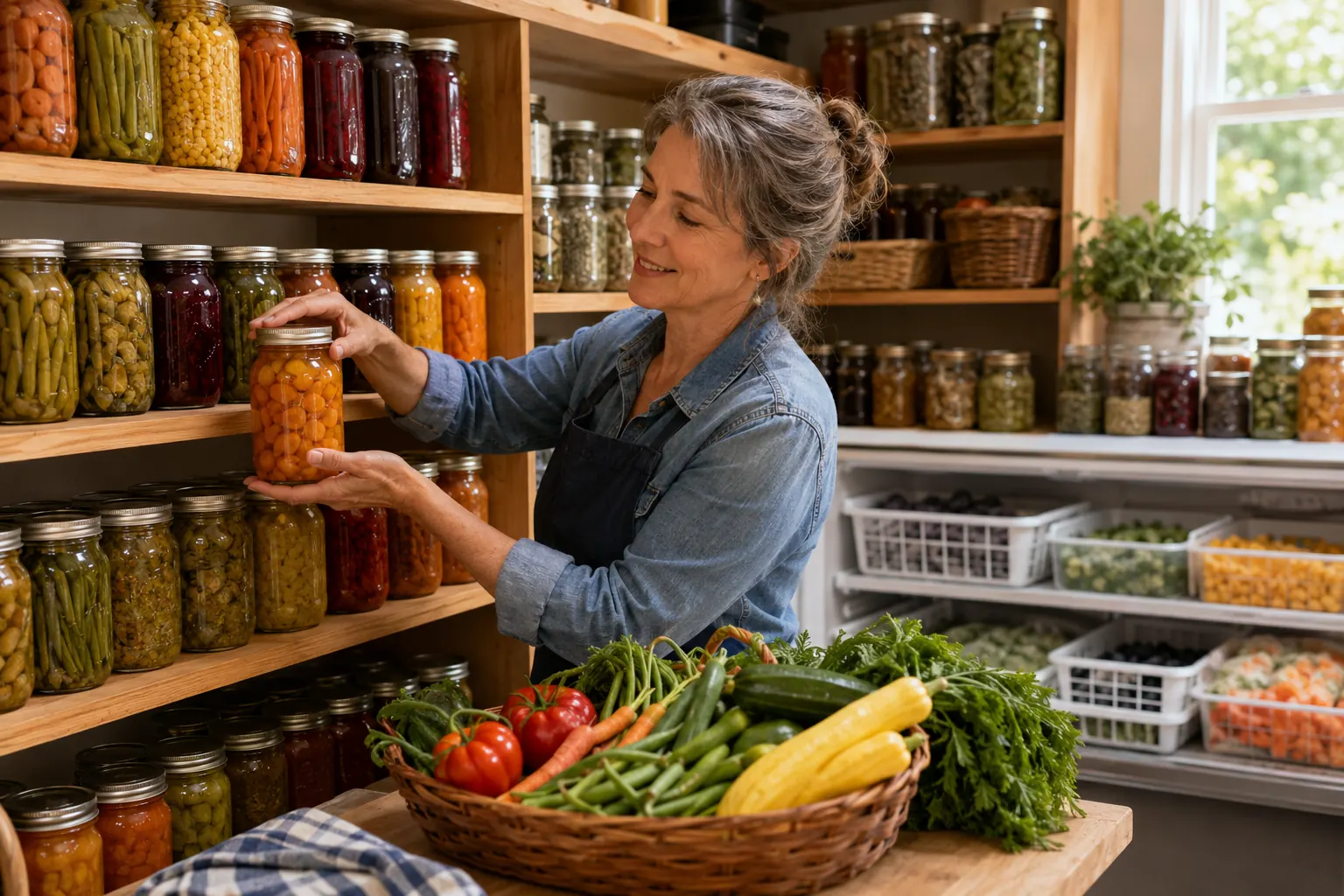
Develop the habit of labeling every jar, freezer bag, and container before it gets stored.
Include the contents and the date.
That simple step takes only seconds but saves countless headaches later.
It also helps you rotate older food first, reducing waste and keeping your pantry organized throughout the year.
Mistake #7: Filling the Freezer Without a Plan
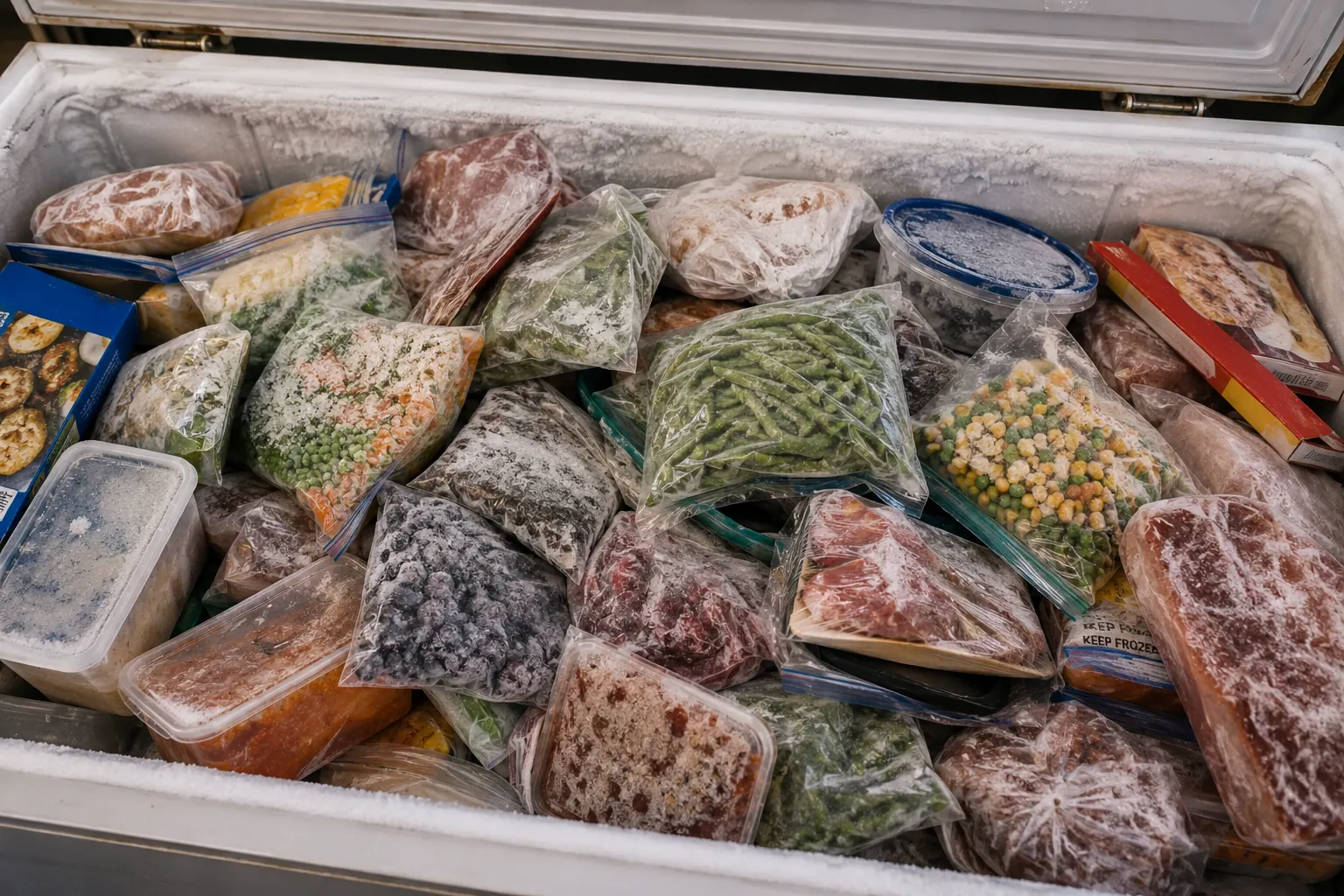
Freezers have an incredible ability to swallow food until one day nothing else fits.
Many beginners freeze vegetables, soups, meats, berries, casseroles, and leftovers wherever space happens to be available.
Months later, finding a single package becomes an archaeological dig.
Before long, older food disappears beneath newer additions and eventually develops freezer burn simply because it was forgotten.
A little organization goes a long way.
Group similar foods together. Keep an inventory near the freezer. Rotate older packages toward the front where they’ll be used first.
You’ll waste less food and spend far less time searching through frozen packages.
Mistake #8: Preserving Foods Your Family Doesn't Actually Eat
It’s surprisingly easy to preserve food simply because it’s available.
A neighbor offers thirty pounds of zucchini.
The grocery store has an incredible sale on peaches.
Your garden produces far more beets than expected.
Before long, your pantry is full of foods your family rarely eats.
Successful food preservation isn’t measured by how many jars you fill.
It’s measured by how many empty jars you have at the end of the year because the food was actually enjoyed.
Focus first on preserving foods your household already loves.
If your family goes through pasta sauce every week, preserve tomatoes. If everyone enjoys applesauce, make plenty. If frozen berries disappear in smoothies and desserts, prioritize those.
Building a pantry around your family’s eating habits ensures your hard work never goes to waste.
Mistake #9: Skipping Regular Pantry and Freezer Checks
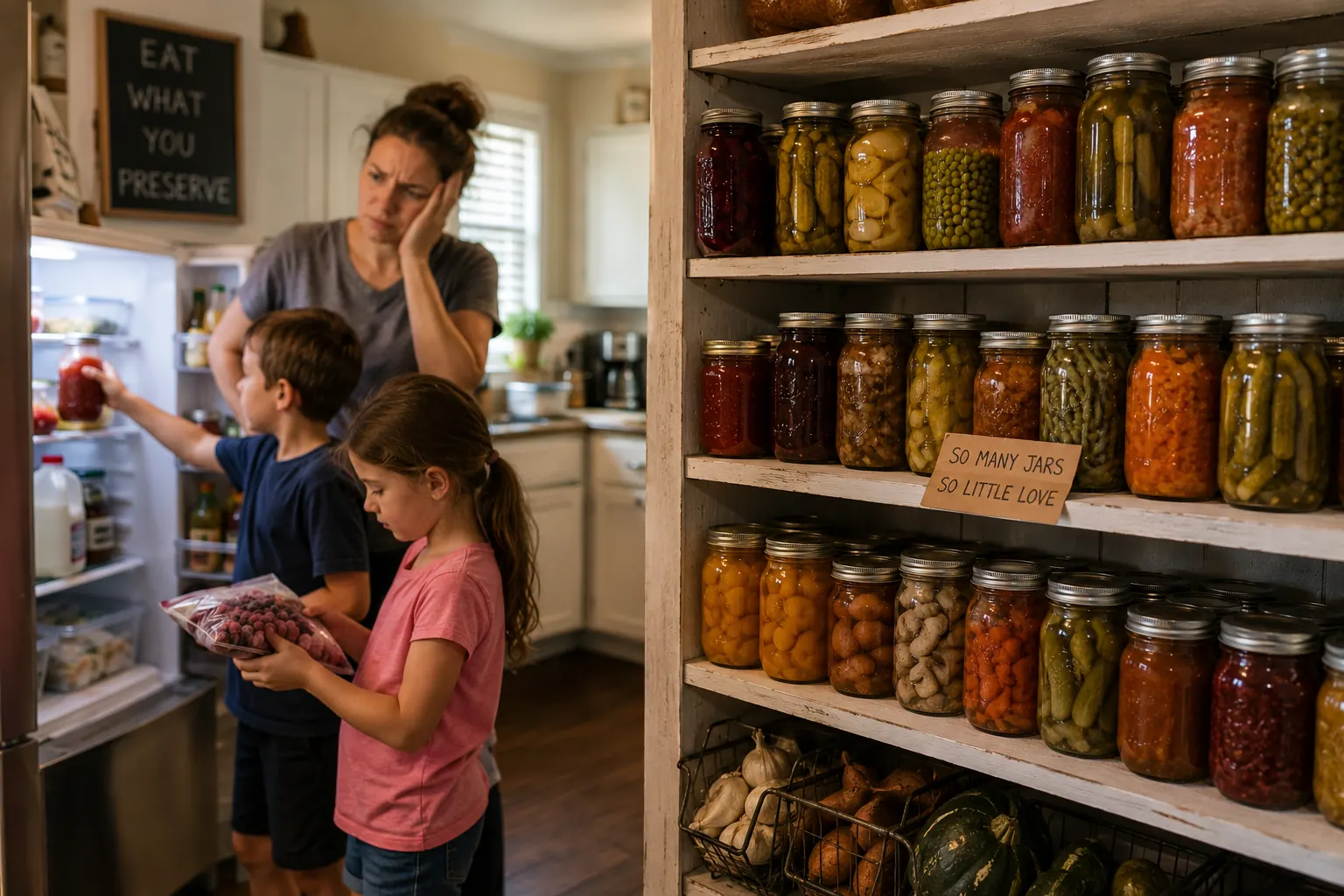
Many beginners assume that once food is preserved, the job is finished.
In reality, preserving food also means managing your inventory throughout the year.
Spend a few minutes every month checking your pantry and freezer.
Look for jars with broken seals, rotate older foods toward the front, update your inventory, and make note of items running low.
This simple habit prevents surprises and helps you plan next season’s preserving efforts.
You may discover you preserved far too many pickles but not nearly enough tomato sauce.
Those observations make each year’s harvest even more successful than the last.
Mistake #10: Expecting Perfection
Perhaps the biggest mistake of all is believing every batch must turn out perfectly.
The reality is that food preservation is a skill developed through experience.
Your first jam may be slightly runny.
A dehydrated batch of apple slices may become a little crispier than intended.
You might overfill a freezer bag or forget to remove enough air before sealing it.
None of those experiences mean you’ve failed.
Each batch teaches something new.
Every experienced home food preserver can tell stories about jars that didn’t seal, recipes that didn’t become family favorites, or vegetables that were accidentally overcooked during blanching.
Those lessons become valuable experience, and each season your confidence grows.
The Secret to Long-Term Success
The people who become excellent at food preservation aren’t necessarily the ones with the biggest gardens or the fanciest kitchens.
They’re the ones who keep showing up season after season.
They preserve a little, learn a little, improve a little, and gradually build a pantry filled with foods they know their families will enjoy.
Food preservation isn’t about achieving perfection.
It’s about reducing waste, stretching your grocery budget, enjoying seasonal flavors all year long, and developing practical skills that become more rewarding with every harvest.
If you’re just beginning, don’t worry about preserving everything.
Choose one fruit, one vegetable, or one recipe that interests you. Follow reliable instructions, work at a comfortable pace, and enjoy the process.
Every experienced home food preserver started exactly the same way.
One jar.
One freezer bag.
One successful batch at a time.
Ready to Preserve Your Harvest with Confidence?
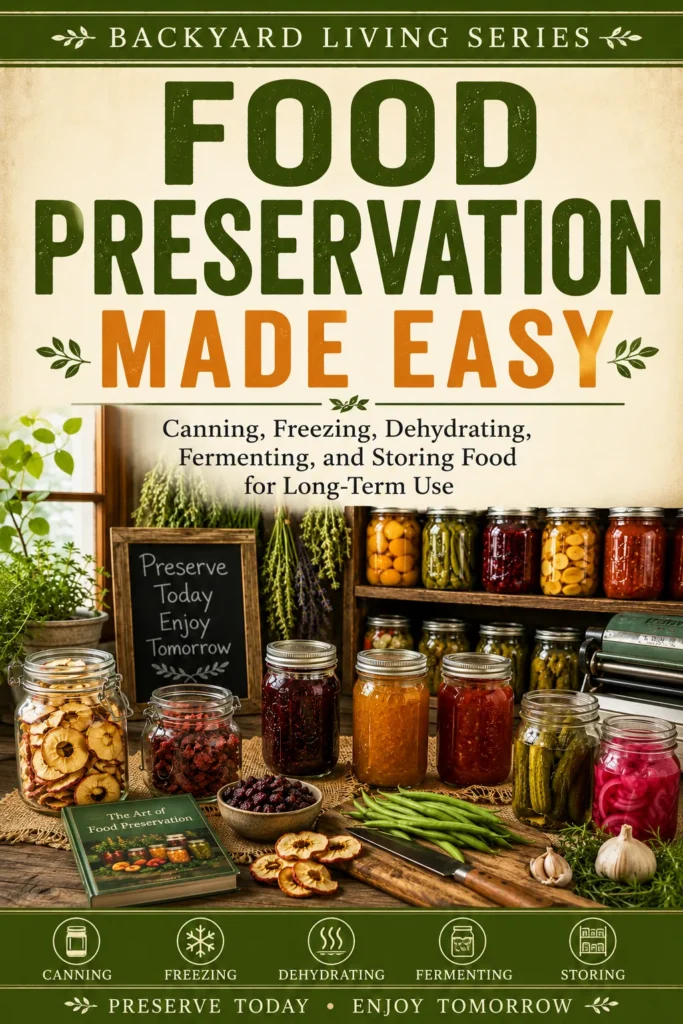
Food Preservation Made Easy expands on each of these topics with clear, step-by-step guidance designed specifically for beginners. From water bath canning and pressure canning to freezing, dehydrating, fermenting, and long-term food storage, the book walks you through safe, proven methods that help you preserve your harvest, reduce food waste, and enjoy homegrown goodness all year long. 🫙
More Food Preservation Articles
If you found this article helpful, these beginner guides are a great next step:
Â
Get Your FREE Backyard Starter Toolkit
Download our free Backyard Starter Toolkit, packed with printable planners, checklists, and beginner resources to help you build, grow, raise, and thrive.
About the Author
Steve McChesney is the founder of Backyard Living Books and has spent decades helping homeowners build, grow, raise, and preserve more from their own backyards. Through practical, beginner-friendly guides, he encourages people to tackle one backyard project at a time and enjoy the satisfaction that comes with learning new skills.