Backyard Learning Center

Learn practical backyard skills one project at a time through beginner-friendly articles, seasonal tips, and step-by-step guides that help you build, grow, raise, and thrive.

What Do Chickens Eat?

A Beginner's Guide to Feeding Healthy, Happy Backyard Chickens

(July 2026 – Estimated Reading Time: 9 Minutes)

One of the first questions every new chicken owner asks is surprisingly simple:

What exactly do chickens eat?

If you’ve watched chickens scratching around a backyard, you might assume they’ll happily survive on bugs, weeds, and kitchen scraps alone. While chickens are excellent foragers and enjoy a wide variety of foods, they still need a balanced diet to stay healthy and produce plenty of fresh eggs.

Fortunately, feeding chickens is much easier than many beginners expect.

With the right feed, clean water, and a few healthy treats, your flock can thrive for years.

The Foundation of Every Chicken's Diet
Chicken Feed

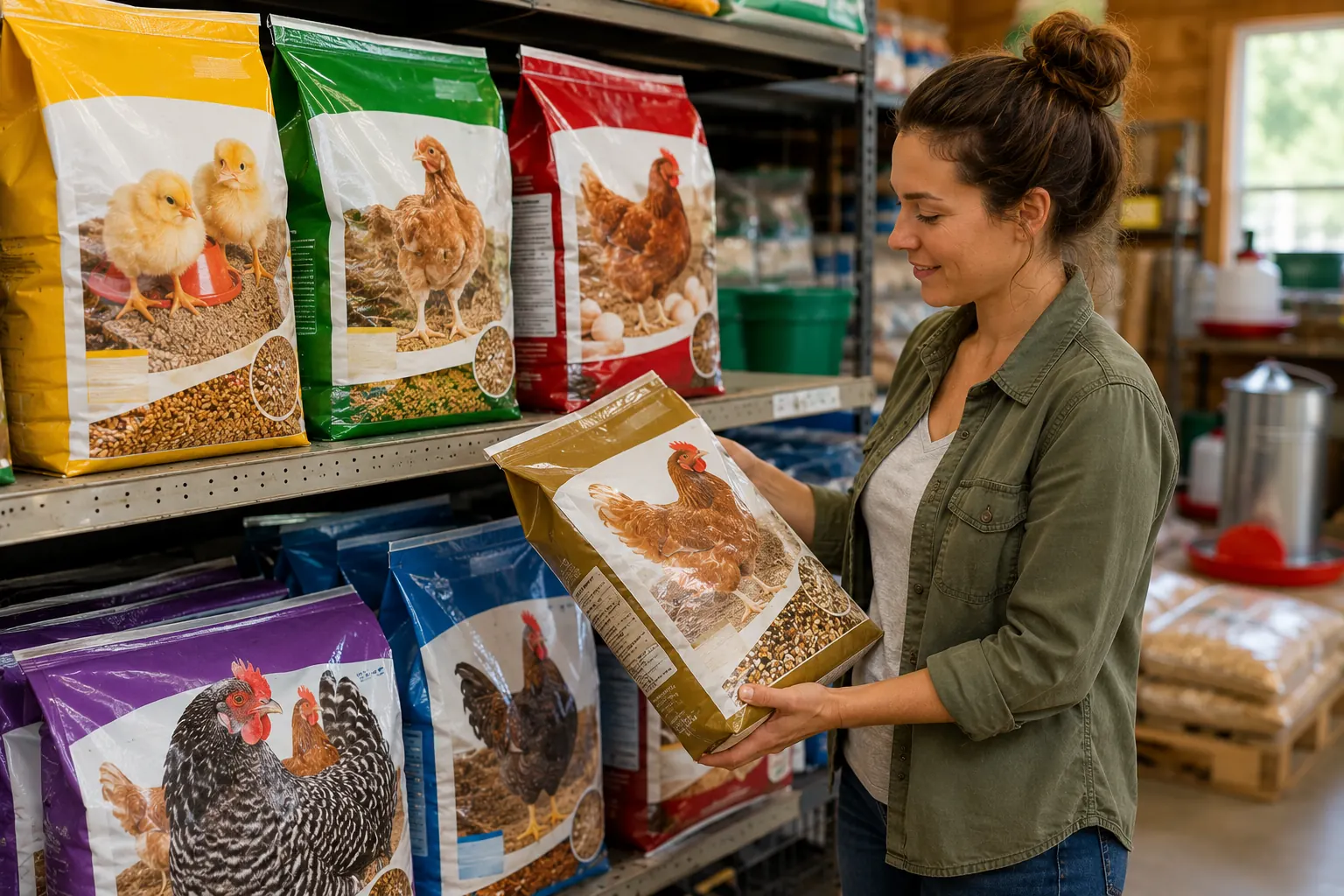
Think of commercial chicken feed as a complete nutritional package.

Quality feed contains carefully balanced amounts of:

  • Protein
  • Carbohydrates
  • Healthy fats
  • Vitamins
  • Minerals
  • Amino acids

Rather than trying to mix ingredients yourself, most backyard chicken keepers simply choose a high-quality commercial feed designed for their birds’ age and purpose.

It’s the easiest way to ensure your flock receives proper nutrition every day.

Different Feeds for Different Ages

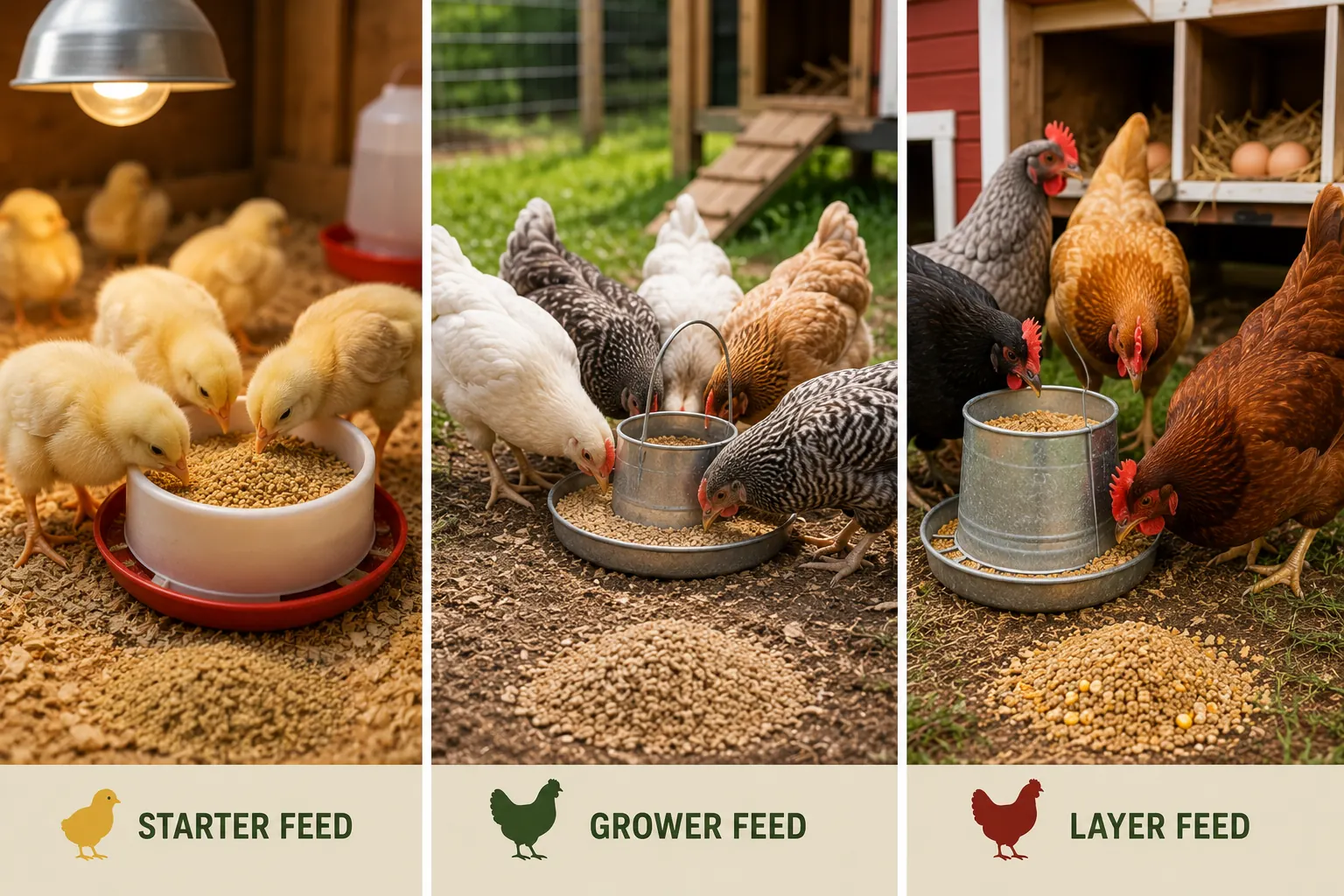
Chicken Ages

Just like puppies and kittens, chickens have different nutritional needs as they grow.

Chick Starter Feed

From hatch until about six weeks of age, chicks need a starter feed containing higher levels of protein to support rapid growth.

Most starter feeds contain 18 to 20 percent protein.

Grower Feed

As young birds continue developing, they transition to grower feed.

This slightly lower protein diet encourages healthy growth without excessive weight gain.

Grower feed is typically fed until birds begin laying eggs.

Layer Feed

Once hens begin laying, usually around 18 to 24 weeks, they should switch to layer feed.

Layer feed contains additional calcium to help produce strong eggshells while still supplying balanced nutrition.

For most backyard flocks, layer feed becomes the everyday staple.

Fresh Water Is Even More Important

If feed is important, water is absolutely essential.

A laying hen drinks far more water than many people realize, especially during hot weather.

Always provide:

  • Clean water
  • Fresh water every day
  • Enough watering space for the entire flock
  • Shade during summer

Even a short interruption in water can reduce egg production and increase stress.

During freezing weather, many chicken keepers use heated waterers to prevent ice from forming.

Do Chickens Need Grit?

Yes…but only under certain circumstances.

If chickens spend most of their time eating commercial feed, they often receive everything they need.

However, birds that:

  • Free-range
  • Eat scratch grains
  • Receive kitchen scraps
  • Consume plants and insects

should also have access to insoluble grit.

Because chickens have no teeth, grit remains inside the gizzard where it helps grind food into digestible pieces.

Many flock owners simply provide a small container of grit that birds can use as needed.

Why Laying Hens Need Calcium

Producing an eggshell every day requires a surprising amount of calcium.

Although layer feed already contains added calcium, many backyard keepers also offer crushed oyster shell in a separate feeder.

The hens will consume extra calcium only when they need it.

Never mix additional calcium directly into feed for young chicks or growing birds.

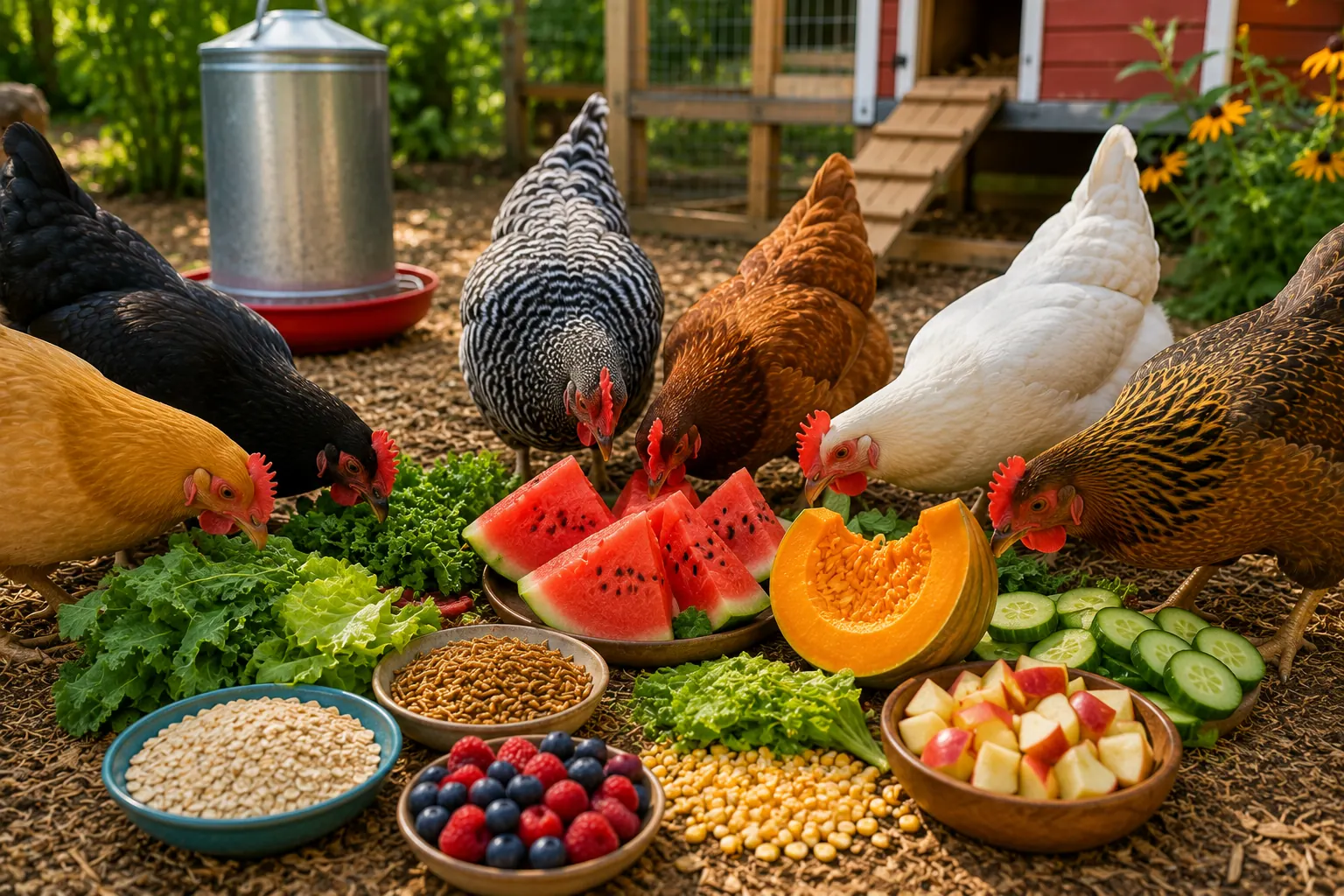
Healthy Treats Chickens Love

Treats can make your flock happier while encouraging natural foraging behavior.

Popular healthy treats include:

  • Mealworms
  • Leafy greens
  • Lettuce
  • Kale
  • Spinach (in moderation)
  • Watermelon
  • Pumpkin
  • Cucumbers
  • Tomatoes (ripe fruit only)
  • Corn
  • Oats
  • Berries
  • Apples without seeds

Treats should remain exactly that…treats.

Most experts recommend keeping treats to no more than about 10 percent of the overall diet.

Too many treats reduce the amount of balanced feed chickens eat.

Chicken treats

Foods Chickens Should Never Eat

Although chickens enjoy many different foods, a few items should always stay off the menu.

Avoid feeding:

  • Chocolate
  • Avocado skin and pits
  • Raw dried beans
  • Moldy food
  • Alcohol
  • Excessively salty foods
  • Raw potato peels from green potatoes
  • Spoiled leftovers

When in doubt, it’s safer not to feed questionable foods.

Can Chickens Live on Kitchen Scraps?

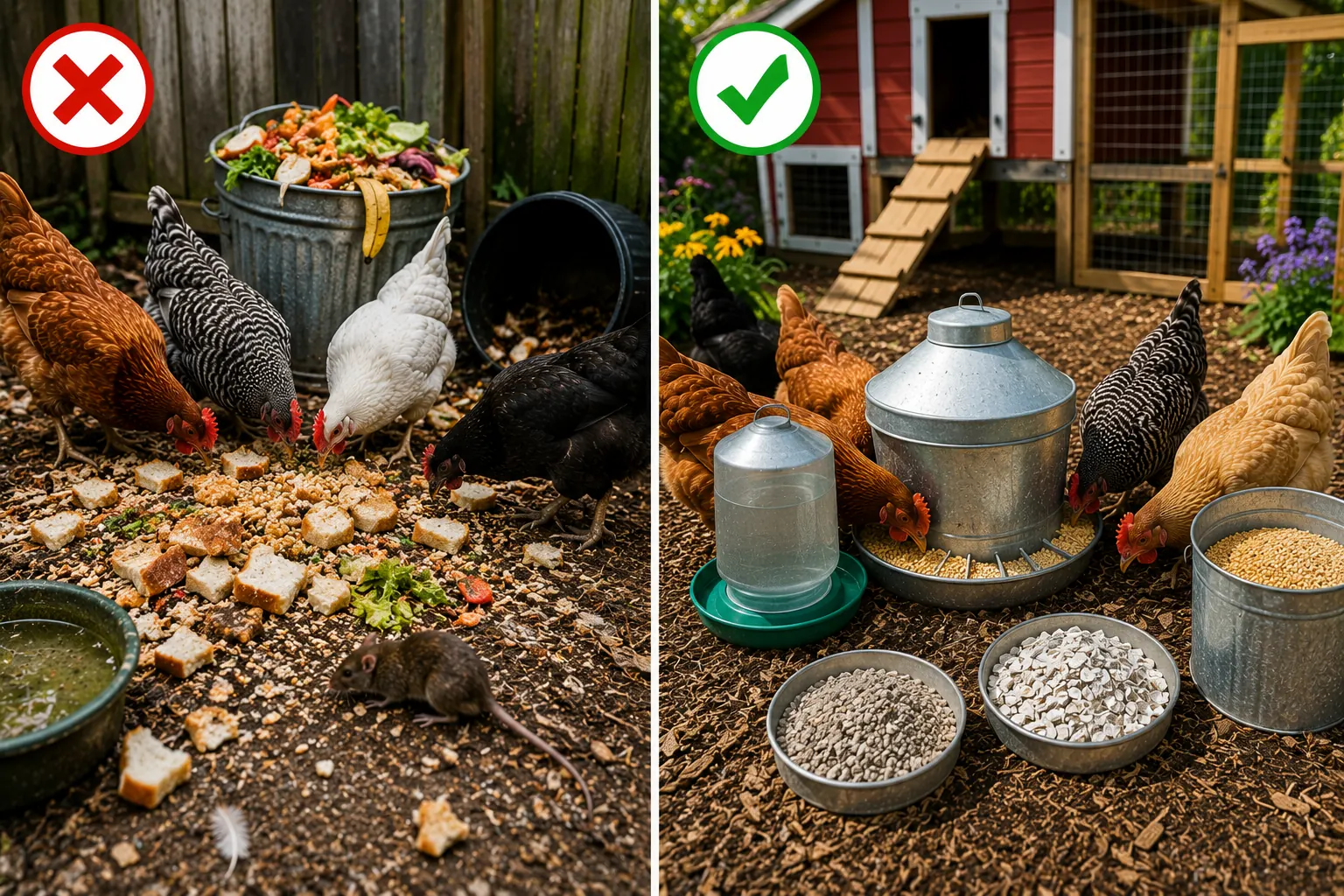
Kitchen scraps are a wonderful supplement but should never replace balanced feed.

Vegetable trimmings, fruit scraps, stale bread in moderation, and cooked rice can all become enjoyable snacks.

Commercial layer feed should still remain the primary source of nutrition.

Think of scraps as dessert, not dinner.

What About Free-Ranging?

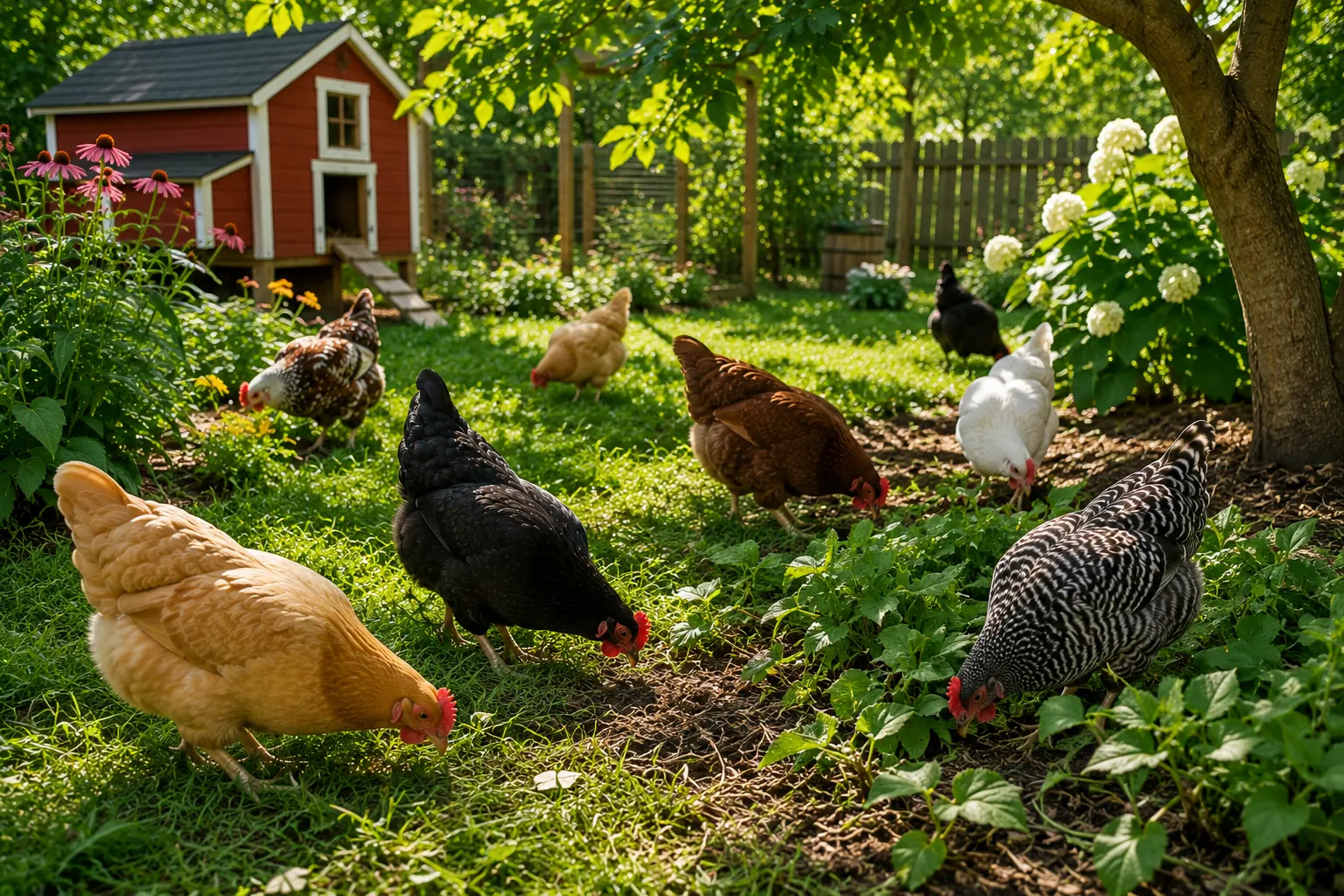
Free Range Chickens

One of the joys of backyard chickens is watching them forage.

Free-ranging birds naturally eat:

  • Grass
  • Seeds
  • Insects
  • Beetles
  • Worms
  • Small frogs
  • Tender plants

This natural behavior provides enrichment while reducing feed consumption slightly.

Even excellent foragers, however, still need balanced feed available each day.

Should You Feed Scratch Grains?

Scratch grains are often misunderstood.

Many beginners assume they’re complete chicken feed.

They’re not.

Scratch is simply a grain mix used as an occasional treat.

Because it’s high in carbohydrates, many owners scatter small amounts during cold weather or use it to encourage natural scratching behavior.

Too much scratch reduces the nutritional balance of the flock’s diet.

Feeding During Winter

Cold weather increases a chicken’s energy needs.

Most flocks naturally eat slightly more feed during winter while maintaining body heat.

Keep feeders:

  • Dry
  • Full
  • Protected from snow and rain

Fresh water remains just as important during winter as it is in summer.

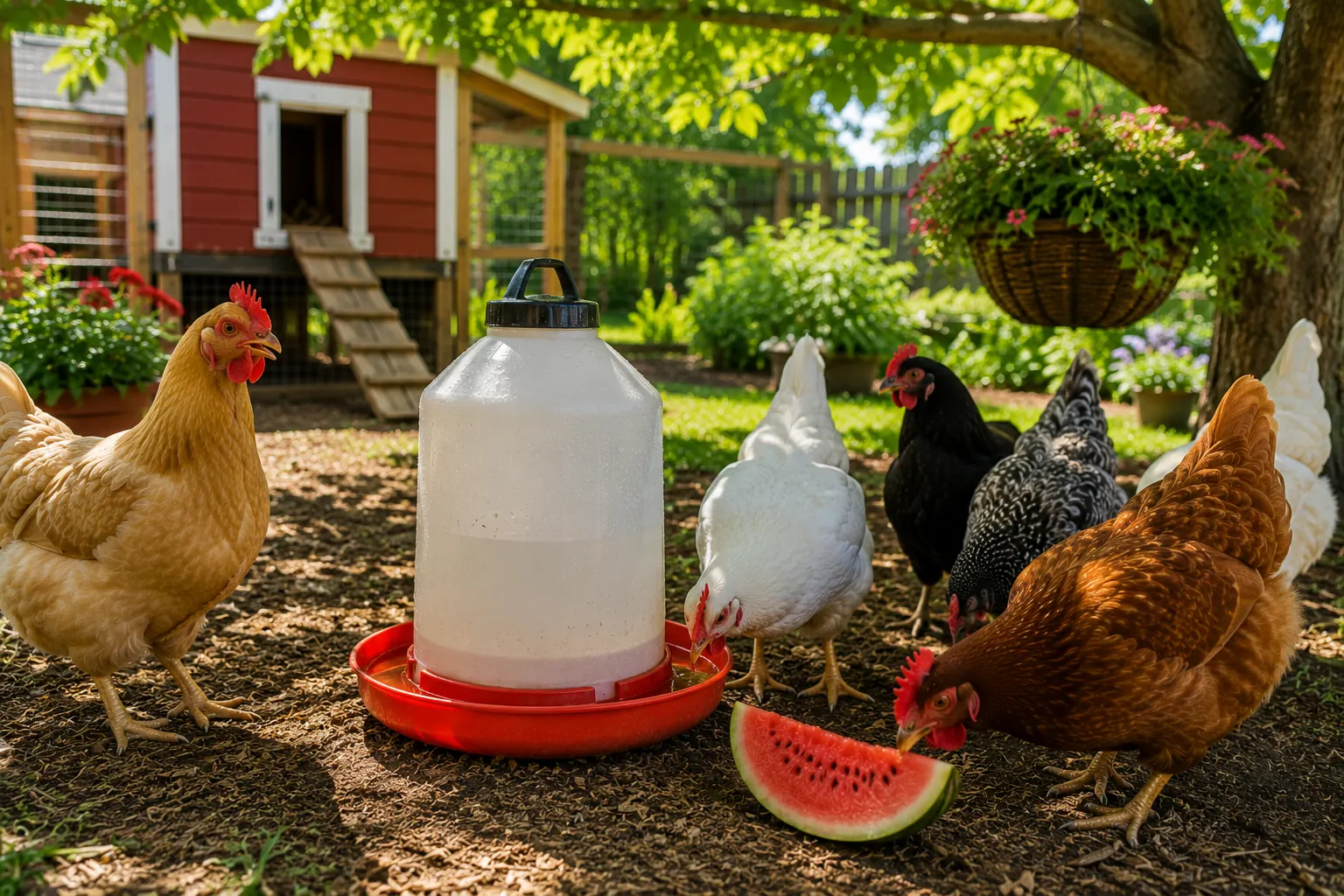
Feeding During Summer

Hot weather often causes chickens to eat less.

Provide:

  • Plenty of cool water
  • Shade
  • Good ventilation
  • Frozen treats like watermelon or peas

Avoid allowing feed to become wet or moldy during humid weather.

Summer Chicken Feeding

Common Feeding Mistakes

Chicken Feeding Mistakes

New chicken owners often make a few simple mistakes.

Some of the most common include:

  • Feeding too many treats
  • Forgetting fresh water
  • Not providing grit when needed
  • Giving young chicks layer feed too early
  • Feeding spoiled food
  • Allowing rodents access to feed

Fortunately, all of these are easy to avoid once you know what your flock actually needs.

Frequently Asked Questions

How often should I feed my chickens?

Most backyard keepers allow hens to eat free-choice throughout the day, keeping feeders filled with layer feed at all times.

Can chickens eat bread?

Yes, but only in moderation. Bread should never replace balanced chicken feed.

Do chickens eat bugs?

Absolutely. Insects are a natural part of a chicken’s diet and provide additional protein.

Can chickens eat grass?

Yes. Chickens enjoy fresh grass and many leafy plants while foraging.

Do chickens need food overnight?

No. Chickens usually roost after sunset and eat during daylight hours.

Ready to Build the Perfect Coop?

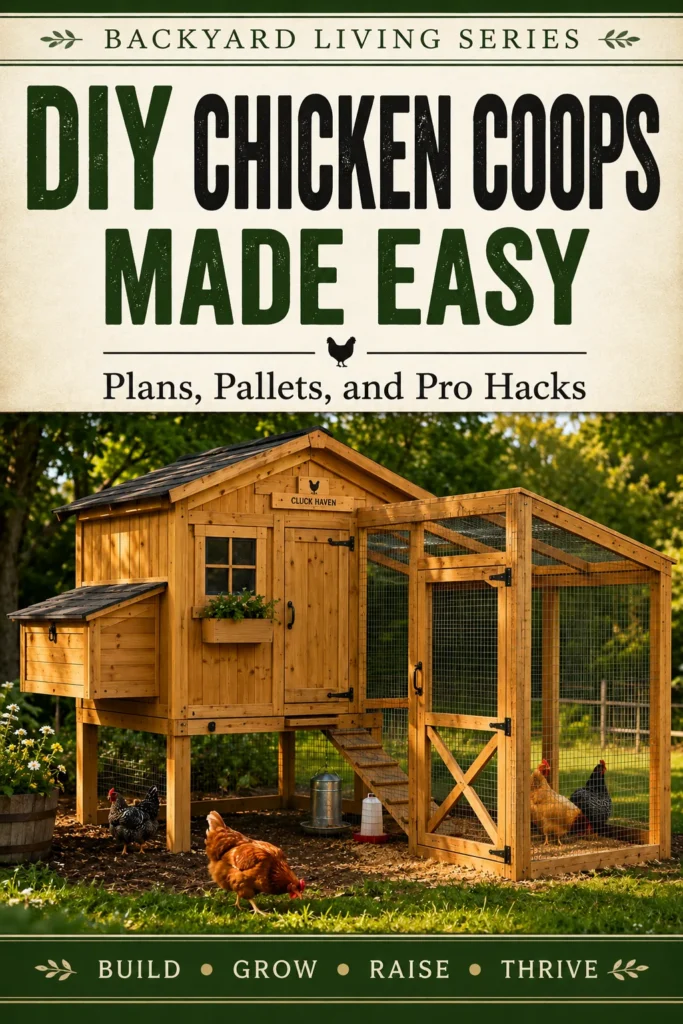
Proper nutrition is only one part of raising healthy chickens. DIY Chicken Coops Made Easy walks you through choosing the right coop, building nesting boxes and roosts, setting up feeders and waterers, protecting your flock from predators, and caring for chickens through every season.

More Backyard Chicken Articles

About the Author

Steve McChesney is the founder of Backyard Living Books and has spent decades helping homeowners build, grow, raise, and preserve more from their own backyards. Through practical, beginner-friendly guides, he encourages people to tackle one backyard project at a time and enjoy the satisfaction that comes with learning new skills.

Scroll to Top