Backyard Learning Center

Learn practical backyard skills one project at a time through beginner-friendly articles, seasonal tips, and step-by-step guides that help you build, grow, raise, and thrive.

Keeping Chickens Safe from Predators

How to Protect Your Backyard Flock Day and Night

(July 2026 – Estimated Reading Time: 8 Minutes)

Few experiences are more heartbreaking for a chicken owner than discovering that a predator has attacked the flock overnight.

The unfortunate reality is that chickens attract a wide variety of predators. Whether you live in the country, the suburbs, or even some urban neighborhoods, there are animals that see your flock as an easy meal.

The good news is that most predator attacks are preventable.

With a well-designed coop, a secure run, and a few smart management practices, you can dramatically reduce the chances of losing a bird. Prevention is almost always easier than dealing with the aftermath of an attack.

Here’s what every beginner should know about keeping their chickens safe.

Know Your Local Predators

Raccoon

The first step is understanding what you’re protecting your flock from.

Some predators hunt during the day, while others become active after dark.

Common backyard chicken predators include:

  • Raccoons
  • Foxes
  • Coyotes
  • Hawks
  • Owls
  • Neighborhood dogs
  • Opossums
  • Snakes
  • Weasels (where present)
  • Bobcats (in some regions)

Even if you’ve never seen these animals in your yard, that doesn’t mean they aren’t nearby.

A secure coop should always be built with the assumption that predators will eventually find it.

Why Chickens Are Easy Targets

Unlike many wild birds, chickens don’t fly well.

They also tend to follow predictable routines, returning to the same coop each evening.

Without protection, they’re vulnerable while sleeping, nesting, or foraging.

Young chicks are especially at risk because of their small size.

That’s why your coop becomes your flock’s first and most important line of defense.

Build a Predator-Proof Coop

A secure coop is the single best investment you can make.

Look for these features:

  • Solid construction
  • Lockable doors
  • Tight-fitting windows
  • Good ventilation with hardware cloth
  • Secure roofing
  • No gaps larger than about one inch

Predators are remarkably persistent.

If they find a weakness, they’ll often return night after night until they succeed.

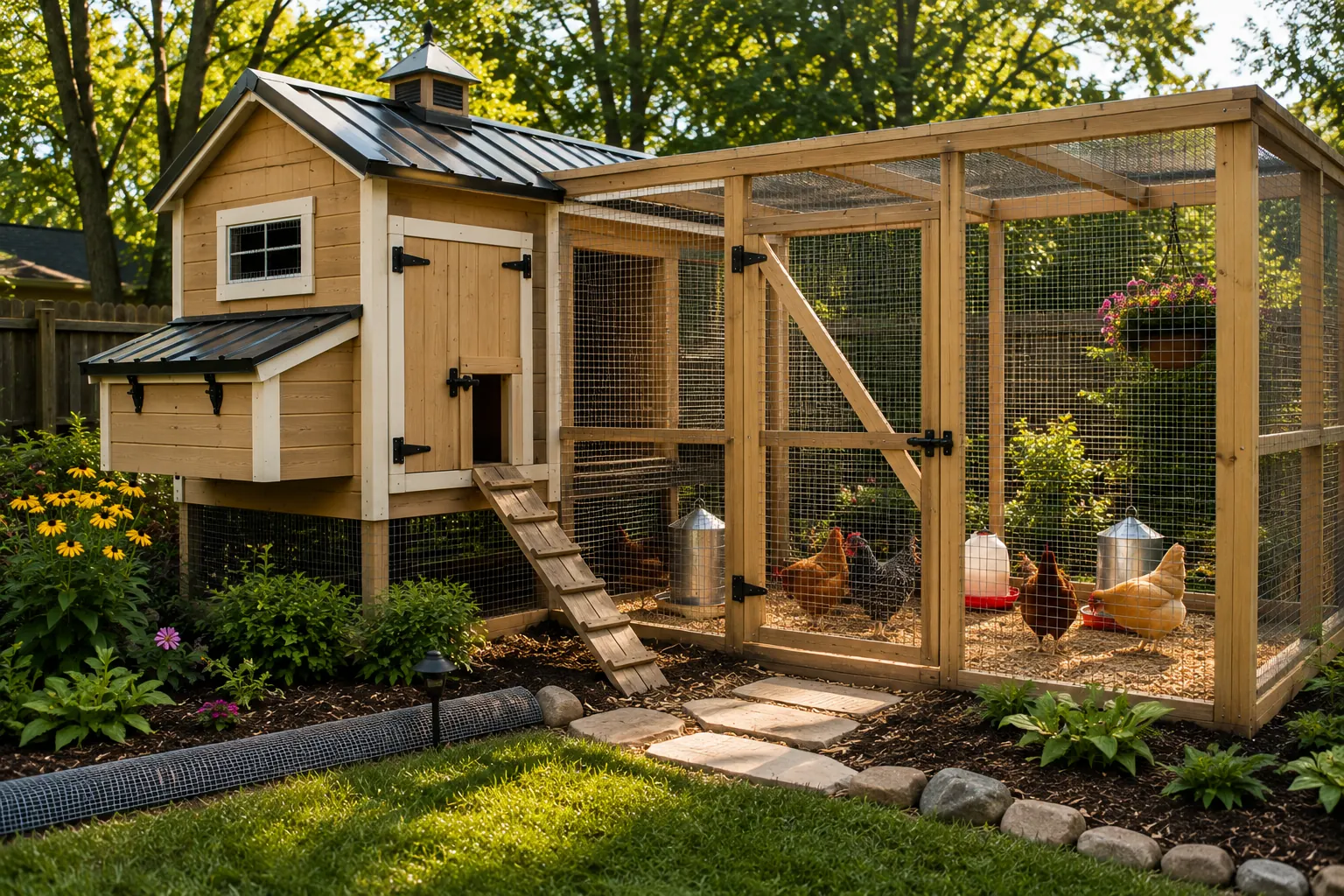
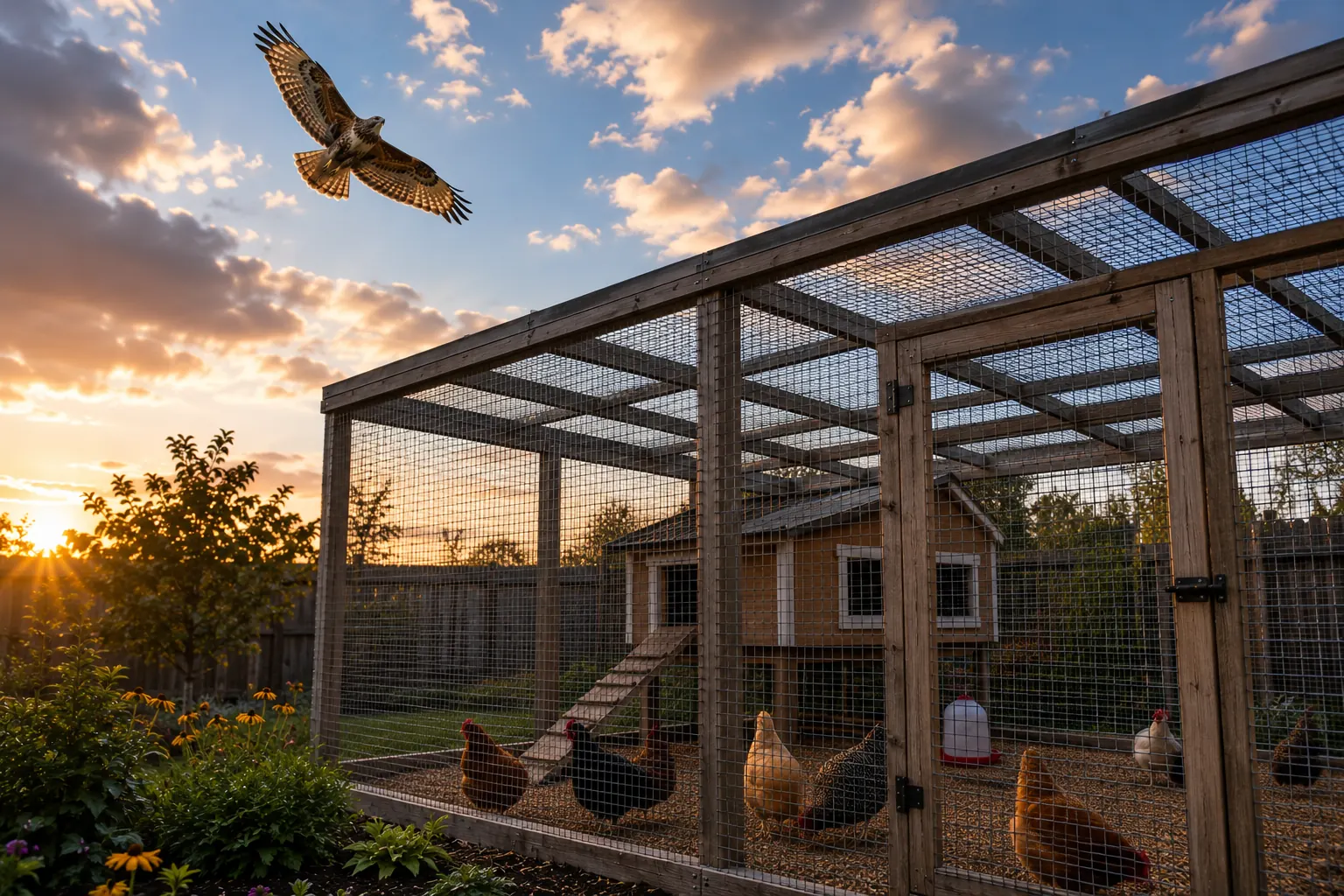
Predator proof chicken coop

Hardware Cloth vs. Chicken Wire

Hardware Cloth

This surprises many beginners.

Chicken wire is designed to keep chickens in.

It is not designed to keep predators out.

Many predators can bite through it, tear it apart, or reach through its openings.

Instead, use ½-inch galvanized hardware cloth for windows, vents, and runs.

It’s much stronger and provides significantly better protection.

Although it costs more initially, it’s one of the best investments you can make.

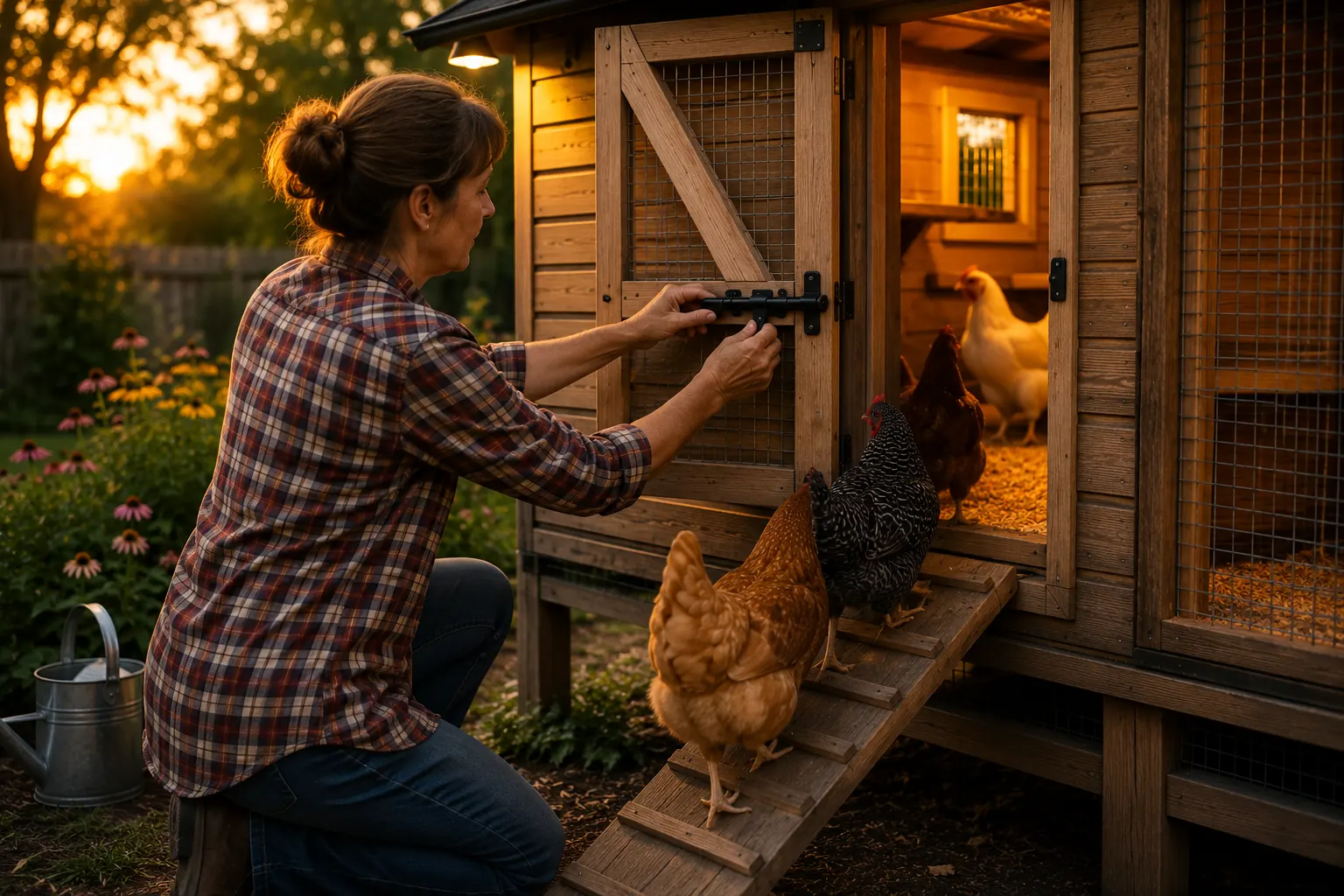
Secure Every Door

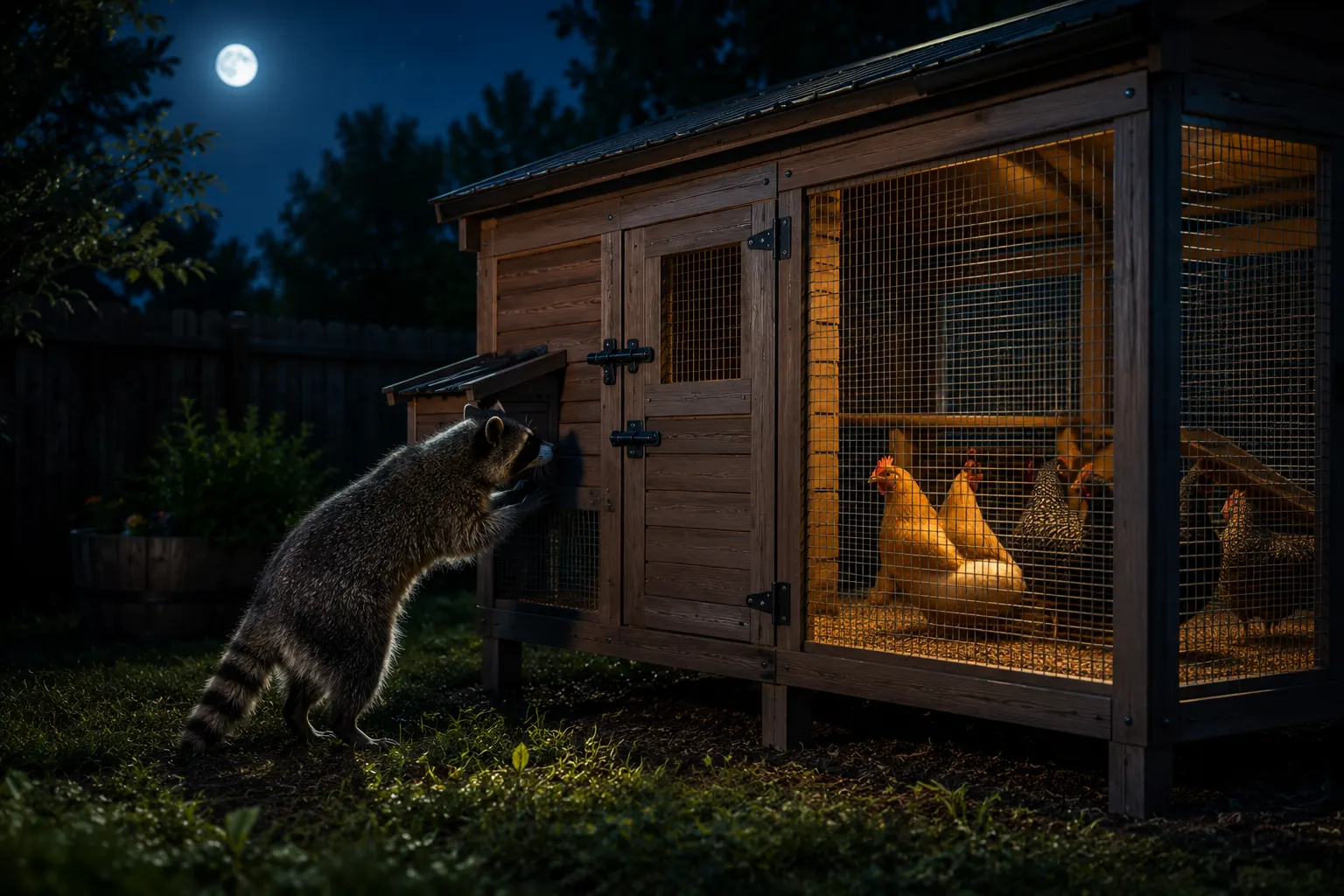
Raccoons have surprisingly dexterous paws.

Simple hook-and-eye latches are often no challenge for them.

Choose predator-resistant latches such as:

  • Locking barrel bolts
  • Spring-loaded latches
  • Carabiner-secured latches
  • Padlocks if needed

If a curious child can accidentally open the coop, chances are a determined raccoon eventually can too.

Protect Against Digging Predators

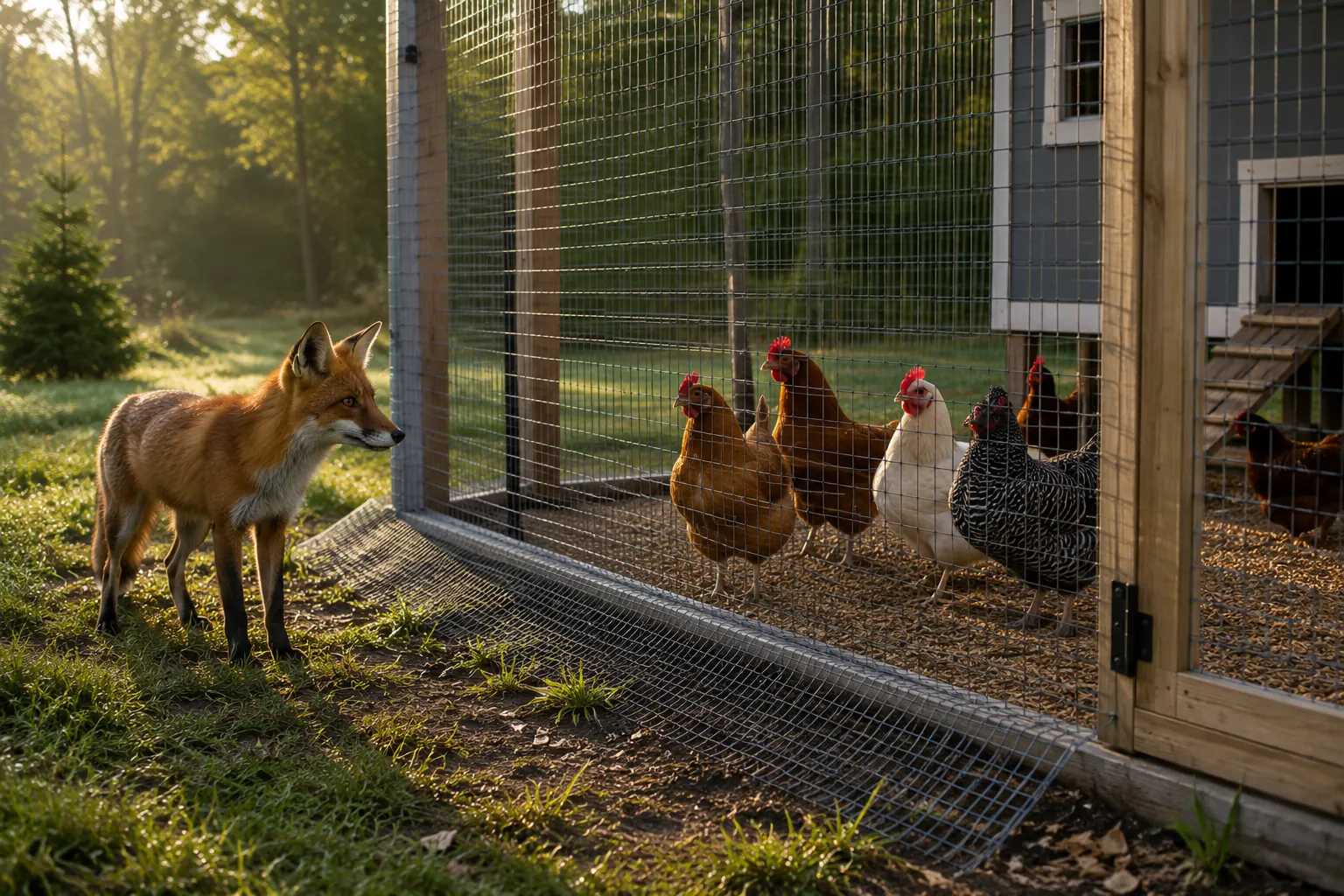
Fox outside fence

Foxes, coyotes, and neighborhood dogs often try digging under fencing.

Several solutions work well:

  • Bury hardware cloth 12 to 18 inches deep.
  • Create an outward-facing wire apron around the run.
  • Use concrete pavers along vulnerable areas.
  • Regularly inspect for signs of digging.

Stopping predators below ground is just as important as securing the walls above.

Don't Forget the Roof

Many predators attack from above.

Hawks and owls can easily swoop into an uncovered run.

A roof also helps keep:

  • Climbing raccoons out
  • Tree branches from dropping into the run
  • Heavy rain from turning the ground into mud

Roof options include:

  • Hardware cloth
  • Welded wire panels
  • Corrugated roofing
  • Polycarbonate panels
  • Heavy-duty netting (for daytime protection)
Hawk Flying

Lock Chickens Up Every Night

Locking Chicken Coop

Most serious predator attacks happen after dark.

Fortunately, chickens naturally return to the coop around sunset.

Make it part of your evening routine to:

  • Count your birds.
  • Close the coop door.
  • Check the latches.
  • Confirm everyone is safely inside.

Automatic coop doors have become increasingly popular and can provide additional peace of mind for owners with busy schedules.

Keep the Coop Area Clean

Predators aren’t attracted only to chickens.

They’re also attracted to:

  • Spilled feed
  • Garbage
  • Pet food
  • Rodents

Clean up spilled grain regularly and store feed in sealed metal or heavy-duty plastic containers with tight-fitting lids.

Reducing unwanted visitors also reduces predator activity.

Watch for Warning Signs

Predators often leave clues before an attack occurs.

Watch for:

  • Tracks around the coop
  • Dug-out areas
  • Bent fencing
  • Feathers near the run
  • Droppings
  • Unusual nighttime noises

Finding these signs early allows you to strengthen weak spots before a predator succeeds.

Should Chickens Free-Range?

Many backyard owners allow supervised free-ranging because it provides exercise and encourages natural foraging.

However, free-ranging also increases exposure to predators.

If your birds free-range:

  • Supervise whenever possible.
  • Provide shrubs or shelters for cover.
  • Keep dogs under control.
  • Be alert for hawks overhead.

Many owners choose a balance between supervised free-ranging and a secure enclosed run.

Predator Protection Through the Seasons

Predator activity often changes throughout the year.

During spring, many animals search for food to feed their young.

Summer brings increased activity from snakes and hawks.

Fall and winter can become especially challenging as wild food sources become scarcer.

Regular inspections of your coop and fencing help keep your flock protected year-round.

Common Predator Protection Mistakes

New chicken owners often make a few avoidable mistakes:

  • Relying on chicken wire alone.
  • Forgetting to secure vents.
  • Leaving doors unlocked at night.
  • Ignoring signs of digging.
  • Allowing feed to attract rodents.
  • Assuming suburban neighborhoods are predator-free.

Fortunately, each of these problems is easy to prevent with good planning.

Frequently Asked Questions

What is the biggest predator of backyard chickens?

It depends on where you live, but raccoons, foxes, hawks, coyotes, and neighborhood dogs are among the most common.

Is chicken wire enough to protect my flock?

No. Chicken wire helps contain chickens but offers very little protection against determined predators. Hardware cloth is the better choice.

Should I lock my chickens up every night?

Absolutely. Most predator attacks occur after dark.

Can hawks attack adult chickens?

Yes. Larger hawks are capable of attacking adult hens, especially smaller breeds.

How often should I inspect my coop?

A quick daily inspection and a more thorough weekly check can help identify problems before predators do.

More Backyard Chicken Articles

About the Author

Steve McChesney is the founder of Backyard Living Books and has spent decades helping homeowners build, grow, raise, and preserve more from their own backyards. Through practical, beginner-friendly guides, he encourages people to tackle one backyard project at a time and enjoy the satisfaction that comes with learning new skills.

Scroll to Top