Backyard Learning Center

Learn practical backyard skills one project at a time through beginner-friendly articles, seasonal tips, and step-by-step guides that help you build, grow, raise, and thrive.

How Much Space Do Chickens Need?

Everything Beginners Should Know Before Building a Coop

(July 2026 – Estimated Reading Time: 7 Minutes)

Happy Chickens

One of the first questions new chicken owners ask is, “How much space do my chickens actually need?”

It’s an important question because the amount of space you provide directly affects your flock’s health, happiness, and egg production. Chickens that are overcrowded are more likely to become stressed, develop bad habits like feather pecking, and experience health problems.

On the other hand, giving your flock enough room allows them to behave naturally, stay active, and live healthier lives.

The good news is that you don’t need acres of land to raise chickens successfully. Even a modest suburban backyard can comfortably support a small flock if it’s designed properly.

Whether you’re planning for four hens or dreaming of a larger flock, here’s what every beginner should know about giving chickens the space they need.

Why Space Matters

Chickens spend their day scratching the ground, searching for insects, dust bathing, stretching their wings, and interacting with the rest of the flock.

When they’re forced into cramped quarters, several problems can develop:

  • Feather pecking
  • Bullying
  • Stress
  • Dirty nesting boxes
  • Increased disease risk
  • Lower egg production

Adequate space isn’t simply about comfort. It’s one of the best investments you can make in the long-term health of your flock.

How Much Coop Space Do Chickens Need?

The coop serves as your chickens’ bedroom.

They sleep there each night, lay their eggs there, and seek shelter during storms or extreme weather.

A good rule for standard-sized laying hens is:

4 square feet per chicken inside the coop

Examples:

  • 4 hens = 16 square feet
  • 6 hens = 24 square feet
  • 8 hens = 32 square feet

Bigger is almost always better.

Extra room makes cleaning easier, reduces stress, and gives you flexibility if you decide to add another bird later.

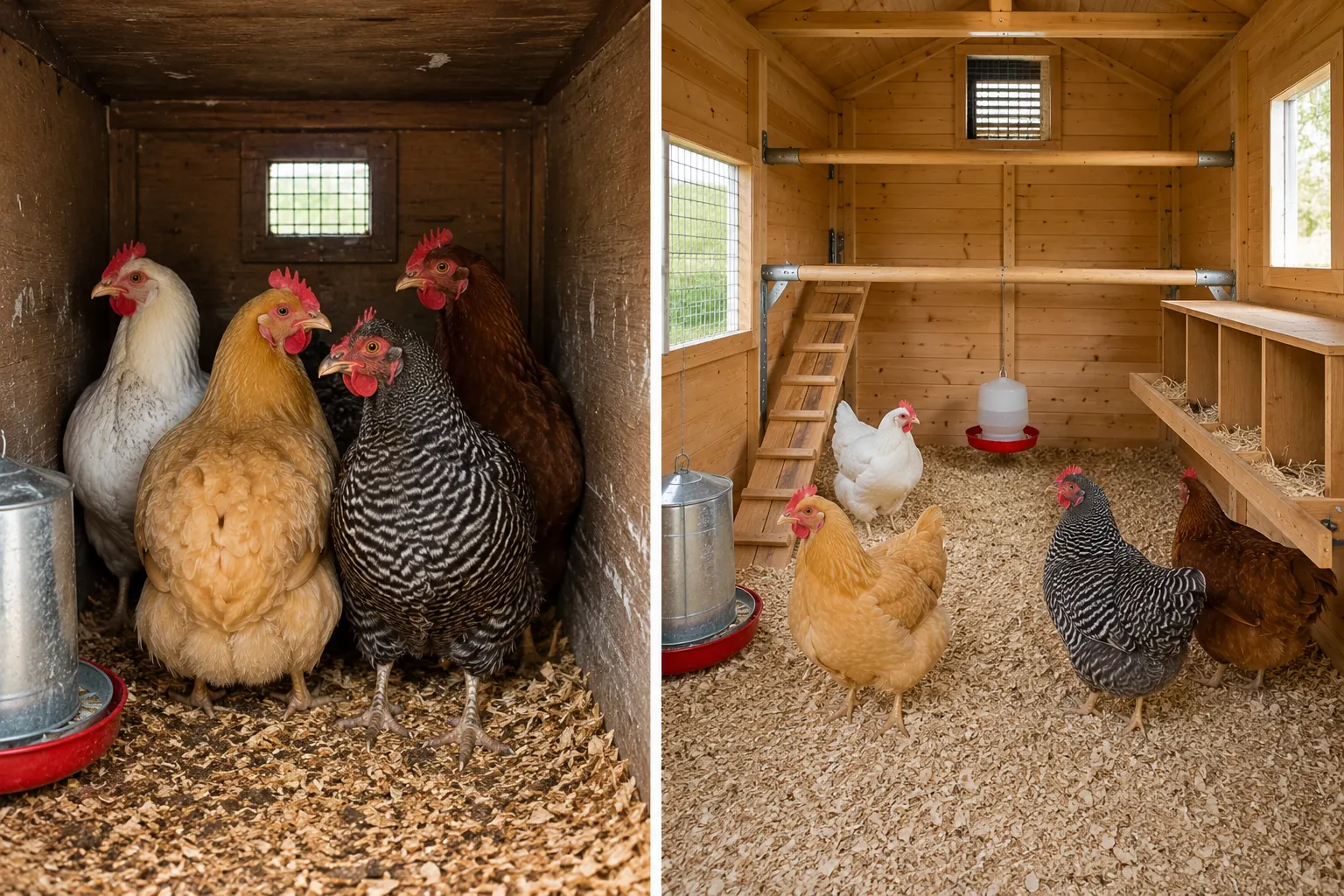
Coop comparison

How Much Outdoor Run Space Do Chickens Need?
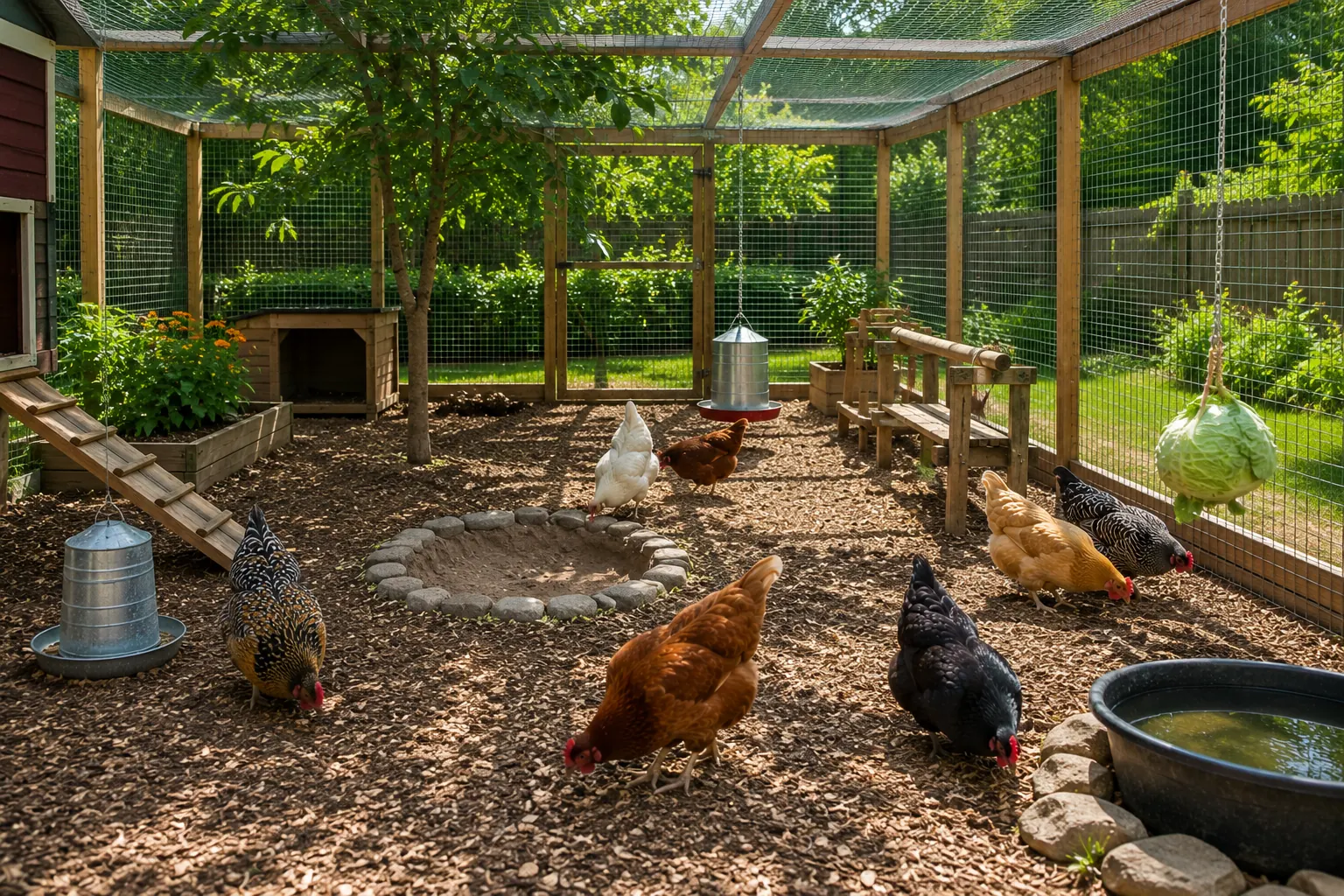
Outdoor run

If your chickens won’t be free-ranging throughout the day, they’ll need a secure outdoor run.

A common recommendation is:

10 square feet per chicken in the run

For example:

  • 4 hens = 40 square feet
  • 6 hens = 60 square feet
  • 8 hens = 80 square feet

The more room your flock has, the happier they’ll be.

Larger runs also stay cleaner because manure isn’t concentrated in one small area.

Free-Range vs. Confined Chickens

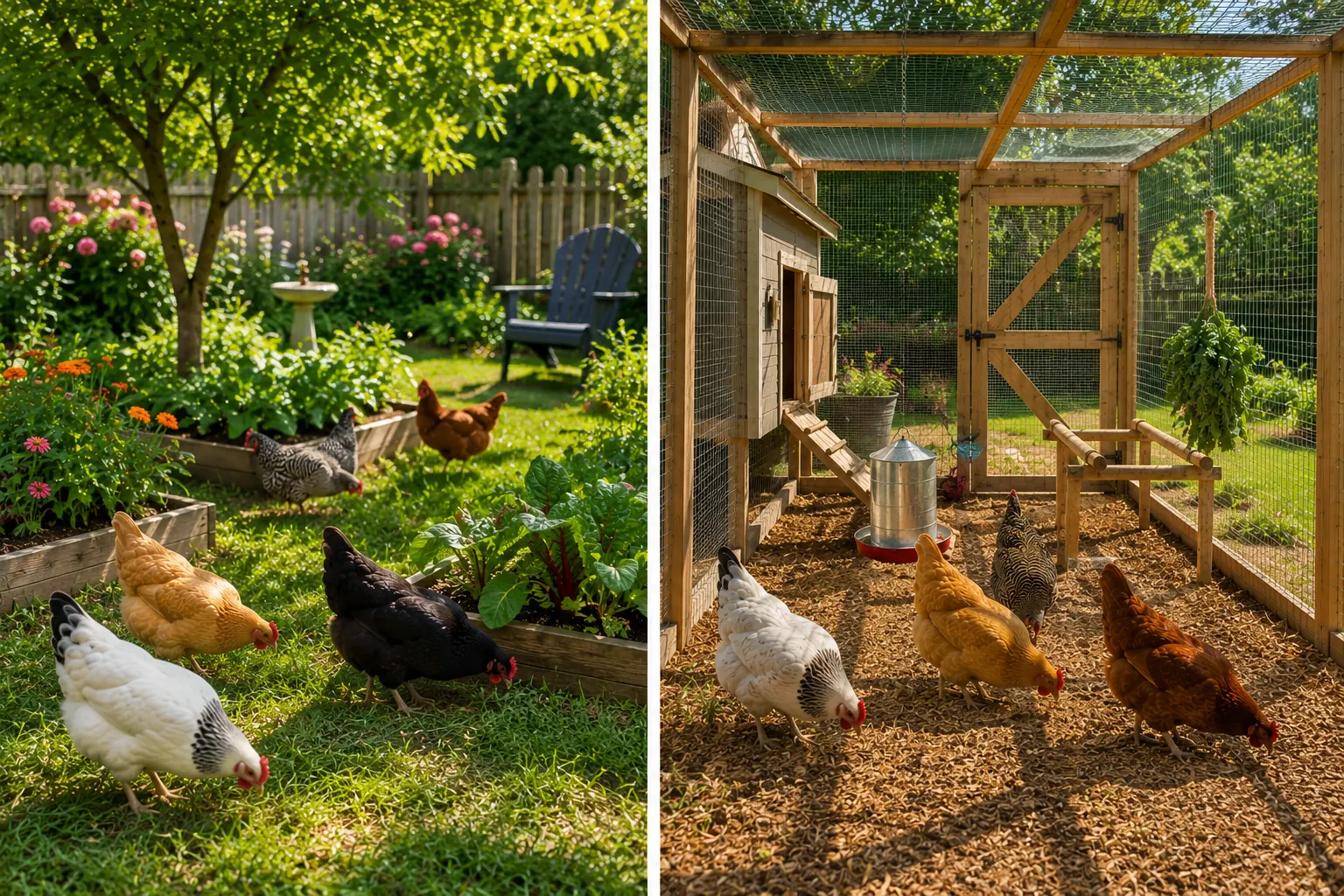
Free Range vs Secure Run

Many backyard owners allow their chickens to free-range for at least part of the day.

Benefits include:

  • More exercise
  • Fewer insects in the yard
  • Natural foraging
  • Happier birds
  • Less feed consumption


The trade-off is that free-ranging birds need protection from predators and may occasionally decide your flower beds look more interesting than their run.

Many owners find a combination works best.

The chickens enjoy supervised time in the yard while still having a secure run available when no one is home.

Don't Forget Vertical Space

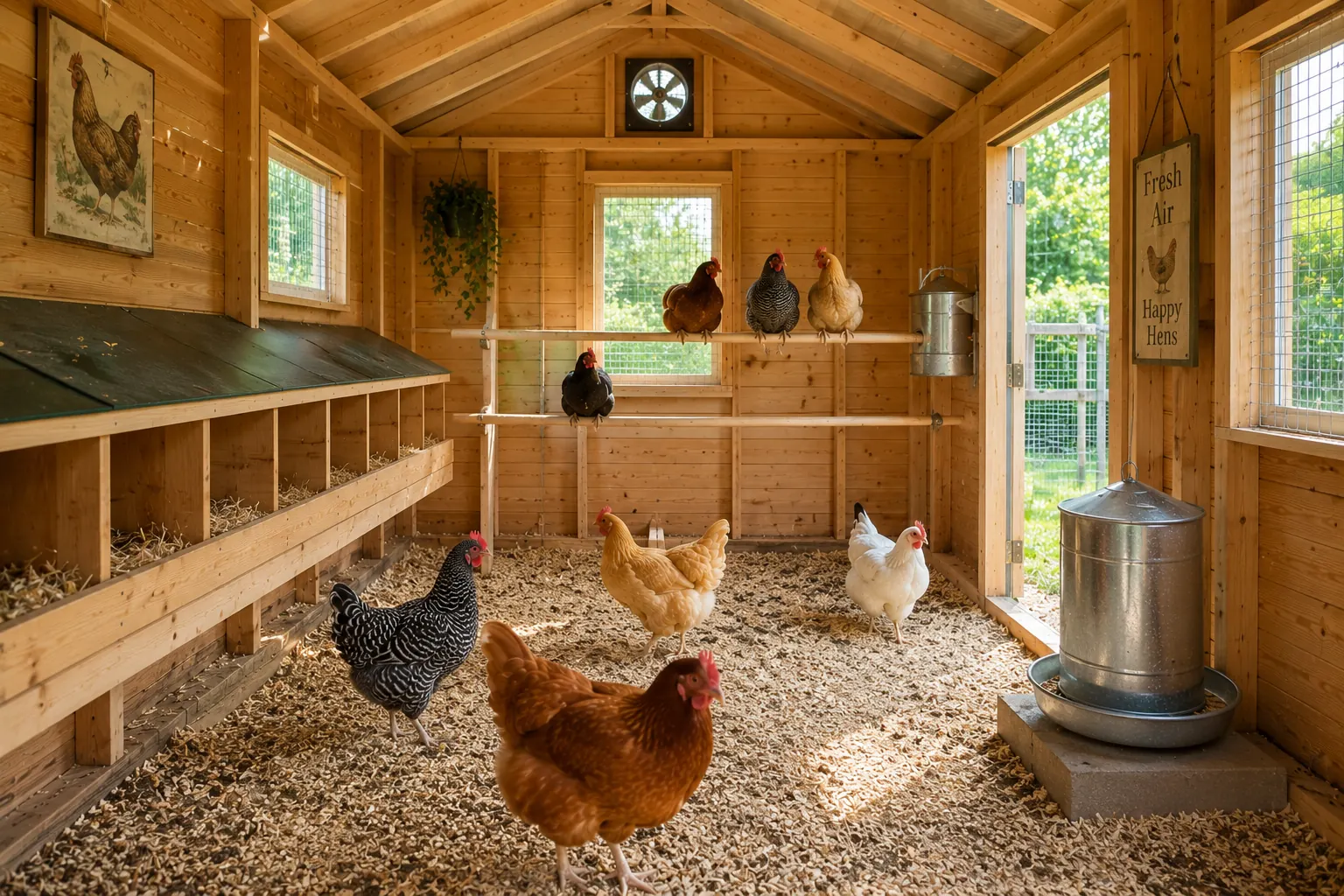
Interior Coop

Floor space isn’t the only thing that matters.

Chickens also appreciate height.

A well-designed coop includes:

  • Roost bars
  • Nesting boxes
  • Good ventilation
  • Easy access for cleaning

Being able to stand comfortably inside a walk-in coop also makes caring for your flock much easier.

Space for Nesting Boxes and Roosts

Not every hen needs her own nesting box.

A good guideline is:

One nesting box for every three to four hens.

Roost bars should provide:

8 to 12 inches of perch space per bird.

Giving every chicken enough room to roost comfortably helps reduce nighttime squabbles.

Chickens scratching

Planning for Future Expansion

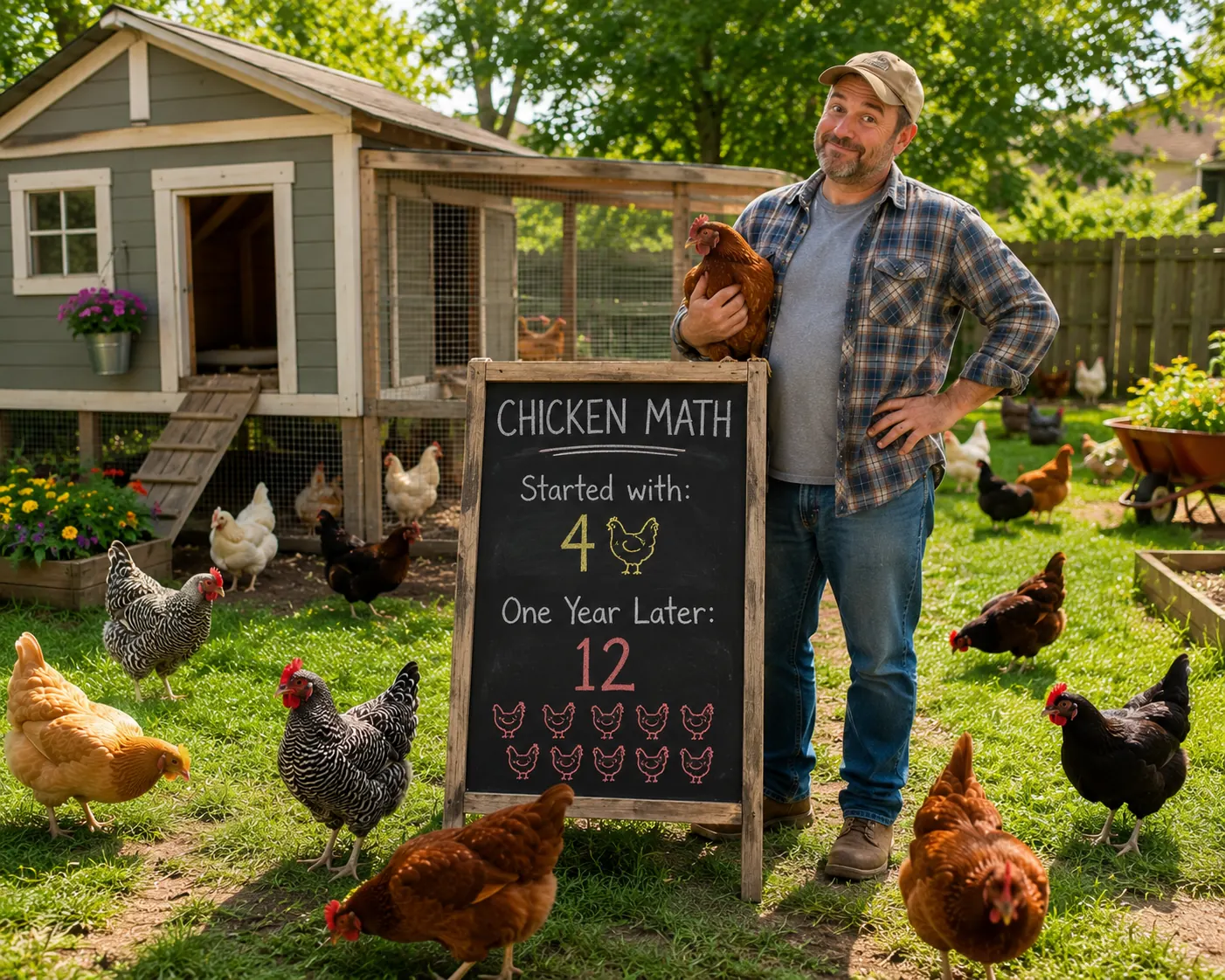
Chicken Math

One of the most common mistakes beginners make is building exactly enough space for the flock they have today.

Chicken owners often discover something surprising.

Four chickens somehow become six.

Then eight.

Then twelve.

This phenomenon is affectionately known as Chicken Math, and it happens far more often than most people expect.

If your budget allows, build slightly larger than you think you’ll need.

Future-you will probably be grateful.

Common Space Mistakes

Avoid these common beginner errors:

Building too small

Many coops sold online advertise unrealistic capacities.

Always calculate the square footage yourself.

Ignoring predator protection

A large run is only useful if it’s secure.

Poor ventilation

Fresh air is just as important as square footage.

No room for cleaning

Leave enough space to comfortably remove bedding and access every corner.

Is Your Backyard Big Enough?

You may be surprised.

Many suburban backyards have more than enough room for four to six hens.

Before building:

✓ Check local ordinances.

✓ Review HOA rules.

✓ Plan for future expansion.

✓ Consider your neighbors.

✓ Leave room to comfortably access the coop.

A thoughtfully designed backyard can support a healthy flock without taking over the entire yard.

Frequently Asked Questions

How many chickens should beginners start with?

Four to six hens is ideal for most first-time owners.

Can chickens stay in the coop all day?

They can, but they’ll be much healthier and happier with access to a run or free-ranging time.

Can different breeds share one coop?

Yes. Most breeds live together very well when introduced properly.

Do bantam chickens need less space?

Generally yes. Because they’re smaller, bantams require less room than standard breeds.

What if I build my coop too small?

You can often expand the run or build an addition, but it’s usually easier and less expensive to build slightly larger from the beginning.

More Backyard Chicken Articles

About the Author

Steve McChesney is the founder of Backyard Living Books and has spent decades helping homeowners build, grow, raise, and preserve more from their own backyards. Through practical, beginner-friendly guides, he encourages people to tackle one backyard project at a time and enjoy the satisfaction that comes with learning new skills.

Scroll to Top