
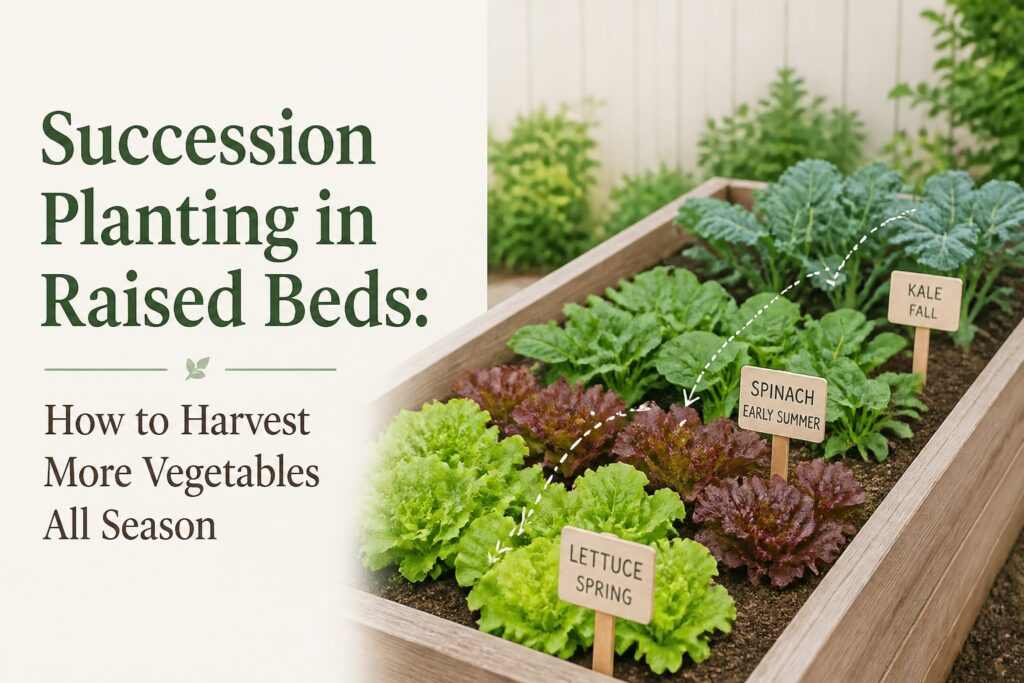
Succession planting is one of the easiest ways to keep a raised bed producing after the first crop is gone. Instead of planting everything in spring and waiting for one big harvest, you sow or transplant small batches every few weeks. That simple shift can give a small backyard garden a much longer harvest window.
It also keeps empty soil from sitting around. A bed that held lettuce in April might grow bush beans in June, followed by fall spinach. The trick is having a rough plan, not a perfect calendar. Weather, variety, and your family’s appetite all matter.
What succession planting looks like in a raised bed
Plant the same crop in small batches
The most familiar method is repeated planting. You sow a short row of radishes or a few feet of lettuce, then repeat two or three weeks later. The crops mature at different times, so you aren’t faced with a counter full of produce on one Saturday.
This works especially well with quick crops that bolt, become woody, or lose quality once they reach full size. Radishes, salad greens, cilantro, baby carrots, and bush beans often fit this pattern. Lettuce is a good example. Six heads planted at once may be more than two people can eat. Two heads every couple of weeks feels much more manageable.
Follow one crop with another
The second method uses the same growing space for different crops throughout the season. Early peas can be harvested and removed in late spring or early summer, leaving room for bush beans, cucumbers, or warm-season herbs where the growing season allows. Spring spinach might be followed by summer beans and then fall lettuce or radishes. The exact sequence depends on your climate, frost dates, and the time each crop needs to mature. Once you begin planning around available bed space rather than a single annual planting, a small garden can produce much more.
Our Raised Bed Gardening for Beginners: The Complete Step-by-Step Guide covers the bigger planning decisions, including sunlight, bed layout, soil depth, and watering. Those basics matter here because succession planting won’t rescue a bed that gets only three hours of sun or dries out every afternoon.
Choose crops that can handle repeated planting
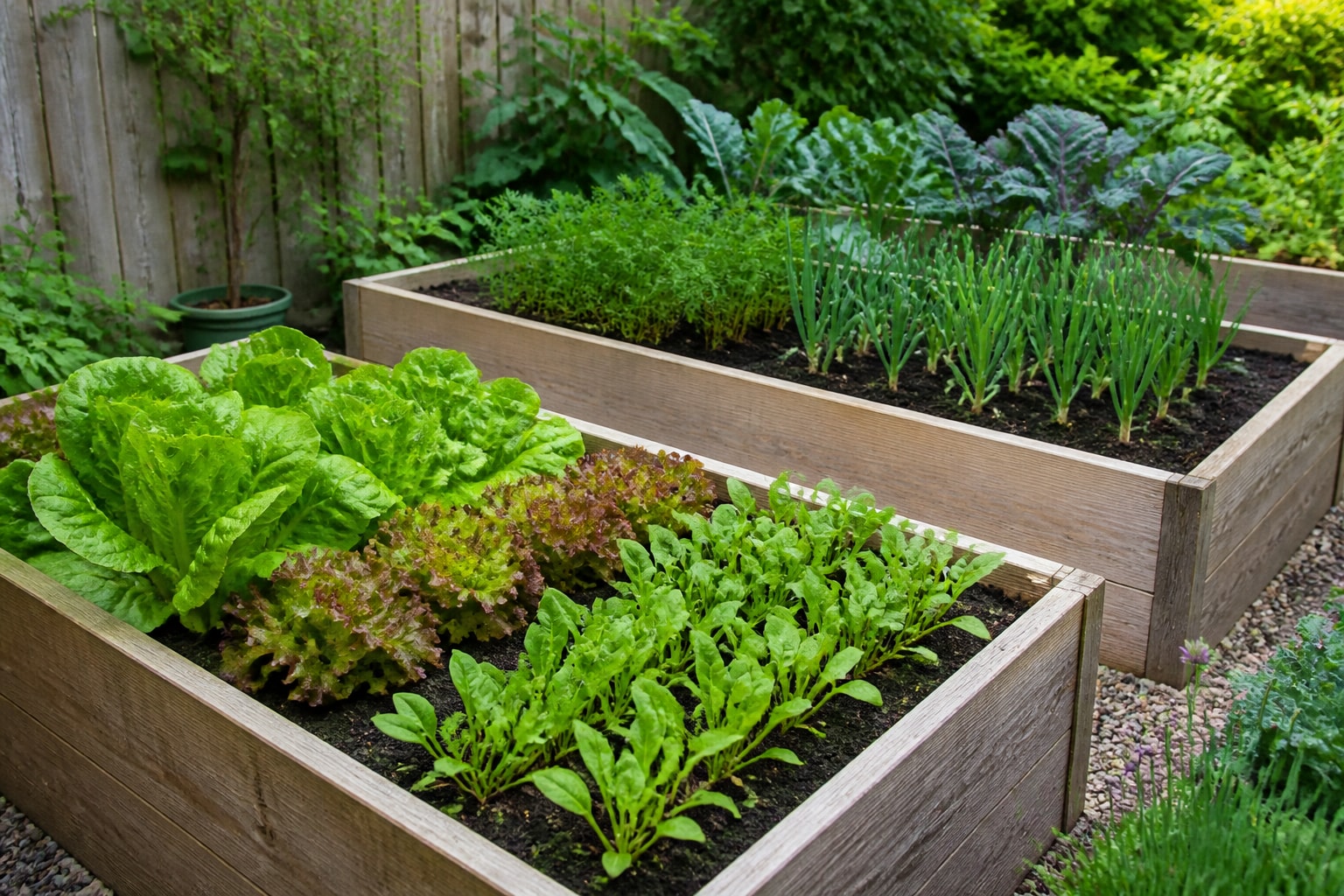
Not every vegetable belongs in a succession schedule. Tomatoes and winter squash occupy a bed for a long time. Planting another round beside them usually creates crowding, disease pressure, or a tangle nobody enjoys sorting out.
Look for crops with a short time to harvest or a clear end point. Most seed packets list days to maturity, but treat that number as a rough estimate. Heat, cold, cloudy weather, and transplant shock can move the date around.
- Radishes and salad turnips for quick spring or fall harvests
- Lettuce, arugula, and spinach for cool weather
- Bush beans for repeated summer sowings
- Beets and carrots for staggered root harvests
- Cilantro, dill, and basil for fresh leaves over several weeks
- Peas in spring, with a fall planting in mild climates
Pay attention to temperature
Some plants like cool soil and short days. Others won’t do much until the soil warms. Lettuce planted in midsummer may struggle, while beans planted in chilly April may sit and sulk. That’s not a seed-quality problem. It’s a timing problem.
A useful approach is to divide the growing season into cool, warm, and cool-again periods. Grow peas and spinach early, tomatoes and beans during summer, then return to spinach, lettuce, and radishes as temperatures drop. Gardeners in hot climates may pause cool-season crops in summer. Gardeners in mild coastal areas can keep planting nearly year-round.
Use shorter varieties when space is tight
Raised beds in small backyards often need compact choices. Bush beans take less room than pole beans, and baby carrots mature sooner than long storage varieties. Loose-leaf lettuce can be harvested a few leaves at a time instead of waiting for a full head.
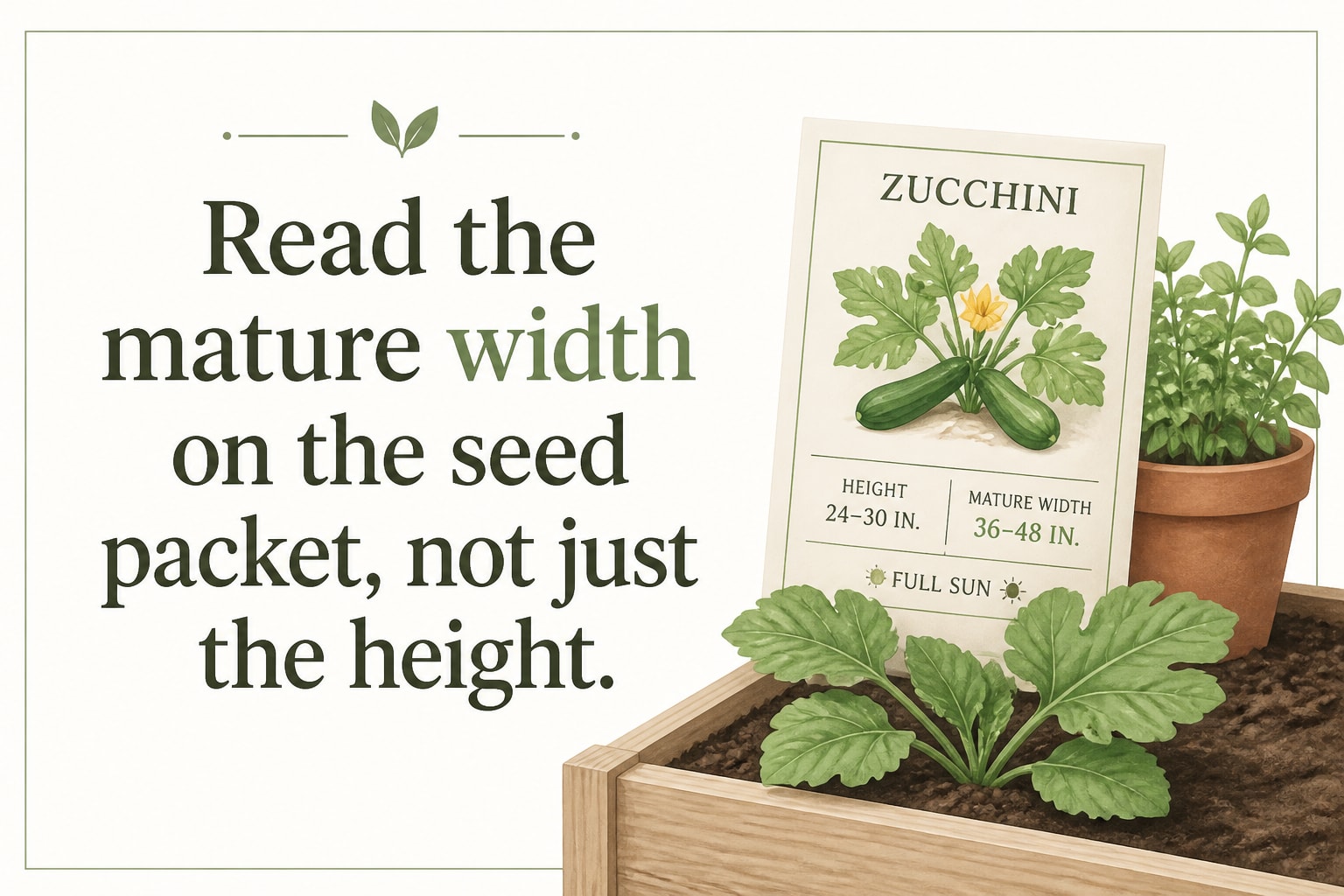
Read the mature width on the seed packet, not just the height. Overcrowding is one of the quickest ways to turn a productive bed into a damp, disease-prone mess.
Build a simple planting schedule
You don’t need a spreadsheet with color coding and twelve tabs. A notebook, pencil, and basic bed sketch are enough. Mark what is growing now, when you expect to remove it, and what could follow.
Start with harvest windows
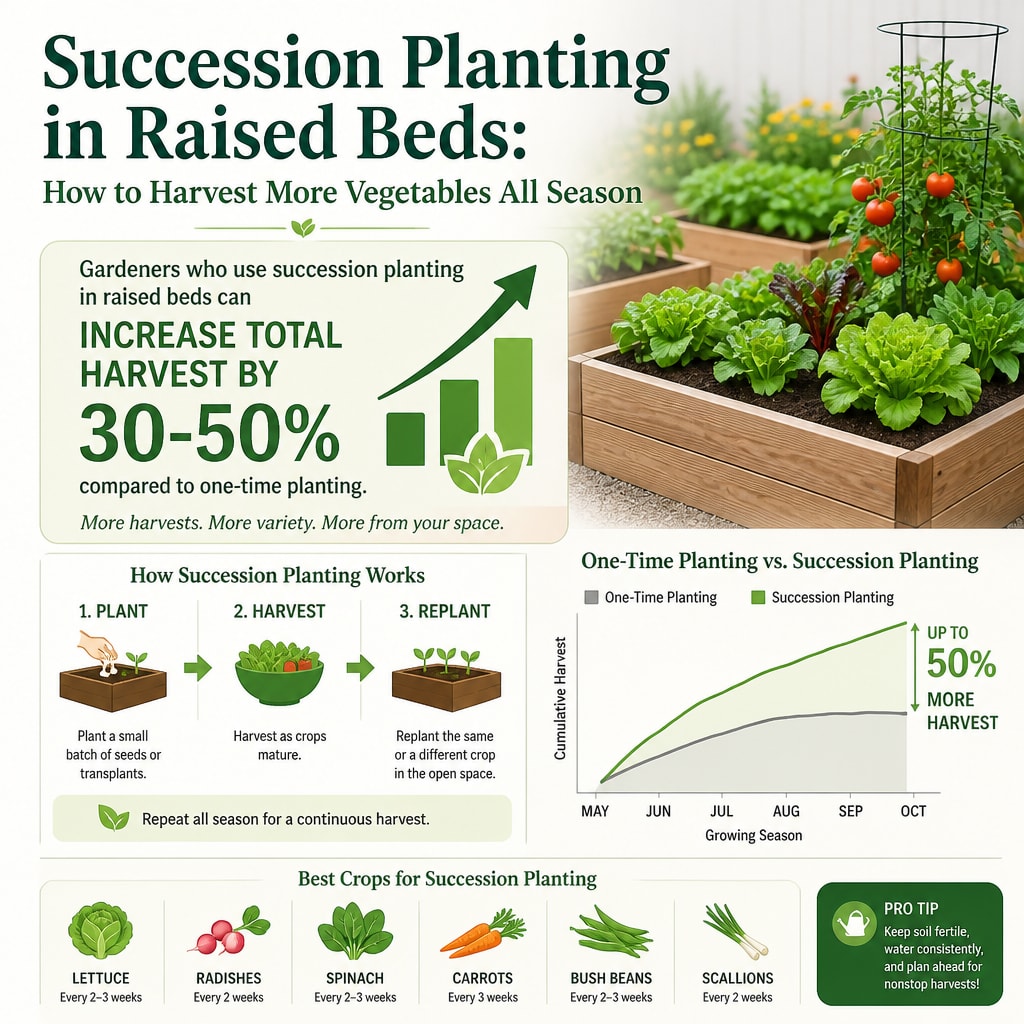
Think backward from when you want to eat. For a steady supply of lettuce, plant a small batch, wait two or three weeks, and plant another. During mild spring and fall weather, planting another small batch every two or three weeks can provide a steady harvest. In hot summer weather, lettuce may germinate poorly or bolt quickly, so it may be better to pause new sowings, choose heat-tolerant varieties, or provide afternoon shade. Adjust the schedule to your local conditions rather than following a fixed calendar.
For a crop that takes longer, such as beets or carrots, use two or three separate rows. You can harvest the first row as baby roots while the next row is still sizing up. That gives you flexibility, especially when your household’s eating habits change from week to week.
Leave room for the next crop
Don’t plant every inch of a raised bed on day one. A little open space is useful. It gives you somewhere to tuck in a new row later, and it makes harvesting less awkward.
Accessibility is an important part of succession planting. Can you reach the middle of the bed without stepping into the soil? Can you remove finished crops without damaging newly planted seedlings? A succession plan that looks efficient on paper may become difficult to maintain if harvesting and replanting require reaching across established vegetables. Arrange crops so each planting remains accessible throughout the growing season.
Keep a note of what you planted and when. Add a quick comment about flavor, disease, or yield. After one season, you’ll have information that is far more useful than a generic planting chart for your area.
Refresh the bed between crops
Once a crop finishes, don’t immediately push a new seed into the same tired planting hole. Pull out old roots, remove diseased plant material, and loosen the top few inches of soil. Then add a thin layer of finished compost if the bed needs it.
Raised bed soil settles and changes over time. Some crops are heavy feeders, while others leave the soil in decent shape. Beans and peas fix some nitrogen through their relationship with soil bacteria, although they don’t hand a complete fertilizer dose to the next crop. That distinction matters.
Watch for repeated disease problems
Succession planting can make good use of space, but it isn’t a reason to grow the same plant family in the same spot forever. Repeated lettuce crops may not cause much trouble, yet planting one brassica after another can allow pests and diseases to hang around.
Rotate plant families when you can. Move crops from the cabbage family, tomato family, and bean family to different sections of the bed. In a very small garden, perfect rotation may be impossible. Just avoid repeating a problem crop immediately in the same soil.
Water the new planting gently
New seeds need consistent moisture near the surface. Mature plants may need a deeper, less frequent watering pattern. Those needs can conflict in one bed, especially on hot days.
A small watering wand, drip line, or soaker hose helps. Water slowly enough that the soil absorbs it instead of sending it down the path. Mulch can reduce evaporation, but keep it pulled slightly away from tender stems and newly emerged seedlings.
Make succession planting easier to maintain
The best plan is the one you can keep up with. Most gardeners aren’t short on enthusiasm in April. July is the real test. A few practical habits make the system much less fussy.
Plant less than you think you need
It’s tempting to fill every gap after reading about succession planting. Resist that urge. Start with one extra round of two crops you already eat regularly. More lettuce may sound sensible until you discover that everyone wants tomatoes instead.
Succession planting should reduce waste, not create a new chore. Harvest often, especially beans and young zucchini. Leaving mature produce on the plant can slow new production.
Keep a few backup options
Seeds don’t always germinate evenly. A sudden heat wave can ruin a lettuce sowing. Slugs may find your seedlings before you do. Have a replacement crop ready, such as bush beans, basil, or another round of radishes.
Transplants can also rescue a gap in the schedule. A six-pack of lettuce or a few herb plants from a local nursery may be worth buying when the season gets away from you. There’s no prize for growing every plant from seed.
For a deeper look at crop spacing, planting depth, and bed preparation, visit How to Plant Vegetables in Raised Garden Beds: A Beginner’s Guide. Getting those small details right makes later plantings much more reliable.
FAQs for Succession Planting in Raised Beds: How to Harvest More Vegetables All Season
How often should we plant a new succession crop?
Every two to four weeks is a useful starting point for quick crops, but there isn’t one perfect interval. Lettuce may need a shorter gap during cool spring weather and a longer one when growth slows. Check the days to maturity, then adjust based on what you actually harvest. Your notes will become more accurate than the packet over time.
Can we use succession planting in a very small raised bed?
Yes. In a small bed, focus on crops that finish quickly and leave room for what comes next. A short row of radishes followed by beans can work well. So can lettuce followed by fall spinach. Avoid packing the bed with large, long-season plants that block light and make replanting difficult.
Keep the garden producing
Succession planting is really a habit of noticing. Notice when a crop is slowing down. Notice which vegetables your household eats fastest. Notice where the bed opens up, then put that space to work.
Start with one bed and two repeat plantings this season. That’s enough to learn the rhythm without turning gardening into a second job.
🌱 FREE DOWNLOAD: Your First Raised Bed Garden
A Beginner-Friendly Guide to Getting Started
Thinking about growing your own vegetables in a raised bed? Start with a simple plan that helps you avoid costly mistakes and build a garden you can enjoy for years.
Our FREE Your First Raised Bed Garden guide provides practical, beginner-friendly information to help you:
- Choose a suitable location with enough sunlight.
- Plan the size and layout of your raised garden bed.
- Understand the basics of preparing healthy garden soil.
- Select vegetables that are appropriate for beginners.
- Get started with planting, watering, and caring for your garden.
You don’t need a huge backyard, expensive equipment, or years of gardening experience to get started!
Get Your FREE Raised Bed Gardening Guide
Free PDF guide from Backyard Living Books.
📗 Ready to Grow Your Own Fresh Vegetables?
Creating a productive raised bed garden takes thoughtful planning, healthy soil, and a little know-how.
Take the guesswork out of raised bed gardening!
Raised Bed Gardening Made Easy: Plans, Soil Mixes, Planting Secrets, and Beginner-Friendly Harvests is a practical guide designed to help you:
- Plan and build raised garden beds that fit your space.
- Choose materials and prepare the right soil mix.
- Select and plant vegetables for productive harvests.
- Understand watering, fertilizing, and routine garden maintenance.
- Avoid common mistakes that can waste time and money.
Whether you’re planting your first garden or looking to improve an existing one, this book will help you garden with greater confidence.
Explore Raised Bed Gardening Made Easy
🌿 Want More FREE Raised Bed Gardening Tips?
Visit our Gardening Learning Center for helpful articles, practical advice, and beginner-friendly resources covering everything from soil preparation and vegetable planting to watering, pest prevention, and seasonal gardening.
Explore the Gardening Learning Center
Part of the Backyard Living Series: Build • Grow • Raise • Thrive.