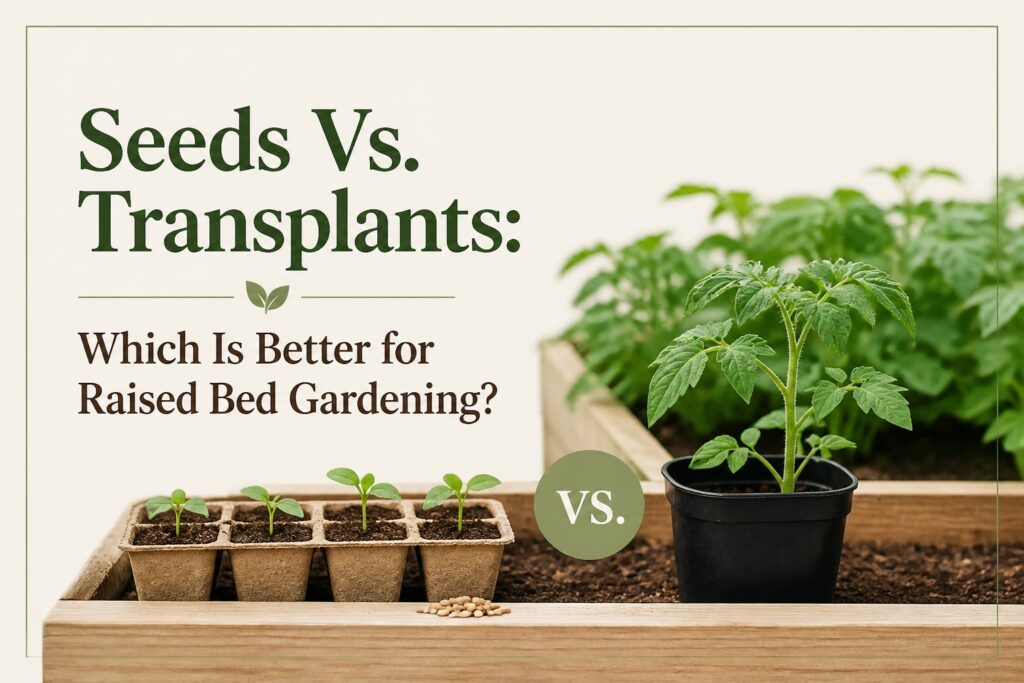
Seeds and transplants can both produce a healthy raised bed garden. The better choice depends on the vegetable, your timing, your available space, and how much patience you have for early-season care. For most beginners, the smartest answer isn’t picking one method for everything. It’s using each method where it makes the most sense.
Raised beds give you a useful advantage here. The soil warms earlier, drainage is easier to control, and you can keep young plants close by where they’re simple to watch. But a raised bed won’t fix poor timing or a weak seedling. The small decisions still matter.
Start with the vegetable and your planting window
Some crops prefer a direct start
Many root vegetables grow best when planted directly in the raised bed. Carrots, radishes, turnips, and parsnips are usually direct-sown because disturbing their developing roots can affect growth or root shape. Beets are also commonly direct-sown, although young beet seedlings can be transplanted successfully when handled carefully. Most of these crops establish readily in loose, properly prepared raised-bed soil when temperatures are suitable.
Beans, peas, corn, cucumbers, squash, and melons are commonly direct-sown, too. Their seeds are large, easy to handle, and quick to establish when the soil has warmed. A few cucumber or bean seeds tucked into open space can be simpler than buying several young plants.
Some crops appreciate a head start
Tomatoes, peppers, eggplants, and many herbs take longer to reach harvest size. A transplant gives these warm-season crops a running start, which is especially helpful in areas with short summers. You’re buying time, not just convenience.
Cool-season crops can go either way. Lettuce, kale, broccoli, and cabbage grow from seed, but nursery seedlings are handy when you want a quicker harvest or missed the earliest planting window. Our Raised Bed Gardening for Beginners: The Complete Step-by-Step Guide covers how soil preparation, spacing, and timing fit together before plants go into the bed.
Why starting from seed still makes sense
Seeds give you more choice for less money
A packet of seeds can fill several raised beds for the price of a few transplants. You’ll also find far more varieties in seed catalogs and garden centers. That matters when you want a compact cucumber, a cherry tomato suited to containers, or a lettuce variety that handles warm weather.
Seeds are also useful for succession planting. Sow a short row of radishes today, another in two weeks, and you won’t end up with every radish ready on the same weekend. The same approach works with salad greens, bush beans, and some carrots.
There’s a quiet satisfaction in watching the first green loop push through the soil. But seed starting does ask for attention. Tiny seedlings need steady moisture, enough light, and protection from heavy rain, birds, slugs, and sudden cold snaps.
Direct sowing avoids transplant shock
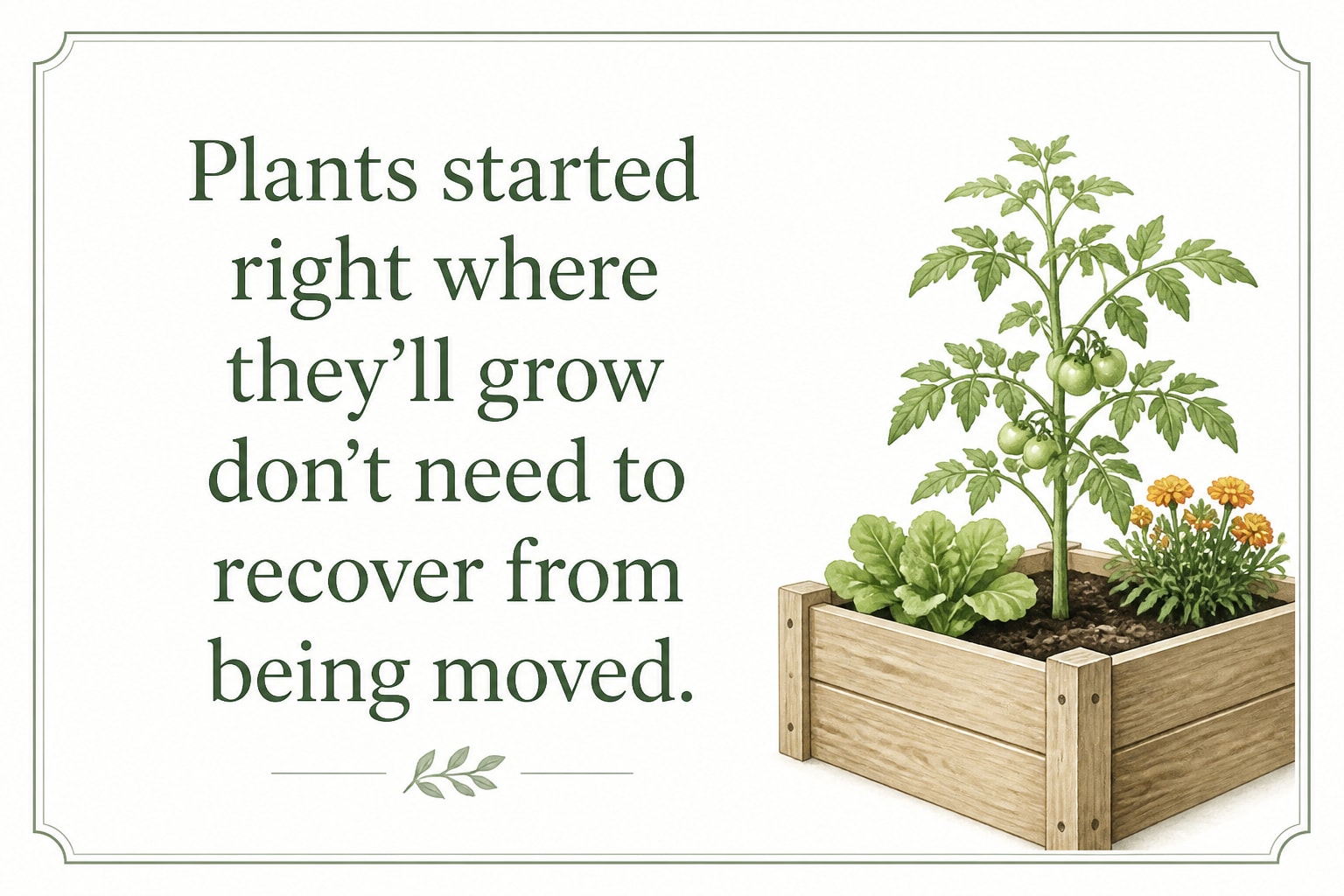
Plants started right where they’ll grow don’t need to recover from being moved. Their roots can expand naturally, and you avoid the hardening-off stage required for indoor seedlings. That’s a real benefit for busy gardeners or anyone who doesn’t want trays of plants taking over a sunny windowsill.
Still, a seed packet isn’t a promise. Germination can be uneven. A cold spring may slow everything down. Birds can pull up newly sprouted peas as if they’ve been waiting for them. Covering a freshly planted row with lightweight garden fabric often prevents that particular headache.
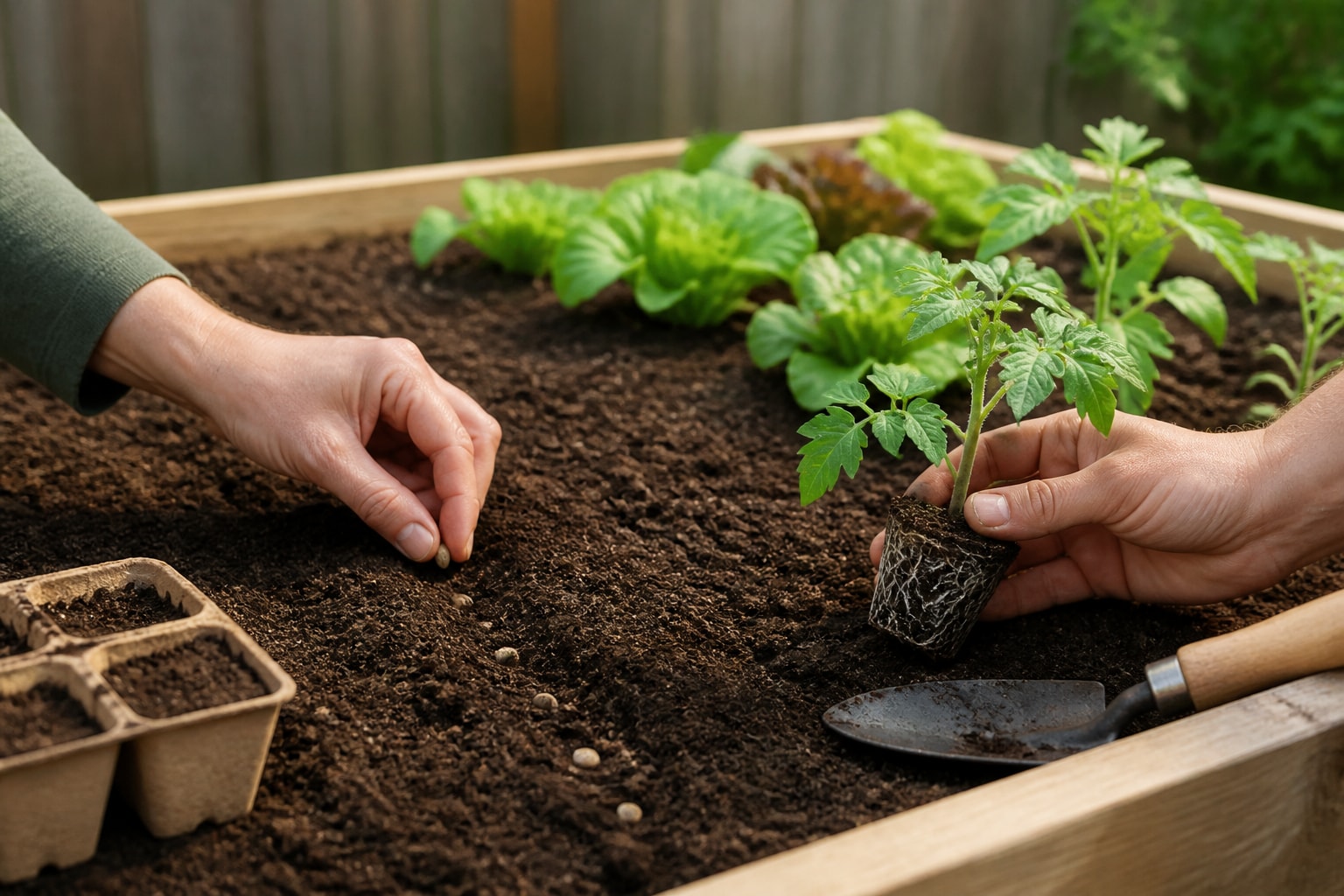
When sowing, follow the seed packet depth rather than burying everything under a thick layer of soil. Most seeds need only shallow coverage. Press the soil gently around them, water with a soft spray, and keep the surface consistently damp until seedlings appear.
Why transplants are worth the extra cost
You get a visible head start
Transplants shorten the wait between planting and harvest. That’s the biggest reason gardeners buy them. A tomato seedling already has a developed stem and root system, while a tomato seed may need weeks of indoor care before it’s ready for the bed.
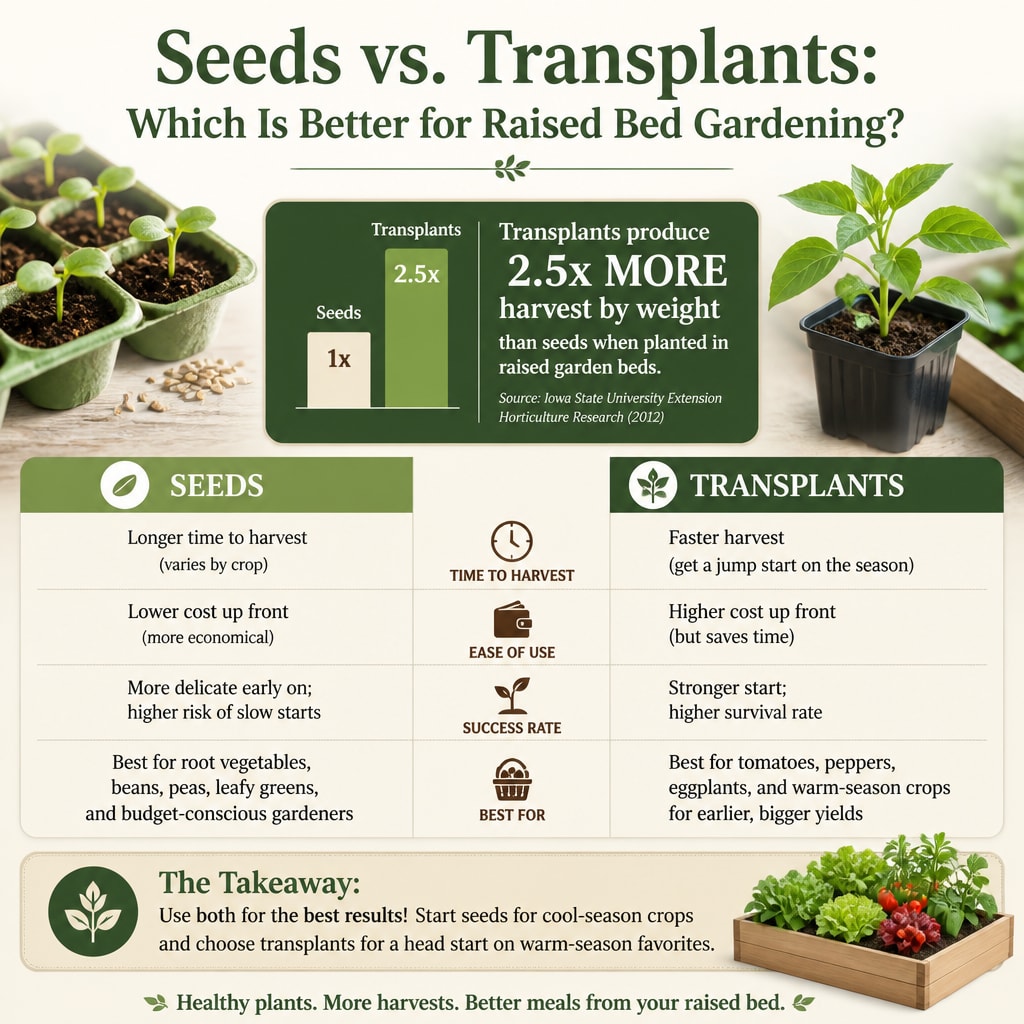
Transplants also make planning easier. You can see how many plants you have, place them according to mature spacing, and fill a raised bed without wondering how many seeds will sprout. For retirees and homeowners working with a small backyard, that predictability can be worth a lot.
Choose plants with sturdy stems, healthy green leaves, and roots that hold the potting mix together without circling tightly around the container. Avoid plants that are tall, pale, wilted, or covered with insects. A bargain plant that struggles for weeks isn’t much of a bargain.
Handle the move carefully
Before planting, gradually expose seedlings grown indoors or in protected greenhouses to outdoor conditions over approximately 7 to 10 days. This process, called hardening off, helps plants adjust to direct sunlight, wind, and temperature changes. Start with a sheltered location and gradually increase outdoor exposure. Nursery plants that have already been hardened off may need less adjustment, but it’s worth checking before planting.
Set transplants into moist soil, and avoid squeezing the stem. For tomatoes, planting slightly deeper than the container level can work because tomatoes form roots along buried stems. Peppers and eggplants are less forgiving of deep planting, so keep them near their original soil line.
Water thoroughly after planting. A thin layer of mulch helps hold moisture, but leave a little space around the stem. Wet mulch pressed against the plant can invite rot and pests. This small detail gets missed often.
Build a planting plan that uses both methods
Most raised bed gardeners don’t need to choose seeds or transplants as an all-or-nothing rule. A mixed plan usually gives you the best balance of cost, variety, speed, and simplicity.
Here’s a practical starting point:
- Direct-sow carrots, radishes, beets, beans, peas, and salad greens.
- Buy or start transplants for tomatoes, peppers, and eggplants.
- Use cucumber, squash, and melon seeds unless your growing season is short.
- Plant broccoli, cabbage, and kale as seeds or young transplants.
- Repeat quick crops every few weeks for a steadier harvest.
Spacing deserves just as much attention as the starting method. Crowded plants compete for water and airflow, even in rich raised-bed soil. The mature plant size on the seed packet or nursery label is more useful than the size of the young plant in your hand.
Keep a simple garden record, too. Write down the variety, planting date, and whether you used seed or transplant. After one season, you’ll know which tomatoes struggled, which lettuce bolted early, and which beans produced heavily. That information beats guessing next spring.
For more detailed planting guidance, see How to Plant Vegetables in Raised Garden Beds: A Beginner’s Guide. It explains how bed layout, planting depth, spacing, and ongoing care work together to support healthy vegetables.
FAQs for Seeds vs. Transplants: Which Is Better for Raised Bed Gardening?
Is it cheaper to grow vegetables from seed?
Usually, yes. Seeds cost less per plant and give you more variety. The trade-off is time and care, especially when starting seeds indoors under grow lights. For a small garden, buying a few tomato or pepper transplants may be more economical once you count equipment and failed seedlings.
Can beginners grow vegetables from seed?
Absolutely. Start with forgiving crops such as radishes, beans, peas, lettuce, cucumbers, and squash. Sow a short row rather than an entire bed, then learn from what happens. Tomatoes and peppers are possible, too, but they need stronger light and a longer growing period before they’re ready to move outside.
Choose the method that makes gardening easier
Seeds are affordable, flexible, and especially useful for root crops and quick-growing vegetables. Transplants cost more, but they save time and make warm-season crops much easier to fit into a short summer. Neither method wins every time.
For most raised bed gardeners, we recommend a combination. Direct-sow the crops that dislike root disturbance, and use healthy transplants for plants that benefit from a head start. That approach keeps the work manageable without giving up variety or harvest time.
🌱 FREE DOWNLOAD: Your First Raised Bed Garden
A Beginner-Friendly Guide to Getting Started
Thinking about growing your own vegetables in a raised bed? Start with a simple plan that helps you avoid costly mistakes and build a garden you can enjoy for years.
Our FREE Your First Raised Bed Garden guide provides practical, beginner-friendly information to help you:
- Choose a suitable location with enough sunlight.
- Plan the size and layout of your raised garden bed.
- Understand the basics of preparing healthy garden soil.
- Select vegetables that are appropriate for beginners.
- Get started with planting, watering, and caring for your garden.
You don’t need a huge backyard, expensive equipment, or years of gardening experience to get started!
Get Your FREE Raised Bed Gardening Guide
Free PDF guide from Backyard Living Books.
📗 Ready to Grow Your Own Fresh Vegetables?
Creating a productive raised bed garden takes thoughtful planning, healthy soil, and a little know-how.
Take the guesswork out of raised bed gardening!
Raised Bed Gardening Made Easy: Plans, Soil Mixes, Planting Secrets, and Beginner-Friendly Harvests is a practical guide designed to help you:
- Plan and build raised garden beds that fit your space.
- Choose materials and prepare the right soil mix.
- Select and plant vegetables for productive harvests.
- Understand watering, fertilizing, and routine garden maintenance.
- Avoid common mistakes that can waste time and money.
Whether you’re planting your first garden or looking to improve an existing one, this book will help you garden with greater confidence.
Explore Raised Bed Gardening Made Easy
🌿 Want More FREE Raised Bed Gardening Tips?
Visit our Gardening Learning Center for helpful articles, practical advice, and beginner-friendly resources covering everything from soil preparation and vegetable planting to watering, pest prevention, and seasonal gardening.
Explore the Gardening Learning Center
Part of the Backyard Living Series: Build • Grow • Raise • Thrive.