
Look, filling a raised garden bed can get expensive fast. Bags of premium soil add up, delivery fees sting, and suddenly the bed costs more to fill than it did to build. The good news is that you don’t need a box packed with costly potting mix. With a sensible blend of topsoil, finished compost, and a few inexpensive organic materials, you can create healthy growing soil without cutting corners.
The aim is simple: give roots enough depth, air, moisture, and nutrients to grow well. We can do that on a budget. The trick is knowing where quality matters most and where you can safely save money.
Start with the bed size and your real soil needs
Calculate the volume before buying anything
Before purchasing soil, measure the inside length, width, and depth of the bed. Multiply those three numbers to find the volume in cubic feet. A 4-by-8-foot bed filled 12 inches deep needs 32 cubic feet of material. That is a lot of soil, and guessing usually leads to either an expensive surplus or a frustrating shortage.
Many vegetables can grow successfully in raised beds containing 8 to 12 inches of quality soil, particularly when their roots can extend into suitable ground beneath the bed. However, larger crops such as tomatoes, peppers, and deep-rooted vegetables may benefit from additional soil depth. When a raised bed sits on concrete, compacted ground, or another surface that restricts root growth, providing adequate growing depth becomes especially important. Shallow-rooted crops such as lettuce, radishes, and spinach generally require less depth.
That gives us room to save money. A bed doesn’t always need to be filled to the top with expensive garden mix. In deeper raised beds, certain clean organic materials may be used below the main growing zone to reduce the amount of purchased soil needed. However, these materials decompose and settle over time, so they should not replace the soil depth required for healthy root development. For shallow raised beds, a consistent, high-quality soil blend is usually the better choice.
Choose depth based on what you plan to grow
Think about your crop list before you buy a single bag. A retiree growing salad greens near the kitchen may need only a modest layer of soil. Someone hoping to grow tomatoes, carrots, and cucumbers in the same bed will need more depth and stronger support for hungry roots.
For more planning help, our Raised Bed Gardening for Beginners: The Complete Step-by-Step Guide covers bed placement, dimensions, crop planning, and the practical decisions that affect filling costs.
Use a simple soil blend that does the heavy lifting
The basic budget mix
For most raised beds, we recommend starting with a blend of:
- About 60 percent quality topsoil
- About 30 percent finished compost
- About 10 percent aeration material such as shredded leaves, aged pine bark, or leaf mold
- A small amount of organic fertilizer only when a soil test or crop needs it
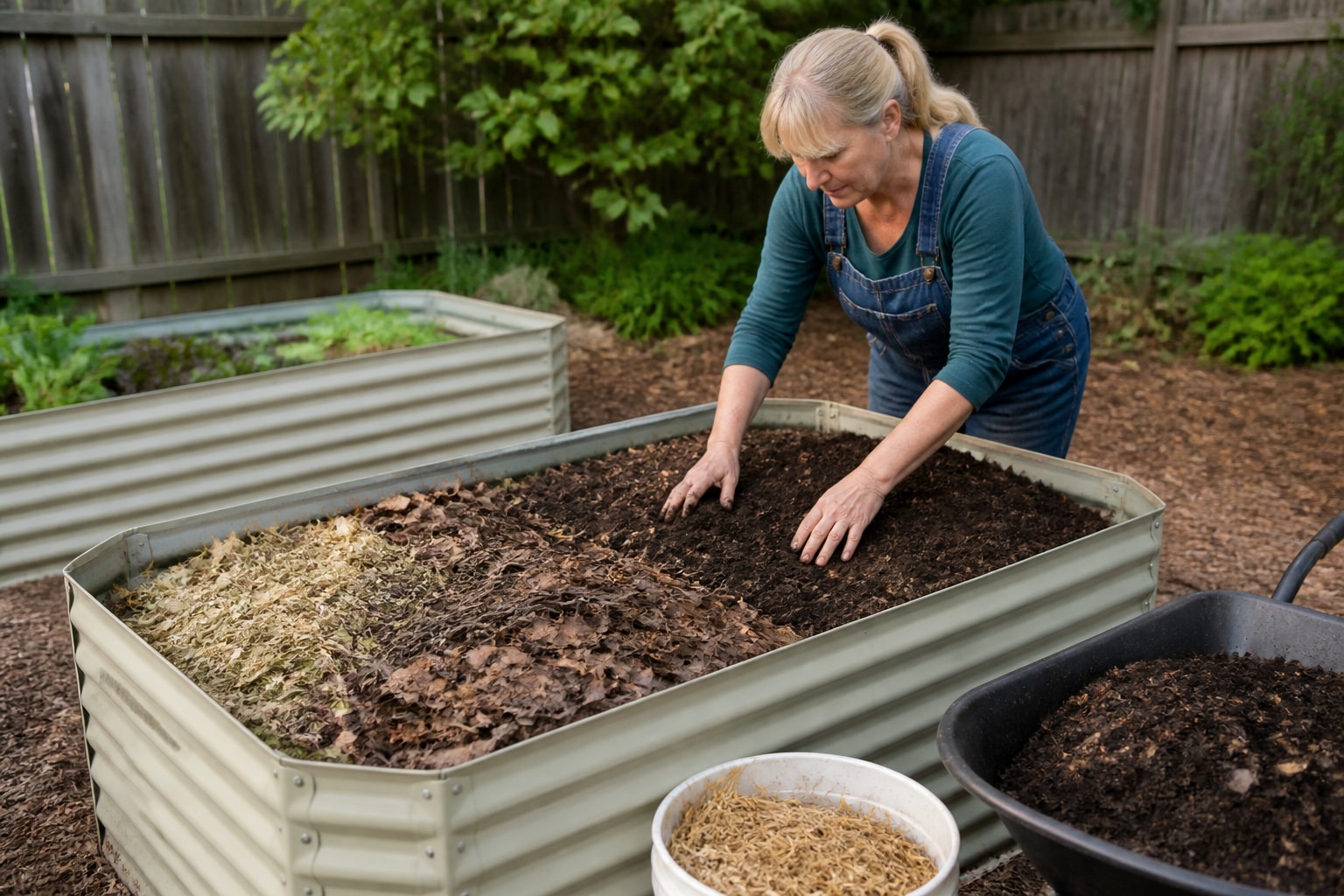
This 60/30/10 mixture is one possible starting point rather than a universal soil recipe. The ideal blend depends on the quality of the topsoil, the maturity and composition of the compost, and local growing conditions. Some commercially prepared raised bed soils already contain sufficient organic matter and may not require additional aeration materials. The finished blend should be loose enough for roots to grow while retaining moisture without becoming waterlogged.
Topsoil provides mineral material and structure. Compost supplies organic matter and a steady stream of nutrients. Leaf mold and aged bark improve air spaces and help the soil hold moisture without staying soggy.
Why pure compost isn’t the answer
Pure compost sounds like a gardener’s dream. It usually isn’t. Compost varies widely, and a bed filled entirely with it can settle dramatically, dry out quickly, or contain more soluble salts than young plants appreciate. Some composts are also too fine and compacted.
Compost is an ingredient, not the whole meal. Mix it with mineral topsoil so the bed has body and stays usable through the season. This matters even more in small backyards, where you may not have room to correct a poor mix by moving everything out later.
Save money with safe materials from your own yard
Build the lower layer with bulky organic matter
For a deeper bed, the lower portion can include clean, untreated logs, branches, woody garden trimmings, or partly decomposed leaves. This approach is sometimes called hugelkultur. It can reduce the amount of purchased soil, but it isn’t magic and it doesn’t suit every situation.
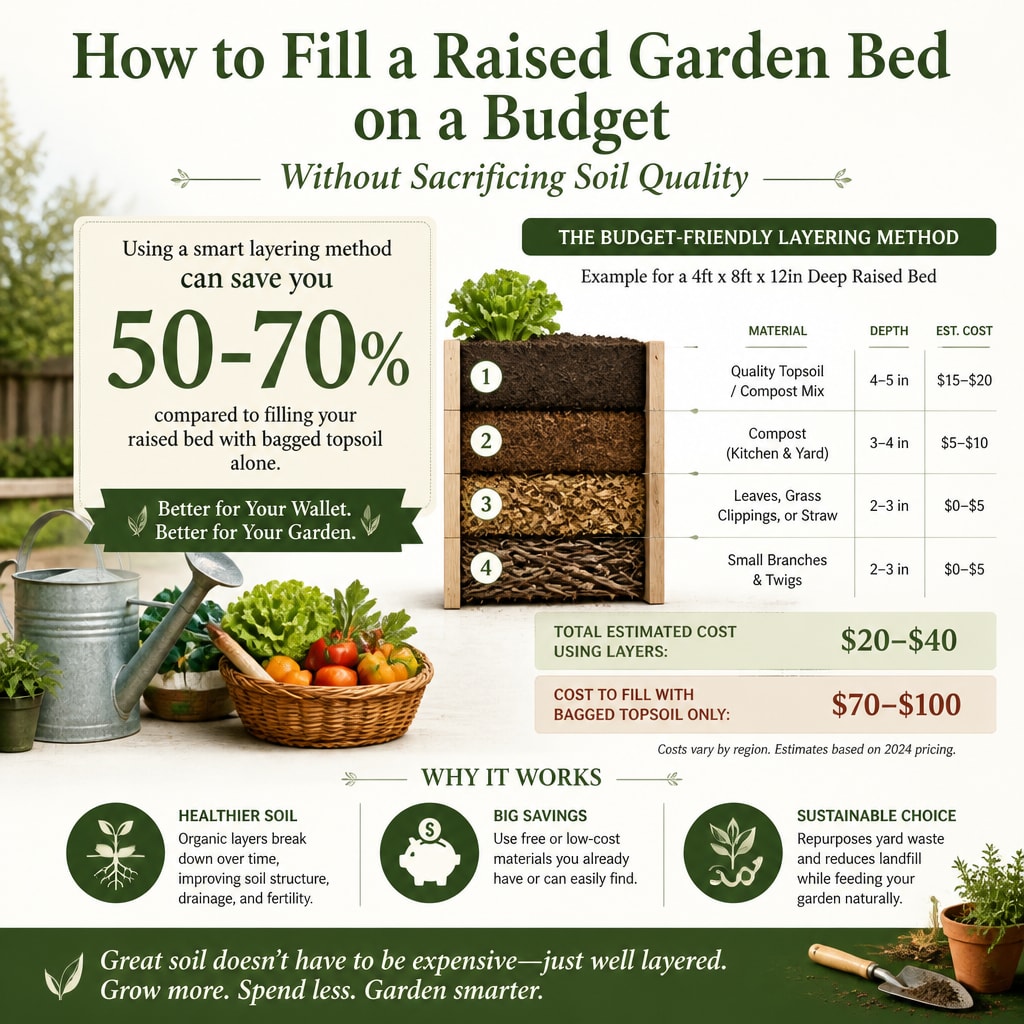
If using a hugelkultur-style approach in a sufficiently deep raised bed, choose clean, untreated woody material and place it well below the main vegetable root zone. Partly decomposed wood is generally preferable to large amounts of fresh wood because it has already begun breaking down. Fill gaps with suitable soil to reduce large air pockets. As the wood decomposes, the bed may settle and require additional soil. Avoid mixing large quantities of fresh wood directly into the growing soil, where decomposition can temporarily reduce nitrogen availability.
Don’t use painted, stained, pressure-treated, or chemically treated wood. Avoid diseased plant material, invasive weeds with mature seed heads, and anything that smells like fuel or chemicals. Free material is only a bargain when it’s clean.
Make leaf mold and compost gradually
Autumn leaves are one of the best budget materials available. Shred them with a mower, pile them in a wire bin, and keep the pile slightly damp. In time, they break down into leaf mold, a soft material that improves moisture retention and soil texture.
Home compost can also reduce costs, but give it enough time. Finished compost should be dark and crumbly, with an earthy smell. You shouldn’t be able to identify most of the original food scraps or yard waste. Immature compost may heat up, smell sour, or compete with plants while it continues decomposing.
New raised beds often settle noticeably during their first growing season as organic materials decompose and the soil consolidates. Plan for this by keeping some quality topsoil or finished compost available for future adjustments. When the soil level drops significantly, replenish it with an appropriate soil blend rather than relying entirely on additional compost. This helps maintain adequate growing depth without creating excessive nutrient buildup.
Fill the bed in layers, then test before planting
Mix as you go instead of creating a hard boundary
Place bulky material at the bottom only when the bed is deep enough to make it worthwhile. Add the soil blend in 4- to 6-inch layers, mixing each layer lightly with the one beneath it. You don’t need to turn the entire bed like a compost pile. Just avoid distinct bands that water can’t move through easily.
Fill the bed slightly above the final level because soil settles. Leave about an inch of space below the frame so water doesn’t wash soil over the sides. Give the finished bed a slow, thorough watering. This reveals low spots and helps the materials settle together.
Check the texture before adding amendments
Take a handful of slightly moist soil and gently squeeze it. A well-structured growing medium often holds together briefly before crumbling when disturbed. Sticky, dense soil may indicate excessive clay content or moisture, while soil that falls apart immediately may be sandy or simply too dry. Before adding amendments, evaluate how the soil drains and retains moisture. Finished compost or other suitable organic matter may improve some soil conditions, but the appropriate correction depends on the existing soil texture and composition.
A soil test is a smart use of a small amount of money. Many local extension offices offer inexpensive testing, and the results can prevent you from buying amendments your bed doesn’t need. Extra fertilizer won’t repair compacted soil, poor drainage, or low organic matter.
Our Raised Bed Gardening Soil Guide: Compost, Fertilizer, and Soil Health explains how to read soil conditions, choose amendments, and maintain fertility after the bed is planted.
FAQs for How to Fill a Raised Garden Bed on a Budget Without Sacrificing Soil Quality
Can I fill a raised bed with regular garden soil?
You can use some native garden soil, especially in the lower portion, but don’t fill the entire bed with heavy clay or dense soil from another part of the yard. It may compact and drain poorly. Blend it with finished compost and a lighter organic material first. A quick squeeze test will tell you more than the label on a bag.
What is the cheapest way to fill a raised garden bed?
The lowest-cost approach is usually a combination of clean native soil, homemade compost, shredded leaves, and locally sourced bulk topsoil. Use purchased compost where plants will grow, rather than filling every inch with bagged planting mix. For very deep beds, partly decomposed wood can reduce the volume of soil needed, but plan for settling and yearly top-ups.
Build good soil once, then maintain it cheaply
Filling a raised bed on a budget doesn’t mean accepting poor soil. It means spending money where roots need quality and using clean, useful materials everywhere else. Start with accurate measurements. Choose a practical blend of topsoil and finished compost. Add leaf mold or aged organic matter for texture, and be cautious with fresh wood, unknown fill, and pure compost.
After planting, protect the surface with shredded leaves, straw, or another clean mulch. Mulch reduces evaporation, buffers temperature swings, and breaks down slowly into organic matter. Each spring, add a thin layer of finished compost instead of digging the bed over. The soil will improve without the yearly expense of rebuilding it.
🌱 FREE DOWNLOAD: Your First Raised Bed Garden
A Beginner-Friendly Guide to Getting Started
Thinking about growing your own vegetables in a raised bed? Start with a simple plan that helps you avoid costly mistakes and build a garden you can enjoy for years.
Our FREE Your First Raised Bed Garden guide provides practical, beginner-friendly information to help you:
- Choose a suitable location with enough sunlight.
- Plan the size and layout of your raised garden bed.
- Understand the basics of preparing healthy garden soil.
- Select vegetables that are appropriate for beginners.
- Get started with planting, watering, and caring for your garden.
You don’t need a huge backyard, expensive equipment, or years of gardening experience to get started!
Get Your FREE Raised Bed Gardening Guide
Free PDF guide from Backyard Living Books.
📗 Ready to Grow Your Own Fresh Vegetables?
Creating a productive raised bed garden takes thoughtful planning, healthy soil, and a little know-how.
Take the guesswork out of raised bed gardening!
Raised Bed Gardening Made Easy: Plans, Soil Mixes, Planting Secrets, and Beginner-Friendly Harvests is a practical guide designed to help you:
- Plan and build raised garden beds that fit your space.
- Choose materials and prepare the right soil mix.
- Select and plant vegetables for productive harvests.
- Understand watering, fertilizing, and routine garden maintenance.
- Avoid common mistakes that can waste time and money.
Whether you’re planting your first garden or looking to improve an existing one, this book will help you garden with greater confidence.
Explore Raised Bed Gardening Made Easy
🌿 Want More FREE Raised Bed Gardening Tips?
Visit our Gardening Learning Center for helpful articles, practical advice, and beginner-friendly resources covering everything from soil preparation and vegetable planting to watering, pest prevention, and seasonal gardening.
Explore the Gardening Learning Center
Part of the Backyard Living Series: Build • Grow • Raise • Thrive.