
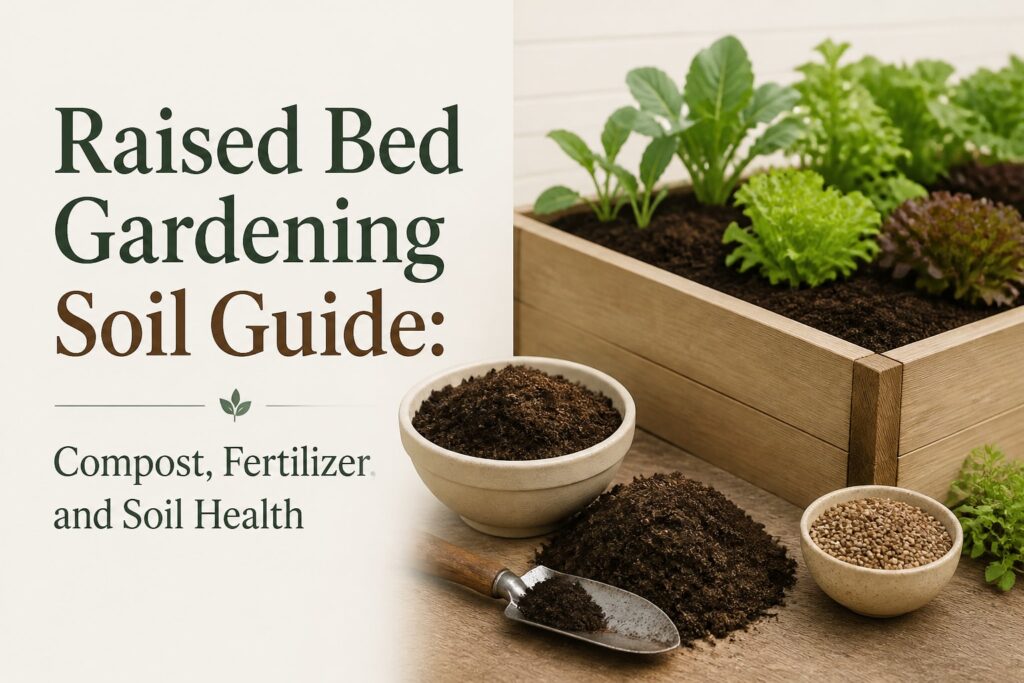
Healthy raised bed soil isn’t just dark and crumbly. It needs to hold moisture without staying soggy, give roots room to breathe, and contain enough nutrients for steady vegetable growth. The good news? You don’t need a perfect soil recipe. You need a sensible mix, a light hand with amendments, and a way to notice problems before plants start struggling.
For the bigger picture, see our Raised Bed Gardening for Beginners: The Complete Step-by-Step Guide. Here, we’re focusing on the part that keeps a bed productive season after season: compost, fertilizer, and soil health.
What healthy raised bed soil should do
Good soil performs several jobs at once. It anchors roots, stores water, drains excess moisture, and supplies nutrients. That sounds simple, but raised beds can get out of balance faster than in-ground beds because they’re often filled with purchased materials and watered more frequently.
A healthy bed usually has a loose texture. When you squeeze a handful that’s slightly damp, it should hold together briefly and then crumble when touched. Soil that smears across your fingers or forms a sticky mass may contain a high proportion of clay or be excessively wet. Soil that falls apart immediately may simply be too dry or have a coarse, sandy texture. These observations provide useful clues, but soil texture, moisture, and organic matter should be evaluated together rather than relying on a single squeeze test.
Most vegetables grow well in soil with a pH around 6.0 to 7.0. That range allows many essential nutrients to remain available to plant roots. But pH isn’t the only thing that matters. A bed with a reasonable pH can still produce weak plants when it’s compacted, poorly drained, or short on nitrogen.
Build the right soil mix from the start
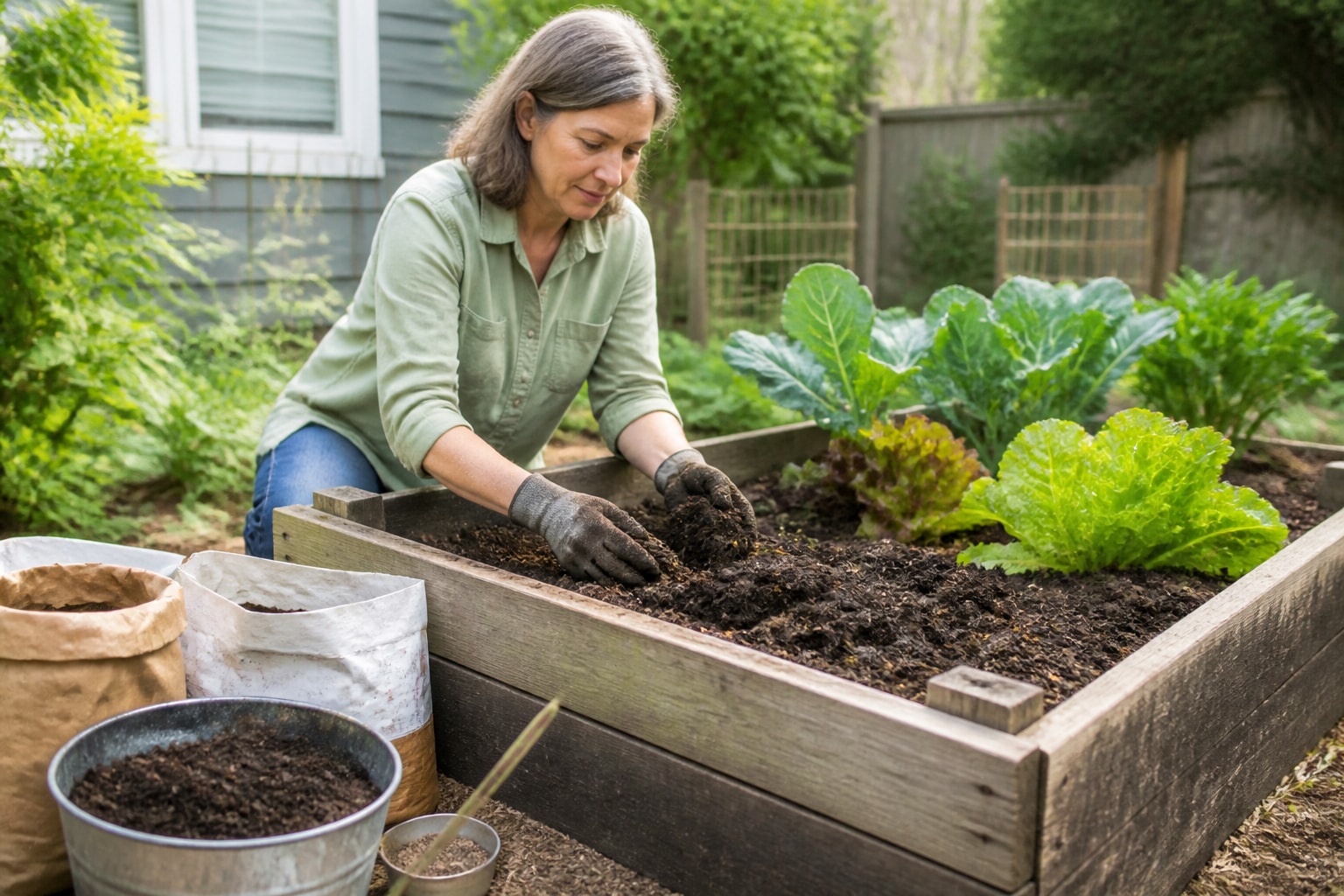
When filling a new raised bed, begin with quality topsoil or a commercially prepared raised bed soil blend, then incorporate well-finished compost as needed. The ideal proportions depend on the texture and quality of the materials available locally. Sandy soil may benefit from additional organic matter to improve moisture retention, while heavy clay-based soil may require careful blending with suitable materials to improve structure and drainage. Avoid relying on a single rigid soil recipe for every garden.
Be cautious with “garden soil” sold in bags. It’s often intended to be blended into existing ground soil, not poured into a deep raised bed by itself. Straight compost isn’t a substitute for soil, either. It can shrink as it breaks down, hold too much water, or contain more soluble salts than young roots appreciate.
Compost should smell earthy, not sour or ammonia-like. It should be dark and mostly broken down, with only a few recognizable pieces left. Fresh manure is a different matter. It can burn roots and may carry pathogens, so it needs proper composting and timing before it goes near food crops.
How much compost belongs in a raised bed?
For a new raised bed, compost is commonly incorporated at approximately 20% to 30% of the total soil blend, although the ideal amount depends on the compost’s composition and the existing soil. Excessive compost can contribute to nutrient imbalances, elevated soluble salts, or excessive moisture retention. Begin with a moderate amount of well-finished compost and adjust based on soil quality, drainage, and laboratory soil test recommendations.
For an established bed, a thin top-dressing is usually enough. Spread roughly 1 inch of finished compost over the surface and let rain, watering, worms, and routine planting work it downward. Deeply turning compost every season can disturb roots and soil life. We’re not fans of doing extra work just because the bed looks a little tired.
Compost improves soil, but it isn’t complete plant food
Compost adds organic matter and a small, variable amount of nutrients. It also supports microbial activity, which helps cycle nutrients into forms plants can use. The catch is that compost quality varies widely. A rich homemade compost may behave differently from a woody municipal product or a compost made mostly from manure.
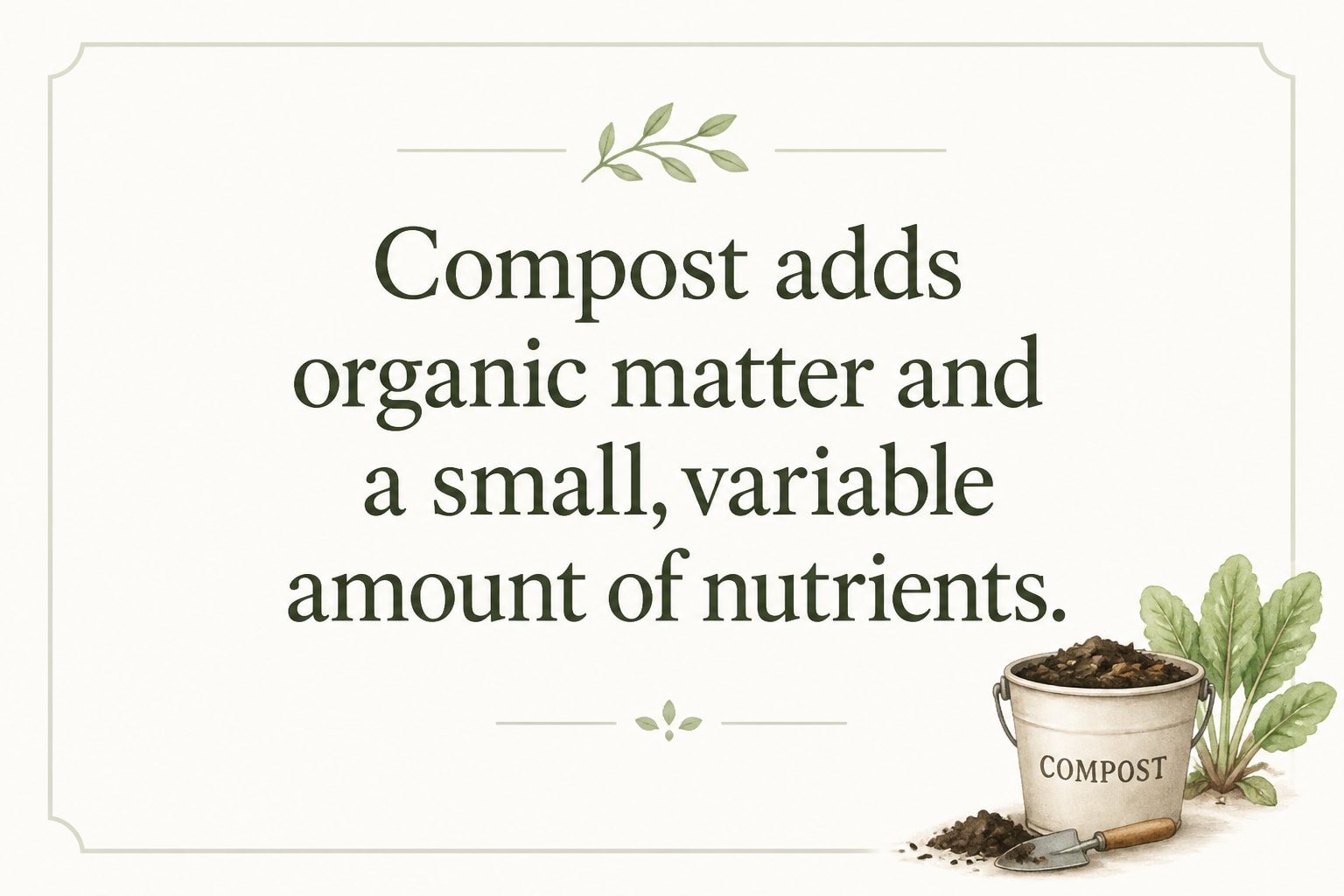
Think of compost as the bed’s maintenance crew, not a full fertilizer program. It improves the working conditions around roots, but heavy-feeding crops such as tomatoes, peppers, squash, and cabbage may still need additional nutrients during the season.
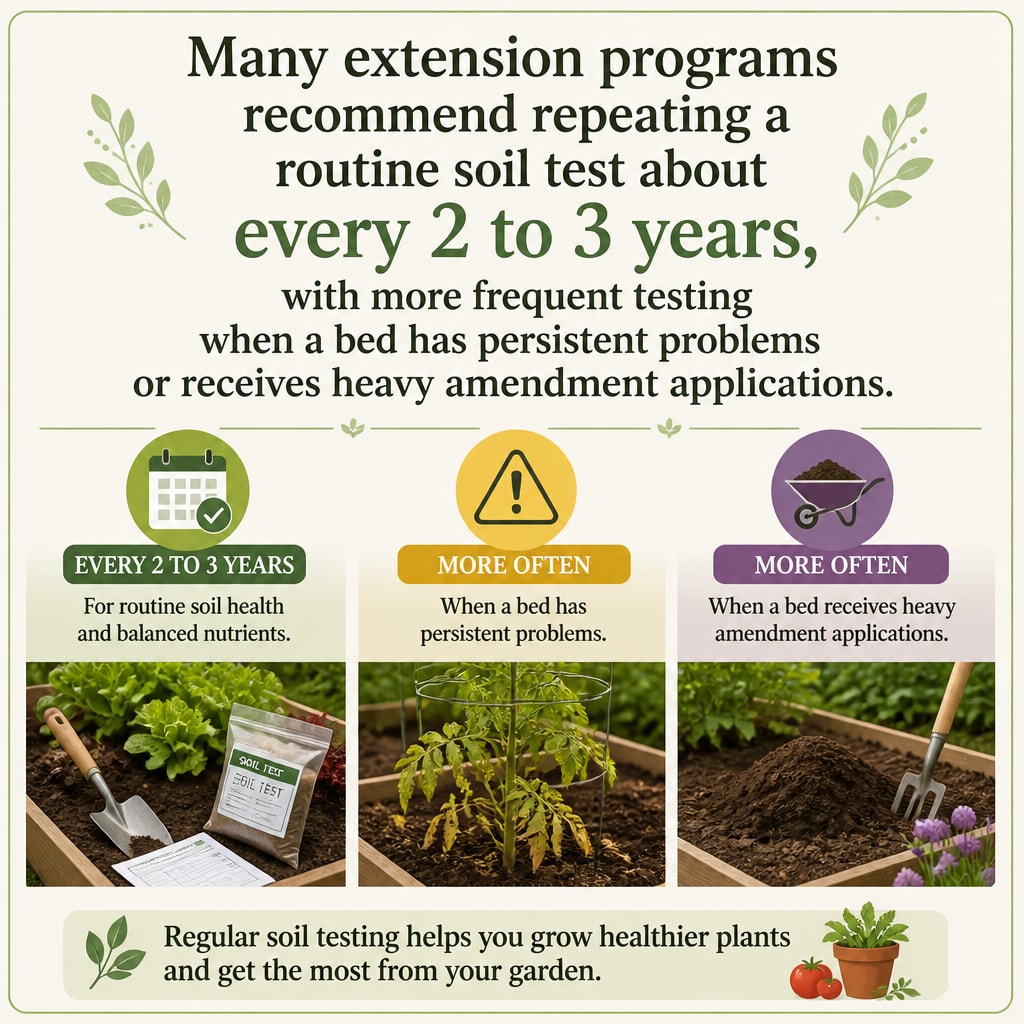
Test the soil when establishing a new raised bed to understand its pH and nutrient levels. For established vegetable gardens, testing approximately every two to three years may be sufficient when soil conditions and plant growth remain consistent. Annual testing may be beneficial when correcting nutrient imbalances, managing intensive vegetable production, or monitoring beds that receive frequent fertilizer or compost applications. Follow your local Cooperative Extension service’s recommendations.
When raised bed vegetables need fertilizer
Fertilizer supplies nutrients in a more concentrated and predictable form than compost. The label’s three numbers represent nitrogen, phosphate, and potash, in that order. Nitrogen supports leafy growth. Phosphorus helps with roots and reproductive growth, although many soils already contain plenty. Potassium supports water regulation and general plant function.
That last point matters because gardeners often reach for a high-phosphorus product whenever a plant looks weak. It’s not always the answer. Adding a nutrient the soil already has can create an imbalance and may contribute to runoff problems.
Use soil test results to determine which nutrients are needed before applying fertilizer. Leafy vegetables may benefit from additional nitrogen when soil levels are insufficient, while fruiting crops such as tomatoes and peppers require balanced nutrition throughout their growth cycle. Avoid automatically switching to high-phosphorus or high-potassium fertilizers when plants begin flowering. Additional nutrients should be supplied only when soil conditions, crop requirements, or test results indicate a need.
Granular or liquid fertilizer?
Granular fertilizer is convenient for planting-time application and often provides slower, steadier feeding. Work it into the upper soil as directed on the label. Don’t pile it against stems. That small mistake can damage plants, especially in dry weather.
Liquid fertilizer acts faster and can help a plant that is actively growing but showing a confirmed nutrient shortage. It also washes through the root zone more quickly, so repeated applications may be needed. More isn’t better here. Overfertilized vegetables can grow lush leaves while producing fewer flowers and fruits.
How to test raised bed soil
A basic soil test can tell you pH, phosphorus, potassium, and sometimes organic matter or soluble salts. Collect several small samples from the bed, mix them in a clean container, and submit the combined sample according to the lab’s instructions. Don’t scoop from only one corner. That corner may have received extra compost or fertilizer and won’t represent the whole bed.
Test soil when it isn’t soaking wet and avoid sampling immediately after fertilizing. Keep records of the results, what you added, and how the plants performed. After a couple of seasons, patterns become much easier to see.
Home test kits can offer a rough reading, but laboratory testing is usually more useful when you’re trying to correct a stubborn problem. Soil test results may include recommendations for specific crops, which is helpful when you’re not sure whether a symptom comes from nutrition, watering, or something else entirely.
Fix common raised bed soil problems
Compacted soil
Compaction happens when people walk on the bed, work wet soil, or allow heavy rain to beat down on bare surfaces. Roots have trouble moving through it, and water may run off instead of soaking in.
Avoid repeatedly tilling raised beds, since excessive disturbance can damage soil structure and beneficial organisms. When compaction is present, carefully loosen the affected soil with a garden fork, avoiding major plant roots. Incorporate suitable organic matter when establishing or renovating the bed, and apply finished compost to the surface during routine maintenance. Prevent future compaction by avoiding walking on the growing area and limiting soil work when the bed is excessively wet.
Poor drainage
A raised bed should drain through its soil and out around the base. Lining the bottom with plastic can trap water, and adding a layer of gravel at the bottom usually doesn’t solve the problem. It may actually reduce the depth available for roots.
Check whether the bed sits on compacted ground, whether the soil contains too much fine material, and whether irrigation is running longer than necessary. A simple finger test works well: push your finger a couple of inches into the soil before watering again. Moist soil doesn’t need another drink just because the surface looks dry.
Low fertility
Slow growth, pale leaves, and small harvests can point to low fertility, but they can also result from cold soil, root damage, pests, or inconsistent watering. Look at the whole growing situation before reaching for fertilizer.
Top-dress with finished compost, run a soil test, and apply a crop-appropriate fertilizer only when the results or plant needs support it. This measured approach saves materials and keeps the bed from becoming overloaded over time.
Refresh soil between growing seasons
After harvest, remove diseased plant material and pull out thick roots that would interfere with the next planting. Healthy roots can often be cut at the soil line and left to decompose, especially in a bed that won’t be replanted immediately.
Add a modest layer of compost, break up obvious crusting near the surface, and cover bare soil with mulch or a suitable cover crop. Mulch protects against erosion and temperature swings. Just keep it a few inches away from plant stems to discourage rot and pests.
Raised bed soil settles over time. That’s normal. Top it up with a blend of quality soil and compost rather than dumping in a load of pure compost. The goal is a stable growing medium that stays productive, not a bed that gets softer and richer until it holds too much water.
Keep your soil plan simple
Start with good base soil, use finished compost as a regular surface amendment, and let a soil test guide fertilizer decisions. Watch how water moves through the bed. Pay attention to leaf color, growth rate, and harvest size. Those everyday observations tell you a lot.
🌱 FREE DOWNLOAD: Your First Raised Bed Garden
A Beginner-Friendly Guide to Getting Started
Thinking about growing your own vegetables in a raised bed? Start with a simple plan that helps you avoid costly mistakes and build a garden you can enjoy for years.
Our FREE Your First Raised Bed Garden guide provides practical, beginner-friendly information to help you:
- Choose a suitable location with enough sunlight.
- Plan the size and layout of your raised garden bed.
- Understand the basics of preparing healthy garden soil.
- Select vegetables that are appropriate for beginners.
- Get started with planting, watering, and caring for your garden.
You don’t need a huge backyard, expensive equipment, or years of gardening experience to get started!
Get Your FREE Raised Bed Gardening Guide
Free PDF guide from Backyard Living Books.
📗 Ready to Grow Your Own Fresh Vegetables?
Creating a productive raised bed garden takes thoughtful planning, healthy soil, and a little know-how.
Take the guesswork out of raised bed gardening!
Raised Bed Gardening Made Easy: Plans, Soil Mixes, Planting Secrets, and Beginner-Friendly Harvests is a practical guide designed to help you:
- Plan and build raised garden beds that fit your space.
- Choose materials and prepare the right soil mix.
- Select and plant vegetables for productive harvests.
- Understand watering, fertilizing, and routine garden maintenance.
- Avoid common mistakes that can waste time and money.
Whether you’re planting your first garden or looking to improve an existing one, this book will help you garden with greater confidence.
Explore Raised Bed Gardening Made Easy
🌿 Want More FREE Raised Bed Gardening Tips?
Visit our Gardening Learning Center for helpful articles, practical advice, and beginner-friendly resources covering everything from soil preparation and vegetable planting to watering, pest prevention, and seasonal gardening.
Explore the Gardening Learning Center
Part of the Backyard Living Series: Build • Grow • Raise • Thrive.