
Depending on soil conditions and whether you’re maintaining an established raised bed or preparing a new one, compost applications may range from approximately 1 to 3 inches. Established beds generally need less, while new beds or those requiring significant improvement may benefit from more.
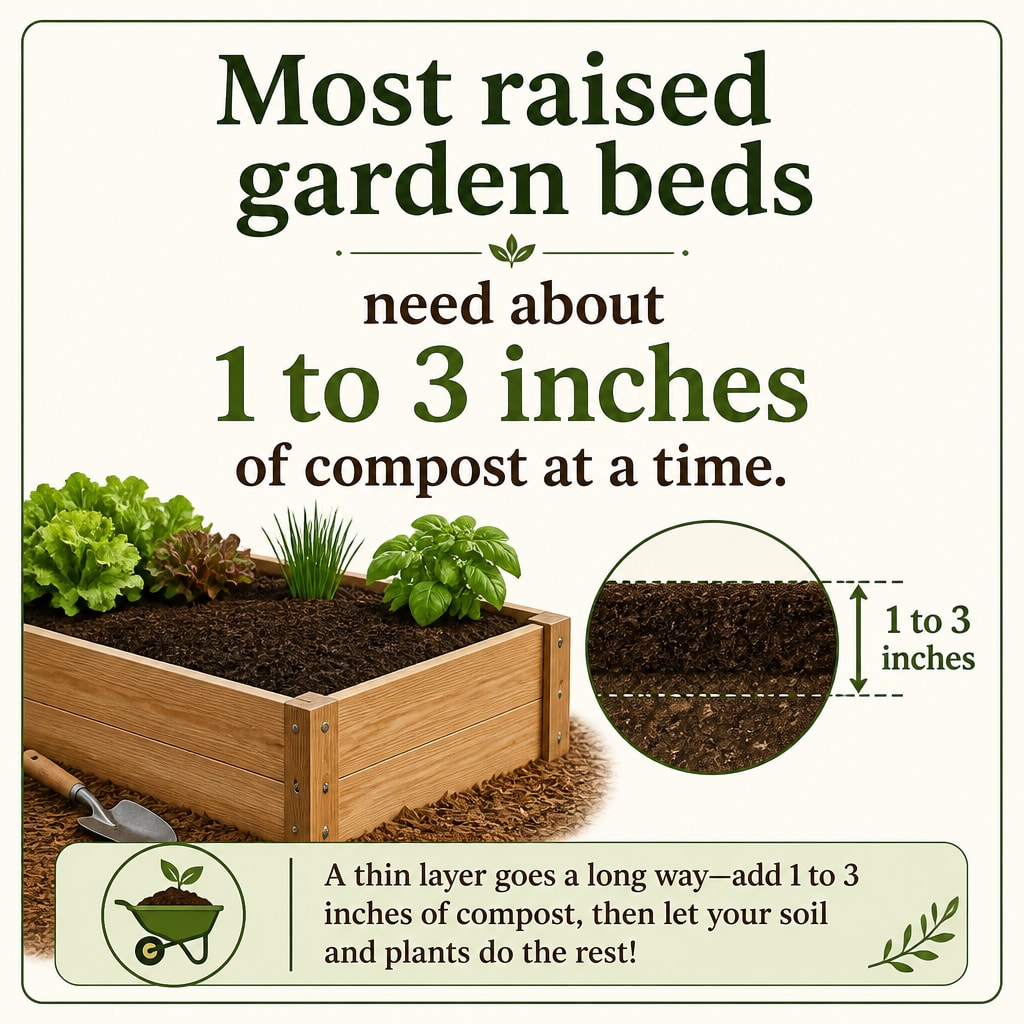
For most home gardeners, 1 inch of finished compost spread over the bed each year is a sensible starting point. New beds usually need more during the initial soil mix. We recommend measuring the bed first, then buying compost by volume instead of guessing with bags.
Start with the right compost amount
Established beds usually need one inch
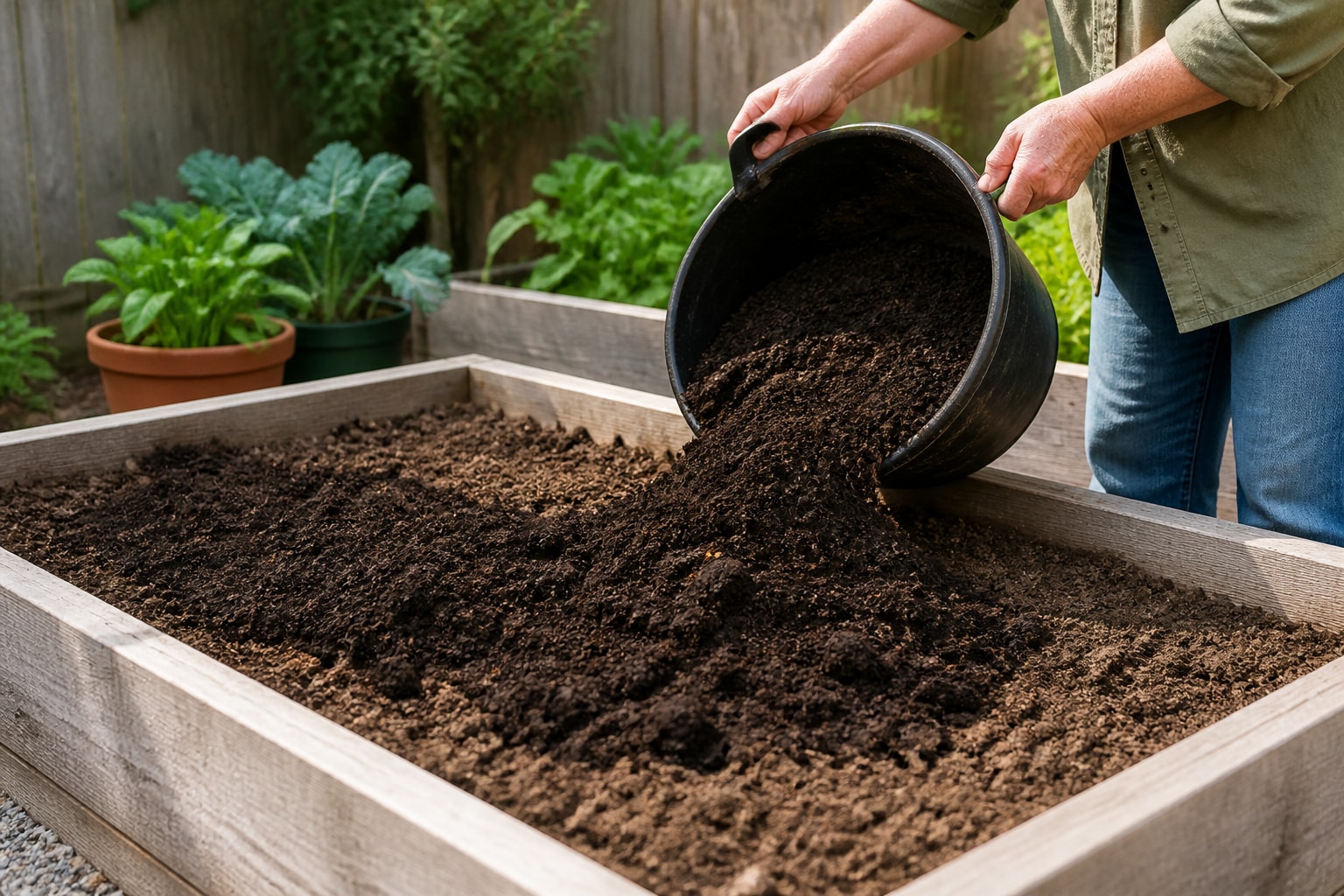
For a bed that’s already filled with decent soil, spread 1 inch of compost over the surface before planting. Mix it into the top 4 to 6 inches with a garden fork, or leave it on top for worms and rain to work downward. Either approach can work. The choice mostly comes down to your soil and how carefully you want to avoid disturbing roots.
Some raised beds may benefit from additional organic matter when the soil is sandy, low in organic matter, or structurally poor. However, adding several inches of compost every year without evaluating soil conditions can lead to excessive nutrient accumulation, particularly phosphorus, and elevated soluble salts. For established beds, begin with a modest application and use soil test results to guide future additions.
New beds need a different calculation
A brand-new raised bed needs enough mineral soil to give roots structure, along with compost for organic matter. Compost shouldn’t make up the entire bed. It breaks down and shrinks, sometimes dramatically, and pure compost can dry out quickly or stay too wet depending on its ingredients.
A practical starting point for a new raised bed is a blend of quality topsoil and approximately 20% to 30% well-finished compost by volume. The ideal proportions depend on the texture and nutrient content of the materials being used. Compost should improve soil structure and organic matter content without becoming the dominant component. In shallow raised beds built over suitable existing soil, plant roots may also extend below the frame, reducing the amount of imported material needed.
Our Raised Bed Gardening for Beginners: The Complete Step-by-Step Guide covers the other decisions that affect soil depth, including bed placement, drainage, and choosing the right size for your backyard.
Calculate how many bags or yards you need
Use length, width, and depth
Compost volume is easy to calculate once you know the bed’s measurements. Multiply length by width by the compost depth, using feet for all three measurements.
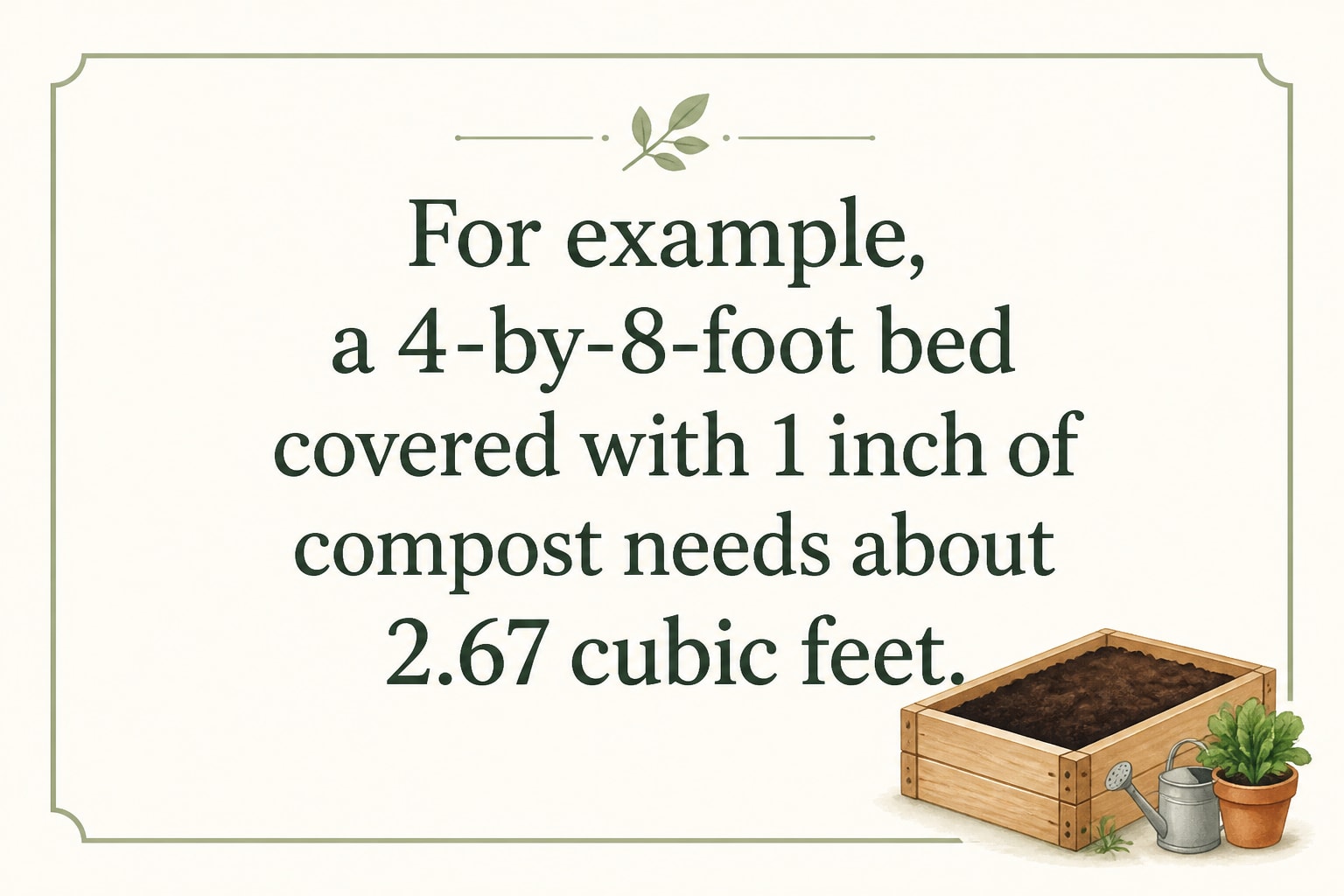
For example, a 4-by-8-foot bed covered with 1 inch of compost needs about 2.67 cubic feet. Two inches takes about 5.33 cubic feet. Three inches takes 8 cubic feet. Those numbers are handy because many bags contain 1 or 2 cubic feet, while bulk compost is sold by the cubic yard.
Here’s the basic formula:
Length in feet × width in feet × depth in feet = cubic feet needed
One inch equals one-twelfth of a foot. So, for a 4-by-8-foot bed with a 2-inch layer, the calculation is 4 × 8 × 0.167, which comes to roughly 5.3 cubic feet. Add a little extra for settling and uneven spreading. Compost sold in bags is often not filled to the exact volume you expect, and loose bulk material compresses during delivery.
Don’t forget bed settling
New soil mixes settle after watering, rain, and regular foot traffic around the bed. That doesn’t mean something went wrong. Organic matter naturally decomposes, and air spaces close up.
We usually fill a new bed close to the top, water it thoroughly, and wait a few days before planting. Then we add soil and compost where the level dropped. Leave about an inch of space below the frame so water doesn’t run over the sides during a storm.
Choose the right time to add compost
Before planting is the easiest window
Early spring is a convenient time to spread compost, but it isn’t the only good option. Fall works well too. A layer added after harvest can sit through winter, and soil organisms will gradually pull organic matter downward. In areas with heavy rain, cover the bed with leaves or a light mulch to reduce erosion.
Compost can also be added between successive crops when soil conditions justify it. After removing spent plants and preparing the surface, apply a modest amount of well-finished compost if additional organic matter is needed. Avoid automatically adding another full inch after every harvest, particularly in beds that receive multiple plantings each year. Regular soil testing helps prevent unnecessary nutrient buildup.
Match the amount to the crop
Tomatoes, squash, cucumbers, and corn tend to appreciate fertile soil, though compost alone won’t supply everything they need. Root crops such as carrots and parsnips can produce forked or oddly shaped roots in very rich, fresh, or lumpy material. They prefer loose soil with moderate fertility.
Seedlings are another special case. Fresh compost may contain salts or unfinished material that can bother young roots. Use mature compost, and don’t pile it against stems. A thin surface layer is safer than a thick mound around a plant.
For a closer look at compost quality, fertilizer choices, and keeping raised-bed soil productive, visit our Raised Bed Gardening Soil Guide: Compost, Fertilizer, and Soil Health.
Know when compost is too much
Watch the plants and the soil
Compost is helpful, but it isn’t a cure for every soil problem. A bed overloaded with compost may drain poorly, dry into a crust, or grow huge leaves with disappointing fruit. Plants can also suffer when compost brings in excess phosphorus or soluble salts.
Pay attention to the material itself. Finished compost should be dark and crumbly, with an earthy smell. It may contain small bits of leaves or twigs, but it shouldn’t be hot, slimy, sour-smelling, or full of recognizable food scraps. Fresh manure compost deserves extra caution. It can burn plants and may contain weed seeds or pathogens unless it’s been properly composted.
Common mistakes to avoid
- Using compost as the entire filling for a deep raised bed
- Adding several inches every season without checking soil texture
- Mixing unfinished compost into seed-starting areas
- Piling compost against stems, crowns, or the wooden frame
- Assuming compost replaces a soil test or balanced fertilizer
Periodic laboratory soil testing can help determine whether nutrient levels are adequate or becoming excessive. Established vegetable beds may benefit from testing every two to three years, while beds receiving frequent compost or fertilizer applications may require more regular monitoring. Follow your local Cooperative Extension service’s recommendations, and remember that compost requirements depend on soil condition rather than a fixed annual schedule.
FAQs for How Much Compost Should You Add to Raised Garden Beds?
Can I add compost every year?
Yes, most established vegetable beds benefit from an annual layer of about 1 inch. Spread it before planting or after harvest. You don’t need to work it deeply every time. A light mixing in the top few inches is enough, and leaving some on the surface protects the soil from drying out.
Is three inches of compost too much?
Not always. Three inches may be useful when improving poor, compacted soil or filling a new bed as part of a soil blend. For a healthy established bed, though, it’s more than most plants need in one season. Start with 1 inch, watch how the bed drains and grows, and adjust next year.
Use compost as a steady soil-building habit
For most established raised beds, approximately 1 inch of finished compost can be a useful starting point when additional organic matter is needed. New raised beds often benefit from a soil blend containing approximately 20% to 30% compost by volume. Measure carefully, use mature compost, and adjust future applications based on soil conditions and testing rather than automatically adding more each season.
🌱 FREE DOWNLOAD: Your First Raised Bed Garden
A Beginner-Friendly Guide to Getting Started
Thinking about growing your own vegetables in a raised bed? Start with a simple plan that helps you avoid costly mistakes and build a garden you can enjoy for years.
Our FREE Your First Raised Bed Garden guide provides practical, beginner-friendly information to help you:
- Choose a suitable location with enough sunlight.
- Plan the size and layout of your raised garden bed.
- Understand the basics of preparing healthy garden soil.
- Select vegetables that are appropriate for beginners.
- Get started with planting, watering, and caring for your garden.
You don’t need a huge backyard, expensive equipment, or years of gardening experience to get started!
Get Your FREE Raised Bed Gardening Guide
Free PDF guide from Backyard Living Books.
📗 Ready to Grow Your Own Fresh Vegetables?
Creating a productive raised bed garden takes thoughtful planning, healthy soil, and a little know-how.
Take the guesswork out of raised bed gardening!
Raised Bed Gardening Made Easy: Plans, Soil Mixes, Planting Secrets, and Beginner-Friendly Harvests is a practical guide designed to help you:
- Plan and build raised garden beds that fit your space.
- Choose materials and prepare the right soil mix.
- Select and plant vegetables for productive harvests.
- Understand watering, fertilizing, and routine garden maintenance.
- Avoid common mistakes that can waste time and money.
Whether you’re planting your first garden or looking to improve an existing one, this book will help you garden with greater confidence.
Explore Raised Bed Gardening Made Easy
🌿 Want More FREE Raised Bed Gardening Tips?
Visit our Gardening Learning Center for helpful articles, practical advice, and beginner-friendly resources covering everything from soil preparation and vegetable planting to watering, pest prevention, and seasonal gardening.
Explore the Gardening Learning Center
Part of the Backyard Living Series: Build • Grow • Raise • Thrive.