

Growing herbs in a raised garden bed gives you fresh flavor within arm’s reach, but herbs don’t all want the same treatment. Mint can take over a corner in no time. Rosemary prefers drier soil. Basil wants warmth and regular picking. A little planning keeps the bed productive instead of turning into a crowded tangle.
We’ve found that the best herb beds are simple. Choose herbs your household actually uses, give each plant enough room, and keep harvesting. That’s the rhythm that works.
Choose herbs that match your garden and kitchen
Start with herbs you’ll actually cut
For most raised beds, we recommend beginning with a short list: basil, parsley, cilantro, chives, thyme, oregano, sage, and rosemary. These cover a lot of everyday cooking without demanding an entire backyard.
Basil is an annual in most climates, so it grows quickly during warm weather and needs regular harvesting. Parsley handles cool temperatures better and can keep producing for months. Cilantro is useful but tends to bolt once the weather heats up. Planting a second round every few weeks helps keep leaves coming.
Chives return year after year and tolerate a little neglect. Thyme, oregano, sage, and rosemary are perennial herbs in many regions, though winter survival depends on your climate. They prefer leaner, well-drained soil than basil or parsley.
Give aggressive herbs their own space
Mint is the classic troublemaker. It spreads through underground stems and can push into neighboring plants. Keep it in a container, or plant that container in the raised bed with the rim sitting above the soil. Lemon balm can behave in a similar way.
When choosing a bed location, think about how often you’ll use the herbs. A bed near the kitchen is convenient, but it still needs at least six hours of sun for most culinary herbs. For more help with bed placement and setup, our Raised Bed Gardening for Beginners: The Complete Step-by-Step Guide covers the planning decisions that make later care easier.
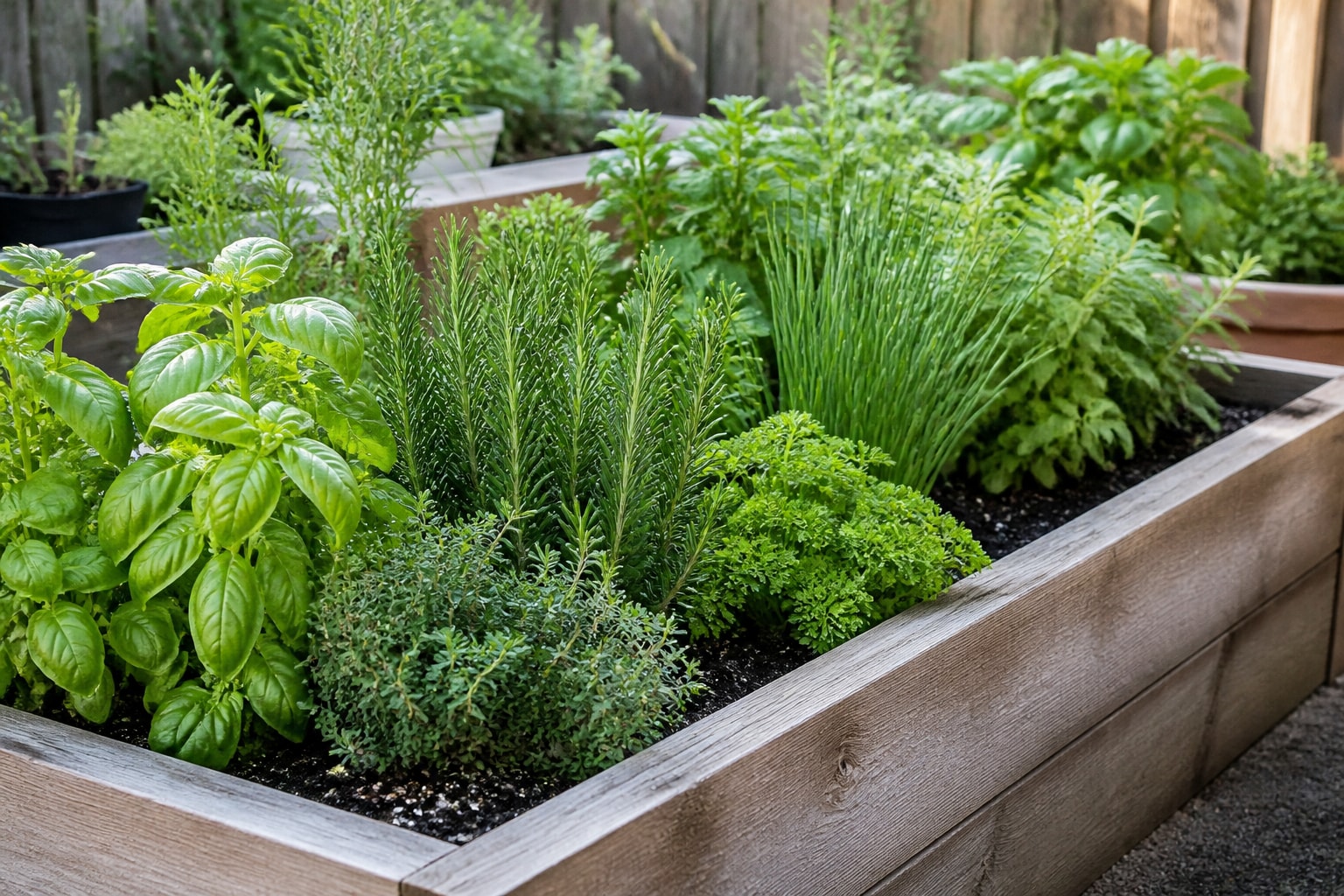
Use spacing that leaves room for real growth
Seed packets and nursery tags often list spacing that feels surprisingly generous. Trust it. A tiny basil transplant may look lonely with 12 inches around it, but that same plant can become a broad, leafy mound by midsummer.
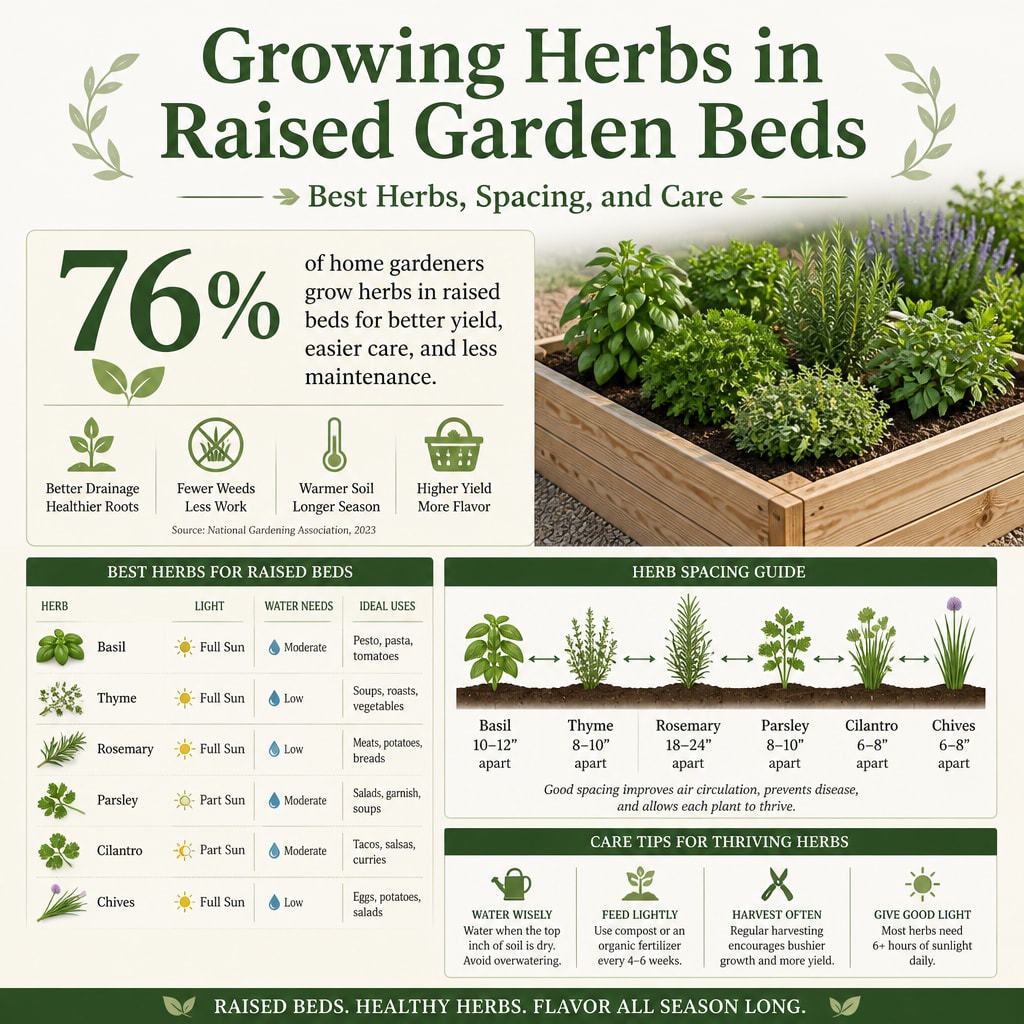
Practical spacing for common herbs
Use these measurements as a starting point. In fertile soil, plants may need the wider end of the range.
- Basil: 12 to 18 inches apart
- Parsley: 8 to 10 inches apart
- Cilantro: 6 to 8 inches apart
- Chives: 8 to 12 inches apart
- Thyme and oregano: 12 to 18 inches apart
- Sage and rosemary: 18 to 24 inches apart
Spacing isn’t only about giving roots room. Air needs to move between stems and leaves. Crowded herbs stay damp longer after rain or watering, which can invite fungal problems. Harvesting also becomes awkward. A bed that looks spacious in spring can become so crowded by midsummer that harvesting herbs tucked behind larger plants becomes difficult.
Plan for mature width, not starter-plant size
In the Northern Hemisphere, placing taller herbs toward the north side of the bed can help prevent them from shading shorter plants. Rosemary and sage can develop into substantial woody shrubs in mild climates, while thyme stays low and spreads along the soil surface. Consider each herb’s mature size and your local sunlight conditions when arranging the bed.
Design the bed so you can reach every herb from the surrounding paths without stepping into the growing soil. For beds accessible from both sides, a width of 3 to 4 feet is usually manageable. If you can reach the bed from only one side, consider keeping it approximately 2 feet wide.
Build the right soil before planting
Most herbs want drainage first
Raised beds already drain better than many in-ground gardens, but the soil mix still matters. A loose blend of quality topsoil, finished compost, and an aerating material such as aged bark or coarse leaf mold gives roots oxygen and prevents the bed from turning into a soggy block.
Don’t fill the bed with pure compost. Compost is valuable, but used alone it can settle, dry unevenly, or provide more nutrients than herbs need. Woody Mediterranean herbs such as thyme, sage, oregano, and rosemary especially dislike wet feet.
For those herbs, place them near the edge of the bed where drainage is often quickest. You can also mix a little extra coarse material into their planting area. Basil and parsley are less fussy and appreciate soil that holds steady moisture.
Plant at the same depth they were growing
Set nursery herbs so the top of the root ball sits level with the surrounding soil. Burying the stem can lead to rot, particularly with rosemary and thyme. Firm the soil gently, water around the roots, and add a light layer of mulch.
Seeds need a different approach. Follow the depth listed on the packet, which is usually shallow for small herb seeds. Keep the surface evenly moist while they germinate. A gentle spray works better than a hard stream that washes seeds into one corner.
For planting timing and bed layout, the recommendations in How to Plant Vegetables in Raised Garden Beds: A Beginner’s Guide also apply to herbs. The same basics matter: sunlight, healthy soil, sensible spacing, and a watering plan.
Care for herbs with steady, simple habits
Water deeply, then check before watering again
Newly planted herbs need consistent moisture while roots settle in. After that, water according to the plant and the weather. Basil and parsley generally need more regular moisture than rosemary or thyme.
Push a finger about an inch into the soil. If it feels dry there, water thoroughly at the base. Raised beds can dry faster than ground-level beds, especially in hot, windy weather. Drip irrigation or a soaker hose keeps leaves drier and makes watering easier for gardeners who don’t want to drag a hose around every evening.
Harvest often and feed lightly
Frequent harvesting encourages many herbs to branch. Pinch basil just above a pair of leaves, and remove flower buds when you want more leafy growth. Cut parsley stems near the base rather than snipping only the outer leaves. Chives can be trimmed a few inches above the soil.
Woody herbs usually need less fertilizer than leafy annuals. Too much nitrogen can produce soft, floppy growth with weaker flavor. A thin layer of compost in spring is often enough for established perennial herbs. Basil and parsley may appreciate an occasional mild feed during a long growing season, but more isn’t automatically better.
Keep an eye out for bolting, especially with cilantro and parsley. Once a plant sends up a flower stalk, the leaves may turn smaller or sharper in flavor. Let a few plants flower for pollinators or seed collection, then replace them when they stop earning their space.
FAQs for Growing Herbs in Raised Garden Beds: Best Herbs, Spacing, and Care
Can herbs and vegetables share the same raised bed?
Yes, as long as their water and spacing needs line up. Basil can grow beside tomatoes, and chives fit neatly near lettuce or peppers. Rosemary and thyme are a less natural match for moisture-loving vegetables, so put them at the dry edge of the bed or in a separate container.
How many herbs should we plant in one raised bed?
That depends on the bed’s size and how much you cook with herbs. In a 4-by-8-foot bed, a practical starting point might be two basil plants, one parsley, one cilantro, a clump of chives, and several perennial herbs along the edge. Leave open space for a second cilantro planting or seasonal flowers. A bed packed on planting day usually feels too crowded later.
Make your herb bed easier to enjoy
The best herb raised bed isn’t the one with the most varieties. It’s the one you can reach, water, and harvest without a fuss. Start with herbs your kitchen uses, give them room to mature, and match watering to each plant’s habits.
We created Raised Bed Gardening Made Easy for homeowners who want those decisions laid out clearly, from planning and filling a bed to planting and seasonal maintenance. You can also find free gardening resources and more practical lessons in the Backyard Living Books Learning Center. Pick a few herbs, give them a sunny place, and get started. Fresh flavor doesn’t need to be complicated.
🌱 FREE DOWNLOAD: Your First Raised Bed Garden
A Beginner-Friendly Guide to Getting Started
Thinking about growing your own vegetables in a raised bed? Start with a simple plan that helps you avoid costly mistakes and build a garden you can enjoy for years.
Our FREE Your First Raised Bed Garden guide provides practical, beginner-friendly information to help you:
- Choose a suitable location with enough sunlight.
- Plan the size and layout of your raised garden bed.
- Understand the basics of preparing healthy garden soil.
- Select vegetables that are appropriate for beginners.
- Get started with planting, watering, and caring for your garden.
You don’t need a huge backyard, expensive equipment, or years of gardening experience to get started!
Get Your FREE Raised Bed Gardening Guide
Free PDF guide from Backyard Living Books.
📗 Ready to Grow Your Own Fresh Vegetables?
Creating a productive raised bed garden takes thoughtful planning, healthy soil, and a little know-how.
Take the guesswork out of raised bed gardening!
Raised Bed Gardening Made Easy: Plans, Soil Mixes, Planting Secrets, and Beginner-Friendly Harvests is a practical guide designed to help you:
- Plan and build raised garden beds that fit your space.
- Choose materials and prepare the right soil mix.
- Select and plant vegetables for productive harvests.
- Understand watering, fertilizing, and routine garden maintenance.
- Avoid common mistakes that can waste time and money.
Whether you’re planting your first garden or looking to improve an existing one, this book will help you garden with greater confidence.
Explore Raised Bed Gardening Made Easy
🌿 Want More FREE Raised Bed Gardening Tips?
Visit our Gardening Learning Center for helpful articles, practical advice, and beginner-friendly resources covering everything from soil preparation and vegetable planting to watering, pest prevention, and seasonal gardening.
Explore the Gardening Learning Center
Part of the Backyard Living Series: Build • Grow • Raise • Thrive.