

Tomatoes, peppers, and cucumbers can all grow happily in raised garden beds, but they don’t want exactly the same treatment. Tomatoes need room and steady support. Peppers prefer warmth and patience. Cucumbers grow fast and can sprawl across half the bed before you notice. A little planning keeps that enthusiasm under control.
Before planting, choose a spot with at least six to eight hours of direct sun and easy access to water. A bed near the house usually gets better care than one tucked behind the shed. That sounds obvious, but it matters. Gardens thrive when harvesting takes two minutes instead of a small expedition.
Set Up the Bed Before Planting
Give roots the right growing mix
Fill the bed with loose, well-drained soil that holds moisture without turning soggy. A practical mix includes quality topsoil, finished compost, and a material that improves drainage, such as aged bark fines or a suitable garden soil amendment. Avoid using plain bagged potting soil for a deep raised bed. It can settle too much and may cost far more than a soil blend made for garden beds.
Work in compost before planting, but don’t bury fresh manure around young roots. It can be too strong and may contain weed seeds or pathogens. Mature compost has a dark, earthy smell and a crumbly texture. That’s what we want.
Plan spacing around mature plants
Small transplants make gardeners feel overly optimistic. A tomato seedling looks tiny, so planting three of them close together seems harmless. Six weeks later, the bed is a leafy wall with poor airflow.
Use the spacing on the plant tag as your starting point, then allow extra room for vigorous varieties. Indeterminate tomatoes often benefit from 24 to 36 inches between plants, depending on the variety and how they’re trained or pruned. Compact or carefully trellised varieties may tolerate closer spacing. Peppers commonly need 18 to 24 inches, although smaller varieties may need less. Bush cucumbers require adequate ground space, while vining cucumbers can be trained vertically on a sturdy trellis.
For a broader look at bed depth, placement, soil, and seasonal planning, see Raised Bed Gardening for Beginners: The Complete Step-by-Step Guide.
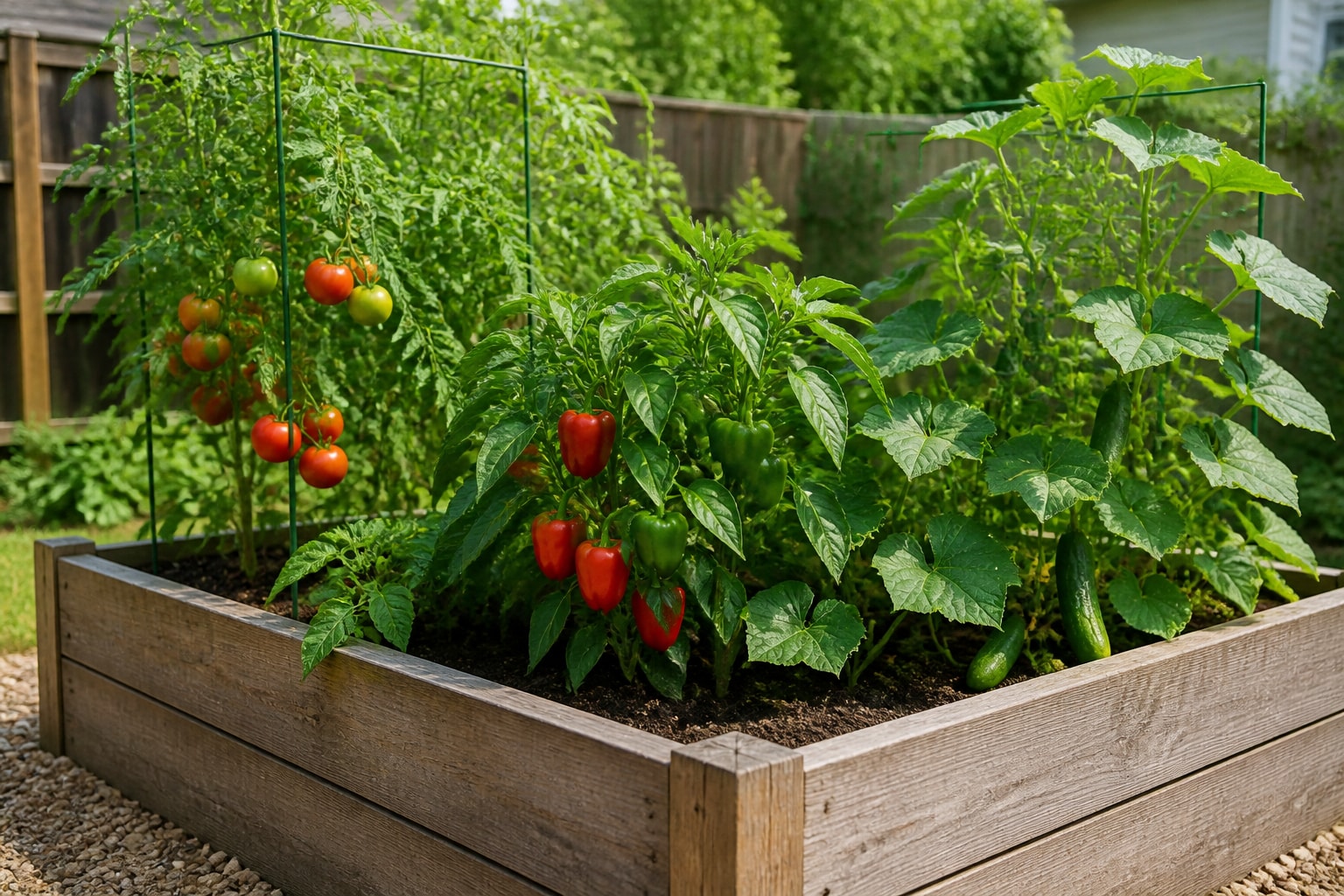
Grow Strong Tomatoes Without the Jungle
Plant tomatoes deeply
Tomatoes can form roots along buried stems, which makes deep planting useful. Remove the lower leaves and set the plant into a hole deep enough to cover that section of stem. Handle the root ball gently, then water slowly so the soil settles around it.
There is one exception. Grafted tomato plants should usually be planted so the graft union stays above the soil. That swollen area near the lower stem needs to remain visible.
Support plants early
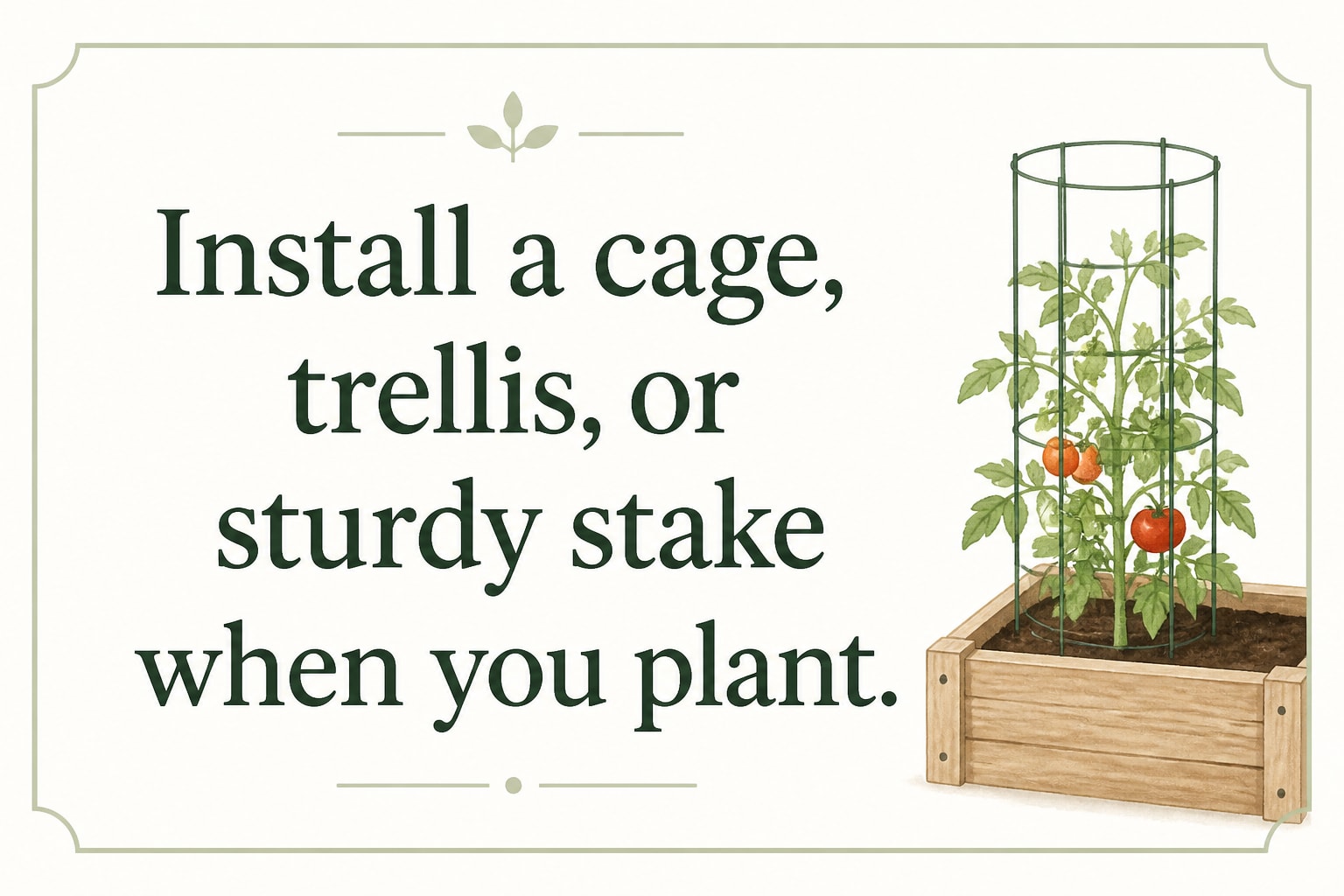
Install a cage, trellis, or sturdy stake when you plant. Waiting until the tomato is six feet tall is how stems get damaged and roots get disturbed. This is a common problem in small backyard gardens. Tomato plants can grow surprisingly quickly, making it difficult to install supports later without damaging stems or disturbing roots.
Indeterminate tomatoes keep producing and climbing through the season, so they need substantial support. Determinate varieties stay more compact and tend to produce their crop over a shorter period. Either type can work in a raised bed. Just match the variety to the space you have.
Water at the soil line, not over the leaves. Deep, consistent watering is better than a daily sprinkle. Let the top inch of soil dry slightly between waterings, then soak the root zone thoroughly. Mulch with two or three inches of clean straw, shredded leaves, or compost once the soil has warmed.
Don’t panic over every yellow leaf. Older leaves near the base often fade naturally. Yellowing across the whole plant, wilting despite moist soil, or dark lesions spreading up the stem points to a bigger problem, such as poor drainage, disease, or root damage.
Keep Peppers Warm and Productive
Wait for warm soil
Peppers are not in a hurry. They dislike cold roots and chilly nights, so planting too early often stalls them. In many areas, peppers perform better when night temperatures stay reliably above 50 degrees Fahrenheit and the soil has warmed.
Set transplants into the bed at the same depth they were growing in their containers. Unlike tomatoes, peppers don’t need to be buried deeply. Press soil gently around the roots, water them in, and give them a few days to settle before adding fertilizer.
Feed lightly and harvest often
Too much nitrogen creates a beautiful pepper plant with very few peppers. Use compost before planting and, later, a balanced vegetable fertilizer according to the label. Once flowers appear, avoid piling on extra nitrogen.
Peppers may drop flowers during a heat wave, drought, or sudden cold spell. That doesn’t always mean the plant is failing. Keep moisture even and harvest mature peppers regularly. Picking encourages the plant to keep producing, while leaving ripe fruit hanging can slow the next flush.
Raised beds dry out faster than in-ground soil, especially in sunny, windy yards. Check moisture by pushing a finger into the soil near the plant. The surface can look dry while the root zone remains damp, or look fine after the deeper soil has already dried. Feel the soil rather than guessing.
For planting dates, bed preparation, and vegetable spacing by season, visit How to Plant Vegetables in Raised Garden Beds: A Beginner’s Guide.
Train Cucumbers Up Instead of Out
Choose a trellis before the vines take over
Cucumbers are the bed’s enthusiastic neighbor. Vining varieties can run several feet, and their leaves quickly shade nearby peppers. In the Northern Hemisphere, placing a cucumber trellis along the north side of the bed can help prevent the vines from shading shorter crops. Adjust the placement to account for nearby fences, buildings, and the direction of sunlight in your garden.
Use a strong trellis secured to the bed frame or driven firmly into the ground. Light garden netting can work, but it needs good support once the vines and fruit become heavy. Guide young vines onto the trellis with soft ties. They usually grab on by themselves after that.
Keep cucumber roots evenly moist
Cucumbers need regular moisture while flowering and forming fruit. Dry soil followed by heavy watering can lead to bitter or misshapen cucumbers. Mulch helps, but leave a little space around the stem so it doesn’t stay constantly wet.
Pick cucumbers while they’re still firm and before the seeds become large. Check the vines every day or two during warm weather. One oversized cucumber can hide under the leaves and drain energy from the plant. This is one of those jobs that becomes oddly satisfying once the harvest starts.
Keep an eye out for powdery mildew, cucumber beetles, and wilt. Good airflow helps, as does watering the soil instead of the foliage. Remove badly affected leaves rather than coating the whole plant with a product at the first sign of trouble. For any treatment, follow the label and observe the harvest interval.
FAQs for How to Grow Tomatoes, Peppers, and Cucumbers in Raised Garden Beds
Can tomatoes, peppers, and cucumbers grow in the same raised bed?
Yes, as long as the bed receives full sun and the plants have enough room. Keep cucumber vines on a trellis and place taller tomatoes where they won’t shade peppers for most of the day. Avoid crowding the plants just because they fit on paper. Airflow is part of the space requirement.
How often should we water vegetables in a raised bed?
There isn’t one perfect schedule. Weather, soil depth, plant size, and mulch all change the answer. Check the soil a few inches down every couple of days, especially during hot weather. Water deeply when that zone feels dry, and water more often during heat waves or while plants are establishing.
Build a Bed You Can Keep Up With
The best raised-bed garden isn’t the one packed with the most plants. It’s the one you can water, support, inspect, and harvest without turning every visit into a chore. Give tomatoes sturdy cages, peppers warm soil and steady moisture, and cucumbers a trellis from the beginning. Those three decisions prevent a surprising amount of trouble.
Start with a manageable number of plants this season.
🌱 FREE DOWNLOAD: Your First Raised Bed Garden
A Beginner-Friendly Guide to Getting Started
Thinking about growing your own vegetables in a raised bed? Start with a simple plan that helps you avoid costly mistakes and build a garden you can enjoy for years.
Our FREE Your First Raised Bed Garden guide provides practical, beginner-friendly information to help you:
- Choose a suitable location with enough sunlight.
- Plan the size and layout of your raised garden bed.
- Understand the basics of preparing healthy garden soil.
- Select vegetables that are appropriate for beginners.
- Get started with planting, watering, and caring for your garden.
You don’t need a huge backyard, expensive equipment, or years of gardening experience to get started!
Get Your FREE Raised Bed Gardening Guide
Free PDF guide from Backyard Living Books.
📗 Ready to Grow Your Own Fresh Vegetables?
Creating a productive raised bed garden takes thoughtful planning, healthy soil, and a little know-how.
Take the guesswork out of raised bed gardening!
Raised Bed Gardening Made Easy: Plans, Soil Mixes, Planting Secrets, and Beginner-Friendly Harvests is a practical guide designed to help you:
- Plan and build raised garden beds that fit your space.
- Choose materials and prepare the right soil mix.
- Select and plant vegetables for productive harvests.
- Understand watering, fertilizing, and routine garden maintenance.
- Avoid common mistakes that can waste time and money.
Whether you’re planting your first garden or looking to improve an existing one, this book will help you garden with greater confidence.
Explore Raised Bed Gardening Made Easy
🌿 Want More FREE Raised Bed Gardening Tips?
Visit our Gardening Learning Center for helpful articles, practical advice, and beginner-friendly resources covering everything from soil preparation and vegetable planting to watering, pest prevention, and seasonal gardening.
Explore the Gardening Learning Center
Part of the Backyard Living Series: Build • Grow • Raise • Thrive.