

The best place for a raised bed garden is usually the sunniest, flattest, easiest-to-reach part of your yard. That sounds simple. In practice, a fence casts a longer shadow than expected, water collects beside the garage, and the spot that looked perfect in April turns into an oven by July.
We recommend choosing the location before buying lumber or hauling in soil. A raised bed is easier to build than to relocate. Once it’s filled, it can weigh hundreds of pounds. Spend a little time watching the space, checking the ground, and thinking about how you’ll use the garden on an ordinary Tuesday.
This advice fits into the wider process covered in Raised Bed Gardening for Beginners: The Complete Step-by-Step Guide. Here, we’re narrowing in on one decision that affects almost everything else: where the bed should go.
Start with the sun, not the shape of the yard
How much sunlight vegetables really need
Most vegetables need at least six hours of direct sunlight each day. Eight hours is even better for tomatoes, peppers, cucumbers, squash, beans, and eggplant. Leafy crops such as lettuce, spinach, kale, and arugula can handle a little less, especially in a hot climate.
Direct sunlight means actual sunshine hitting the leaves. Bright shade under a tree doesn’t count. Neither does a patch that gets reflected light from a pale wall. That extra brightness can help, but it won’t replace several hours of open sun.
Watch the proposed garden area at different times. Morning sun is helpful, but afternoon sun usually carries more heat and growing power. A spot that receives sun from 9 a.m. to 3 p.m. may work beautifully. One that gets sun from 7 a.m. to 1 p.m. can still grow plenty of greens and herbs, though fruiting crops may produce less.
Check shadows throughout the growing season
Don’t rely on a single sunny afternoon. Trees leaf out. The sun’s path shifts. A neighbor’s house or your own shed may throw a shadow across the bed later in the summer.
When working with homeowners on this, we suggest taking three quick photos of the area: morning, midday, and late afternoon. Do this on a clear day, then repeat the check a few weeks later if you’re still unsure. It’s a low-tech approach, but it catches problems that online sun maps sometimes miss.
Place taller crops on the north side of the bed whenever possible. That keeps tomatoes, corn, trellised cucumbers, and pole beans from shading shorter plants. In a narrow side yard, this small decision can make a surprising difference.
Choose a location you’ll actually use
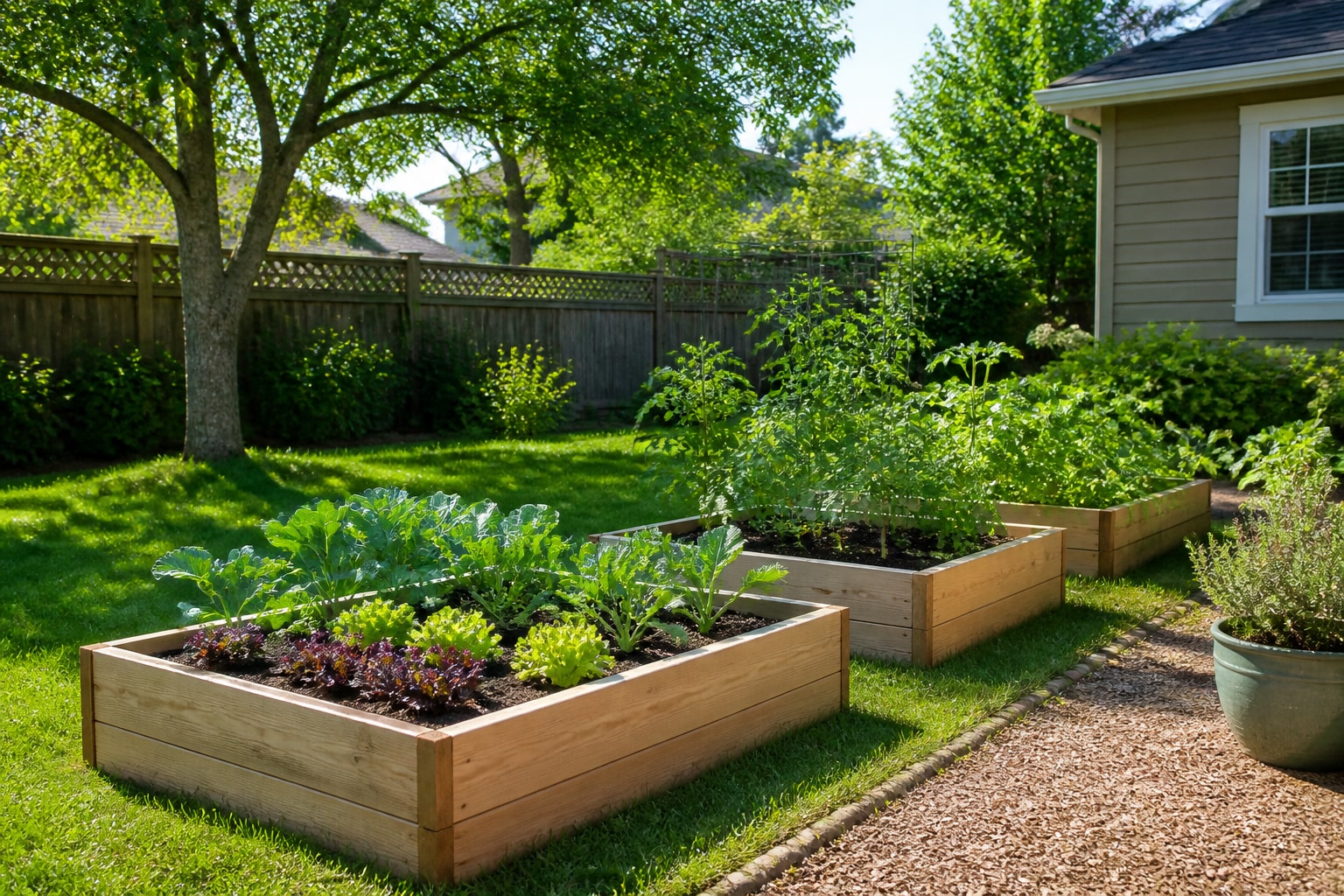
Keep the bed close to the house
A garden that’s technically perfect but twenty minutes from the back door often gets neglected. We’ve seen this happen with retirees who planned a large garden at the far edge of the property, then found that carrying tools and watering cans became a chore. A smaller bed near the kitchen usually produces more food because it receives more attention.
Try to place the bed where you’ll pass it often. Near the back door, beside a patio, or along a frequently used walkway can work well. You’ll notice wilted leaves sooner, grab herbs while cooking, and spot pests before they take over.
Leave enough room to walk around the bed without stepping into the soil. About two feet of clearance is comfortable for many gardeners. Three feet feels much better when you’re carrying a bucket or kneeling beside the bed. For wheelchair access, wide paths and a reachable bed height matter even more.
Make water and tools easy to reach
Place the garden within practical hose distance, but don’t let a hose become a trip hazard across the main walkway. A nearby spigot is convenient. A rain barrel can help, although it needs a stable base and regular cleaning.
Think about where your shovel, gloves, compost bucket, and harvest basket will live. A small storage box or covered shelf near the bed saves countless trips. This sounds minor at first. By midsummer, it won’t feel minor.
Raised beds also need regular watering during hot weather. A location that’s convenient for installing drip irrigation is worth extra consideration. Drip lines deliver water near the roots and keep leaves drier than overhead sprinklers, which can reduce some disease problems.
Pay close attention to drainage and ground conditions
A raised bed still needs a good foundation
Raised sides improve drainage, but they don’t make standing water disappear. When the ground beneath the bed stays saturated, roots can remain too wet and the soil may settle unevenly. The bottom of the bed matters.
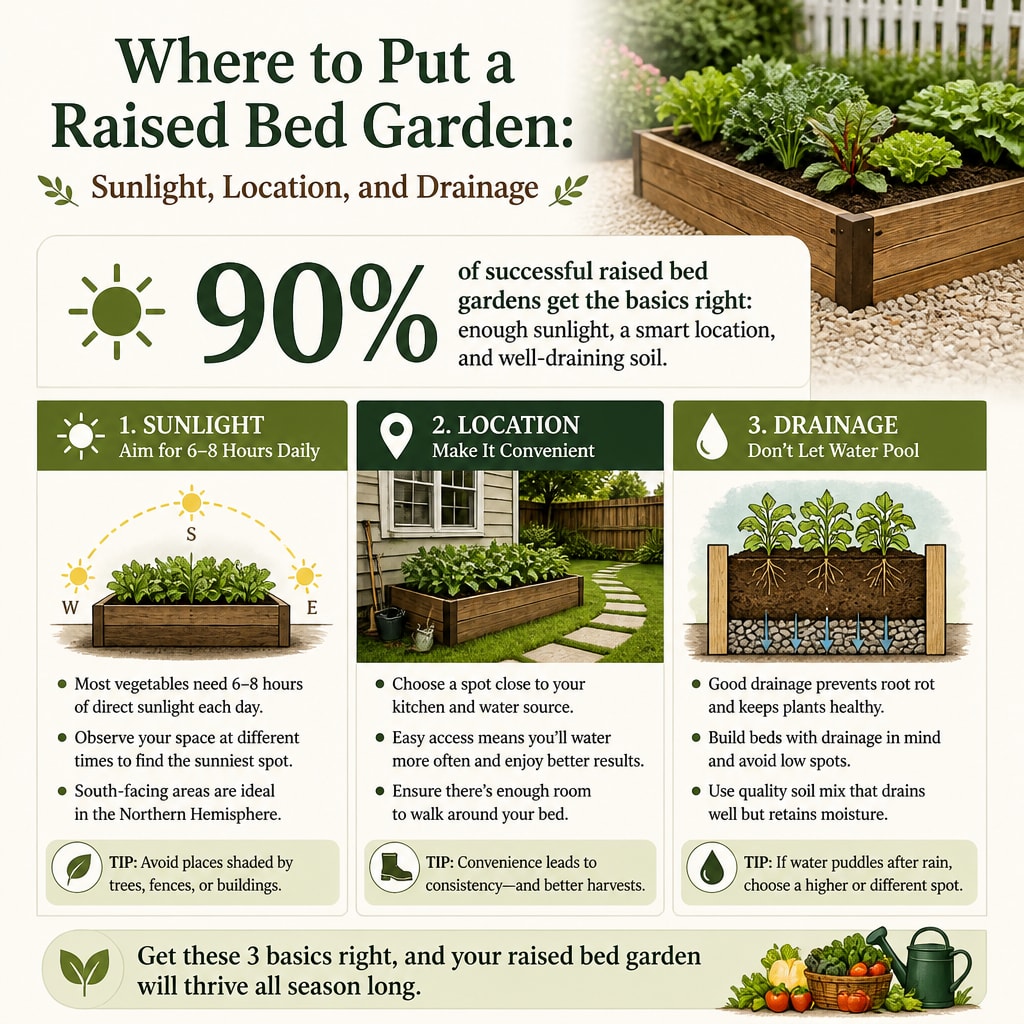
Choose ground that drains reasonably well. Avoid the lowest point in the yard, the area beside a downspout, or a place where you already see moss, muddy footprints, or puddles after rain. A gentle slope can be managed. A soggy hollow usually needs drainage work before it becomes a garden.
Test the spot after a heavy rain. Watch how long water remains. You can also dig a hole about a foot deep, fill it with water, and observe how quickly it empties. This isn’t a laboratory test, but it gives you useful information about compacted clay or a high water table.
Level the bed without creating new problems
A nearly level bed makes watering easier and keeps soil from washing out on one side. You don’t need to flatten the entire yard. Remove high spots, add soil under the low side, or use a shallow terrace for a sloped site.
Don’t bury the bed in a deep depression just to make it look level. That can turn the garden into a basin. A little extra digging and a clear path for runoff are usually better than trapping water beside the vegetables.
Also check what’s below the soil. Old construction debris, buried concrete, tree roots, and compacted fill can all affect growth. Urban and suburban lots sometimes contain leftover materials from previous projects. A small test hole can reveal more than guesswork.
Plan around roots, surfaces, and nearby hazards
Be careful with trees and large shrubs
Trees create shade, but their roots are the bigger issue. They compete for moisture and nutrients, and some roots can push into the bottom of a raised bed over time. A bed placed directly under a mature tree may dry out quickly even after a thorough watering.
Keep the bed outside the main root zone when you can. The exact distance varies with the tree, but farther is generally easier. Don’t cut large roots just to squeeze in a garden. That can damage the tree and leave the bed fighting a losing battle.
Black walnut trees deserve special caution because their roots, leaves, and hulls can release juglone, a compound that affects some plants. Gardening near one can work for certain crops, but it’s not the simplest location for a beginner.
Think about heat, chemicals, and access
Dark walls, asphalt, and concrete absorb heat and can make a bed hotter than the surrounding yard. That may help peppers in a cool climate, but lettuce and other tender crops can struggle beside a south-facing masonry wall during a hot summer.
Keep the garden away from places where lawn herbicides, weed-and-feed products, or other chemicals are applied. Spray drift can reach a bed you thought was safely out of the way. We’re not fans of placing edible crops right beside a regularly treated lawn.
Here’s a quick location check before you commit:
- At least six hours of direct sun for most vegetables
- Good drainage after heavy rain
- Convenient access to water and tools
- Enough walking space around the bed
- Distance from aggressive roots and sprayed lawns
For more planning help, including bed size, spacing, and site preparation, see How to Plan and Design a Raised Bed Garden for Beginners.
Match the bed location to your garden habits
Small yards need thoughtful placement
A small backyard doesn’t rule out raised beds. It just makes each foot work harder. Along a sunny fence can be a good choice, provided the fence doesn’t block too much light. A side yard may work for herbs and greens. A compact bed beside the patio can supply salad ingredients without taking over the lawn.
Keep beds narrow enough that you can reach the center from both sides. Around three to four feet wide is common. Against a wall or fence, make the bed narrower so you aren’t leaning across the soil. Reachability beats a bigger footprint.
For older gardeners or anyone with sore knees and backs, consider bed height as part of location planning. A taller bed can reduce bending, but it needs a sturdy base and more soil. Place it where the structure won’t interfere with doors, paths, or mowing.
Leave room for future changes
Gardens evolve. You may add a trellis, a compost bin, a second bed, or a small seating area. Don’t pack the first bed into the only open corner of the yard. Leave a little breathing room.
We also recommend observing the site for a full week before building. Notice where you naturally walk, where water runs, and which spots feel unpleasant in the afternoon heat. The best location often becomes obvious once you stop viewing the yard as a static picture.
FAQs for Where to Put a Raised Bed Garden: Sunlight, Location, and Drainage
Can I put a raised bed on grass?
Yes. Mow the grass short, remove persistent weeds, and cover the area with cardboard or another suitable weed barrier before adding the bed and soil. Grass can grow through gaps, especially around the edges, so secure the bed firmly and keep paths maintained.
Don’t place the bed on grass that stays wet or slopes sharply without addressing those conditions first. The raised sides won’t fix poor drainage underneath.
Can a raised bed go beside a fence?
It can, but check the fence’s shadow before building. A fence on the south side may block valuable light, while one on the north side may have little effect during the main growing season. Leave enough space to maintain the fence and reach the back of the bed.
Watch for treated wood, peeling paint, or runoff from the fence. You want the garden close enough to use easily, not so close that maintenance becomes awkward.
Choose the spot before you build
The right raised bed location gives your plants enough sun, drains well, and makes daily care feel manageable. That last part matters. A garden should fit your life, not demand a heroic expedition every time it needs water.
Walk the yard at several times of day, test the ground after rain, and picture yourself harvesting there in August. A sunny, accessible spot with clear paths will usually outperform a larger bed placed somewhere inconvenient. Once you’ve found it, our book Raised Bed Gardening Made Easy can help you plan the build, soil, planting, and maintenance steps that come next. You can also visit the Backyard Living Books Learning Center for practical resources and free gardening downloads.