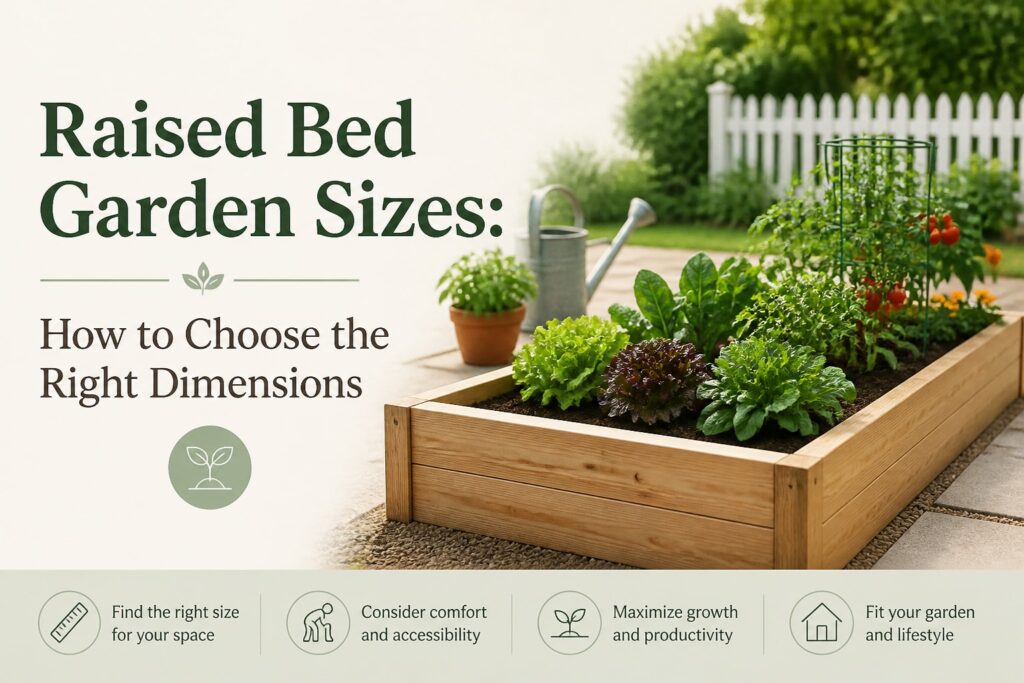
The best raised bed garden size is the one you can reach, fill, water, and maintain without turning every gardening task into a chore. For most home gardeners, that means choosing a bed width of 3 to 4 feet, a length that fits the space, and enough depth for the crops you actually want to grow.
That sounds simple. It is, mostly. But bed dimensions affect everything from plant spacing to soil cost, weed control, and your comfort at harvest time. A beautiful bed that’s too wide can become frustrating by midsummer. A shallow bed may look tidy but leave tomatoes and root crops struggling.
Start with the reach you have
Why bed width matters more than length
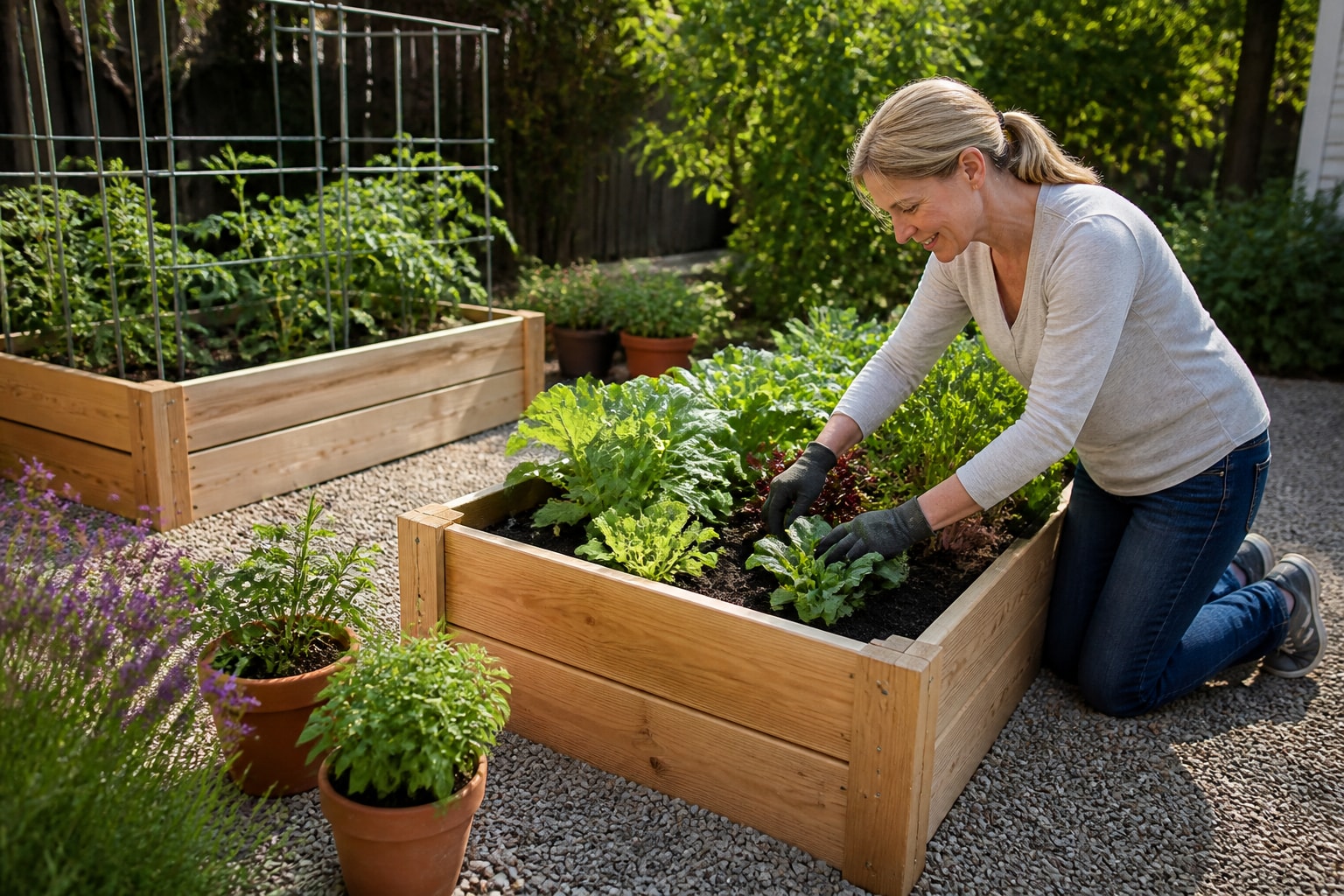
Width is the dimension that causes the most trouble. You need to reach the center of the bed from one or both sides without stepping into the growing soil.
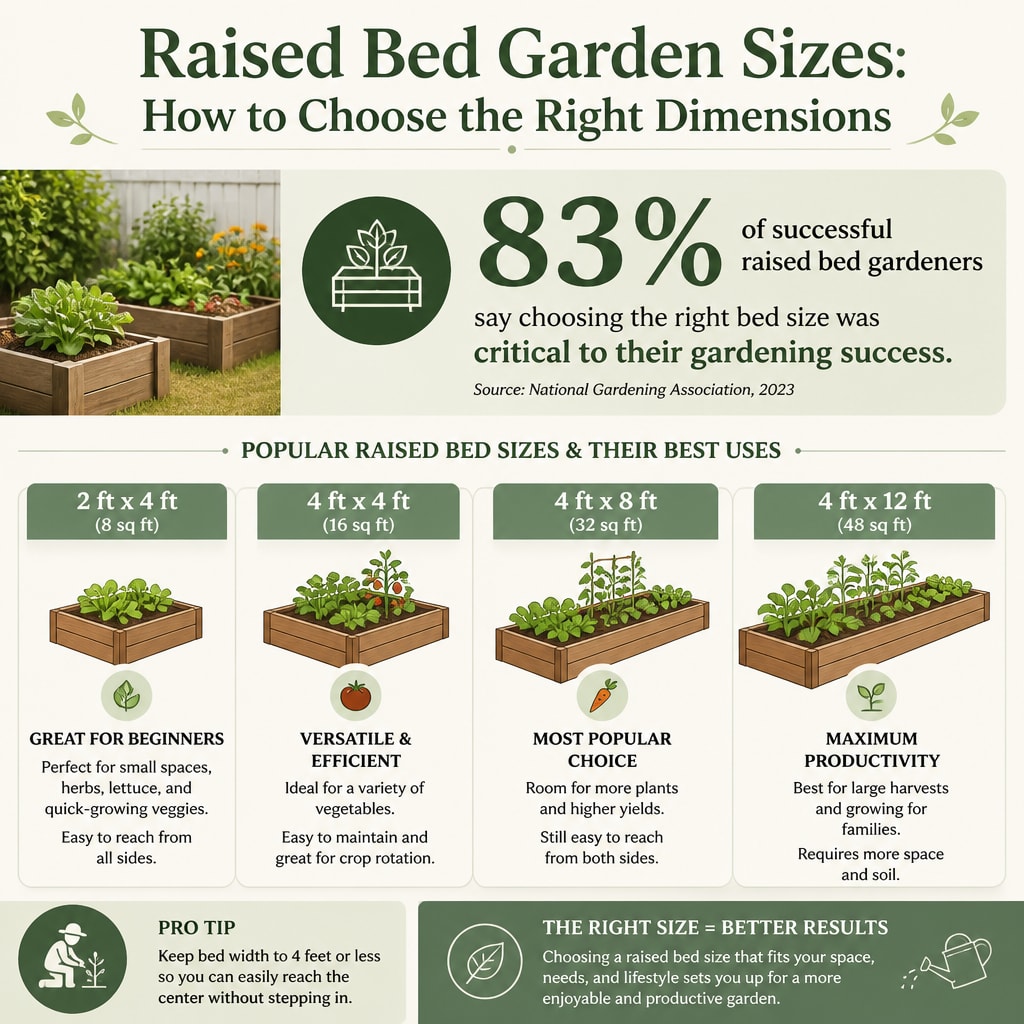
For a bed that you can access from both long sides, 4 feet wide is a common upper limit. Many gardeners prefer 3 feet, especially if they have limited mobility, stiff shoulders, or a narrow path. A 2-foot-wide bed works nicely along a wall or fence where you can only reach from one side.
We recommend testing this before building. Stand beside the proposed location and reach toward the middle. Can you comfortably touch the soil without leaning hard or twisting? Try it from both sides. Your reach on a cool spring morning may feel different from your reach while pulling weeds in August.
Leave room around the beds
Paths need attention too. A 2-foot path may be enough for walking, but 3 feet feels much better when you’re carrying a watering can, kneeling beside the bed, or pushing a small cart. Retirees and gardeners with balance concerns often appreciate wider paths more than they expected.
Don’t squeeze a bed against a fence just to gain a few extra square feet. You’ll lose access to one side, and weeds or pests can hide in that narrow gap. A little breathing room pays off every time you work in the garden.
For the broader planning decisions, our Raised Bed Gardening for Beginners: The Complete Step-by-Step Guide covers placement, materials, soil, planting, and maintenance from the ground up.
Choose a length that fits your yard and your routine
Common lengths for home gardens
Raised beds are often 4, 6, or 8 feet long. Those dimensions match readily available lumber, which can reduce cutting and make construction easier. But you don’t need to force your garden into a standard rectangle.
A 4-by-4-foot bed is compact and easy to manage. It’s a sensible choice for a patio, side yard, or first growing season. A 4-by-8-foot bed gives you more planting space, though it can require a surprising amount of soil. Two 4-by-4 beds may be easier to reach and rearrange than one 4-by-8 bed.
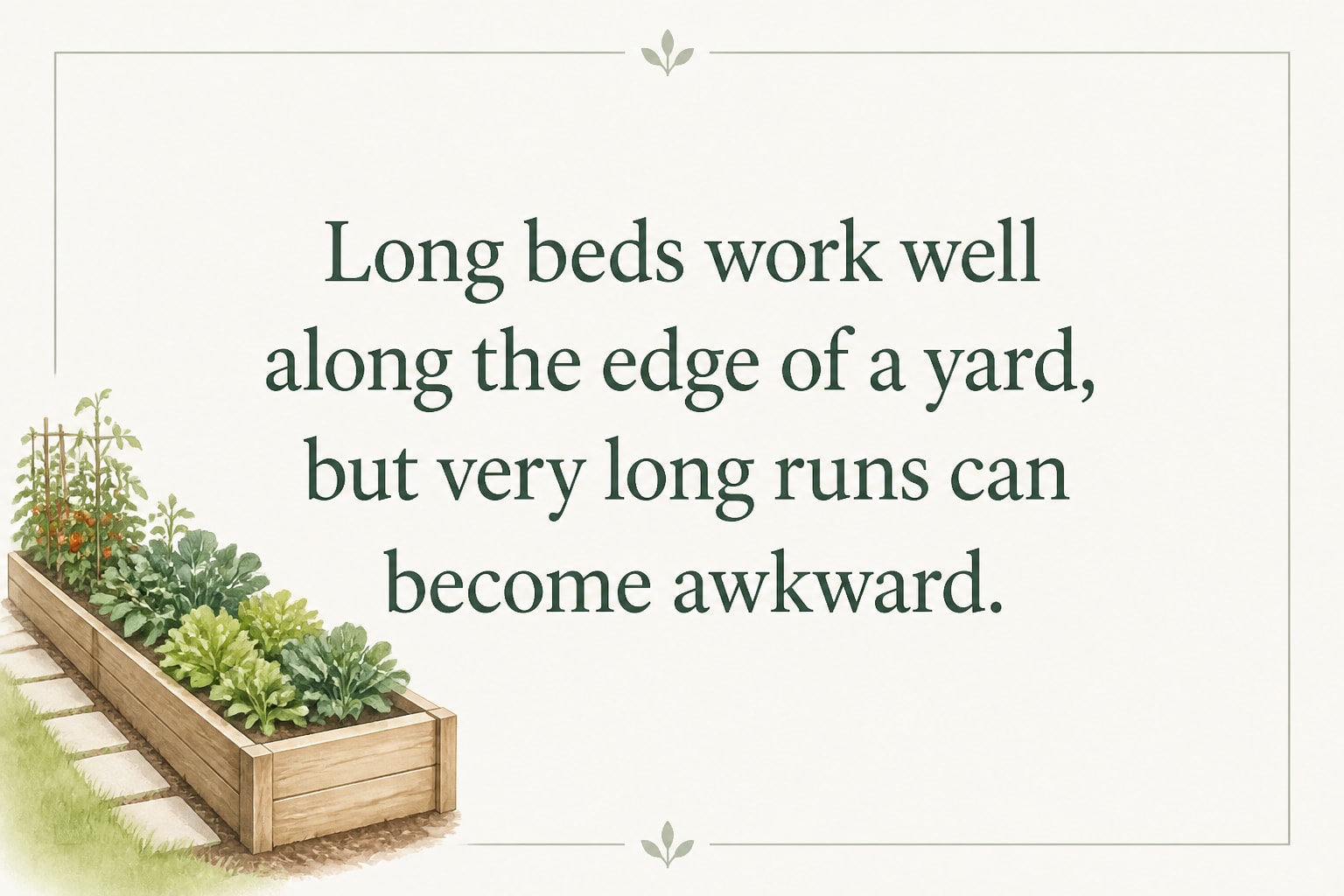
Long beds work well along the edge of a yard, but very long runs can become awkward. A 12-foot bed may need stepping stones or a break in the frame so you can cross to the other side. We tend to prefer beds no longer than 8 feet for small home gardens. The shorter sections are easier to build, fill, cover, and renew.
Think about watering and maintenance
Place the bed where a hose can reach without dragging across delicate plants. This sounds minor until you have to pull a heavy hose around three corners. The same applies to compost, mulch, and bags of soil. Your future self will notice the difference.
Count your available time, too. A large garden bed isn’t automatically more productive. It becomes productive when you can keep up with watering, harvesting, pest checks, and replanting. A smaller bed that stays tended often beats a larger one that gets ignored after the first busy month.
Match bed depth to the crops you want
When a shallow bed is enough
A raised bed doesn’t need to be waist-high to grow vegetables. A frame 6 to 8 inches tall can work for lettuce, spinach, onions, many herbs, and other shallow-rooted crops, especially when the soil underneath drains well.
Still, a shallow frame doesn’t always mean you need only a shallow layer of good soil. Roots may continue into the native ground below. Remove grass and loosen compacted soil before filling the bed, unless you’re building on concrete or another hard surface.
When deeper is better
For tomatoes, peppers, cucumbers, carrots, beets, and other crops with deeper root systems, providing 12 to 18 inches of good growing soil can be helpful, especially when the bed sits over compacted, rocky, or otherwise difficult ground. However, an open-bottom raised bed placed over healthy native soil doesn’t necessarily need to be that tall because roots can continue growing into the soil below. Taller beds require more materials and soil, so consider your existing ground conditions before choosing the height.
For a small backyard, a 12-inch bed is often a useful middle ground. It provides enough volume for a wide range of vegetables without becoming expensive or difficult to construct. A 24-inch-high bed can reduce bending, which may be worth the extra materials for gardeners with back or knee problems. Just remember that taller walls need strong construction and stable support.
Here are practical starting dimensions for common situations:
- 2 feet wide by 4 feet long for a narrow space or limited reach
- 3 feet wide by 6 feet long for an easy-to-reach general vegetable bed
- 4 feet wide by 8 feet long for a larger space with access from both sides
- 12 inches deep for mixed vegetables and many annual crops
- 18 inches deep for deeper roots or difficult native soil
Design the layout around real life
Small yards need flexible beds
In a small backyard, several modest beds usually work better than one oversized rectangle. You can rotate crops more easily, reach every plant, and leave room for a compost bin or rain barrel. Separate beds also let you give one area a temporary cover for frost or insects without covering the whole garden.
Square-foot gardening can help you plan the interior, but don’t let a grid dictate the frame dimensions. A 3-by-6-foot bed may fit your yard better than a perfect 4-by-4. The plants won’t care that the shape isn’t symmetrical.
Plan for mature plants
Look beyond the tiny seedlings at the garden center. A zucchini plant can spill several feet outside its planting spot. Indeterminate tomatoes may need a tall trellis. Melons wander. Put sprawling crops at an edge, or give them their own bed where they won’t crowd everything else.
Also watch sunlight over the full growing season. A location that looks sunny in April may sit in the shadow of a fence or tree by June. Most vegetables need several hours of direct sun, and fruiting crops generally want more. The How to Plan and Design a Raised Bed Garden for Beginners section on our site can help you work through placement, orientation, pathways, and planting plans before you buy lumber.
When planning raised beds, access should be one of the first considerations, even before choosing frame materials. Can you reach the bed easily from the house? Is there a place to sit? Can you get water there? A garden should fit your daily routine rather than force you to change how you work.
FAQs for Raised Bed Garden Sizes: How to Choose the Right Dimensions
What is the best size for a beginner raised bed?
A 3-by-6-foot bed that’s about 12 inches deep is a strong starting point for many beginners. It offers enough room for a useful mix of vegetables while staying manageable. A 4-by-4-foot bed is even easier to start with, especially in a small yard or on a tight budget.
Keep the width at 4 feet or less when you can reach both sides. For one-sided access, 2 feet is a safer maximum. These aren’t strict rules, but they’re good guardrails.
How many raised beds do I need for a family?
That depends on what you eat and how often you want to preserve food. One 4-by-8-foot bed can provide fresh herbs, salad greens, and a modest number of summer crops. It won’t usually supply every vegetable for a family, particularly crops such as potatoes, corn, and winter squash that take a lot of space.
Start with one or two beds. Pay attention to what you actually harvest. You can add another frame next season with much better information than a guess made in the hardware store parking lot.
Make the size decision before buying materials
Before you build, mark the proposed bed with stakes, string, or a garden hose. Walk around it. Reach into the middle. Picture yourself watering, weeding, and harvesting when plants are full-sized. This quick test can prevent an expensive redesign.
The right raised bed isn’t the biggest one that fits your yard. It’s the one you can comfortably reach and reliably care for. Start with manageable dimensions, leave generous paths, and add more growing space only when your routine proves you need it.
🌱 FREE DOWNLOAD: Your First Raised Bed Garden
A Beginner-Friendly Guide to Getting Started
Thinking about growing your own vegetables in a raised bed? Start with a simple plan that helps you avoid costly mistakes and build a garden you can enjoy for years.
Our FREE Your First Raised Bed Garden guide provides practical, beginner-friendly information to help you:
- Choose a suitable location with enough sunlight.
- Plan the size and layout of your raised garden bed.
- Understand the basics of preparing healthy garden soil.
- Select vegetables that are appropriate for beginners.
- Get started with planting, watering, and caring for your garden.
You don’t need a huge backyard, expensive equipment, or years of gardening experience to get started!
Get Your FREE Raised Bed Gardening Guide
Free PDF guide from Backyard Living Books.
📗 Ready to Grow Your Own Fresh Vegetables?
Creating a productive raised bed garden takes thoughtful planning, healthy soil, and a little know-how.
Take the guesswork out of raised bed gardening!
Raised Bed Gardening Made Easy: Plans, Soil Mixes, Planting Secrets, and Beginner-Friendly Harvests is a practical guide designed to help you:
- Plan and build raised garden beds that fit your space.
- Choose materials and prepare the right soil mix.
- Select and plant vegetables for productive harvests.
- Understand watering, fertilizing, and routine garden maintenance.
- Avoid common mistakes that can waste time and money.
Whether you’re planting your first garden or looking to improve an existing one, this book will help you garden with greater confidence.
Explore Raised Bed Gardening Made Easy
🌿 Want More FREE Raised Bed Gardening Tips?
Visit our Gardening Learning Center for helpful articles, practical advice, and beginner-friendly resources covering everything from soil preparation and vegetable planting to watering, pest prevention, and seasonal gardening.
Explore the Gardening Learning Center
Part of the Backyard Living Series: Build • Grow • Raise • Thrive.