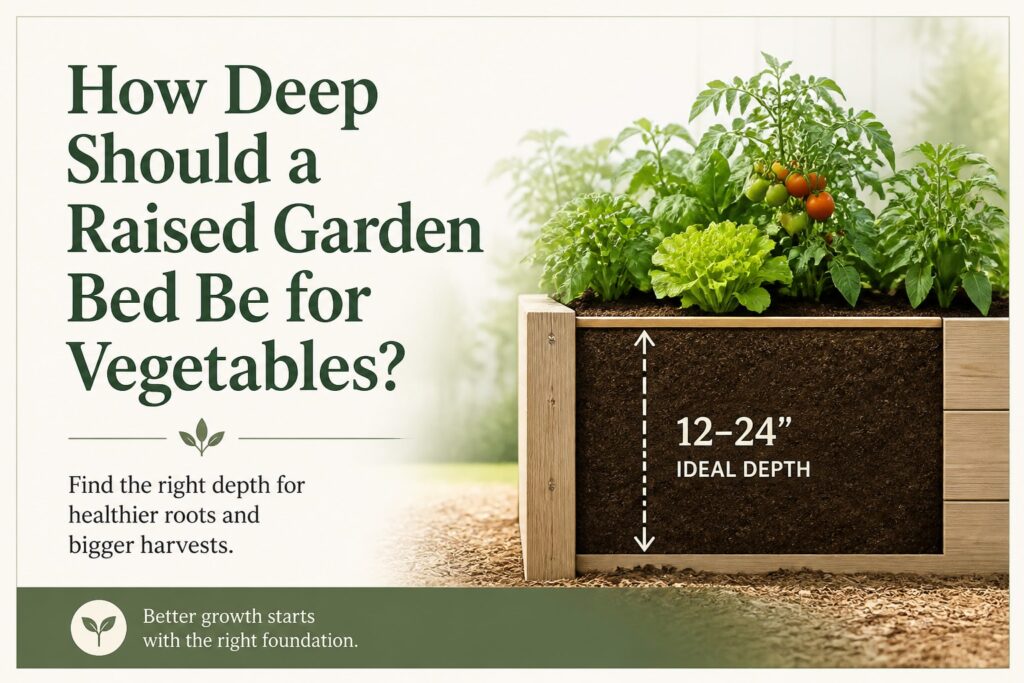
For many home vegetable gardens, a raised bed 12 to 18 inches deep is a practical starting point. However, the ideal depth depends on what you plan to grow and whether plant roots can extend into the ground beneath the bed. An open-bottom bed over healthy garden soil may be shallower, while a bed on concrete or another solid surface must provide the full growing depth within the bed itself. Even a 6-inch raised bed can support certain vegetables when the underlying soil is suitable.
The right depth depends on what you want to grow, what sits below the bed, and how comfortable you want gardening to be. A small backyard plot, a patio setup, and a bed built over hard clay all have slightly different needs. We’ll sort through those differences so you can build once and avoid the usual guesswork.
Start with 12 to 18 inches for most vegetables
Why 12 inches is a useful minimum
A 12-inch bed provides about a foot of growing medium for roots to spread through. That’s enough for lettuce, spinach, beans, onions, radishes, kale, and many herbs. It also gives the soil some protection from rapid temperature swings and drying, which matters in a sunny backyard.
A 12-inch raised bed provides room for a quality growing medium and can help establish a productive root zone above less-than-ideal native soil. When the bed has an open bottom and sits over loose, well-drained ground, roots may continue growing below the frame. However, additional bed height does not automatically solve drainage problems caused by compacted soil, an impermeable surface, or blocked drainage openings. Those conditions should be addressed during construction.
We recommend 12 inches as a sensible starting point for new gardeners. It keeps construction manageable, works for a wide range of vegetables, and doesn’t eat through your budget quite as quickly as a 24-inch bed.
When 18 inches earns its keep
Choose closer to 18 inches when you’re growing tomatoes, peppers, eggplants, cucumbers, or larger varieties of squash. These plants don’t all need 18 inches of root depth in every garden, but they tend to produce better when the root zone stays evenly moist and well aerated.
That extra depth also helps when the bed is built over compacted soil, gravel, concrete, or a lawn with stubborn roots. You’re creating a more complete growing environment instead of asking plant roots to fight their way into ground that may not cooperate.
For a detailed planning reference, our Raised Bed Gardening for Beginners: The Complete Step-by-Step Guide covers bed placement, dimensions, soil, planting, and seasonal maintenance.
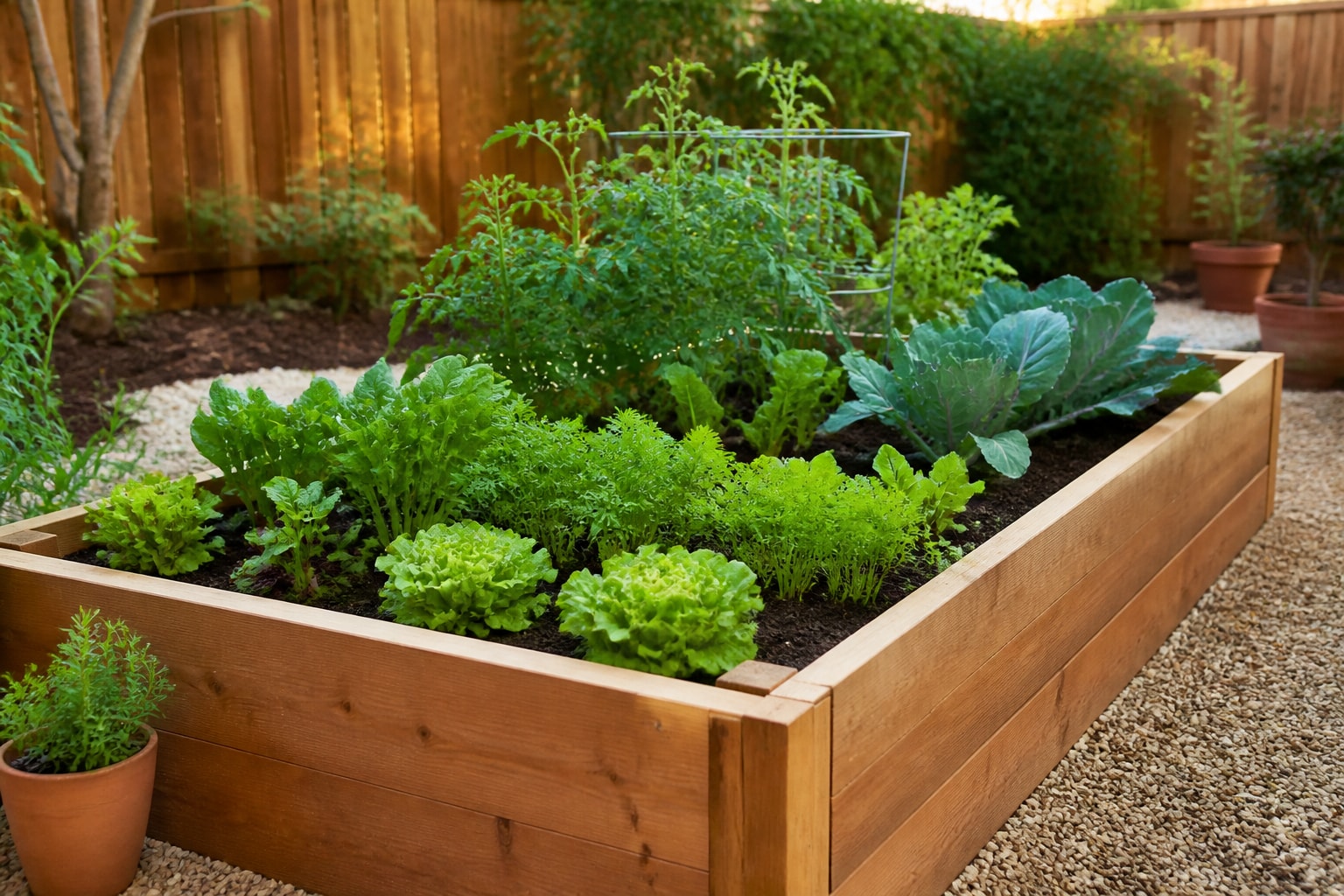
Match bed depth to the vegetables you want to grow
Root depth isn’t the only factor. Some plants have shallow roots but still benefit from extra soil because they’re heavy feeders or need consistent moisture. Others send roots much farther down than you might expect.
- 6 to 8 inches: Baby greens, lettuce, radishes, and some shallow-rooted herbs, especially over suitable native soil.
- 8 to 12 inches: Many leafy vegetables, onions, beets, bush beans, and strawberries.
- 12 to 18 inches: A practical growing depth for a wide variety of vegetables, including tomatoes, peppers, cucumbers, broccoli, and eggplant, particularly when roots can extend below an open-bottom bed.
- 18 to 24 inches: Useful for longer root crops, larger vegetables, and beds where the underlying ground limits root growth.
- 24 inches or more: Often selected for accessibility, deep containers, or specialized growing conditions rather than because every vegetable requires that much soil.
Shallow-rooted crops still need good soil
A shallow crop doesn’t mean a shallow-quality bed. Lettuce may only need several inches for its roots, but it grows poorly in hard, waterlogged soil. Radishes split in compacted ground. Herbs can sulk when the soil stays soggy.
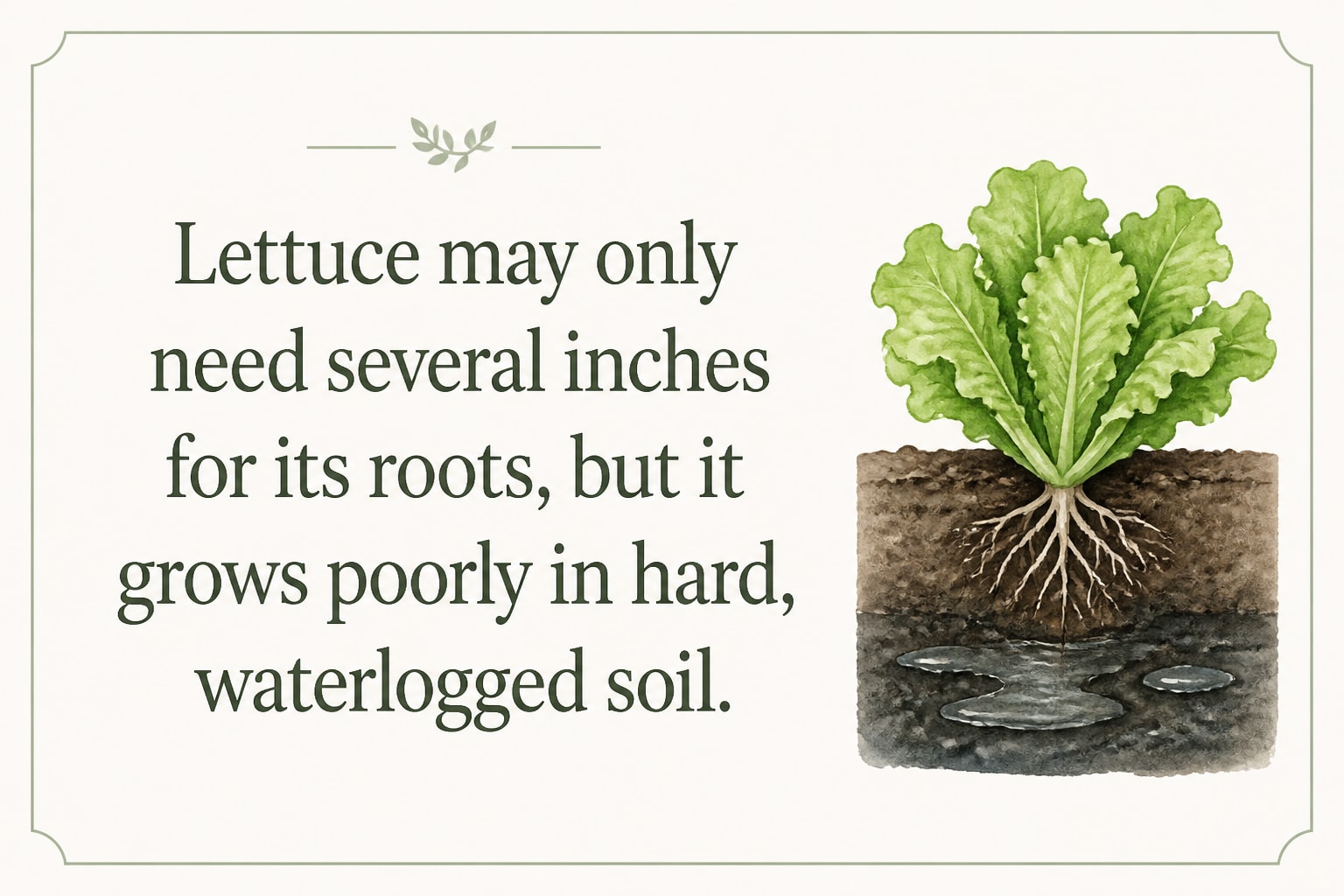
Soil texture matters as much as depth. We want a mix that holds moisture but drains excess water. Compost, aged organic matter, and quality topsoil can help, but don’t fill the bed with compost alone. Compost settles, dries quickly in some conditions, and may contain more nutrients than young plants need.
Deep-rooted vegetables need more than a tall frame
Carrots and parsnips are the obvious examples. A 12-inch bed might be enough for short carrot varieties, but long varieties can bend, fork, or stop growing when they hit stones and compacted soil. Pick the variety to match your bed rather than trying to force a long-rooted crop into a shallow space.
Potatoes are a little different. They benefit from loose soil and can be grown by gradually mounding more soil around the stems. They don’t automatically require a 24-inch raised bed, though a deeper frame makes the process easier to manage.
Consider what sits below the bed
The ground underneath changes the answer. A 12-inch bed placed over healthy, loose soil may function like a much deeper growing area because roots can continue downward. The same frame over concrete has only 12 inches of usable root space.
Beds on soil or lawn
When building a raised bed over existing soil, inspect the ground for compaction and drainage problems before installing the frame. Thick turf can be removed or smothered, depending on the construction method and the time available before planting. Loosening compacted ground beneath the bed may improve root penetration and water movement. Deep excavation usually isn’t necessary, but the goal is to avoid creating a restrictive boundary beneath the new growing medium.
Cardboard or several layers of plain newspaper can smother remaining grass beneath a new bed. Keep expectations realistic, though. Those materials break down over time. They aren’t a permanent barrier against aggressive perennial weeds.
Beds on concrete, gravel, or pavers
A solid surface calls for more depth. We recommend at least 18 inches for vegetables, with 24 inches being more comfortable for tomatoes, peppers, and other larger plants. Drainage becomes especially important here, so the bed needs open drainage holes or a bottom designed to let water escape.
Don’t seal the bottom and hope a layer of gravel will solve everything. Gravel under soil doesn’t magically improve drainage when the water has nowhere to go. It just takes up valuable growing space. This detail gets missed often, and it causes plenty of soggy-root problems.
For bed walls, corner supports, soil mixes, and other construction choices, see our Raised Garden Bed Materials and Construction Basics. A little planning at this stage can save your back and your wallet later.
Choose a depth that works for your body and budget
Gardening depth is also a comfort decision. A 12-inch bed still requires bending or kneeling. A 24-inch bed brings the soil closer to waist height, which can make planting, weeding, and harvesting much easier for retirees, gardeners with stiff knees, or anyone who simply doesn’t enjoy crouching in the dirt.
Raised beds and accessible gardening
For wheelchair-accessible gardening, the overall design matters more than soil depth alone. Consider the height of the planting surface, comfortable reach distance, clear space beneath or beside the bed, and accessible pathways. Elevated planters designed for seated gardeners may use a relatively shallow soil container supported at a comfortable working height. Other accessible raised beds may be much deeper. Choose dimensions based on the gardener’s needs, the intended crops, and the planter’s construction rather than assuming that every accessible bed requires 24 to 30 inches of soil.
Place frequently harvested crops such as salad greens and herbs in the most accessible growing areas. Position taller crops where they won’t block sunlight or make other plants difficult to reach. A thoughtful layout can reduce bending, stretching, and unnecessary movement throughout the growing season.
Don’t forget the soil bill
Extra depth adds cost quickly. A 4-by-8-foot bed that’s 12 inches deep holds about 32 cubic feet of soil. At 18 inches, it holds about 48 cubic feet. That’s a meaningful difference once delivery, compost, and amendments are included.
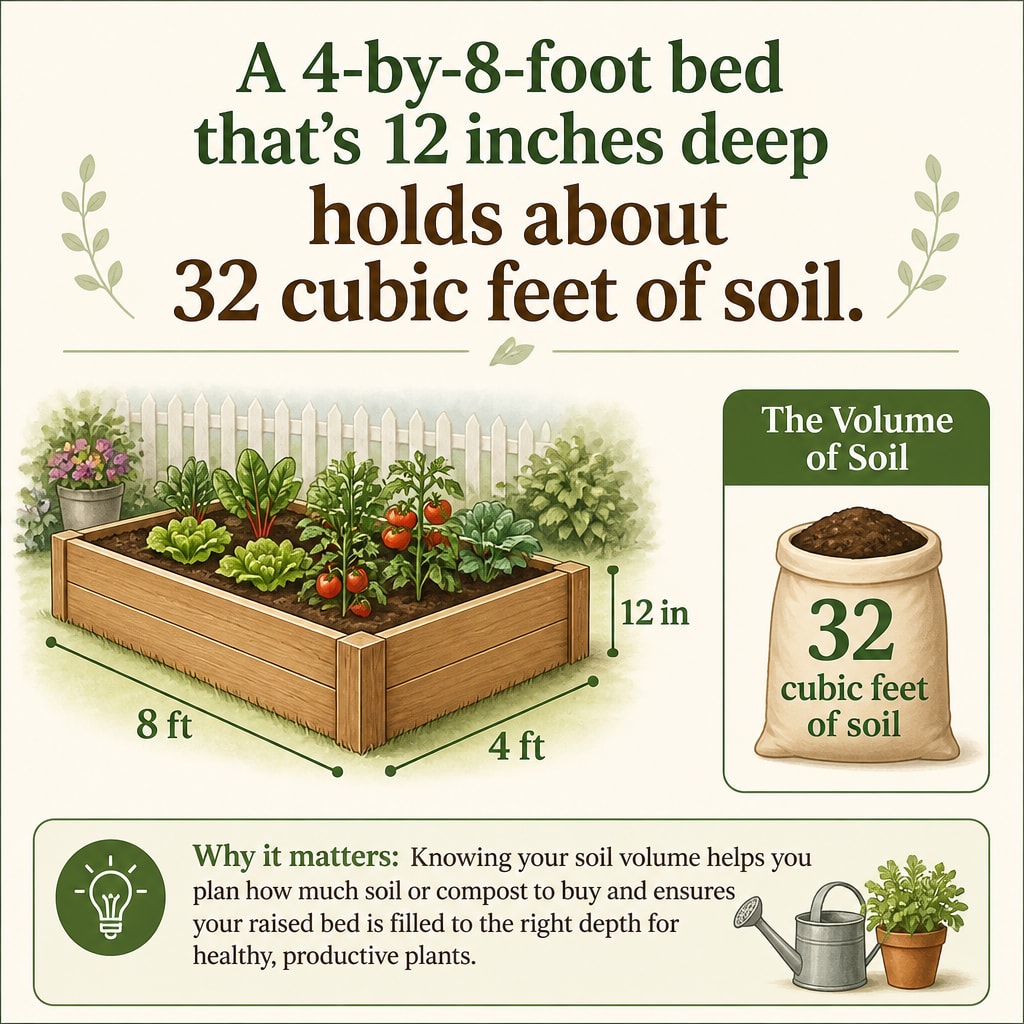
For a budget-conscious setup, make the bed 12 inches deep and grow most vegetables there. You can reserve a deeper container for carrots, parsnips, or accessibility needs. Another option is a wider, low bed over loosened ground. It gives roots somewhere to go without requiring as much imported soil.
FAQs for How Deep Should a Raised Garden Bed Be for Vegetables?
Is 6 inches deep enough for a vegetable garden?
Sometimes. Six inches can support lettuce, radishes, herbs, baby greens, and a few other shallow-rooted crops, especially when the bed sits over loose, healthy soil. It’s less forgiving, though. The bed dries faster, has less room for roots, and may heat up more quickly in summer. For a mixed vegetable bed, 12 inches is a safer choice.
Can a raised bed be too deep?
Yes, although the issue is usually cost and access rather than plant health. A very deep bed uses more soil, may need stronger walls, and can be difficult to reach across. Most vegetables won’t perform better simply because the bed is 30 inches deep. Build that tall when accessibility or a solid surface requires it, not because deeper always means better.
Make your next bed deep enough to be forgiving
For most home gardeners, 12 to 18 inches is the useful range. Choose 12 inches for a mixed bed over workable soil. Move toward 18 inches when the ground is poor, the bed sits on a hard surface, or you’re growing larger plants. Go deeper for accessibility, long-rooted crops, or a fully contained growing area.
Before buying lumber or ordering soil, list the vegetables you actually plan to grow and check the surface underneath. That small bit of planning usually gives you a better answer than copying someone else’s bed dimensions.
🌱 FREE DOWNLOAD: Your First Raised Bed Garden
A Beginner-Friendly Guide to Getting Started
Thinking about growing your own vegetables in a raised bed? Start with a simple plan that helps you avoid costly mistakes and build a garden you can enjoy for years.
Our FREE Your First Raised Bed Garden guide provides practical, beginner-friendly information to help you:
- Choose a suitable location with enough sunlight.
- Plan the size and layout of your raised garden bed.
- Understand the basics of preparing healthy garden soil.
- Select vegetables that are appropriate for beginners.
- Get started with planting, watering, and caring for your garden.
You don’t need a huge backyard, expensive equipment, or years of gardening experience to get started!
Get Your FREE Raised Bed Gardening Guide
Free PDF guide from Backyard Living Books.
📗 Ready to Grow Your Own Fresh Vegetables?
Creating a productive raised bed garden takes thoughtful planning, healthy soil, and a little know-how.
Take the guesswork out of raised bed gardening!
Raised Bed Gardening Made Easy: Plans, Soil Mixes, Planting Secrets, and Beginner-Friendly Harvests is a practical guide designed to help you:
- Plan and build raised garden beds that fit your space.
- Choose materials and prepare the right soil mix.
- Select and plant vegetables for productive harvests.
- Understand watering, fertilizing, and routine garden maintenance.
- Avoid common mistakes that can waste time and money.
Whether you’re planting your first garden or looking to improve an existing one, this book will help you garden with greater confidence.
Explore Raised Bed Gardening Made Easy
🌿 Want More FREE Raised Bed Gardening Tips?
Visit our Gardening Learning Center for helpful articles, practical advice, and beginner-friendly resources covering everything from soil preparation and vegetable planting to watering, pest prevention, and seasonal gardening.
Explore the Gardening Learning Center
Part of the Backyard Living Series: Build • Grow • Raise • Thrive.