
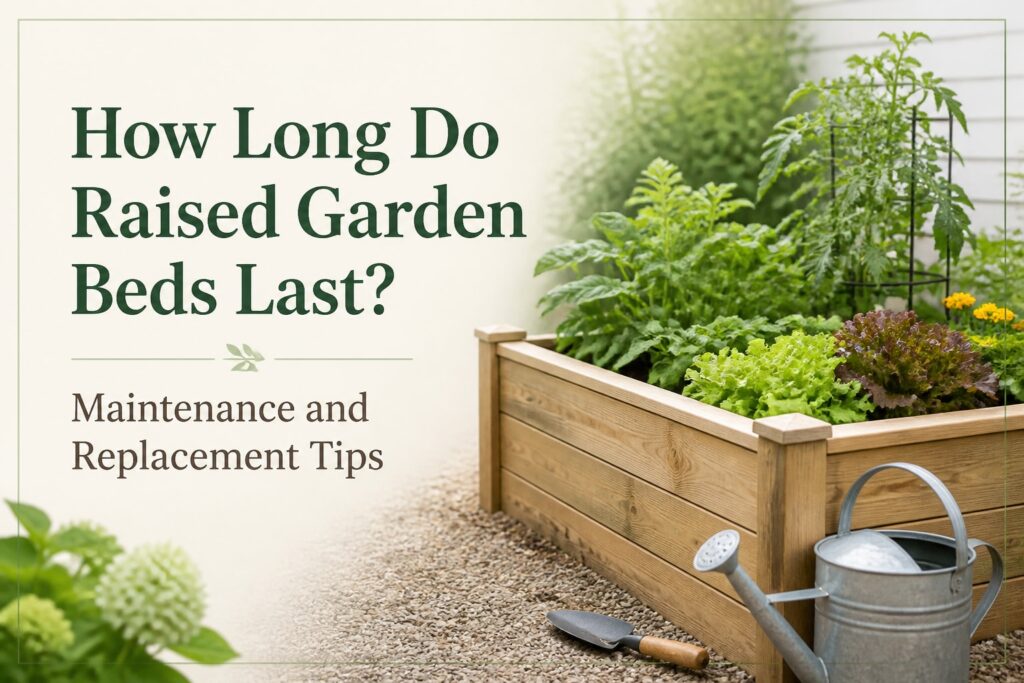
Raised garden beds can last anywhere from a few years to several decades, depending on their materials, construction, climate, and maintenance. The exact number depends on what they’re made from, how wet the site stays, and whether you catch small problems before they become a collapsed wall. A cedar bed in a well-drained backyard can keep going for many seasons. An untreated pine bed sitting in constantly damp soil may start failing much sooner.
That wide range reflects how differently raised beds age. Even a well-built bed can deteriorate prematurely when moisture problems and structural damage go unaddressed. A modest homemade bed, on the other hand, may remain useful for many years when it is properly constructed, inspected regularly, and repaired as needed.
What Determines How Long a Raised Bed Lasts
The material matters, but it isn’t the whole story
Wood is a popular choice for raised garden beds because it is attractive, widely available, and relatively easy to work with. Naturally decay-resistant woods such as cedar and redwood can provide many years of service, although their actual lifespan depends on wood quality, climate, soil moisture, and construction methods. Untreated pine generally deteriorates faster when exposed to consistently damp soil. Modern pressure-treated lumber may last longer, provided it is suitable for the intended use.
Composite boards and recycled plastic lumber resist biological decay and may provide long service life, but their durability depends on product quality, UV exposure, structural support, and installation. Some composite products can bow or sag under the weight of wet soil. Galvanized steel beds can also last many years, although coating quality, metal thickness, climate, and exposure to moisture influence corrosion and structural performance.
Brick, stone, and concrete raised beds can remain serviceable for decades when properly constructed. However, even durable masonry materials depend on stable foundations, adequate drainage, and suitable construction methods. Poor installation can lead to cracking, shifting, or leaning long before the materials themselves deteriorate.
Moisture does most of the damage
The inside of a raised bed is a rough place for wood. Soil stays against the boards, watering keeps the lower edge damp, and mulch can hold moisture right where rot begins. A bed placed on compacted clay or a low spot has an even harder time drying out.
Drainage helps more than many people expect. The bed doesn’t need to sit on gravel, but it should rest on reasonably level ground that lets excess water move away. Keeping leaves and wet mulch from piling against the outside wall also buys time.
For planning help that covers sizing, placement, and construction choices, see Raised Bed Gardening for Beginners: The Complete Step-by-Step Guide.
Maintenance That Adds Years to a Raised Bed
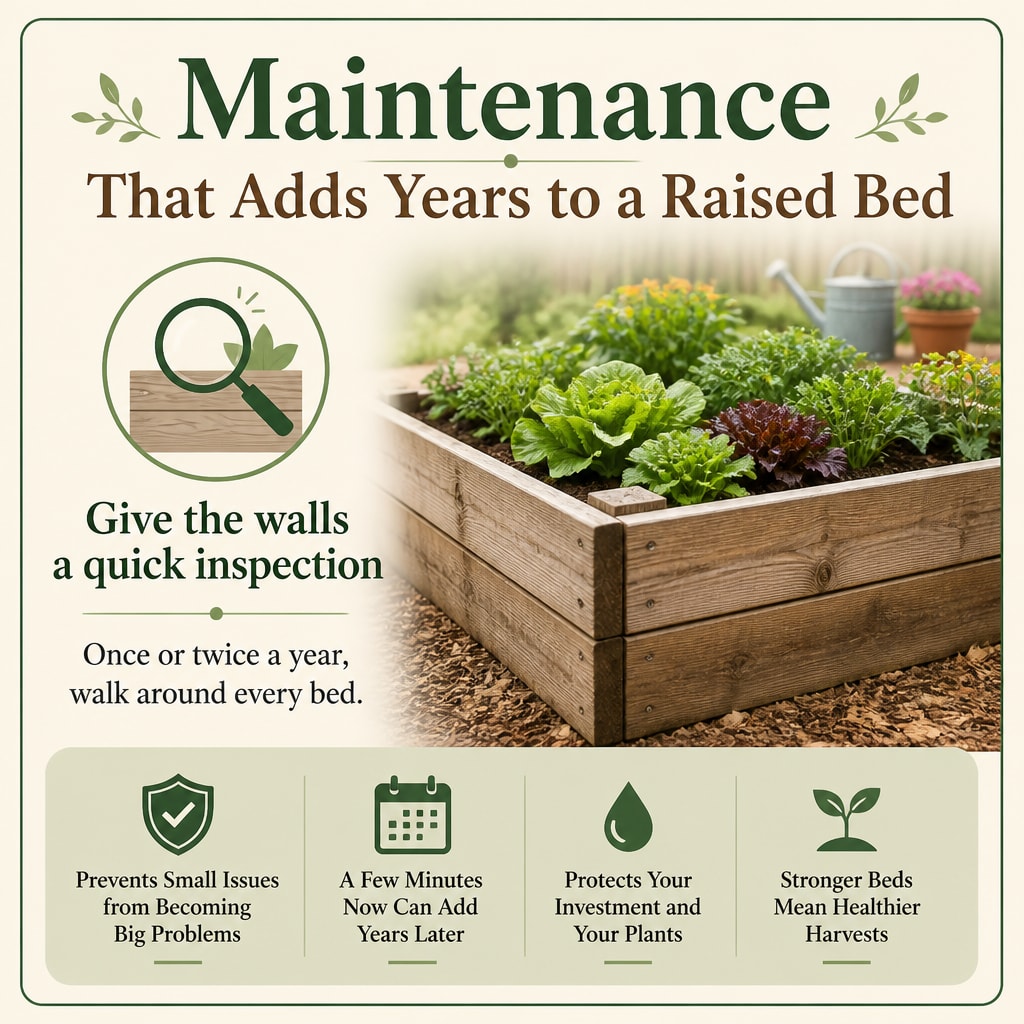
Give the walls a quick inspection
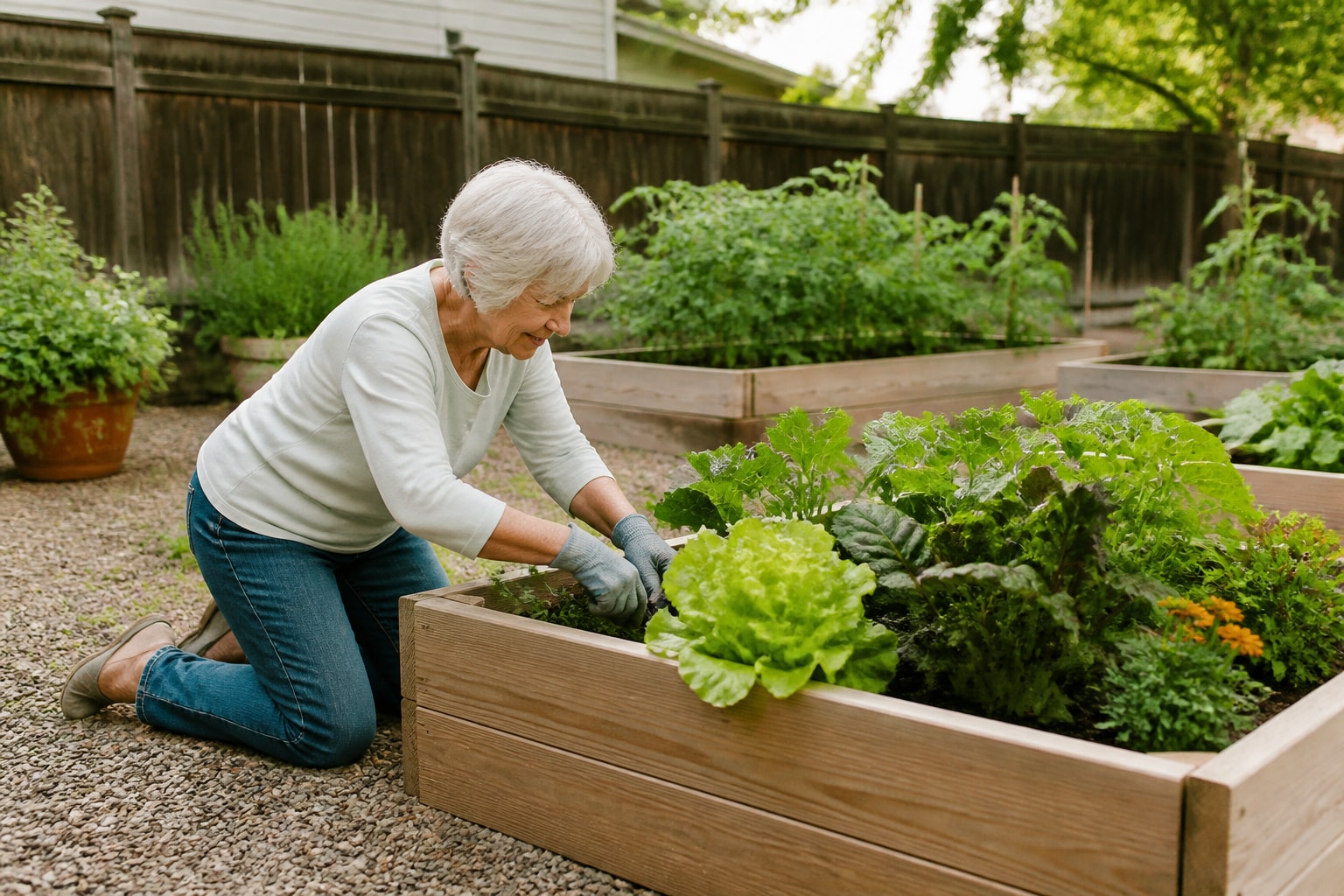
Once or twice a year, walk around every bed. Spring is a good time, before vegetables hide the lower boards. Press gently on the sides. Look for soft spots, split corners, bowed boards, loose fasteners, and gaps where soil is escaping.
A screwdriver makes a useful, low-tech test. Push it into suspicious wood. Sound lumber feels firm. Rotten lumber gives way easily, sometimes with a soft, crumbly feel. Don’t wait for a wall to fall outward before acting. By then, the soil pressure has usually made the repair larger.
Keep water and soil from working against the boards
Drip irrigation or soaker hoses can help deliver water directly to the growing area while reducing unnecessary wetting of the bed’s exterior. Keeping soil and mulch slightly below the top edge also helps prevent material from spilling over the sides. However, the main structural concern is the overall depth and weight of the soil, particularly when saturated. Taller or longer beds should have adequate reinforcement to withstand that pressure.
A thin layer of mulch helps reduce evaporation and soil splash. Leave a small gap between the mulch and the wood, though. That gap lets the board dry rather than trapping a damp blanket against it.
Here’s a short maintenance routine we recommend:
- Inspect corners, screws, and the bottom edge in spring.
- Remove wet leaves and packed mulch from the outside walls.
- Top up soil without filling above the frame.
- Repair loose fasteners before the boards shift.
- Clear weeds and vines that hide damage.
Paint and stain can help protect exposed wood, but they aren’t magic. Choose a product labeled for exterior use, and follow its directions. Avoid coating the inside of a vegetable bed with an unknown product. Soil stays in contact with that surface for years, so this isn’t the place to experiment.
When to Repair a Bed and When to Replace It
Small repairs are often worth doing
Minor damage does not always require replacing the entire raised bed. A cracked board, loose fastener, or weakened corner may be repairable when the surrounding structure remains sound. Before making repairs, check whether the frame can safely support the weight of the soil. Severely bowed or deteriorated walls may need to be emptied or temporarily supported before damaged components are removed. Use corrosion-resistant fasteners suitable for outdoor construction, and replace structural components that can no longer hold securely.
Brace a bowed wall only after checking why it moved. Sometimes the soil is simply too high. Sometimes water has softened the ground beneath one corner. A brace attached to rotten wood won’t solve much. It’s like hanging a gate on a sponge.
Know the signs that replacement is safer
Replacement makes more sense when several boards are soft, the corners no longer hold square, or the wall leans noticeably into a walkway. A bed that is losing soil every time you water can also waste a surprising amount of fertilizer and compost.
Before rebuilding, ask what caused the failure. Was the bed too wide to reach comfortably? Did the bottom sit in a puddle? Were the fasteners too short? Did roots from a nearby tree push against the frame? Repeating the same design usually produces the same repair bill.
Our category on Raised Garden Bed Materials and Construction Basics can help you compare materials and avoid a replacement that was predictable from the start.
FAQs for How Long Do Raised Garden Beds Last? Maintenance and Replacement Tips
Can I make a raised bed last longer by lining it with plastic?
A properly installed liner along the interior walls of a wooden raised bed may reduce direct contact between damp soil and the lumber, potentially slowing deterioration. However, a poorly installed liner can trap moisture against the wood, particularly if water collects between the liner and the boards.
If you choose to use a liner, select a durable material appropriate for garden use and install it so water cannot accumulate against the wood. Avoid covering the bottom of an open-bottom raised bed with impermeable plastic, since this can interfere with drainage and root growth. A liner is optional and should not be considered a substitute for good construction, drainage, and routine maintenance.
How often should I replace the soil in a raised bed?
Raised bed soil generally does not need to be replaced on a regular schedule. Inspect its texture, drainage, and fertility between growing seasons, and add finished compost when additional organic matter is needed. Soil testing can help determine whether fertilizer or other amendments are necessary.
Complete soil replacement is usually reserved for unusual circumstances, such as confirmed contamination or problems that cannot reasonably be corrected through soil management. Compaction, drainage issues, and many nutrient imbalances can often be improved without discarding the entire soil volume. When replacing a damaged raised bed frame, healthy existing soil can frequently be reused.
Keep Your Raised Beds Productive for the Long Haul
A raised bed lasts longest when its material matches the site and its owner notices trouble early. Cedar or composite may be a sensible choice for a permanent backyard setup. Less expensive lumber can work well when you accept a shorter service life and plan for a straightforward replacement.
Check the walls each spring, control moisture, keep soil below the rim, and repair small failures before they spread. That simple routine protects both your budget and your planting space.
🌱 FREE DOWNLOAD: Your First Raised Bed Garden
A Beginner-Friendly Guide to Getting Started
Thinking about growing your own vegetables in a raised bed? Start with a simple plan that helps you avoid costly mistakes and build a garden you can enjoy for years.
Our FREE Your First Raised Bed Garden guide provides practical, beginner-friendly information to help you:
- Choose a suitable location with enough sunlight.
- Plan the size and layout of your raised garden bed.
- Understand the basics of preparing healthy garden soil.
- Select vegetables that are appropriate for beginners.
- Get started with planting, watering, and caring for your garden.
You don’t need a huge backyard, expensive equipment, or years of gardening experience to get started!
Get Your FREE Raised Bed Gardening Guide
Free PDF guide from Backyard Living Books.
📗 Ready to Grow Your Own Fresh Vegetables?
Creating a productive raised bed garden takes thoughtful planning, healthy soil, and a little know-how.
Take the guesswork out of raised bed gardening!
Raised Bed Gardening Made Easy: Plans, Soil Mixes, Planting Secrets, and Beginner-Friendly Harvests is a practical guide designed to help you:
- Plan and build raised garden beds that fit your space.
- Choose materials and prepare the right soil mix.
- Select and plant vegetables for productive harvests.
- Understand watering, fertilizing, and routine garden maintenance.
- Avoid common mistakes that can waste time and money.
Whether you’re planting your first garden or looking to improve an existing one, this book will help you garden with greater confidence.
Explore Raised Bed Gardening Made Easy
🌿 Want More FREE Raised Bed Gardening Tips?
Visit our Gardening Learning Center for helpful articles, practical advice, and beginner-friendly resources covering everything from soil preparation and vegetable planting to watering, pest prevention, and seasonal gardening.
Explore the Gardening Learning Center
Part of the Backyard Living Series: Build • Grow • Raise • Thrive.