
Most vegetables in raised beds don’t need a constant stream of fertilizer. They need the right food at the right time, in amounts their roots can actually use. Too little can leave plants pale and stunted. Too much creates lush leaves, weak growth, and disappointing harvests. Tomatoes may produce plenty of foliage but very few fruits. Beans can sulk. Carrots may fork or stay small.
So, when should you fertilize? Start by evaluating the soil and the nutritional needs of the vegetables you plan to grow. Some raised beds already contain enough nutrients for healthy plant growth, while others benefit from fertilizer at planting or during the growing season. Soil test results, crop requirements, and plant performance provide better guidance than a rigid feeding calendar. This is especially important in small raised beds, where excessive fertilizer can quickly create nutrient imbalances.
Start with the soil before adding fertilizer
Raised beds are often filled with a blend of compost, topsoil, and other organic materials. That mix may already contain plenty of nutrients. Fresh compost, aged manure, or a quality planting mix can feed young vegetables for several weeks.
Take a moment to think about what went into the bed. Was it filled recently? Have you added compost every season? Did you grow heavy-feeding crops there last year? Those details matter more than a generic feeding schedule printed on a fertilizer bag.
Watch the plants and the soil
Healthy vegetables usually have steady growth and leaves with good color. Pale lower leaves, weak stems, and slow growth can point to a nutrient shortage, but they can also come from cold soil, poor drainage, root damage, or not enough sunlight. Fertilizer won’t fix those problems.
A soil test gives you a clearer starting point. Home test kits can offer useful clues, while a laboratory test provides better information about pH, phosphorus, potassium, and organic matter. We recommend testing new raised beds before adding strong amendments. It’s much easier to correct a shortage than to undo a pile of excess phosphorus.
For a broader look at filling and caring for raised beds, visit Raised Bed Gardening for Beginners: The Complete Step-by-Step Guide. Fertilizer makes more sense once the bed’s basic structure, drainage, and planting conditions are in order.
Feed at planting with a light hand
Finished compost can improve soil structure, moisture retention, and biological activity while contributing some nutrients. However, raised beds that already contain adequate organic matter may not need additional compost before every planting. Evaluate existing soil conditions before adding more. When fertilizer is necessary, choose a product and application rate appropriate for the crop and soil test recommendations rather than treating compost and fertilizer as interchangeable.
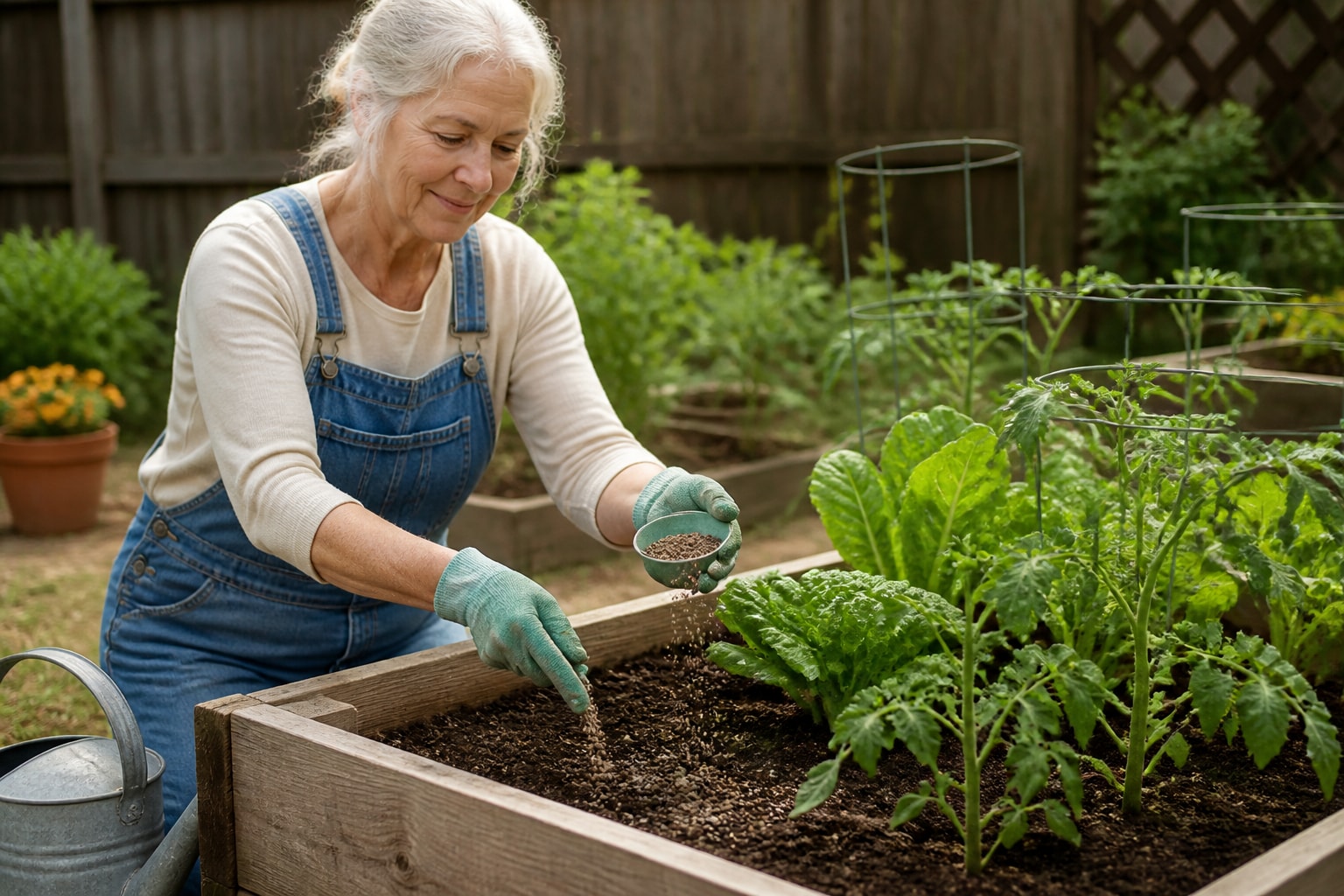
Granular organic fertilizer is another option. Mix it into the soil according to the label, not according to how generous you’re feeling that morning. More isn’t better here. Concentrated fertilizer touching seeds or tender roots can cause damage.
When seedlings need extra help
Seedlings started indoors may need supplemental nutrients after developing their first true leaves, particularly when grown in a seed-starting medium that contains little or no fertilizer. Use a fertilizer formulated for seedlings and follow its label instructions for young plants. Some products recommend diluted applications, while others have specific seedling feeding rates. Avoid assuming that every fertilizer should be mixed at the same fraction of its standard strength, since formulations vary.
Newly transplanted vegetables need time to settle. Water them well, give them a few days, and avoid pushing them with a strong dose right away. A starter fertilizer with modest nitrogen and some phosphorus may help in poor soil, but healthy plants in fertile compost usually don’t need a special transplant formula.
Match the fertilizer to the vegetable
Vegetables don’t all ask for the same menu. Leafy crops such as lettuce, kale, Swiss chard, and cabbage use more nitrogen to build foliage. Fruiting crops such as tomatoes, peppers, cucumbers, and squash need steady nutrition too, but too much nitrogen can send them into leaf-making mode at the expense of flowers and fruit.
Root crops are a different story. Carrots, beets, radishes, and turnips often perform better in moderately fertile soil. High nitrogen can produce beautiful tops with unimpressive roots. That’s a frustrating trade.
A simple feeding plan
- Evaluate soil fertility before planting and add compost only when additional organic matter is beneficial.
- Choose fertilizers according to soil test recommendations and the nutritional requirements of each crop.
- Monitor leafy vegetables for healthy growth and provide supplemental nitrogen when needed.
- Consider side-dressing heavy-feeding vegetables during periods of rapid growth or fruit development when additional nutrients are warranted.
- Avoid excessive nitrogen applications to fruiting crops, since they can encourage foliage growth at the expense of fruit production.
Side-dressing means placing fertilizer beside an established row or plant instead of mixing it directly into the root zone. Keep granular products a few inches away from stems, scratch them gently into the surface, and water afterward. This method gives vegetables a midseason boost without disturbing their roots.
For tomatoes, a modest side-dressing when the first fruit begins to form often works well. Peppers tend to appreciate the same general timing, though they usually grow more slowly. Cucumbers and squash can be hungry plants, especially when they’re producing heavily. Watch their growth and feed in small amounts rather than giving one giant application.
Beans and peas generally make their own nitrogen with help from soil bacteria, so they rarely need much nitrogen fertilizer. A high-nitrogen product may give you leaves but fewer pods. That’s not the bargain it sounds like.
Know when to stop feeding your raised bed
Fertilizing is not a contest. Once plants are growing well, adding more can create trouble. Excess nutrients may wash into nearby areas, raise salt levels, or produce soft growth that attracts pests and struggles in hot weather.
One common mistake is feeding on a fixed weekly schedule all season. That might be appropriate for a container crop with frequent watering, but a deep raised bed amended with compost behaves differently. Nutrients are released gradually, and rain or irrigation changes the picture.
Signs you may be overdoing it
Very dark green leaves, unusually rapid leafy growth, scorched leaf edges, and a crusty white buildup on the soil surface can all point to excess fertilizer or salt accumulation. Stop feeding, water deeply when drainage is good, and remove any visible fertilizer granules from around the plants. Don’t keep adding products because the plant “looks hungry.”
For established raised beds, soil testing every two to three years may be sufficient when plants are growing well and soil conditions remain stable. Test more frequently when correcting nutrient problems or making substantial amendments. Keep a simple record of fertilizer applications, compost additions, crop locations, and plant performance. These notes can help identify patterns and prevent unnecessary fertilizer use from one growing season to the next.
You’ll find more practical advice about compost, soil amendments, and feeding choices in the Raised Bed Gardening Soil Guide: Compost, Fertilizer, and Soil Health.
FAQs for When and How to Fertilize Vegetables in Raised Garden Beds
How often should I fertilize vegetables in a raised bed?
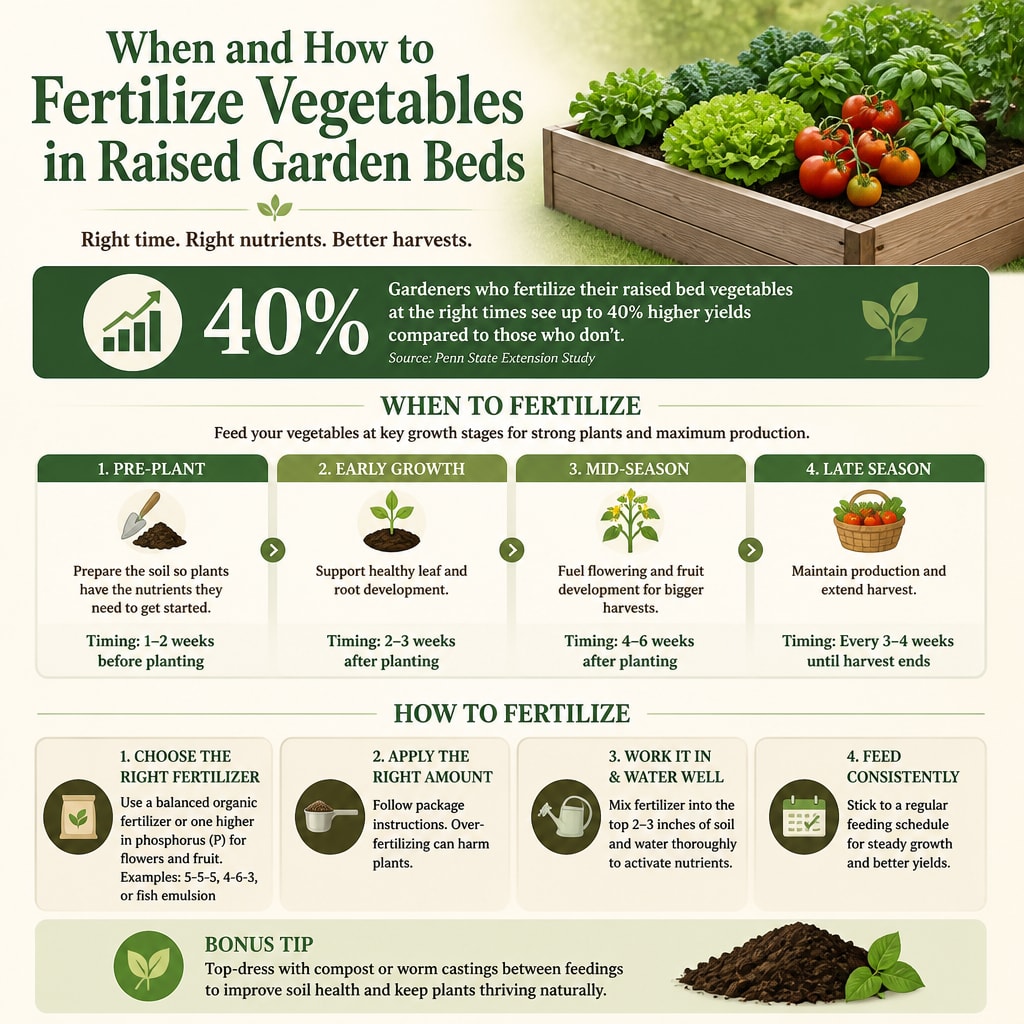
There is no universal fertilizing schedule for raised bed vegetables. The appropriate frequency depends on soil fertility, crop requirements, fertilizer formulation, and growing conditions. Some vegetables grow successfully without supplemental fertilizer when the soil already contains sufficient nutrients. Heavy-feeding crops may benefit from additional applications during active growth, while beans, peas, and many root vegetables often require less nitrogen. Use soil test recommendations and fertilizer labels to determine appropriate timing and amounts, and monitor plant growth throughout the season.
Can I fertilize vegetables right after transplanting?
Yes, but go gently. Water the plants first and avoid strong fertilizer against the roots or stems. A diluted liquid feed can help seedlings that are pale or growing in poor soil. For healthy transplants in fertile raised-bed soil, plain water for the first several days is often the better choice.
Keep your feeding routine simple
The best raised-bed fertilizer plan is usually modest: build good soil, feed lightly at planting, check how plants respond, and side-dress heavy feeders when they start producing. Don’t fertilize by habit alone. Your vegetables will tell you plenty, especially when you learn to notice changes in color, growth, and fruiting.
🌱 FREE DOWNLOAD: Your First Raised Bed Garden
A Beginner-Friendly Guide to Getting Started
Thinking about growing your own vegetables in a raised bed? Start with a simple plan that helps you avoid costly mistakes and build a garden you can enjoy for years.
Our FREE Your First Raised Bed Garden guide provides practical, beginner-friendly information to help you:
- Choose a suitable location with enough sunlight.
- Plan the size and layout of your raised garden bed.
- Understand the basics of preparing healthy garden soil.
- Select vegetables that are appropriate for beginners.
- Get started with planting, watering, and caring for your garden.
You don’t need a huge backyard, expensive equipment, or years of gardening experience to get started!
Get Your FREE Raised Bed Gardening Guide
Free PDF guide from Backyard Living Books.
📗 Ready to Grow Your Own Fresh Vegetables?
Creating a productive raised bed garden takes thoughtful planning, healthy soil, and a little know-how.
Take the guesswork out of raised bed gardening!
Raised Bed Gardening Made Easy: Plans, Soil Mixes, Planting Secrets, and Beginner-Friendly Harvests is a practical guide designed to help you:
- Plan and build raised garden beds that fit your space.
- Choose materials and prepare the right soil mix.
- Select and plant vegetables for productive harvests.
- Understand watering, fertilizing, and routine garden maintenance.
- Avoid common mistakes that can waste time and money.
Whether you’re planting your first garden or looking to improve an existing one, this book will help you garden with greater confidence.
Explore Raised Bed Gardening Made Easy
🌿 Want More FREE Raised Bed Gardening Tips?
Visit our Gardening Learning Center for helpful articles, practical advice, and beginner-friendly resources covering everything from soil preparation and vegetable planting to watering, pest prevention, and seasonal gardening.
Explore the Gardening Learning Center
Part of the Backyard Living Series: Build • Grow • Raise • Thrive.