
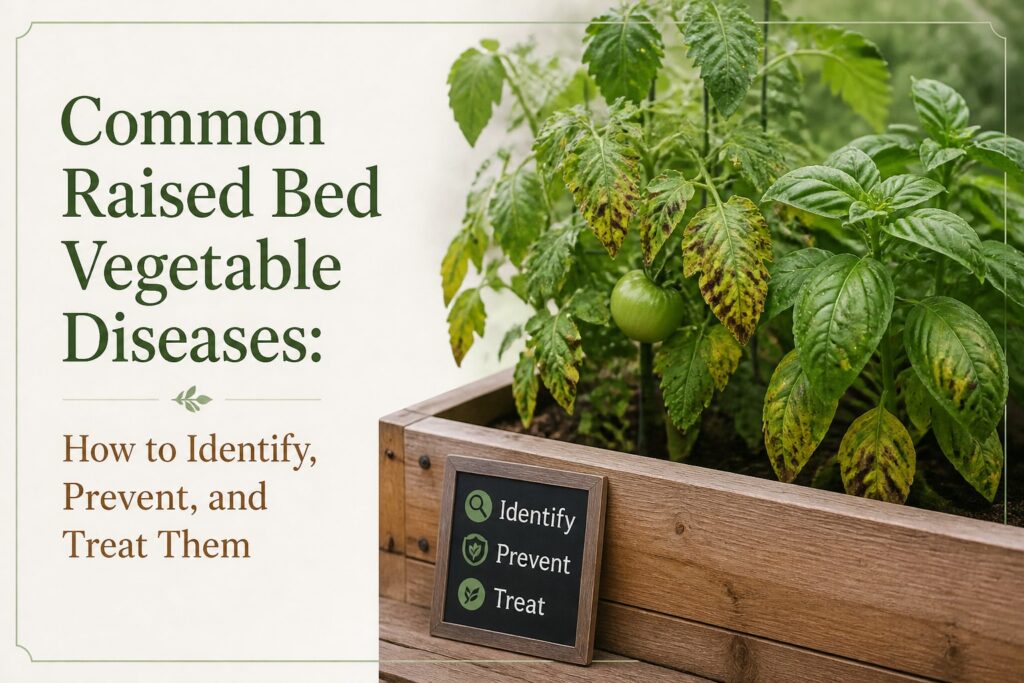
Raised beds give vegetables better soil and easier access, but they don’t make plants immune to disease. A tomato can still develop early blight. Cucumbers can still pick up powdery mildew. And once a disease gets comfortable in a crowded bed, it can move fast.
The good news? Most common raised bed vegetable diseases are easier to manage when we catch them early. We’re looking for patterns, not panicking over every yellow leaf. A little diagnosis, better watering habits, and prompt cleanup go a long way.
Start with the clues your plants are giving you
Look at the whole plant first
Before treating anything, step back and inspect the plant from top to bottom. Are the symptoms limited to older leaves near the soil? Are new leaves distorted? Do the stems have dark lesions? Is the problem affecting one plant or an entire row?
That last question matters. A single wilted plant may have root damage, a stem injury, or an insect problem. Several plants with matching spots often point toward a fungal or bacterial disease. Yellow leaves across the entire bed may be caused by overwatering, poor drainage, or a nutrient issue instead.
Separate disease from ordinary plant stress
Raised bed gardeners often mistake sunscald, transplant shock, and watering stress for disease. A plant that droops on a hot afternoon but recovers by evening probably isn’t infected. Yellowing on older leaves may be part of normal aging, but it can also indicate nitrogen deficiency, watering problems, or disease. Look at the entire plant and check soil conditions before deciding that fertilizer is needed.
Look for symptoms that spread or develop a distinct pattern. Fuzzy growth, concentric leaf spots, powdery coatings, water-soaked lesions, and sudden wilting deserve closer attention. Take a quick photo when symptoms begin. That record helps us compare changes over several days rather than relying on memory.
Our Raised Bed Gardening for Beginners: The Complete Step-by-Step Guide covers bed setup, soil, planting, and routine maintenance. Those basics matter here because healthy roots and good spacing give plants more room to handle trouble.
Common diseases you’re likely to see in a raised bed
Early blight and other leaf spot diseases
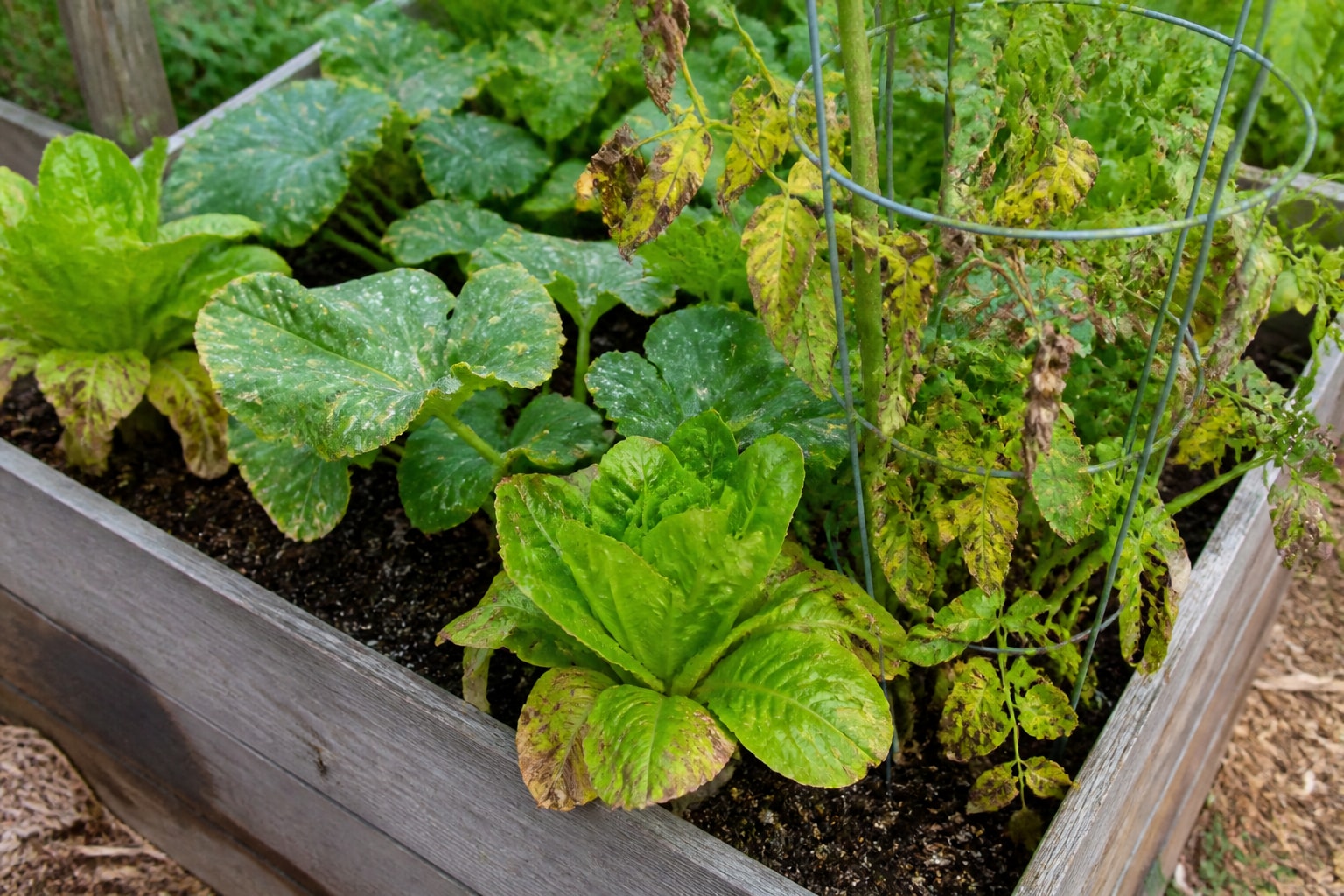
Early blight is common on tomatoes and potatoes. It usually begins on lower leaves as brown spots with darker rings. The leaves yellow, dry out, and drop. Splashing water, infected plant debris, and wet foliage help the disease spread.
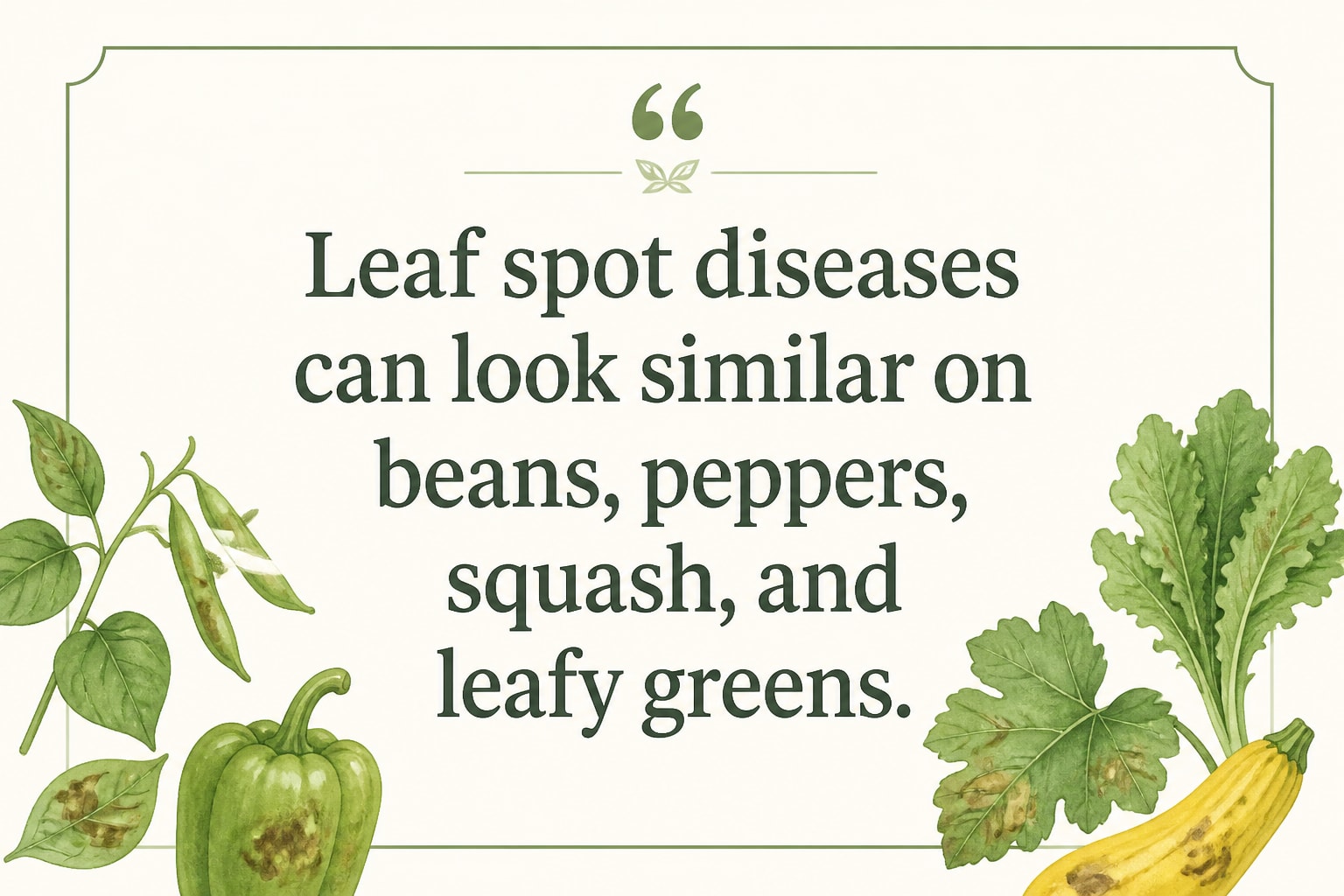
Leaf spot diseases can look similar on beans, peppers, squash, and leafy greens. They don’t always kill a plant, but heavy infection reduces the leaves available for photosynthesis. That means fewer flowers, smaller harvests, and tired-looking plants.
Powdery mildew, downy mildew, and gray mold
Powdery mildew looks like white flour dusted across the leaves. It often appears when days are warm, nights are cool, and air movement is poor. Squash, cucumbers, peas, and herbs are frequent targets.
Downy mildew is different. It commonly creates yellow or pale patches on the upper leaf surface, with gray, purple, or fuzzy growth underneath. It favors damp conditions. Gray mold, also called Botrytis, produces soft brown tissue and fuzzy gray spores, especially around damaged flowers or crowded foliage.
Wilts, damping off, and root problems
Fusarium and Verticillium wilts can cause one side of a plant to wilt while the rest looks fairly normal. Leaves may yellow gradually, and cutting an affected stem can reveal brown discoloration in the vascular tissue. These soilborne diseases are difficult to cure once established.
Damping off affects seedlings. Stems become thin and pinched near the soil line, then young plants topple. Overly wet soil, poor air circulation, and reused containers are common contributors. Root rot creates a similar problem in older plants, especially where the bed stays soggy after rain.
Prevention starts before disease shows up
Give plants room and keep leaves dry
Spacing isn’t just about making harvest easier. It lets air move through the foliage and helps leaves dry after rain or watering. Follow the spacing on the seed packet, even when it feels like you’re leaving too much empty soil. Plants fill in quickly.
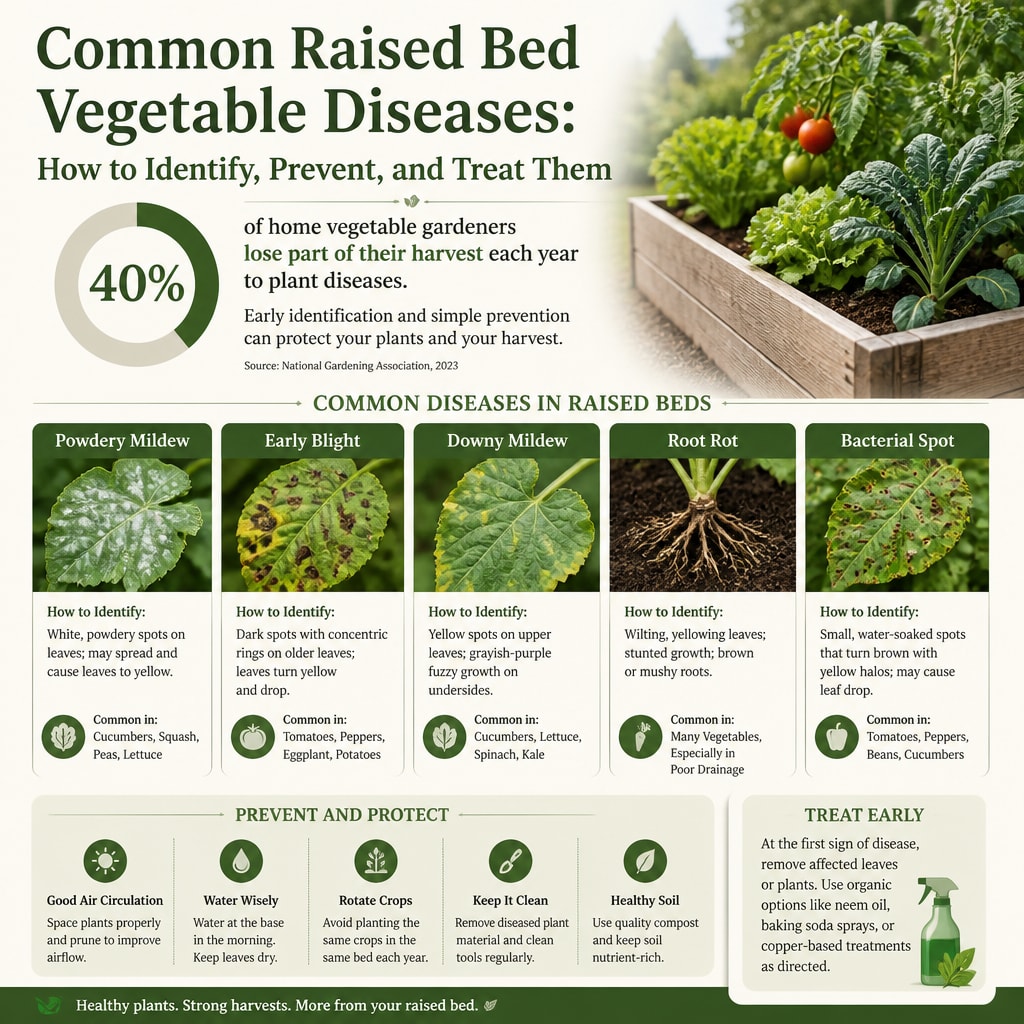
Water at the soil line in the morning. A soaker hose or drip line is helpful, but a careful watering wand works too. We’re not trying to keep every leaf perfectly dry forever. We’re simply avoiding hours of wet foliage whenever possible.
Build a cleanup routine
Inspect suspicious leaves and identify the likely disease before removing foliage. When appropriate, prune badly affected leaves using clean tools, especially if the disease is spreading. Avoid removing so many leaves that the plant loses its ability to grow and produce. Keep potentially infected material out of ordinary home compost piles unless the composting process can reliably destroy the pathogen. Follow local recommendations for disposing of diseased plant debris.
- Rotate plant families to new beds when practical.
- Clean pruners with household disinfectant between infected plants.
- Use disease-free seed and healthy transplants.
- Keep weeds under control around the bed.
- Add mulch to reduce soil splashing onto leaves.
Crop rotation can help reduce certain soilborne disease problems, although its effectiveness depends on the pathogen and how long it survives in the soil. A rotation of three or more years may be helpful for some diseases, but others can persist much longer. In small raised beds where rotation is difficult, choose disease-resistant varieties, avoid introducing contaminated soil or plants, improve drainage, and remove infected crop debris. If a serious soilborne disease is suspected, seek identification through your local Cooperative Extension service before replanting susceptible crops.
What to do when a disease appears
Act early, but don’t spray blindly
Start by removing the worst-affected leaves. Wipe pruners between cuts, and wash your hands before moving to another bed. Improve spacing and airflow by removing a few lower leaves from tomatoes, but don’t strip the plant bare. Leaves are still the plant’s food-making equipment.
Fungicides may protect new growth from some fungal diseases, but they usually won’t repair tissue that’s already damaged. Read the label carefully and confirm that the product is approved for the crop you’re treating. Some products are preventive, not curative. That distinction saves a lot of frustration.
Know when removal is the better choice
A badly infected annual plant may not be worth rescuing. This is especially true when it’s declining quickly, spreading disease to nearby plants, or showing signs of a serious wilt. Pull it gently, remove as much of the root system as you can, and clean the area.
Don’t save seeds from plants that had a strong disease problem. And don’t plant the same crop family in that exact spot next season if a soilborne disease is suspected. A healthy-looking replacement can fail just as quickly when the pathogen is still in the soil.
Our Raised Bed Garden Pest Control, Seasonal Care, and Harvesting resources cover ongoing bed care, including seasonal cleanup and harvest timing. Disease management works best as a routine rather than a one-time rescue mission.
FAQs for Common Raised Bed Vegetable Diseases: How to Identify, Prevent, and Treat Them
Can I eat vegetables from a diseased plant?
Often, yes. A disease affecting a plant’s leaves does not automatically make its healthy-looking vegetables unsafe to eat. However, the edible portion should be firm, free of rot or mold, and thoroughly washed before preparation. Discard produce showing decay, soft spots, mold, or other signs of spoilage. When the cause of unusual symptoms is uncertain, contact your local Cooperative Extension service for guidance rather than assuming the produce is safe.
Should I replace all the soil after a disease problem?
Usually not. Replacing an entire raised bed is expensive and often unnecessary. Remove infected plants and roots, avoid moving soil between beds, add fresh compost, and rotate crops. Soil replacement may make sense for a small container with severe root disease, but it’s not the default answer for a backyard bed.
Keep the beds clean and the plants observed
Healthy raised beds aren’t disease-free beds. They’re beds where problems are noticed early and managed before they spread. Check leaves when you harvest, water at the soil instead of over the foliage, give plants breathing room, and remove questionable debris promptly.
🌱 FREE DOWNLOAD: Your First Raised Bed Garden
A Beginner-Friendly Guide to Getting Started
Thinking about growing your own vegetables in a raised bed? Start with a simple plan that helps you avoid costly mistakes and build a garden you can enjoy for years.
Our FREE Your First Raised Bed Garden guide provides practical, beginner-friendly information to help you:
- Choose a suitable location with enough sunlight.
- Plan the size and layout of your raised garden bed.
- Understand the basics of preparing healthy garden soil.
- Select vegetables that are appropriate for beginners.
- Get started with planting, watering, and caring for your garden.
You don’t need a huge backyard, expensive equipment, or years of gardening experience to get started!
Get Your FREE Raised Bed Gardening Guide
Free PDF guide from Backyard Living Books.
📗 Ready to Grow Your Own Fresh Vegetables?
Creating a productive raised bed garden takes thoughtful planning, healthy soil, and a little know-how.
Take the guesswork out of raised bed gardening!
Raised Bed Gardening Made Easy: Plans, Soil Mixes, Planting Secrets, and Beginner-Friendly Harvests is a practical guide designed to help you:
- Plan and build raised garden beds that fit your space.
- Choose materials and prepare the right soil mix.
- Select and plant vegetables for productive harvests.
- Understand watering, fertilizing, and routine garden maintenance.
- Avoid common mistakes that can waste time and money.
Whether you’re planting your first garden or looking to improve an existing one, this book will help you garden with greater confidence.
Explore Raised Bed Gardening Made Easy
🌿 Want More FREE Raised Bed Gardening Tips?
Visit our Gardening Learning Center for helpful articles, practical advice, and beginner-friendly resources covering everything from soil preparation and vegetable planting to watering, pest prevention, and seasonal gardening.
Explore the Gardening Learning Center
Part of the Backyard Living Series: Build • Grow • Raise • Thrive.