

Raised beds make vegetable gardening easier to manage, but they don’t make pests, disease, cold weather, or overripe zucchini disappear. The good news is that a small bed gives us a real advantage: we can inspect plants closely, protect crops quickly, and harvest before problems spread.
Our approach is simple. Keep plants healthy, check the bed often, protect tender crops when the weather turns, and pick vegetables at the right stage. For the broader planting and maintenance basics, see Raised Bed Gardening for Beginners: The Complete Step-by-Step Guide.
Keep pests out with regular garden checks
You don’t need to patrol your raised beds all day. A quick walk-through every day or two is usually enough to catch trouble early. Look beneath leaves, along stems, and around the soil surface. Caterpillars hide in plain sight surprisingly well. Aphids gather on new growth. Slugs leave ragged holes and shiny trails, especially after a damp night.
Start with the least aggressive fix. Pick off larger insects by hand and drop them into a container of soapy water. Spray aphids from the underside of leaves with a firm stream of water. Remove badly damaged leaves, but don’t strip a plant bare just because one leaf looks rough. Plants need that foliage to keep making energy.
Use barriers before sprays
Lightweight row cover is one of our favorite tools for raised beds. It keeps many flying insects away from young crops without putting residue on the leaves. Secure the edges completely. One loose corner is enough for a determined cabbage moth to get inside.
For slugs and snails, reduce hiding places around the bed and water in the morning rather than late in the day. Copper tape helps in some situations, though results can be uneven. We aren’t big fans of scattering random household products around edible crops. Prevention and hand removal are less dramatic, but they’re often more dependable.
Don’t forget beneficial insects. Lady beetles, lacewings, hoverflies, and parasitic wasps help keep pest numbers in check. A flower or two near the vegetables can provide nectar for adult beneficial insects, while avoiding broad-spectrum insecticides protects the helpers already working in the bed.
Spot vegetable diseases before they spread
Disease control starts with paying attention to patterns. A single yellow leaf at the bottom of a tomato plant may simply be old foliage. Yellowing across several plants, wilting despite moist soil, or powdery growth on many leaves deserves a closer look.
Water at the soil line when possible. Wet foliage that stays damp overnight creates a friendlier setting for several fungal and bacterial diseases. Give plants enough room for air movement, and remove leaves that touch the soil. Mulch helps keep soil from splashing onto lower foliage during rain or watering.
Remove problems carefully
When you notice leaves showing signs of disease, first identify the likely problem. Remove badly affected foliage when appropriate, using clean pruning tools and avoiding unnecessary damage to the plant. Keep potentially infected material out of home compost piles unless you know your composting process can safely handle it. When a disease may spread through pruning tools, clean and disinfect the blades between plants according to the disinfectant’s instructions. Removing affected leaves can reduce some disease pressure, but it won’t cure every infection.
Also check the roots before changing the watering schedule. Wilting doesn’t always mean a plant is thirsty. Root damage, compacted soil, and saturated conditions can all cause the same sad droop. Raised beds drain better than in-ground beds, but they can still stay too wet when irrigation runs on autopilot.
Water and feed plants without overdoing it
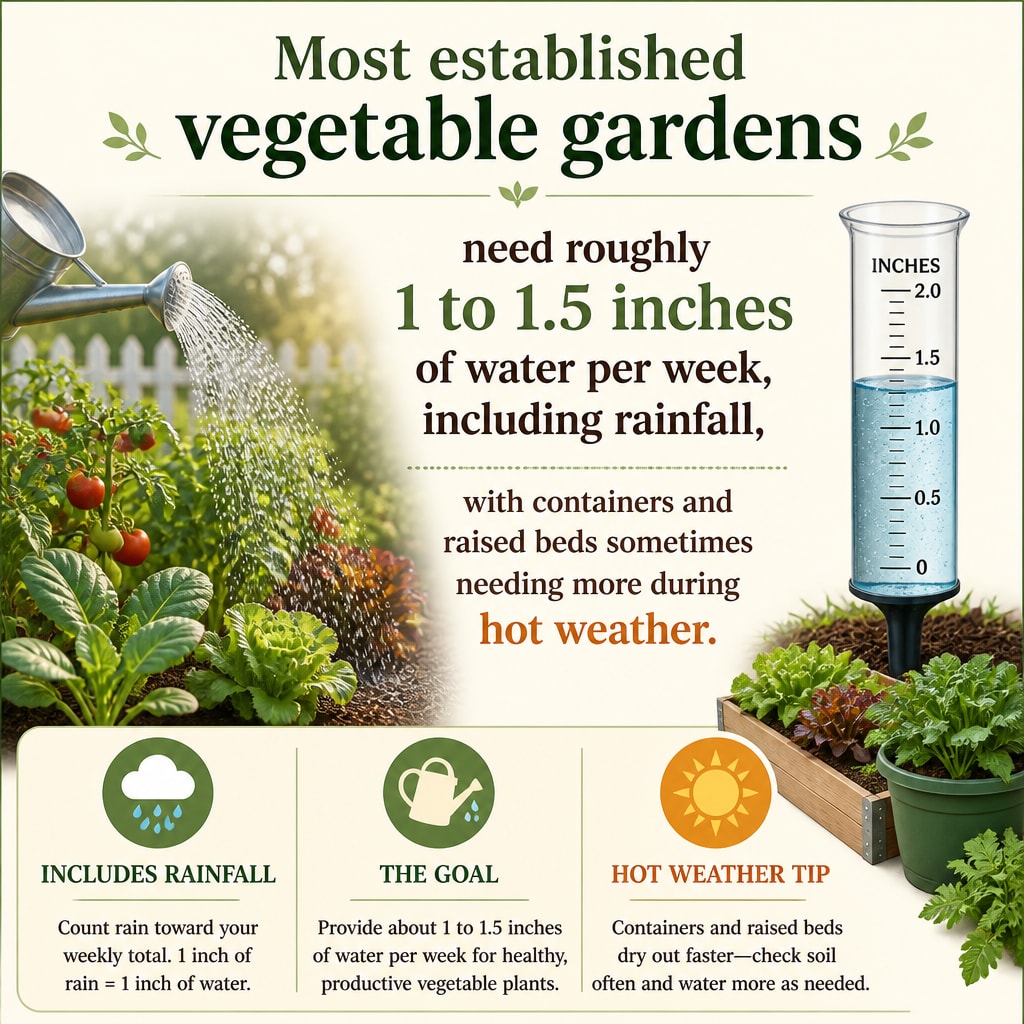
Raised beds often dry out faster than surrounding ground, especially when they’re filled with a loose soil mix and sit in full sun. Push a finger an inch or two into the soil. If it feels dry at root depth, water slowly and deeply. A shallow splash encourages shallow roots and leaves the center of the root zone dry.
Many established vegetable gardens need approximately 1 to 1.5 inches of water per week, including rainfall, as a general starting point. Raised beds may require more frequent watering during hot, dry, or windy weather, especially when they contain shallow soil or fast-draining mixes. Check moisture several inches below the surface and adjust watering to the needs of your crops rather than following a fixed schedule.
Feed plants based on their growth, not on a calendar alone. Pale leaves, weak stems, or slow growth may point to a nutrient issue, but excess fertilizer can create huge leafy plants with disappointing fruit. Tomatoes, peppers, and squash are especially good at making us think more fertilizer must be better. Usually, it isn’t.
Protect raised beds from frost and cold
Cold weather catches gardeners at the edges of the season. A forecast that says 38 degrees may still be a problem for tender basil or pepper plants when the bed sits in an exposed backyard. Cold air settles in low spots, and clear nights can chill plant surfaces below the official air temperature.
Use row cover, a cold frame, or an inverted bucket for short cold snaps. Keep fabric from resting directly on delicate foliage when possible, and anchor it well so wind can’t turn it into a sail. Remove heavy covers during sunny mornings. Plants can overheat quickly inside a tightly covered bed.
Hardy crops such as kale, carrots, parsley, and some lettuces can handle cool weather far better than warm-season crops. Tomatoes, cucumbers, beans, and peppers are less forgiving. One exception: a mature plant may survive a brief light frost, but its growth can still be set back.
For longer protection, a simple cold frame over one section of the bed gives us a useful buffer. It won’t make winter disappear. It can buy several extra weeks in spring and fall, which is often enough to finish a crop or get an early start.
Know when vegetables are ready to harvest
Harvesting is where all the small daily tasks finally pay off. Pick in the morning when plants are hydrated and temperatures are cooler. Use scissors or a knife for crops with tough stems, and avoid yanking plants out of the soil unless you’re harvesting a root crop.
Common signs of readiness
- Beans: Pick when pods are firm and slender, before the seeds bulge.
- Cucumbers: Harvest while they’re crisp and before they turn yellow or oversized.
- Tomatoes: For the best flavor, allow fruit to ripen on the plant when conditions are favorable. Tomatoes that have reached the breaker stage, when their mature green color first begins changing to the ripe color, can also finish ripening indoors. Harvest earlier when cracking, pests, or severe weather threaten the crop, but immature green tomatoes may not ripen properly after picking.
- Zucchini: Small to medium fruits usually have the best texture. Check plants often because they can go from perfect to baseball-bat size in a blink.
- Lettuce: Take outer leaves as needed, or harvest the whole head before the plant bolts in hot weather.
- Carrots and beets: Brush soil away from the shoulder to judge size, then harvest a test root.
Beans and cucumbers often need checking every 2 to 3 days during peak production, because missed harvests quickly become oversized and less tender. Frequent picking also encourages many plants to keep producing. That’s a nice return for a two-minute walk through the garden.
Prepare beds for the next season
When a crop finishes, pull plants that are diseased or heavily infested and remove fallen fruit. Healthy spent plants can go into a properly managed compost pile, though woody stems may need chopping first. Leaving dead vines over winter gives some pests a convenient place to shelter.
Top-dress the bed with finished compost rather than turning the entire soil profile upside down every year. Deep digging can disturb soil life and break up the structure that makes raised beds pleasant to work. Add mulch before winter, especially where bare soil might wash away or freeze hard.
Take a few notes while the season is fresh. Which variety produced well? Where did water collect? Did a plant shade its neighbor? A small sketch on a sheet of paper can save plenty of head-scratching next spring. We also recommend rotating plant families when space allows. It won’t prevent every disease, but it reduces the chance of repeating the same soil-related problems in the same spot.
Make raised bed care a short routine
Good garden care doesn’t need to become a second job. Walk the beds regularly, check leaves and soil, water at the root zone, and harvest before vegetables become overripe. Add protection before a frost, not after plants have already collapsed. Small actions done early usually beat heroic rescue work later.
A healthier bed is easier to manage
The best raised bed gardens aren’t pest-free or perfectly tidy. They’re watched often enough that small problems stay small. Keep the soil healthy, protect plants during rough weather, and harvest on time. Do that consistently, and your beds will give you more vegetables with a lot less scrambling.
🌱 FREE DOWNLOAD: Your First Raised Bed Garden
A Beginner-Friendly Guide to Getting Started
Thinking about growing your own vegetables in a raised bed? Start with a simple plan that helps you avoid costly mistakes and build a garden you can enjoy for years.
Our FREE Your First Raised Bed Garden guide provides practical, beginner-friendly information to help you:
- Choose a suitable location with enough sunlight.
- Plan the size and layout of your raised garden bed.
- Understand the basics of preparing healthy garden soil.
- Select vegetables that are appropriate for beginners.
- Get started with planting, watering, and caring for your garden.
You don’t need a huge backyard, expensive equipment, or years of gardening experience to get started!
Get Your FREE Raised Bed Gardening Guide
Free PDF guide from Backyard Living Books.
📗 Ready to Grow Your Own Fresh Vegetables?
Creating a productive raised bed garden takes thoughtful planning, healthy soil, and a little know-how.
Take the guesswork out of raised bed gardening!
Raised Bed Gardening Made Easy: Plans, Soil Mixes, Planting Secrets, and Beginner-Friendly Harvests is a practical guide designed to help you:
- Plan and build raised garden beds that fit your space.
- Choose materials and prepare the right soil mix.
- Select and plant vegetables for productive harvests.
- Understand watering, fertilizing, and routine garden maintenance.
- Avoid common mistakes that can waste time and money.
Whether you’re planting your first garden or looking to improve an existing one, this book will help you garden with greater confidence.
Explore Raised Bed Gardening Made Easy
🌿 Want More FREE Raised Bed Gardening Tips?
Visit our Gardening Learning Center for helpful articles, practical advice, and beginner-friendly resources covering everything from soil preparation and vegetable planting to watering, pest prevention, and seasonal gardening.
Explore the Gardening Learning Center
Part of the Backyard Living Series: Build • Grow • Raise • Thrive.