

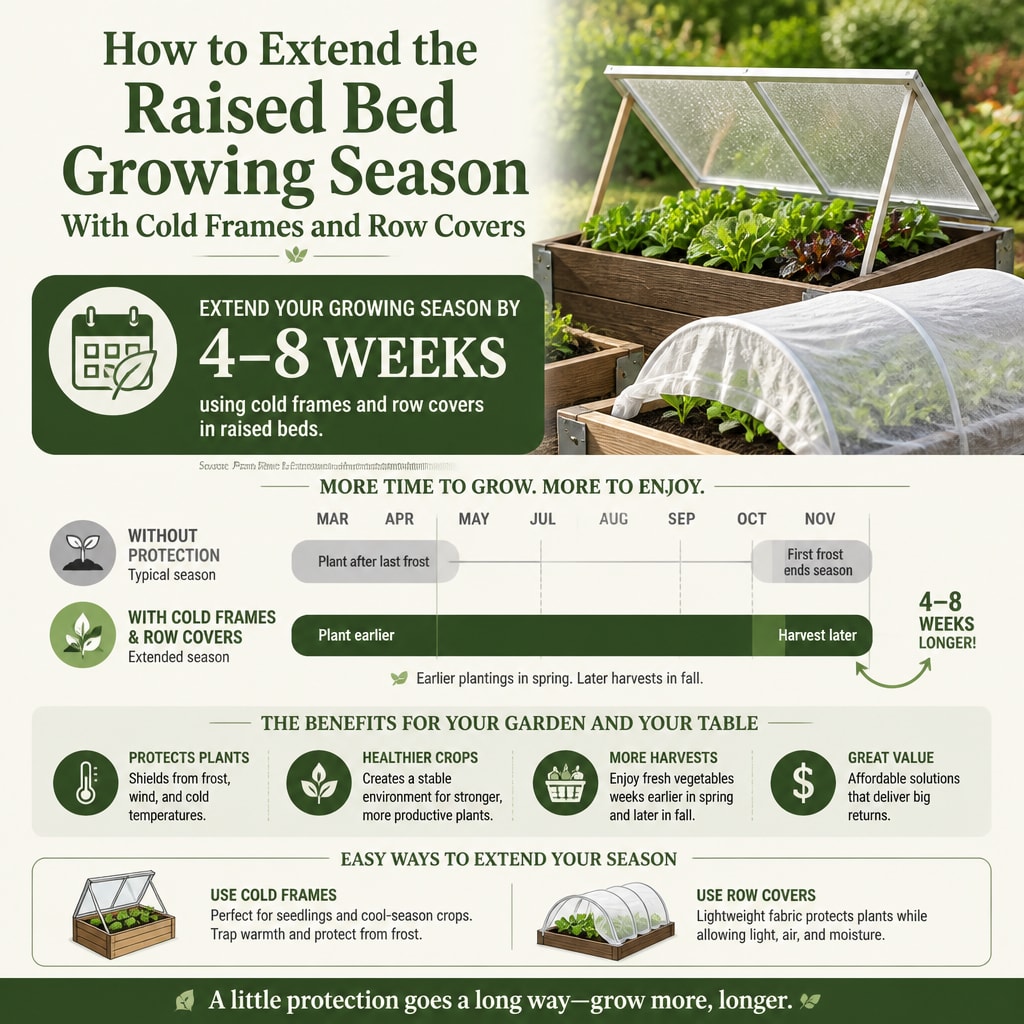
Cold weather doesn’t have to end your raised bed harvest in October. With a simple cold frame or a length of row cover, you can keep lettuce, spinach, radishes, carrots, kale, and other cool-season crops growing weeks longer. In mild areas, you may even harvest through much of winter.
The trick is matching the protection to the weather and the crop. A covered bed can stay surprisingly warm during the day, then turn into a stuffy little greenhouse by lunchtime. Without proper ventilation, temperatures inside a cold frame can rise high enough to damage or kill young plants, even when the outdoor air feels cool. Regular temperature checks and timely ventilation are essential.
So, let’s make this practical. You don’t need an elaborate setup or a large backyard. A few hoops, some garden fabric, and a watchful eye can stretch your raised bed growing season without turning gardening into a daily chore.
Start With the Right Crops and Timing
Choose vegetables that like cool weather
Cold frames and row covers work best with crops that already tolerate chilly conditions. They won’t turn a frost-sensitive tomato into a winter vegetable. That’s not how this works.
For fall and early spring, we recommend starting with leafy greens and root crops. Lettuce, spinach, arugula, mustard greens, kale, Swiss chard, radishes, scallions, and carrots are dependable choices. Peas can also perform well when protected from sharp temperature drops.
Many of these plants grow slowly as daylight fades. That’s normal. The goal isn’t always rapid growth. Sometimes the win is keeping a crop alive and harvestable until better weather returns.
Watch the calendar and the forecast
Planting dates depend on your local climate, but the first expected frost is a useful planning marker. Sow fall crops early enough that they reach a reasonable size before cold weather settles in. Tiny seedlings are more vulnerable than established plants.
For spring planting, covers can let you sow a week or two earlier than you normally would. Soil temperature still matters, though. A row cover warms the air around the plants, but it won’t magically heat cold, soggy soil.
Use our Raised Bed Gardening for Beginners: The Complete Step-by-Step Guide when you’re working out bed placement, soil depth, and planting timing. Those basics make season extension much easier later.
Build a Cold Frame That Earns Its Space
Keep the design simple
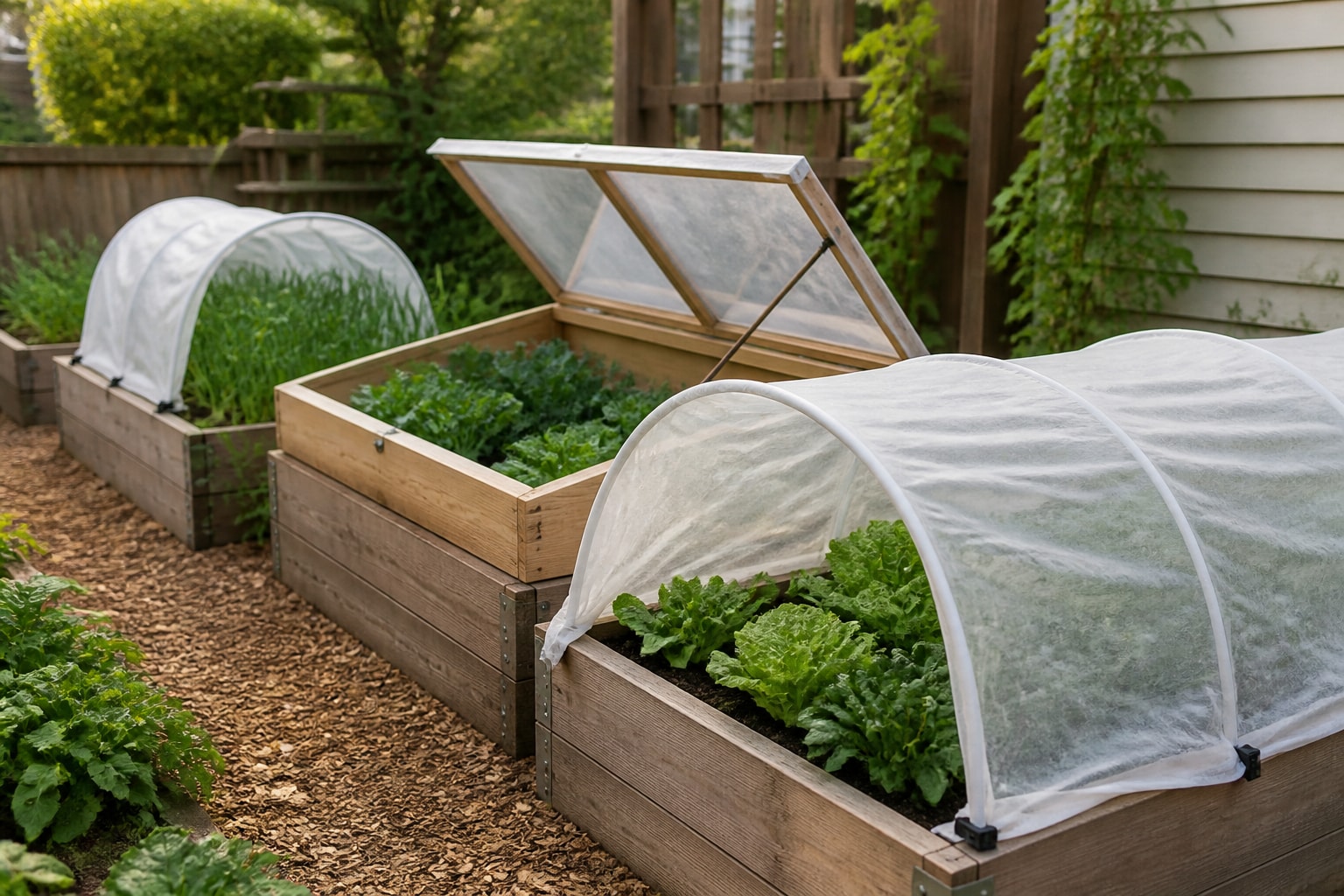
A cold frame is a low box with a transparent top. Sunlight warms the inside, and the frame shelters plants from wind and frost. You can build one from scrap lumber and an old window, buy a small kit, or make a temporary version from rigid plastic panels. If reusing an old window, check for deteriorating paint and damaged glass. Avoid materials that could introduce lead or broken glass into the garden, and consider lightweight polycarbonate panels as a safer alternative.
For a raised bed, position the frame so the sloped top faces the winter sun. In the Northern Hemisphere, that usually means facing south. Don’t obsess over perfect angles in a small backyard. A clean, sunny location matters more than a beautifully engineered box sitting in shade.
Use untreated wood, exterior screws, and a lid that opens easily. Heavy glass can be awkward, especially for older gardeners, so lightweight polycarbonate is often a nicer option. A handle helps. So does a stick or automatic vent opener to keep the lid propped open.
Vent it before the plants wilt
This is the part new gardeners miss. Cold frames can heat up quickly, even when the outdoor air feels cold. On a sunny 45-degree morning, the inside may become much warmer than you expect.
Place a simple thermometer inside the cold frame and check it regularly, especially on sunny days. Many cool-season vegetables grow best in relatively mild conditions, and temperatures inside a closed frame can rise quickly. Open the lid as needed to prevent overheating, then close it before evening temperatures fall. The amount of ventilation required depends on the crop, outdoor weather, and temperature inside the frame.
Moisture provides another clue. Condensation on the lid is common, but constantly wet leaves invite disease. Water the soil in the morning, keep foliage as dry as possible, and give the frame some air when conditions allow.
Use Row Covers for Flexible Protection
Pick the right fabric weight
Row cover is a lightweight fabric that rests over hoops or directly over plants. It lets light, air, and water pass through while reducing wind exposure and moderating temperature.
Lightweight fabric works well for insect protection and modest temperature changes. Medium-weight fabric provides more frost protection. Heavy fabric offers more warmth, but it also blocks more light and can press down on plants after rain or snow.
For most raised bed gardeners, medium-weight fabric is a useful starting point. Buy a piece wider and longer than the bed. You need enough slack for the plants to grow, plus extra fabric to anchor along the edges.
Install hoops and secure the edges
Flexible hoops made from wire, PVC, or fiberglass create a tunnel over the bed. Place them at regular intervals so the cover doesn’t sag onto the vegetables. Keep the highest point tall enough that growing plants won’t rub against the fabric.
Secure every edge with landscape staples, boards, rocks, or bags filled with sand. A loose edge is an invitation to wind. An unsecured cover can quickly blow loose during windy weather, exposing plants to cold and potentially damaging the fabric or support hoops.
Don’t let the fabric sit directly on tender foliage when frost is expected. The material can transfer cold to leaves where it touches. Hoops give the plants a little breathing room and protect the cover from tearing.
- Check the forecast each evening during cold spells.
- Anchor covers before windy weather arrives.
- Brush snow off hoops before the weight builds up.
- Water the bed before a hard freeze, but avoid soaking the foliage.
- Remove covers when flowers need pollination or daytime temperatures rise.
Make Daily Checks Part of the Routine
Look for heat, moisture, and pests
Season extension is mostly a small habit: peek under the cover. Check for wilted leaves, excess condensation, chewed foliage, and soil that feels either bone-dry or waterlogged.
Protected beds can still attract aphids, slugs, and other pests. In fact, a warm covered space may make conditions more comfortable for them. Look under leaves and along the soil surface. Remove pests early, before they multiply.
Fertilizer usually isn’t the answer when growth slows in winter. Plants naturally grow more slowly with less daylight. Extra feeding can push soft growth that suffers during the next cold snap. Healthy soil and sensible watering matter more.
Know when to uncover the bed
Remove row covers temporarily when daytime temperatures climb or when pollinators need access to flowering plants. Leave covers off long enough for the bed to dry if the weather has been damp.
Cold frames need the same attention. Open the lid during warm afternoons, then close it before evening. On overcast days, the frame may stay closed, but a quick check is still worthwhile.
We recommend keeping a simple note on your phone. Record when you covered the bed, the overnight low, and how the plants looked the next morning. After a season or two, you’ll have a local routine that’s far more useful than a generic date on a seed packet.
For help with frost damage, watering, and seasonal bed maintenance, visit Raised Bed Garden Pest Control, Seasonal Care, and Harvesting. These details often decide whether a protected crop thrives or merely survives.
FAQs for How to Extend the Raised Bed Growing Season With Cold Frames and Row Covers
Can row covers protect raised bed plants from frost?
Yes, row covers can protect many cool-season crops from light to moderate frost. The amount of protection depends on the fabric weight, how securely it’s installed, and whether the fabric is held above the foliage. They won’t protect plants from every severe freeze, especially when temperatures stay low for many hours.
During a hard freeze, additional protection may be necessary. A second layer of frost fabric supported by hoops can provide extra insulation, while a properly ventilated cold frame offers another option. Small, movable containers can be brought into a sheltered location. However, row covers cannot guarantee protection during prolonged or extreme cold. Avoid placing plastic directly against foliage, and monitor moisture and temperature beneath any protective covering.
Should row covers stay on all winter?
Not necessarily. Covers can stay in place for extended periods during cold weather, but they need regular checks. Open or remove them during warm spells, heavy rain, and periods when plants need pollination.
Plastic sheeting is different from breathable row cover. Plastic can overheat a bed and trap moisture, so it needs careful venting. For beginners, breathable fabric is usually easier to manage.
Keep Growing With a Simple Protection Plan
Cold frames and row covers don’t require a large garden, expensive equipment, or perfect timing. Start with one raised bed and a few crops you already enjoy eating. Add hoops, secure the fabric well, and check the bed most days when the weather is changing.
A cold frame gives you a sturdy, warm pocket for greens and seedlings. Row cover offers more flexibility across a larger bed. Used together, they can turn a short harvest window into a much longer one.
🌱 FREE DOWNLOAD: Your First Raised Bed Garden
A Beginner-Friendly Guide to Getting Started
Thinking about growing your own vegetables in a raised bed? Start with a simple plan that helps you avoid costly mistakes and build a garden you can enjoy for years.
Our FREE Your First Raised Bed Garden guide provides practical, beginner-friendly information to help you:
- Choose a suitable location with enough sunlight.
- Plan the size and layout of your raised garden bed.
- Understand the basics of preparing healthy garden soil.
- Select vegetables that are appropriate for beginners.
- Get started with planting, watering, and caring for your garden.
You don’t need a huge backyard, expensive equipment, or years of gardening experience to get started!
Get Your FREE Raised Bed Gardening Guide
Free PDF guide from Backyard Living Books.
📗 Ready to Grow Your Own Fresh Vegetables?
Creating a productive raised bed garden takes thoughtful planning, healthy soil, and a little know-how.
Take the guesswork out of raised bed gardening!
Raised Bed Gardening Made Easy: Plans, Soil Mixes, Planting Secrets, and Beginner-Friendly Harvests is a practical guide designed to help you:
- Plan and build raised garden beds that fit your space.
- Choose materials and prepare the right soil mix.
- Select and plant vegetables for productive harvests.
- Understand watering, fertilizing, and routine garden maintenance.
- Avoid common mistakes that can waste time and money.
Whether you’re planting your first garden or looking to improve an existing one, this book will help you garden with greater confidence.
Explore Raised Bed Gardening Made Easy
🌿 Want More FREE Raised Bed Gardening Tips?
Visit our Gardening Learning Center for helpful articles, practical advice, and beginner-friendly resources covering everything from soil preparation and vegetable planting to watering, pest prevention, and seasonal gardening.
Explore the Gardening Learning Center
Part of the Backyard Living Series: Build • Grow • Raise • Thrive.