

Plant spacing decides more than how tidy your raised bed looks. Give vegetables too much room and you waste valuable growing space. Pack them too tightly and airflow suffers, roots compete, leaves stay damp, and harvesting becomes a wrestling match. In raised beds, compact vegetables can sometimes be planted more efficiently by eliminating unnecessary walking rows. However, larger crops still need adequate space to reach their mature size, receive sunlight, and maintain healthy airflow.
We’ll show you how to choose spacing for common vegetables, adjust it for your own bed, and avoid the mistakes that leave a raised garden bed crowded by midsummer.
Why spacing matters in a raised bed
Plants need room above and below the soil
Vegetables compete for sunlight, water, nutrients, and root space. A tomato plant may begin as a small transplant, then turn into a broad leafy plant that shades everything nearby. A carrot barely takes up room above the soil, but its roots still need enough space to swell.
Spacing also affects disease pressure. Crowded foliage dries slowly after rain or watering. That creates a friendlier setting for fungal problems, especially in dense plantings of tomatoes, cucumbers, squash, and beans. Good spacing won’t prevent every issue, but it gives your plants a fighting chance.
Here’s the part that surprises many new gardeners: raised beds don’t automatically require wide rows. Because you aren’t walking through the growing area, you can plant in a grid or staggered pattern and use the space between plants more efficiently. Our Raised Bed Gardening for Beginners: The Complete Step-by-Step Guide covers the wider planning decisions, including bed layout and soil depth.
Seed packet spacing is often a starting point
Seed packets commonly show spacing for traditional rows, where you leave room to walk or cultivate between them. In a raised bed, that extra row space may not be necessary. The package directions still matter, but they aren’t carved in stone.
Smaller, fast-growing crops such as lettuce, radishes, baby beets, and green onions can sometimes be planted closer together when they’re harvested young. However, crops grown to full maturity should generally follow the recommended final plant spacing. Large plants need more respect. A zucchini plant that gets only a little room can take over a surprising amount of real estate.
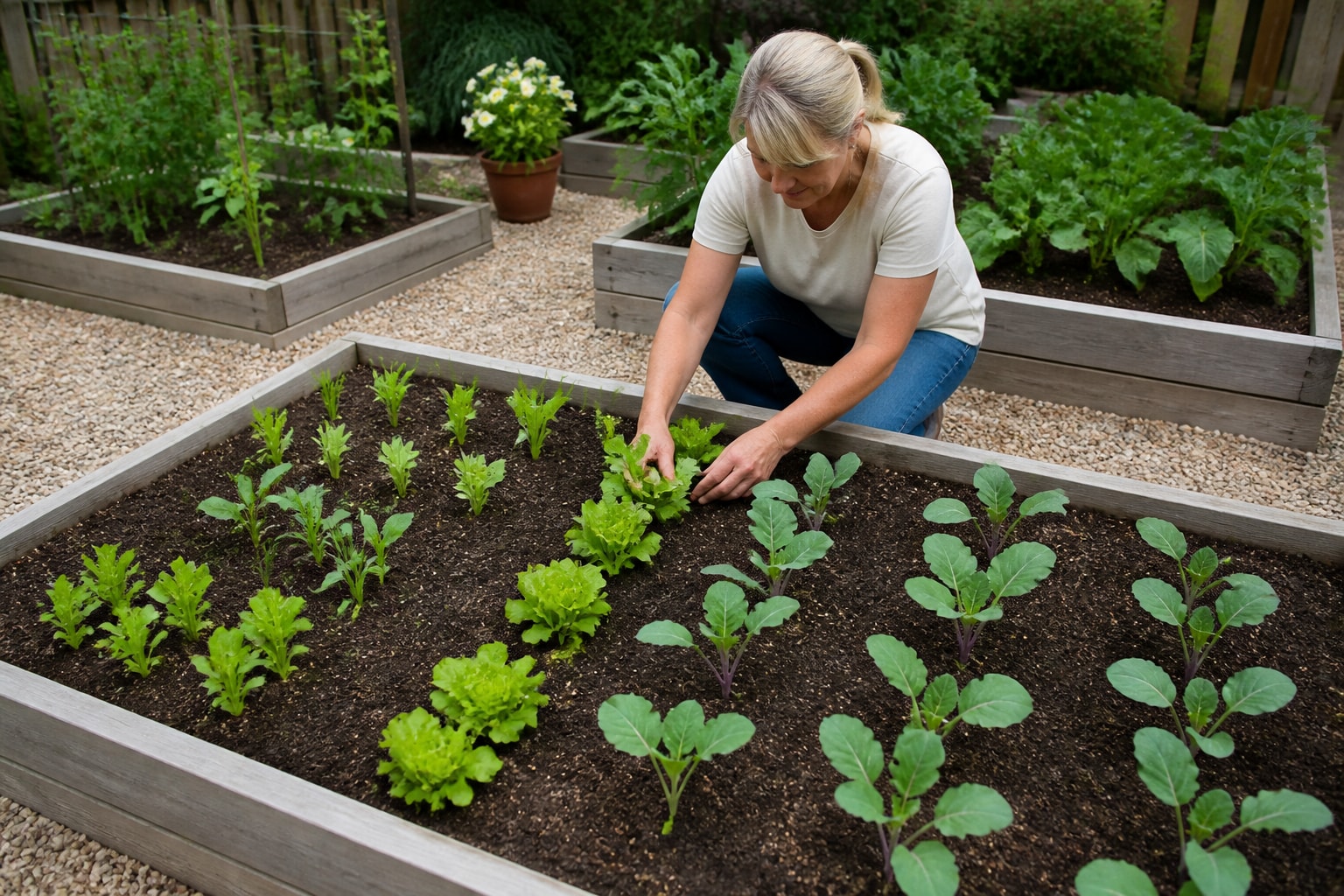
How to measure spacing before you plant
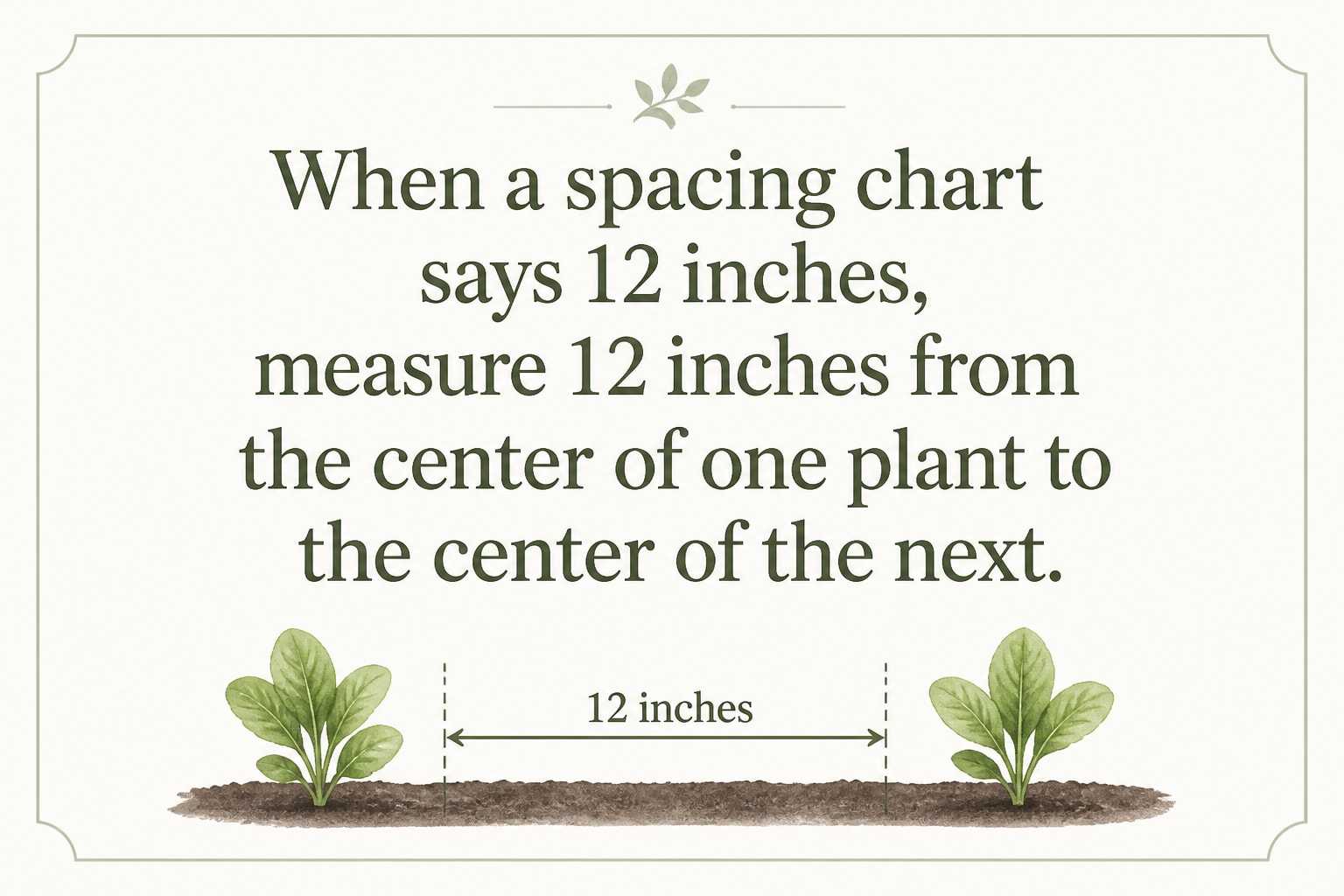
Measure from the center of each plant
When a spacing chart says 12 inches, measure 12 inches from the center of one plant to the center of the next. Don’t measure leaf edge to leaf edge. That small distinction prevents a lot of accidental crowding.
For a 4-by-8-foot bed, use a tape measure and mark the soil with a pencil, stick, or a short piece of dowel. You can also make a simple cardboard planting template with holes at 6, 9, or 12 inches. Press it onto the soil, plant through the holes, and move on. Simple tools are underrated.
Use staggered rows instead of straight lines
A staggered pattern lets plants sit diagonally between the plants in the next row. This makes better use of the available soil than lining everything up in rigid rows. It’s especially useful for lettuce, onions, beets, and other compact crops.
For example, a 4-foot-wide bed may accommodate three or four rows of compact vegetables spaced approximately 12 inches apart, depending on the distance left along the edges. Smaller crops planted 9 inches apart may fit additional rows, but always account for mature plant size, airflow, and harvesting access.
Raised bed vegetable spacing chart
Use the measurements below as practical starting points. The closer end works for small varieties, fertile soil, and frequent harvesting. Give plants more room when they’re large, disease-prone, or difficult to reach once mature.
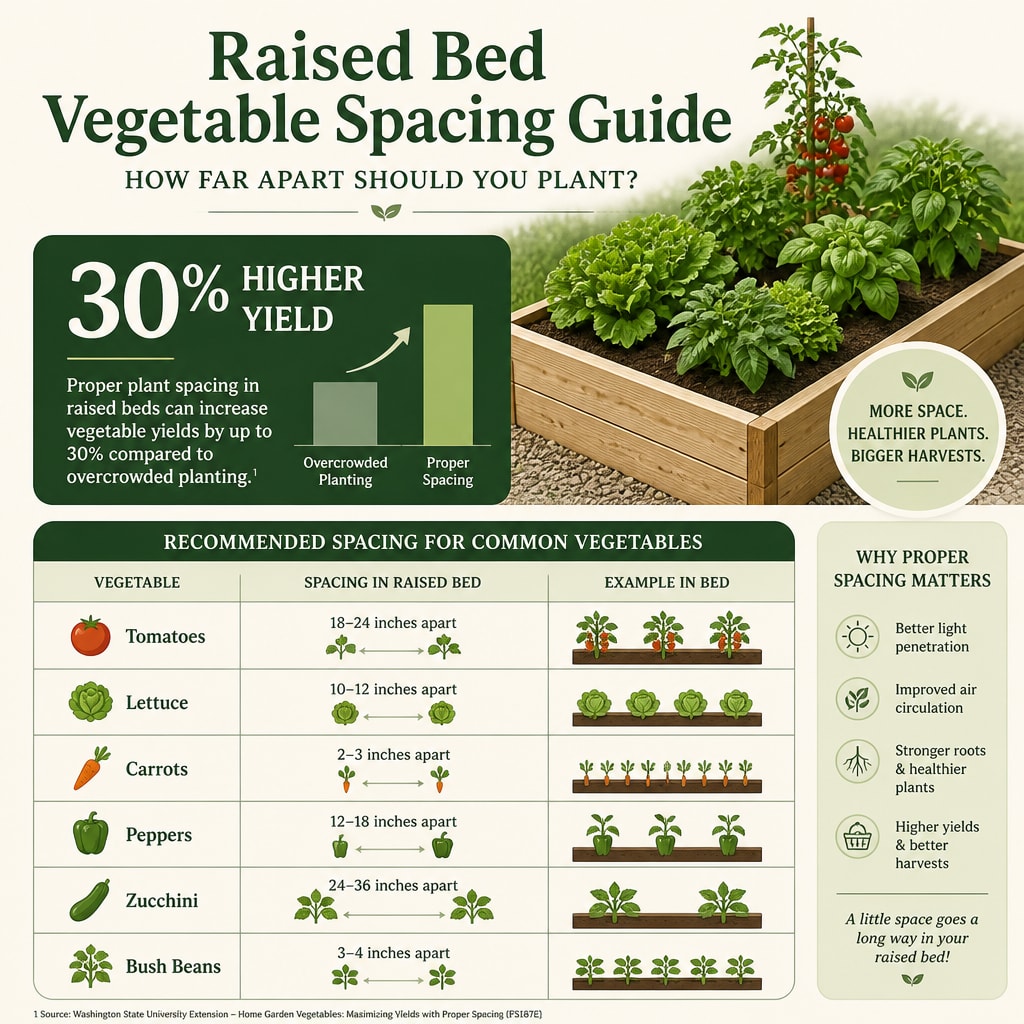
Large plants deserve special planning. A trellised cucumber can grow upward and leave the soil below available for lettuce or radishes. Bush beans stay fairly contained. Zucchini, on the other hand, sprawls. We’re not fans of squeezing three plants into a small bed just because the seedlings looked harmless in May.
For more planting help beyond spacing, see How to Plant Vegetables in Raised Garden Beds: A Beginner’s Guide. It’s useful when you’re deciding what belongs together and when to put each crop in the ground.
Common spacing mistakes that cause trouble
Planting for the seedling size
A row of tiny tomato seedlings can look lonely with 24 inches between them. Resist the urge to fill the gaps. In a few weeks, those empty spots may be covered by stems and leaves. Mature size matters more than the size of the transplant in your hand.
Forgetting access and support
You need to reach the plant to water, tie it up, inspect leaves, and harvest. This becomes obvious when a tomato is planted in the center of a wide bed and the fruit hides behind a wall of foliage. In the Northern Hemisphere, placing taller crops toward the north side of the bed can help reduce shading of shorter vegetables. Adjust the arrangement for your local sunlight conditions and surrounding structures.
Ignoring variety differences
“Tomato” covers a lot of ground. A compact patio tomato and an indeterminate heirloom aren’t remotely the same size. The same goes for bush cucumbers, compact peppers, miniature carrots, and full-size cabbage. Check the variety label and adjust the spacing rather than treating every crop as identical.
- Leave more space in humid areas or beds with poor airflow.
- Plant compact varieties closer than sprawling varieties.
- Thin direct-sown crops early, while seedlings are easy to remove.
- Use trellises for crops that naturally climb.
- Expect harvested plants to open space for a second crop.
FAQs for Raised Bed Vegetable Spacing Guide: How Far Apart Should You Plant?
Can I plant vegetables closer together in a raised bed?
Usually, yes. Raised beds let you skip walking rows, so compact crops can be planted in a grid or staggered pattern. Don’t apply that idea blindly to everything. Tomatoes, zucchini, cabbage, and large peppers still need room for air movement and harvesting. Start with the chart, then make modest adjustments based on the mature size of the variety.
What should I do when my plants are too close together?
Thin them while they’re young. It feels wasteful, but leaving every seedling in place usually produces weaker plants and smaller harvests. With lettuce, beets, and carrots, the thinnings can go into a salad. For larger transplants, move them while the root ball is still small. Some crops handle this better than others, so direct-sown root vegetables are best thinned rather than relocated.
Make your bed fit the plants
The best spacing plan is one that matches your bed size, crop varieties, sunlight, and willingness to prune or trellis. Start with the mature plant size, measure from center to center, and leave yourself enough room to reach the harvest. That simple approach prevents most spacing headaches.
🌱 FREE DOWNLOAD: Your First Raised Bed Garden
A Beginner-Friendly Guide to Getting Started
Thinking about growing your own vegetables in a raised bed? Start with a simple plan that helps you avoid costly mistakes and build a garden you can enjoy for years.
Our FREE Your First Raised Bed Garden guide provides practical, beginner-friendly information to help you:
- Choose a suitable location with enough sunlight.
- Plan the size and layout of your raised garden bed.
- Understand the basics of preparing healthy garden soil.
- Select vegetables that are appropriate for beginners.
- Get started with planting, watering, and caring for your garden.
You don’t need a huge backyard, expensive equipment, or years of gardening experience to get started!
Get Your FREE Raised Bed Gardening Guide
Free PDF guide from Backyard Living Books.
📗 Ready to Grow Your Own Fresh Vegetables?
Creating a productive raised bed garden takes thoughtful planning, healthy soil, and a little know-how.
Take the guesswork out of raised bed gardening!
Raised Bed Gardening Made Easy: Plans, Soil Mixes, Planting Secrets, and Beginner-Friendly Harvests is a practical guide designed to help you:
- Plan and build raised garden beds that fit your space.
- Choose materials and prepare the right soil mix.
- Select and plant vegetables for productive harvests.
- Understand watering, fertilizing, and routine garden maintenance.
- Avoid common mistakes that can waste time and money.
Whether you’re planting your first garden or looking to improve an existing one, this book will help you garden with greater confidence.
Explore Raised Bed Gardening Made Easy
🌿 Want More FREE Raised Bed Gardening Tips?
Visit our Gardening Learning Center for helpful articles, practical advice, and beginner-friendly resources covering everything from soil preparation and vegetable planting to watering, pest prevention, and seasonal gardening.
Explore the Gardening Learning Center
Part of the Backyard Living Series: Build • Grow • Raise • Thrive.