Backyard Learning Center
Learn practical backyard skills one project at a time through beginner-friendly articles, seasonal tips, and step-by-step guides that help you build, grow, raise, and thrive.
Koi, Goldfish, or No Fish?
Choosing the Right Fish for Your Backyard Pond
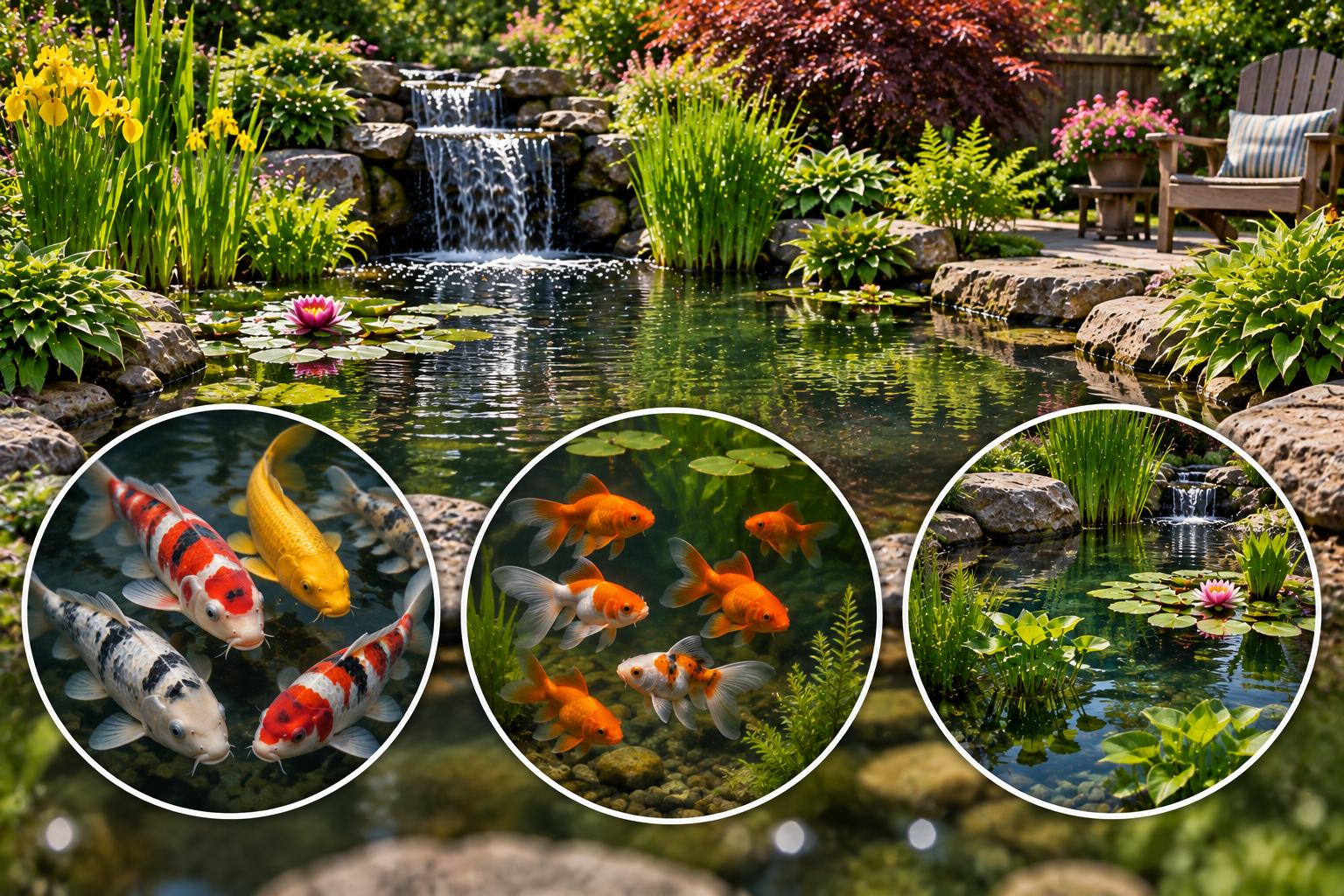
You built the pond.
The pump is running.
The plants are in.
The water is beginning to clear.
Now you’re standing beside it thinking:
This pond needs fish.
Maybe it does.
Maybe it doesn’t.
Fish can add color, movement, and personality to a backyard pond. Before long, they’ll recognize when someone approaches, gather near their favorite feeding spot, and somehow convince you they’re starving despite having eaten earlier that day.
But fish also change how a pond needs to be managed.
They produce waste. They need oxygen. They require suitable water quality, adequate space, and protection from predators.
And some fish require considerably more room than others.
So before coming home with a bag containing your newest aquatic residents, let’s compare the three main choices:
Koi, goldfish, or no fish at all.
First, Does a Backyard Pond Need Fish?
No.
A backyard pond can be beautiful without a single fish.
A fish-free pond can support aquatic plants and attract wildlife such as birds, frogs, toads, dragonflies, and other visitors.
For someone primarily interested in a water garden or wildlife pond, leaving fish out may actually be the better choice.
Fish can eat aquatic insects, eggs, larvae, and other small organisms that wildlife ponds are intended to support.
So don’t add fish simply because you assume a pond is supposed to have them.
Decide what you want from the pond first.
Koi: The Stars of the Pond
Koi are probably the fish most closely associated with elaborate backyard ponds.
And there’s a reason.
They’re beautiful.
Koi come in striking combinations of white, orange, red, yellow, black, and other colors and patterns.
They can also become surprisingly interactive.
Koi quickly learn where food comes from and may swim directly toward you when you approach.
Eventually you’ll start recognizing individual fish.
Then you’ll name them.
At that point, it’s over.
You have aquatic pets.
Koi Get Big
This is the most important thing beginners need to understand.
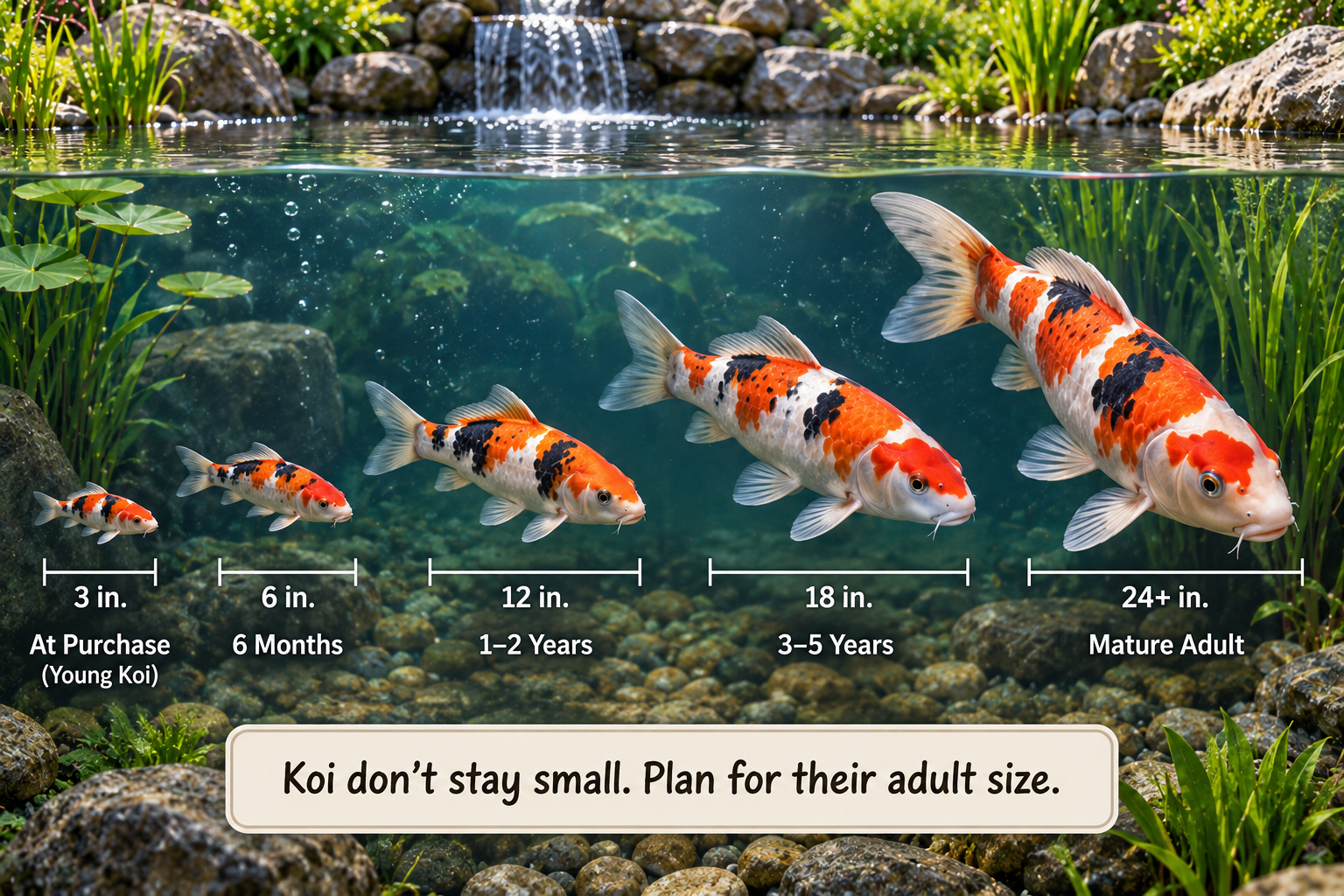
Those little koi at the pond store don’t remain little.
Healthy koi can grow well beyond a foot long, with some reaching two feet or more depending on genetics, environment, nutrition, and care.
That means koi need considerably more room than many beginners expect.
A small decorative pond may look enormous when you’re holding a three-inch fish.
It looks considerably different when that fish becomes the size of your forearm.
Build a koi pond for the adult fish, not the fish you’re bringing home today.
Koi Need Serious Filtration
Large fish produce large amounts of waste.
That waste must be processed by the pond’s filtration system.
A koi pond generally needs strong mechanical and biological filtration, adequate circulation, and good oxygenation.
Mechanical filtration helps remove solid debris.
Biological filtration supports beneficial bacteria that process harmful fish waste.
Aeration helps maintain adequate dissolved oxygen.
All three become increasingly important as fish size and population increase.
Koi aren’t necessarily difficult to keep when the pond is properly designed.
But they’re not fish you should casually add to an undersized decorative pond.
Koi Can Be Hard on Plants
If your dream pond is filled with carefully arranged aquatic plants, koi may occasionally have their own decorating ideas.
They may investigate plant containers, disturb soil or gravel, nibble vegetation, and uproot certain plants.
You can keep plants with koi, but you may need to protect them or design planting areas with the fish in mind.
Koi have never read your landscaping plan.
Goldfish: The Beginner-Friendly Choice

For many backyard pond owners, goldfish are an excellent alternative.
They’re attractive, active, hardy when kept under appropriate conditions, and generally remain much smaller than koi.
That makes them better suited to many typical backyard ponds.
But we’re not necessarily talking about the tiny fancy goldfish you may have seen in indoor aquariums.
Several types of goldfish are commonly kept outdoors.
Common Goldfish
Common goldfish have the familiar streamlined body shape and come in colors including orange, red, yellow, white, and combinations of these.
They’re active swimmers and can grow considerably larger than the little fish sold in stores.
They still require appropriate pond space and filtration.
“Goldfish” doesn’t mean “stays two inches long.”
Comet Goldfish
Comets are similar to common goldfish but typically have longer, more flowing tails.
They’re active and colorful and can make excellent pond fish.
Their streamlined bodies make them strong swimmers.
For a beginner who wants attractive fish without committing to the size requirements of koi, comets are worth considering.
Shubunkins
Shubunkins are another popular pond goldfish.
They often display combinations of blue, orange, red, black, and white.
Every fish can look different.
They have the hardy, active characteristics of other single-tailed goldfish but bring a little more visual variety to the pond.
If you like colorful fish but don’t have room for koi, shubunkins can provide plenty to look at.
What About Fancy Goldfish?
Fancy goldfish include varieties with rounded bodies, elaborate fins, unusual head growth, or other specialized characteristics.
They’re beautiful, but many aren’t as well suited to typical outdoor pond conditions as streamlined common goldfish, comets, and shubunkins.
Some swim more slowly and may have greater difficulty competing for food or avoiding predators.
If you want fancy goldfish outdoors, research the particular variety and make sure your pond conditions are appropriate.
Don’t assume every goldfish has the same requirements.
Goldfish Still Need Proper Care
Goldfish may be easier to accommodate than koi, but they’re not maintenance-free decorations.
They still need:
Adequate water volume
Good water quality
Appropriate filtration
Oxygen
Suitable temperatures
Proper nutrition
Predator protection
And goldfish produce waste too.
A heavily stocked goldfish pond can develop the same kinds of water-quality problems as any other overstocked fish pond.
The solution isn’t buying a bigger filter every time you buy another fish.
Sometimes the correct number of additional fish is zero.
Don't Overstock the Pond

This is one of the easiest mistakes to make.
You visit the pond store intending to buy three fish.
Then you see another one with beautiful markings.
Then there’s the little white one.
And that orange one is clearly looking directly at you.
You return home with nine.
Fish populations should be based on the pond’s actual water volume, filtration, oxygen levels, species, and expected adult size.
Stock conservatively.
You can always add fish later after the pond has matured and you’re confident the system can support them.
Removing twenty fish from an overloaded pond is considerably less entertaining.
Fish Need Oxygen
Fish consume oxygen.
So do beneficial bacteria.
And decomposing organic material consumes oxygen as well.
Warm water generally holds less dissolved oxygen than cooler water, which can make hot weather especially challenging.
Waterfalls, fountains, and dedicated aeration systems can help increase gas exchange and circulation.
If you keep a substantial fish population, particularly koi, adequate aeration deserves serious attention.
Watch fish behavior too.
Fish gathering at the surface and appearing to gasp can indicate an oxygen problem or other water-quality issue that requires immediate attention.
Fish Need Healthy Water
Clear water isn’t automatically healthy water.
A pond can look beautiful while containing unsafe levels of ammonia or nitrite.
That’s why fish pond owners should understand basic water testing.
Important parameters can include:
Ammonia
Nitrite
Nitrate
pH
Temperature
Other measurements may also be useful depending on the pond and water source.
A new pond needs time for biological filtration to establish.
Add fish gradually rather than stocking the entire pond immediately.
You’re not simply filling a pond with fish.
You’re building an aquatic system capable of supporting them.
Don't Forget Predators
Once you add fish, you may attract animals interested in eating them.
Herons, raccoons, and other predators can discover backyard ponds surprisingly quickly.
Provide fish with places to retreat and consider predator protection when designing the pond.
Adequate depth can help in some situations.
Caves, overhangs, and other appropriate shelters may provide additional protection.
Netting or deterrents may also be useful depending on the predator.
The goal is to make the pond less attractive as an all-you-can-catch seafood restaurant.

What Happens During Winter?
Winter care depends heavily on your climate, pond depth, fish species, and local conditions.
In colder regions, properly designed ponds may allow hardy pond fish to remain outdoors through winter.
But the pond needs appropriate depth and management.
If ice forms, maintaining proper gas exchange becomes important.
Never assume that because koi or goldfish are considered hardy, they’ll survive any outdoor pond under any conditions.
Plan winter care before winter arrives.
That’s much easier than developing a fish-care strategy while standing beside a frozen pond in January.
When No Fish May Be the Best Choice
There are several good reasons to skip fish entirely.
Maybe you want a wildlife pond.
Maybe aquatic plants are your main interest.
Maybe you travel frequently.
Maybe you don’t want additional filtration requirements.
Maybe you want fewer feeding and water-quality responsibilities.
Or perhaps you simply enjoy the water itself.
A fish-free pond can still contain:
Water lilies.
Marginal plants.
Waterfalls.
Fountains.
Beautiful stonework.
Dragonflies.
Frogs.
Visiting birds.
You may actually see more small aquatic wildlife without fish hunting among it.
No fish isn’t an unfinished pond.
It’s simply a different kind of pond.

Which Should a Beginner Choose?
If this is your first pond and you want fish, common goldfish, comets, or shubunkins can be a practical place to start, provided the pond is properly designed for them.
They give you the enjoyment of keeping fish without the same adult size and equipment demands associated with koi.
If your heart is set on koi, that’s fine too.
Just build a proper koi pond from the beginning.
Don’t build a small decorative pond and try to turn it into a koi pond afterward.
And if you’re most interested in frogs, dragonflies, water lilies, birds, and aquatic plants, consider leaving fish out altogether.
Choose the Pond Before You Choose the Fish
This is the simplest rule.
Don’t stand at the fish store and decide what your pond can handle based on what looks good swimming in the display tank.
Decide what kind of pond you want.
Determine its water volume.
Install appropriate circulation and filtration.
Allow the biological system to begin establishing.
Then choose fish suited to that environment.
Koi can be spectacular.
Goldfish can be colorful and entertaining.
And a pond without fish can become an incredible little wildlife habitat.
All three can be the right choice.
The trick isn’t finding the best fish. It’s choosing the best residents for the pond you’ve actually built. 🐟🪷💦
Ready to Create Your Own Backyard Oasis?
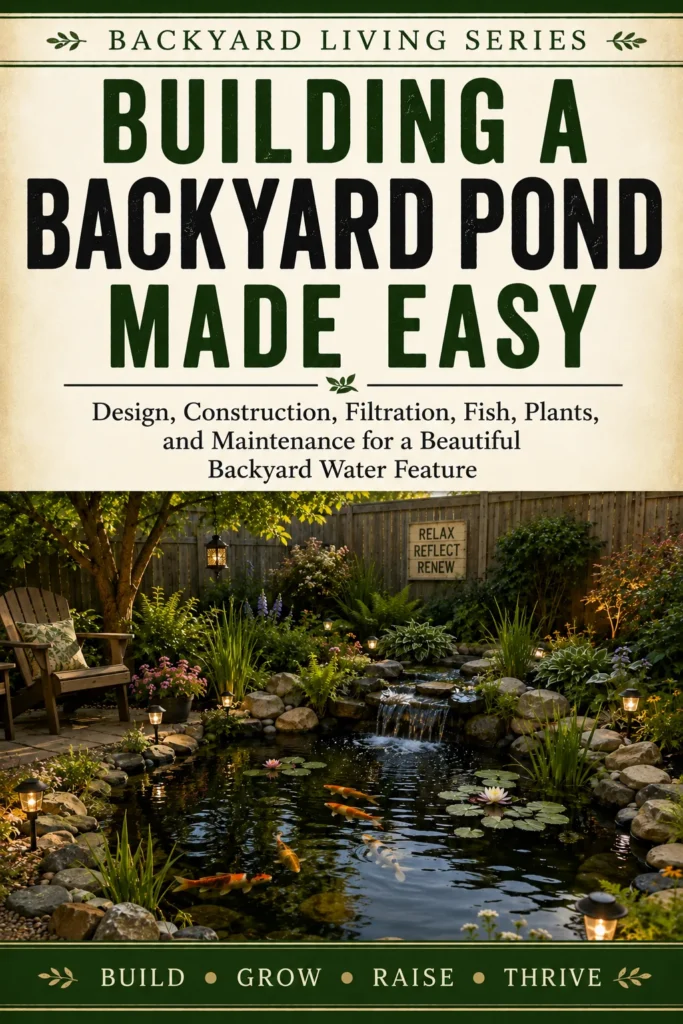
Building a Backyard Pond Made Easy expands on each of these topics with clear, step-by-step guidance designed specifically for beginners. From choosing the right location and planning your pond to selecting liners, pumps, filters, plants, and fish, the book walks you through the entire process. You’ll also learn how to keep your water clear, prevent common problems, maintain your pond through the seasons, and create a beautiful backyard feature you can enjoy for years to come. 🌿💧
More Backyard Pond Articles
If you found this article helpful, these beginner guides are a great next step:
Get Your FREE Backyard Starter Toolkit
Download our free Backyard Starter Toolkit, packed with printable planners, checklists, and beginner resources to help you build, grow, raise, and thrive.
About the Author
Steve McChesney is the founder of Backyard Living Books and has spent decades helping homeowners build, grow, raise, and preserve more from their own backyards. Through practical, beginner-friendly guides, he encourages people to tackle one backyard project at a time and enjoy the satisfaction that comes with learning new skills.