Backyard Learning Center
Learn practical backyard skills one project at a time through beginner-friendly articles, seasonal tips, and step-by-step guides that help you build, grow, raise, and thrive.
How Big Should a Backyard Pond Be
A Simple Beginner’s Guide
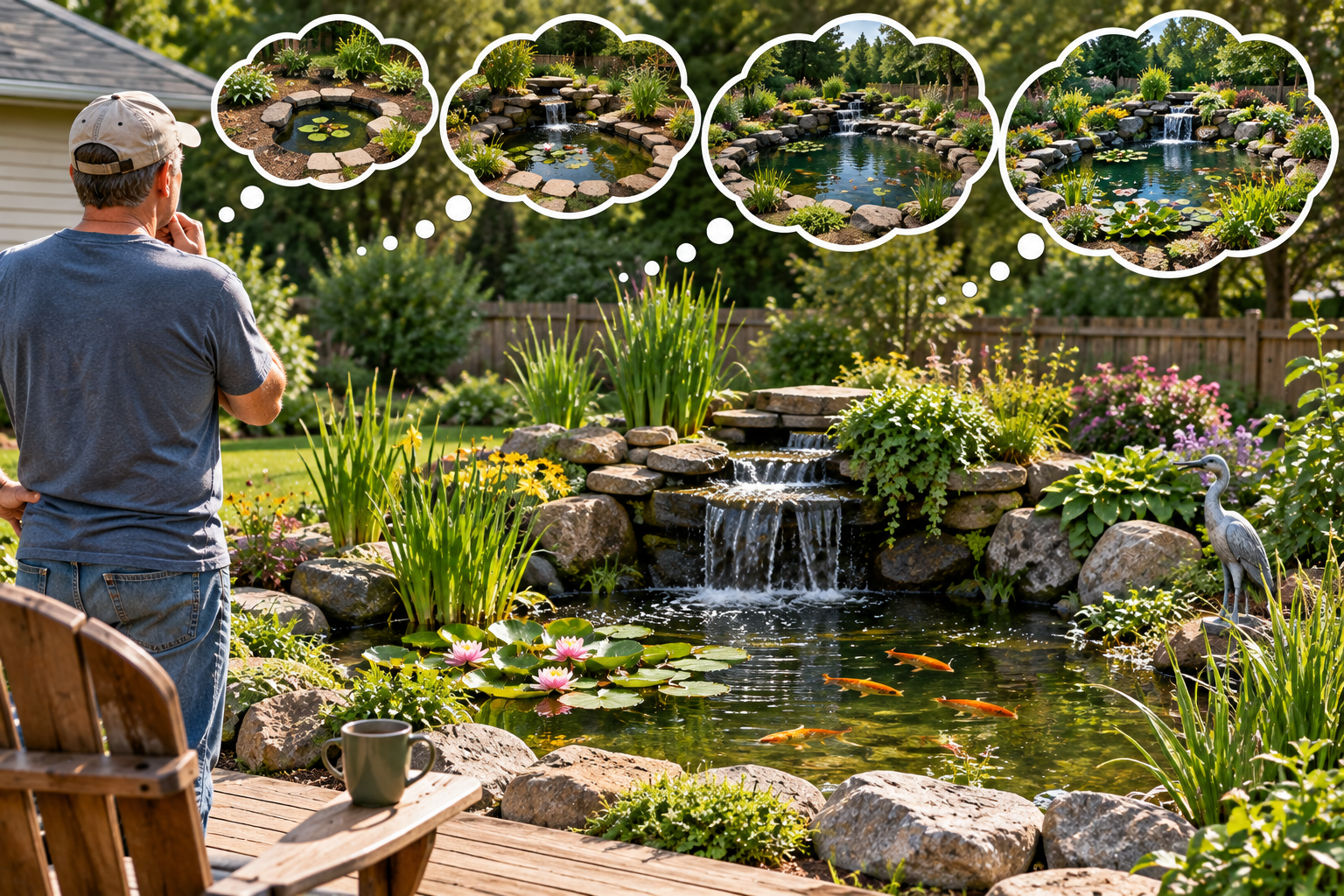
You’ve picked the perfect spot for your pond.
Now comes another important decision:
How big should you make it?
At first, the answer seems obvious.
Make it small.
A small pond means less digging, less liner, fewer rocks, less water, and a smaller dent in the weekend.
But there’s a catch.
Beginners often wish they’d built their pond a little larger.
Once you add plant shelves, rocks, aquatic plants, a pump, perhaps a waterfall, and maybe some fish, that generous-looking hole in the lawn can become surprisingly small.
The right size isn’t determined by a magic number.
It depends on what you want the pond to do.
Start With the Purpose of the Pond
Before measuring anything, decide what kind of pond you’re building.
Are you creating a:
Small decorative pond?
Wildlife pond?
Water garden?
Fish pond?
Koi pond?
Each has different space requirements.
A little pond designed for water lilies and a fountain doesn’t need the same dimensions as a pond intended for adult koi.
Build for the pond you ultimately want, not merely the pond that’s easiest to dig.
A Small Decorative Pond
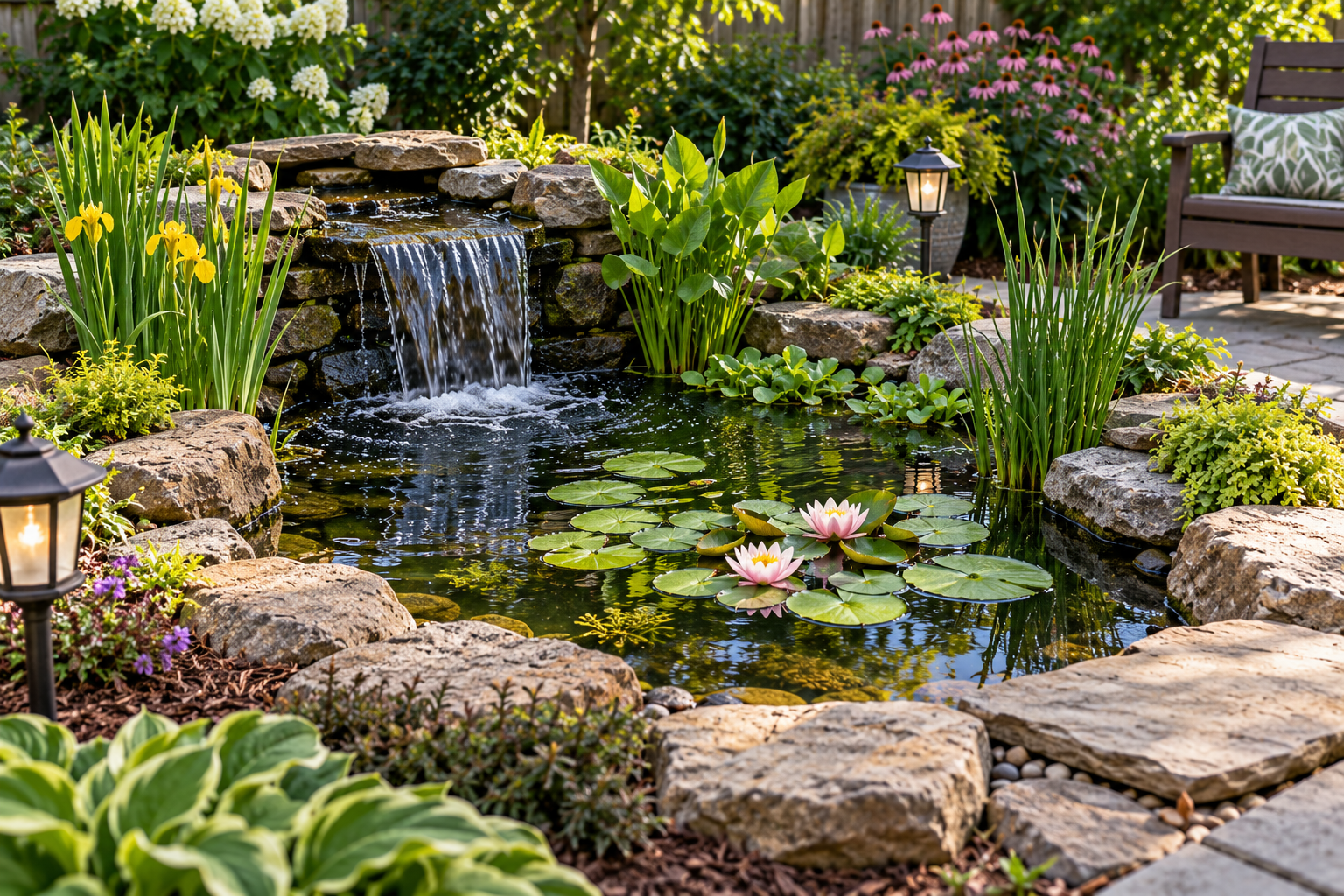
If you mainly want an attractive water feature with aquatic plants and perhaps a fountain or small waterfall, you can keep things fairly compact.
A pond measuring roughly 4 × 6 feet or 5 × 7 feet can create a noticeable backyard feature without occupying a large amount of space.
That’s enough room to experiment with plants, rocks, moving water, and landscaping.
It can be an excellent beginner project.
Just remember that rocks and plant shelves reduce the amount of visible open water.
A 4 × 6-foot outline won’t give you 24 square feet of unobstructed water once everything is installed.
A Medium Backyard Pond
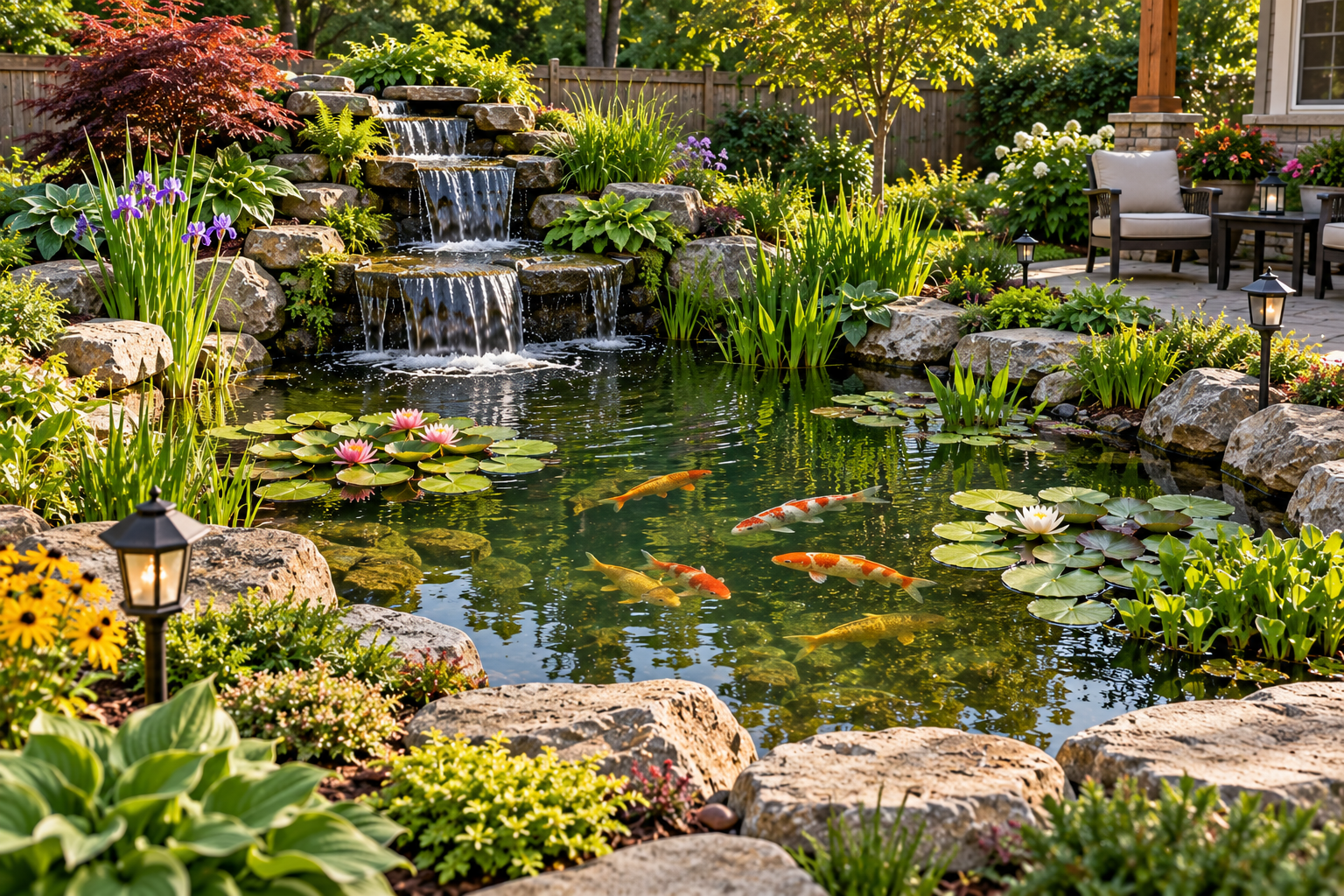
If you have the space, something in the neighborhood of 6 × 8 feet to 8 × 10 feet gives you considerably more design freedom.
You can create broader plant shelves.
You have more room for aquatic plants.
A waterfall can be better proportioned to the pond.
You may also have greater flexibility if you want appropriate pond fish.
For many backyards, this size can create a substantial water feature without dominating the property.
It looks like a pond rather than a large birdbath that got ambitious.
A Larger Pond
Once you move beyond roughly 8 × 10 feet, you’re entering a more substantial project.
That means more excavation, liner, underlayment, rock, water, plumbing, and potentially larger pumps and filtration equipment.
But larger ponds also give you more opportunities.
You can create deeper areas, broader planting zones, larger waterfalls, and more extensive landscaping.
If fish are a major part of your plans, additional water volume can also provide a more stable aquatic environment when the pond is properly designed and maintained.
Of course, larger ponds also cost more.
There’s a considerable difference between buying rocks for a 5 × 7-foot pond and discovering that a truck will apparently be arriving with your rocks.
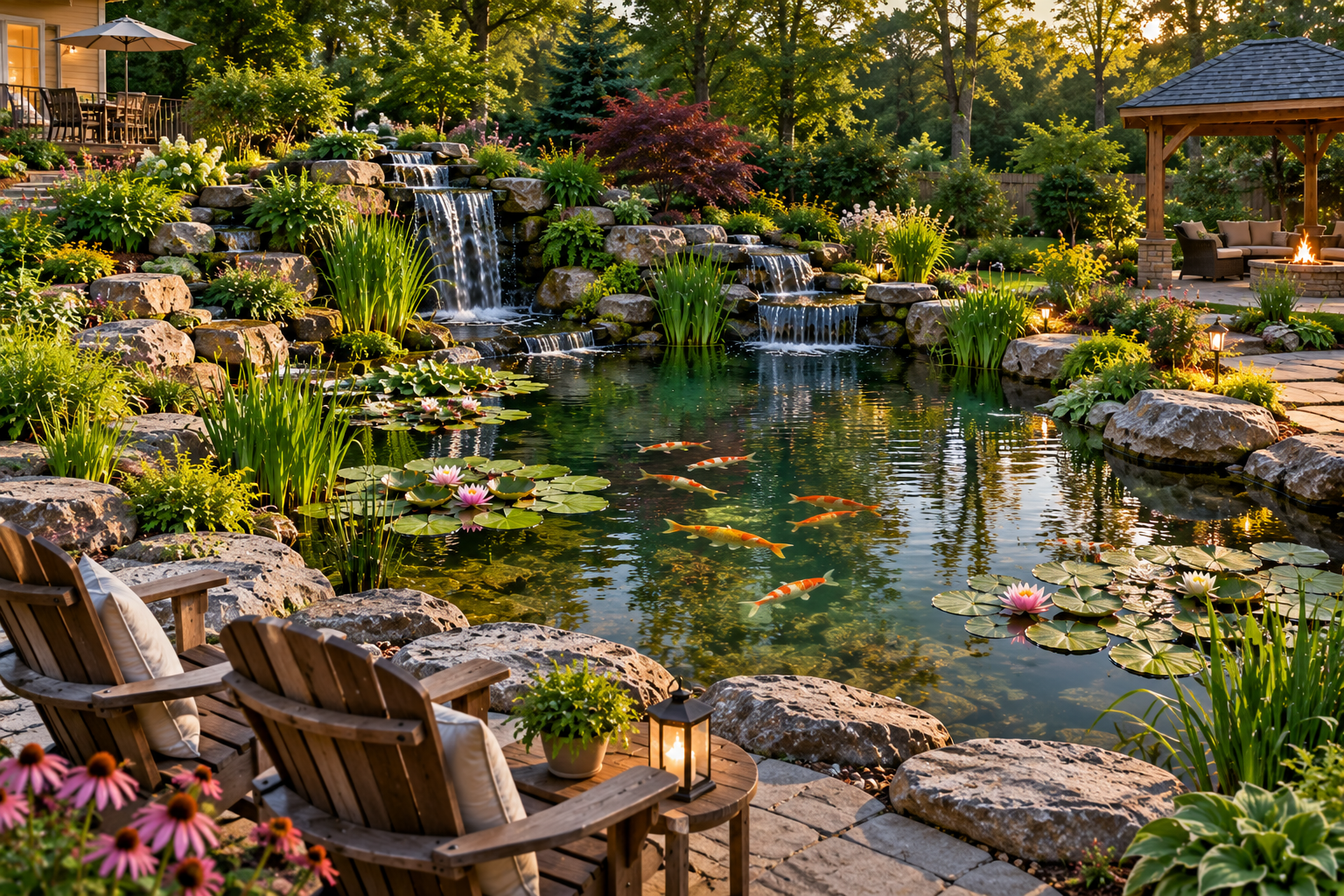
How Deep Should the Pond Be?
Surface dimensions are only part of the equation.
Depth matters too.
A decorative water garden may not need the depth required by a serious fish pond.
If you’re keeping fish, depth can help provide protection from predators and moderate water-temperature changes.
Climate matters as well.
In areas with freezing winters, fish ponds may need adequate depth and proper winter management so fish can remain safely outdoors.
Koi require particularly careful planning because they’re large fish with substantial space and water-quality requirements.
Don’t choose depth simply because you saw someone else’s pond online.
Choose it according to your pond type, climate, plants, and fish.
Don’t Forget Plant Shelves
If aquatic plants are part of your plan, you may want shelves at different depths.
These shelves provide places for containers holding marginal plants and other aquatic vegetation.
But shelves take up space.
Imagine an 8-foot-wide pond with shelves around portions of its perimeter.
The deepest central section will be considerably narrower than eight feet.
That’s another reason small ponds can become smaller than expected after construction.
Plan the underwater shape at the same time you plan the outer dimensions.
Fish Change the Equation
If you want fish, don’t base pond size only on how the pond looks in the landscape.
You’re creating an aquatic habitat.
Fish need adequate water volume, oxygen, circulation, filtration, and swimming space.
And fish grow.
Those cute little fish from the pond store may not remain cute little fish.
This is especially important with koi.
Koi can become large and produce substantial amounts of waste.
A koi pond should be designed specifically around koi from the beginning.
Don’t build a tiny decorative pond and assume you’ll simply add several koi later.
The fish haven’t agreed to that housing arrangement.
More Fish Means More Filtration
Pond size and fish population work together.
The more fish you keep, the more waste enters the water.
That waste must be handled through appropriate biological and mechanical processes.
A lightly stocked pond is generally easier for a beginner to manage than a heavily stocked one.
If fish are important to you, think about the entire system:
Pond volume
Fish size
Number of fish
Pump capacity
Filtration
Aeration
Water quality
Don’t choose each part separately.
They need to work together.
Bigger Water Volumes Can Be More Stable
It may seem strange, but an extremely tiny pond isn’t always easier to manage.
Small volumes of water can heat and cool quickly.
Water quality can also change faster.
Evaporation has a greater effect.
A larger pond contains more water, which can provide greater stability when the pond is properly designed.
That doesn’t mean everyone should build a huge pond.
It simply means:
Smaller isn’t automatically easier.
But Bigger Isn’t Automatically Better Either
There’s another side to this.
Every additional foot adds work and expense.
More dirt must be removed.
More liner is required.
More stone may be needed.
The pump may need greater capacity.
The filter may need to handle more water.
The waterfall may require more plumbing.
And somebody has to maintain all of it.
Usually, that somebody is the person currently reading articles about building ponds.
Build something large enough to accomplish your goals but small enough that you’re comfortable maintaining it.
How Much Water Will Your Pond Hold?
Knowing approximate pond volume is important when choosing pumps, filtration, water treatments, and other equipment.
For a roughly rectangular pond, a simple estimate is:
Length × Width × Average Depth × 7.48 = Approximate Gallons
For example, suppose your pond is:
8 feet long
6 feet wide
2 feet average depth
The calculation would be:
8 × 6 × 2 × 7.48 = about 718 gallons
Irregular pond shapes make this less exact, but the calculation gives you a useful estimate.
Remember to use average depth, not simply the deepest point.
Plant shelves and irregular curves reduce actual water volume.
Use a Garden Hose Before Making the Decision

This is one of the simplest pond-planning tricks.
Take a garden hose and outline the proposed pond directly on the lawn.
Make it 5 × 7 feet.
Stand back.
Look at it.
Then enlarge it.
Walk around it.
Look from the patio.
Look through the kitchen window.
Imagine rocks around the perimeter.
Imagine plants.
Imagine the waterfall.
You’ll quickly get a much better understanding of how the pond will fit into the property.
Measurements on paper are useful.
A garden hose lying across your lawn is considerably more persuasive.
Leave Room Around the Pond
Don’t use every available inch for water.
You’ll need access around at least part of the pond for maintenance.
Think about where you’ll:
Clean the filter.
Reach the pump.
Trim plants.
Remove debris.
Feed fish.
Use a pond net.
Work on the waterfall.
You may also want landscaping, seating, stepping stones, or pathways nearby.
A pond that technically fits between the fence and patio may still be too large if you have to stand in the pond to maintain it.
Make the Waterfall Fit the Pond
Waterfalls need to be proportional.
A massive waterfall pouring into a tiny pond can look out of place and create unnecessary splashing and water loss.
A small pond may need only a modest cascade.
A larger pond can support a broader waterfall or stream.
Think about the entire scene rather than designing the waterfall and pond separately.
They should look as though they belong together.

Don't Forget the Dirt
This catches beginners by surprise.
Digging a pond creates an impressive amount of soil.
Even a modest excavation can leave you staring at a pile much larger than expected.
Before digging, decide where that soil will go.
You might use some to create:
- A raised waterfall area
- Landscaping berms
- Raised planting areas
- Low spots that need filling
If you don’t have a use for it, you may need to arrange removal.
The dirt doesn’t disappear simply because the pond has taken its former address.
A Simple Beginner Size Guide
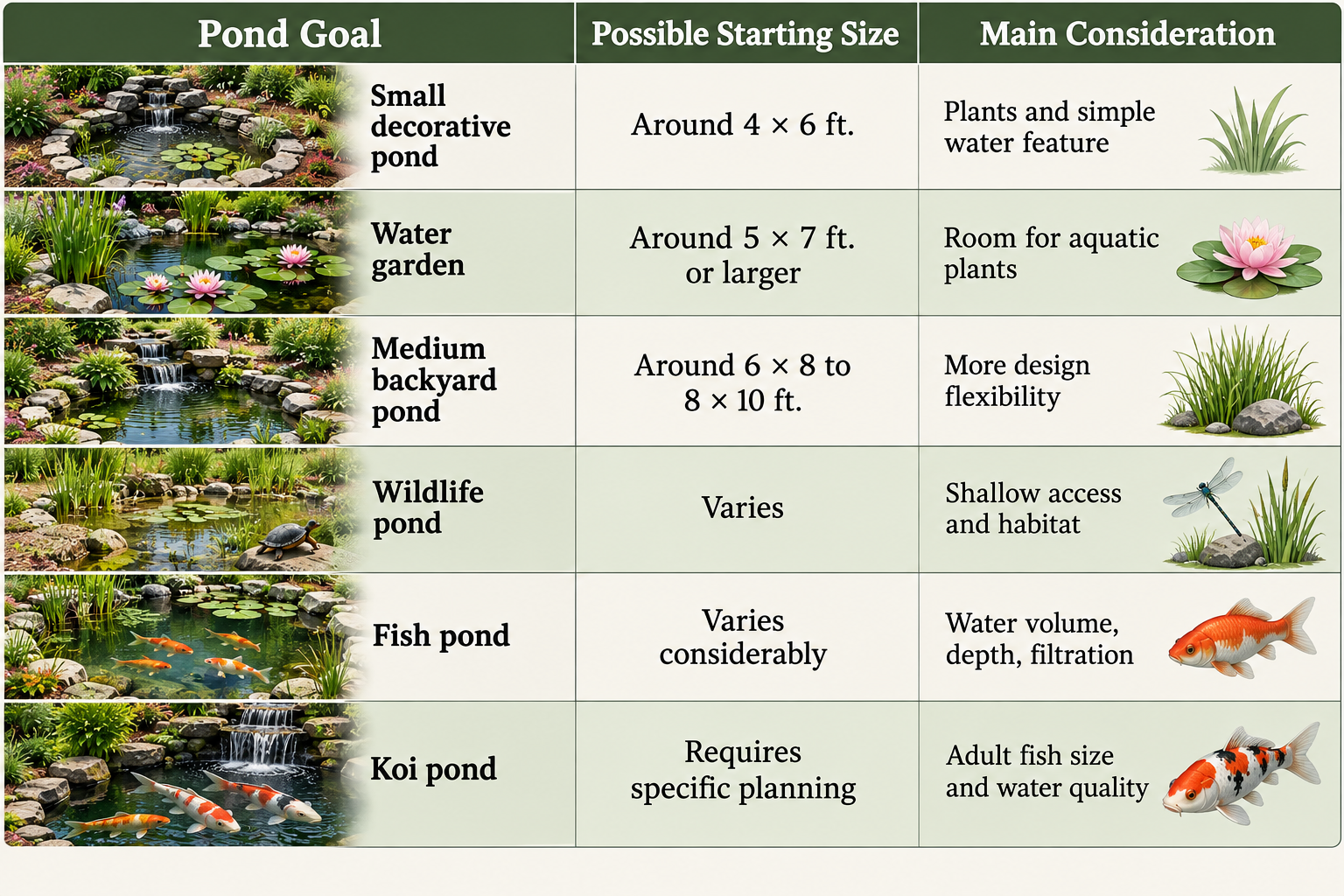
These are planning examples, not rigid requirements.
Your climate, property, pond design, local regulations, fish, and plants should determine the final dimensions.
The Beginner Mistake to Avoid
Don’t build the smallest pond possible simply because you’re nervous about the project.
Stand inside your garden-hose outline.
Imagine shelves along the edges.
Imagine rocks covering portions of the liner.
Imagine plants spreading across some of the surface.
Now look at how much open water remains.
If it suddenly seems smaller than you expected, enlarge the outline before digging.
Changing the size now takes thirty seconds.
Changing it after you’ve installed the liner, rocks, pump, plants, and 700 gallons of water is a somewhat larger Saturday project.
Build for What You Want to Enjoy
There’s no perfect backyard pond size.
A 5 × 7-foot water garden may be exactly right for one property.
Another backyard may easily accommodate an 8 × 12-foot pond with fish and a waterfall.
And someone with a tiny patio may be happiest with a container pond.
Start with your purpose.
Consider your available space.
Plan for plants and fish.
Think about maintenance.
Calculate approximate water volume.
Then outline the pond on the ground and live with that shape for a day or two before digging.
Your pond doesn’t need to be enormous.
It just needs to be large enough to become the pond you’re picturing.
And if you’re standing over the outline wondering whether you should make it just a little bigger, you probably already know the answer. 🪷🐸💦
Ready to Create Your Own Backyard Oasis?
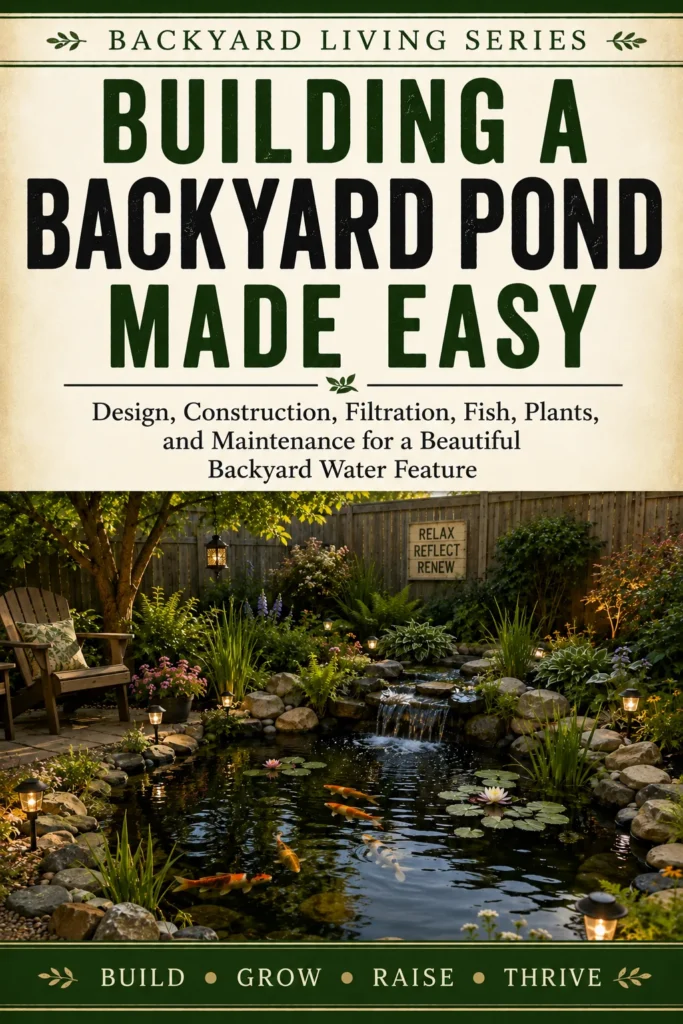
Building a Backyard Pond Made Easy expands on each of these topics with clear, step-by-step guidance designed specifically for beginners. From choosing the right location and planning your pond to selecting liners, pumps, filters, plants, and fish, the book walks you through the entire process. You’ll also learn how to keep your water clear, prevent common problems, maintain your pond through the seasons, and create a beautiful backyard feature you can enjoy for years to come. 🌿💧
More Backyard Pond Articles
If you found this article helpful, these beginner guides are a great next step:
Get Your FREE Backyard Starter Toolkit
Download our free Backyard Starter Toolkit, packed with printable planners, checklists, and beginner resources to help you build, grow, raise, and thrive.
About the Author
Steve McChesney is the founder of Backyard Living Books and has spent decades helping homeowners build, grow, raise, and preserve more from their own backyards. Through practical, beginner-friendly guides, he encourages people to tackle one backyard project at a time and enjoy the satisfaction that comes with learning new skills.