
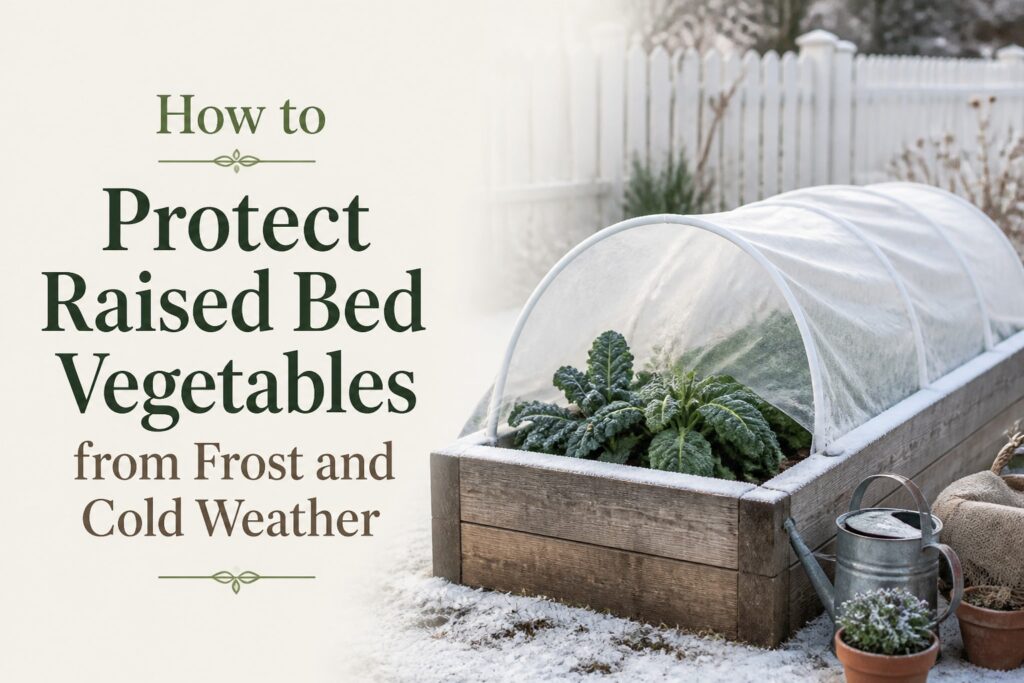
Frost can ruin a raised bed overnight, but protecting your vegetables usually takes less work than people expect. A few minutes spent watching the forecast, watering at the right time, and covering tender plants can make the difference between a healthy harvest and blackened leaves by breakfast.
Raised beds can warm more quickly than surrounding garden soil in spring, particularly when they’re exposed to direct sunlight. However, shallow or exposed beds may also experience greater temperature fluctuations during cold weather. Soil depth, moisture, and the materials used to build the bed all influence how much warmth is retained overnight. That trade-off matters during a late cold snap. Our job is to hold onto the heat already in the soil and keep freezing air from settling directly on the plants.
Know what kind of cold your garden is facing
Frost is different from a hard freeze
A light frost usually forms when air temperatures dip to around 32°F (0°C), especially on clear, calm nights. The air near the soil surface can be colder than the temperature reported by your weather app, so your raised bed may frost even when the forecast says 34°F.
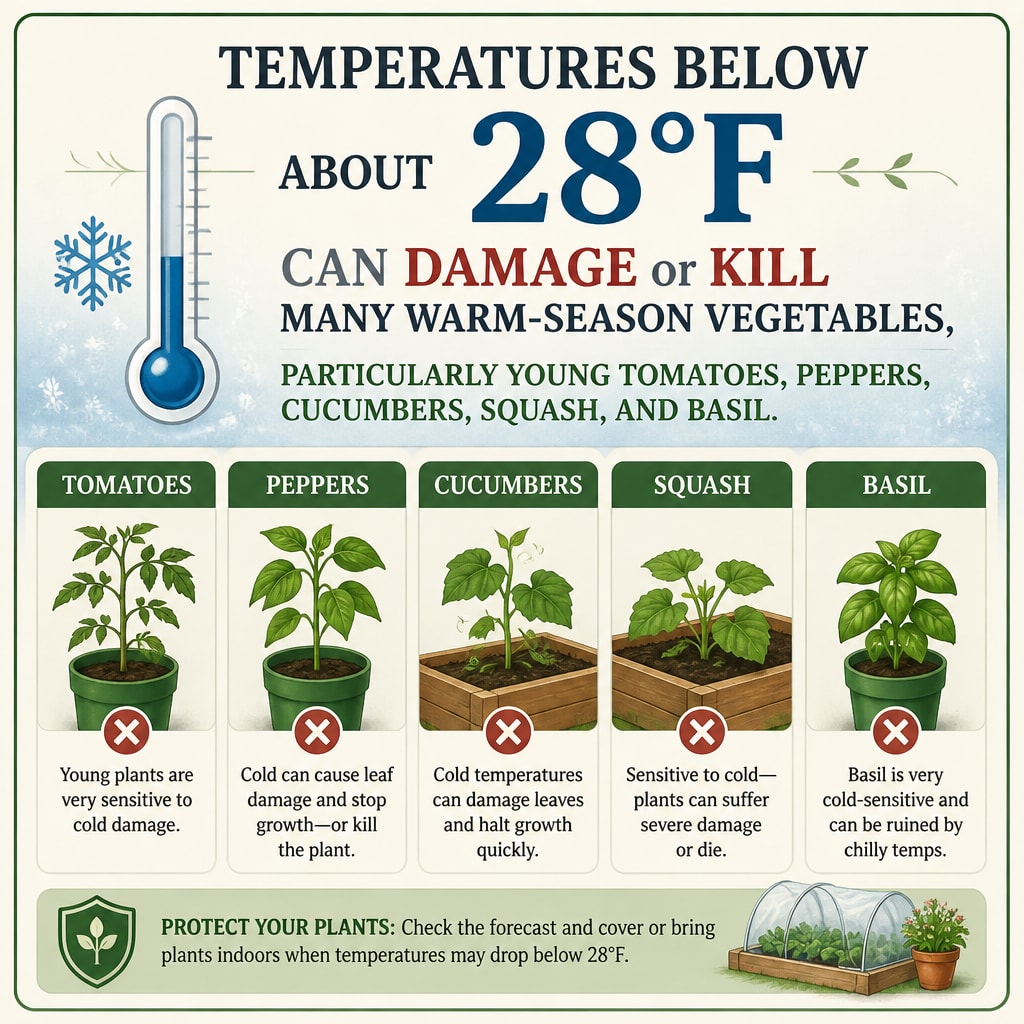
A hard freeze is more serious. Temperatures below about 28°F can damage or kill many warm-season vegetables, particularly young tomatoes, peppers, cucumbers, squash, and basil. A cover helps, but thin fabric alone may not save plants during a long, severe freeze.
Cold tolerance varies by vegetable
Peas, spinach, kale, carrots, radishes, and many lettuces can handle a light frost with little trouble. Some even taste sweeter afterward. Tomatoes and peppers are a different story. They sulk in cool weather and can suffer permanent damage from one cold night.
Think about the plant’s growth stage, too. A mature cabbage can shrug off cold that would stop a tiny seedling. Newly transplanted plants are more vulnerable because their roots haven’t settled into the soil yet.
For a broader look at planning, planting, and maintaining beds through the seasons, visit Raised Bed Gardening for Beginners: The Complete Step-by-Step Guide. Frost protection fits into the larger rhythm of bed care, not just one emergency night.
Prepare the raised bed before the cold arrives
Water the soil, not the leaves
Moderately moist soil can absorb and retain more heat during the day than very dry soil, helping reduce temperature changes near plant roots. If the bed is dry and freezing weather is expected, water the soil earlier in the day so moisture can soak into the root zone before temperatures fall.
Avoid watering soil that’s already saturated or poorly drained. Excess moisture can damage roots and create additional problems during cold weather. Water at the soil level rather than soaking the foliage, and remember that watering alone cannot protect tender vegetables from a hard freeze.
Add a layer of insulation
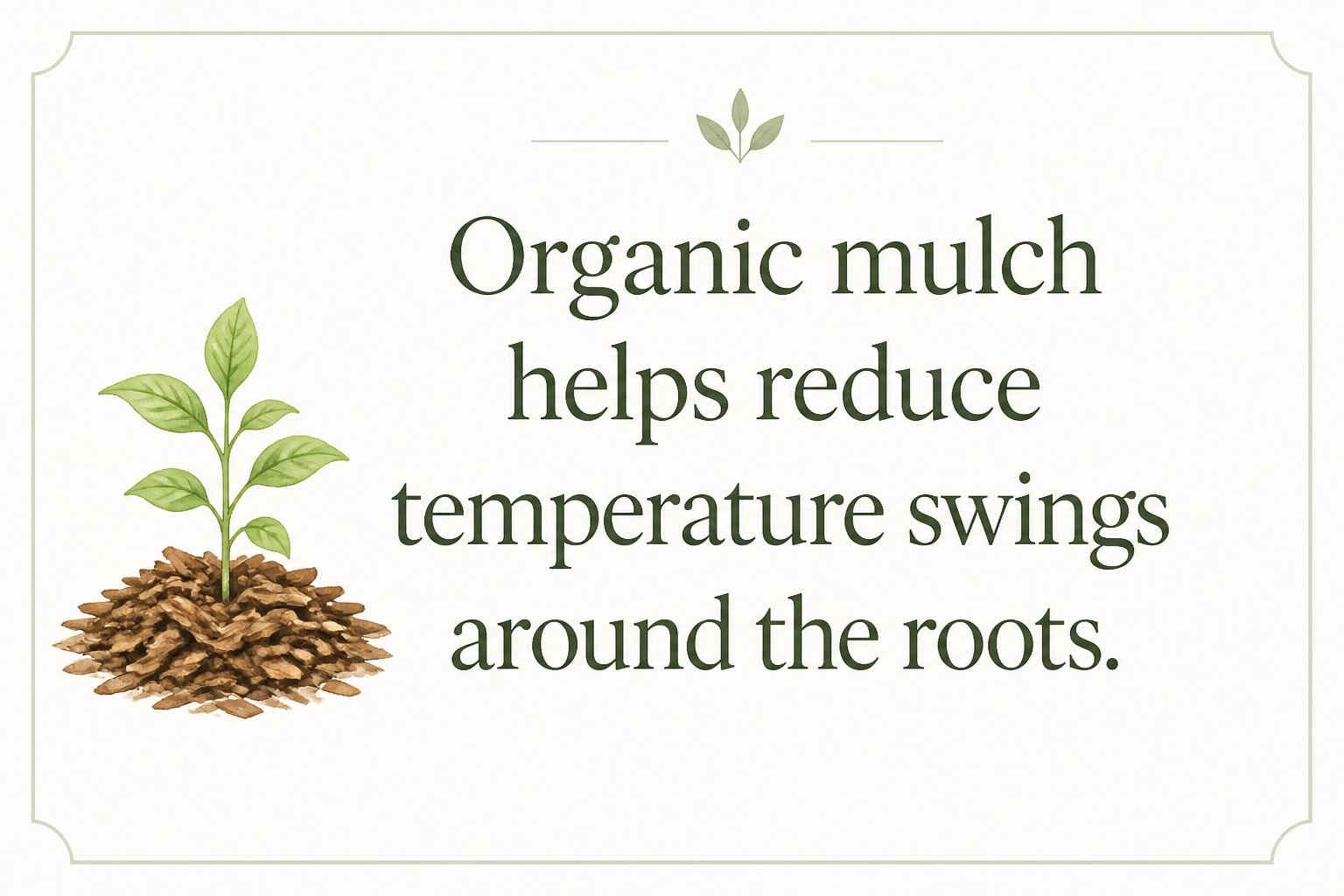
Organic mulch helps reduce temperature swings around the roots. Use clean straw, shredded leaves, pine straw, or finished compost. For winter soil protection, a loose layer of approximately 2 to 3 inches of organic mulch is often sufficient, although the ideal depth depends on the material and climate. Use a thinner layer around small seedlings, and keep mulch away from plant crowns and stems to prevent excess moisture and decay. Keep it slightly away from plant stems so moisture and decay don’t create new problems.
Mulch won’t protect the leaves or flowers. It protects the roots, which is still a big deal. A plant with living roots has a much better chance of recovering after cold damage.
Remove weeds and harvest anything ready before the cold snap. A tidy bed is easier to cover, and pulling ripe produce means you won’t lose food unnecessarily. Tender crops that are still small can sometimes be moved into a sheltered spot, especially when they’re growing in containers inside the bed.
Use covers that reach all the way to the soil
Choose the right material
Frost cloth, row cover, old sheets, blankets, and lightweight quilts can all work. Frost cloth is convenient because it lets some air and water pass through, and it can often stay over plants for several days. A sheet works in a pinch.
Plastic is trickier. It can protect plants from wind and precipitation, but plastic touching foliage may transfer cold and cause damage. Use hoops, stakes, or a simple frame to keep it suspended above the leaves. Remove plastic in the morning once temperatures rise, because a sunny covered bed can heat up quickly.
Cover the whole plant, not just the top
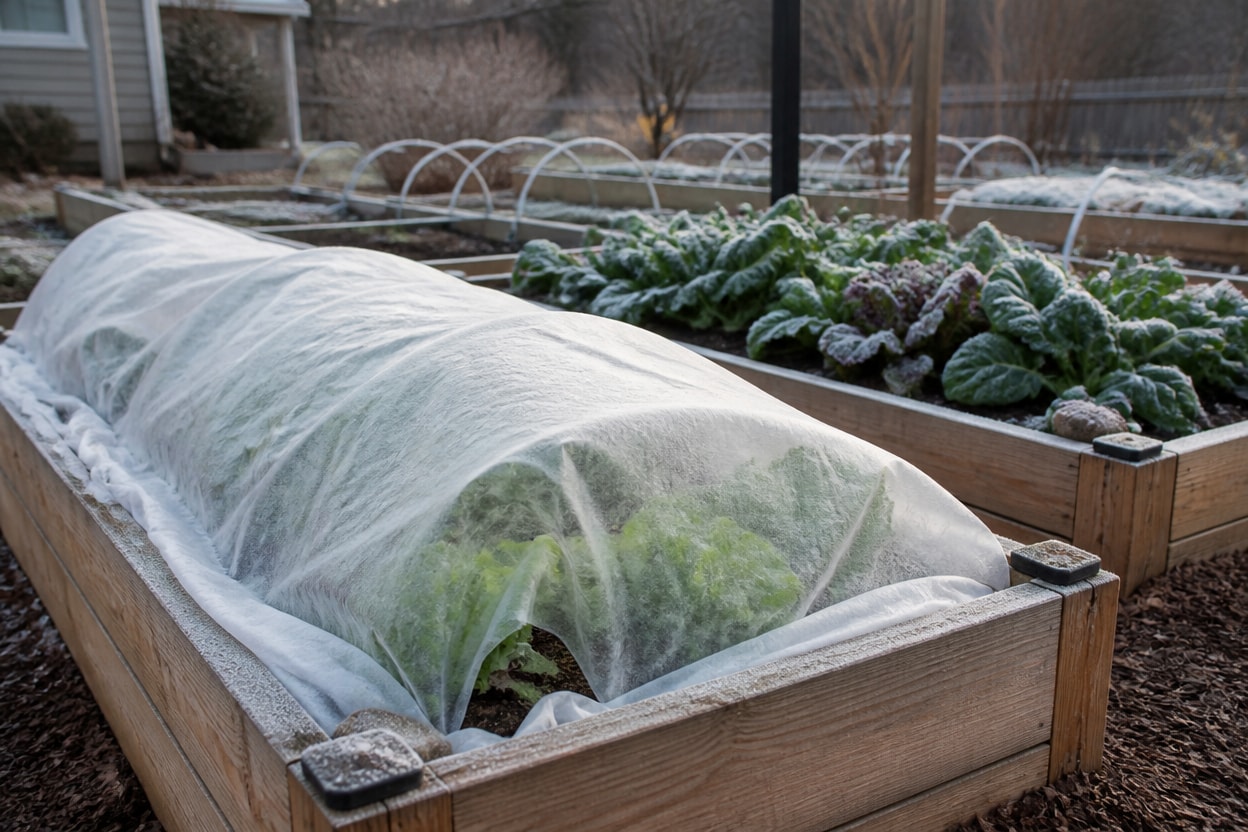
Cold air slips underneath loose covers. Drape the material over the bed and anchor the edges with soil, bricks, clips, or boards. The cover doesn’t have to be airtight, but it should reach the ground on every side.
- Water the bed earlier in the day.
- Place hoops or supports before sunset.
- Keep the cover from resting on delicate foliage.
- Anchor every edge so wind can’t lift it.
- Open or remove covers after the morning temperature rises.
For tall tomato plants, a sturdy tomato cage or similar support can hold frost cloth above the foliage, creating a protected pocket of air around the plant. Just make sure the structure won’t tip over in wind.
Never use a charcoal grill, propane heater, or other combustion device under a cover. Fire and carbon monoxide are serious risks. A few containers of warm water can add a little heat in a small enclosed setup, but they won’t perform miracles during a deep freeze.
Keep plants stable during a cold spell
Watch the forecast beyond one night
Many gardeners protect plants for the first cold night and uncover them too soon. Check the overnight low for the next several days. A warm afternoon followed by another freezing night can catch plants at their weakest.
During a stretch of cold weather, leave frost cloth in place if daytime temperatures remain mild rather than hot. Vent the sides when needed. Plants still need light and air circulation, and a damp, sealed cover can encourage disease.
Hold off on pruning and feeding
Don’t rush to cut away every dark leaf the morning after frost. Damaged tissue can look worse before it becomes clear what survived. Wait until the weather settles and new growth shows where the plant is still active.
Skip strong fertilizer right before a cold snap. Fresh, tender growth is often more sensitive to freezing temperatures. Let plants recover first. A light feeding later may help, but fertilizer can’t reverse frozen tissue.
After the danger passes, remove badly damaged leaves and check stems for soft or split areas. Some tomatoes and peppers will recover from light frost damage. Others won’t. Give them a little time before pulling them out, especially when the stems remain firm and green.
Seasonal care also includes watching for pests and disease after weather stress. Visit Raised Bed Garden Pest Control, Seasonal Care, and Harvesting for help keeping the bed productive as conditions change.
FAQs for How to Protect Raised Bed Vegetables From Frost and Cold Weather
Can I use a regular blanket to cover vegetables?
Yes, a regular blanket or sheet can protect against a light frost, provided it doesn’t crush the plants and the edges are secured. Keep heavy blankets supported above fragile foliage. Remove them once the morning warms up, especially when sunlight reaches the bed.
Should I harvest tomatoes before a frost?
Harvest mature green tomatoes before a hard freeze. They can ripen indoors at room temperature, away from direct sunlight. Tomatoes that have started to show color are usually worth bringing inside, too. A light frost may only damage the leaves, but a hard freeze can turn the fruit soft and watery.
Protect the bed, then keep gardening
Frost protection doesn’t need to be complicated. Start with the forecast, water the soil during the day, mulch around the roots, and cover vulnerable plants all the way to the ground. Use supports under fabric, remove plastic promptly, and give damaged plants time before deciding they’re finished.
🌱 FREE DOWNLOAD: Your First Raised Bed Garden
A Beginner-Friendly Guide to Getting Started
Thinking about growing your own vegetables in a raised bed? Start with a simple plan that helps you avoid costly mistakes and build a garden you can enjoy for years.
Our FREE Your First Raised Bed Garden guide provides practical, beginner-friendly information to help you:
- Choose a suitable location with enough sunlight.
- Plan the size and layout of your raised garden bed.
- Understand the basics of preparing healthy garden soil.
- Select vegetables that are appropriate for beginners.
- Get started with planting, watering, and caring for your garden.
You don’t need a huge backyard, expensive equipment, or years of gardening experience to get started!
Get Your FREE Raised Bed Gardening Guide
Free PDF guide from Backyard Living Books.
📗 Ready to Grow Your Own Fresh Vegetables?
Creating a productive raised bed garden takes thoughtful planning, healthy soil, and a little know-how.
Take the guesswork out of raised bed gardening!
Raised Bed Gardening Made Easy: Plans, Soil Mixes, Planting Secrets, and Beginner-Friendly Harvests is a practical guide designed to help you:
- Plan and build raised garden beds that fit your space.
- Choose materials and prepare the right soil mix.
- Select and plant vegetables for productive harvests.
- Understand watering, fertilizing, and routine garden maintenance.
- Avoid common mistakes that can waste time and money.
Whether you’re planting your first garden or looking to improve an existing one, this book will help you garden with greater confidence.
Explore Raised Bed Gardening Made Easy
🌿 Want More FREE Raised Bed Gardening Tips?
Visit our Gardening Learning Center for helpful articles, practical advice, and beginner-friendly resources covering everything from soil preparation and vegetable planting to watering, pest prevention, and seasonal gardening.
Explore the Gardening Learning Center
Part of the Backyard Living Series: Build • Grow • Raise • Thrive.