

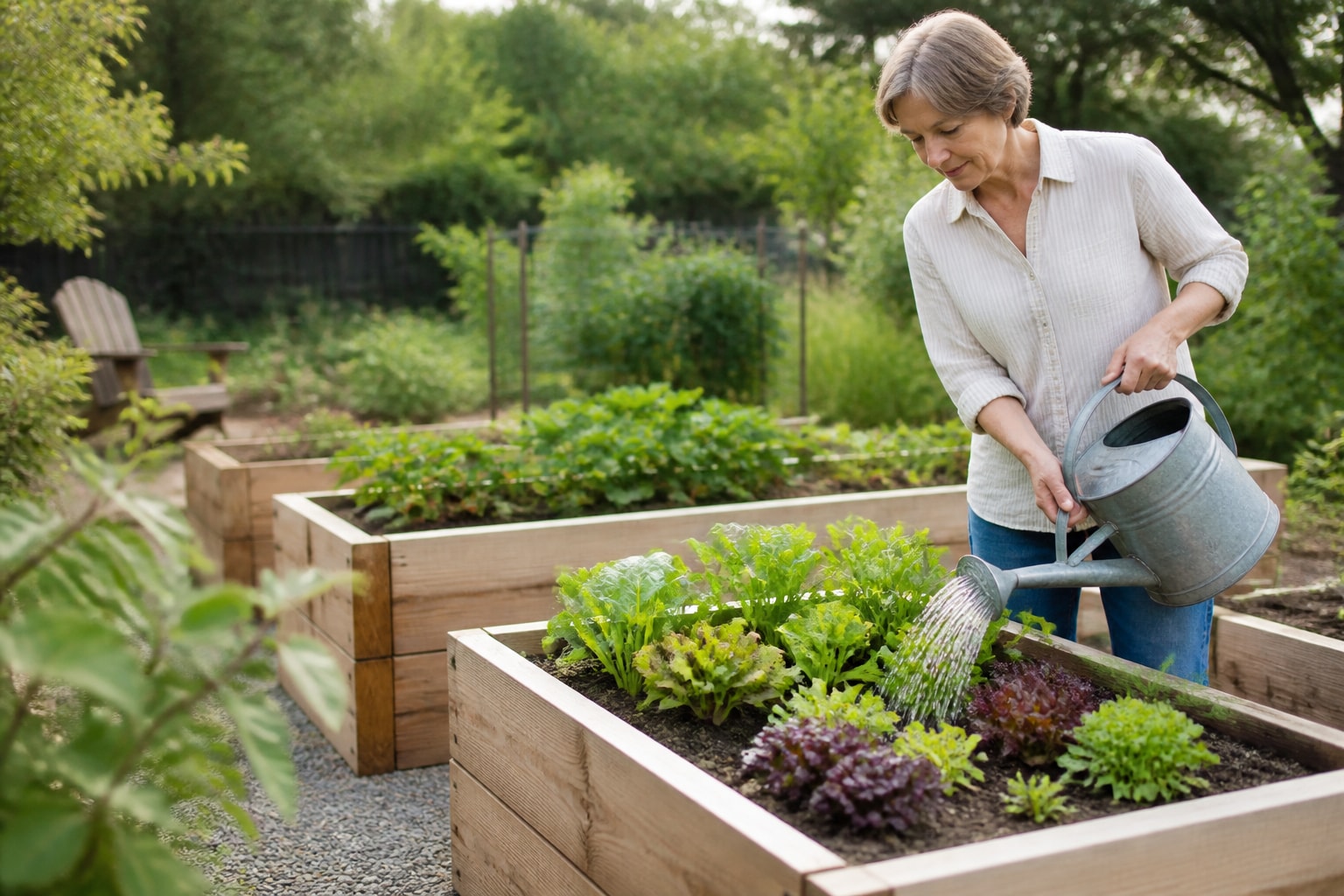
Many established vegetable gardens need approximately 1 to 1.5 inches of water per week, including rainfall. However, raised beds may require more frequent watering because their soil can dry faster, particularly during hot weather. The actual amount depends on your soil, climate, plant varieties, and growing conditions. Weather, soil, plant size, bed depth, and the time of year all change the answer. A shallow bed in full sun may need water every day during a hot spell. A deeper bed with mature plants might be fine for several days.
The useful question isn’t simply, “How often should we water?” It’s, “How long does moisture stay available in this bed?” Once we pay attention to that, watering gets much less fussy.
Start with the soil instead of the calendar
The finger test still works
Push your finger about 2 inches into the soil near a plant, not right against its stem. The surface can look dry while the root zone is still damp. That’s especially common after watering in the evening.
If the soil feels cool and slightly moist, wait. If it feels dry at that depth, water slowly and thoroughly. Very dry soil sometimes pulls away from the sides of the bed, and water can run down the gap instead of soaking in. In that situation, water for a few minutes, pause, and water again.
Know what your plants are telling you
Young seedlings have small root systems, so they dry out faster than established tomatoes, beans, or peppers. Newly planted crops may need a light check every day. That doesn’t mean they need a full soaking every day.
Drooping leaves in the late afternoon aren’t always an emergency. Some plants wilt a little during heat and recover by evening. Persistent wilting in the morning is a different story. So are crisp leaf edges, cracked fruit, and soil that’s dry several inches down.
Our Raised Bed Gardening for Beginners: The Complete Step-by-Step Guide covers the bigger picture, including bed placement, soil depth, and planting choices. Those decisions affect watering more than many beginners expect.
Adjust your watering routine through the seasons
Spring needs patience
Spring beds often stay damp longer than expected. Cool nights, cloudy days, and regular rain slow evaporation. Water deeply when needed, but don’t keep adding water just because the top looks pale.
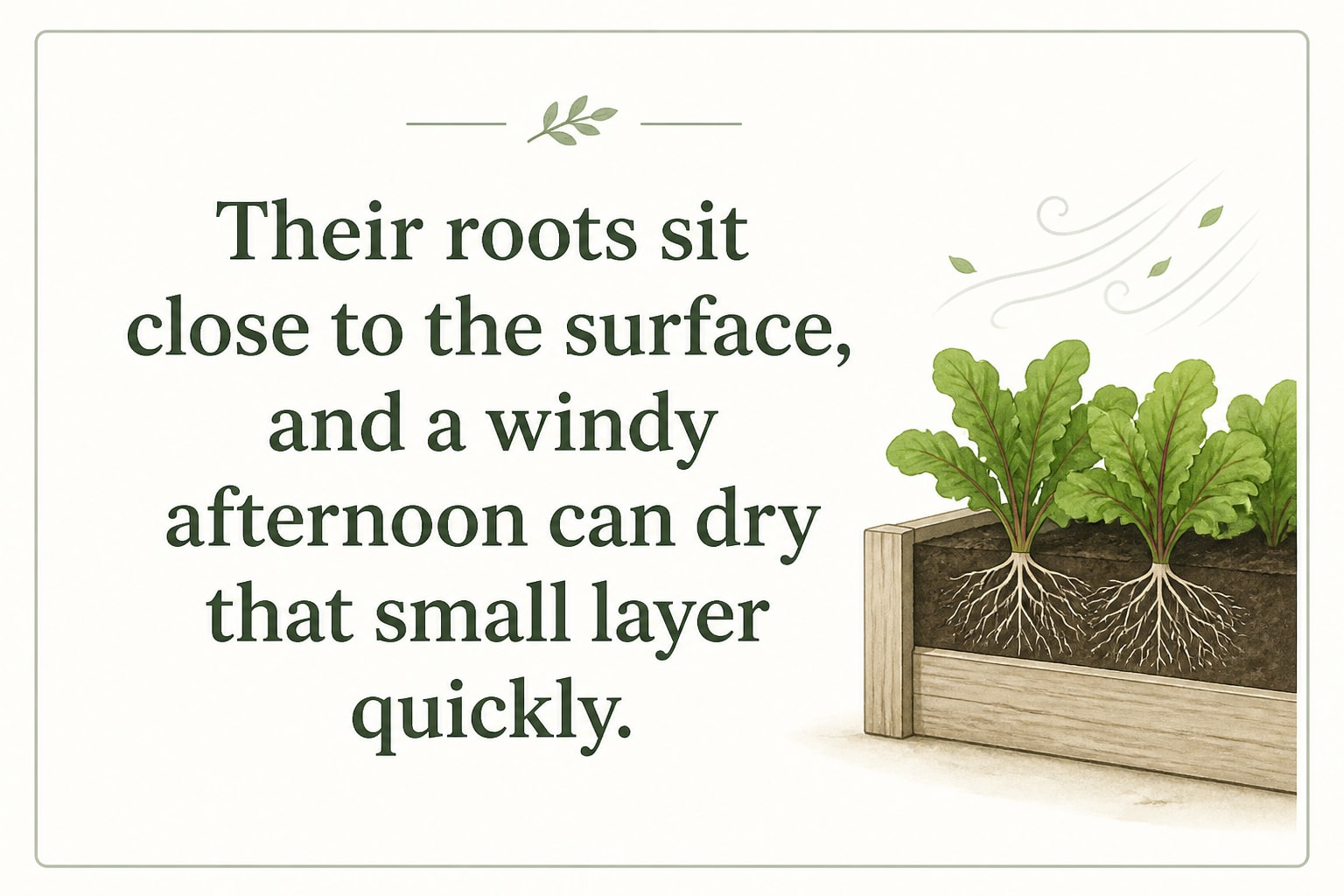
New seedlings are the exception. Their roots sit close to the surface, and a windy afternoon can dry that small layer quickly. Check them more often, using a gentle spray so you don’t wash soil away from the stems.
Summer is about consistency
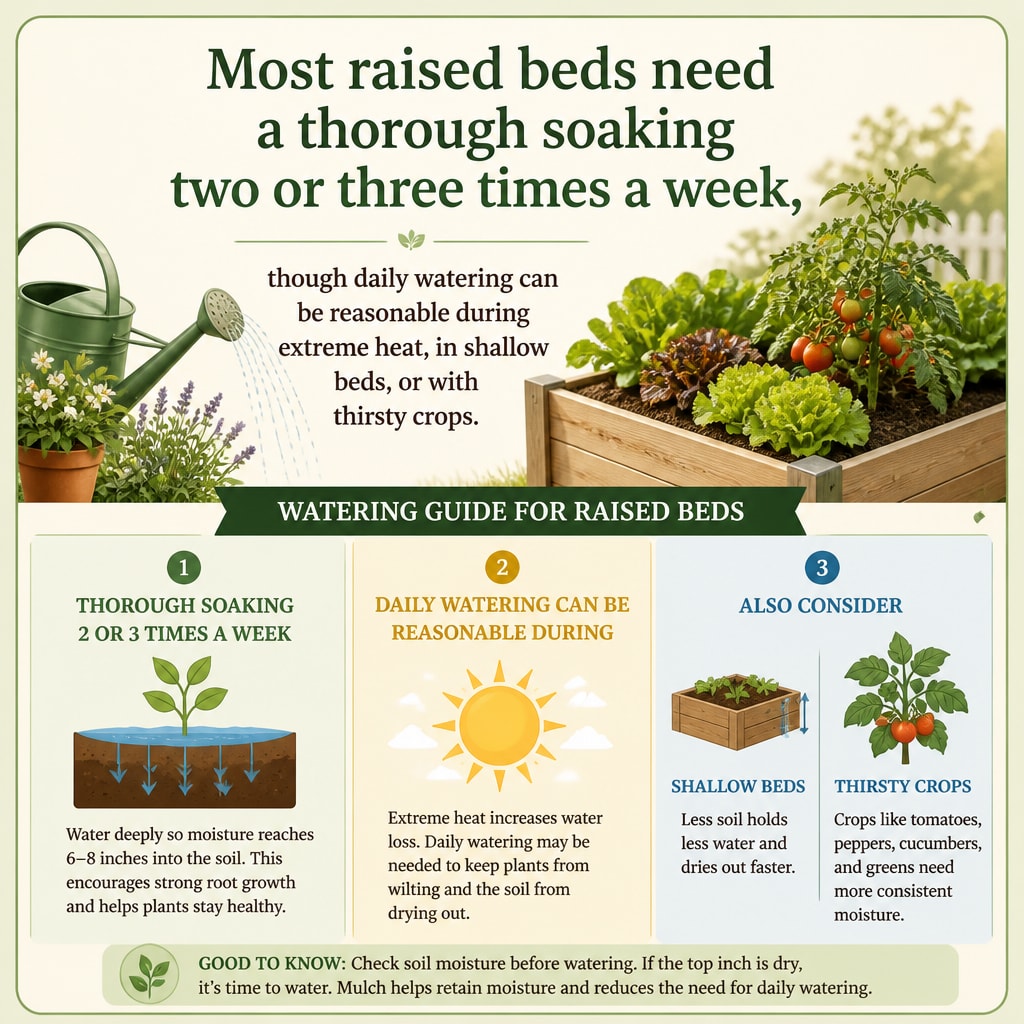
Summer is when consistent watering becomes especially important. Many established raised beds benefit from deep watering several times per week, but there is no universal schedule. During extreme heat, shallow beds or gardens with sandy soil may require daily attention. Larger plants and fruiting vegetables can also consume considerable moisture. Check the soil regularly and adjust watering frequency based on how quickly the root zone dries.
Water early in the morning when you can. Plants have time to take up moisture before the heat arrives, and the foliage dries more quickly. Early evening works too, particularly when mornings are busy. We aren’t fans of spraying leaves late at night as a routine. Wet foliage sitting for hours can encourage disease in humid weather.
Fall and winter are not completely hands-off
As temperatures drop and plants slow down, watering usually becomes less frequent. Rain may handle most of the work. Still, evergreen herbs, overwintering vegetables, and newly planted garlic can suffer when the soil stays dry for a long stretch.
If freezing weather is expected and the soil is unusually dry, watering before temperatures drop can help protect plants from drought stress. Moist soil also retains and transfers heat differently than dry soil, potentially offering some protection during brief cold periods. Avoid watering frozen or already saturated ground.
Give roots a deep drink without wasting water
Slow watering beats a quick splash
A hose nozzle on full power can create runoff, especially in a fresh bed with loose soil. Use a gentle stream, a watering wand, or drip irrigation. Move around the bed so one spot doesn’t become a muddy crater.
Water until the moisture reaches the main root zone. For many vegetables, that means roughly 6 to 12 inches deep once plants are established. You can check by pushing a trowel into the soil after watering. The damp area should extend beyond the top inch or two.
Drip lines and soaker hoses are handy, but they aren’t magic. A clogged emitter can leave one plant thirsty while its neighbor sits in wet soil. Check the system occasionally by lifting the hose or digging a small inspection spot.
Mulch changes the schedule
A 2- to 3-inch layer of straw, shredded leaves, or finished compost helps slow evaporation and keeps soil temperatures steadier. Leave a little space around plant stems. Mulch packed against a stem can hold too much moisture there and attract pests.
Mulch also makes rainfall more useful. Instead of bouncing off bare soil or washing it toward the path, water has a better chance to soak in. This is one small change that can noticeably reduce how often you reach for the hose.
Our Raised Bed Garden Watering and Maintenance: A Complete Beginner’s Guide has more practical advice on mulch, irrigation, drainage, and the small maintenance jobs that keep beds productive.
Spot overwatering before it damages the bed
Too much water can look like too little
Yellow leaves and wilting don’t always mean a plant needs more water. Roots sitting in saturated soil can struggle to absorb oxygen, and the plant may droop anyway. Slow growth, soft stems, fungus gnats, algae on the soil surface, and a sour smell are clues that the bed is staying too wet.
Check drainage before changing your watering schedule. A raised bed should drain through its soil profile. It doesn’t need a plastic-lined bottom, and adding gravel underneath usually doesn’t fix poor drainage. In fact, that approach can leave water perched above the layer below.
Use this quick check when plants look stressed
- Feel the soil 2 to 4 inches below the surface.
- Look for standing water several hours after watering.
- Check whether mulch or dense leaves are blocking airflow.
- Inspect drip emitters and hose connections.
- Compare the stressed plant with others in the same bed.
A single wilted plant may have a damaged root, a pest problem, or a stem buried too deeply. Every problem isn’t a watering problem. That’s why checking the soil and the whole bed saves time.
FAQs for How Often Should You Water Raised Garden Beds? A Seasonal Guide
Should raised garden beds be watered every day?
Usually, no. Daily moisture checks are especially important for newly planted seeds, young seedlings, shallow beds, and periods of extreme heat. However, checking moisture every day does not necessarily mean watering every day. Water when the soil begins drying at the appropriate root depth, rather than following a rigid schedule. Frequent shallow watering encourages roots to stay near the surface, where they dry out quickly.
How can we tell whether a raised bed needs water?
Check the soil 2 inches down with your finger or a trowel. Moist soil can wait. Dry soil at that depth needs a thorough watering. Also watch the plants in the morning. Ongoing wilt, curling leaves, or cracked fruit can point to inconsistent moisture, but yellow leaves and soggy soil may signal too much water instead.
Build a watering habit that fits your garden
The best schedule is one you can actually maintain. Check beds in the morning, water slowly when the root zone is dry, and adjust after hot weather, heavy rain, or a change in plant size. A simple mulch layer and a reliable hose setup make the work easier.
🌱 FREE DOWNLOAD: Your First Raised Bed Garden
A Beginner-Friendly Guide to Getting Started
Thinking about growing your own vegetables in a raised bed? Start with a simple plan that helps you avoid costly mistakes and build a garden you can enjoy for years.
Our FREE Your First Raised Bed Garden guide provides practical, beginner-friendly information to help you:
- Choose a suitable location with enough sunlight.
- Plan the size and layout of your raised garden bed.
- Understand the basics of preparing healthy garden soil.
- Select vegetables that are appropriate for beginners.
- Get started with planting, watering, and caring for your garden.
You don’t need a huge backyard, expensive equipment, or years of gardening experience to get started!
Get Your FREE Raised Bed Gardening Guide
Free PDF guide from Backyard Living Books.
📗 Ready to Grow Your Own Fresh Vegetables?
Creating a productive raised bed garden takes thoughtful planning, healthy soil, and a little know-how.
Take the guesswork out of raised bed gardening!
Raised Bed Gardening Made Easy: Plans, Soil Mixes, Planting Secrets, and Beginner-Friendly Harvests is a practical guide designed to help you:
- Plan and build raised garden beds that fit your space.
- Choose materials and prepare the right soil mix.
- Select and plant vegetables for productive harvests.
- Understand watering, fertilizing, and routine garden maintenance.
- Avoid common mistakes that can waste time and money.
Whether you’re planting your first garden or looking to improve an existing one, this book will help you garden with greater confidence.
Explore Raised Bed Gardening Made Easy
🌿 Want More FREE Raised Bed Gardening Tips?
Visit our Gardening Learning Center for helpful articles, practical advice, and beginner-friendly resources covering everything from soil preparation and vegetable planting to watering, pest prevention, and seasonal gardening.
Explore the Gardening Learning Center
Part of the Backyard Living Series: Build • Grow • Raise • Thrive.