
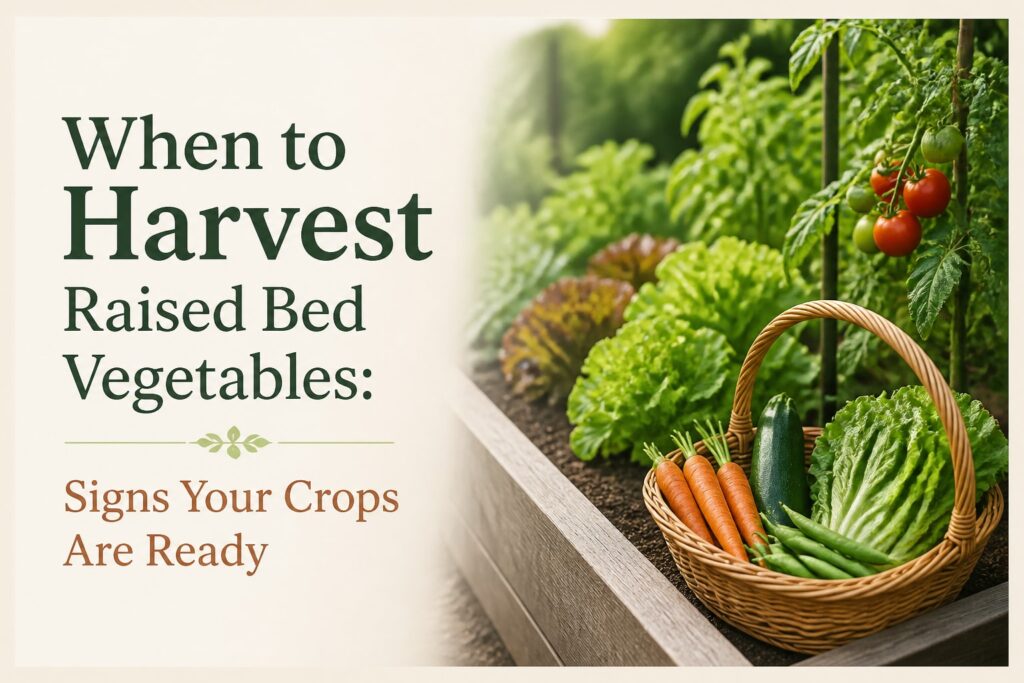
Harvesting raised bed vegetables at the right moment makes a bigger difference than most beginners expect. Pick too early and you lose size and flavor. Wait too long and tender crops turn tough, bitter, or seedy. The good news? Your plants usually show you when they’re ready. You just need to know what to watch for.
Raised beds make this easier because the soil warms quickly, drainage is usually better, and plants are close enough for daily checks. We recommend walking through your beds every morning or evening during peak harvest season. A two-minute inspection can save a whole row of overripe beans or a hidden zucchini the size of a baseball bat.
Learn the signs that a vegetable is ready
Size is only part of the answer
Seed packets often give a harvest range, but size alone can fool you. Weather, watering, fertility, and variety all affect how quickly a crop matures. Look at color, firmness, texture, and how easily the vegetable separates from the plant.
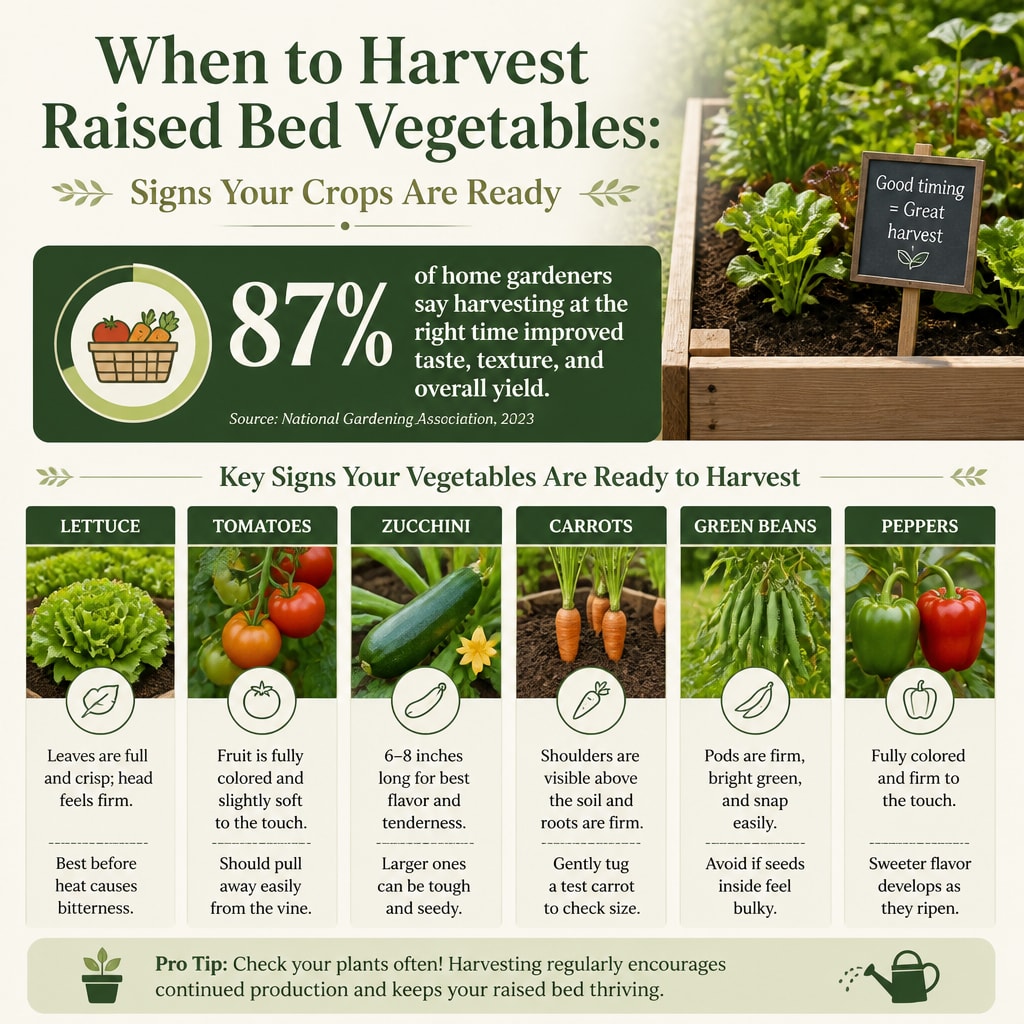
Tomatoes are a good example. A tomato that has reached its mature color and feels slightly soft usually has better flavor than one picked while it’s still hard and pale. Peppers may be edible while green, but many varieties become sweeter after changing color. Cucumbers should feel firm and have a consistent green color. Large, yellowing cucumbers are usually full of larger seeds and a watery center.
Use the plant itself as a clock
Flowering and fruit development offer useful clues about harvest timing. Depending on the variety and growing conditions, snap beans generally take about one to two weeks after flowering to develop harvestable pods. Summer squash grows especially quickly and may go from tender to oversized in just a few days during warm weather. Check developing vegetables regularly rather than relying on a fixed number of days.
We also pay attention to texture. Lettuce leaves should feel crisp, peas should look plump inside their pods, and snap beans should break cleanly when bent. A limp bean that folds instead of snapping has probably waited too long.
For a broader look at planting, soil preparation, watering, and seasonal maintenance, visit Raised Bed Gardening for Beginners: The Complete Step-by-Step Guide. Harvest timing makes more sense when you understand what the plant needs throughout the season.
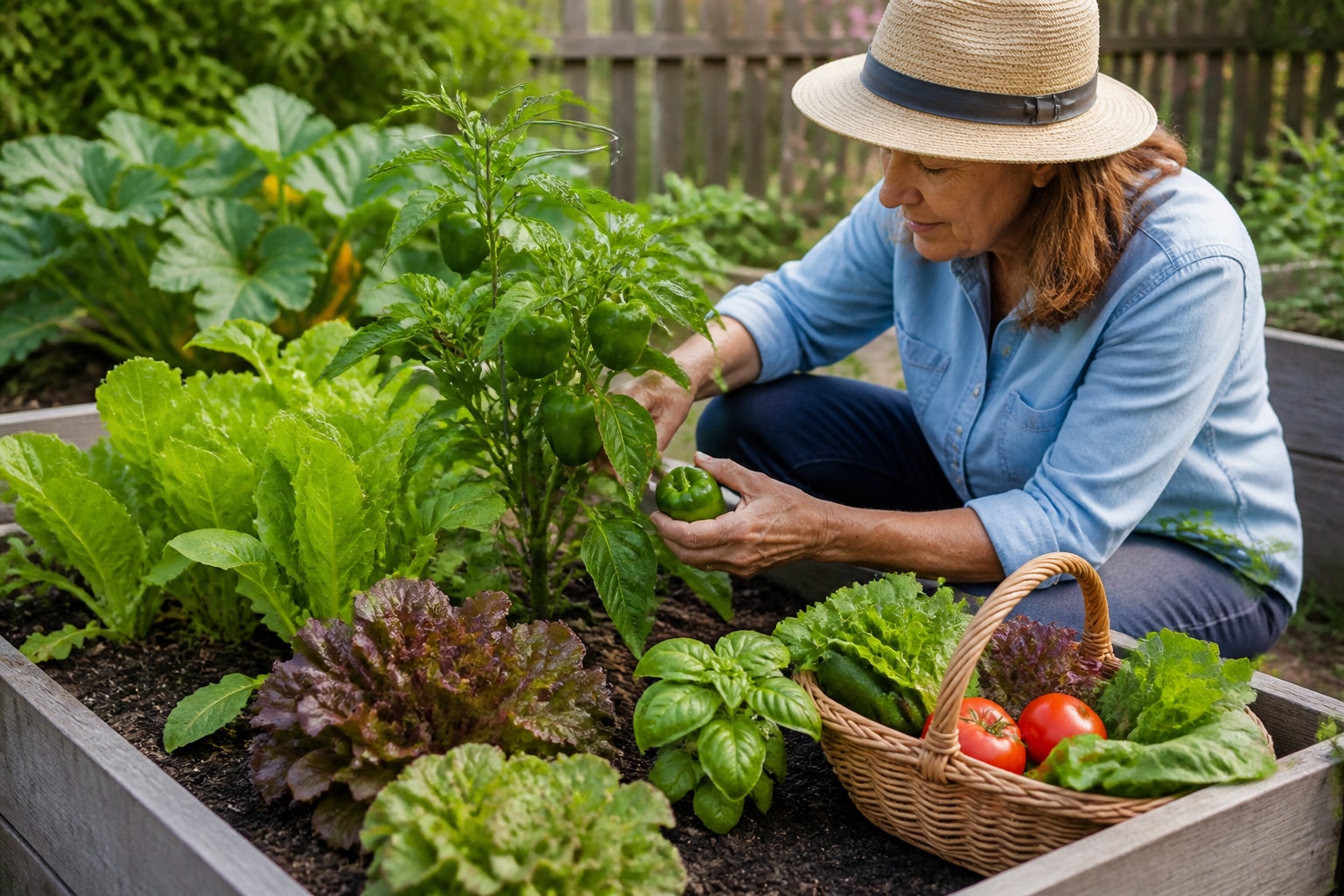
Know when common raised bed crops are ready
Leafy greens and herbs
Harvest lettuce, spinach, kale, Swiss chard, and mustard greens while the leaves are young and tender. You don’t have to pull the entire plant. Cut outer leaves first and leave the center growing. This cut-and-come-again method gives a small raised bed much more staying power.
Spinach and lettuce may turn bitter when hot weather arrives. That’s a sign to harvest more often, provide afternoon shade, or replace them with a warm-season crop. Herbs are usually best just before they flower, when their leaves have strong flavor. Basil is the exception only in the sense that we want to pinch flower buds early, keeping the plant focused on leafy growth.
Fruiting crops and root vegetables
Pick beans while the pods are slender and the seeds inside haven’t bulged. Harvest shelling peas when the pods are plump and the peas inside have developed but remain tender. Pick snow peas while their pods are still flat, before the seeds enlarge. Sugar snap peas are generally ready when the pods become rounded, crisp, and sweet. The ideal harvest stage depends on the type you’re growing. Eggplant should have glossy skin and a little give when pressed. Dull skin often means the fruit has become seedy.
For carrots, radishes, beets, and turnips, the shoulders showing above the soil offer a useful clue. Radishes are quick and should be pulled as soon as they reach the size listed for your variety. Carrots can stay in the soil longer, though hot conditions may make them less sweet or more fibrous. New potatoes can often be harvested several weeks after plants begin forming tubers, sometimes around the time flowering starts. However, not all potato varieties flower reliably, so gently check beneath the soil for small, usable potatoes. For mature storage potatoes, wait until the foliage naturally yellows and dies back, then allow the skins time to firm before harvesting in suitable soil conditions.
There’s plenty more to learn about protecting crops and keeping harvests coming in the right season. The Raised Bed Garden Pest Control, Seasonal Care, and Harvesting guide covers those practical details without making backyard growing feel like a second job.
Harvest in a way that keeps plants producing
Pick early and pick often
Many plants slow down once mature fruit stays on the stem. Beans stop making new pods. Zucchini becomes enormous. Cucumbers turn yellow and bitter. Regular harvesting signals the plant to keep producing, so check fast-growing crops every day or two.
Use clean, sharp scissors or pruners for tomatoes, peppers, cucumbers, and thick stems. Pulling can damage the plant or snap off nearby branches. For leafy greens, pinch or cut leaves above the growing point. With herbs, avoid removing more than about one-third of the plant at a time. Plants need enough foliage left behind to keep making energy.
- Harvest leafy greens in the cool morning.
- Pick peas and beans before the day gets hot.
- Cut herbs just before flowering for strong flavor.
- Use a knife for firm stems and thick squash stalks.
- Handle ripe tomatoes gently to prevent bruising.
Harvest after watering with a little care
Morning is usually the best time to harvest because plants are hydrated and temperatures are mild. Wet foliage isn’t a problem for every crop, but harvesting dry leaves can reduce the spread of some fungal diseases. Don’t work through the bed when the soil is soggy. Raised bed soil can compact around plant crowns and paths, even when the bed drains well.
One exception is root crops. Moist soil can make carrots and beets easier to pull, especially when they’re tightly anchored. Just avoid yanking hard. Loosen the soil first with a hand fork.
Handle late, early, and imperfect harvests
What to do when the timing gets away from you
Every gardener misses a zucchini. Or three. It happens. Oversized squash can be peeled, seeded, and shredded for bread or fritters. Large cucumbers may work in relish or pickles. Tough beans can be shelled and used like dried beans if the variety allows it.
Bolting greens are a different story. Once lettuce, spinach, or cilantro sends up a flower stalk, the leaves often become bitter. Harvest what still tastes good, pull the plant, and replant a heat-tolerant crop. Letting a few healthy plants flower can also provide seeds for next season, though cross-pollination may make the results less predictable.
Store the harvest without ruining it
Handle harvested vegetables according to their individual storage needs. Remove damaged leaves and excess soil, but avoid washing produce until you’re ready to use it unless proper drying and refrigeration are part of your storage routine. Refrigerate leafy greens, beans, and many other tender vegetables promptly. Store ripe tomatoes at room temperature when practical for the best flavor, while potatoes and cured winter squash generally require cool, dry storage conditions appropriate to each crop. Leafy greens keep well in a refrigerated container or bag that maintains humidity without allowing excess moisture to collect.
Fresh herbs can sit in a glass of water like a small bouquet, with a loose bag over the top. Root vegetables last longer in a cool, dark place, although carrots and beets keep better after their leafy tops are removed. The tops pull moisture from the roots.
FAQs for When to Harvest Raised Bed Vegetables: Signs Your Crops Are Ready
Should we harvest vegetables in the morning or evening?
Morning is usually best. Crops are hydrated, temperatures are lower, and leafy greens tend to be crisp. Evening also works, especially when mornings are busy. Try not to harvest during the hottest part of the day, when delicate produce wilts quickly.
What happens when we wait too long to harvest?
Texture and flavor usually suffer first. Beans become stringy, peas turn starchy, cucumbers develop large seeds, and summer squash becomes watery. Some crops, such as carrots and winter squash, can tolerate extra time better than others. Check each plant every few days rather than assuming every vegetable follows the same schedule.
Keep harvesting simple and consistent
The best harvest routine isn’t complicated. Walk the beds often, look for mature color and firm texture, and pick a little before crops become oversized. A small basket, clean snips, and a few minutes of attention can keep a raised bed productive for weeks.
🌱 FREE DOWNLOAD: Your First Raised Bed Garden
A Beginner-Friendly Guide to Getting Started
Thinking about growing your own vegetables in a raised bed? Start with a simple plan that helps you avoid costly mistakes and build a garden you can enjoy for years.
Our FREE Your First Raised Bed Garden guide provides practical, beginner-friendly information to help you:
- Choose a suitable location with enough sunlight.
- Plan the size and layout of your raised garden bed.
- Understand the basics of preparing healthy garden soil.
- Select vegetables that are appropriate for beginners.
- Get started with planting, watering, and caring for your garden.
You don’t need a huge backyard, expensive equipment, or years of gardening experience to get started!
Get Your FREE Raised Bed Gardening Guide
Free PDF guide from Backyard Living Books.
📗 Ready to Grow Your Own Fresh Vegetables?
Creating a productive raised bed garden takes thoughtful planning, healthy soil, and a little know-how.
Take the guesswork out of raised bed gardening!
Raised Bed Gardening Made Easy: Plans, Soil Mixes, Planting Secrets, and Beginner-Friendly Harvests is a practical guide designed to help you:
- Plan and build raised garden beds that fit your space.
- Choose materials and prepare the right soil mix.
- Select and plant vegetables for productive harvests.
- Understand watering, fertilizing, and routine garden maintenance.
- Avoid common mistakes that can waste time and money.
Whether you’re planting your first garden or looking to improve an existing one, this book will help you garden with greater confidence.
Explore Raised Bed Gardening Made Easy
🌿 Want More FREE Raised Bed Gardening Tips?
Visit our Gardening Learning Center for helpful articles, practical advice, and beginner-friendly resources covering everything from soil preparation and vegetable planting to watering, pest prevention, and seasonal gardening.
Explore the Gardening Learning Center
Part of the Backyard Living Series: Build • Grow • Raise • Thrive.