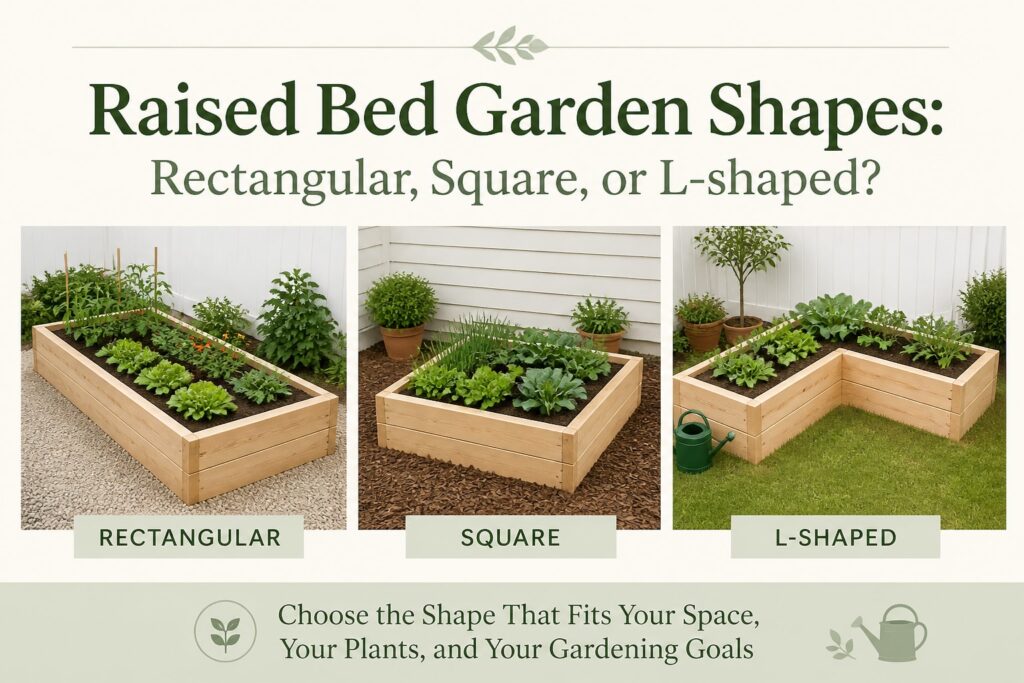
The shape of a raised bed changes more than its appearance. It affects how far you’ll reach, how much lumber you’ll buy, where you can walk, and whether every plant gets enough sun. For a small backyard, the right shape can make gardening feel pleasantly simple. The wrong one can leave you stepping over boards and ignoring the plants tucked into awkward corners.
So, rectangular, square, or L-shaped? There isn’t one winner for every yard. We recommend starting with the space you actually have, then matching the bed to your reach and daily routine.
Start with the space and your reach
Before choosing a shape, stand in the proposed growing area and imagine working there in July. Can you reach the middle without leaning across the soil? Is there room to carry a watering can? Will a fence, wall, or shed block one side?
Keep the bed narrow enough to work comfortably
Most gardeners can reach about 2 feet from one side without stepping into the bed. That makes a 4-foot-wide bed a dependable choice when you can walk around both sides. A bed against a wall or fence usually needs to be closer to 2 feet wide, because you’ll only approach it from the front.
That reach limit matters more than the bed’s total footprint. Soil compacts when people walk on it, and compacted soil is a pain to loosen later. New gardeners sometimes build beautiful raised beds that are simply too wide to maintain comfortably. The back half can become a neglected strip of lettuce and weeds because it’s difficult to reach without stepping into the soil.
Map the practical details first
Mark the proposed outline with a garden hose, rope, or flour. Leave roughly 2 feet for walking between beds. A little extra space is helpful when you use a wheelbarrow, have stiff knees, or want to garden from a seated position.
Also watch the sun. Consider the direction of sunlight when positioning your raised bed. In the Northern Hemisphere, placing taller crops toward the north side generally helps reduce shading of shorter plants. However, nearby trees, fences, buildings, and convenient access may matter more than the direction the bed faces. Our How to Plan and Design a Raised Bed Garden for Beginners explains how bed placement, paths, water access, and sunlight work together.
Rectangular beds make the easiest starting point
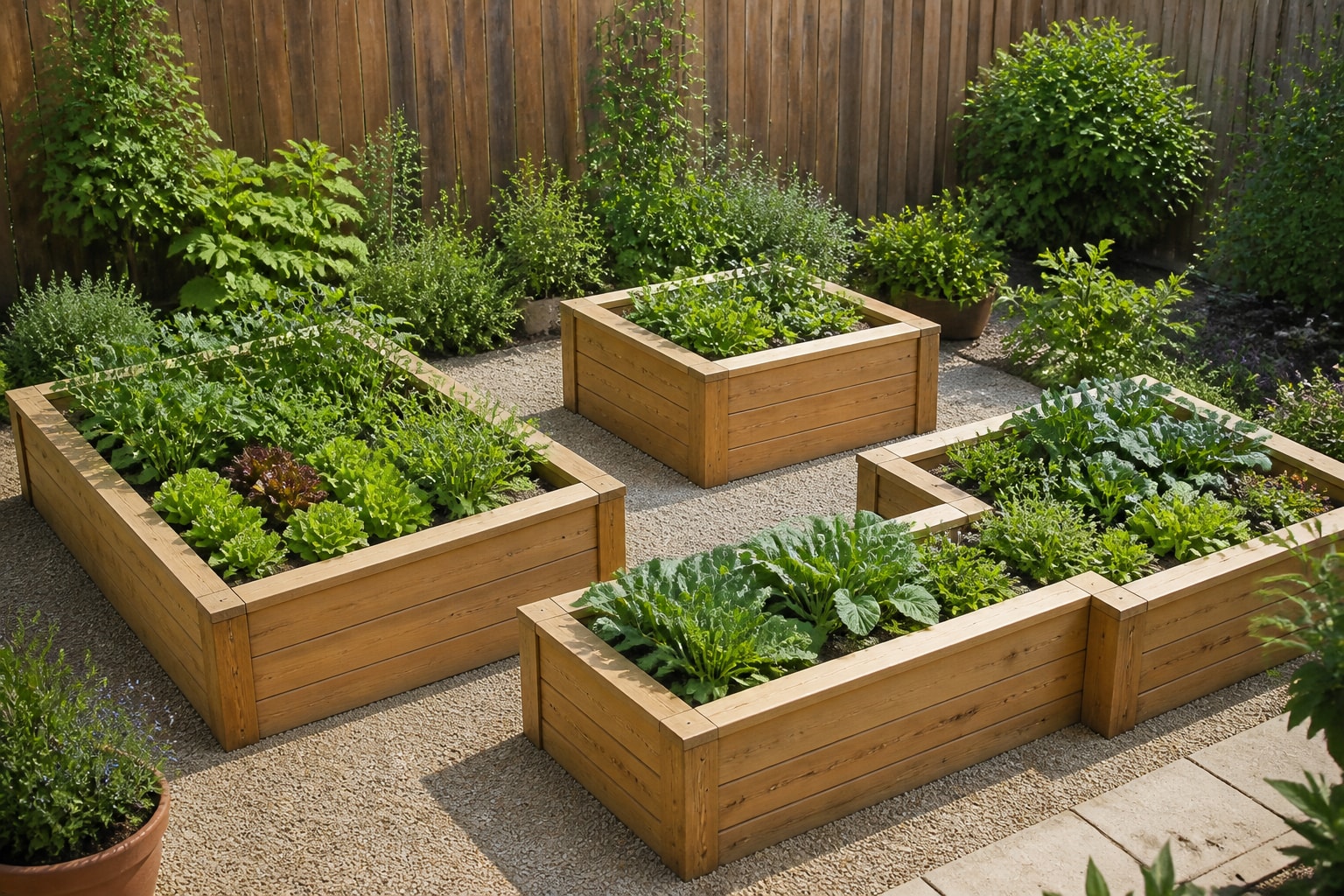
Rectangular raised beds are the safe bet for beginners, and that’s not an insult. They’re easy to build, easy to cover with netting, and simple to divide into planting sections. A 4-by-8-foot bed is common, but a 3-by-6-foot version may suit a smaller yard much better.
Why gardeners keep choosing rectangles
- Straight boards are simple to measure and cut.
- Long rows work well for carrots, onions, beans, and salad greens.
- Drip lines and soaker hoses are easy to lay out.
- Paths stay clear and mowing around the bed is straightforward.
- Temporary hoops or covers fit neatly over the growing area.
Rectangles also make crop rotation less confusing. You can reserve one end for herbs, another for tomatoes, and leave room for succession plantings of radishes or greens. That organization is useful when you’re still learning how much space each crop needs.
But length has a limit. An 8-foot bed may be fine in a broad yard, while a narrow 12-foot bed can feel like a runway with no benefit. Long boards may bow, and a very long bed can be harder to reach if the width also creeps upward. In practice, keeping the width modest is more helpful than chasing extra growing area.
When a rectangle works best
Choose a rectangular bed when you have an open patch of lawn, want a tidy row of beds, or plan to add more beds later. It’s also a good fit for homeowners who want the build to stay affordable. Fewer cuts and uncomplicated corners usually mean less wasted material.
Square beds suit compact yards and simple layouts
A square bed can be surprisingly productive in a small backyard. A 4-by-4-foot bed gives you access from all four sides and creates a compact planting area without making the garden feel scattered.
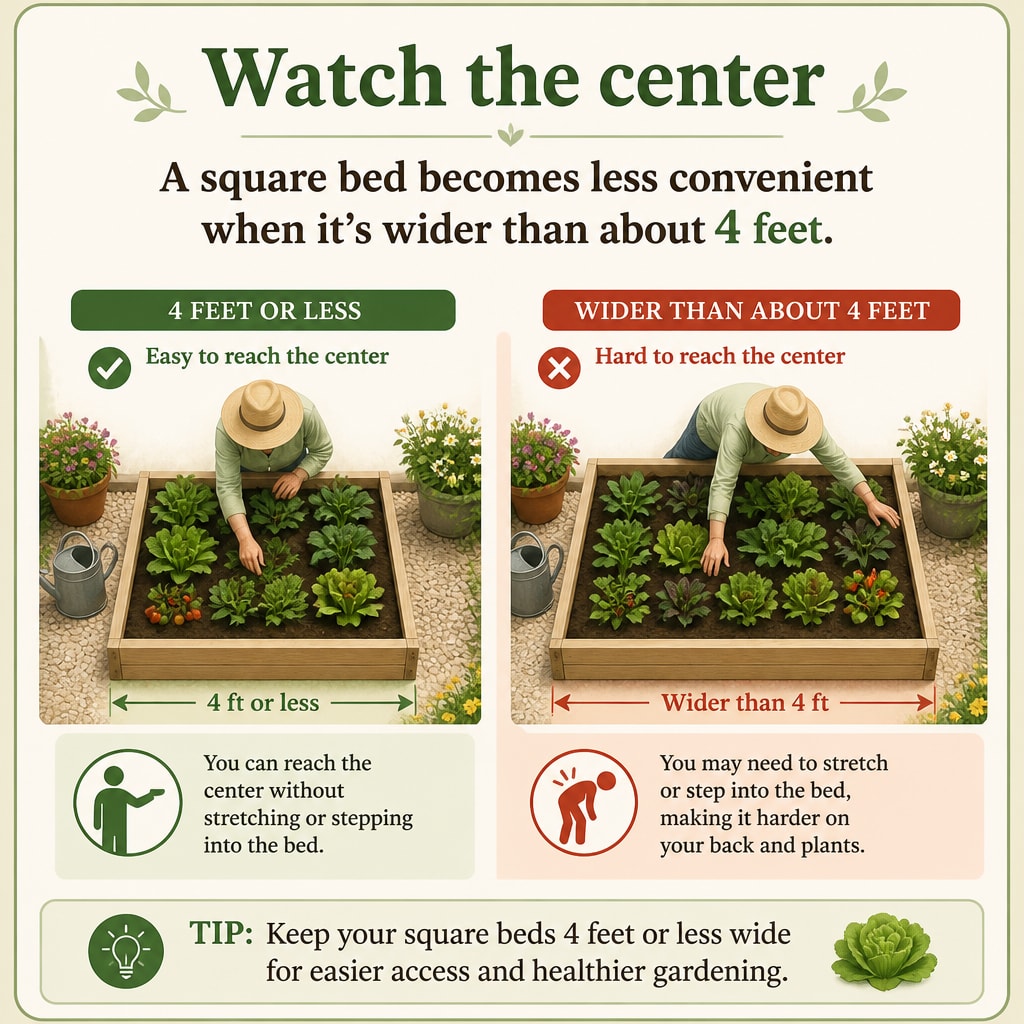
Square beds are especially handy when you’re using intensive spacing instead of long rows. You might plant a block of bush beans, several heads of lettuce, or a grid of herbs. The shape encourages you to think in sections rather than one crop running the entire length of the bed.
What square beds do well
They fit neatly into patios, side yards, and corners of lawns. You can place two or three with narrow paths between them, then reach every section without climbing inside. That’s a big deal for older gardeners or anyone managing back, hip, or balance concerns.
A square bed also works nicely as a dedicated crop area. One bed for salad greens. Another for strawberries. A third for flowers that attract pollinators. It’s not the most efficient shape for every vegetable, though. Long carrots or trellised cucumbers may make better use of a rectangle.
Watch the center
A square bed becomes less convenient when it’s wider than about 4 feet. The center starts to feel distant, especially after rain makes the soil soft. A 6-by-6-foot bed might look generous on paper, but most of that extra width ends up costing you reach and comfort.
For a raised bed that will be tended by children, a seated gardener, or someone who doesn’t want to bend deeply, smaller squares are often the friendlier choice. You can always build another one later. Gardeners tend to regret oversized beds more often than undersized ones.
L-shaped beds solve awkward corners
L-shaped raised beds are useful when the yard has a corner that a rectangle can’t fill neatly. They can wrap around a patio, follow two sides of a fence, or create a planting area around a central sitting space. This shape adds growing room without turning the whole yard into a maze of boards.
Where the L shape earns its keep
An L-shaped bed can separate a vegetable area from a seating space while keeping both close together. It’s also helpful beside a house, where one leg can run along the sunny side and the other can turn toward a path.
The inside corner is the part to think through carefully. Keep each arm narrow enough to reach from the outside. A 2-foot-wide L is easy to work. A 4-foot-wide L with a blocked inner corner is not. You’ll find yourself stretching over plants or stepping into the soil, which defeats the point of a raised bed.
Build and watering details matter
L-shaped beds have more corners, so they require more careful measuring and stronger connections. The inside corner can also dry differently from the outer ends, especially near walls or paving. Set up the bed, fill it, and check how water moves before planting the whole thing. A short test run saves a lot of replanting.
We like L-shaped beds for gardeners who have a clear corner problem to solve. We’re less enthusiastic when the shape is chosen only because it looks interesting. Extra corners add cost and make covers, edging, and irrigation a little fussier. The shape should earn its keep.
Choose the shape that matches your daily routine
Think about how you’ll use the bed on an ordinary Tuesday, not just how it looks in a sketch. Will you harvest herbs while dinner cooks? Carry compost from the driveway? Sit on the edge to pull weeds? These small details usually point toward the right shape.
Rectangles are the practical choice for open spaces and organized rows. Squares are friendly in compact yards and easy to reach from every side. L shapes make sense around corners, patios, and boundaries. None of them fixes poor sunlight, bad drainage, or a path that’s too narrow.
For a new gardener, we’d usually start with one modest rectangular or square bed. Learn how much you actually grow and how often you visit the garden. Then add an L-shaped bed only when the layout calls for it. Our main resource, Raised Bed Gardening for Beginners: The Complete Step-by-Step Guide, covers the next decisions, including bed height, soil volume, planting, and upkeep.
FAQs for Raised Bed Garden Shapes: Rectangular, Square, or L-Shaped?
What is the best raised bed shape for a beginner?
A rectangular bed is usually the easiest first project, especially at about 3 or 4 feet wide. A square bed is just as beginner-friendly when space is tight. The best choice is the one you can reach from every side and water without dragging a hose through the plants.
Can an L-shaped raised bed be practical?
Yes. It’s practical when you need to use a corner or wrap around a patio. Keep both arms narrow enough to reach, reinforce the corners, and pay attention to how water reaches the inside bend. An L shape can be useful, but it shouldn’t make everyday care harder.
A shape that stays easy to use is the right one
Choose the raised bed shape that respects your space, your reach, and the way you actually garden. Rectangles keep things simple. Squares fit compact areas. L shapes make awkward corners useful. Start smaller than your ambition suggests, leave comfortable paths, and build from there. A bed you enjoy tending will produce far more than one that only looks impressive on planting day.
🌱 FREE DOWNLOAD: Your First Raised Bed Garden
A Beginner-Friendly Guide to Getting Started
Thinking about growing your own vegetables in a raised bed? Start with a simple plan that helps you avoid costly mistakes and build a garden you can enjoy for years.
Our FREE Your First Raised Bed Garden guide provides practical, beginner-friendly information to help you:
- Choose a suitable location with enough sunlight.
- Plan the size and layout of your raised garden bed.
- Understand the basics of preparing healthy garden soil.
- Select vegetables that are appropriate for beginners.
- Get started with planting, watering, and caring for your garden.
You don’t need a huge backyard, expensive equipment, or years of gardening experience to get started!
Get Your FREE Raised Bed Gardening Guide
Free PDF guide from Backyard Living Books.
📗 Ready to Grow Your Own Fresh Vegetables?
Creating a productive raised bed garden takes thoughtful planning, healthy soil, and a little know-how.
Take the guesswork out of raised bed gardening!
Raised Bed Gardening Made Easy: Plans, Soil Mixes, Planting Secrets, and Beginner-Friendly Harvests is a practical guide designed to help you:
- Plan and build raised garden beds that fit your space.
- Choose materials and prepare the right soil mix.
- Select and plant vegetables for productive harvests.
- Understand watering, fertilizing, and routine garden maintenance.
- Avoid common mistakes that can waste time and money.
Whether you’re planting your first garden or looking to improve an existing one, this book will help you garden with greater confidence.
Explore Raised Bed Gardening Made Easy
🌿 Want More FREE Raised Bed Gardening Tips?
Visit our Gardening Learning Center for helpful articles, practical advice, and beginner-friendly resources covering everything from soil preparation and vegetable planting to watering, pest prevention, and seasonal gardening.
Explore the Gardening Learning Center
Part of the Backyard Living Series: Build • Grow • Raise • Thrive.