

Raised garden beds can make gardening much easier for older adults and people with limited mobility, but height alone won’t solve every problem. A bed that’s too wide still creates awkward reaching. A path that’s too narrow can turn a pleasant morning outside into a balancing act. The best accessible garden is planned around the gardener first, then the vegetables.
We recommend starting with the movements that feel difficult now. Bending? Kneeling? Carrying a watering can? Turning a walker between beds? Once we know that, the design gets much clearer. Here’s how to build a raised garden space that feels comfortable, safe, and genuinely useful.
Start with the gardener, not the lumber
Think about daily movements
Spend a few minutes watching how you move through the proposed garden area. Where would you naturally stand? Which side of the bed would you use most? Can you reach the center without leaning over the soil?
For many gardeners with limited mobility, the hardest jobs aren’t planting. They’re repeated small movements: twisting to grab a hand tool, stepping backward from a bed, lifting a full watering can, or standing up after kneeling. A good layout reduces those movements before the first seed goes into the ground.
Consider a homeowner planning a large U-shaped raised bed. On paper, the layout might look efficient, but tight inside corners could force uncomfortable twisting and reaching. Shortening the arms, widening the walking space, and adding a sturdy seat can make the garden easier to maintain without sacrificing accessibility.
Plan for changing needs
Accessibility needs can change over time. A bed that works while standing may become difficult after an injury or during a period of reduced strength. Leave enough room for a chair, walker, or small garden cart, even if you don’t need one today.
For broader planning help, our Raised Bed Gardening for Beginners: The Complete Step-by-Step Guide covers site selection, construction, soil, planting, and seasonal care. Use those basics, then adjust the design to fit your body and your yard.
Choose a comfortable bed height and width
Height matters, but taller isn’t always better
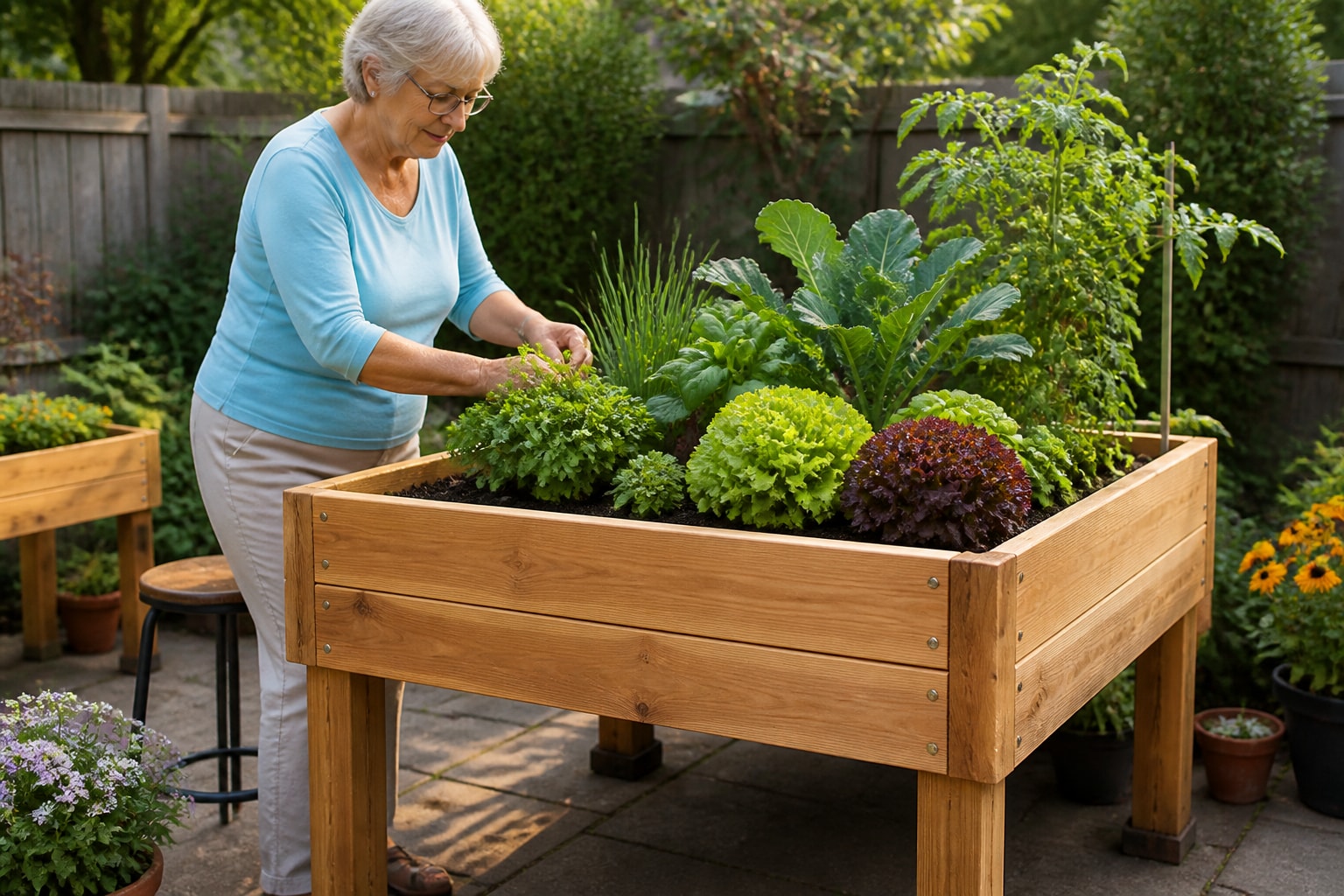
A raised bed around 24 to 30 inches high may work well for gardeners who prefer to sit or stand while tending plants. Wheelchair users may benefit from elevated or tabletop-style planters designed with sufficient knee and foot clearance underneath. The ideal height depends on the gardener’s seated reach, wheelchair dimensions, and ability to approach the growing area comfortably. Test the dimensions before building rather than relying on a single recommended height.
Before building, mock up the bed with boxes, scrap boards, or a table. Sit in your usual gardening chair and reach toward the center. Stand beside it and reach again. Your shoulders should stay relaxed. You shouldn’t have to brace your stomach, lean heavily on the edge, or stretch until your balance changes.
Very tall beds have trade-offs. They cost more, need more soil, and may require stronger framing. A tall wall can also be harder to repair. Sometimes a 24-inch bed with a comfortable seat works better than a 36-inch bed with no place to rest.
Keep the growing area within reach
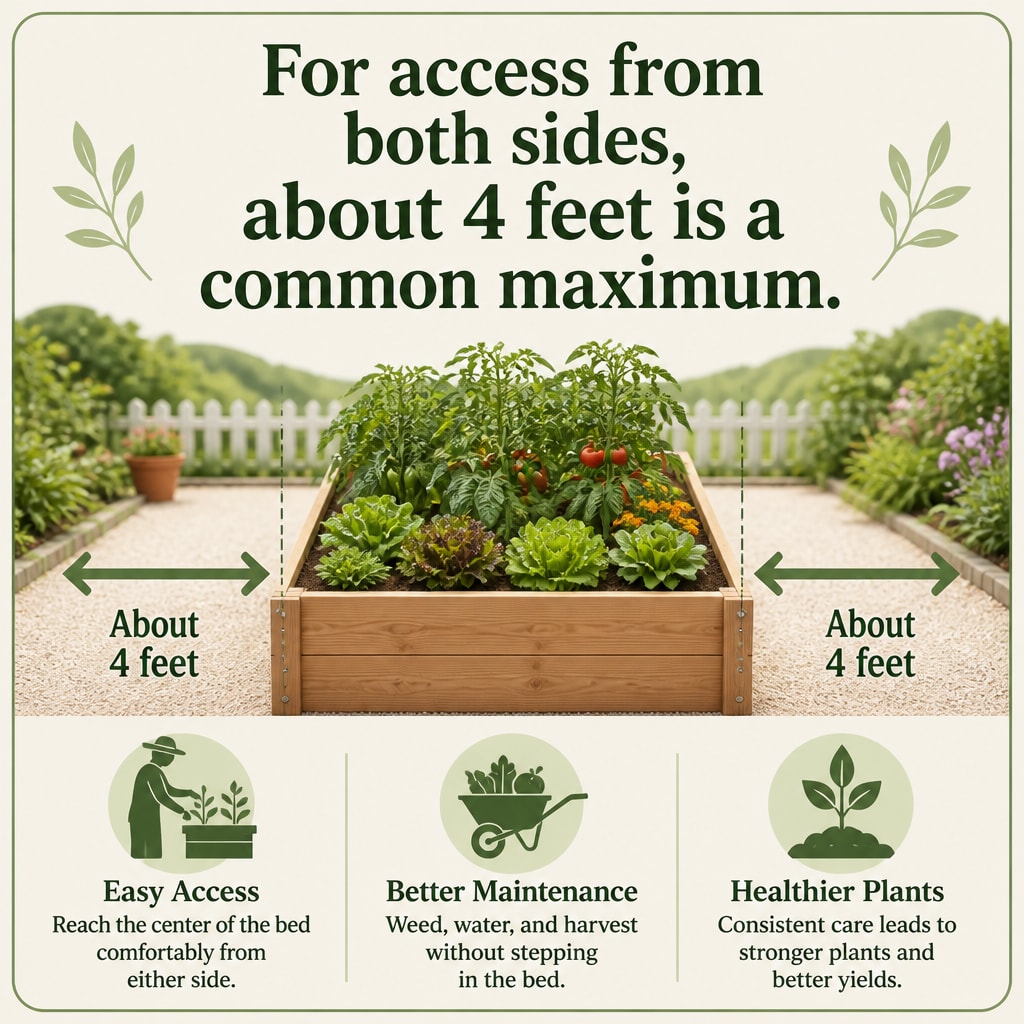
A narrow bed is usually easier to care for than a wide one. For access from one side, aim for roughly 2 feet of growing width. For access from both sides, about 4 feet is a common maximum. Shorter arms are often easier than one long rectangle because you can reach more plants without shuffling around the bed.
Rounded corners or beveled outer corners help reduce bumps, especially in tight spaces. Finish the top edge smoothly and make it wide enough to grip lightly. That edge can provide welcome support, but it shouldn’t be treated as a substitute for a handrail.
Build paths and work areas that feel easy
Give mobility aids room to turn
Path width is one of the details people overlook. A walkway may seem wide enough when empty, then feel cramped once a wheel, footstool, hose, or harvest basket enters the picture.
As a starting point, allow at least 36 inches for a walker or comfortable foot traffic. A wheelchair usually needs more room, especially at corners. A turning area near the bed can make a bigger difference than adding another planting section. Measure the actual mobility aid, then add breathing room.
Keep paths firm, level, and free of loose gravel. Packed gravel can work in some yards, but small stones may shift under walker wheels. Concrete, pavers with narrow joints, or a well-compacted fine surface tend to feel steadier. Avoid abrupt lips between the path and bed.
Add places to sit and set things down
A seat every few steps sounds excessive until you’ve spent an hour weeding. A sturdy bench, fold-down seat, or garden stool lets you change position before your back or legs start complaining.
Include a small landing area beside the bed for tools, harvested vegetables, and a watering can. This simple spot prevents you from carrying everything at once. It also keeps tools out of the walkway, where they become trip hazards.
For more help with choosing a layout, bed shape, and location, see How to Plan and Design a Raised Bed Garden for Beginners. The same planning decisions matter even more when every step and reach needs to count.
Make watering, planting, and maintenance less demanding
Put water close to the beds
Dragging a hose across the yard is tiring and creates a hazard. Place a hose connection near the garden, or use a lightweight hose that doesn’t fight you around corners. A drip irrigation line with a simple timer can reduce daily carrying, though it still needs seasonal checks for leaks and blocked emitters.
Hand watering is fine when the source is nearby. Choose a smaller can with two handles, or keep a filled container on a stable stand at waist height. Don’t make one person carry a heavy load just because the garden was planned around a distant spigot.
Choose crops and tools for easy access
Put frequently harvested crops along the nearest edges. Lettuce, herbs, cherry tomatoes, snap peas, and compact peppers reward regular visits without requiring deep reaches. Trellised crops can save space, but place supports where they won’t block the path or snag clothing.
- Use lightweight tools with thick, nonslip handles.
- Keep a tool caddy at the garden instead of carrying tools from the shed.
- Apply mulch to slow weeds and reduce exposed soil.
- Use plant labels with large, high-contrast writing.
- Set up a kneeling pad or stable seat near regular work areas.
Raised beds also need maintenance. Check for loose boards, sharp screws, rotting timber, and shifting pavers at the start of each season. A quick repair now is much easier than dealing with a wobbly edge while carrying a harvest basket.
FAQs for How to Design Accessible Raised Garden Beds for Seniors and Gardeners with Limited Mobility
What is the best height for an accessible raised garden bed?
There isn’t one perfect height for everyone. Many gardeners find 24 to 30 inches comfortable for standing or seated work, while wheelchair users may prefer around 30 to 36 inches. Test the height before building with boxes or temporary boards. Reach should feel relaxed, and the bed shouldn’t force you to lean across the soil.
How wide should paths be around raised beds?
About 36 inches is a useful starting point for a walker or easy foot traffic, but wheelchairs and turning movements may need more. Measure the equipment you actually use. Add extra width at corners and near gates. A smooth, firm surface matters just as much as the measurement.
Make the garden easier to use from day one
Accessible raised bed design comes down to fewer awkward reaches, safer footing, manageable bed dimensions, and supplies that stay close by. Build a small mock-up before committing to lumber. Sit, stand, turn, and pretend to harvest a few plants. Those simple tests reveal problems that a sketch often misses.
🌱 FREE DOWNLOAD: Your First Raised Bed Garden
A Beginner-Friendly Guide to Getting Started
Thinking about growing your own vegetables in a raised bed? Start with a simple plan that helps you avoid costly mistakes and build a garden you can enjoy for years.
Our FREE Your First Raised Bed Garden guide provides practical, beginner-friendly information to help you:
- Choose a suitable location with enough sunlight.
- Plan the size and layout of your raised garden bed.
- Understand the basics of preparing healthy garden soil.
- Select vegetables that are appropriate for beginners.
- Get started with planting, watering, and caring for your garden.
You don’t need a huge backyard, expensive equipment, or years of gardening experience to get started!
Get Your FREE Raised Bed Gardening Guide
Free PDF guide from Backyard Living Books.
📗 Ready to Grow Your Own Fresh Vegetables?
Creating a productive raised bed garden takes thoughtful planning, healthy soil, and a little know-how.
Take the guesswork out of raised bed gardening!
Raised Bed Gardening Made Easy: Plans, Soil Mixes, Planting Secrets, and Beginner-Friendly Harvests is a practical guide designed to help you:
- Plan and build raised garden beds that fit your space.
- Choose materials and prepare the right soil mix.
- Select and plant vegetables for productive harvests.
- Understand watering, fertilizing, and routine garden maintenance.
- Avoid common mistakes that can waste time and money.
Whether you’re planting your first garden or looking to improve an existing one, this book will help you garden with greater confidence.
Explore Raised Bed Gardening Made Easy
🌿 Want More FREE Raised Bed Gardening Tips?
Visit our Gardening Learning Center for helpful articles, practical advice, and beginner-friendly resources covering everything from soil preparation and vegetable planting to watering, pest prevention, and seasonal gardening.
Explore the Gardening Learning Center
Part of the Backyard Living Series: Build • Grow • Raise • Thrive.