
Backyard Learning Center
Learn practical backyard skills one project at a time through beginner-friendly articles, seasonal tips, and step-by-step guides that help you build, grow, raise, and thrive.
10 Homesteading Mistakes Beginners Make

Homesteading has a way of starting innocently.
You plant a few tomatoes.
Then you build a raised bed.
Then somebody mentions chickens.
Before long, you’re researching fruit trees, compost bins, rain barrels, greenhouses, food preservation, and whether six quail would fit beside the shed.
Welcome to homesteading.
The enthusiasm is wonderful. It’s also responsible for many beginner mistakes.
Most new homesteaders don’t run into trouble because they aren’t capable of doing the work. They run into trouble because they try to do too much, too quickly, without knowing their property yet.
Here are ten common mistakes and how to avoid them.
Mistake #1: Trying to Do Everything the First Year
This is the big one.
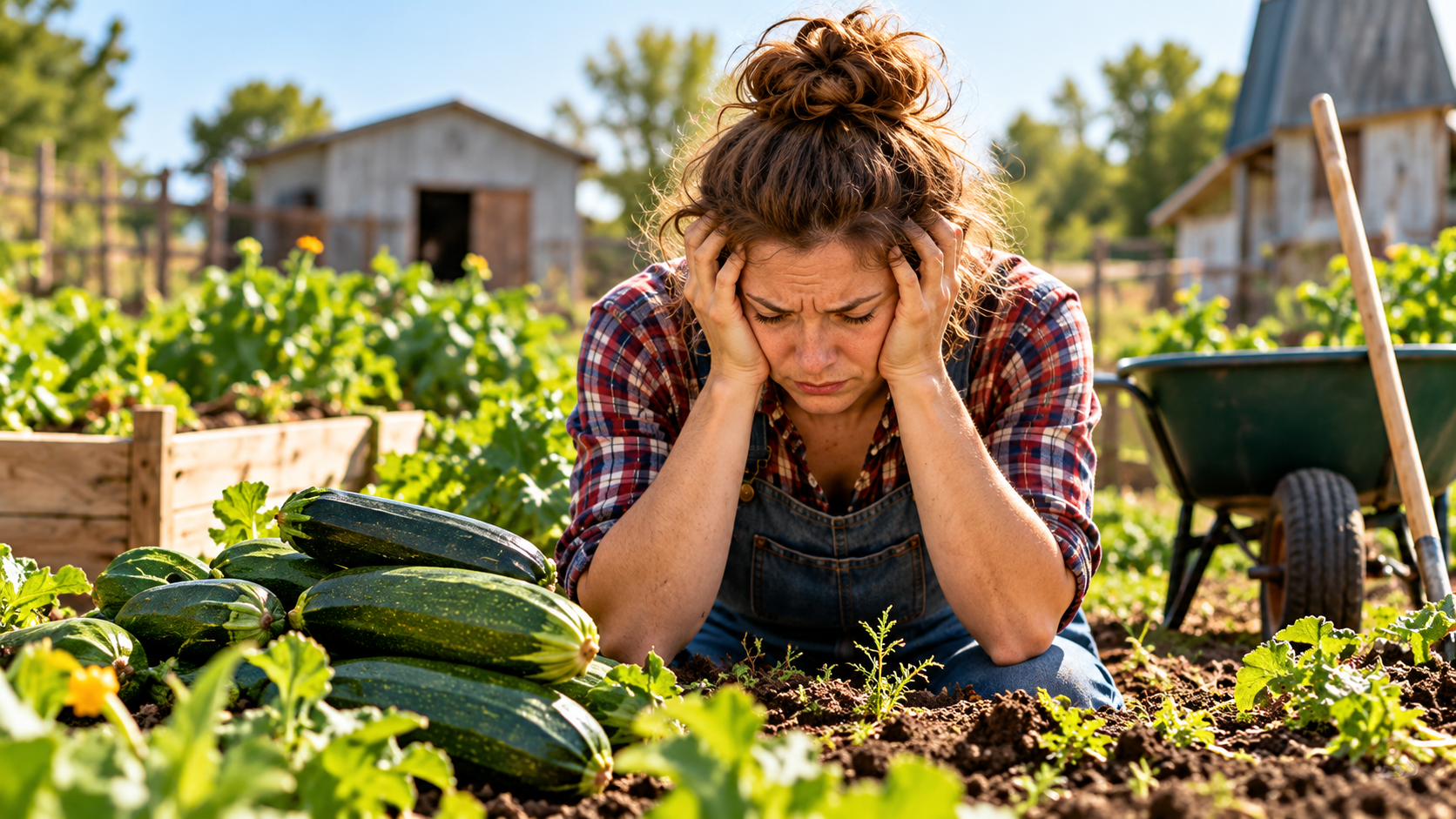
You’ve decided to homestead, so naturally you need a vegetable garden, chickens, fruit trees, compost pile, greenhouse, rainwater system, berry patch, and enough canning equipment to supply a church basement.
By July, you’re exhausted.
The garden has weeds.
The chickens need cleaning.
The fruit trees need water.
And there are 14 zucchini on the kitchen counter staring at you.
How to Avoid It
Choose one or two major projects for your first year.
For example:
Start a small vegetable garden.
Add a composting system.
Learn how those work before adding something else.
Homesteading becomes much more manageable when you build it one skill at a time.
Mistake #2: Starting Too Big
You don’t need twelve raised beds because you eventually want twelve raised beds.
Start with two or three.
You don’t need 25 chickens because somebody online has 25 chickens.
Start with a small flock.
You don’t need an orchard during your first spring.
Plant a couple of carefully selected fruit trees.
How to Avoid It
Build according to what you can comfortably maintain right now.
Expansion is easy.
Trying to maintain a homestead that’s already larger than your available time is not.
It’s much more satisfying to manage four productive garden beds well than twelve poorly.
Mistake #3: Not Learning Your Property First
Every property has its own personality.
Some areas stay wet.
Others dry quickly.
One corner gets eight hours of sun.
Another looks sunny until a nearby tree blocks it every afternoon.
Cold air may settle in a low area.
Strong winds may hit one side of the property.
How to Avoid It
Spend time observing before making permanent decisions.
Watch where the sun travels.
See where water collects after heavy rain.
Notice prevailing winds.
Identify existing trees and plants.
Locate utilities.
Learn where deer, rabbits, or other wildlife enter the property.
A few months of observation can prevent years of working around something placed in the wrong location.

Mistake #4: Growing Food Nobody Eats
This mistake often begins with a seed catalog.
Suddenly, you absolutely need six varieties of radishes.
There’s only one problem.
Nobody in your household likes radishes.
Growing food you won’t eat uses garden space, water, fertilizer, and your time.
How to Avoid It
Look at your grocery purchases.
What vegetables does your household buy regularly?
What herbs do you use?
Which fruits do you enjoy?
Start there.
Experiment with something new occasionally, but give your best growing space to foods that have a good chance of reaching the dinner table.
Your garden doesn’t receive bonus points for producing vegetables everybody avoids.
Mistake #5: Adding Animals Before Building the Infrastructure
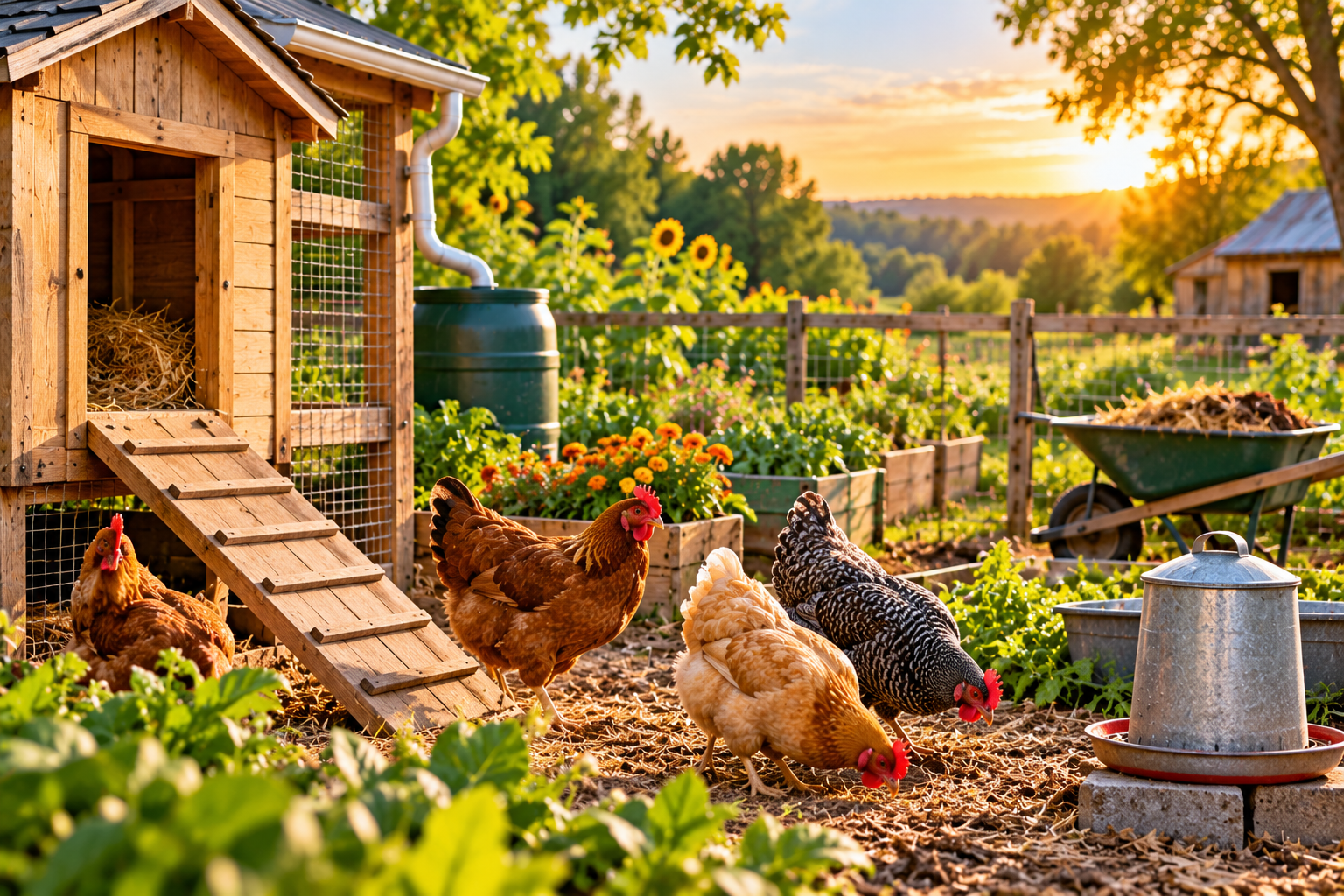
Baby chicks are dangerous.
Not physically.
They’re dangerous because they’re cute.
You see them at the feed store and suddenly six of them are riding home with you.
Then you remember you don’t have a chicken coop.
How to Avoid It
Build and test the animal setup before the animals arrive.
Have housing, feeders, waterers, bedding, feed storage, fencing, and predator protection ready.
Also make sure you understand the animal’s daily care requirements.
Animals don’t care that the coop isn’t finished.
They still need somewhere safe to sleep tonight.
Mistake #6: Ignoring Local Rules
You may own the property.
That doesn’t necessarily mean you can put anything you want on it.
Local governments and homeowners associations may regulate chickens, roosters, livestock, beehives, accessory structures, fences, setbacks, and other homesteading activities.
How to Avoid It
Check local ordinances, zoning requirements, permit requirements, and HOA restrictions before spending money.
This is especially important before adding animals or constructing permanent structures.
It’s much easier to read the rules first than figure out what to do with a goat you’re suddenly not allowed to keep.
Mistake #7: Underestimating the Daily Work
Gardens need water.
Animals need food.
Eggs need collecting.
Compost needs attention.
Fruit needs harvesting.
Equipment needs maintenance.
Preserved foods don’t magically jump into jars.
A small homestead doesn’t necessarily require hours every day, but it does create responsibilities that continue whether you’re busy, tired, traveling, or simply don’t want to do them.
How to Avoid It
Before starting a new project, ask:
What does this require every day?
Every week?
Every season?
Who handles it when I’m away?
That last question becomes particularly important with animals.
Tomatoes may forgive you for taking a weekend trip.
Chickens still want breakfast.
Mistake #8: Buying Too Much Equipment
Homesteading can become surprisingly expensive if you let the shopping cart take control.
There’s always another tool.
Another gadget.
Another specialized container.
Another piece of equipment somebody insists will transform your life.
Soon, you’re spending hundreds of dollars to grow $37 worth of vegetables.
How to Avoid It
Buy equipment when you actually need it.
Start with basic, durable tools.
Borrow or rent equipment you rarely use when practical.
Reuse suitable materials where it makes sense.
Upgrade once you know the activity is something you’ll continue.
Your first garden doesn’t need to resemble the equipment department of a farm-supply store.
Mistake #9: Forgetting About Harvest Time
Growing food is only half the job.
Eventually, you have to do something with it.
Twenty ripe tomatoes are wonderful.
Eighty ripe tomatoes arriving during the same week require a plan.
Fruit trees can eventually produce substantial harvests.
Chickens keep producing eggs.
Green beans apparently enjoy becoming ready whenever you’re busiest.
How to Avoid It
Think about harvest and storage before planting.
Decide what you’ll:
Eat fresh
Give away
Freeze
Dehydrate
Pickle
Can using tested methods
Store for later use
Planting several varieties with different harvest times can also help spread production across the season.
The goal isn’t simply to grow food.
It’s to use what you grow.
Mistake #10: Comparing Your Beginning With Someone Else's Established Homestead
This one can quietly take the fun out of everything.
You look online and see somebody with a beautiful greenhouse, enormous garden, spotless chicken coop, productive orchard, shelves full of preserved food, and a barn that apparently has never encountered dirt.
Then you look outside.
You have two raised beds and a compost tumbler.
You’re doing fine.
That other homestead may have taken ten years to build.
How to Avoid It
Measure progress against your own starting point.
Last year you bought every tomato you ate.
This year you grew some.
Last year your kitchen scraps went into the trash.
Now they’re becoming compost.
Last year you didn’t know how to preserve food.
Now you do.
Those are real accomplishments.
One More Mistake: Forgetting Why You Started
Yes, this makes eleven.
Homesteaders tend to produce extra.
It’s easy to become so focused on productivity that every part of the property becomes another project.
The garden needs expanding.
The coop needs improving.
Another fruit tree would fit over there.
Maybe you could squeeze a greenhouse beside the shed.
Eventually, you can turn something you enjoyed into a never-ending list of chores.
Remember why you started.
Maybe you wanted fresher food.
Maybe you wanted to become more self-reliant.
Maybe you wanted to spend more time outdoors.
Maybe you simply wanted to know where some of your food came from.
Don’t build a homestead that defeats the reason you wanted one.
A Better First-Year Homestead
A beginner homestead doesn’t need to be complicated.
It might consist of:
Two or three raised beds
A few containers of herbs
One composting system
That’s plenty for a first season.
Learn how much food those beds produce.
Learn how much time they require.
Learn what grows well on your property.
Learn what your family actually eats.
Then decide what comes next.
Maybe it’s fruit trees.
Maybe chickens.
Maybe berries.
Maybe food preservation.
Or maybe you discover those three raised beds provide exactly as much gardening as you want.
That’s useful information too.
Build the Homestead You Can Maintain
Successful homesteading isn’t about having the most animals, biggest garden, largest pantry, or longest project list.
It’s about creating systems that work for your household.
Start small.
Learn your property.
Grow food you’ll actually eat.
Prepare before adding animals.
Know the local rules.
Control spending.
Have a plan for the harvest.
Then expand only when you’re ready.
You have plenty of time.
After all, the goal isn’t to build your entire homestead in one weekend.
The goal is to build one you still enjoy living on years from now. 🌱🏡🐓🥕
Ready to Start Homesteading with Confidence?
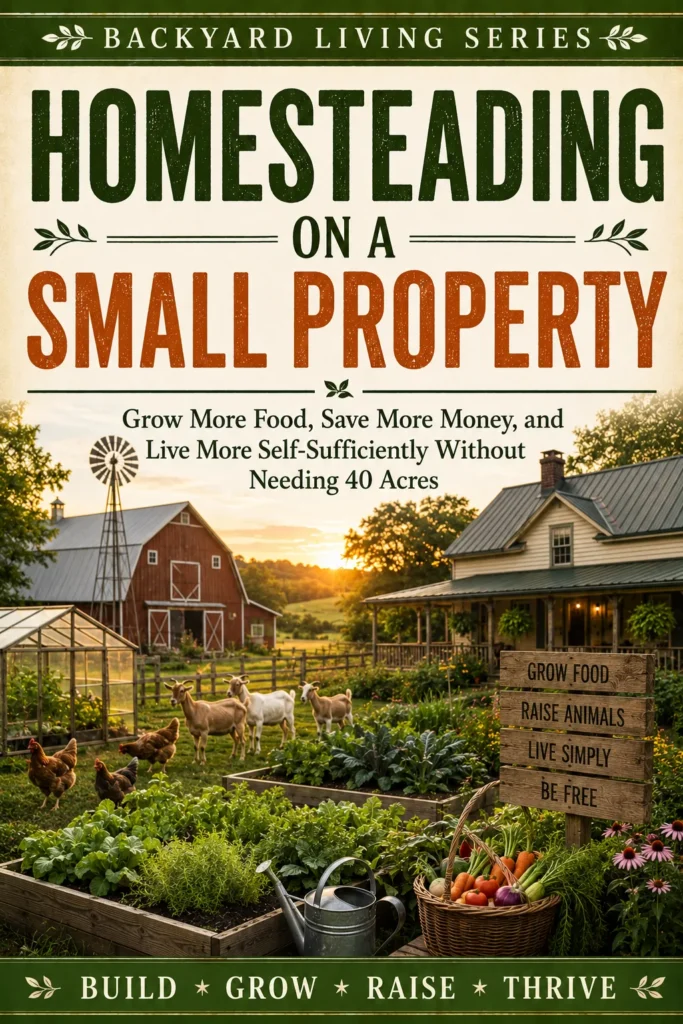
Homesteading on a Small Property expands on each of these topics with clear, step-by-step guidance designed specifically for beginners. From avoiding common homesteading mistakes and growing more food in a small backyard to becoming more self-sufficient, this book shows you how to make the most of the space you have. You’ll discover how to plan your homestead, choose the right animals for your property, grow fresh vegetables and fruit, and develop practical skills that help you rely less on outside resources. You’ll also learn how to turn even a ¼-acre lot into a productive, rewarding homestead without feeling overwhelmed or spending a fortune. Whether you have a suburban backyard or a small piece of land, you’ll discover that successful homesteading isn’t about how much property you own. It’s about making the most of what you have. 🏡🌱
More Homesteading Articles
If you found this article helpful, these beginner guides are a great next step:
Get Your FREE Backyard Starter Toolkit
Download our free Backyard Starter Toolkit, packed with printable planners, checklists, and beginner resources to help you build, grow, raise, and thrive.
About the Author
Steve McChesney is the founder of Backyard Living Books and has spent decades guiding homeowners to build, grow, raise, and preserve more from their own backyards. Through practical, beginner-friendly guides, he encourages people to tackle one backyard project at a time and enjoy the satisfaction that comes with learning new skills.