Backyard Learning Center
Learn practical backyard skills one project at a time through beginner-friendly articles, seasonal tips, and step-by-step guides that help you build, grow, raise, and thrive.
How Much Food Can You Grow in a Small Backyard?
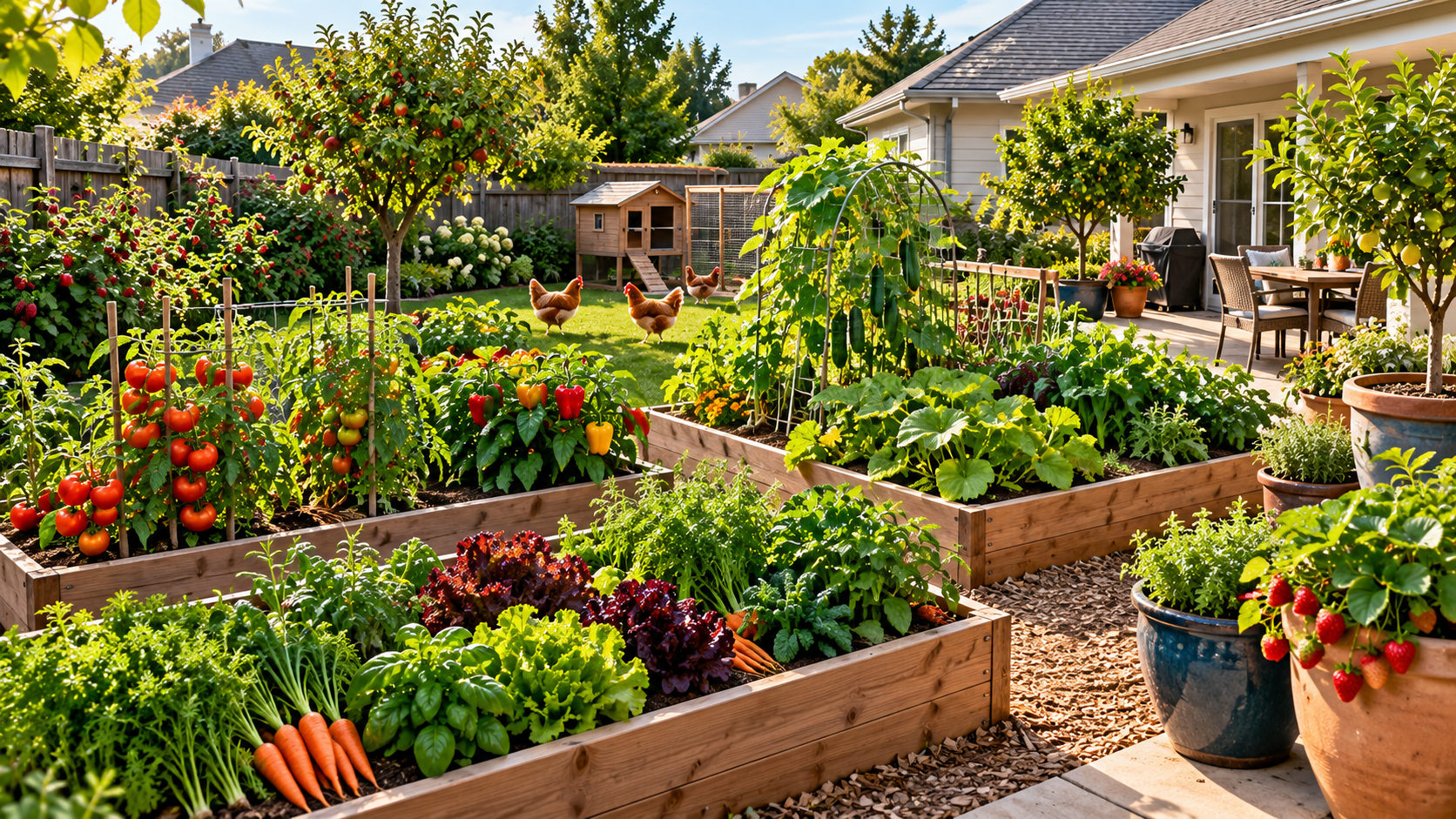
One of the first questions people ask when considering a small homestead is:
Can a little backyard actually produce enough food to matter?
Absolutely.
Will a ¼-acre suburban property make you completely self-sufficient?
Probably not.
But that’s the wrong measuring stick.
You don’t need to replace the grocery store to make backyard food production worthwhile. If your garden supplies tomatoes all summer, herbs you no longer buy, peppers for the freezer, fresh eggs, berries for breakfast, and enough cucumbers to make you suspicious of every neighbor who avoids eye contact, that’s real food.
And with good planning, a surprisingly small backyard can produce quite a lot of it.
Start With the Space You Actually Have
Your property size and your growing space aren’t necessarily the same thing.
A quarter-acre lot may contain nearly 11,000 square feet, but some of that belongs to the house, driveway, patio, shed, sidewalks, and other uses.
Your actual food-growing area might be 500 square feet.
Or 1,000.
Or just four raised beds and a sunny patio.
That’s enough to begin.
The better question isn’t:
How much land do I own?
It’s:
How much productive space can I create?
A Small Garden Can Produce a Lot of Vegetables
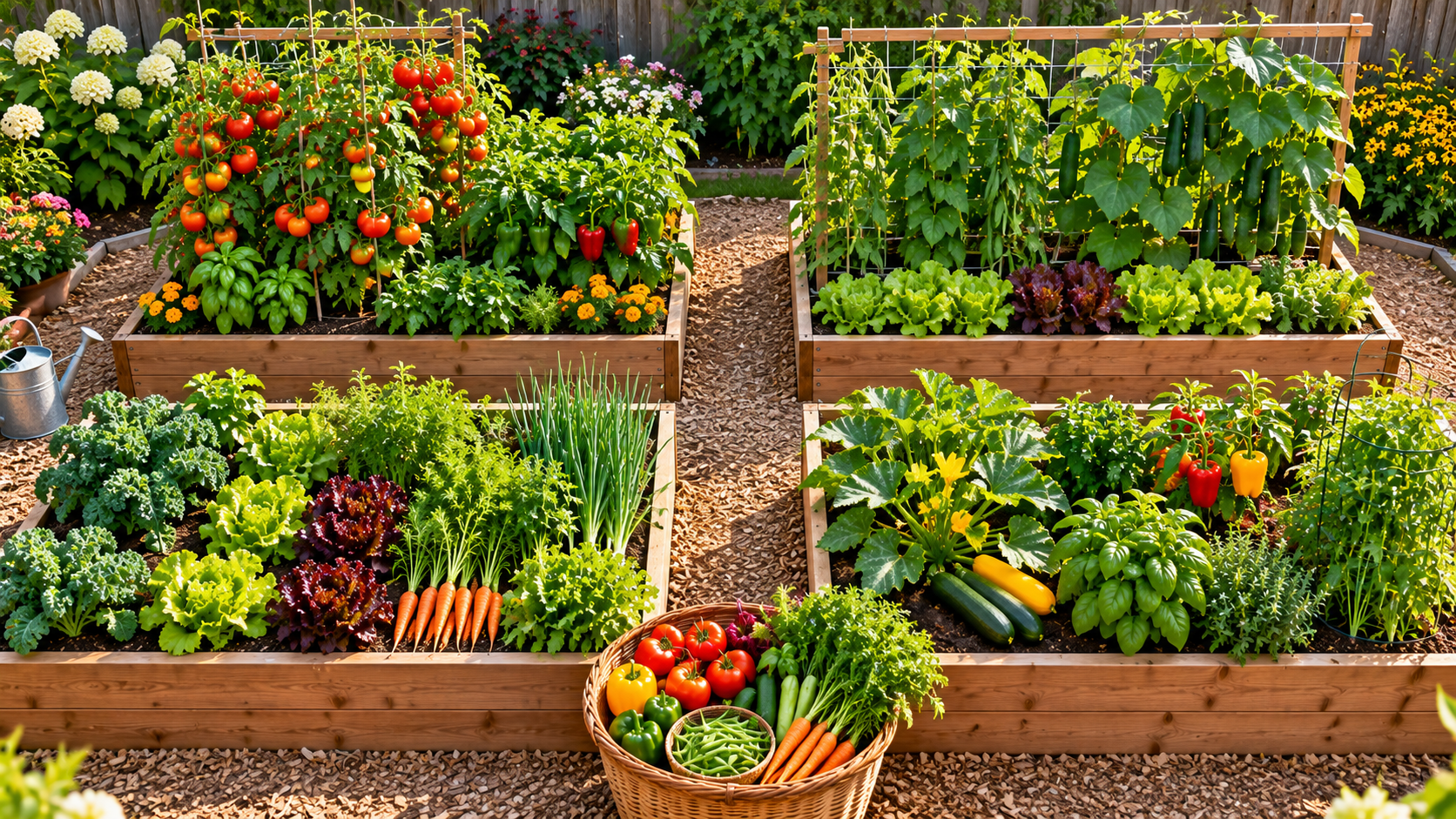
Imagine four raised beds measuring 4 feet by 8 feet.
That’s only 128 square feet of actual growing area.
Yet those beds could hold a combination of tomatoes, peppers, beans, lettuce, carrots, cucumbers, herbs, onions, and other crops suited to your climate.
The exact harvest will vary according to crop, variety, weather, growing season, soil, spacing, pests, and your gardening practices.
But you don’t need enormous harvest numbers for those beds to become useful.
Consider what happens when you’re regularly walking outside instead of going to the produce department for lettuce, tomatoes, peppers, cucumbers, and herbs.
Those harvests add up.
Grow What You Actually Eat
This sounds obvious.
It isn’t.
Seed catalogs have a remarkable ability to convince people they need vegetables they’ve never purchased, cooked, or willingly eaten.
Don’t use valuable backyard space growing food simply because it looks interesting in a photograph.
Start with the vegetables your household regularly buys.
If you eat tomatoes constantly, give tomatoes some prime real estate.
If your family loves peppers, grow peppers.
If nobody in the house eats turnips, you probably don’t need a magnificent turnip operation.
Your garden becomes more productive when you measure production by food you’ll actually use.

Some Crops Give You More From a Small Space
When growing space is limited, crop selection matters.
A plant that occupies a small area and produces repeatedly can be particularly valuable.
Examples might include pole beans, cucumbers grown on a trellis, indeterminate tomatoes, peppers, leafy greens, and herbs.
Other crops require more room for the amount of food they provide.
That doesn’t mean you shouldn’t grow them.
If you love sweet corn, grow some sweet corn.
Just understand that a small homestead involves choices.
Every square foot has a résumé.
Give the job to the plants that make sense for your household.
Vertical Growing Can Increase Production
A small backyard may have limited ground.
It has considerably more vertical space.
Trellises, cages, fences, and other supports can allow certain crops to grow upward rather than spreading across valuable garden space.
Depending on the crop, you might grow:
- Cucumbers
- Pole beans
- Peas
- Indeterminate tomatoes
- Some vining squash and melons
Now the space beside or underneath those plants may become available for additional crops when appropriate.
A six-foot trellis doesn’t create more land.
But it certainly makes your existing land work harder.
Plant More Than Once
A garden bed doesn’t necessarily have to produce only one crop each year.
Suppose cool weather allows you to grow lettuce early in the season.
When that crop finishes, another warm-season crop may take its place.
Later, you may be able to plant another cool-season crop.
This is called succession planting, and it’s one of the best ways to increase production from limited space.
Instead of asking:
What can I grow in this bed?
Ask:
What can I grow in this bed throughout the growing season?
That small change in thinking can make the same garden considerably more productive.
Don't Forget the Fence Line
Property edges are often overlooked.
Depending on sunlight and your climate, a fence line might support berry plants, trellised vegetables, espaliered fruit trees, or other productive plants.
This is especially useful on small homesteads because you’re using an area that might otherwise contribute very little.
Just account for mature plant size and maintenance access.
A blackberry planting that seemed wonderfully compact during year one may have expansion plans you weren’t invited to approve.
Fruit Trees Add Food Without Taking Over the Yard
You don’t need a traditional orchard.
Dwarf and semi-dwarf fruit trees can provide significant production while occupying much less space than standard trees.
Depending on your climate, you might grow apples, peaches, pears, plums, figs, citrus, or other fruits.
A few carefully chosen trees can also provide harvests at different times.
Perhaps peaches arrive first.
Figs come later.
Apples finish the season.
Now a relatively small section of your yard is producing food for months rather than weeks.
Berries Are Small-Homestead Superstars
Berries deserve serious consideration when space is limited.
Strawberries can grow in beds or containers.
Blueberries can fit into suitable sunny areas.
Blackberries and raspberries can sometimes be trained along supports.
Once established and properly maintained, berry plants can produce year after year.
They’re also expensive enough at the grocery store that growing your own can be particularly satisfying.
The first bowl of backyard berries has a strange ability to make you forget exactly how much you spent establishing the berry patch.
Containers Create Growing Space Where None Existed
A patio isn’t garden soil.
That doesn’t mean it can’t produce food.
Containers and grow bags can turn hard surfaces into productive areas.
Depending on container size and growing conditions, you can grow herbs, peppers, tomatoes, strawberries, lettuce, potatoes, and even certain dwarf fruit trees.
Containers also let you take advantage of small sunny locations where an in-ground garden isn’t possible.
That forgotten corner of the patio might be worth another pepper plant.
Herbs Provide a Lot of Value From Very Little Space
Herbs don’t produce huge harvests by weight.
That’s not the best way to measure them.
Think about what a small package of fresh basil, rosemary, thyme, or parsley costs at the grocery store.
A modest herb garden can provide repeated harvests while occupying very little room.
Place frequently used herbs somewhere convenient.
A few steps outside the kitchen door is better than the far corner of the property.
You’re much more likely to use them when getting rosemary doesn’t require hiking boots.
Eggs Can Become Part of Your Backyard Food Supply
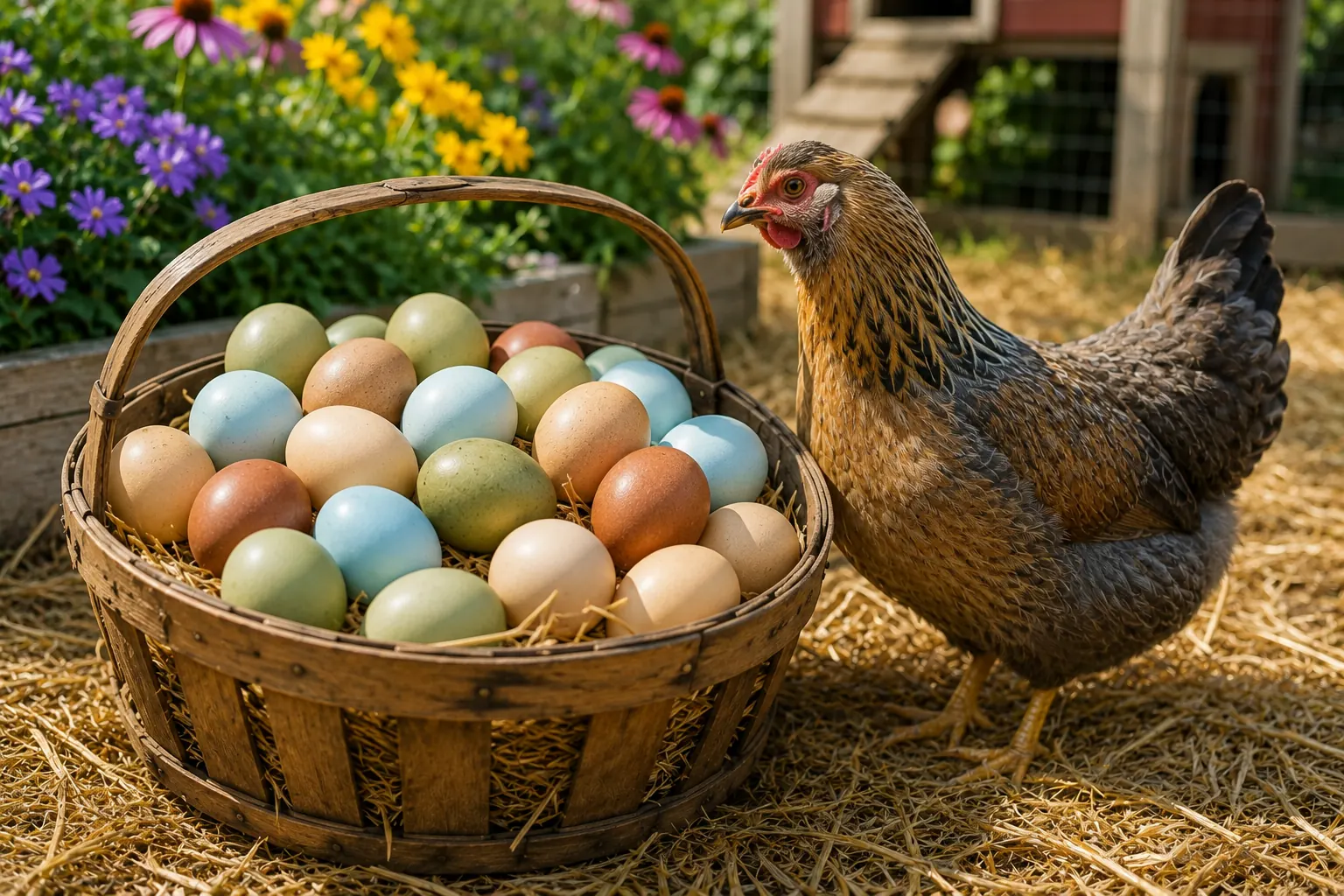
If local regulations permit poultry, your backyard food production doesn’t have to stop with plants.
A modest flock of laying hens can provide eggs.
Quail can provide eggs in an even smaller area.
That changes the backyard equation.
Now you’re producing vegetables, fruit, herbs, and a source of protein from the same small property.
Of course, animals also require feed, housing, water, cleaning, predator protection, and daily care.
The eggs aren’t free.
They’re simply produced at home.
Compost Helps the System Support Itself
Food production creates plant trimmings and kitchen scraps.
Those materials can become ingredients for compost.
Finished compost can then return to appropriate garden areas.
You aren’t creating a completely closed system, but you’re making better use of resources already passing through your household.
Vegetable scraps help create compost.
Compost helps support future crops.
Future crops produce more vegetables.
That’s a pretty good arrangement for something that started with carrot peelings.
Preservation Changes the Meaning of a Harvest
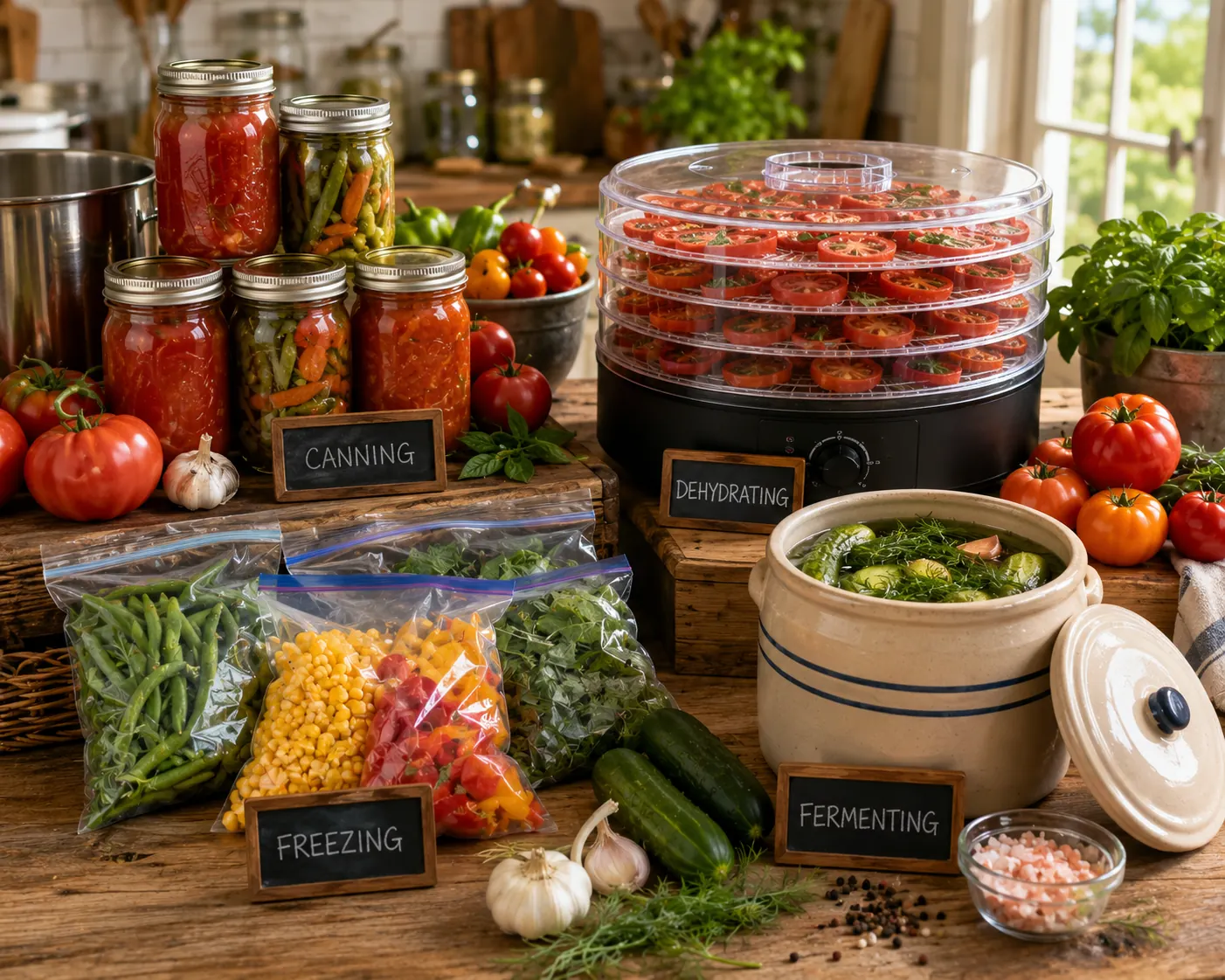
Suppose your garden produces 30 tomatoes during one week.
That’s wonderful.
It’s also a lot of tomatoes to eat before Saturday.
This is where food preservation becomes part of small-scale food production.
Depending on the food and an appropriate tested method, you might freeze, dehydrate, pickle, ferment, or can part of your harvest.
Now food harvested in July might still be feeding your family months later.
Growing food and preserving food work beautifully together.
Measure What You Produce
If you really want to know how much food your backyard produces, keep records for one growing season.
You don’t need an elaborate spreadsheet.
Record what you harvest.
For example:
Tomatoes: 42 pounds
Peppers: 18 pounds
Green beans: 16 pounds
Cucumbers: 31
Strawberries: 12 pounds
Eggs: 63 dozen
Your numbers will depend entirely on what you grow and how your season goes.
But once you track production, something interesting happens.
You stop seeing a few tomatoes here and a basket of beans there.
You see the total amount of food your property produced during the year.
That can be surprisingly motivating.
You Don’t Need to Grow Everything
This is an important part of small-property homesteading.
Don’t waste valuable garden space trying to produce foods that aren’t practical for you.
Maybe potatoes are inexpensive where you live, but fresh berries are costly.
Grow berries.
Maybe you have limited space and can buy onions cheaply by the bag.
Use that space for tomatoes you love but can’t find at the grocery store.
Maybe a local farm sells excellent sweet corn.
Buy theirs and use your garden for crops that produce repeatedly.
Homesteading doesn’t mean every bite of food must originate within sight of your kitchen window.
It means becoming more capable of producing, preserving, and managing some of your own food.
How Much Can You Really Grow?
There’s no universal number.
Two 500-square-foot gardens can produce very different harvests depending on climate, sunlight, soil, crop choices, planting methods, pests, experience, and growing season.
But a small backyard can realistically contribute vegetables, herbs, berries, tree fruit, and possibly eggs to your household.
And every season teaches you how to use the space better.
You discover which tomato varieties perform best.
You learn where afternoon shade appears.
You realize nobody eats nearly as many radishes as you expected.
You discover that three cucumber plants were sufficient.
Very sufficient.
Next year, you adjust.
Don’t Measure Success by Self-Sufficiency
Your first goal doesn’t need to be producing 100 percent of your family’s food.
Try producing something you currently buy.
Then another thing.
And another.
Maybe your first year provides summer vegetables and herbs.
The next year you add berries.
Then fruit trees.
Then chickens.
Then preservation.
A small backyard isn’t going to replace thousands of acres of agricultural land.
It doesn’t need to.
If you walk outside tonight, pick vegetables for dinner, collect a few eggs, and grab fresh herbs on the way back inside, your little backyard has already done something remarkable.
It stopped being just a yard.
It became part of your pantry. 🌱🥕🍅🥚
Ready to Start Homesteading with Confidence?
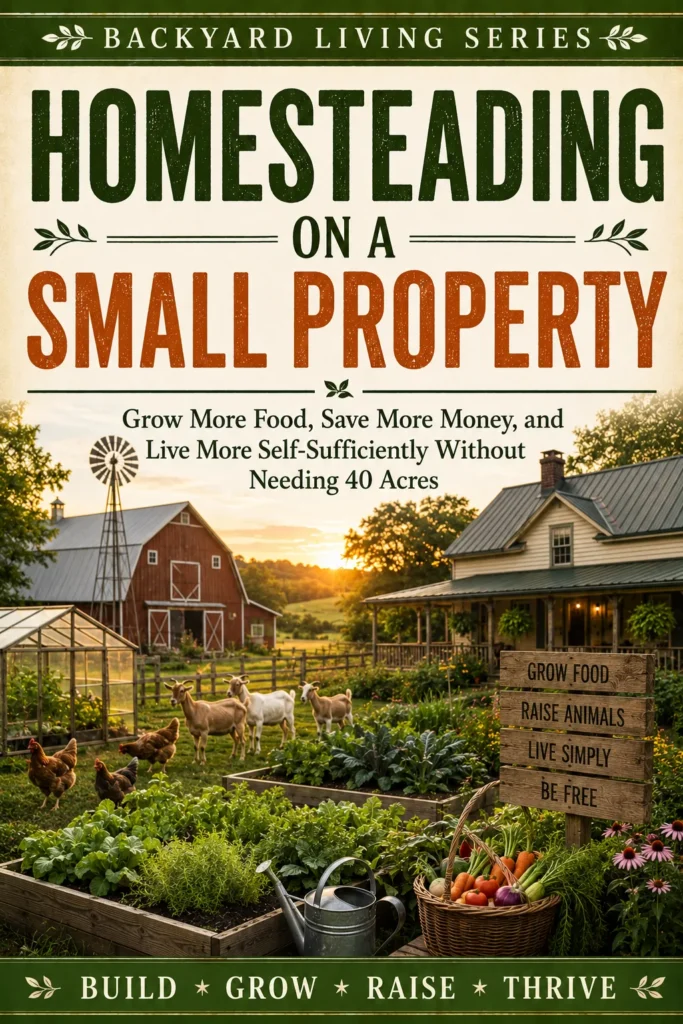
Homesteading on a Small Property expands on each of these topics with clear, step-by-step guidance designed specifically for beginners. From avoiding common homesteading mistakes and growing more food in a small backyard to becoming more self-sufficient, this book shows you how to make the most of the space you have. You’ll discover how to plan your homestead, choose the right animals for your property, grow fresh vegetables and fruit, and develop practical skills that help you rely less on outside resources. You’ll also learn how to turn even a ¼-acre lot into a productive, rewarding homestead without feeling overwhelmed or spending a fortune. Whether you have a suburban backyard or a small piece of land, you’ll discover that successful homesteading isn’t about how much property you own. It’s about making the most of what you have. 🏡🌱
More Homesteading Articles
If you found this article helpful, these beginner guides are a great next step:
Get Your FREE Backyard Starter Toolkit
Download our free Backyard Starter Toolkit, packed with printable planners, checklists, and beginner resources to help you build, grow, raise, and thrive.
About the Author
Steve McChesney is the founder of Backyard Living Books and has spent decades guiding homeowners to build, grow, raise, and preserve more from their own backyards. Through practical, beginner-friendly guides, he encourages people to tackle one backyard project at a time and enjoy the satisfaction that comes with learning new skills.