
Backyard Learning Center
Learn practical backyard skills one project at a time through beginner-friendly articles, seasonal tips, and step-by-step guides that help you build, grow, raise, and thrive.
How to Keep Your Greenhouse Cool During the Summer
(August 2026 – Estimated Reading Time: 8 Minutes)
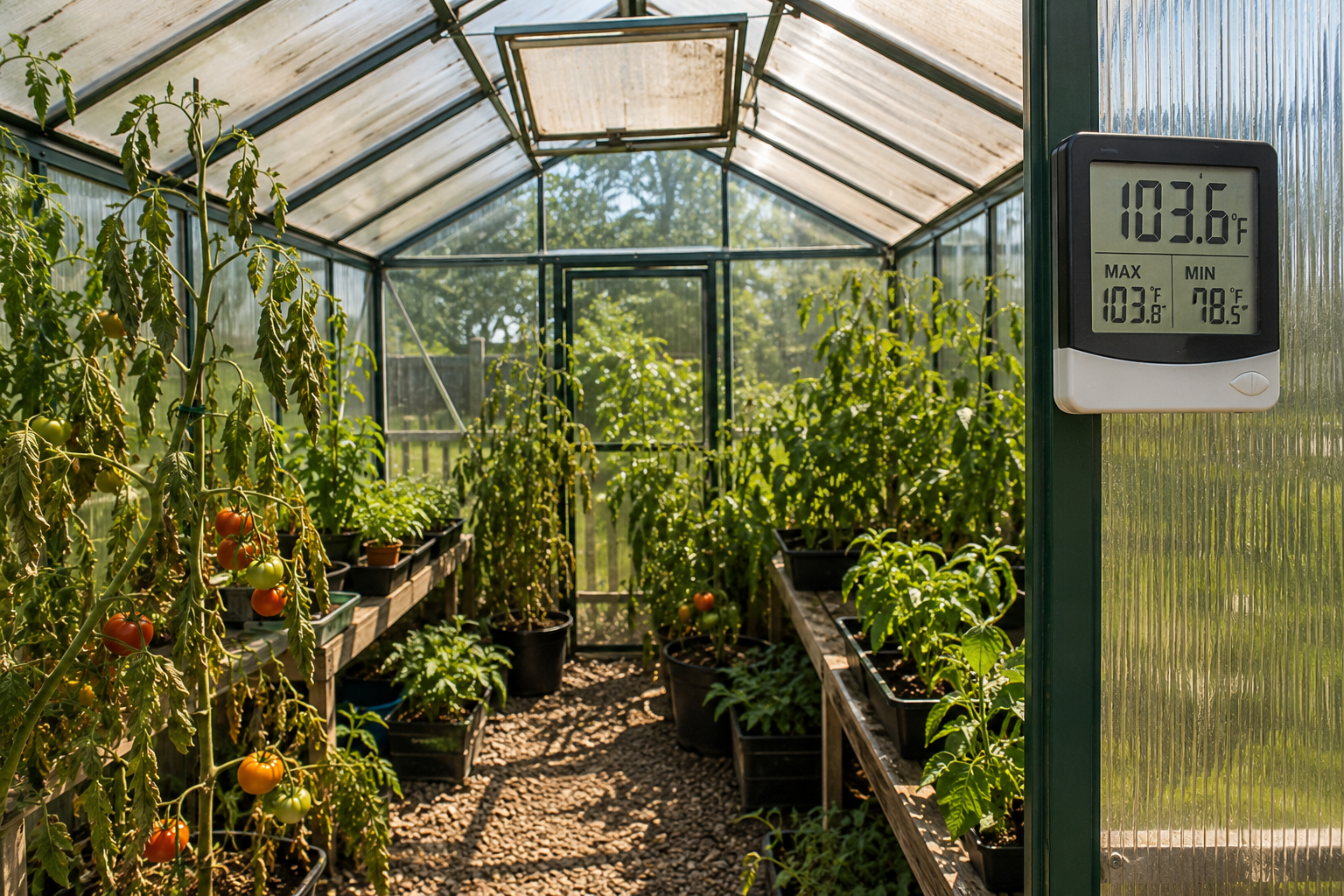
A greenhouse is designed to capture sunlight and hold warmth. That’s exactly what makes it such a valuable gardening tool during cool weather.
Summer, however, changes the equation.
On a sunny July afternoon, the temperature inside a closed greenhouse can climb past 100°F in surprisingly little time. In some cases, it can reach 120°F or higher, even when the outside temperature feels comfortable.
For plants, that kind of heat can quickly become dangerous.
Leaves wilt. Flowers drop before producing fruit. Pollination slows or stops altogether. Young seedlings may collapse from heat stress, and prolonged exposure can permanently damage many crops.
Fortunately, keeping a greenhouse cool doesn’t require expensive equipment. With a little planning and a few simple techniques, you can maintain a healthier growing environment all summer long.
Here are the most effective ways to prevent your greenhouse from becoming an oven.
Understand Why Greenhouses Get So Hot
Sunlight passes easily through greenhouse coverings such as glass or polycarbonate panels.
Once inside, that sunlight warms the soil, benches, pots, and plants. Those surfaces release heat, but much of it becomes trapped inside the enclosed structure.
It’s the same reason the inside of a parked car becomes unbearably hot on a sunny day.
Without ventilation, temperatures rise quickly.
The larger your greenhouse and the stronger the sunlight, the more important cooling becomes.
Fortunately, several simple strategies work together to keep temperatures under control.
Open Roof Vents Every Day
Hot air naturally rises.
Roof vents allow that hot air to escape before temperatures climb too high.
If your greenhouse has roof vents, make opening them part of your daily routine whenever warm weather arrives.
Even partially opening a vent can significantly reduce interior temperatures.
For gardeners who aren’t always home, automatic vent openers are one of the best investments you can make.
These inexpensive devices use temperature-sensitive cylinders that automatically lift roof vents as the greenhouse warms and close them again when temperatures cool.
They require no electricity and quietly work every sunny day.
It’s one of those upgrades that pays for itself through healthier plants and greater peace of mind.
Create Cross Ventilation
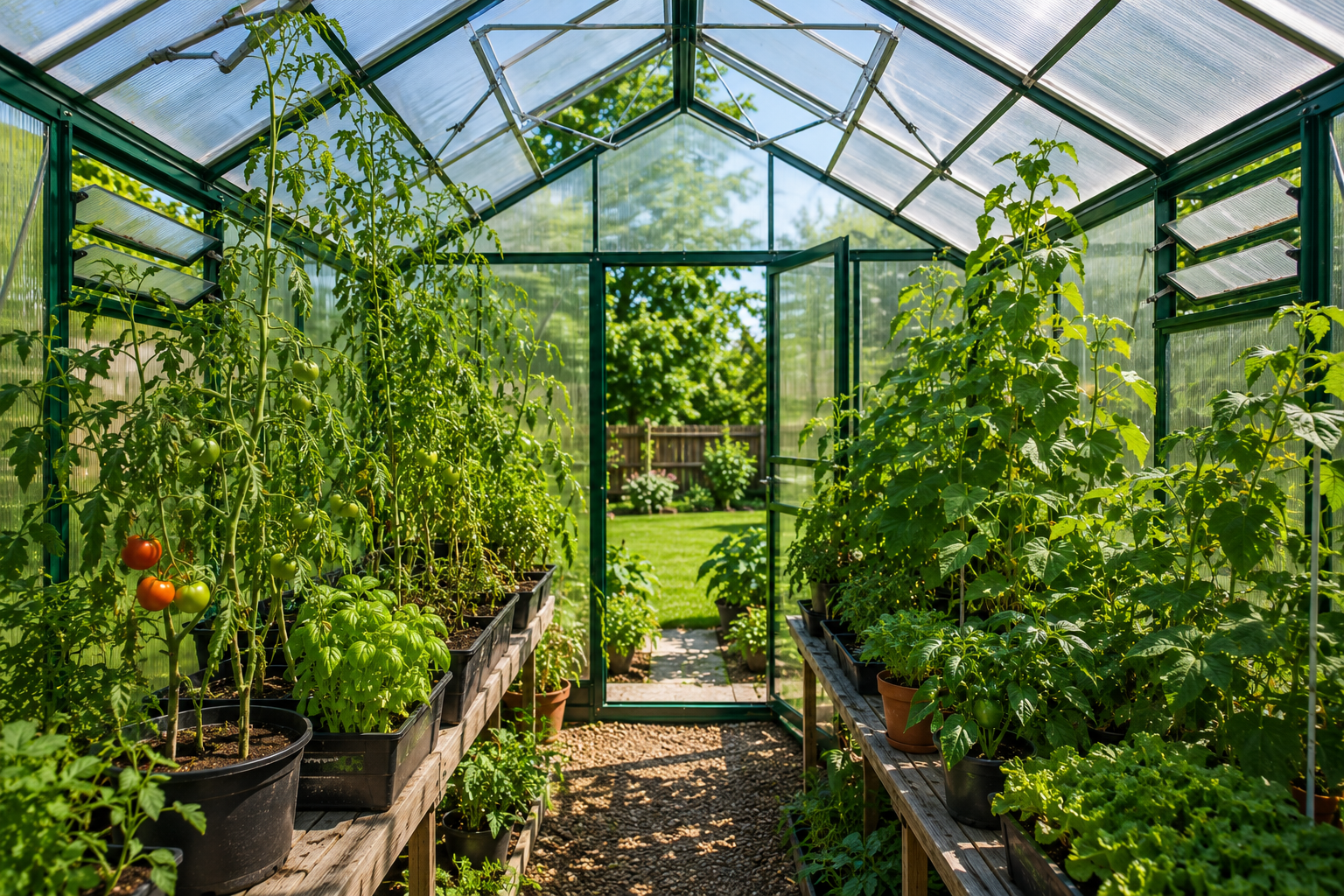
Opening a roof vent is only half the solution.
Fresh, cooler air also needs a way to enter the greenhouse.
That’s where doors and side vents come into play.
When cooler air enters near ground level and warm air exits through the roof, a natural airflow develops throughout the structure.
This process, known as cross ventilation, continuously replaces hot air with cooler outside air.
Whenever weather allows:
- Open the main door.
- Open side vents.
- Open roof vents.
- Keep pathways clear so air can circulate freely.
Good airflow benefits nearly every plant you grow.
Use Circulation Fans
Even with vents open, warm air can become trapped in corners or near the roof.
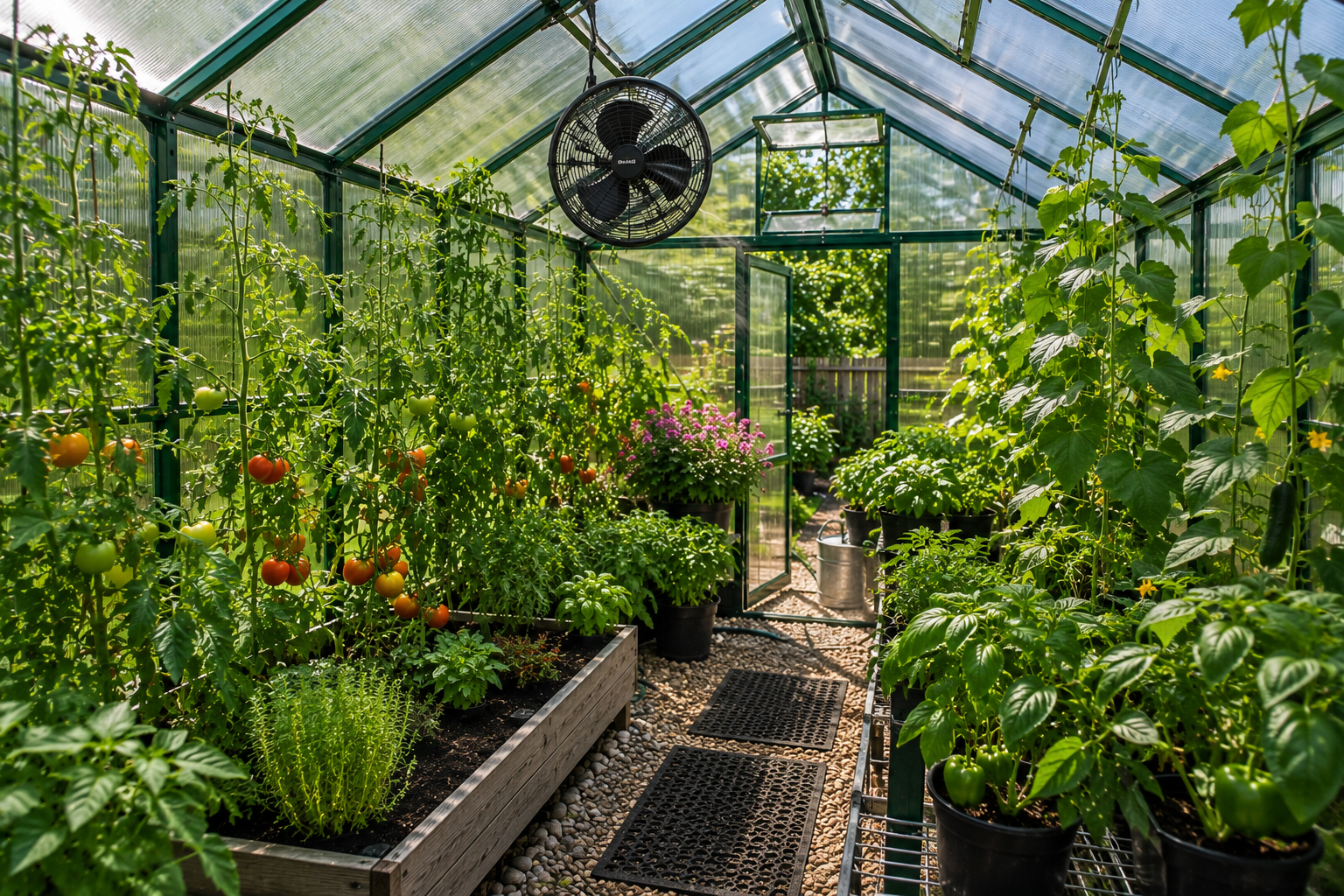
Circulation fans help eliminate these hot spots.
Unlike large exhaust fans that exchange inside and outside air, circulation fans simply keep air moving around the greenhouse.
The benefits include:
- More even temperatures
- Reduced humidity
- Stronger plant stems
- Better pollination
- Less fungal disease
Small oscillating fans often provide plenty of airflow for hobby greenhouses.
Aim them across the tops of plants rather than directly at individual leaves.
Gentle air movement is usually all that’s needed.
Install Shade Cloth
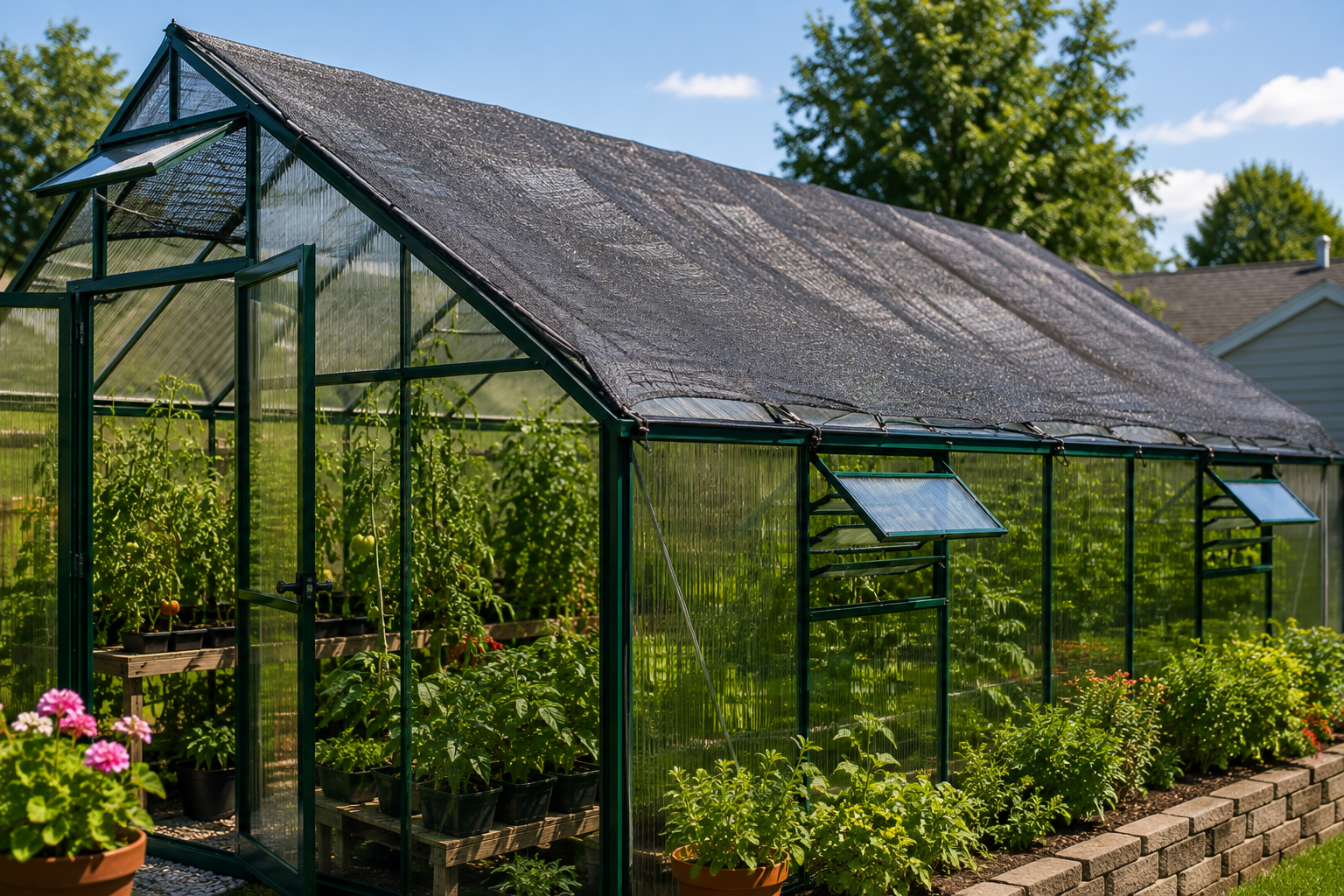
Sometimes the easiest way to cool a greenhouse is by reducing the amount of sunlight entering it.
Shade cloth works exactly as its name suggests.
It filters a percentage of incoming sunlight while still allowing enough light for healthy plant growth.
Common shade cloth ratings include:
- 30% shade for vegetables
- 40% to 50% shade for general gardening
- 60% or higher for delicate ornamentals or extremely hot climates
Many gardeners install shade cloth over the roof during summer and remove it again in fall.
Others choose interior shade curtains that can be adjusted throughout the day.
A properly installed shade cloth can lower greenhouse temperatures by several degrees while protecting plants from leaf scorch.
Water at the Right Time
Summer watering isn’t just about supplying moisture.
It also affects greenhouse temperatures.
Water plants early in the morning whenever possible.
Morning watering:
- Gives roots moisture before afternoon heat.
- Allows excess humidity to dissipate.
- Reduces fungal disease.
- Helps plants tolerate hot afternoons.
Avoid heavy watering late in the evening.
Moisture that remains overnight increases humidity and encourages mold and mildew.
Deep watering is generally more beneficial than frequent shallow watering.
Healthy roots growing deeper into the soil are naturally more resilient during hot weather.
Add Thermal Mass
One of the simplest cooling techniques doesn’t involve fans or electricity at all.
It involves water.
Large barrels or containers filled with water absorb heat throughout the day.
As temperatures cool during the evening, that stored heat is slowly released back into the greenhouse.
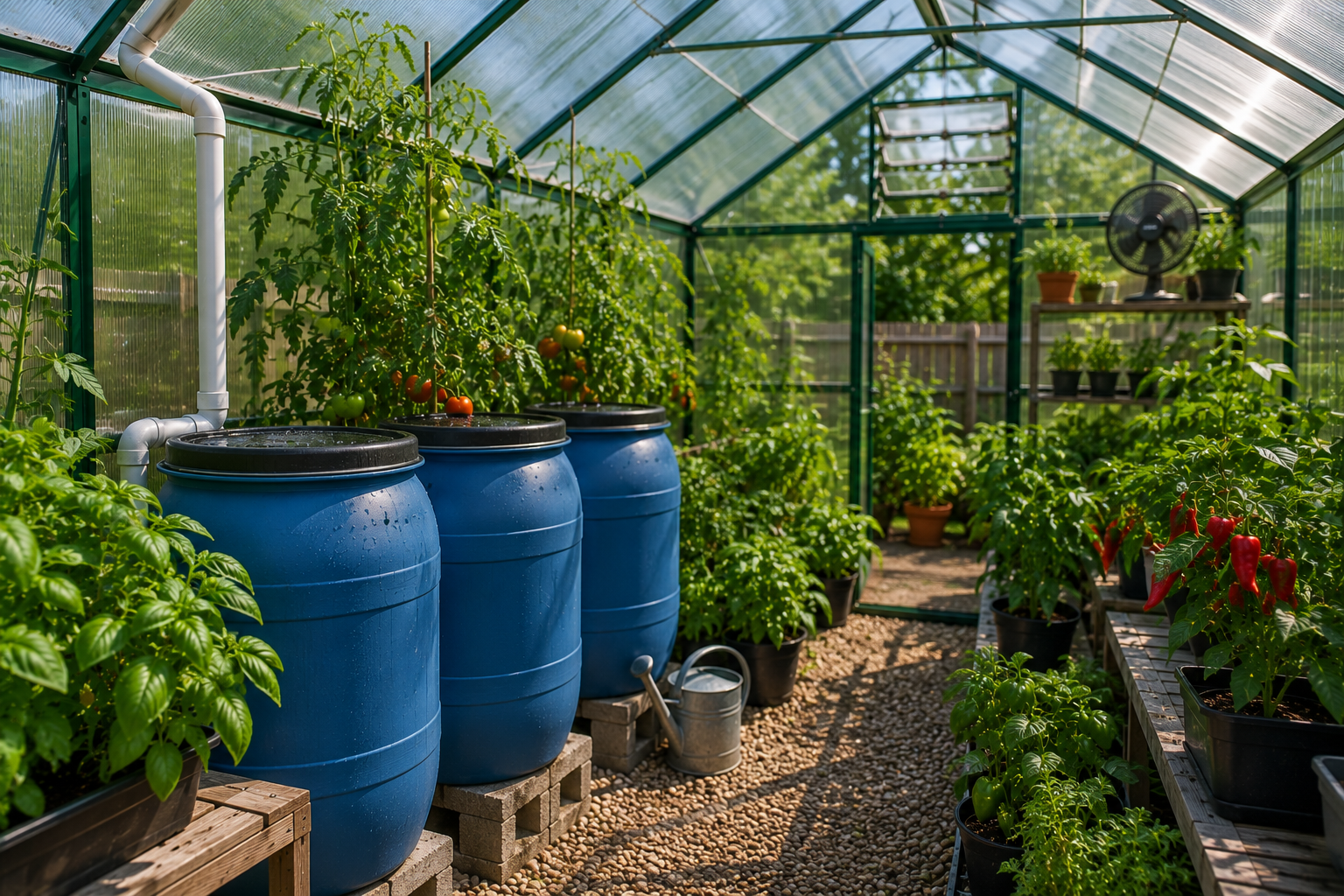
This process helps moderate temperature swings by reducing daytime peaks and nighttime drops.
Many greenhouse gardeners use:
- Rain barrels
- Plastic drums
- Decorative water containers
- Large storage tanks
Besides stabilizing temperatures, these containers provide a convenient supply of water for irrigation.
It’s a practical solution with two valuable benefits.
Avoid Overcrowding
It’s tempting to fill every available inch of greenhouse space.
After all, empty shelves seem like wasted opportunities.
But overcrowded plants trap heat and restrict airflow.
Leaves remain damp longer.
Humidity increases.
Pests spread more easily.
Proper spacing allows air to circulate naturally around every plant.
It also makes watering, pruning, and harvesting much easier.
Remember that small seedlings often become large mature plants.
Leave room for future growth rather than today’s size.
Your plants will reward you with healthier growth and larger harvests.
Watch Your Thermometer
Guessing the greenhouse temperature isn’t enough.
Install a quality thermometer where it’s easy to read.
Even better, use a digital thermometer that records daily high and low temperatures.
You’ll quickly notice patterns such as:
- Afternoon temperature spikes
- Overnight cooling
- Seasonal changes
- Heat buildup during calm weather
Most warm-season vegetables perform well between 70°F and 85°F.
Once temperatures climb above 90°F, many plants begin experiencing stress.
Tomatoes, for example, may stop producing fruit when temperatures remain excessively high.
Monitoring temperatures allows you to respond before problems develop.
Know Which Plants Need Extra Protection
Not every plant tolerates summer heat equally.
Some vegetables thrive.
Others struggle.
Heat-loving plants include:
- Tomatoes
- Peppers
- Eggplants
- Okra
- Basil
Cool-season crops often need extra attention during summer.
These include:
- Lettuce
- Spinach
- Arugula
- Kale
- Cilantro
If possible, move cool-weather crops toward shadier areas or replace them with warm-season vegetables until temperatures begin cooling again.
Matching your crops to the season makes greenhouse management much easier.
Consider an Exhaust Fan
If you live in an area with long, hot summers, an exhaust fan may become your best cooling tool.
Mounted near one end of the greenhouse, an exhaust fan pulls hot air outside while drawing cooler air through vents or open doors.
Many systems include thermostats that automatically switch the fan on when temperatures reach a preset level.
Although this requires electricity, it provides excellent temperature control during prolonged heat waves.
For larger greenhouses, it’s often one of the most effective upgrades available.
Keep the Greenhouse Clean
Dust and dirt may not seem related to cooling, but they can affect how efficiently your greenhouse performs.
Clean glazing allows maximum light during cooler months.
During summer, however, dirt buildup often creates uneven heating patterns while reducing overall visibility.
Regularly clean:
- Glass or polycarbonate panels
- Roof vents
- Fan blades
- Window tracks
Remove dead leaves and plant debris promptly.
A clean greenhouse promotes better airflow while reducing insect and disease problems.
Learn From Each Summer
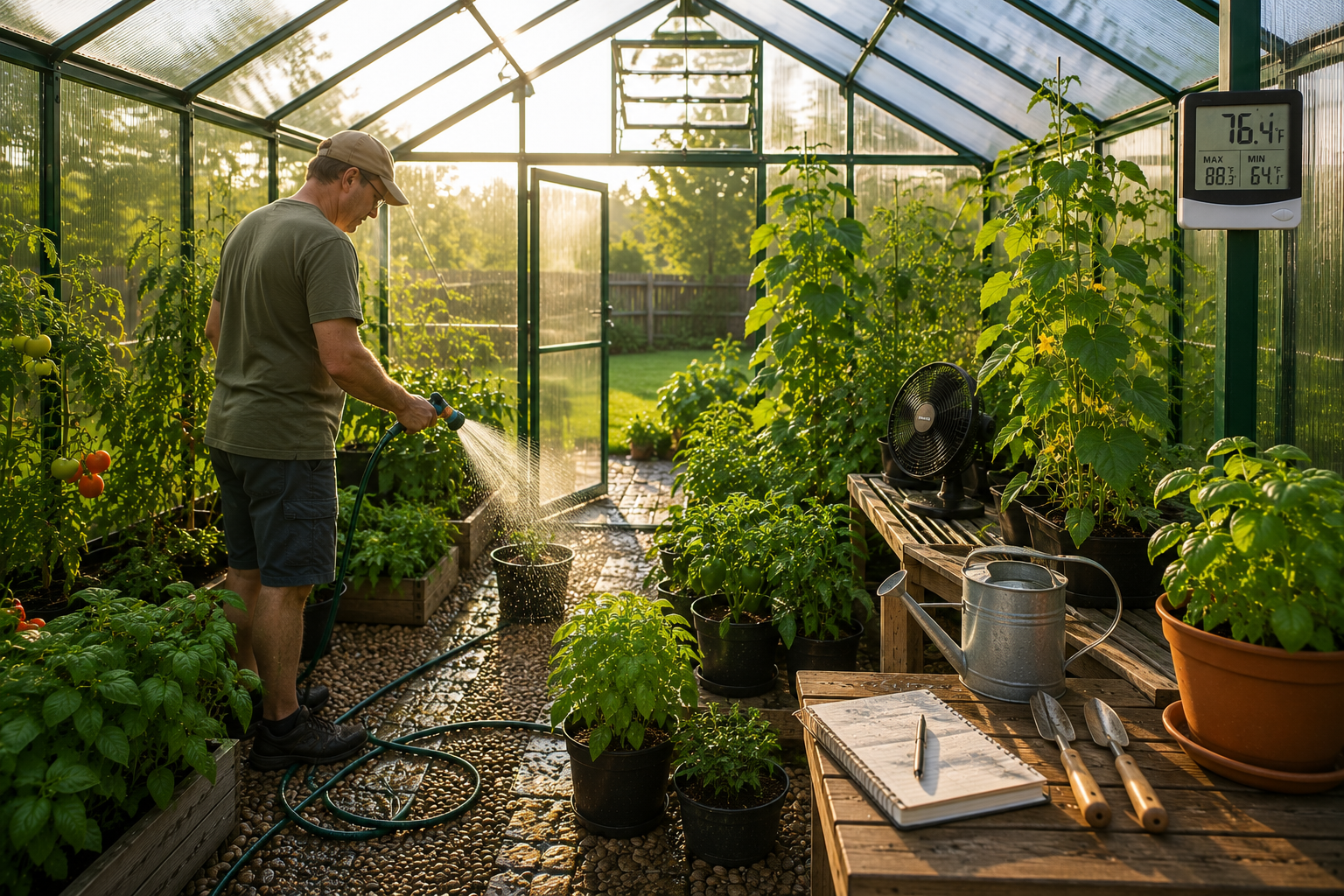
Every greenhouse develops its own personality.
Some heat quickly in the morning.
Others remain comfortable until early afternoon.
Nearby trees, prevailing winds, and greenhouse orientation all influence temperatures.
Spend time observing how your greenhouse responds throughout the season.
Take notes about:
- When vents need opening
- Which areas become hottest
- Where plants perform best
- Which cooling methods work most effectively
Those observations become valuable experience that makes each summer easier than the last.
Final Thoughts
Keeping a greenhouse cool during the summer doesn’t require expensive technology or constant attention. Success comes from combining several simple strategies that work together.
Open vents early. Encourage cross ventilation. Use circulating fans. Install shade cloth when needed. Water wisely. Avoid overcrowding. Monitor temperatures daily.
Small adjustments made consistently can lower temperatures dramatically and keep your plants productive through even the hottest months.
Instead of worrying about summer heat, you’ll spend your time enjoying healthy vegetables, thriving herbs, and abundant harvests.
Ready to Grow Year-Round?
Backyard Greenhouses Made Easy expands on each of these topics with clear, step-by-step guidance designed specifically for beginner greenhouse gardeners. From choosing the right greenhouse and managing temperature, ventilation, and watering to starting seeds, controlling pests, extending your growing season, and harvesting fresh produce year-round, the book provides practical instruction to help you grow with confidence in every season. 🌿

More Greenhouse Articles
If you found this article helpful, these beginner guides are a great next step:
Get Your FREE Backyard Starter Toolkit
Download our free Backyard Starter Toolkit, packed with printable planners, checklists, and beginner resources to help you build, grow, raise, and thrive.
About the Author
Steve McChesney is the founder of Backyard Living Books and has spent decades helping homeowners build, grow, raise, and preserve more from their own backyards. Through practical, beginner-friendly guides, he encourages people to tackle one backyard project at a time and enjoy the satisfaction that comes with learning new skills.