Backyard Learning Center
Learn practical backyard skills one project at a time through beginner-friendly articles, seasonal tips, and step-by-step guides that help you build, grow, raise, and thrive.
DIY Greenhouse Ideas for Every Budget
(August 2026 – Estimated Reading Time: 9 Minutes)
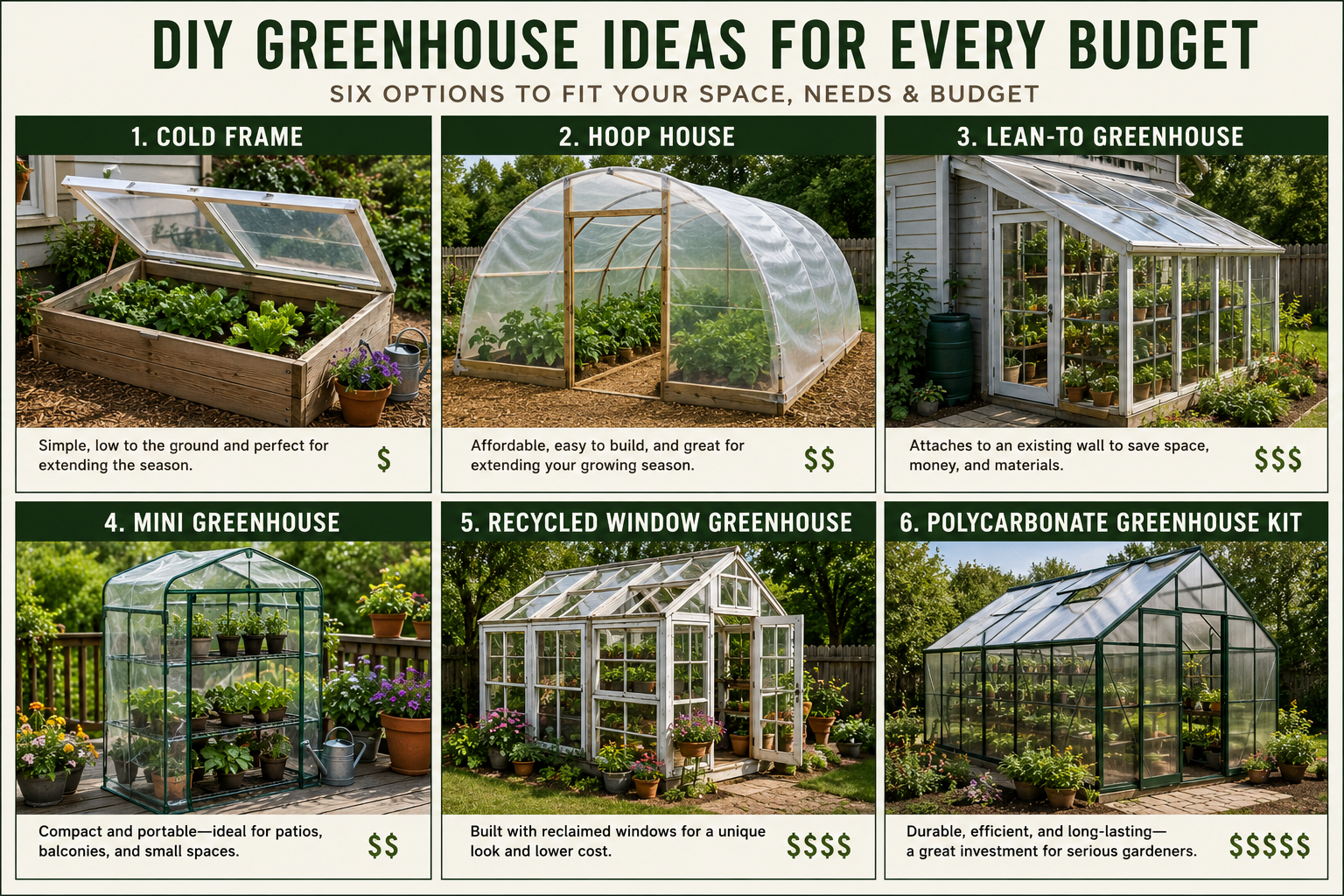
Dreaming about owning a greenhouse often begins with one assumption: they’re expensive.
Many people picture a large glass structure with automatic vents, concrete walkways, and a price tag that rivals a small car. While those beautiful greenhouses certainly exist, they’re far from the only option.
The truth is that greenhouses come in nearly every size, style, and price range imaginable. Whether you have fifty dollars or several thousand to invest, there’s a greenhouse design that can fit both your backyard and your budget.
The best greenhouse isn’t necessarily the biggest or most expensive. It’s the one that helps you grow the plants you love while fitting comfortably into your available space and your finances.
If you’ve been putting off building a greenhouse because you thought it was beyond your budget, you may be pleasantly surprised by what’s possible.
Start With Your Gardening Goals
Before choosing a greenhouse design, take a few minutes to think about what you actually want to accomplish.
Are you hoping to start vegetable seedlings each spring? Would you like to harvest lettuce through the winter? Maybe your goal is to grow tomatoes earlier each summer, or perhaps you’ve always wanted to keep citrus trees alive through the colder months.
Your goals will influence nearly every decision that follows.
Someone interested in starting seedlings may need only a compact greenhouse with a few shelves. A gardener planning to grow tomatoes year-round will need considerably more space and better ventilation.
Building a greenhouse that matches your gardening style almost always produces better results than simply choosing the largest structure you can afford.
The Humble Cold Frame
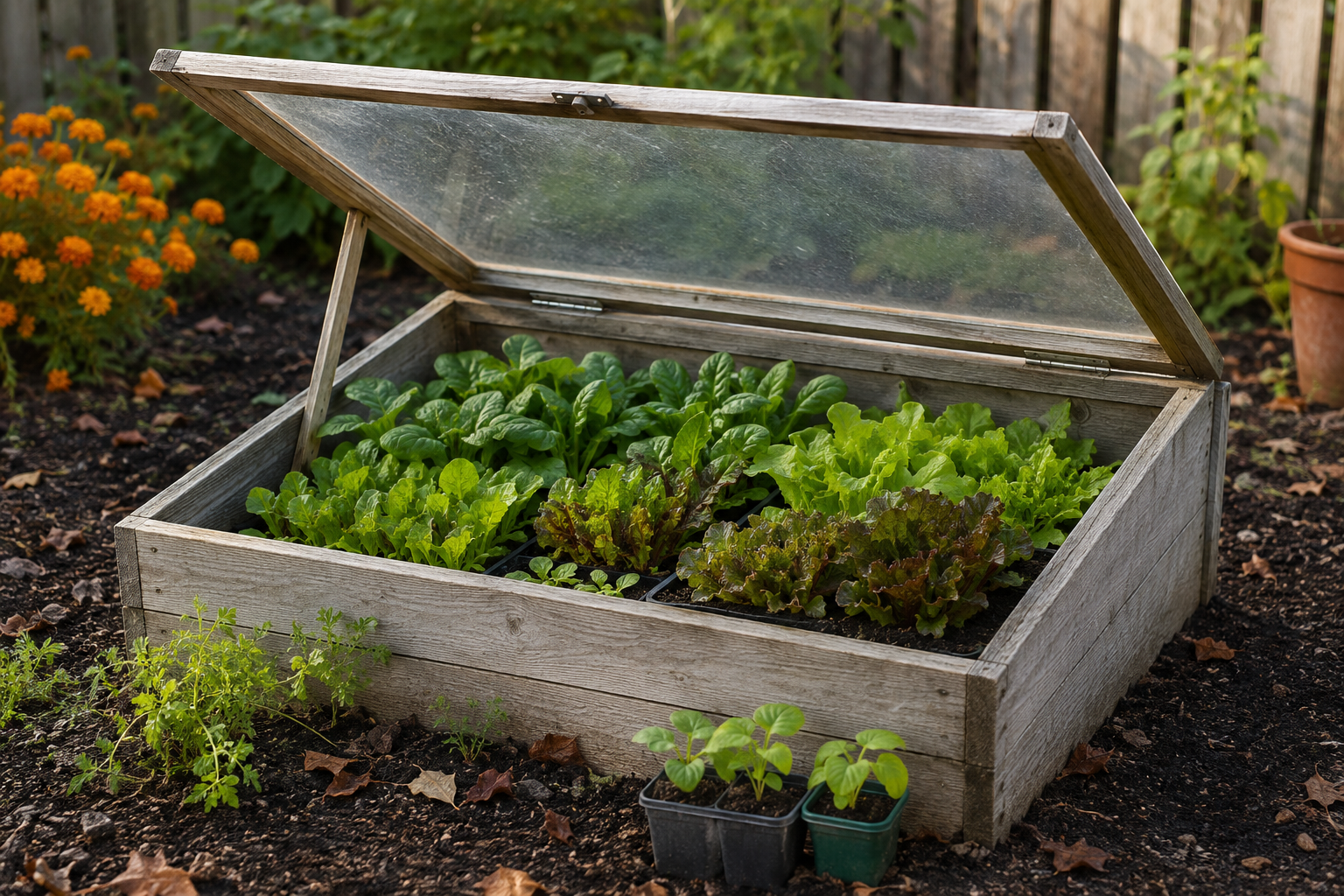
For many gardeners, the journey begins with a cold frame.
A cold frame is essentially a miniature greenhouse built low to the ground. It usually consists of a wooden frame topped with a clear lid that captures sunlight while protecting plants from frost and wind.
Although simple, a cold frame can accomplish a surprising amount.
Gardeners often use them to harden off seedlings before transplanting them outdoors. They’re also excellent for extending the harvest of lettuce, spinach, carrots, and other cool-season vegetables well into late fall and, in many climates, throughout much of the winter.
Because of their small size, cold frames are inexpensive to build. Many are constructed from scrap lumber and recycled windows, making them an excellent weekend project for beginning gardeners.
If you’re curious about greenhouse gardening but aren’t ready to commit to a larger structure, a cold frame offers an affordable introduction.
The Hoop House
One of the most popular budget-friendly greenhouse designs is the hoop house.
Its appeal comes from its simplicity.
Flexible PVC pipe or metal conduit is bent into a series of arches that create the framework. The entire structure is then covered with greenhouse plastic to trap warmth while allowing sunlight to reach the plants inside.
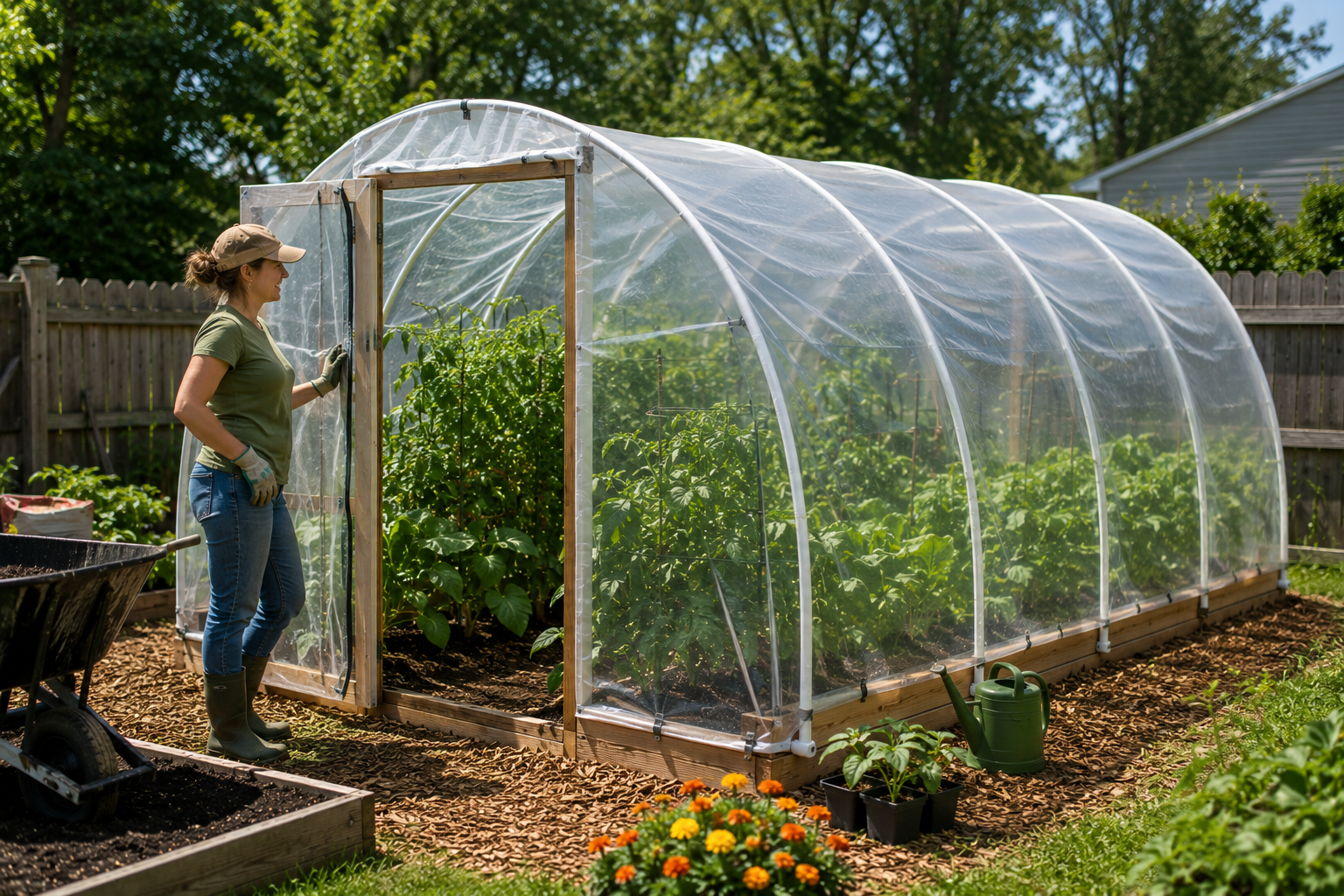
Despite its straightforward construction, a hoop house provides many of the same benefits as more expensive greenhouses.
It protects plants from frost, shields them from wind, and creates a warmer growing environment that extends the gardening season by weeks or even months.
Many backyard gardeners build hoop houses themselves using materials available at local home improvement stores. The design is forgiving, inexpensive, and easily customized to fit almost any yard.
For gardeners who enjoy building projects, it’s often one of the most satisfying greenhouse options available.
The Lean-To Greenhouse
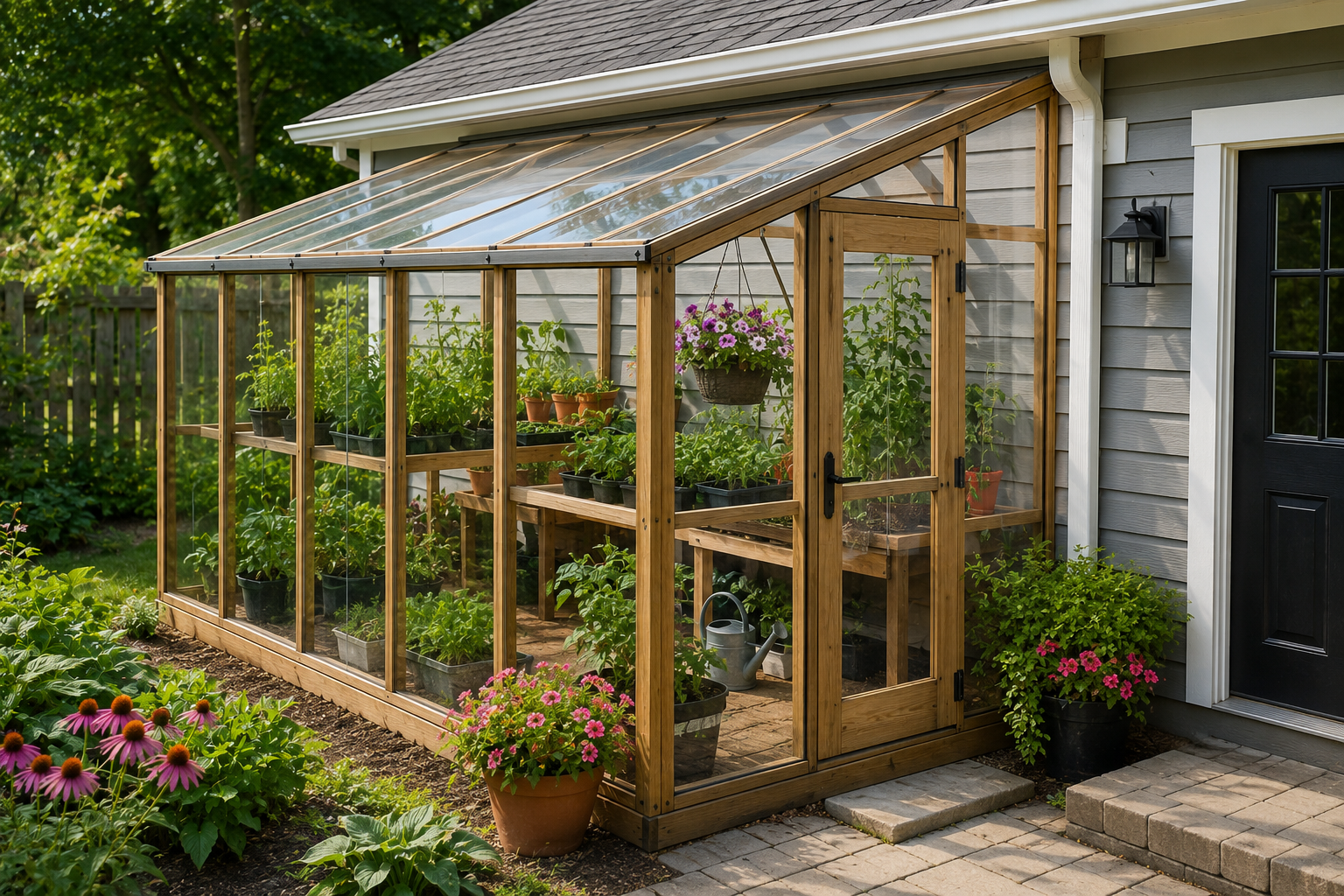
Not every backyard has room for a freestanding greenhouse.
That’s where a lean-to design shines.
Instead of standing alone, a lean-to greenhouse attaches to an existing structure such as a garage, workshop, or house. One wall is already built, reducing both material costs and construction time.
The shared wall also provides several practical advantages.
It offers protection from wind, helps retain heat, and often makes it easier to access electricity and water if those features are needed.
A lean-to greenhouse works especially well in smaller yards where every square foot matters.
When positioned on the south-facing side of a building, it can receive excellent sunlight while making efficient use of available space.
Mini Greenhouses
Sometimes the smallest greenhouse is exactly the right greenhouse.
Mini greenhouses have become increasingly popular among gardeners with patios, balconies, or limited yard space.
These compact structures often resemble shelving units enclosed in clear plastic. While they don’t provide room to walk inside, they’re perfect for seed starting, protecting young plants, or growing herbs and leafy greens.
Because they’re lightweight, many can be moved as the seasons change.
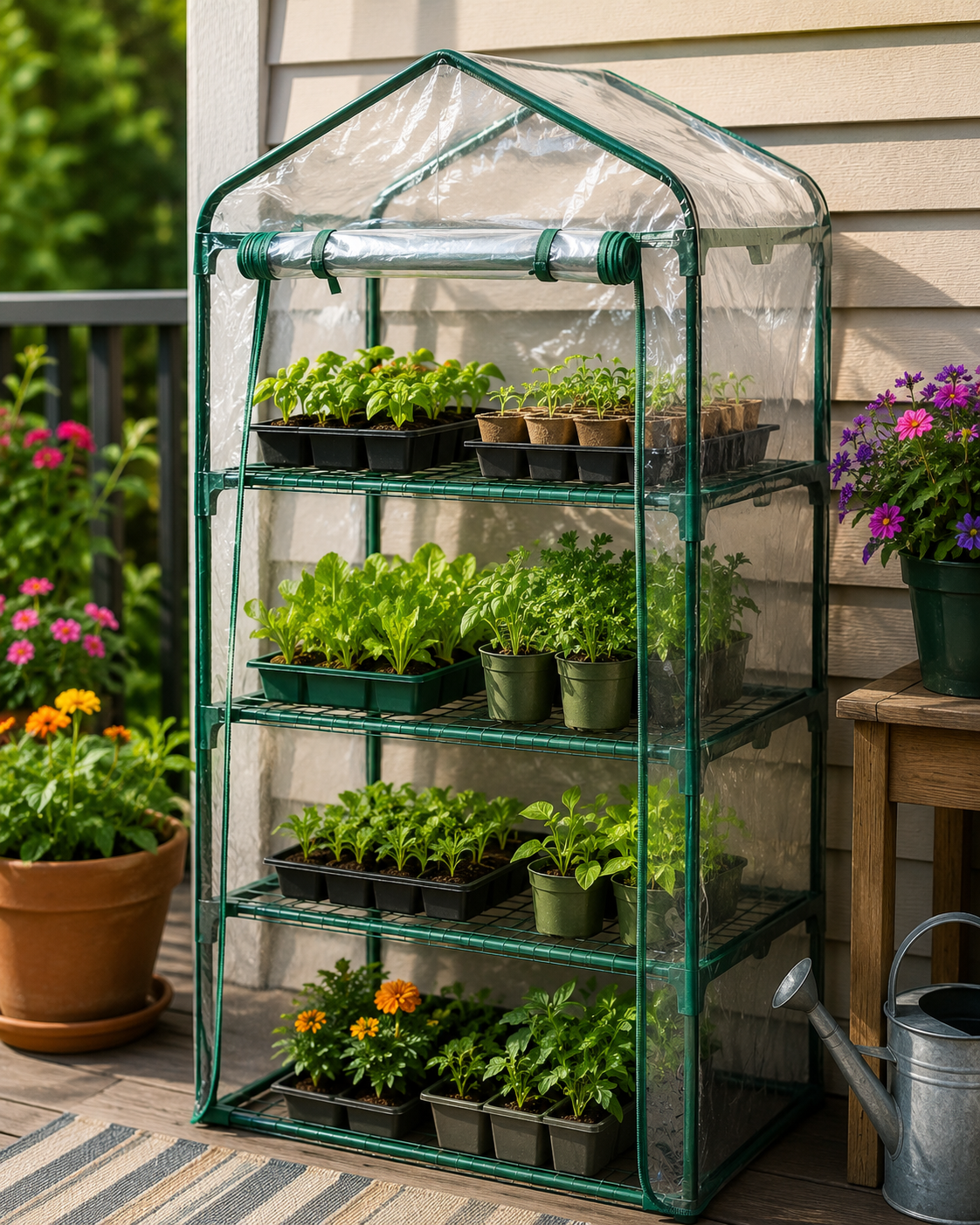
For apartment dwellers or anyone wanting to experiment with greenhouse gardening without making a major investment, mini greenhouses provide an excellent starting point.
Many gardeners who begin with a mini greenhouse eventually expand to a larger structure after discovering how much they enjoy the experience.
Polycarbonate Greenhouse Kits
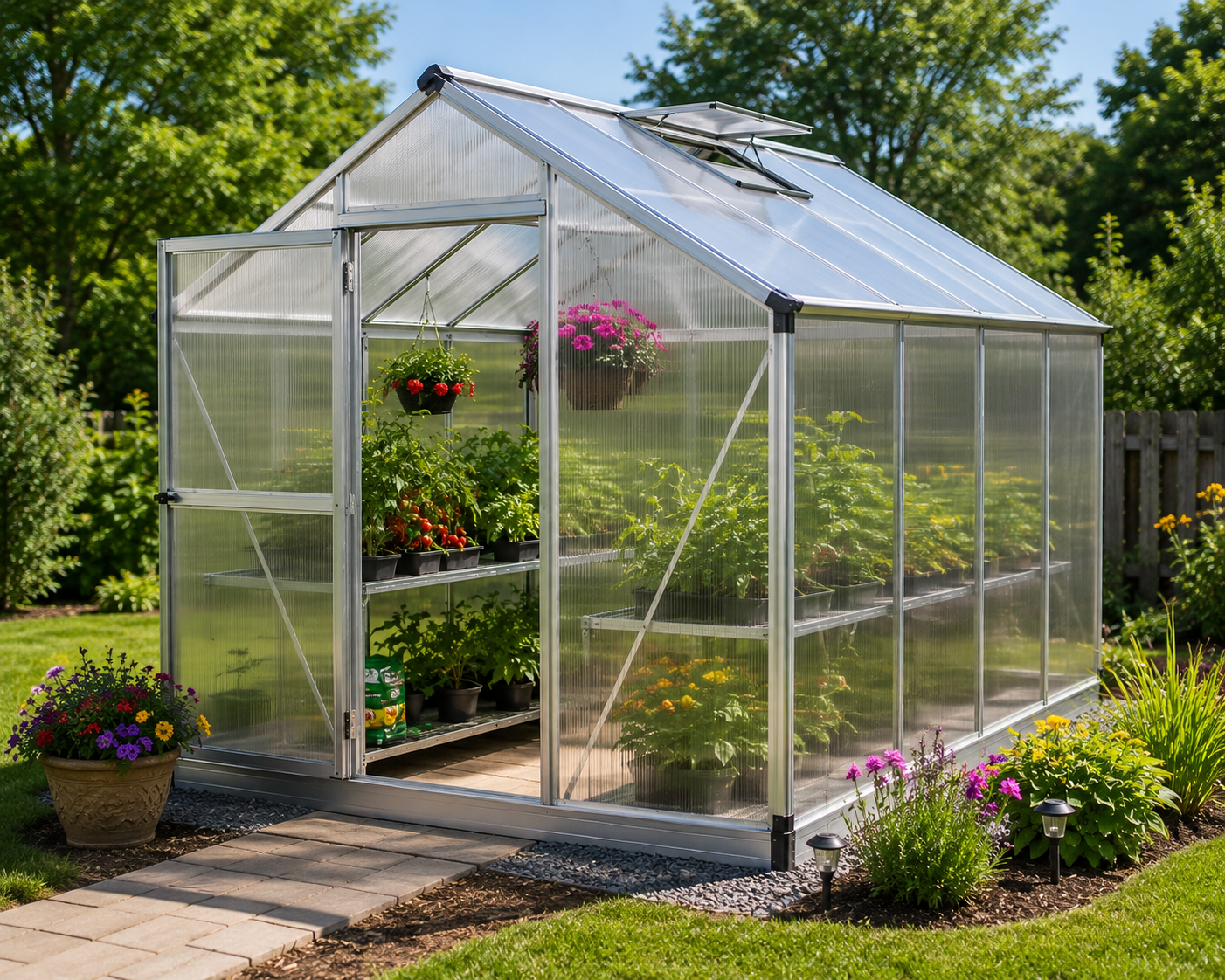
As budgets increase, greenhouse kits become an attractive option.
Modern kits typically use aluminum frames combined with twin-wall polycarbonate panels.
Unlike traditional glass, polycarbonate offers several advantages. It’s lightweight, durable, resistant to hail, and provides excellent insulation. The twin-wall construction helps retain heat while diffusing sunlight more evenly throughout the greenhouse.
Many kits are designed specifically for homeowners and can be assembled over a weekend with basic tools.
Although they cost more than DIY structures, they eliminate much of the measuring, cutting, and design work required when building from scratch.
For gardeners who prefer spending time growing plants rather than constructing buildings, a greenhouse kit often represents a worthwhile investment.
Recycled Window Greenhouses
One person’s renovation project can become another person’s dream greenhouse.
Across the country, creative gardeners have built beautiful greenhouses using reclaimed windows collected from remodeling projects, salvage yards, or online marketplaces.
Each window contributes its own unique character, resulting in a greenhouse that feels both practical and artistic.
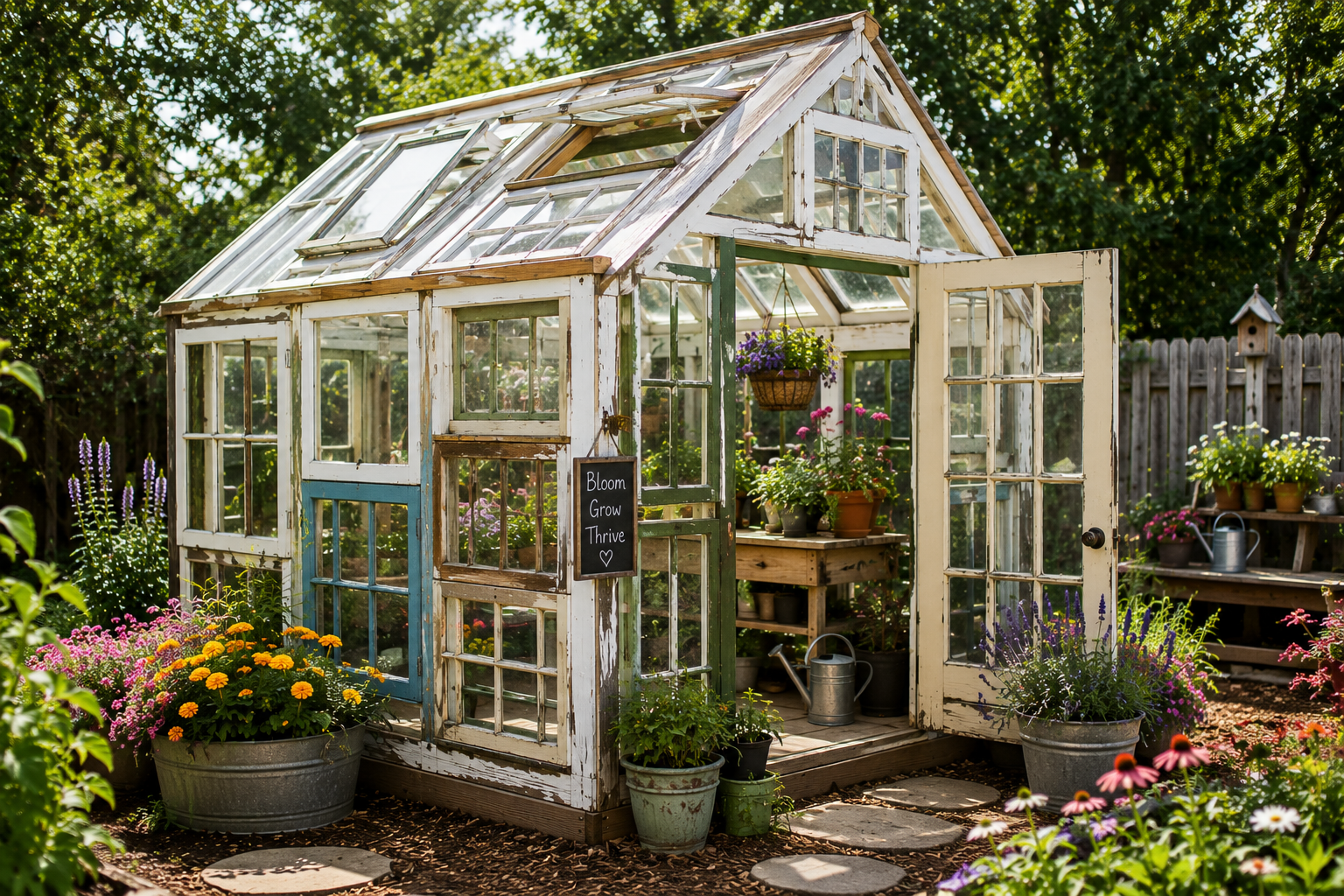
No two recycled window greenhouses are exactly alike.
Besides saving money, this approach keeps useful materials out of landfills while creating a structure with tremendous personality.
Building with reclaimed materials does require careful planning, since window sizes often vary considerably. Still, many gardeners enjoy solving that puzzle and appreciate the finished greenhouse even more because of it.
Don't Forget the Interior
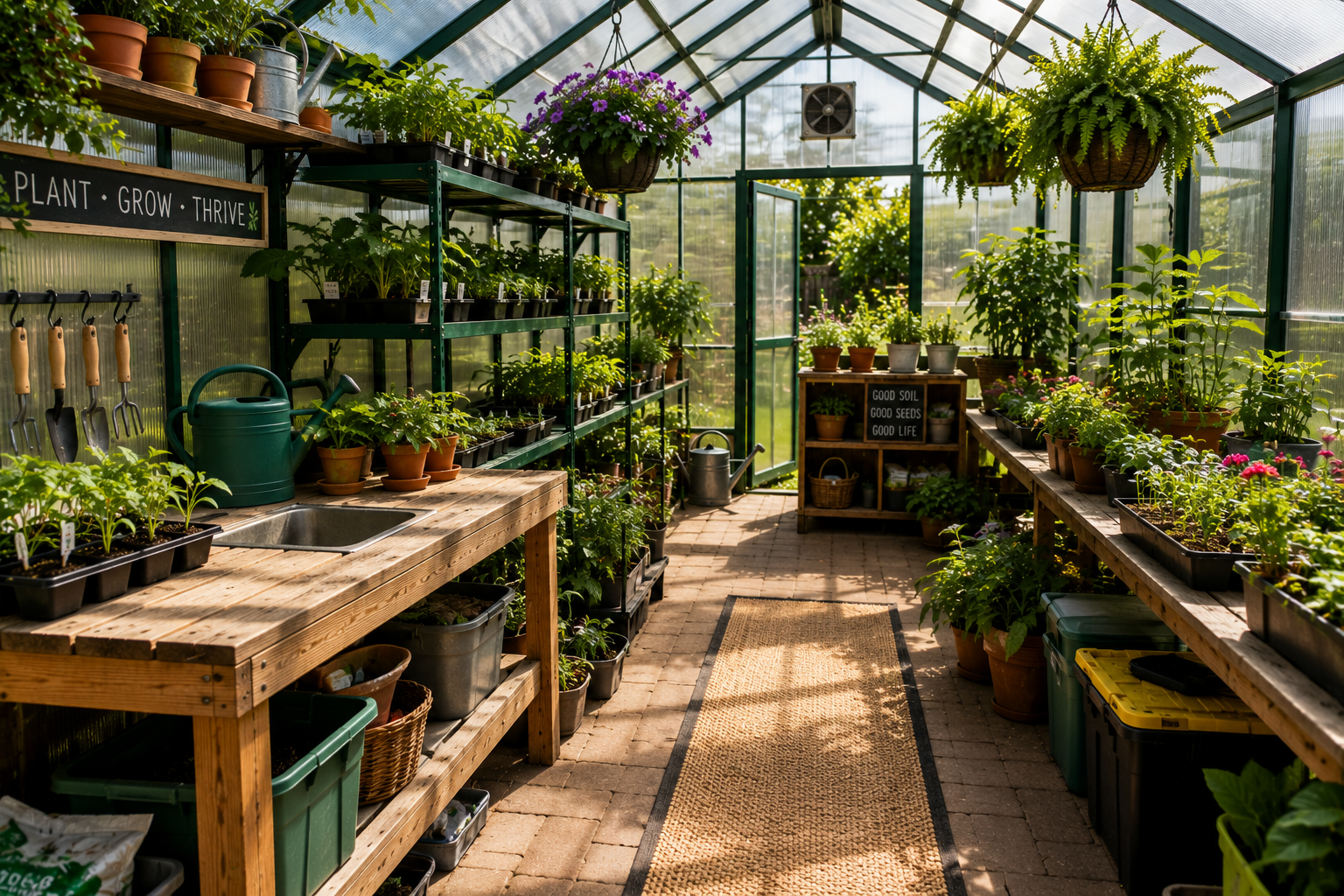
When planning a greenhouse budget, many people focus entirely on the structure itself.
The interior deserves just as much thought.
Shelving, potting benches, storage, watering equipment, and growing containers all contribute to how enjoyable the greenhouse will be to use.
Fortunately, these features don’t need to be expensive.
Old tables often become excellent potting benches. Wire shelving provides sturdy growing space while allowing good airflow. Five-gallon buckets store soil, fertilizer, and tools. Plastic bins keep seed packets organized and protected from moisture.
Many greenhouse owners gradually improve the interior over several seasons rather than purchasing everything at once.
That approach spreads costs over time while allowing the layout to evolve naturally.
Spend Money Where It Matters
If your budget is limited, prioritize the features that have the greatest impact on plant health.
A strong frame, durable covering, good ventilation, and proper drainage deserve attention first.
Cosmetic upgrades can always come later.
Fresh paint, decorative planters, attractive walkways, and stylish shelving certainly make a greenhouse more inviting, but healthy plants care far more about airflow and sunlight than decorative touches.
Invest first in function.
Appearance can always improve over time.
Build for Tomorrow, Not Just Today
There’s an old saying among greenhouse gardeners:
“No greenhouse is ever quite big enough.”
Many people begin with a modest collection of seedlings. Before long they’re experimenting with peppers, herbs, hanging baskets, citrus trees, and flowers.
If possible, leave yourself room to grow.
That might mean selecting a slightly larger greenhouse than you originally planned or choosing a location where an addition could be built later.
Gardening has a way of expanding naturally.
Planning for that growth now can save both money and effort in the future.
Remember That Gardening Is the Goal
It’s easy to become so focused on greenhouse designs that you lose sight of why you’re building one in the first place.
The purpose isn’t simply to own a greenhouse.
The purpose is to enjoy gardening more.
Whether your greenhouse is made from recycled windows, PVC pipe, or premium polycarbonate panels, it succeeds when it helps you grow healthy plants and spend more time doing something you love.
Some of the most productive greenhouses you’ll ever see are also among the simplest.
Success comes far more from good gardening habits than expensive construction materials.
Final Thoughts
Building a greenhouse doesn’t have to strain your finances. From simple cold frames and DIY hoop houses to lean-to structures, mini greenhouses, recycled window projects, and professionally designed kits, there’s an option for nearly every budget.
Start with your goals, choose a design that fits your space, and remember that even a modest greenhouse can dramatically extend your growing season and increase your harvests.
The most important step isn’t building the perfect greenhouse.
It’s building the one that gets you growing.
Ready to Grow Year-Round?
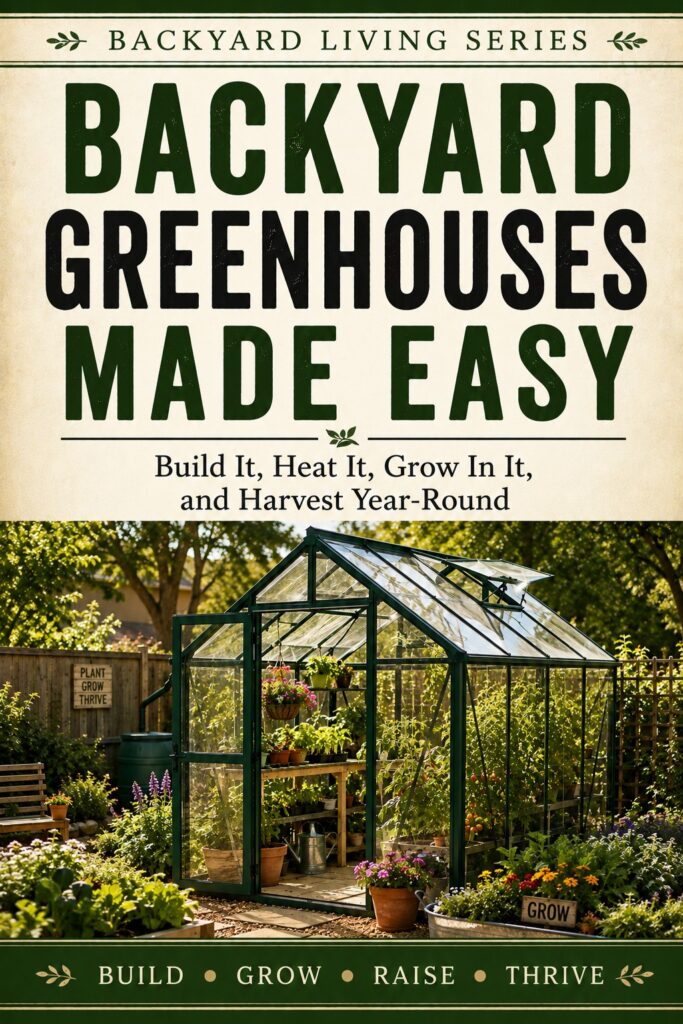
Backyard Greenhouses Made Easy expands on each of these topics with clear, step-by-step guidance designed specifically for beginner greenhouse gardeners. From choosing the right greenhouse and managing temperature, ventilation, and watering to starting seeds, controlling pests, extending your growing season, and harvesting fresh produce year-round, the book provides practical instruction to help you grow with confidence in every season. 🌿
More Greenhouse Articles
If you found this article helpful, these beginner guides are a great next step:
Get Your FREE Backyard Starter Toolkit
Download our free Backyard Starter Toolkit, packed with printable planners, checklists, and beginner resources to help you build, grow, raise, and thrive.
About the Author
Steve McChesney is the founder of Backyard Living Books and has spent decades helping homeowners build, grow, raise, and preserve more from their own backyards. Through practical, beginner-friendly guides, he encourages people to tackle one backyard project at a time and enjoy the satisfaction that comes with learning new skills.