

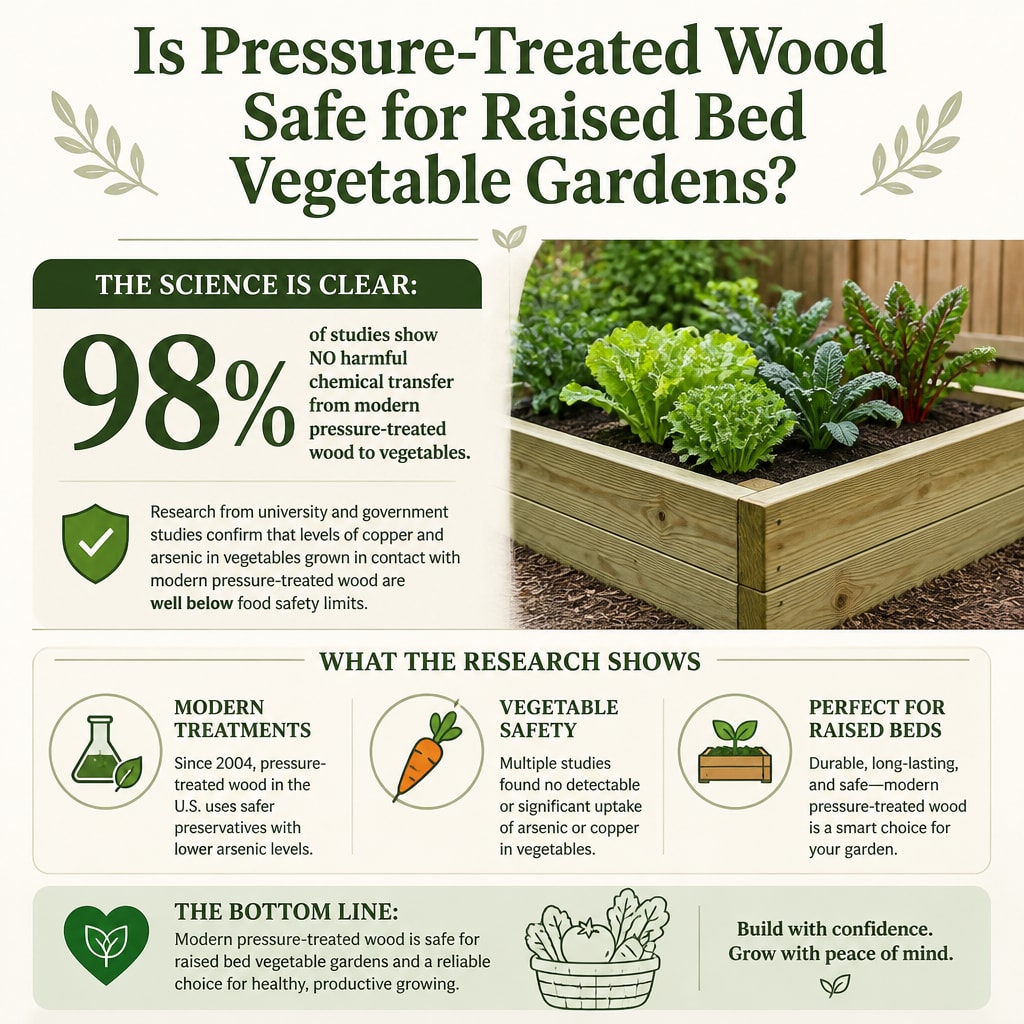
Yes, pressure-treated wood can be used for a raised vegetable garden, but the answer depends on when it was treated, what chemicals it contains, and how the bed is built. Modern lumber sold for residential projects is generally considered suitable for garden-bed construction. Older boards are a different story.
The short version? We recommend new, clearly labeled residential pressure-treated lumber for most backyard beds. Avoid salvaged boards when you don’t know their history, and don’t use railroad ties, utility poles, or industrial timber around food crops. That small bit of caution saves a lot of second-guessing later.
Why modern pressure-treated wood is usually acceptable
The chemistry changed
For many years, outdoor lumber was commonly treated with chromated copper arsenate (CCA), a preservative containing arsenic that protected wood from insects and decay. Because of concerns about arsenic exposure, manufacturers voluntarily ended most residential consumer uses of CCA-treated lumber in the United States by December 31, 2003. Existing CCA-treated wood was not automatically removed from service, so older decks, fences, and salvaged building materials may still contain it.
Today, residential pressure-treated lumber is more often treated with copper-based preservatives such as alkaline copper quaternary or copper azole. These treatments don’t contain added arsenic, and the wood is made for outdoor use around homes. That doesn’t mean the boards are chemically inert. Copper compounds can move into nearby soil in small amounts, particularly as wood weathers. But under normal garden-bed use, modern residential lumber is widely regarded as a reasonable construction choice.
What the research and regulations tell us
Regulators distinguish between older arsenic-treated lumber and newer residential products for a reason. The larger concern with old CCA boards is arsenic exposure from sawdust, surface dust, and soil contact over time. Modern treated lumber still deserves sensible handling, especially during cutting, but it doesn’t carry the same arsenic issue.
Before using pressure-treated lumber in a vegetable garden, identify the type of treatment whenever possible. A current product label, manufacturer’s documentation, or purchase receipt can help establish whether the lumber is suitable for residential outdoor use. Avoid reclaimed boards when their treatment history is unknown. Purchasing new, clearly labeled lumber is generally a more reliable choice than attempting to identify preservatives in weathered or salvaged wood.
For broader planning help, our Raised Bed Gardening for Beginners: The Complete Step-by-Step Guide covers bed placement, dimensions, soil, planting, and maintenance in one practical path.
When pressure-treated lumber is the wrong choice
Skip old or unidentified boards
We’d pass on any wood that might contain CCA, especially if it has been sitting outside for years or came from a deck built before the early 2000s. Don’t sand it, cut it, or burn it. Burning treated wood is particularly bad because the chemicals become concentrated in the ash and smoke.
Also avoid boards with a strong industrial history. Railroad ties may contain creosote. Utility poles and bridge timbers can carry preservatives intended for heavy-duty infrastructure, not a bed of lettuce and carrots. A bargain isn’t much of a bargain when the material’s past is unknown.
Watch for damaged and freshly treated wood
Fresh pressure-treated boards can feel damp, look greenish, or have a sharp chemical smell. That smell doesn’t automatically mean the lumber is unsafe, but wet boards are harder to build with and may shrink as they dry. Let them dry according to the product directions before assembling the bed.
Don’t use boards that are heavily split, coated with peeling residue, or visibly contaminated with oil or other substances. A raised bed is exposed to rain, soil, and irrigation for years. Sound lumber matters more than saving a few dollars at the lumberyard.
- Choose pressure-treated lumber labeled for the intended residential outdoor application.
- Read the treatment label and manufacturer’s safety instructions before purchasing or cutting.
- Wear safety glasses and appropriate respiratory protection when cutting or sanding treated lumber.
- Cut lumber outdoors or in a well-ventilated work area.
- Collect sawdust and scraps promptly, keeping them out of garden soil and compost.
- Wash hands after handling treated lumber, especially before eating or handling food.
- Never burn pressure-treated wood or dispose of its sawdust in a compost pile.
One practical detail gets missed all the time: don’t use treated-sawdust scraps as mulch or soil amendment. Put them in the trash according to local disposal rules. They aren’t compost ingredients.
How to build a treated-wood bed with less worry
Keep the boards on the outside of the soil
Modern treated lumber can touch the soil in a raised bed. Still, many gardeners prefer to add a barrier between the boards and the growing mix. A heavy-duty plastic liner can reduce direct contact, though it should be installed thoughtfully. Cover the inside walls, not the bottom, so excess water can drain freely. Don’t wrap the whole box like a bathtub.
A liner is optional when using modern residential pressure-treated lumber. Gardeners who prefer additional separation between treated wood and growing soil can install a durable, garden-appropriate barrier along the inside walls. Select material suitable for prolonged outdoor exposure and install it so water cannot become trapped against the wood. Keep the bottom of an open-bottom bed unobstructed to preserve drainage and root access. Landscape fabric is generally water-permeable and should not be assumed to provide the same separation as an impermeable liner.
Keep drainage and food contact in mind
Good drainage does more for a raised bed than most add-ons. Leave the bottom open, set the bed on reasonably level ground, and don’t place it in a low spot that stays soggy after rain. Constant moisture speeds wood decay, whether the lumber is treated or not.
Don’t put fresh-cut board ends directly against edible roots or leafy crops. That isn’t usually a serious concern with current residential lumber, but it is an easy habit to adopt. Trim exposed splinters, leave the wood surface alone, and never paint or stain the inside face with a product that isn’t approved for that setting.
Our category page, Raised Garden Bed Materials and Construction Basics, compares lumber choices, fasteners, bed heights, and other construction details that affect how long a garden lasts.
Safer alternatives and sensible trade-offs
Cedar, redwood, and untreated lumber
Cedar and redwood are popular because they resist decay naturally and don’t need chemical treatment. They look good, too. The catch is price, and availability can be spotty depending on where you live. Cedar also isn’t immortal. Soil contact, irrigation, and repeated freezing eventually wear it down.
Untreated pine costs less and is easy to find. In many regions, though, it may last only a few seasons when buried in damp soil. That can be perfectly fine for a temporary bed, a rental home, or a gardener who expects to redesign the yard soon. Build it with replaceable boards in mind.
Composite boards, metal, and masonry
Composite garden-bed boards resist biological decay but may cost more than ordinary lumber and require adequate structural support. Galvanized steel beds are another durable option, although thin panels may flex and exposed edges should be properly finished. Dark metal surfaces can become hot in direct sunlight, potentially warming soil near the bed walls, but the effect depends on climate, bed dimensions, soil moisture, and construction. Metal beds still require adequate drainage through their growing medium and base.
Brick, stone, and concrete blocks avoid wood preservatives altogether. They’re durable, but heavy. Moving a few blocks is one thing. Building a long bed from them is a weekend project with a different sort of workout. For older gardeners or anyone with limited lifting strength, wood is often easier to cut, carry, and repair.
There isn’t one perfect material. Choose based on your budget, local climate, expected lifespan, and how much maintenance you want to handle. A well-built modern treated-wood bed can be a practical middle ground.
FAQs for Is Pressure-Treated Wood Safe for Raised Bed Vegetable Gardens?
Can I use old pressure-treated boards in my vegetable garden?
We don’t recommend it when the age or treatment is unknown. Lumber made before the 2003 residential CCA phaseout may contain arsenic, and a faded stamp won’t always tell the whole story. Don’t sand or cut questionable boards to solve the mystery. Replace them with new residential lumber, cedar, metal, or masonry.
Should I line a pressure-treated raised bed with plastic?
You can line the inside walls if it gives you peace of mind or helps protect the boards. Use durable material, keep it above the bottom, and leave plenty of room for drainage. A liner is optional with current residential pressure-treated lumber. It won’t fix poor drainage, and it shouldn’t be treated as a substitute for choosing suitable boards.
Our practical recommendation for your garden
For most homeowners, new pressure-treated lumber labeled for residential outdoor use is a reasonable choice for a vegetable bed. Handle it carefully, keep sawdust out of the soil, build for drainage, and avoid old or industrial wood. Those decisions matter more than chasing a perfect material.
🌱 FREE DOWNLOAD: Your First Raised Bed Garden
A Beginner-Friendly Guide to Getting Started
Thinking about growing your own vegetables in a raised bed? Start with a simple plan that helps you avoid costly mistakes and build a garden you can enjoy for years.
Our FREE Your First Raised Bed Garden guide provides practical, beginner-friendly information to help you:
- Choose a suitable location with enough sunlight.
- Plan the size and layout of your raised garden bed.
- Understand the basics of preparing healthy garden soil.
- Select vegetables that are appropriate for beginners.
- Get started with planting, watering, and caring for your garden.
You don’t need a huge backyard, expensive equipment, or years of gardening experience to get started!
Get Your FREE Raised Bed Gardening Guide
Free PDF guide from Backyard Living Books.
📗 Ready to Grow Your Own Fresh Vegetables?
Creating a productive raised bed garden takes thoughtful planning, healthy soil, and a little know-how.
Take the guesswork out of raised bed gardening!
Raised Bed Gardening Made Easy: Plans, Soil Mixes, Planting Secrets, and Beginner-Friendly Harvests is a practical guide designed to help you:
- Plan and build raised garden beds that fit your space.
- Choose materials and prepare the right soil mix.
- Select and plant vegetables for productive harvests.
- Understand watering, fertilizing, and routine garden maintenance.
- Avoid common mistakes that can waste time and money.
Whether you’re planting your first garden or looking to improve an existing one, this book will help you garden with greater confidence.
Explore Raised Bed Gardening Made Easy
🌿 Want More FREE Raised Bed Gardening Tips?
Visit our Gardening Learning Center for helpful articles, practical advice, and beginner-friendly resources covering everything from soil preparation and vegetable planting to watering, pest prevention, and seasonal gardening.
Explore the Gardening Learning Center
Part of the Backyard Living Series: Build • Grow • Raise • Thrive.