

Look, raised beds can fool you. The surface may look dry while the soil underneath is soggy, or the top inch may feel damp even though your tomato roots are thirsty. That confusion is common, especially during hot weather, after a stretch of rain, or when a new bed has a rich but heavy soil mix.
The good news is that your plants usually show you what’s happening. You just need to read the clues together instead of reacting to one wilted leaf. We’ll walk through the signs of overwatering and underwatering, a simple soil check, and what to do when your raised bed has gone too far in either direction.
Start with the soil, not the leaves
Leaves get all the attention, but they’re not always telling the whole story. A plant can wilt because the soil is bone-dry. It can also wilt because water has filled the air spaces around its roots, leaving those roots short on oxygen. Same symptom. Very different problem.
The finger test still works
Push your finger about 2 inches into the soil near the plant, not directly against the stem. In a small raised bed, that quick check is often more useful than a strict watering schedule.
Dry soil feels loose, dusty, or almost warm and crumbly. Properly moist soil feels cool and holds together lightly. Waterlogged soil feels slick, dense, or muddy. You may even notice a sour smell when you dig down a little. That smell points to poor air circulation and decomposing roots, not a plant that simply needs another drink.
Check a few spots. One corner of a bed may dry quickly beside a sunny wall, while the area under a large squash plant stays wet for days. Raised beds aren’t always uniform, particularly when irrigation lines, mulch, or dense root systems change how water moves.
Look below the surface
For a clearer answer, carefully dig a small inspection hole about 4 to 6 inches deep between plants, avoiding major roots whenever possible. Examine the soil’s moisture level below the surface rather than relying entirely on leaf appearance. This simple check can help distinguish genuinely dry soil from waterlogged conditions.
Healthy roots are generally firm, although their natural color varies by plant species. Dark, soft, or mushy roots may indicate root rot associated with prolonged saturation or disease. Extremely dry soil, brittle roots, or soil pulling away from the sides of the bed can indicate insufficient moisture. Evaluate these clues together rather than relying on root color alone. There can be some variation by crop, but the general pattern holds.
For more help with the broader process of caring for a raised bed, see Raised Bed Gardening for Beginners: The Complete Step-by-Step Guide. Watering makes more sense once the bed’s soil, drainage, plant spacing, and mulch are working together.
Signs your raised bed is overwatered
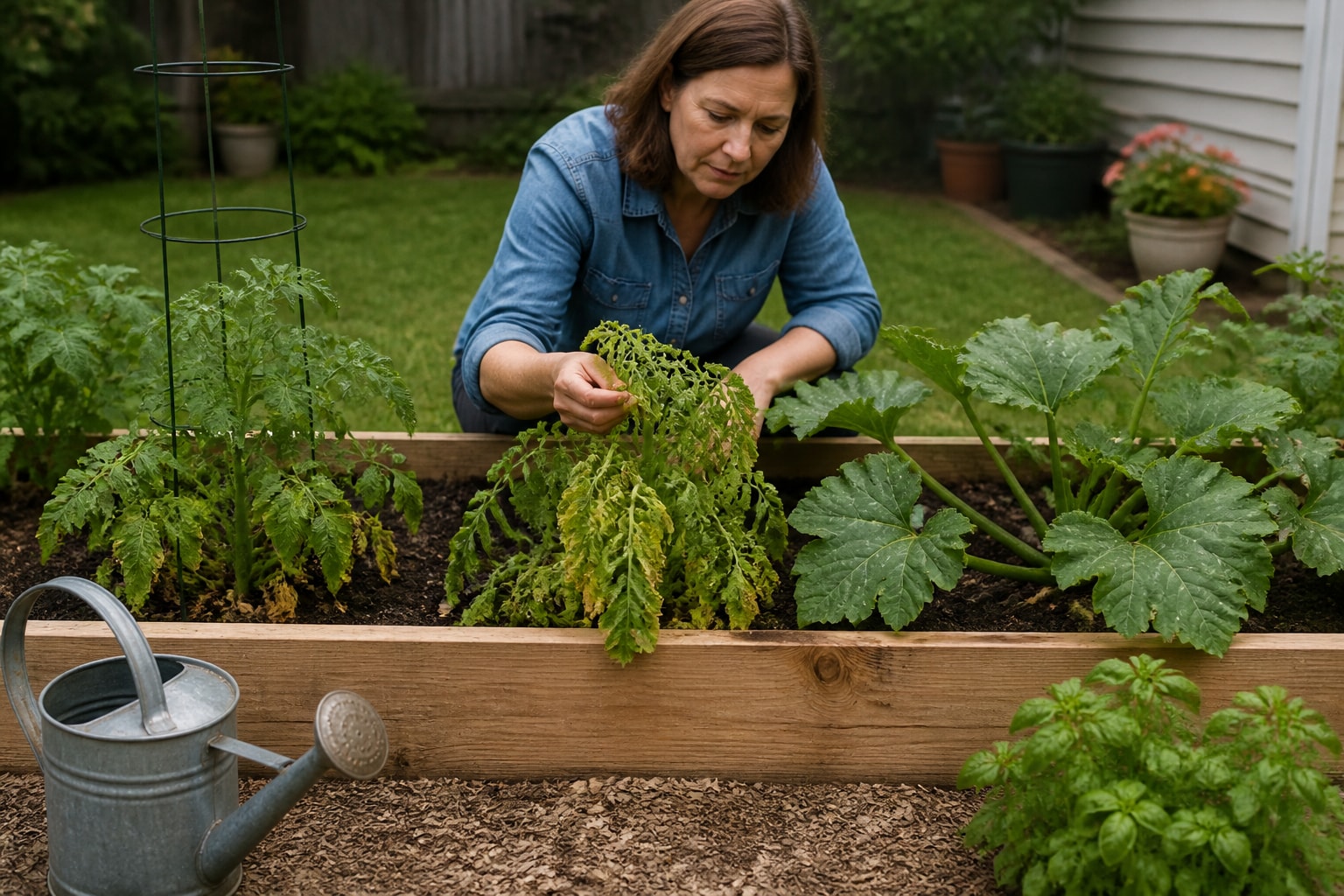
Overwatering is more than giving a plant too much water once. One heavy rain usually won’t ruin a well-built bed. The trouble starts when the root zone stays saturated repeatedly, or drainage is too slow for the plants growing there.
Watch for these plant clues
- Leaves turn pale or yellow, especially older leaves.
- Plants wilt even though the soil is wet.
- Leaves feel soft, limp, or unusually thin.
- Growth slows, and new leaves stay small.
- Fungus gnats, mold on the soil, or a sour odor appear.
- Roots are brown, dark, or mushy when you inspect them.
Overwatered plants may also develop yellow leaves that drop from the bottom upward. A tomato can look tired at noon, yet the soil remains wet several inches down. That’s a classic moment when gardeners add more water and make the root problem worse.
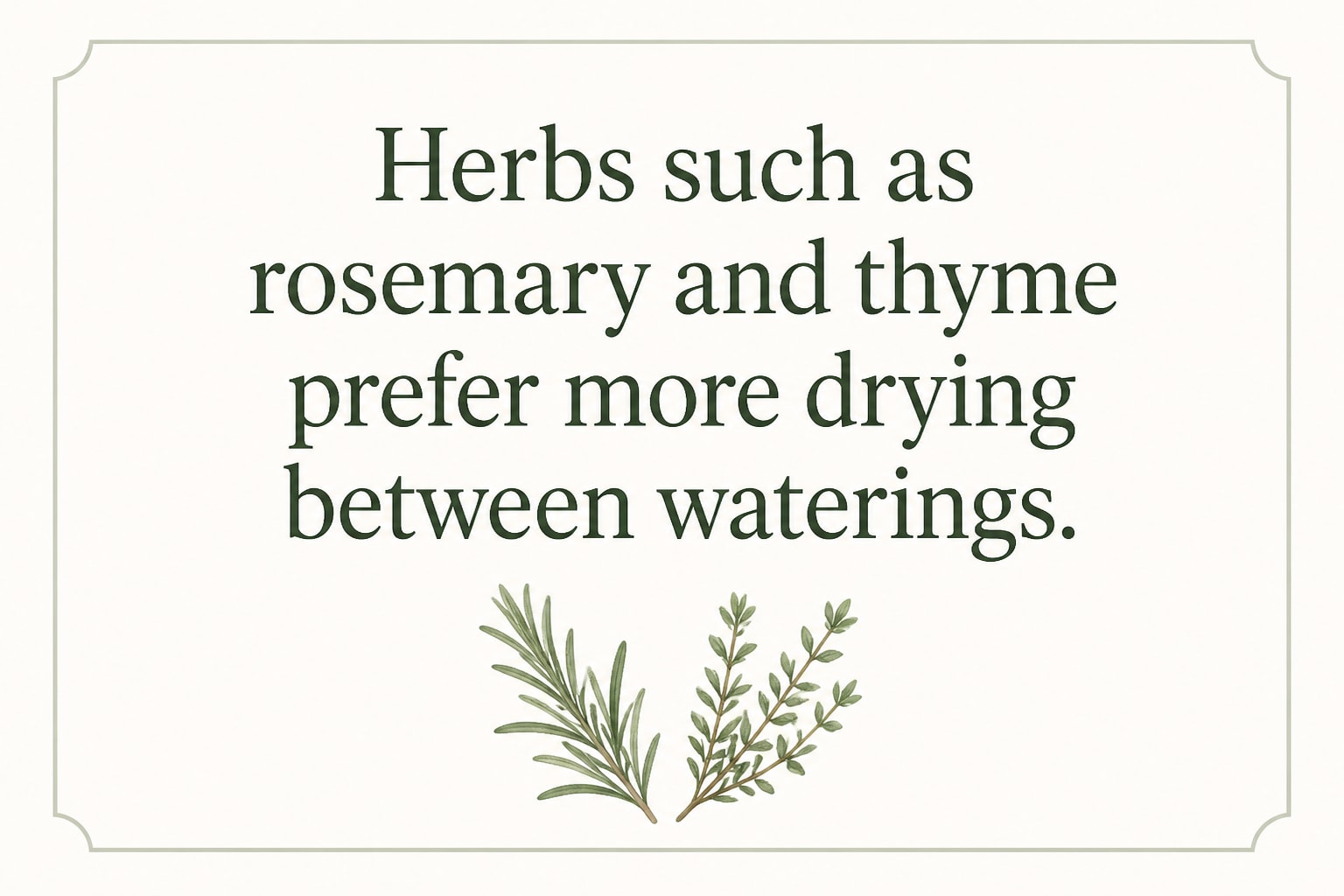
Some crops are especially touchy. Herbs such as rosemary and thyme prefer more drying between waterings. Root crops can struggle in dense, saturated soil. Seedlings are vulnerable because their roots haven’t reached far enough to find better conditions.
Check drainage before changing your schedule
Raised beds usually drain better than in-ground soil, but “raised” doesn’t automatically mean well-drained. A bed sitting on compacted clay may drain slowly. A bed lined with plastic can trap water. Fine compost, peat-heavy mixes, or too much manure may hold more moisture than expected.
Make sure excess water can drain freely from the bottom of the raised bed into the underlying soil or through appropriate drainage openings. Avoid adding a gravel layer beneath the growing soil as a drainage solution, since differences in soil texture can create a perched water layer. Instead, identify blocked drainage paths, reduce unnecessary irrigation, and improve the growing medium when appropriate. Allow saturated soil time to recover before making additional changes.
Signs your raised bed is underwatered
Underwatering tends to look more dramatic. Leaves droop, edges crisp, and the whole plant can seem ready to give up by late afternoon. Sometimes it recovers overnight. Sometimes it doesn’t, especially when the root zone has been dry for several days.
Common clues of dry soil
Dry plants often have leaves that feel papery or brittle. Leaf edges may turn brown and curl inward. Flowers drop. Fruit stays small or develops cracks, and young plants can wilt from the top down. The soil itself may pull away from the bed’s edges or become so hard that water runs across the surface rather than soaking in.
Weather gives you context. A sunny, windy day can pull moisture from a raised bed quickly. Dark-colored beds warm faster. Small beds also have more exposed edge area, so they may dry sooner than a large garden plot. Mature plants with dense foliage can use a surprising amount of water, too.
But don’t trust wilt alone. Some plants naturally droop in afternoon heat and recover after sunset. Feel the soil before watering. A cucumber wilted in hot weather with moist soil doesn’t necessarily need a drink. It may simply be reacting to heat stress.
Water deeply instead of sprinkling often
When the soil is genuinely dry, water slowly at the base of the plant. Give it time to soak down. A quick sprinkle wets the surface and can leave the deeper roots dry, which encourages shallow rooting.
For a badly dried bed, water in two or three passes. Apply some water, wait a few minutes, then apply more. Very dry soil can repel water at first, particularly when it contains a lot of peat or has shrunk away from the sides of the bed.
Our category page, Raised Bed Garden Watering and Maintenance: A Complete Beginner’s Guide, covers practical routines for watering, mulching, and keeping moisture more consistent through the season.
How to fix an overwatered or underwatered bed
Once you know which direction the problem is going, resist the urge to make a dozen changes at once. Small corrections are easier to judge.
When the bed is too wet
Pause irrigation and let the top few inches dry. Move containers or anything blocking drainage openings. Check whether a hose timer is running too long, particularly after rain. Thin crowded growth where poor airflow is encouraging leaf disease.
Avoid digging or working saturated soil unnecessarily, since this can damage roots and compact the growing medium. If a plant continues to decline despite improved moisture conditions, carefully inspect its root system for signs of rot or disease. Severely damaged plants may not recover and could require replacement. For future plantings, improve drainage and soil structure as needed, using well-finished compost and suitable amendments rather than adding excessive amounts at once.
When the bed is too dry
Water the root zone slowly, then add a 2- to 3-inch layer of mulch around plants. Keep mulch a few inches away from stems to reduce rot and pest problems. Straw, shredded leaves, and untreated grass clippings can all work, though fresh thick grass clippings may mat together.
Look for the reason the bed dried out. Drip emitters may be clogged. A soaker hose may be watering one section while missing another. The bed could be exposed to reflected heat from a fence or wall. And sometimes the plants are simply crowded. A mature zucchini can drink far more than a young lettuce plant sharing the same watering zone.
Build a watering routine that adjusts
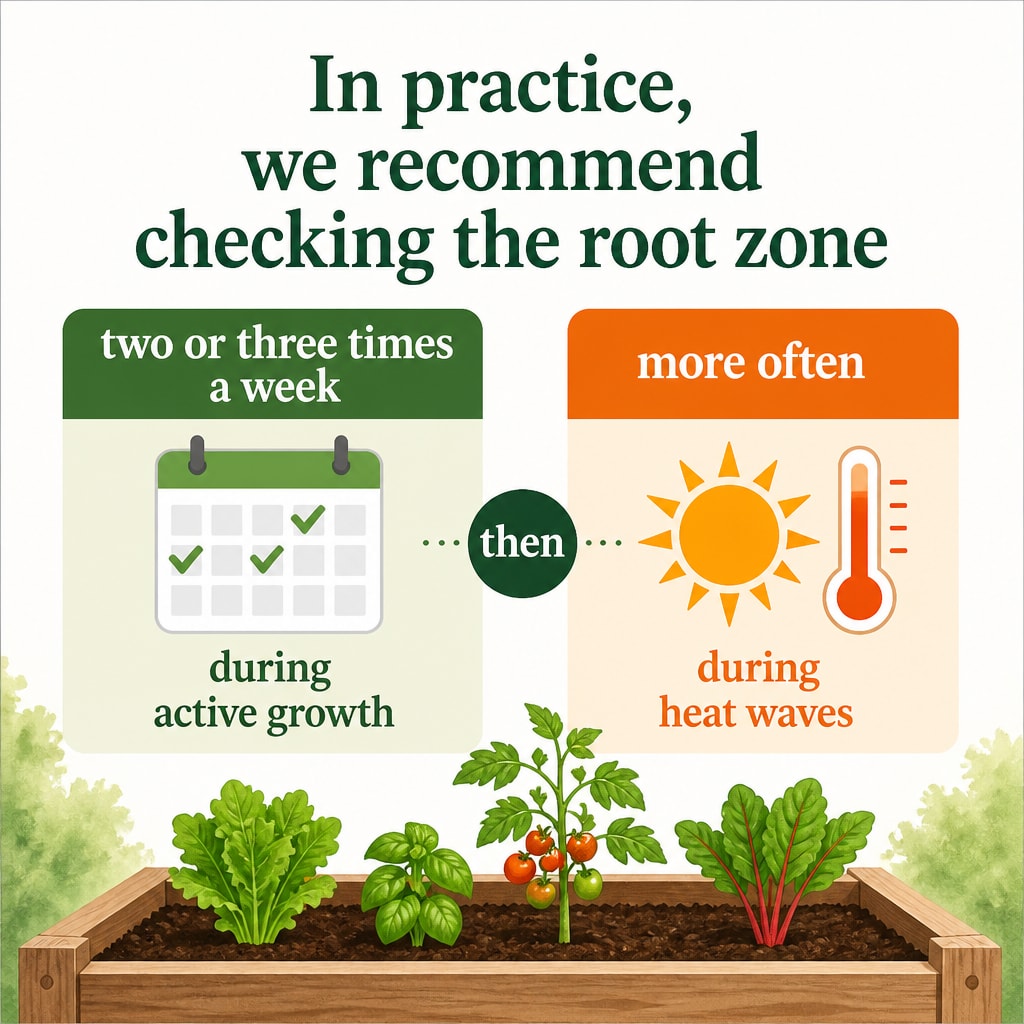
A watering calendar can provide a useful reminder, but soil conditions should determine when water is actually needed. During active growth, check the root zone regularly, often daily during hot or windy weather, especially in shallow beds or when seedlings are establishing. Mature plants in deeper, well-mulched beds may require less frequent watering. Adjust your routine according to weather, plant size, soil texture, and seasonal conditions.
Water early in the day when possible. The foliage has time to dry, and less water is lost to midday evaporation. A layer of mulch helps, but it won’t rescue a bed with poor drainage or a broken irrigation line.
Keep a short note on your phone. Record when you watered, how much rain fell, and which parts of the bed dried first. After a couple of weeks, patterns show up. You’ll learn that the corner beside the garage needs attention sooner, while the section under the tomato trellis stays moist longer.
Soil moisture meters can offer a helpful second opinion, though inexpensive models aren’t always precise. Use one as a comparison tool between areas of the bed, not as an unquestionable command. Your finger and a small inspection hole still tell you plenty.
FAQs for How to Tell if Your Raised Bed Garden Is Overwatered or Underwatered
Why are my raised bed plants wilting when the soil is wet?
The roots may be short on oxygen because the soil is staying saturated. Check the root zone several inches down and inspect the roots if the plant continues to decline. Also consider heat stress, root damage, or disease. Wet soil plus wilting is a reason to pause watering, not automatically add more.
How often should we water a raised bed garden?
There isn’t one perfect schedule. Check the soil 2 inches down and water when it’s beginning to dry, then water deeply enough to reach the main root zone. Seedlings, leafy greens, and newly planted crops may need more frequent attention. Established plants in mulched soil usually need less frequent, deeper watering.
Keep the root zone in charge
Healthy raised bed watering comes down to one habit: check the soil before reaching for the hose. Wilted leaves don’t always mean thirst, and damp soil doesn’t always mean the roots are comfortable. Look beneath the surface, notice the weather, and adjust in small steps.
🌱 FREE DOWNLOAD: Your First Raised Bed Garden
A Beginner-Friendly Guide to Getting Started
Thinking about growing your own vegetables in a raised bed? Start with a simple plan that helps you avoid costly mistakes and build a garden you can enjoy for years.
Our FREE Your First Raised Bed Garden guide provides practical, beginner-friendly information to help you:
- Choose a suitable location with enough sunlight.
- Plan the size and layout of your raised garden bed.
- Understand the basics of preparing healthy garden soil.
- Select vegetables that are appropriate for beginners.
- Get started with planting, watering, and caring for your garden.
You don’t need a huge backyard, expensive equipment, or years of gardening experience to get started!
Get Your FREE Raised Bed Gardening Guide
Free PDF guide from Backyard Living Books.
📗 Ready to Grow Your Own Fresh Vegetables?
Creating a productive raised bed garden takes thoughtful planning, healthy soil, and a little know-how.
Take the guesswork out of raised bed gardening!
Raised Bed Gardening Made Easy: Plans, Soil Mixes, Planting Secrets, and Beginner-Friendly Harvests is a practical guide designed to help you:
- Plan and build raised garden beds that fit your space.
- Choose materials and prepare the right soil mix.
- Select and plant vegetables for productive harvests.
- Understand watering, fertilizing, and routine garden maintenance.
- Avoid common mistakes that can waste time and money.
Whether you’re planting your first garden or looking to improve an existing one, this book will help you garden with greater confidence.
Explore Raised Bed Gardening Made Easy
🌿 Want More FREE Raised Bed Gardening Tips?
Visit our Gardening Learning Center for helpful articles, practical advice, and beginner-friendly resources covering everything from soil preparation and vegetable planting to watering, pest prevention, and seasonal gardening.
Explore the Gardening Learning Center
Part of the Backyard Living Series: Build • Grow • Raise • Thrive.