
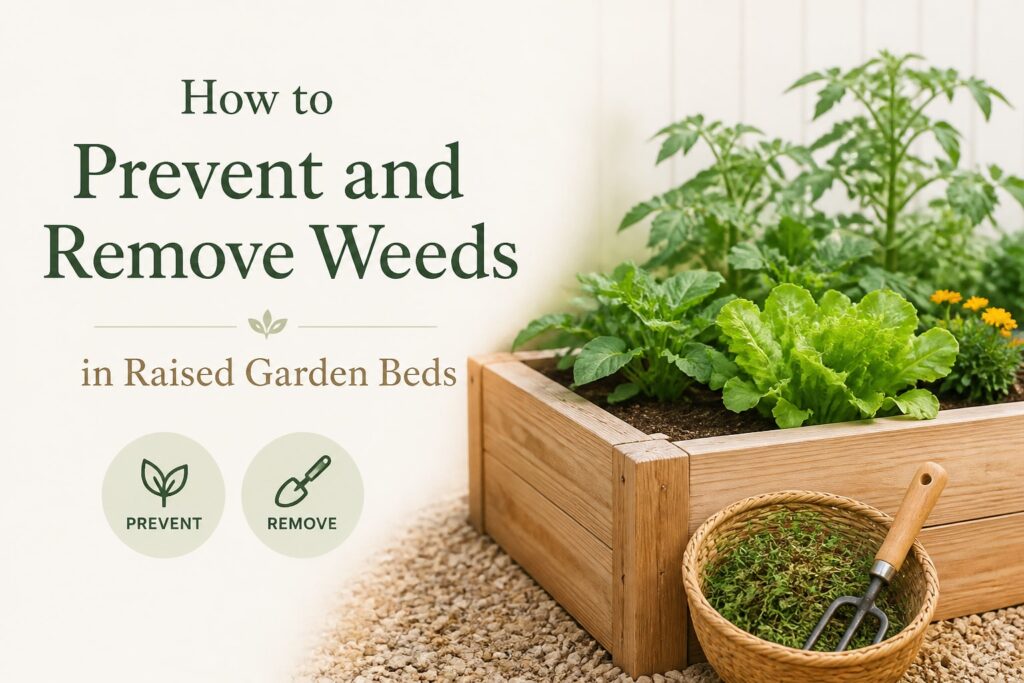
Weeds in a raised garden bed are more than an annoyance. They steal water, light, nutrients, and elbow room from vegetables that are already working hard to grow. The good news? Raised beds are usually easier to weed than in-ground gardens, especially when you catch the problem early.
A common mistake is waiting until weeds are well established before removing them. By that point, weeds may have developed extensive roots or produced seeds, making the problem harder to control. Fortunately, a consistent prevention routine can break this cycle. That cycle can be broken. The trick is to prevent new weed seeds from settling in, remove existing weeds before they mature, and keep the soil covered.
Start by Making Weeds Hard to Establish
Use clean soil and finished compost
Many weed problems begin before the first vegetable is planted. Garden soil, compost, manure, and mulch can all contain weed seeds. Most of the time, this isn’t a reason to avoid those materials. It is a reason to buy from a reliable source and avoid using unfinished compost.
Finished compost typically has a dark, crumbly appearance and a pleasant, earthy smell. It should not have a strong ammonia or rotten odor. However, appearance alone cannot guarantee that compost is free of weed seeds or persistent herbicide residues, so purchasing from a reputable supplier is important. Be careful with compost made from hay or animal bedding, too. It may contain persistent herbicide residues that can damage tomatoes, beans, and other broadleaf plants. That’s a different problem from ordinary weeds, but it can ruin a bed just as quickly.
Give vegetables the space they need
A well-planted bed leaves less open soil for weeds to occupy. Follow the spacing recommendations for each crop, but don’t turn the bed into a packed jungle. Crowded plants compete with each other and make hand weeding awkward.
We recommend planting in blocks rather than long, widely spaced rows when that suits the crop. Lettuce, onions, carrots, and many herbs can form a living canopy over the soil. Larger plants, such as zucchini or tomatoes, need more room and may cast enough shade to slow weeds around their bases.
For more help with bed layout, soil, planting, and seasonal care, see Raised Bed Gardening for Beginners: The Complete Step-by-Step Guide. Good planning won’t eliminate weeds, but it makes the daily work much lighter.
Cover Bare Soil Before Weeds Find It
Choose mulch that fits the crop
Mulch is one of our favorite tools for raised beds because it blocks light from reaching weed seeds near the surface. Straw, shredded leaves, untreated grass clippings, and finished compost can all work. Each has a small catch.
Straw is useful around larger plants, but it can contain grain seeds. Shredded leaves break down nicely, though thick layers can mat together. Grass clippings should be free of herbicides and applied in thin layers so they don’t turn slimy. Compost helps feed the soil, but a thick compost layer can also introduce seeds.
For most vegetables, apply roughly 2 to 3 inches of loose mulch after seedlings are established. Keep it a little away from plant stems. Wet mulch pressed against a stem creates a cozy place for rot and pests.
Try landscape fabric only in the right spot
Landscape fabric can suppress weeds along pathways or beneath permanent crops, but we aren’t big fans of putting it across every vegetable bed. Roots, compost, and future plantings make it awkward to work with. Soil organisms also benefit from organic matter being added directly to the surface.
Plain, uncoated cardboard covered with organic mulch can help suppress existing vegetation when preparing a new garden area. Remove tape, labels, and staples before placing the cardboard, and overlap the edges to reduce gaps where weeds can emerge. Wet the cardboard thoroughly and cover it with mulch. However, avoid using thick layers of cardboard inside established vegetable beds, where they may temporarily restrict water movement and gas exchange. Persistent perennial weeds may also grow through or around the cardboard.
Remove Existing Weeds Without Disturbing the Bed
Pull young weeds after watering
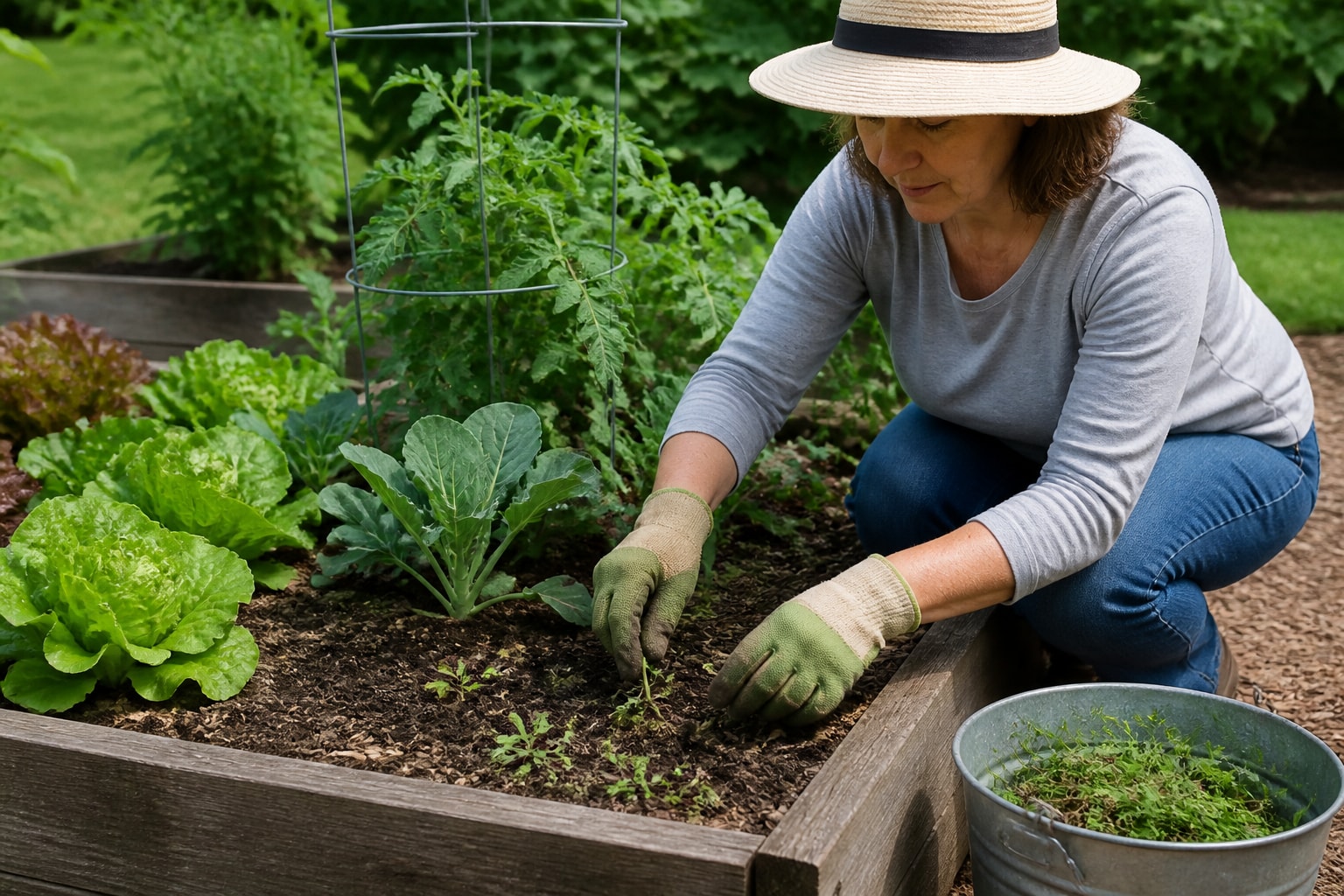
Small weeds are much easier to remove than mature ones. Water the bed the day before, or weed shortly after a rain when the soil is damp but not mud. Grip the weed close to the soil line and pull slowly. The goal is to remove the crown and as much of the root as practical.
Some weeds break off easily and regrow from the remaining root. Dandelions, bindweed, and quackgrass are examples. A narrow hand weeder helps loosen the soil beside the root. Work carefully around vegetable roots. We don’t want to win a battle with a weed by accidentally uprooting a pepper plant.
Try not to turn the whole bed over while weeding. Every time soil is disturbed, buried weed seeds can be brought closer to the surface. A small hand tool used only where needed usually causes less trouble than aggressive cultivation.
Deal with weeds before they make seeds
One mature weed can scatter a surprising number of seeds. Pull or cut weeds before flowering whenever possible. Bag weeds that have already developed seeds instead of tossing them into a cool backyard compost pile. Home compost often doesn’t reach the sustained heat needed to kill every seed.
Never leave pulled weeds sitting on damp soil. Some weeds can reroot from a stem or crown. Set them on a dry surface to wilt, or add them to the trash if they’re carrying flowers, seed heads, or persistent roots.
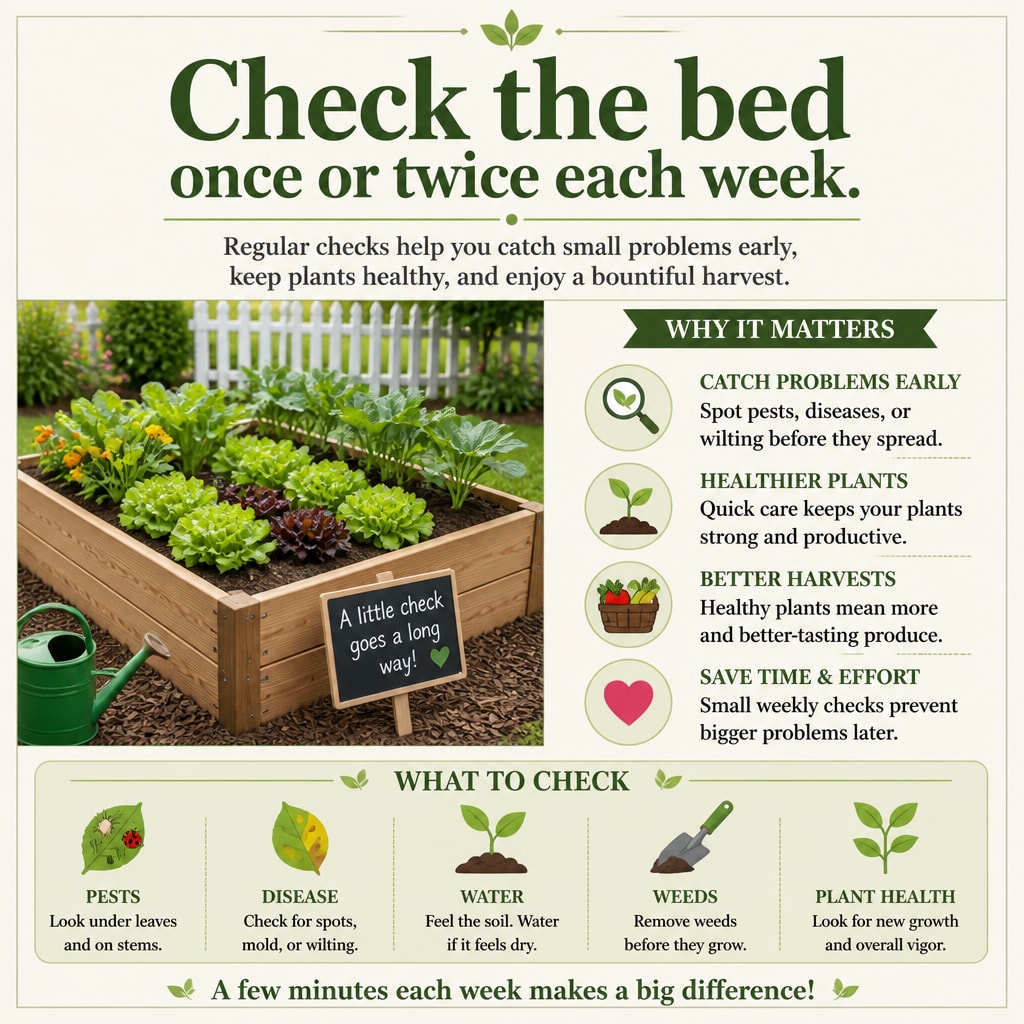
- Check the bed once or twice each week.
- Pull weeds while they’re small.
- Use a hand weeder for deep taproots.
- Keep mulch off plant stems.
- Remove weeds with flowers or seed heads from the garden area.
Handle Tough Weeds and Keep the Bed Manageable
What to do with spreading or perennial weeds
Annual weeds usually pull cleanly. Perennial weeds are a different story. Bindweed, nutsedge, quackgrass, and creeping charlie can return from pieces of root or underground stems. Pulling helps, but it may take repeated removal over several weeks.
For a heavily infested bed, begin by removing crop residue at the end of the growing season. Carefully loosen the soil with a garden fork and remove as much of the perennial weed’s underground root or stem system as possible. Avoid chopping these structures into small pieces, since some species can regenerate from fragments. Covering the area with cardboard and mulch may help suppress regrowth, but persistent weeds such as bindweed and nutsedge often require repeated removal over an extended period. Continue monitoring the bed and surrounding edges for new shoots.
We don’t recommend using household vinegar, salt, or bleach in a vegetable bed. Salt can damage soil for a long time, and vinegar sprays don’t distinguish between a weed and a vegetable. They also work poorly on established perennial roots. Chemical herbicides may have a place in some landscapes, but spraying around edible crops creates too much room for mistakes for most backyard gardeners.
Build weeding into normal garden care
Make a quick weed check part of watering, harvesting, or picking a few ripe tomatoes. Five minutes every few days beats an exhausting Saturday spent clearing a jungle. Keep gloves, a hand fork, and a small bucket near the beds so the job doesn’t require a trip to the shed.
Our Raised Bed Garden Watering and Maintenance: A Complete Beginner’s Guide covers the everyday routines that keep a raised bed productive. Watering at the soil level helps vegetables use moisture efficiently and keeps the surface from being constantly splashed around.
FAQs for How to Prevent and Remove Weeds in Raised Garden Beds
Should I pull weeds or hoe them?
Both methods can work. Pulling is safer around established vegetable roots, while a sharp hoe is quick for tiny weeds in open areas. Use a shallow slicing motion rather than chopping deeply into the soil. Deep hoeing can bring more weed seeds to the surface and damage nearby roots.
Can I use wood chips in a vegetable raised bed?
Yes. Wood chips can be used as surface mulch around established vegetables, although their coarse texture makes them less convenient for beds where seeds are planted frequently. Fresh wood chips generally do not cause significant nitrogen deficiencies when left on the soil surface. However, mixing large amounts of undecomposed wood into the soil can temporarily reduce nitrogen availability as microorganisms break it down. Keep wood chips away from plant stems and consider finer organic mulch for beds containing small seedlings or closely spaced crops.
Keep Your Raised Bed Healthy and Weeds Under Control
A weed-free raised bed isn’t a realistic promise, and it doesn’t need to be. A manageable bed is the real goal. Cover bare soil, plant with sensible spacing, pull young weeds often, and treat persistent weeds as a repeat project rather than a one-time chore.
🌱 FREE DOWNLOAD: Your First Raised Bed Garden
A Beginner-Friendly Guide to Getting Started
Thinking about growing your own vegetables in a raised bed? Start with a simple plan that helps you avoid costly mistakes and build a garden you can enjoy for years.
Our FREE Your First Raised Bed Garden guide provides practical, beginner-friendly information to help you:
- Choose a suitable location with enough sunlight.
- Plan the size and layout of your raised garden bed.
- Understand the basics of preparing healthy garden soil.
- Select vegetables that are appropriate for beginners.
- Get started with planting, watering, and caring for your garden.
You don’t need a huge backyard, expensive equipment, or years of gardening experience to get started!
Get Your FREE Raised Bed Gardening Guide
Free PDF guide from Backyard Living Books.
📗 Ready to Grow Your Own Fresh Vegetables?
Creating a productive raised bed garden takes thoughtful planning, healthy soil, and a little know-how.
Take the guesswork out of raised bed gardening!
Raised Bed Gardening Made Easy: Plans, Soil Mixes, Planting Secrets, and Beginner-Friendly Harvests is a practical guide designed to help you:
- Plan and build raised garden beds that fit your space.
- Choose materials and prepare the right soil mix.
- Select and plant vegetables for productive harvests.
- Understand watering, fertilizing, and routine garden maintenance.
- Avoid common mistakes that can waste time and money.
Whether you’re planting your first garden or looking to improve an existing one, this book will help you garden with greater confidence.
Explore Raised Bed Gardening Made Easy
🌿 Want More FREE Raised Bed Gardening Tips?
Visit our Gardening Learning Center for helpful articles, practical advice, and beginner-friendly resources covering everything from soil preparation and vegetable planting to watering, pest prevention, and seasonal gardening.
Explore the Gardening Learning Center
Part of the Backyard Living Series: Build • Grow • Raise • Thrive.