
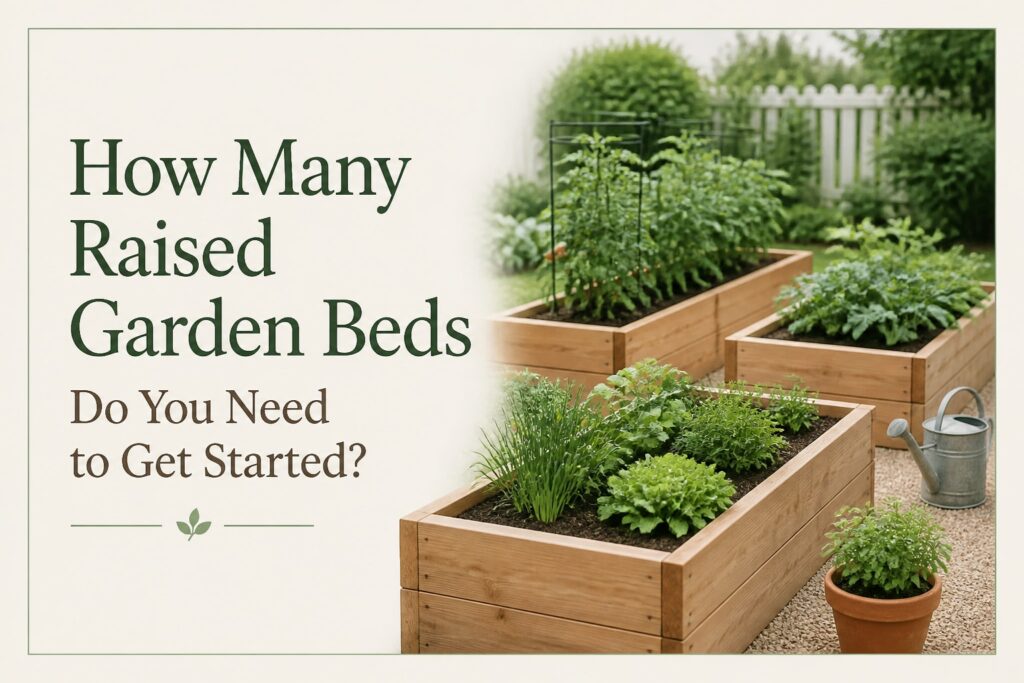
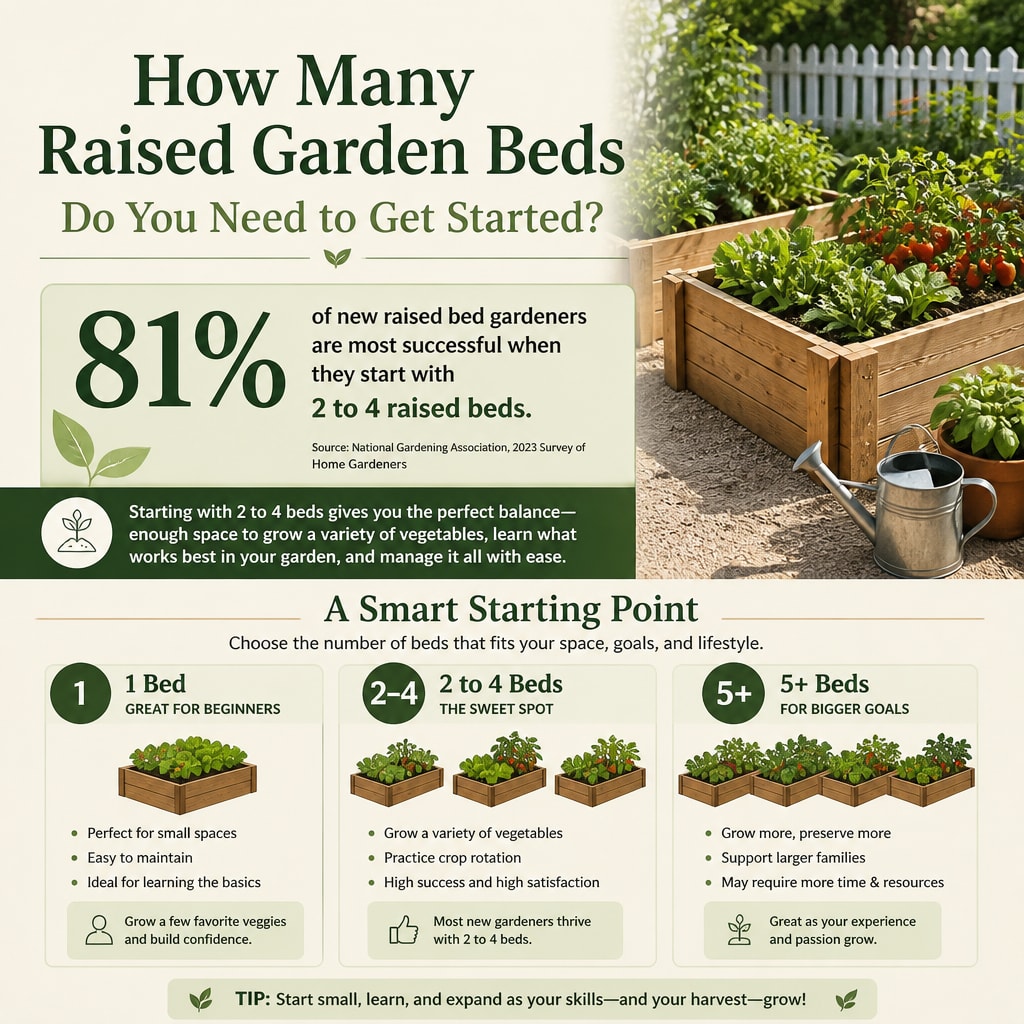
Most beginners don’t need a backyard full of raised beds. One well-planned bed is enough to learn the basics, grow a useful amount of food, and figure out how much time gardening actually fits into your week. For many households, two or three beds are the sweet spot.
The right number depends on your available space, the vegetables you want to grow, and whether you’re starting with seedlings or growing from seed. Your watering routine matters, too. A garden that looks manageable in May can feel like a part-time job by midsummer.
Start with the garden you can maintain
One bed is a perfectly good beginning
One raised bed gives you enough room to learn without making every mistake expensive or exhausting. A 4-by-4-foot bed provides 16 square feet of growing space. That’s plenty for salad greens, herbs, a few tomatoes, and some compact root crops.
It also keeps the work in proportion. You’ll have less soil to mix, fewer plants to water, and a smaller area to weed while you’re learning how your yard behaves. Does it dry out quickly? Does one corner stay damp? Which spots get afternoon shade? A single bed helps you answer those questions before you build more.
We often recommend starting with one bed for retirees, busy homeowners, and anyone who hasn’t gardened before. There’s no prize for building four beds and abandoning them in July. A productive small garden beats an ambitious one that becomes a chore.
Two beds create useful flexibility
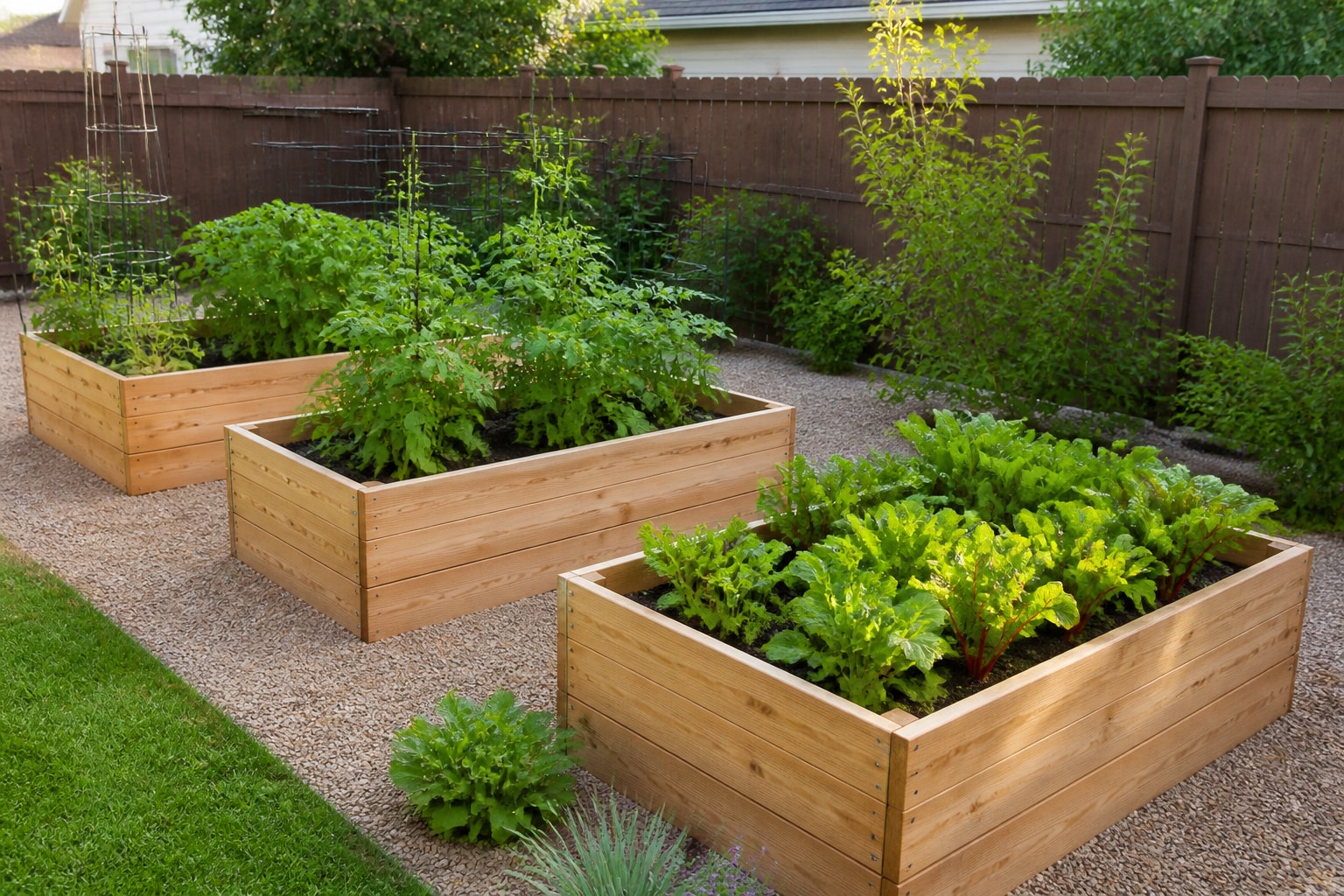
Two beds are a better fit when you want more variety or enough produce for regular meals. You can put fruiting crops such as tomatoes, peppers, and cucumbers in one bed, then use the other for lettuce, carrots, onions, beans, and herbs.
That separation makes planning easier. You can rotate crop families from one bed to the other in future seasons, although rotation is less critical in a small home garden than good soil, clean plant debris, and healthy watering habits.
Match bed count to the food you want to grow
Think in plants, not just square feet
A bed’s size tells only part of the story. Tomatoes take more room than radishes. Zucchini can occupy an entire square or two, while green onions can be tucked into gaps. So the number of beds you need depends heavily on your crop list.
For a modest kitchen garden, two 4-by-4-foot beds can provide a useful mix of fresh produce. Depending on the varieties and spacing requirements, you might grow one or two compact tomato plants, a couple of pepper plants, and herbs or leafy greens. Radishes, carrots, and bush beans can be planted in succession as space becomes available. That won’t replace every grocery-store vegetable, but it can provide fresh ingredients throughout the growing season.
People who want to preserve food or feed a larger household often need more space. Pickling cucumbers, freezing beans, storing onions, and growing enough tomatoes for sauce all add up. Three or four beds may be reasonable, but only when the time and water supply are there.
Use succession planting to get more from less
You don’t necessarily need more beds to grow more food. Once spring peas or lettuce finish, plant bush beans, fall carrots, or another round of greens in that same space. This is called succession planting, and it’s one of the best ways to make a small garden earn its keep.
Our team sees beginners overbuild because they assume each crop needs a permanent section. It doesn’t. A bed can have several jobs during the season. The trick is to choose crops with different timing instead of trying to grow everything at once.
For help fitting beds, paths, sunlight, and crops into your yard, see How to Plan and Design a Raised Bed Garden for Beginners. The layout decisions you make before buying lumber can save plenty of rearranging later.
Let your space and daily routine set the limit
Measure the practical space
Raised beds need more room than their outside dimensions suggest. You’ll want paths wide enough to walk through comfortably, carry a watering can, and kneel beside the bed. A 3-foot path is comfortable for many gardeners, though a narrower path can work in a tight backyard.
Keep beds narrow enough that you can reach the middle without stepping on the soil. Most home gardeners do well with beds no wider than 4 feet. Against a wall or fence, 2 feet is usually more sensible. Reaching across a bed sounds easy on paper. After a season of stretching around tomato plants, it gets old.
Pay attention to sunlight, too. Most vegetables need at least six hours of direct sun, with fruiting crops often wanting more. A larger number of beds won’t fix a shady location. They’ll just give you more shade to manage.
Count the maintenance minutes
Each additional bed brings more than planting space. It adds watering, checking for pests, harvesting, adding compost, tying plants, and clearing spent crops. That work arrives during hot weeks when gardens grow fastest.
A simple starting estimate is useful: plan on checking the garden several times each week and watering as needed. During heat waves, containers and raised beds may need daily attention because their soil can dry faster than in-ground soil. Drip irrigation or a soaker hose can reduce the hassle, but it still needs occasional inspection.
Be honest about mobility and comfort. A tall raised bed may be easier on your back, while a low bed can be simpler and less expensive to build. Leave enough room to sit, kneel, or use a small garden stool. Good access is not a luxury. It’s what keeps the garden enjoyable.
Choose a starting size that leaves room to grow
Common starting combinations
There’s no single correct setup, but these combinations work well for many beginner gardeners:
- One 4-by-4-foot bed for herbs, greens, and a few summer crops
- Two 4-by-4-foot beds for a varied household garden
- One 4-by-8-foot bed for gardeners who want a larger planting area in one location
- Three or four beds for preserving food or growing for several people
- One main bed plus containers for mint, herbs, or crops that spread
One 4-by-8-foot bed has the same growing area as two 4-by-4-foot beds, but the layout feels different. Two smaller beds provide easier access and let you separate crops. One longer bed may use space more efficiently and cost less to frame. For a small backyard, paths and access often matter more than the raw square footage.
Leave expansion simple
Start where you can see the garden from the house and reach it without a long walk. Build one or two beds using a consistent width, then leave enough room nearby for another bed later. That way, expansion doesn’t require rebuilding the whole arrangement.
We also recommend waiting before buying every accessory. Trellises, row covers, irrigation parts, and specialty tools can be useful, but you’ll know what you actually need after one season. Spend first on sound bed construction, quality soil, reliable watering, and plants suited to your climate.
For a broader walkthrough of bed placement, construction, soil, planting, and care, visit Raised Bed Gardening for Beginners: The Complete Step-by-Step Guide. It can help you connect the bed count decision to the rest of your garden plan.
FAQs for How Many Raised Garden Beds Do You Need to Get Started?
Is one raised bed enough for a family?
It can be, depending on what you grow and how much your family eats. One 4-by-4-foot bed won’t supply all your vegetables for the year, but it can provide regular herbs, salad greens, a few tomatoes, peppers, and seasonal crops. Start with the vegetables your household already enjoys. Growing food nobody wants to eat is a quick way to lose interest.
How many raised beds do I need for a small backyard?
Two 4-by-4-foot beds are a sensible starting point for many small yards. They provide variety without taking over the space. Measure for paths, check the sun, and make sure a hose can reach before settling on the final number. In a very compact yard, one bed plus containers may work better than several tightly packed beds.
Build the smallest garden you’ll enjoy
For most beginners, one or two raised beds are enough to get started. Choose a size you can reach, place it where sunlight and water are convenient, and grow a short list of vegetables your household will actually use. You can always add another bed after you’ve learned the rhythm of your yard.
Our book, Raised Bed Gardening Made Easy, walks through the practical details from planning and building to filling, planting, and maintaining productive beds. We also share free gardening resources through the Backyard Living Books Learning Center, so you can keep building your skills one season at a time.
🌱 FREE DOWNLOAD: Your First Raised Bed Garden
A Beginner-Friendly Guide to Getting Started
Thinking about growing your own vegetables in a raised bed? Start with a simple plan that helps you avoid costly mistakes and build a garden you can enjoy for years.
Our FREE Your First Raised Bed Garden guide provides practical, beginner-friendly information to help you:
- Choose a suitable location with enough sunlight.
- Plan the size and layout of your raised garden bed.
- Understand the basics of preparing healthy garden soil.
- Select vegetables that are appropriate for beginners.
- Get started with planting, watering, and caring for your garden.
You don’t need a huge backyard, expensive equipment, or years of gardening experience to get started!
Get Your FREE Raised Bed Gardening Guide
Free PDF guide from Backyard Living Books.
📗 Ready to Grow Your Own Fresh Vegetables?
Creating a productive raised bed garden takes thoughtful planning, healthy soil, and a little know-how.
Take the guesswork out of raised bed gardening!
Raised Bed Gardening Made Easy: Plans, Soil Mixes, Planting Secrets, and Beginner-Friendly Harvests is a practical guide designed to help you:
- Plan and build raised garden beds that fit your space.
- Choose materials and prepare the right soil mix.
- Select and plant vegetables for productive harvests.
- Understand watering, fertilizing, and routine garden maintenance.
- Avoid common mistakes that can waste time and money.
Whether you’re planting your first garden or looking to improve an existing one, this book will help you garden with greater confidence.
Explore Raised Bed Gardening Made Easy
🌿 Want More FREE Raised Bed Gardening Tips?
Visit our Gardening Learning Center for helpful articles, practical advice, and beginner-friendly resources covering everything from soil preparation and vegetable planting to watering, pest prevention, and seasonal gardening.
Explore the Gardening Learning Center
Part of the Backyard Living Series: Build • Grow • Raise • Thrive.