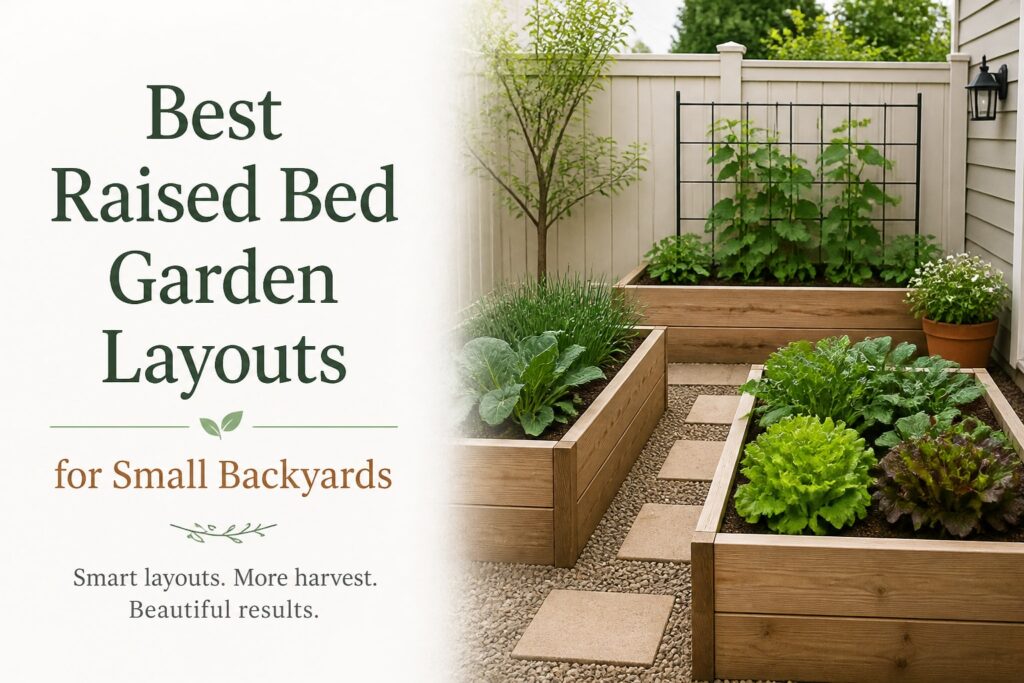
Small backyards can produce a surprising amount of food, but the layout has to earn its space. A raised bed placed six inches too close to a fence can turn harvesting into a shoulder workout. A bed that’s too wide leaves you stepping into the soil, which compacts roots and makes weeding miserable. We’ve seen both problems many times.
The best raised bed garden layouts for small backyards keep three things in balance: sunlight, comfortable access, and enough growing room for the crops you actually want. You don’t need a huge garden. You need a plan that fits the way you move through your yard.
Start with the space you really have
Measure sunlight before lumber
Watch the proposed garden area over a full day. Most vegetables need at least six hours of direct sun, though leafy greens can manage with less. Notice seasonal changes, too. A spot that gets sun in April may sit beneath a neighbor’s tree by June.
Mark the sunny area with stakes or a hose. Then measure the usable footprint, not just the open patch. Leave room for a path, the bed frame, a wheelbarrow, and your own elbows. That last bit sounds silly until you’re trying to pick tomatoes against a fence.
Keep beds narrow enough to reach
For a bed that you can reach from both sides, four feet wide is a practical upper limit. Three feet is even friendlier for retirees, children, or anyone dealing with stiff knees or limited mobility. Along a wall or fence, keep the bed about two feet wide so you can reach the back without leaning across the soil.
Path width matters just as much. Eighteen inches works for a simple footpath. Two to three feet feels much better when you want to carry a bucket, kneel beside the bed, or roll a small cart through the garden. Tight paths look efficient on paper. In practice, they make routine work annoying.
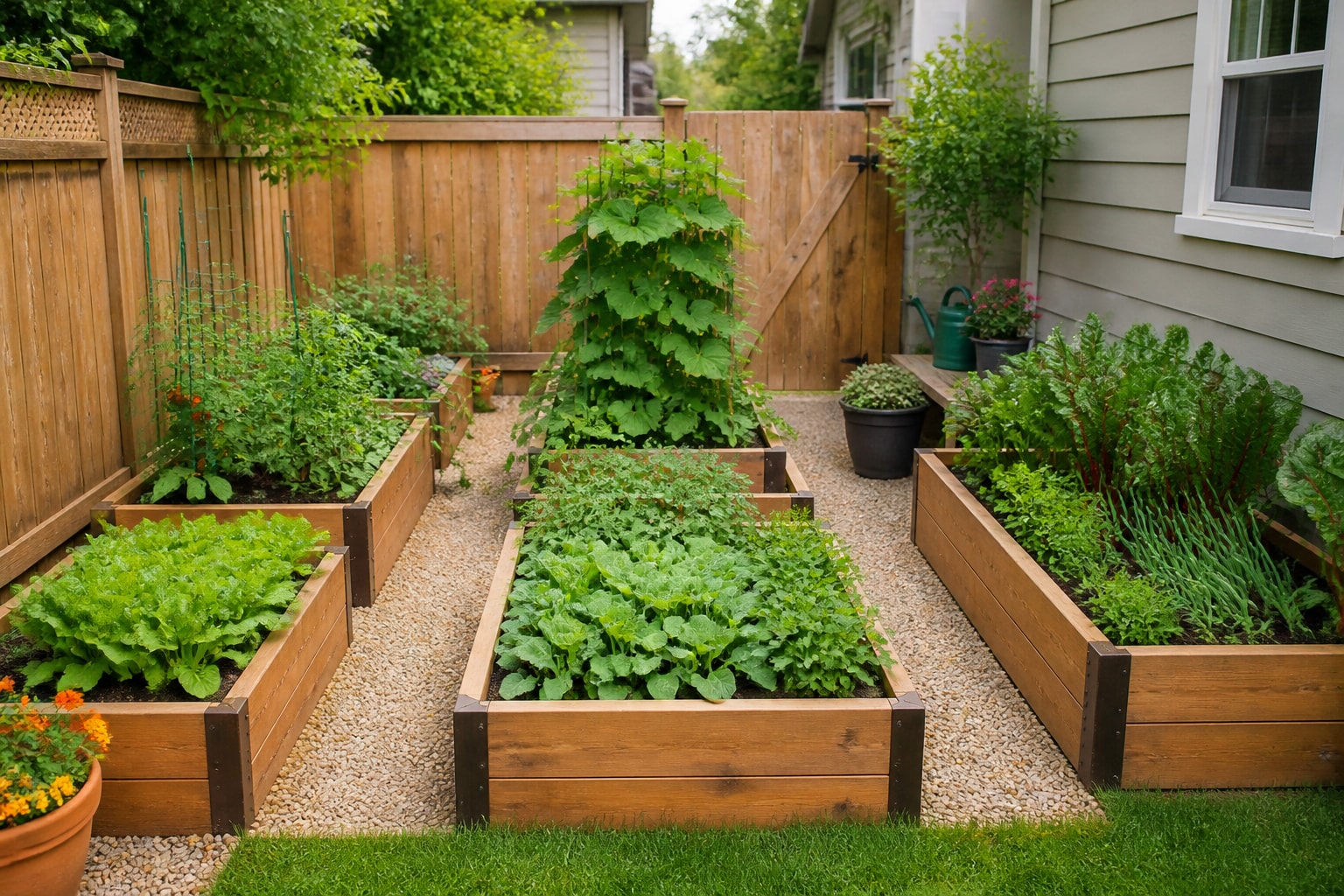
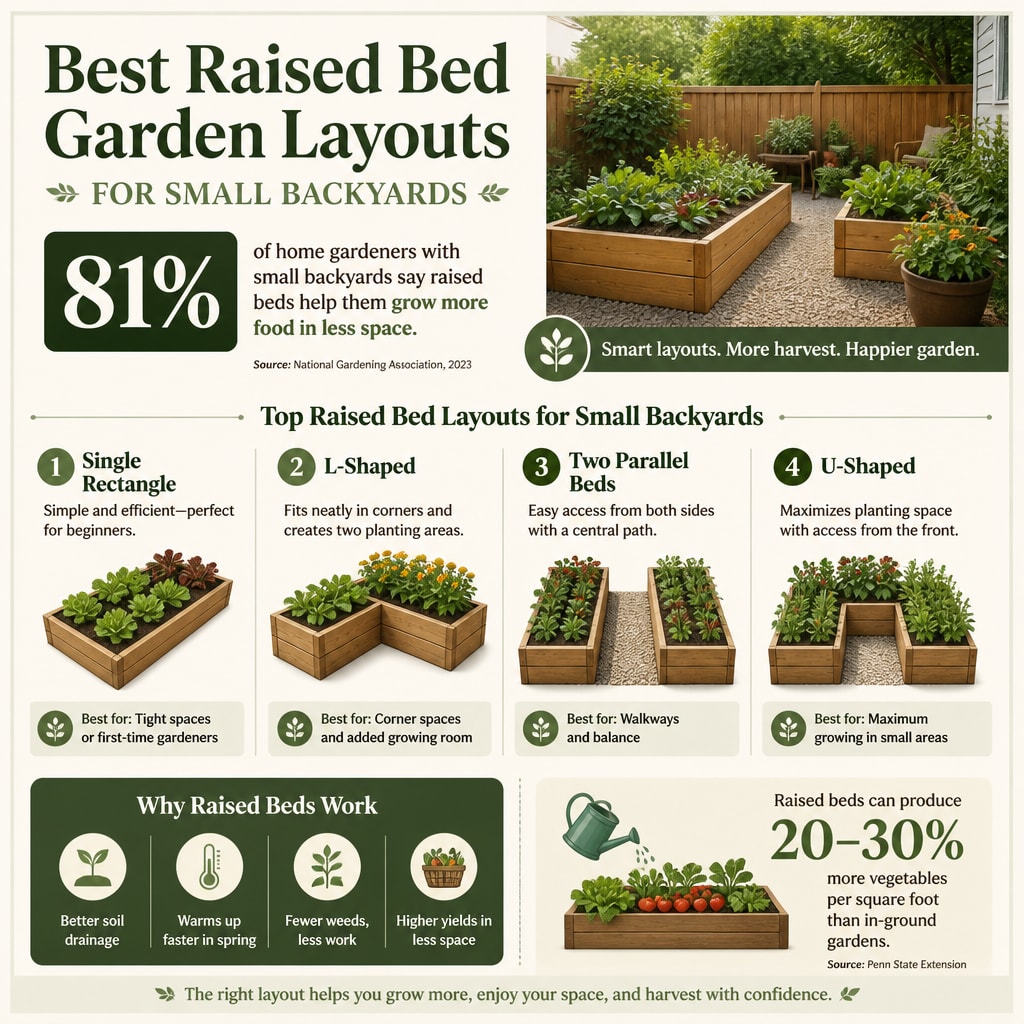
Three Raised Bed Layouts for Small Backyards
The simple rectangle
One rectangular bed is often the best starting point. A 4-by-8-foot bed gives you plenty of planting room without creating a maze of narrow corners. Put taller crops on the north side so they don’t shade shorter plants. Keep a clear path on every accessible side.
This layout suits a small lawn edge, a sunny side yard, or a first garden near the back door. It also keeps watering simple. One hose route. One compost delivery. Fewer places for weeds to hide.
The L-shaped corner
An L-shaped arrangement makes good use of a corner that would otherwise sit empty. It works especially well where two fences meet. Keep each arm no wider than four feet, and don’t make the inside corner too tight. A sharp, cramped corner is hard to plant and harder to reach.
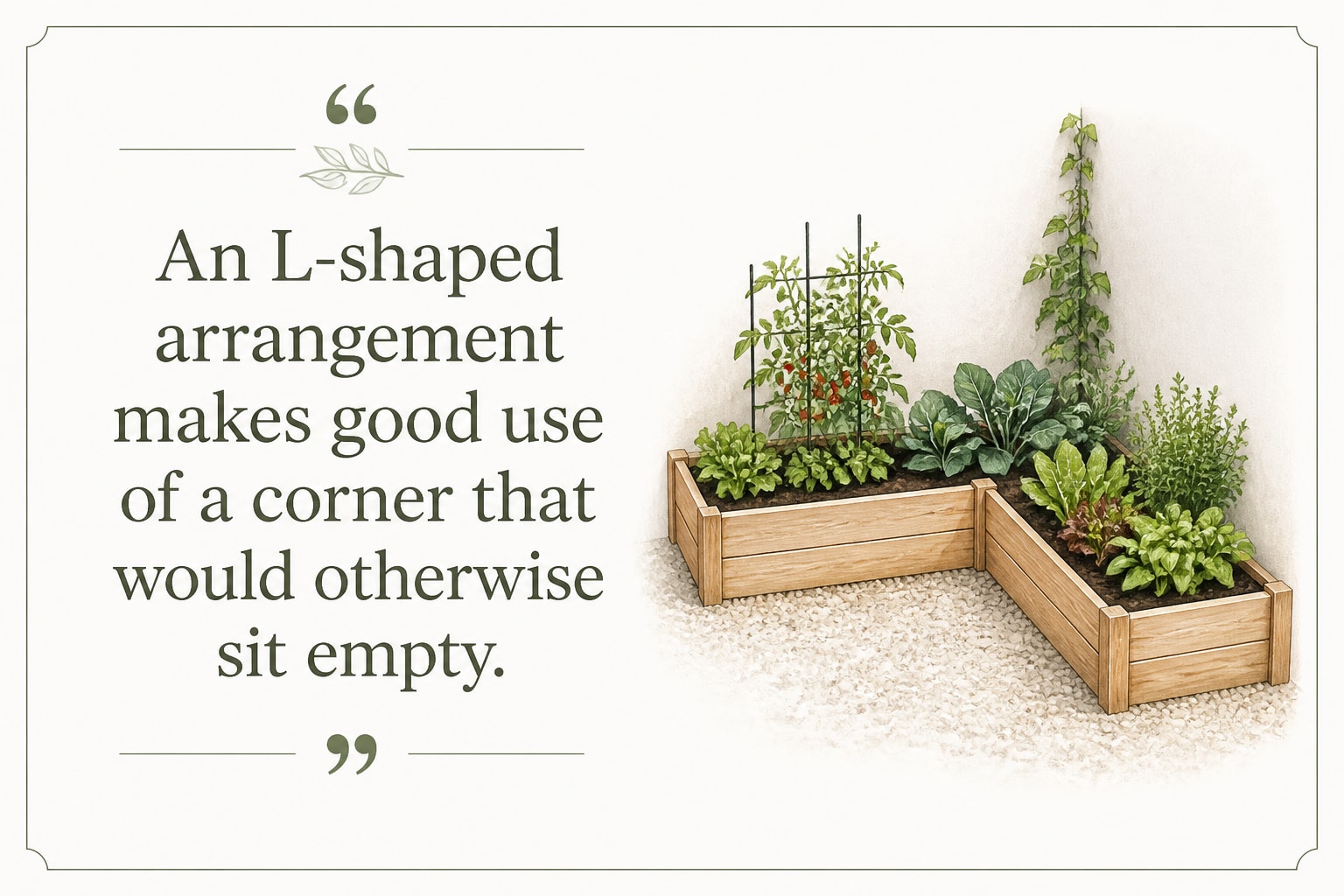
Use the longer arm for crops you harvest often, such as lettuce, herbs, or bush beans. Put slower-growing crops in the less convenient section. That’s a small choice, but it saves a lot of walking over the season.
The U-shaped garden
A U-shaped layout creates a central working area with beds along three sides. It offers a lot of planting space in a compact footprint, though it needs more room than a single rectangle. Keep the inner opening at least three feet wide. You’ll appreciate that clearance when you bring in soil or turn with a full watering can.
U-shaped beds are a good match for gardeners who want separate growing zones. One side can hold vegetables, another herbs, and the third flowers for pollinators. Just don’t let the design become more complicated than your gardening habits.
Make every bed easy to plant and maintain
Assign space by crop height
Place trellised cucumbers, tomatoes, and pole beans where they won’t shade the rest of the bed. In most yards, that means the north side. Medium-height peppers and bush beans can sit in the middle. Lettuce, radishes, carrots, and herbs belong along the front edge.
There’s a little flexibility here. Sun moves across the sky, and nearby walls bounce light back into the bed. Still, the north-side rule prevents many avoidable problems. A tomato plant can become a six-foot wall by midsummer. Plan for its adult size, not the tiny transplant you bought in May.
Leave room for succession planting
A small bed doesn’t have to produce only one crop per square foot all season. Harvest spring peas, then plant beans. Pull early radishes, then tuck in basil or another round of lettuce. This approach keeps the bed productive without adding more frames.
Don’t pack plants so tightly that air can’t move. Crowding encourages disease and makes harvesting harder. Seed packets often show a range of spacing. Use the wider end when your garden gets humid, your soil stays damp, or you don’t want to fuss over every leaf.
Choose a layout you can live with
Our team recommends sketching the garden on graph paper before buying materials. Draw the beds, paths, hose route, gate, spigot, and any permanent obstacles. Add the mature height of nearby shrubs. Then imagine doing ordinary chores in that drawing.
Can you reach the compost bin? Is there somewhere to set a harvest basket? Will a gate open fully? These details separate a pleasant garden from one that quietly becomes a nuisance. The layout doesn’t need to look fancy. It needs to make Tuesday evening watering feel manageable.
Small-backyard layouts that solve common problems
For a narrow side yard
Use one long bed no wider than two or three feet, with a path beside it. This is a natural place for herbs, greens, strawberries, compact peppers, and trellised crops. Avoid placing the bed directly against siding or a fence if moisture and airflow are concerns. A small gap helps you inspect the back edge and keeps leaves from rubbing against the structure.
For a patio or rental-friendly garden
Try two or three small modular beds instead of one large permanent frame. Square beds around three feet wide can sit near a patio, provided the surface can handle water runoff. Containers or raised planters may be a better choice on concrete because they can be moved and won’t trap moisture against the surface.
Use lightweight soil mixes carefully. Garden soil is too dense for many containers, while a raised bed on open ground can use a different blend.
For limited mobility
Shorter beds with wide paths are usually more useful than one oversized bed. Consider a 24-to-30-inch bed height if bending is difficult, but remember that tall frames need strong construction and more soil. Add a stable place to sit near the garden. A narrow bed that can be tended from a seated position may outperform a larger one that requires constant kneeling.
Keep the most frequently harvested plants closest to the house. Fresh herbs, salad greens, and cherry tomatoes tend to get used more when they’re visible and convenient. The garden should meet you halfway.
- Measure the sunny growing area and mark permanent obstacles.
- Keep accessible beds no wider than four feet.
- Leave paths wide enough for your knees, tools, and watering can.
- Place tall crops on the north side whenever possible.
- Put frequent-harvest crops closest to the door.
What layout mistake causes the most trouble?
Oversized beds are the usual culprit. A six-foot-wide bed may look productive, but the center becomes unreachable. Gardeners either step into the soil or ignore the middle. Both choices create problems. Smaller beds with dependable access usually yield more usable food over time.
Do raised beds need to face a certain direction?
Not always. Bed orientation matters less than sunlight and access. North-south beds can help plants receive more even light, especially when the bed is long and crops are tall. In a cramped yard, a convenient east-west placement may work perfectly. Watch for shade from structures, trees, and large plants before deciding.
Choose a layout you’ll enjoy using
The strongest small-backyard layout isn’t the one with the most beds. It’s the one that gives you enough growing space without making watering, weeding, or harvesting feel like a chore. Start with sunlight and reach. Add paths before plants. Leave a little breathing room.
🌱 FREE DOWNLOAD: Your First Raised Bed Garden
A Beginner-Friendly Guide to Getting Started
Thinking about growing your own vegetables in a raised bed? Start with a simple plan that helps you avoid costly mistakes and build a garden you can enjoy for years.
Our FREE Your First Raised Bed Garden guide provides practical, beginner-friendly information to help you:
- Choose a suitable location with enough sunlight.
- Plan the size and layout of your raised garden bed.
- Understand the basics of preparing healthy garden soil.
- Select vegetables that are appropriate for beginners.
- Get started with planting, watering, and caring for your garden.
You don’t need a huge backyard, expensive equipment, or years of gardening experience to get started!
Get Your FREE Raised Bed Gardening Guide
Free PDF guide from Backyard Living Books.
📗 Ready to Grow Your Own Fresh Vegetables?
Creating a productive raised bed garden takes thoughtful planning, healthy soil, and a little know-how.
Take the guesswork out of raised bed gardening!
Raised Bed Gardening Made Easy: Plans, Soil Mixes, Planting Secrets, and Beginner-Friendly Harvests is a practical guide designed to help you:
- Plan and build raised garden beds that fit your space.
- Choose materials and prepare the right soil mix.
- Select and plant vegetables for productive harvests.
- Understand watering, fertilizing, and routine garden maintenance.
- Avoid common mistakes that can waste time and money.
Whether you’re planting your first garden or looking to improve an existing one, this book will help you garden with greater confidence.
Explore Raised Bed Gardening Made Easy
🌿 Want More FREE Raised Bed Gardening Tips?
Visit our Gardening Learning Center for helpful articles, practical advice, and beginner-friendly resources covering everything from soil preparation and vegetable planting to watering, pest prevention, and seasonal gardening.
Explore the Gardening Learning Center
Part of the Backyard Living Series: Build • Grow • Raise • Thrive.