
Raised bed gardens are easier to manage than many in-ground plots, but they still need regular attention. The soil warms quickly, drains well, and often produces healthy growth. That same fast drainage can leave plants thirsty sooner than you expect, especially during hot weather.
The good news? You don’t need to fuss over your beds every hour. A simple routine for watering, mulching, weeding, and checking plants will keep most problems from getting out of hand. Our Raised Bed Gardening for Beginners: The Complete Step-by-Step Guide covers the bigger picture. Here, we’re focusing on the day-to-day care that keeps vegetables producing.
How Often Should You Water Raised Garden Beds?
Watering on a fixed calendar sounds convenient, but plants don’t drink the same amount every day. Temperature, wind, rainfall, soil texture, plant size, and the depth of your bed all matter. A shallow bed filled with a loose soil mix may dry out much faster than a deeper bed with plenty of compost.
Start by checking the soil rather than relying on a fixed watering schedule. Push your finger about 2 inches below the surface near a plant, avoiding the stem itself. If the soil feels dry at that depth, check a little deeper before watering. Established vegetables often have roots extending well below the surface, so the goal is to keep the active root zone adequately moist without leaving the soil waterlogged. A soil moisture meter or small hand trowel can help you check deeper conditions when needed.
About 1 inch of water per week is a commonly used starting benchmark for vegetable gardens, including rainfall. Treat that as a starting point, not a rule carved in stone. Plants in a hot, windy backyard may need more, while a cool week with steady rain may require none from the hose.
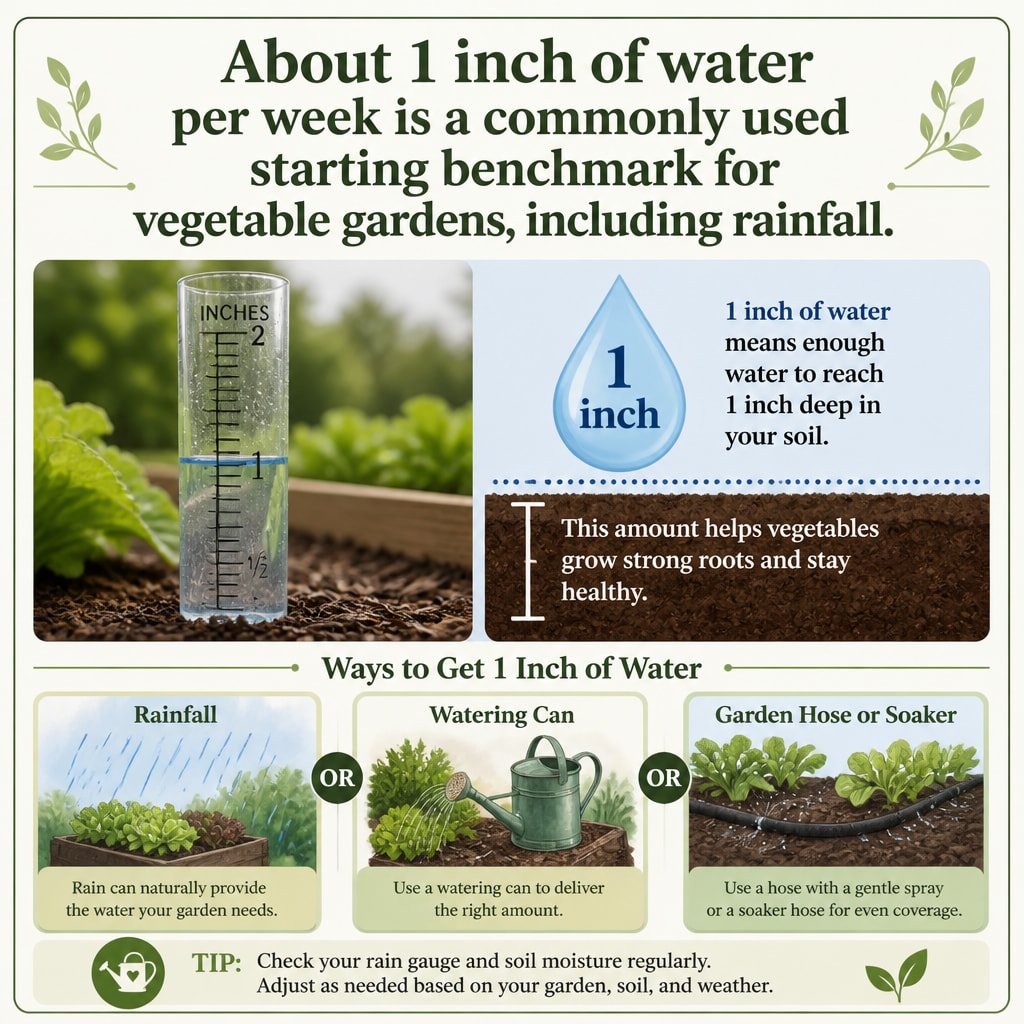
When you water, soak the root zone rather than sprinkling the leaves for a few seconds. A brief splash often wets only the top layer, which encourages shallow roots. Water slowly until moisture reaches several inches down. In a small bed, that may take less time than you expect. In a large bed, work in sections so water has time to soak in instead of running over the edges.
Morning is usually the best time
Morning watering gives leaves and soil time to dry during the day. It also puts moisture in the root zone before the afternoon heat arrives. Evening watering isn’t automatically wrong, especially during a heat wave, but constantly wet foliage overnight can encourage fungal disease.
We recommend watering at soil level with a watering wand, soaker hose, or drip line. A strong spray can wash soil away from roots and splash disease organisms onto lower leaves. That’s not a small detail. Once soil starts spilling from a raised bed, exposed roots and uneven moisture usually follow.
Choosing a watering system for your bed
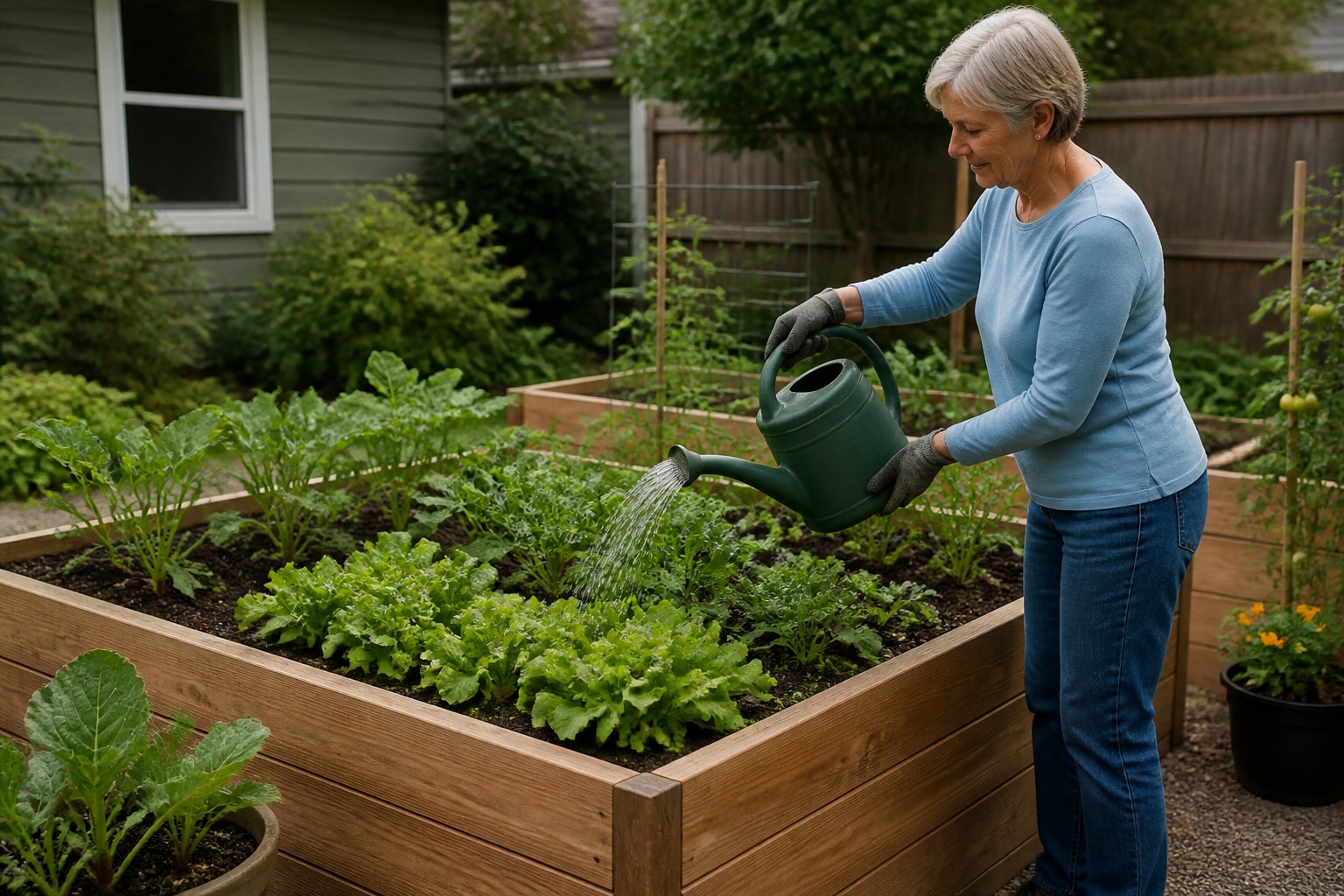
A watering can works beautifully for one or two compact beds. It’s inexpensive, easy to control, and useful for seedlings. The catch is time. Carrying repeated cans across the yard gets old fast, especially when summer vegetables are large and thirsty.
Soaker hoses are a practical middle ground. They release water along their length and can cover a long bed with little setup. Lay the hose in gentle rows, keep it a few inches from plant stems, and test the flow before covering it with mulch. Some soaker hoses release much more water at the hose end than the far end, so watch for uneven wetting.
Drip irrigation gives you more precise control. Emitters deliver water at specific points, which reduces wet foliage and can save time. Drip systems do need occasional inspection. Clogged emitters, loose connectors, and a kinked line can quietly leave one section of your bed bone-dry.
For most home gardeners, the best system is the one you’ll actually use. A basic soaker hose may beat a complicated setup that sits in a box because it feels too fussy. We like simple timers for busy households, but don’t let the timer make every decision. Check the soil now and then. Rain, cool weather, and a broken line can make an automatic schedule wrong in a hurry.
Mulch helps raised beds hold moisture
Mulch is one of the easiest maintenance steps you can take. It covers bare soil, slows evaporation, softens the impact of heavy rain, and makes weed seedlings harder to establish. It also keeps soil from splashing onto leaves during watering.
Good choices include shredded leaves, clean straw, untreated grass clippings, and finished compost. Each material behaves a little differently. Straw is light and tidy, though it can contain weed seeds. Grass clippings break down quickly, but thick layers can mat and smell. Shredded leaves improve the soil as they decompose, but whole leaves may form a soggy blanket.
Apply organic mulch at a depth appropriate for the material. Coarse straw or shredded leaves may work well in a loose layer about 2 to 3 inches deep, while finer materials such as grass clippings should be applied more thinly to prevent matting. Keep mulch slightly away from plant stems to reduce excess moisture and the risk of rot. Check the depth periodically and replenish it as the material decomposes, particularly along exposed edges of the bed.
Don’t mulch tiny seeds immediately after sowing with a heavy material. They may struggle to emerge. Wait until seedlings are established, or use a very thin layer of finely screened compost.
Keep weeds from taking over
Weeds compete for water, light, nutrients, and root space. In a raised bed, they may look harmless at first because the garden is contained. Give them a few weeks, though, and they can become surprisingly persistent.
Pull young weeds after watering or rain, when the soil is loose. Try to remove the root, particularly with taprooted weeds such as dandelions. A narrow hand tool works well in crowded beds. For weeds between beds, keep paths covered with cardboard, wood chips, or another suitable material. Don’t use herbicide drift as your maintenance plan. It can damage vegetables and beneficial plants you didn’t intend to touch.
Weeding a little every few days is easier than doing one miserable cleanup at the end of the month. Set a small goal. Five minutes while you check moisture is often enough to prevent a bad situation.
Inspect plants before small problems become large ones
Walk past your beds regularly and look at the leaves, stems, and soil surface. You’re not hunting for perfection. You’re looking for change.
Check for wilting carefully
Wilting usually points to a moisture problem, but not always. A plant can droop during hot afternoon weather and recover by evening. That doesn’t automatically mean it needs more water. Check the soil first.
Dry soil with limp leaves suggests underwatering or damaged roots. Wet soil with yellowing leaves can point toward overwatering, poor drainage, or root disease. A clogged drip emitter may affect one plant while everything around it looks fine. This is why looking at the individual plant matters.
Watch leaves for pests and disease
Turn over a few leaves. Aphids often gather along tender growth, while flea beetles leave small holes. Powdery mildew appears as a pale coating, especially when airflow is poor. Remove badly damaged leaves, harvest ripe vegetables promptly, and avoid working among wet plants when disease is present.
Give crowded plants more room when possible. Good spacing improves air movement and makes watering, harvesting, and weeding much less annoying. It may feel wasteful to remove a seedling, but an overcrowded bed usually produces weaker plants and more maintenance later.
Seasonal raised bed maintenance
Spring
Clear winter debris, inspect the bed frame, and check whether the soil level has settled. If additional volume is needed, replenish the bed with a suitable raised bed soil mix rather than relying entirely on compost. Add finished compost in moderation based on soil condition and previous applications. Check hoses before planting. Tiny leaks are easy to miss when the garden is bare and irritating to discover once everything is growing.
Start watering newly planted seeds gently and often enough to keep the upper soil moist. Once seedlings establish deeper roots, water less frequently but more deeply.
Summer
Heat and wind can turn a well-watered bed dry within a day. Mulch exposed soil, water early, and harvest regularly. Cucumbers, tomatoes, peppers, and squash may need close attention when flowering and fruiting heavily.
Don’t automatically increase watering every time a plant droops at midday. Check the soil, inspect the roots if the problem persists, and look for signs of disease or stem damage.
Fall and winter
Remove diseased plant material rather than adding it to a slow home compost pile. Healthy spent plants can often be chopped and composted. Before freezing weather arrives, drain and winterize irrigation lines according to the manufacturer’s recommendations, removing components that could be damaged by trapped water. Protect exposed soil with an appropriate layer of organic mulch or a suitable cover crop.
Winter maintenance is also a good time to tighten loose bed hardware, repair edging, clean tools, and make notes about what worked. Those notes are surprisingly useful next spring. Memory tends to edit out the annoying parts.
A simple weekly care routine
Choose one day each week for a closer inspection. Test soil moisture in several areas. Look under leaves. Pull weeds while they’re small. Check the irrigation system and add mulch where soil is showing. Harvest anything ready.
Then take a quick walk through the garden on other days. You’re simply watching for sudden wilting, storm damage, pest activity, or a hose that has shifted. This small habit catches trouble early, before a thirsty plant becomes a dead one.
Keep your raised beds productive
Healthy raised beds don’t require constant attention. They need consistent attention. Water deeply when the soil calls for it, protect the surface with mulch, remove weeds early, and inspect plants often enough to notice changes.
A few minutes of care each week can make the difference between a garden that struggles and one that keeps producing all season.
🌱 FREE DOWNLOAD: Your First Raised Bed Garden
A Beginner-Friendly Guide to Getting Started
Thinking about growing your own vegetables in a raised bed? Start with a simple plan that helps you avoid costly mistakes and build a garden you can enjoy for years.
Our FREE Your First Raised Bed Garden guide provides practical, beginner-friendly information to help you:
- Choose a suitable location with enough sunlight.
- Plan the size and layout of your raised garden bed.
- Understand the basics of preparing healthy garden soil.
- Select vegetables that are appropriate for beginners.
- Get started with planting, watering, and caring for your garden.
You don’t need a huge backyard, expensive equipment, or years of gardening experience to get started!
Get Your FREE Raised Bed Gardening Guide
Free PDF guide from Backyard Living Books.
📗 Ready to Grow Your Own Fresh Vegetables?
Creating a productive raised bed garden takes thoughtful planning, healthy soil, and a little know-how.
Take the guesswork out of raised bed gardening!
Raised Bed Gardening Made Easy: Plans, Soil Mixes, Planting Secrets, and Beginner-Friendly Harvests is a practical guide designed to help you:
- Plan and build raised garden beds that fit your space.
- Choose materials and prepare the right soil mix.
- Select and plant vegetables for productive harvests.
- Understand watering, fertilizing, and routine garden maintenance.
- Avoid common mistakes that can waste time and money.
Whether you’re planting your first garden or looking to improve an existing one, this book will help you garden with greater confidence.
Explore Raised Bed Gardening Made Easy
🌿 Want More FREE Raised Bed Gardening Tips?
Visit our Gardening Learning Center for helpful articles, practical advice, and beginner-friendly resources covering everything from soil preparation and vegetable planting to watering, pest prevention, and seasonal gardening.
Explore the Gardening Learning Center
Part of the Backyard Living Series: Build • Grow • Raise • Thrive.