
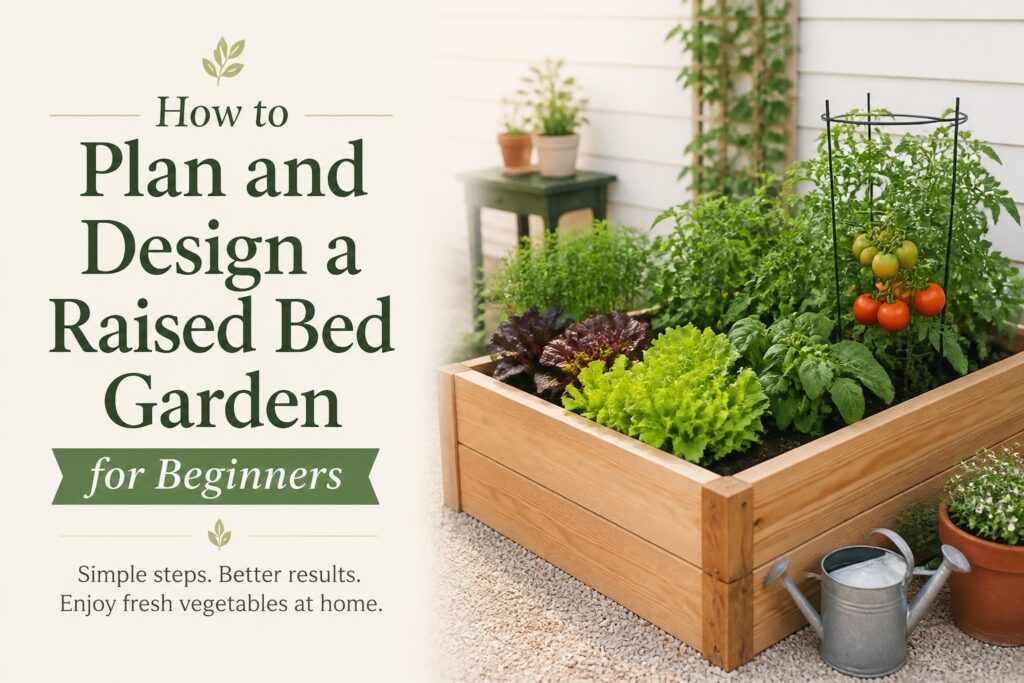
Planning a raised bed garden gets much easier once you stop treating it like a construction project and start treating it like a small, living workspace. You need enough sun, comfortable access, healthy soil, and a layout that fits the way you actually use your yard. A beautiful bed in the wrong spot becomes a daily annoyance. A simple bed in the right spot can produce vegetables for years.
We recommend making the big decisions before buying lumber or hauling in soil. The choices below will help you plan a productive garden that works in a small backyard, on a patio, or beside a home where bending and kneeling are becoming less appealing.
Start with the garden site
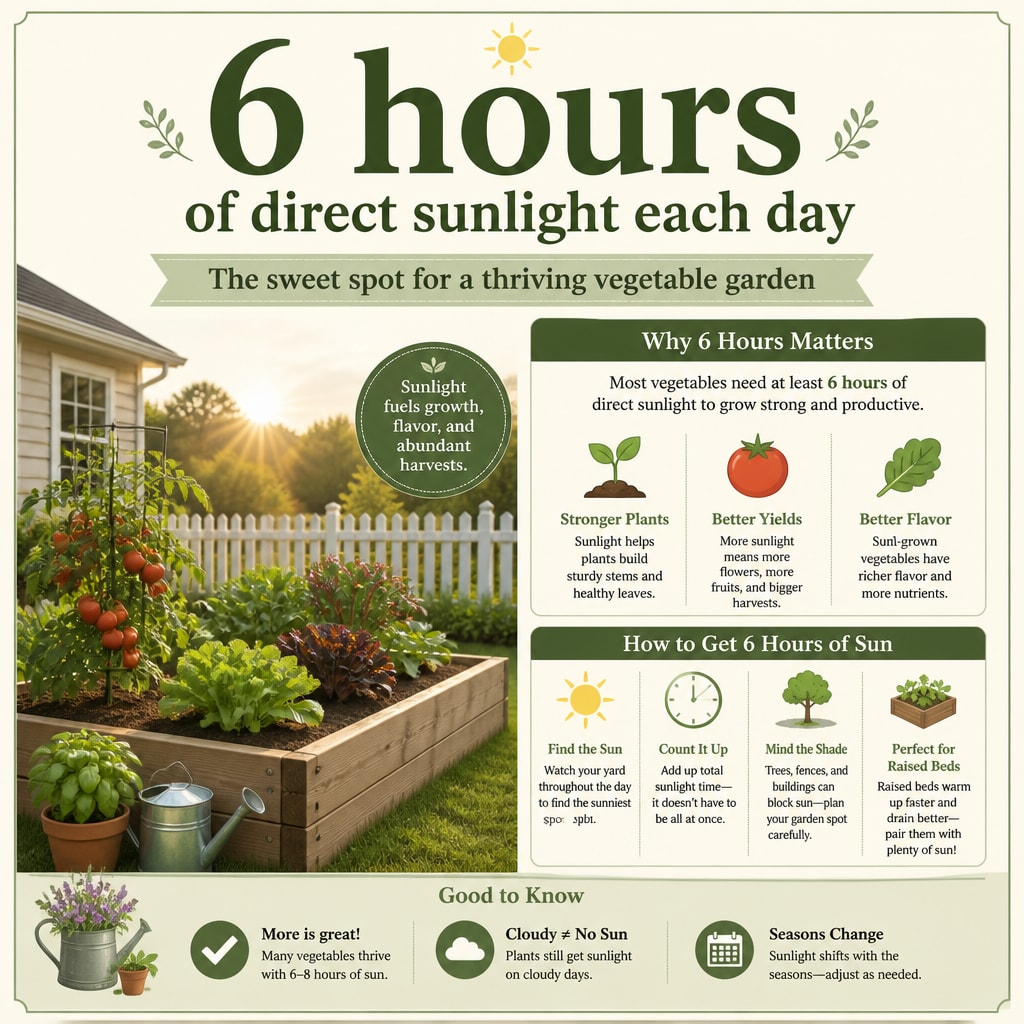
Walk around your property at different times of day. Watch where sunlight lands in the morning, at midday, and late afternoon. Trees, fences, garages, and neighboring buildings can cast much longer shadows than you expect, especially in spring and fall.
Most vegetables need at least 6 hours of direct sunlight each day to grow well, while fruiting crops such as tomatoes, peppers, cucumbers, and squash often perform best with even more. Leafy greens tolerate a little shade, but a shady corner won’t produce a strong harvest of sun-loving crops.
Drainage matters just as much. Avoid low spots where rainwater sits after a storm. Raised beds improve drainage, but they can’t fix a location that stays soggy underneath. Look for firm, reasonably level ground with easy access to a hose. Carrying watering cans across the yard sounds manageable in April. By July, it gets old.
Keep the bed close enough to your house that you’ll notice it while making coffee or walking to the garage. That small bit of convenience leads to more frequent harvesting and quicker attention when a plant starts struggling.
Choose a practical bed size
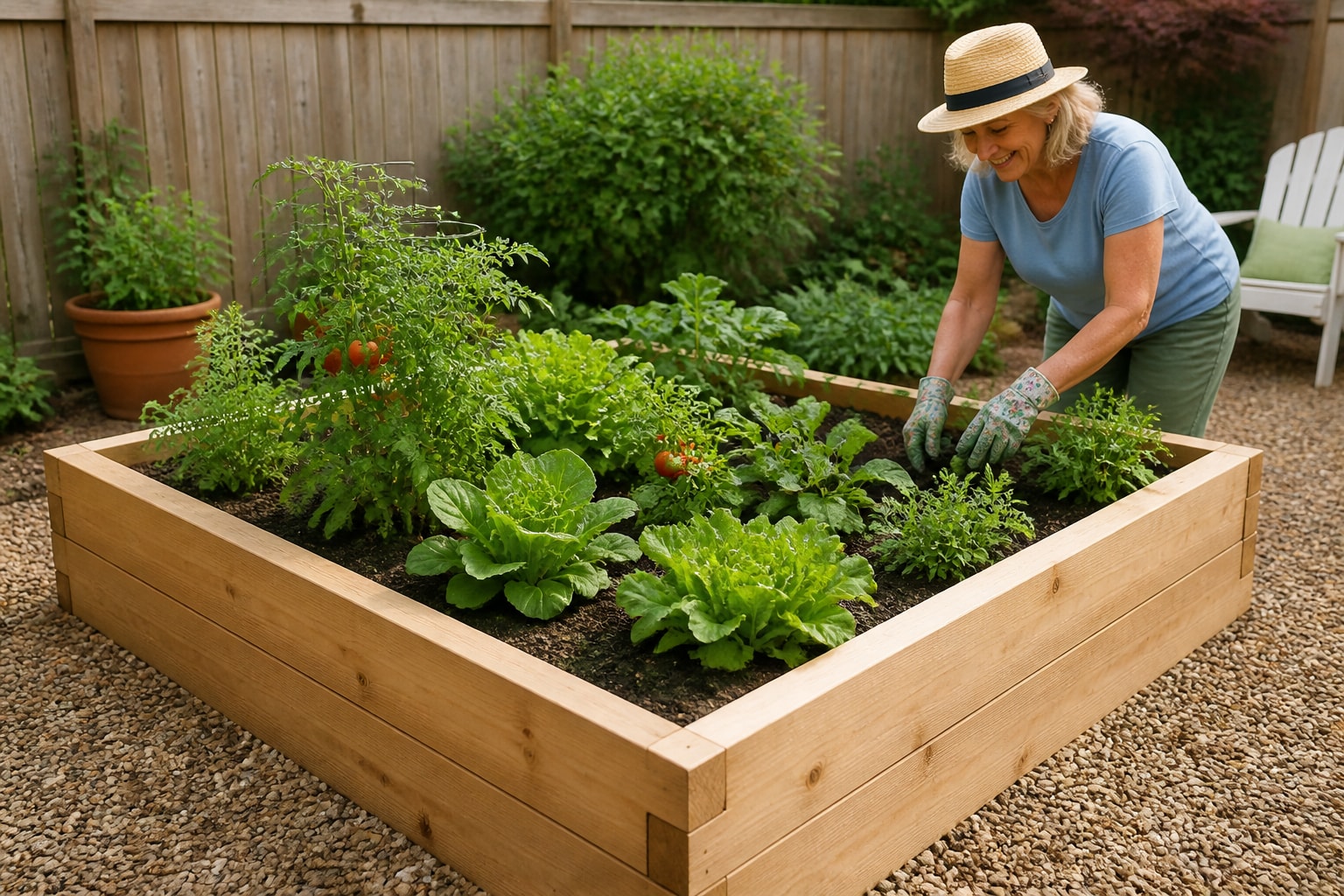
Width is usually the decision that causes trouble. A bed should be narrow enough to reach the middle from either side without stepping into the soil. For most adults, 3 to 4 feet wide works well. A 4-foot width is common because it makes efficient use of lumber and provides plenty of planting room.
Length depends on your space. A 4-by-8-foot bed is popular, but a 2-by-6-foot bed may be a much better choice for a small backyard or a first season. Smaller beds are less expensive to fill, easier to cover with frost protection, and less intimidating when you’re still learning.
Leave walking space between beds. Two feet is a workable minimum, though 3 feet feels much better when you need a wheelbarrow, walker, or bucket. Don’t design every inch of the yard as growing space. You need room to move, kneel, turn around, and bring in compost.
How tall should a raised bed be?
A 6- to 8-inch bed can work over decent soil, while 10 to 12 inches gives roots more room and makes soil improvement easier. Taller beds are useful for gardeners with limited mobility because they reduce bending. They also cost more to fill and may need stronger construction.
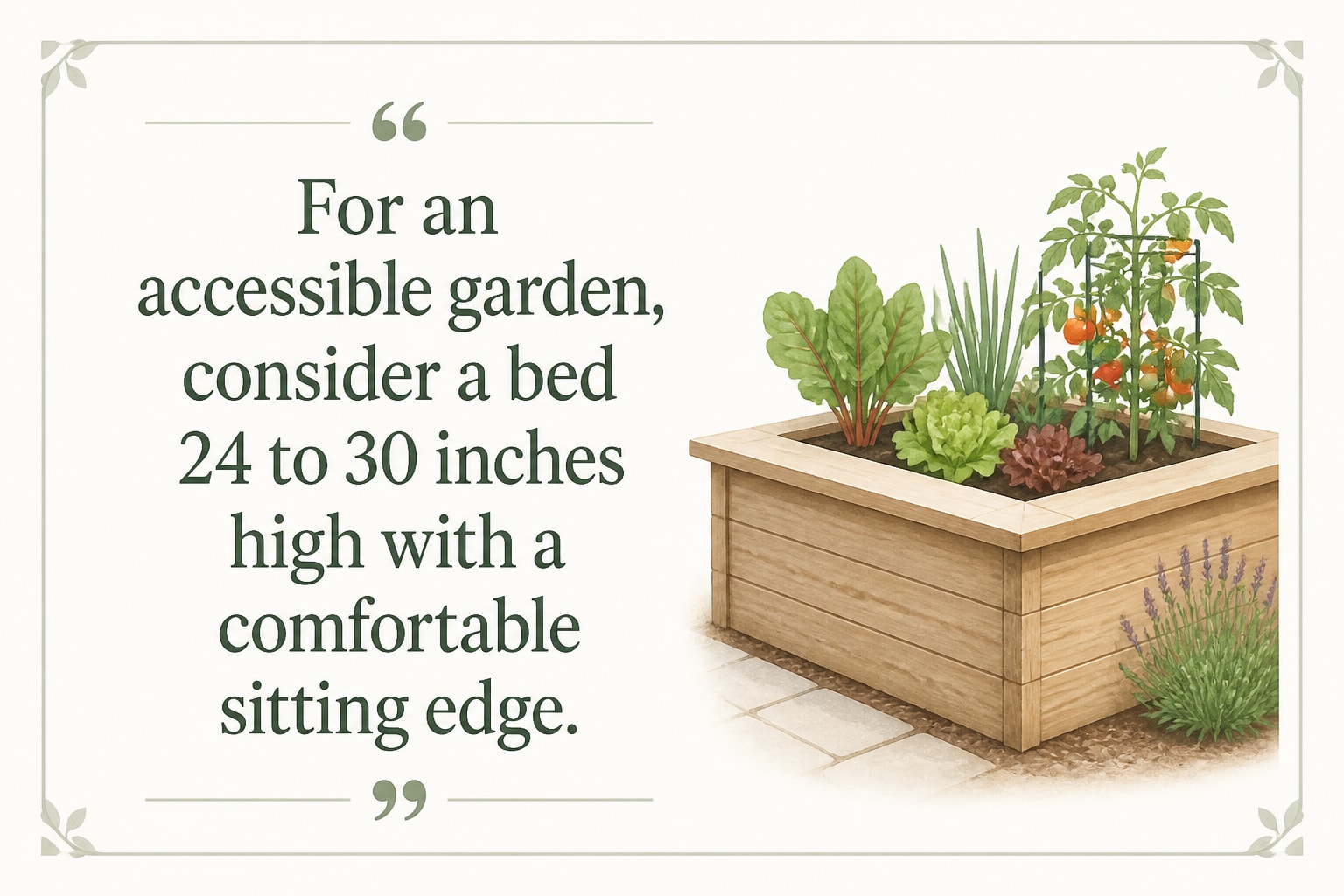
For an accessible garden, consider a bed 24 to 30 inches high with a comfortable sitting edge. That height won’t suit every crop or gardener, but it can make planting and harvesting far easier. A raised bed should support your gardening habits, not force you to work around it.
Pick a layout that matches your yard
Rectangular beds are the simplest place to begin. They fit along fences, beside patios, and in narrow side yards. Square beds work nicely in open spaces, though their centers can become hard to reach if the bed is wider than about 4 feet.
An L-shaped bed can make good use of a corner, especially around a patio or deck. Just watch for awkward inside corners. Every section should remain reachable from a path. We aren’t fans of creating a deep corner that looks clever on paper but becomes a tangle of weeds and unreachable carrots.
Several smaller beds often work better than one enormous box. You can rotate crops, separate herbs from vegetables, and reach each planting area without leaning across the garden. This arrangement also lets you add another bed later instead of committing to a large project in the first season.
Plan around the crops you actually eat
Write down the vegetables your household buys regularly. Then mark the crops that need trellises, such as peas, cucumbers, pole beans, and indeterminate tomatoes. In the Northern Hemisphere, placing tall supports along the north side of the garden generally helps prevent them from shading shorter crops. Adjust the layout for your location, surrounding structures, and the direction of sunlight.
Keep sprawling crops near an edge. A zucchini plant can take over a surprising amount of space, and a pumpkin vine will happily leave the bed altogether. You can let vines run into a path or across a lawn, but decide that ahead of time.
For a first garden, choose a manageable mix: salad greens, herbs, radishes, bush beans, one or two tomato plants, and perhaps peppers. That gives you quick wins and a few longer-season crops without turning watering and harvesting into a second job.
Build or buy the bed carefully
Untreated cedar and other naturally durable woods are common choices. Avoid old painted boards, railroad ties, and salvaged lumber with an unknown history. Pressure-treated wood has changed over the years, so people have different comfort levels with it. We recommend buying materials labeled for current garden or outdoor use and following local guidance.
The bed doesn’t need decorative trim to grow food. It needs solid corners, straight sides, and enough strength to hold wet soil. A basic rectangular frame is easier to repair than a complicated design with lots of joints.
Set the bed on existing soil whenever possible. Remove thick grass, cut back weeds, and loosen the surface. Landscape fabric underneath can make future changes difficult and may interfere with soil life. A layer of cardboard can smother turf during the first season, but it should be plain, unwaxed cardboard with tape and labels removed.
Fill the bed with healthy soil
Raised beds need a growing mix that holds moisture but drains excess water. A common approach is to combine quality topsoil with finished compost and an aerating material, such as aged leaf mold or a suitable soil amendment. The exact blend depends on what local suppliers carry, so read the product labels instead of relying on a catchy recipe.
Don’t fill a food garden with fresh manure. It can burn roots, add weed seeds, and create food-safety concerns. Finished compost should smell earthy and look dark and crumbly. Cheap fill may contain too much sand, clay, or undecomposed wood, which can leave you fighting poor growth all season.
A soil test is useful before you add a lot of amendments. It can reveal pH and nutrient levels, and it keeps you from tossing random products into the bed. Most vegetables prefer soil that is slightly acidic to neutral, but the right correction depends on your test results and local conditions.
Design for watering and maintenance
Put the hose connection on the easiest side of the garden. Drip irrigation or soaker hoses can reduce splashing and keep foliage drier, which may help with some disease problems. Hand watering works too, especially with one or two small beds. The best system is the one you’ll actually use.
Leave enough room to pull weeds while they are small. Mulch with clean straw, shredded leaves, or another suitable organic material after seedlings are established. Keep mulch slightly away from plant stems. Too much moisture against a stem invites trouble.
Think about seasonal access, too. Can you reach the bed after heavy rain without walking through mud? Is there a place to store stakes, row cover, and hand tools? Are you able to sit while harvesting? These details matter more than a fancy layout, particularly for retirees and anyone managing stiff knees, back pain, or reduced balance.
Use a simple first-season plan
Start fewer plants than you think you need. Crowded beds stay damp, become difficult to harvest, and compete for light. Follow the spacing on seed packets, then leave yourself enough room to reach the soil.
Plant cool-season crops such as lettuce, peas, and radishes when your local weather allows. Warm-season crops belong in the garden after the danger of hard frost has passed. Your local extension service and seed packets can help with timing because planting dates vary widely by region.
Keep a small garden notebook. Record what you planted, where it went, when you harvested, and what disappointed you. Next year’s layout becomes much easier when you aren’t trying to remember whether those cherry tomatoes were in the north bed or beside the shed.
Put your plan into action
A successful raised bed garden starts with a realistic footprint, good sunlight, reachable planting areas, and soil that supports healthy roots. You don’t need several beds, expensive equipment, or a perfect design. One well-planned bed is enough to learn a lot.
🌱 Explore the Complete Raised Bed Gardening Guide
Want to see how your garden design fits into the entire growing process?
Our complete beginner’s guide covers everything from building and filling your raised bed to planting, watering, and harvesting your vegetables.
[LINK TO MAIN PILLAR ARTICLE — ADD WHEN PUBLISHED]
🌱 FREE DOWNLOAD: Your First Raised Bed Garden
A Beginner-Friendly Guide to Getting Started
Thinking about growing your own vegetables in a raised bed? Start with a simple plan that helps you avoid costly mistakes and build a garden you can enjoy for years.
Our FREE Your First Raised Bed Garden guide provides practical, beginner-friendly information to help you:
- Choose a suitable location with enough sunlight.
- Plan the size and layout of your raised garden bed.
- Understand the basics of preparing healthy garden soil.
- Select vegetables that are appropriate for beginners.
- Get started with planting, watering, and caring for your garden.
You don’t need a huge backyard, expensive equipment, or years of gardening experience to get started!
Get Your FREE Raised Bed Gardening Guide
Free PDF guide from Backyard Living Books.
📗 Ready to Grow Your Own Fresh Vegetables?
Creating a productive raised bed garden takes thoughtful planning, healthy soil, and a little know-how.
Take the guesswork out of raised bed gardening!
Raised Bed Gardening Made Easy: Plans, Soil Mixes, Planting Secrets, and Beginner-Friendly Harvests is a practical guide designed to help you:
- Plan and build raised garden beds that fit your space.
- Choose materials and prepare the right soil mix.
- Select and plant vegetables for productive harvests.
- Understand watering, fertilizing, and routine garden maintenance.
- Avoid common mistakes that can waste time and money.
Whether you’re planting your first garden or looking to improve an existing one, this book will help you garden with greater confidence.
Explore Raised Bed Gardening Made Easy
🌿 Want More FREE Raised Bed Gardening Tips?
Visit our Gardening Learning Center for helpful articles, practical advice, and beginner-friendly resources covering everything from soil preparation and vegetable planting to watering, pest prevention, and seasonal gardening.
Explore the Gardening Learning Center
Part of the Backyard Living Series: Build • Grow • Raise • Thrive.