Backyard Learning Center
Learn practical backyard skills one project at a time through beginner-friendly articles, seasonal tips, and step-by-step guides that help you build, grow, raise, and thrive.
The Perfect Soil Mix for Raised Beds
(And the Biggest Mistake Beginners Make)
(July 2026 – Estimated Reading Time: 7 Minutes)
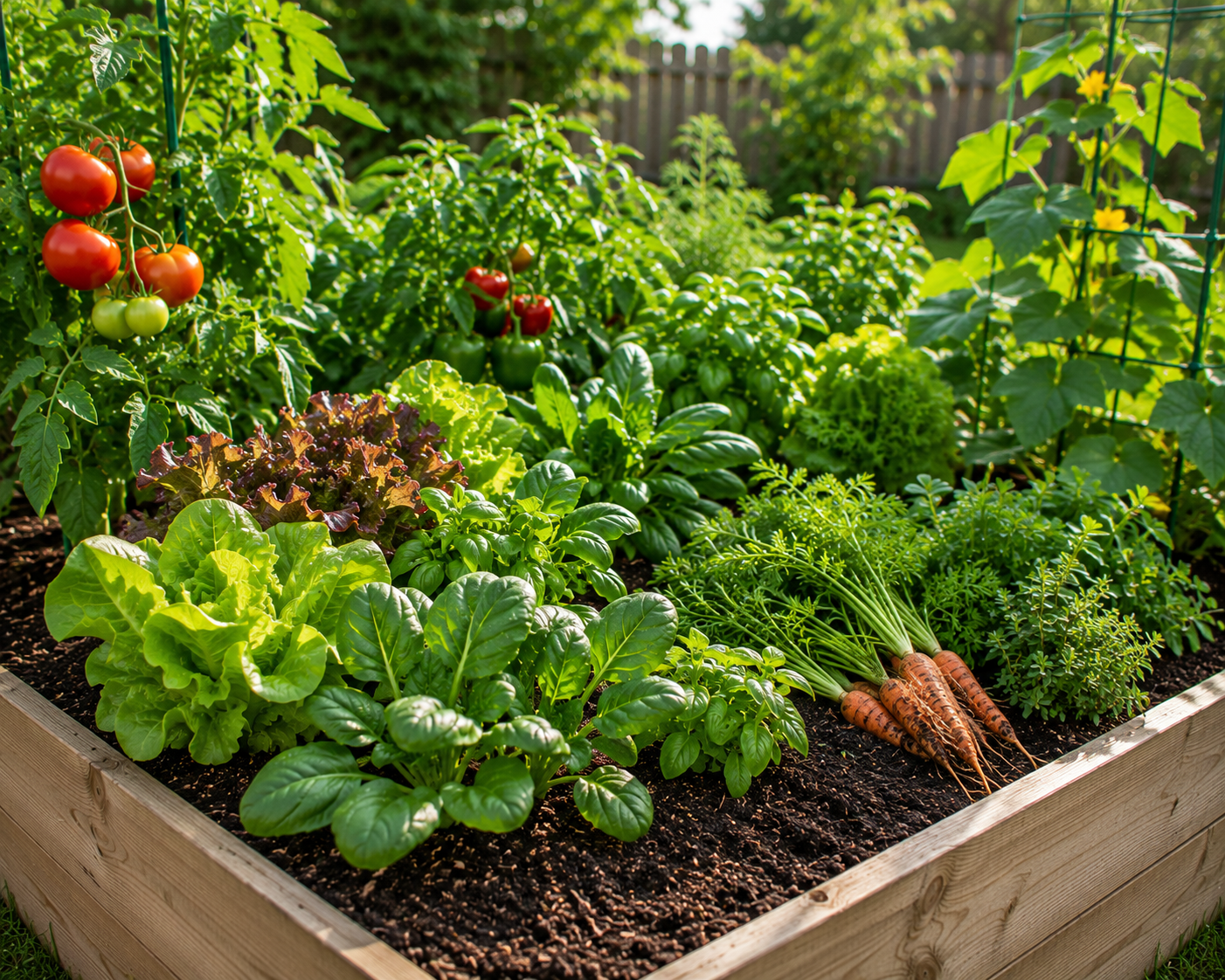
One of the biggest reasons raised bed gardens outperform traditional gardens has nothing to do with the wood, the shape of the beds, or even the vegetables you choose to grow.
It comes down to the soil.
Healthy soil is the foundation of every productive garden.
You can buy the best seeds, water faithfully, and provide plenty of sunshine, but if your soil isn’t supplying roots with the air, moisture, and nutrients they need, your harvest will never reach its full potential.
The good news is that raised beds allow you to create the ideal growing environment from day one. Instead of trying to improve poor native soil over many years, you can fill your beds with a custom soil blend that gives vegetables exactly what they need to thrive.
Let’s take a closer look at what makes the perfect raised bed soil and the biggest mistake many beginners make before they ever plant their first seed.
The Biggest Mistake: Filling Raised Beds with Garden Soil
It seems logical enough.
You build a raised bed, then fill it with soil from your yard.
Unfortunately, that’s one of the quickest ways to turn an exciting gardening project into a disappointing one.
Native soil is rarely ideal for vegetables. Depending on where you live, it may be heavy clay, loose sand, or compacted fill dirt left behind during construction.
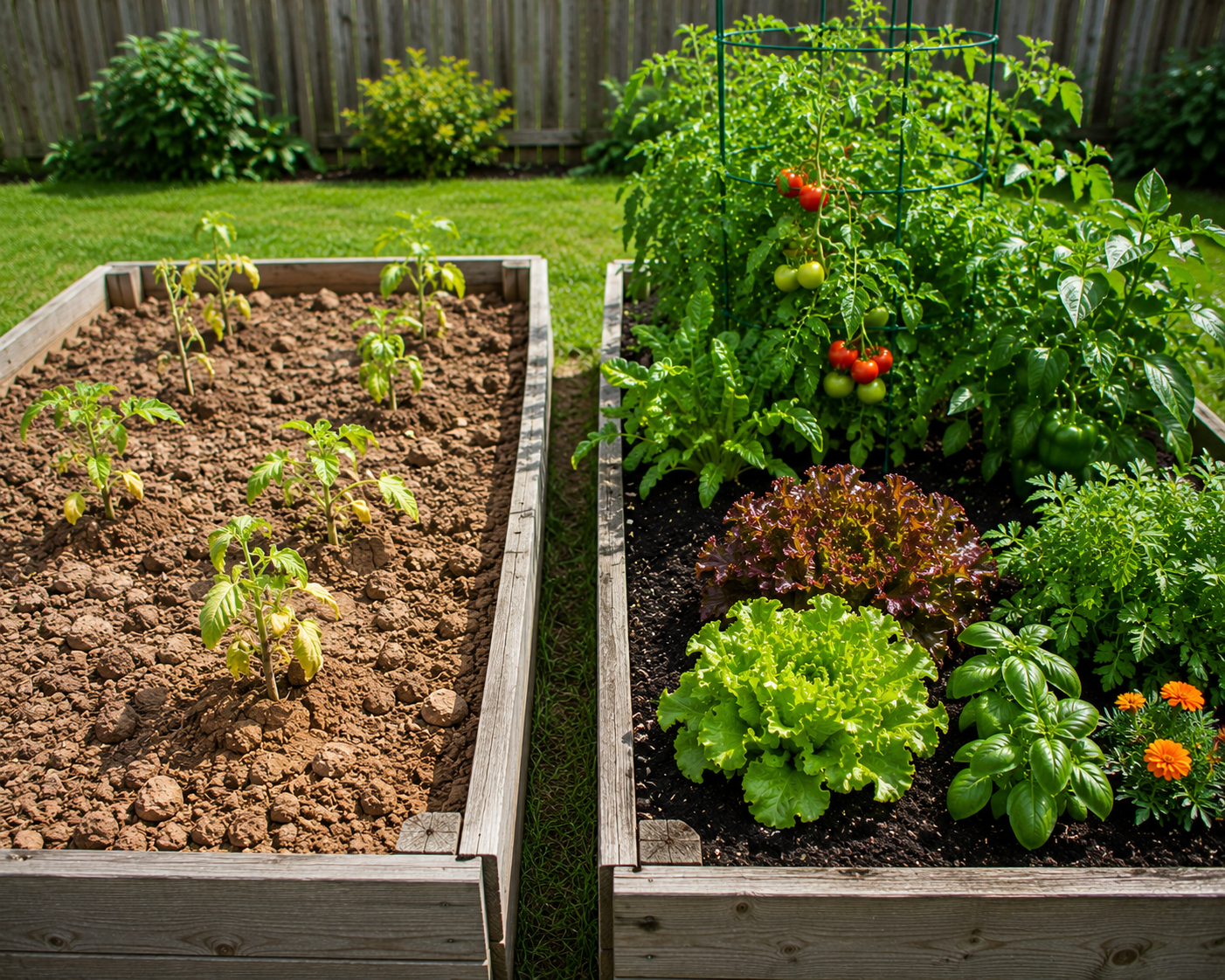
Even if it looks healthy on the surface, it often lacks the balance of nutrients, drainage, and organic matter vegetables require.
Clay soil tends to hold too much water.
Sandy soil drains so quickly that nutrients wash away before plants can use them.
Compacted soil limits root growth and makes it difficult for plants to absorb moisture.
Simply moving that soil into a raised bed doesn’t solve any of those problems.
Instead, think of your raised bed as a fresh start. You’re building an entirely new growing environment, not relocating old problems.
What Makes Great Garden Soil?
Healthy garden soil does four important jobs.
First, it anchors plant roots securely.
Second, it supplies nutrients throughout the growing season.
Third, it holds enough moisture between waterings without becoming waterlogged.
Finally, it allows oxygen to reach the roots.
Roots need air just as much as they need water. Without oxygen, plants struggle to grow no matter how much fertilizer you apply.
The perfect raised bed soil balances all four of these functions.
A Simple Soil Recipe That Works
Fortunately, you don’t need an advanced degree in soil science to build excellent garden soil.
A simple mixture works well for nearly every vegetable garden.
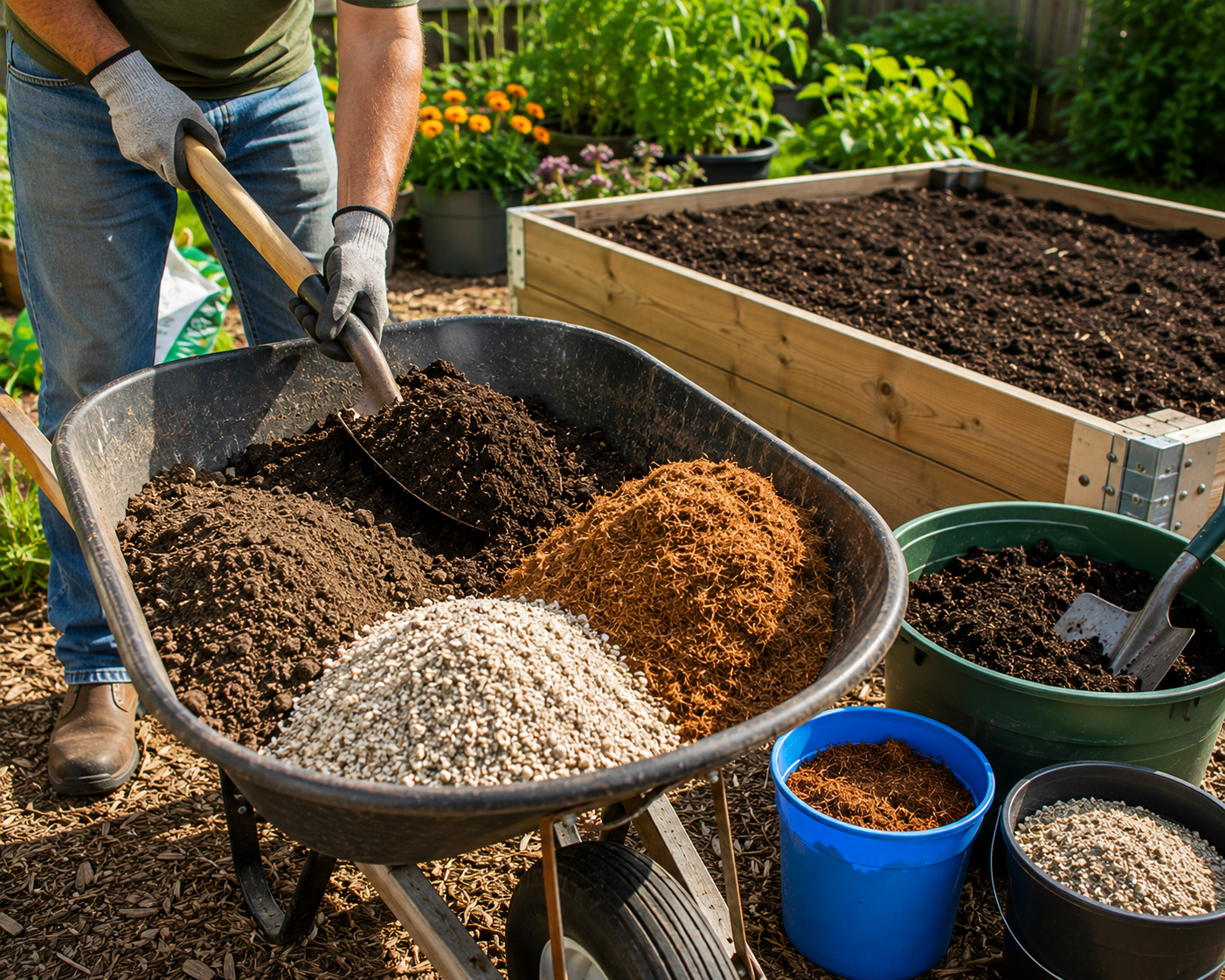
A popular blend includes:
- About one-third high-quality topsoil
- About one-third compost
- About one-third moisture-retaining material such as coconut coir or peat moss
Many gardeners also add a small amount of coarse vermiculite to improve moisture retention and aeration.
This combination creates soil that drains well while holding enough water for healthy plant growth.
Best of all, it stays loose for years with only small annual additions of compost.
Why Compost Is the Real Secret
If there were one ingredient that deserves most of the credit for successful gardens, it would probably be compost.
Compost improves nearly every type of soil.
It adds organic matter that feeds beneficial microorganisms, improves soil structure, increases nutrient availability, and helps regulate moisture.
Clay soils become looser.
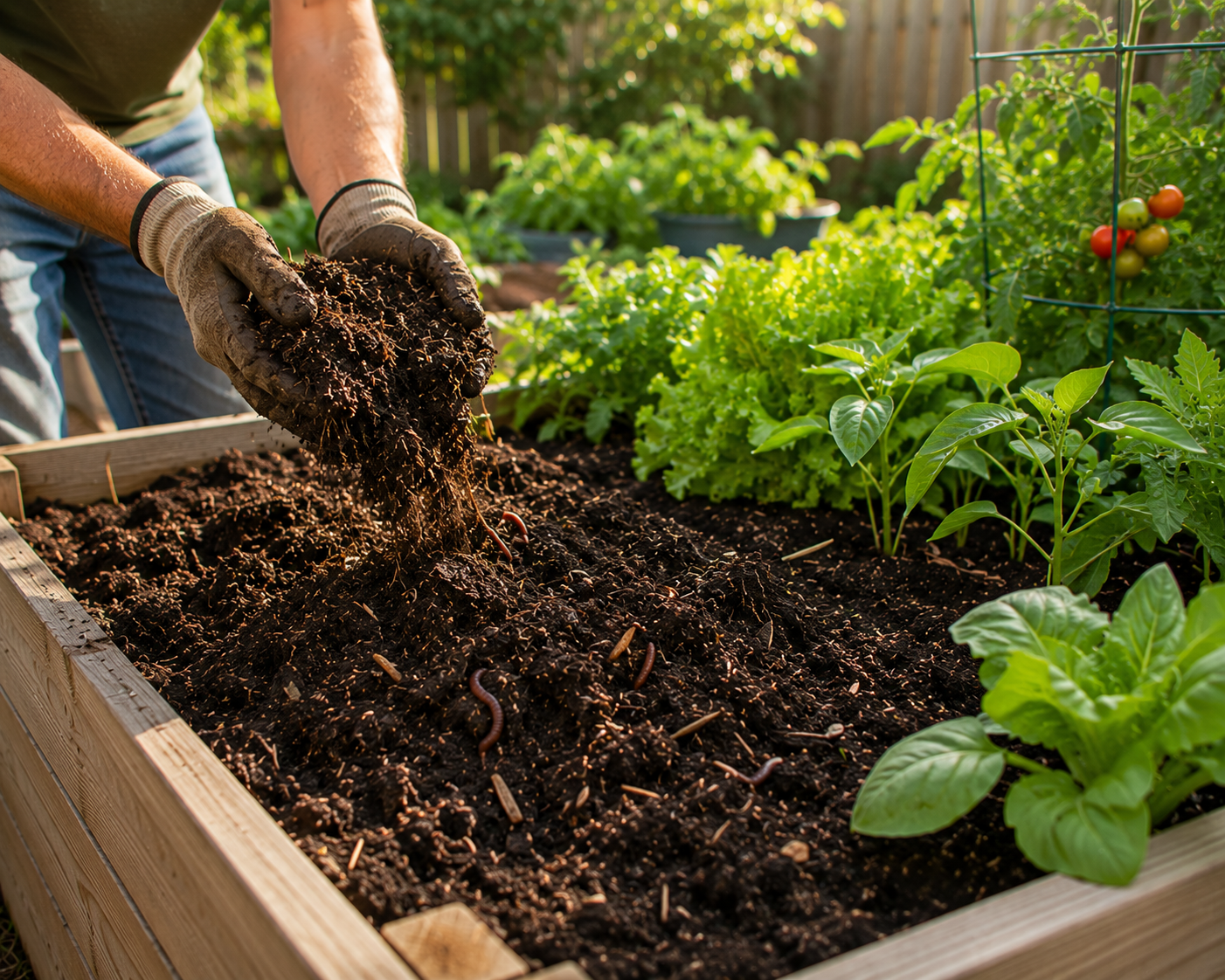
Sandy soils retain water better.
Healthy microbial life flourishes.
Plants develop stronger roots.
The beauty of compost is that it continues improving the soil long after it’s added.
Every season, earthworms and microorganisms break organic matter down into nutrients that vegetables can easily absorb.
Think of compost as slow-release nutrition created by nature itself.
Peat Moss or Coconut Coir?
Many soil recipes recommend one or the other.
Both work well, but they have a few differences.
Peat Moss
Peat moss has been used in gardening for decades.
It holds several times its weight in water, making it excellent for moisture retention during hot weather.
However, peat moss can become difficult to re-wet if it dries completely. Environmental concerns have also led many gardeners to seek renewable alternatives.
Coconut Coir
Coconut coir is made from coconut husks that would otherwise become waste.
Like peat moss, it holds moisture exceptionally well while allowing excellent air circulation around roots.
Unlike peat moss, coir is easier to rehydrate after drying out.
Many gardeners today choose coconut coir because it is renewable, easy to work with, and performs extremely well in raised beds.
Either choice will produce healthy vegetables.
Vermiculite vs. Perlite
These two soil amendments often confuse beginning gardeners.
Although they look somewhat similar, they serve different purposes.
Vermiculite
Vermiculite absorbs and stores moisture while also helping hold nutrients in the root zone.
It works especially well in vegetable gardens where consistent moisture supports healthy growth.
Perlite
Perlite is made from expanded volcanic rock.
Rather than holding water, it improves drainage and keeps soil from becoming compacted.
It is commonly used in potting mixes and seed-starting blends.
For most raised vegetable beds, vermiculite is usually the better choice because vegetables benefit from steady moisture.
Some gardeners use a combination of both.
Don't Forget Organic Matter
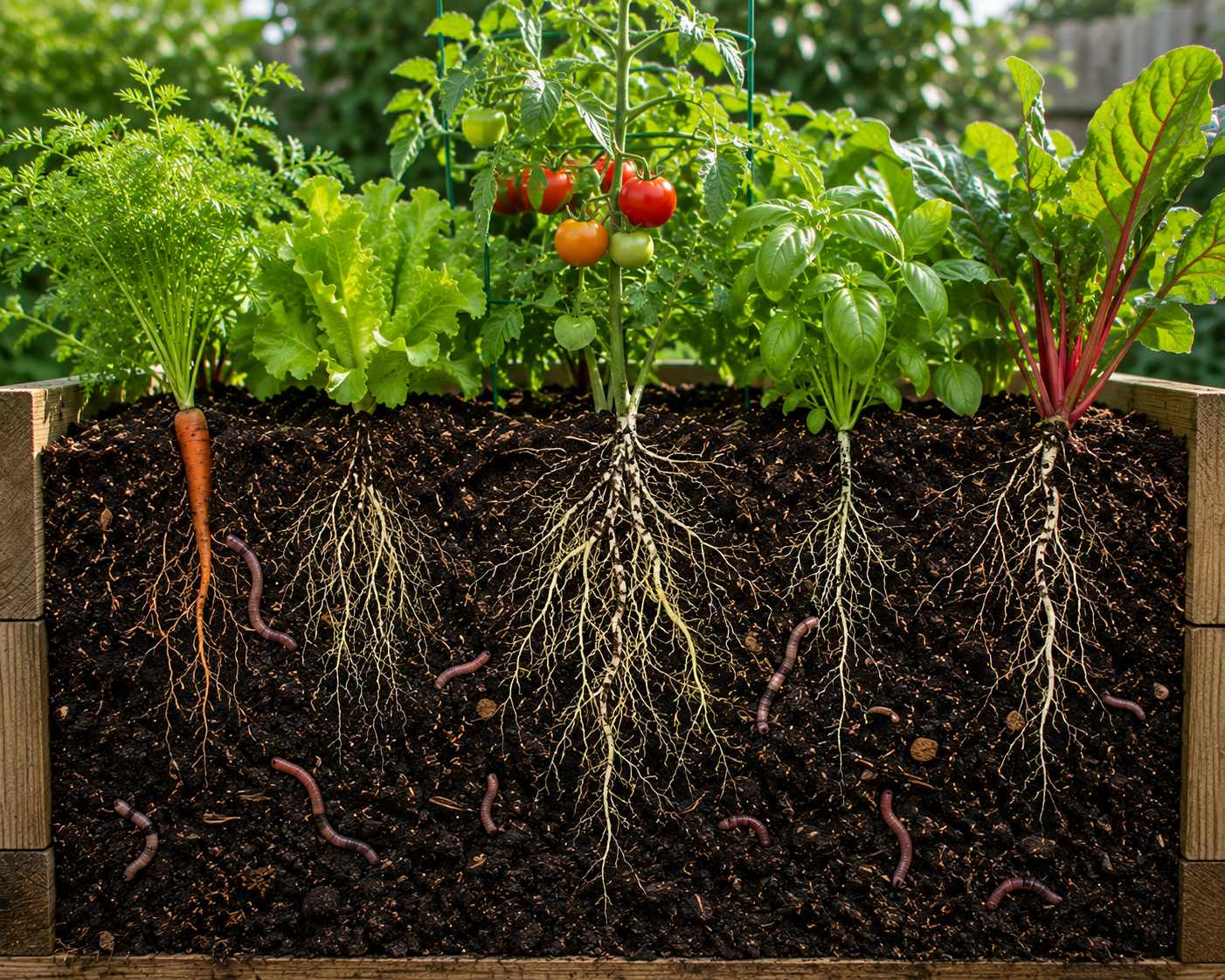
Healthy soil is alive.
Beneath every productive garden is an entire ecosystem of earthworms, fungi, bacteria, insects, and countless microorganisms working together.
Organic matter keeps this underground community thriving.
Leaves, compost, aged manure, shredded bark, and other natural materials gradually decompose, continually feeding both the soil and your plants.
As organic matter breaks down, it improves soil texture while releasing nutrients over time.
This natural cycle is one reason established gardens often become even more productive after several growing seasons.
Avoid Overloading with Fertilizer
One common mistake is believing that more fertilizer automatically produces bigger vegetables.
In reality, too much fertilizer can create problems.
Excess nitrogen often produces beautiful green leaves but fewer tomatoes, peppers, beans, or cucumbers.
Heavy fertilizer applications can also burn roots or encourage weak, overly rapid growth.
A rich soil containing plenty of compost often supplies much of what vegetables need.
Additional fertilizer should be applied thoughtfully based on the needs of specific crops.
Sometimes less really is more.
How Deep Should Raised Bed Soil Be?
Most vegetables grow very well in beds that are at least 10 to 12 inches deep.
Larger root crops such as carrots, parsnips, and potatoes often appreciate additional depth.
Beds that are 16 to 18 inches deep provide excellent growing conditions for nearly every vegetable commonly grown in backyard gardens.
If your raised bed sits directly on existing soil, roots can continue growing downward once they reach the bottom.
This gives plants even more room to develop.
Refreshing Your Soil Each Year
One of the biggest advantages of raised bed gardening is that soil improves over time.
Unlike traditional gardens that often require repeated tilling, raised bed soil benefits from minimal disturbance.
Each spring, simply add an inch or two of fresh compost across the surface.
Earthworms and natural soil organisms gradually incorporate the new organic matter into the bed.
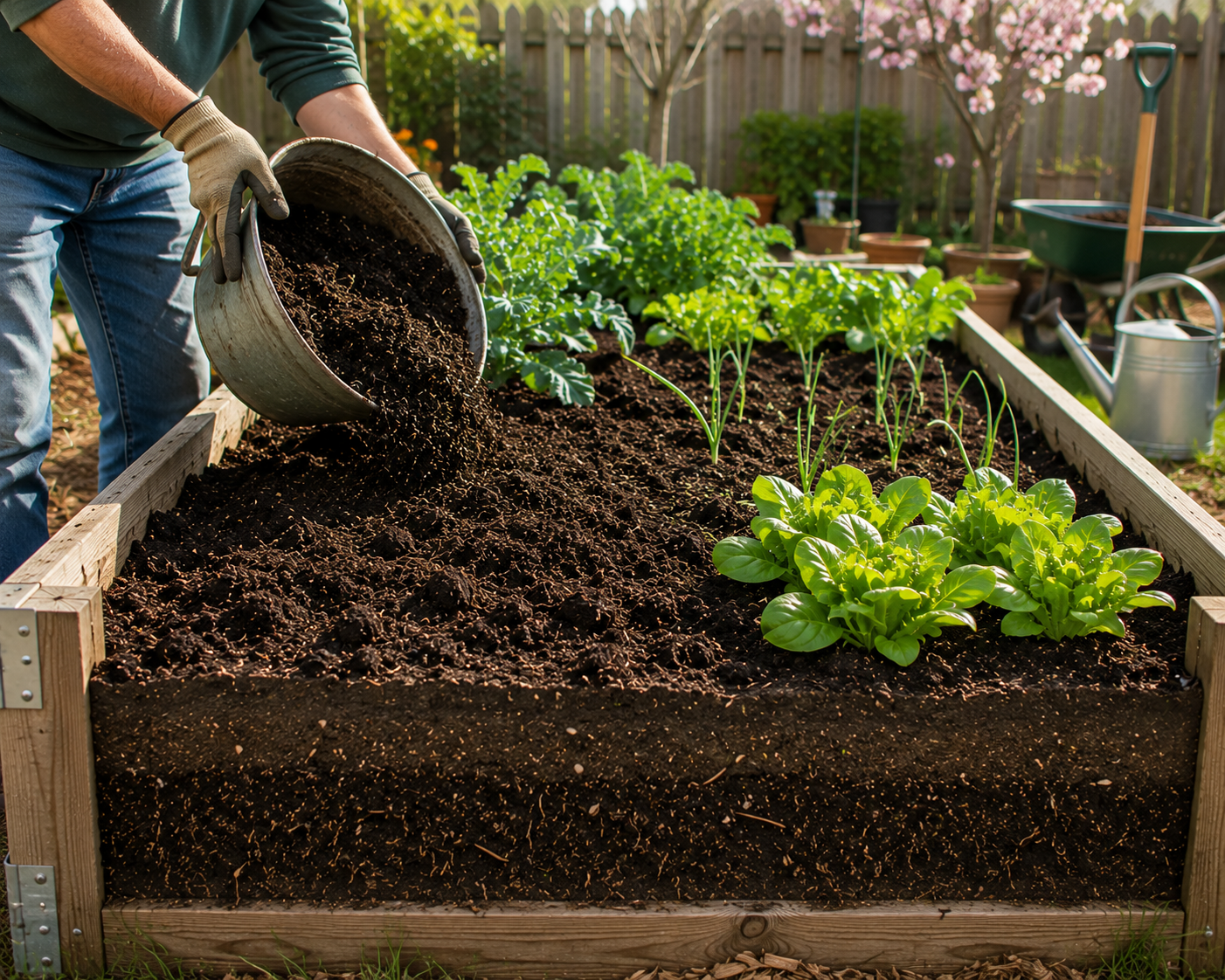
This annual refresh replaces nutrients removed by last year’s vegetables while keeping the soil loose and fertile.
Many gardeners are amazed that this simple routine produces healthier gardens year after year.
Signs Your Soil Is Healthy
Healthy soil is surprisingly easy to recognize.
It feels loose and crumbly.
It smells fresh and earthy.
Earthworms are abundant.
Water soaks in easily without puddling.
Plants produce vigorous roots and steady growth.
Harvests increase with each season.
When these signs appear, you’ve built an environment where vegetables can reach their full potential.
Can You Buy Raised Bed Soil?
Absolutely.
Many garden centers sell premixed raised bed soil that’s ready to use.
Quality varies, however.
Before purchasing, check the label for ingredients such as compost, aged forest products, topsoil, coconut coir, peat moss, or other organic materials.
Avoid products that appear to be mostly wood chips or unfinished mulch.
While convenient, bagged soil becomes expensive for larger gardens.
Many gardeners save money by purchasing soil in bulk from local landscape suppliers.
Bulk deliveries often provide enough material for several raised beds at a fraction of the cost.
Building Better Soil Is an Ongoing Process
No garden starts out perfect.
Even the best soil continues changing as vegetables grow, roots expand, and organic matter decomposes.
The goal isn’t perfection.
It’s continuous improvement.
Adding compost each year, rotating crops, avoiding unnecessary tilling, and protecting the soil with mulch all help create a healthier growing environment over time.
Your soil becomes richer with every season.
Your vegetables become stronger.
Your harvests become larger.
The Bottom Line
Raised beds offer one enormous advantage over traditional gardens: complete control over your growing environment.
Instead of struggling with poor native soil, you can build fertile, well-drained soil that gives vegetables everything they need from the very beginning.
Remember the biggest lesson of all.
Don’t fill your raised beds with ordinary yard soil and expect extraordinary results.
Invest a little time creating the right soil mixture now, and your garden will reward you for years to come with healthier plants, bigger harvests, and far fewer frustrations.
Ready to Grow More with Less Work?
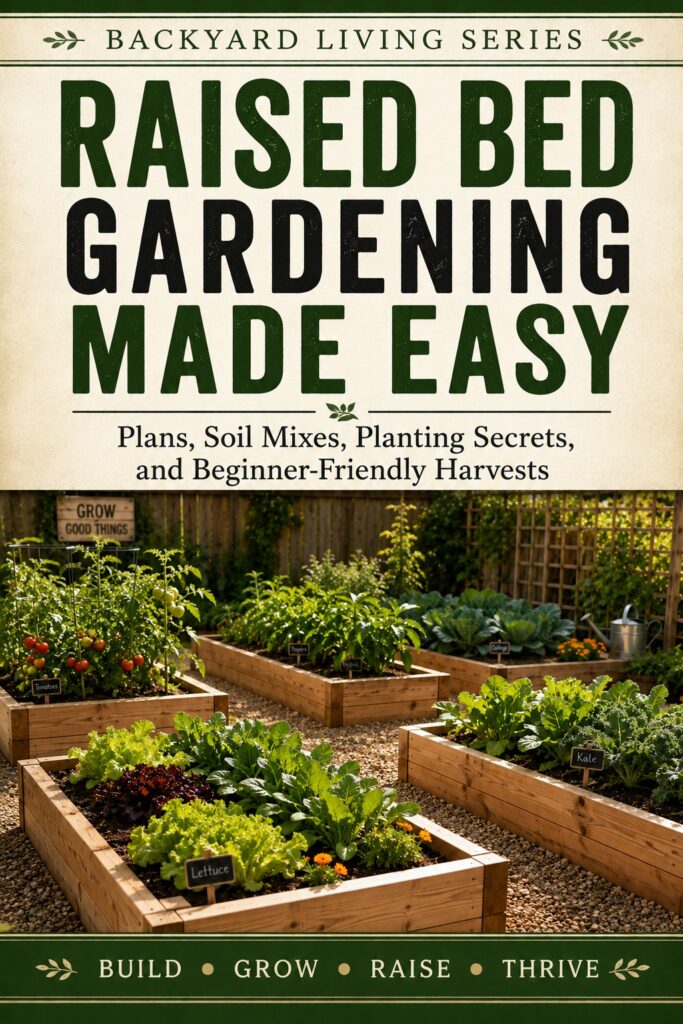
Raised Bed Gardening Made Easy expands on each of these topics with clear, step-by-step guidance designed specifically for beginner gardeners. From planning and building your first raised beds to choosing the best soil, growing healthy vegetables, watering efficiently, managing pests naturally, and extending your harvest season, the book provides practical instruction to help you grow an abundant garden with confidence. 🌱
More Raised Bed Gardening Articles
If you found this article helpful, these beginner guides are a great next step:
Get Your FREE Backyard Starter Toolkit
Download our free Backyard Starter Toolkit, packed with printable planners, checklists, and beginner resources to help you build, grow, raise, and thrive.
About the Author
Steve McChesney is the founder of Backyard Living Books and has spent decades helping homeowners build, grow, raise, and preserve more from their own backyards. Through practical, beginner-friendly guides, he encourages people to tackle one backyard project at a time and enjoy the satisfaction that comes with learning new skills.